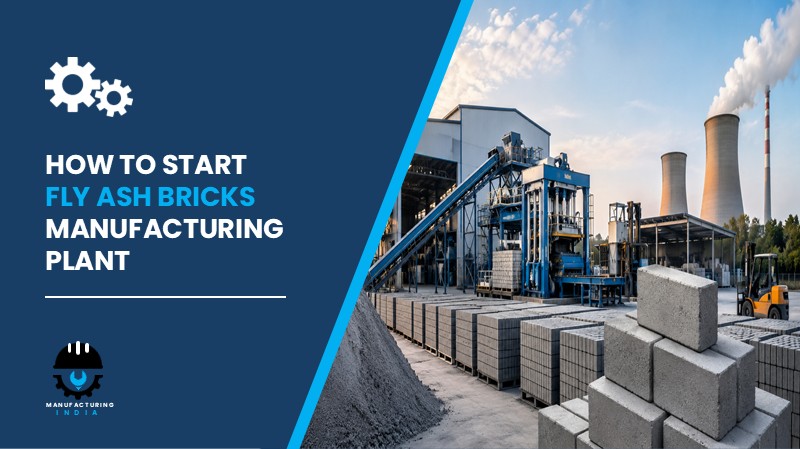
Setting up a fly ash bricks manufacturing plant in India presents a compelling investment case, driven by rising demand from residential construction, commercial construction, and government construction sectors. Fly ash bricks – produced from fly ash, a fine powder by-product of coal-fired power generation plants – are rapidly replacing traditional clay bricks across India’s construction landscape. Their superior compressive strength, lower water absorption, and high thermal insulation make them the preferred choice for walls, floors, and other structural elements in housing projects, offices, shopping centres, and heavy-duty infrastructure applications including roads, dams, and bridges.
India’s accelerating urbanisation, strong infrastructure push under national development programmes, and the Make in India initiative together create a uniquely favourable environment for this manufacturing investment. States such as Gujarat, Maharashtra, Uttar Pradesh, and Chhattisgarh – with dense thermal power plant networks – offer abundant fly ash feedstock at minimal logistics cost, giving Indian producers a natural raw material advantage. The country’s cost-competitive labour, growing industrial estate infrastructure, and government mandates encouraging sustainable construction further strengthen the business case for establishing a fly ash bricks processing unit here.
India’s fly ash bricks manufacturing sector sits at the intersection of policy support, circular economy priorities, and surging construction demand. With gross profit margins of 30-40% and net margins of 15-25%, the investment demonstrates robust financial viability across plant capacities. Demand sustainability is assured by government construction programmes, green building compliance, and the ongoing urbanisation of Indian cities – making this one of the most resilient manufacturing opportunities in the building materials segment.
What are Fly Ash Bricks?
Fly ash bricks are construction masonry units manufactured using fly ash, a fine powder by-product of coal-fired power generation plants, as the primary raw material. To produce these bricks, fly ash is blended with cement or lime, sand or stone dust, and water, then moulded under pressure and cured to achieve the required structural strength. Their very high strength, consistent shape, and clean finish ensure that the plastering requirement is minimal – comparable to cement brick construction. These bricks absorb less water than traditional clay alternatives, exhibit high thermal insulation properties, and demonstrate significantly greater longevity. Fly ash bricks are classified as an eco-friendly building material because they reduce industrial waste by utilising fly ash – which would otherwise burden landfills – while simultaneously reducing soil erosion and the mining of clay.
The key properties that set fly ash bricks apart include high compressive strength, low water absorption, better thermal insulation, and dimensional accuracy. The production method is a multi-step process involving collection of fly ash, mixing and blending, moulding, curing, quality testing, and packaging and distribution. End-use industries served by this product include residential construction, commercial construction, and government construction. Applications span structural walls, floors, and other building elements in housing, offices, and shopping centres, as well as heavy-duty uses in roads, dams, and government infrastructure projects.
Cost of Setting Up a Fly Ash Bricks Manufacturing Plant in India
The overall investment required for a fly ash bricks manufacturing plant depends on several variables: plant capacity, technology selection, degree of automation, geographic location, and regulatory compliance obligations. Investors should evaluate both capital expenditure (CapEx) and operational expenditure (OpEx) carefully before committing resources.
1. Capital Expenditure (CapEx)
Land and Site Development – form a substantial portion of total capital investment. Land registration charges, boundary development, and related site preparation expenses must be accounted for in the financial plan. Investors may consider setting up within a Special Economic Zone (SEZ) or notified industrial estate to benefit from concessional land rates, plug-and-play infrastructure, and single-window regulatory clearances available across states like Gujarat, Maharashtra, and Uttar Pradesh.
Civil Works and Construction – costs cover the manufacturing shed, raw material storage area, curing yard, quality control laboratory, finished goods storage, and the administrative block. The layout must allow designated areas for each unit operation – raw material receiving, mixing, moulding, curing, quality testing, and dispatch – with space reserved for future capacity expansion.
Machinery and Equipment – represent the largest single component of capital expenditure. Key machinery required includes:
- Fly ash collection systems
- Mixers and blenders
- Moulding machines
- Hydraulic presses
- Curing chambers
- Quality control systems
All machinery must comply with industry standards for safety, efficiency, and reliability. The scale of processing and the level of automation selected will determine the total machinery cost. High-quality, corrosion-resistant equipment is strongly recommended to ensure long operational life.
Other Capital Costs – include effluent treatment plant (ETP) setup, pre-operative expenses, commissioning costs, and import duties applicable on specialised equipment components.
Request a Sample Report for In-Depth Market Insights: https://www.imarcgroup.com/fly-ash-bricks-manufacturing-plant-project-report/requestsample
2. Operational Expenditure (OpEx)
Raw Material Cost – is the dominant operating expense, accounting for approximately 50-60% of total OpEx. The primary raw materials required are fly ash, cement or lime, and gypsum (sand or stone dust). Investors are advised to negotiate long-term supply contracts with nearby thermal power plants for fly ash procurement and with regional cement manufacturers for the binding components. This strategy stabilises input costs and ensures continuity of supply.
Utility Cost – covering electricity, water, and steam – represents 15-20% of total operational expenditure. Moulding and hydraulic pressing are the most power-intensive process stages. Locating the plant in proximity to reliable grid infrastructure or investing in captive solar power can reduce utility costs over the long term.
Other Operating Cost – include transportation, packaging, salaries and wages, maintenance, depreciation, and applicable taxes. By the fifth year of operations, total operational costs are expected to increase substantially due to factors such as inflation, market fluctuations, and potential rises in the cost of key raw materials. Supply chain disruptions and rising consumer demand are additional variables that investors should factor into five-year financial projections.
3. Plant Capacity
The proposed fly ash bricks processing facility is designed with an annual processing capacity of 50 million bricks, enabling economies of scale while maintaining operational flexibility. This capacity can be customised based on individual investor requirements – smaller capacities are appropriate for regional or niche markets, while larger operations benefit from lower per-unit costs and stronger margin realisation. Profitability improves steadily with higher capacity utilisation, and the plant layout should be designed to allow phased expansion without major civil disruption.
4. Profit Margins and Financial Projections
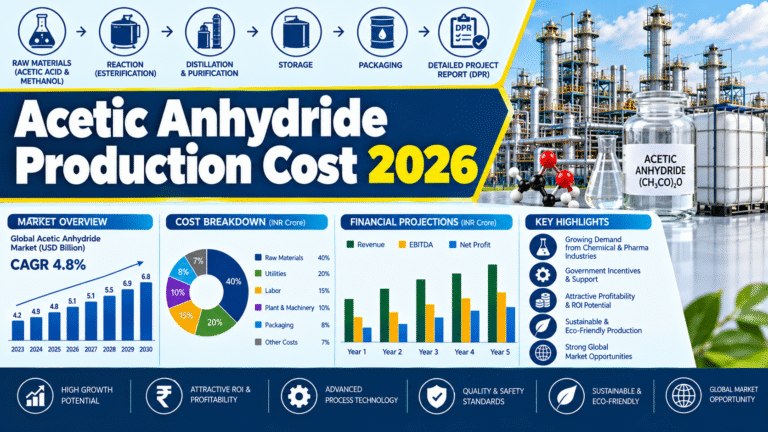
The fly ash bricks manufacturing plant demonstrates healthy profitability potential under normal operating conditions. Gross profit margins typically range between 30-40%, supported by stable demand and value-added applications. Net profit margins are projected in the range of 15-25%. Financial projections covering net present value (NPV), internal rate of return (IRR), payback period, and detailed profit and loss accounts are integral to the feasibility assessment. The project economics also include liquidity analysis, uncertainty analysis, and sensitivity analysis to account for market variability. These projections are developed based on realistic assumptions related to capital investment, operating costs, production capacity utilisation, pricing trends, and demand outlook.
Why Set Up a Fly Ash Bricks Plant in India?
Eco-Friendly and Sustainable Manufacturing: Fly ash bricks are an environmentally friendly building material because they reduce waste by using fly ash – a by-product of coal combustion – and help reduce the burden on landfills. They also contribute to reducing soil erosion and clay mining, aligning perfectly with India’s circular economy and environmental sustainability targets. This positions fly ash brick producers as direct beneficiaries of tightening green building regulations.
Cost-Effective Production Economics: Fly ash bricks are cheaper than conventional red clay bricks, primarily due to lower production costs and reduced energy consumption during manufacturing. Their longer durability also results in reduced maintenance and repair costs for construction buyers, strengthening end-user preference. Cost-competitive land, labour, and raw material supply chains across Indian manufacturing states further reduce production costs relative to global benchmarks.
High Strength and Durability Driving Specification: Fly ash bricks are known for their high compressive strength, low water absorption, and superior thermal insulation compared to traditional alternatives. These performance attributes are increasingly being specified by architects and structural engineers in residential, commercial, and infrastructure projects – creating sustained demand across all construction segments.
Government Regulations and Incentives as a Growth Lever: Several governments worldwide – and India’s own regulatory framework – have introduced incentives and mandates for the use of sustainable materials like fly ash bricks in construction projects. India’s construction policies encourage the utilisation of fly ash in bulk, directly supporting market expansion for fly ash brick producers. This regulatory tailwind reduces demand risk for new entrants and strengthens long-term project viability.
Active Industry Investment and Latest Developments: In April 2023, Heidelberg Materials entered into a definitive purchase agreement to acquire The SEFA Group, Inc., the largest recycler of harvested fly ash for use in concrete products in the USA. This acquisition underscores the growing global recognition of fly ash as a strategic secondary cementitious material (SCM) and signals continued upstream investment in fly ash collection and processing infrastructure.
Growing Demand Across Residential, Commercial, and Government Segments: Fly ash bricks are used more and more in home, commercial, and infrastructure areas due to their eco-friendly processing, low price, and high durability. India’s ongoing urbanisation – with urban population and GDP growth concentrated in tier-2 and tier-3 cities – is creating consistent new demand for cost-effective, durable, and sustainable bricks across all three end-use segments simultaneously.
Manufacturing Process – Step by Step
The fly ash bricks manufacturing process uses collection of fly ash, mixing and blending, moulding, curing, quality testing, and packaging and distribution as the primary production method. Each step involves specific unit operations, material handling procedures, and quality checkpoints.
- Fly Ash Collection: Raw fly ash is sourced from coal-fired power generation plants and transported to the processing facility. Reliable fly ash collection systems ensure consistent feedstock quality and continuity of supply.
- Mixing and Blending: Fly ash is precisely blended with cement or lime and sand or stone dust in the required proportions. Mixers and blenders ensure homogeneous distribution of all raw materials before moulding.
- Moulding: The blended mixture is fed into moulding machines that shape the material into standard brick dimensions. Consistent mould dimensions ensure the high dimensional accuracy and clean finish that characterises fly ash bricks.
- Hydraulic Pressing: Hydraulic presses apply controlled compressive force to the moulded bricks, achieving the high compressive strength that differentiates fly ash bricks from conventional alternatives.
- Curing: Pressed bricks are placed in curing chambers where controlled temperature and humidity conditions allow the binding agents to fully hydrate and the bricks to achieve their design strength. Curing is critical to low water absorption and long-term durability.
- Quality Testing: Finished bricks undergo quality control testing using dedicated quality control systems. Technical tests verify compressive strength, water absorption, dimensional accuracy, and other performance criteria per applicable standards.
- Packaging and Distribution: Tested and approved bricks are packaged and dispatched to end-use industries – residential construction, commercial construction, and government construction – across regional and national markets.
Key Applications
Fly ash bricks serve a wide range of construction and infrastructure end-use industries, each with specific application requirements.
- Construction: Fly ash bricks are primarily used in residential and commercial buildings as a sustainable alternative to traditional red bricks, including walls, floors, and other structural elements.
- Infrastructure: The facility serves heavy-duty construction applications such as roads, bridges, and dams, where high compressive strength and durability are essential.
- Green Buildings and Sustainability: Fly ash bricks are a preferred choice in green building projects due to their environmental benefits, supporting certification under green building codes and standards.
- Government Projects: Many governments are encouraging the use of fly ash bricks in public buildings, schools, hospitals, and other infrastructure due to environmental benefits and compliance with green building codes.
Leading Manufacturers
The global fly ash bricks industry is served by several established processors with extensive production capacities and diverse application portfolios. Key players in the global fly ash bricks industry include:
- Pavcon
- Nuvoco Vistas Corp
- LafargeHolcim
- Jayem Manufacturing
- MR Enterprises
- Puzzolana Green Bricks
These companies serve end-use sectors including construction, infrastructure, green buildings and sustainability, and government projects.
Timeline to Start the Plant
Establishing a fly ash bricks manufacturing plant in India involves a sequential project development timeline across the following eight phases:
- Feasibility study and project report preparation
- Land acquisition and site development
- Regulatory approvals and environmental clearances
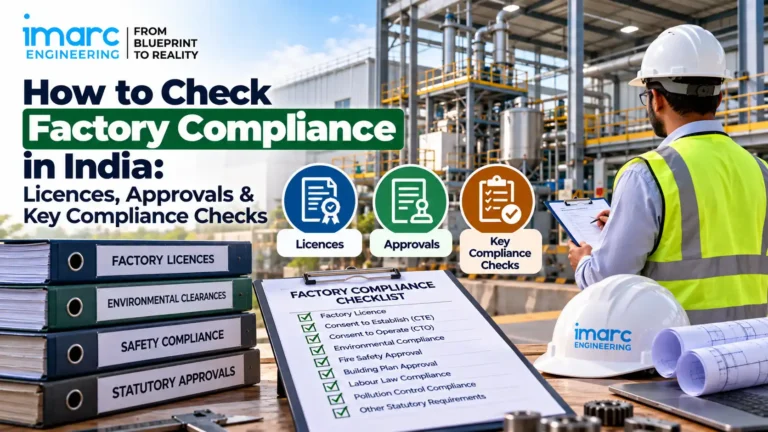
- Factory licence and fire safety compliance
- Machinery procurement and installation
- Raw material supplier agreements and supply chain setup
- Trial production and quality testing
- Commercial production launch
Licences and Regulatory Requirements
Starting a fly ash bricks manufacturing unit in India requires several approvals:
- Business registration (Proprietorship, LLP, or Pvt Ltd)
- Factory Licence under the Factories Act
- Environmental Clearance from State Pollution Control Board
- GST Registration
- Fire Safety NOC
- Hazardous or chemical compliance (relevant given fly ash classification as an industrial by-product)
- Effluent Treatment Plant (ETP) operational clearance
- Occupational Health and Safety compliance
Key Challenges to Consider
High Capital Requirements: Establishing a fly ash bricks manufacturing plant involves significant upfront investment in land, civil works, and specialised machinery – including fly ash collection systems, hydraulic presses, and curing chambers – which can be a barrier for smaller investors without access to project financing.
Raw Material Price Volatility: The operating cost structure is primarily driven by fly ash, cement or lime, and gypsum. Any disruption in thermal power plant output affecting fly ash availability, or price fluctuations in cement and lime, can materially impact operating margins if not mitigated through long-term supply contracts.
Regulatory Compliance: Environmental clearances, ETP operational requirements, and occupational health standards require ongoing investment and management attention. Non-compliance can result in operational disruptions and financial penalties.
Competition from Established Players: The global competitive landscape includes established processors such as LafargeHolcim, Nuvoco Vistas Corp, and Puzzolana Green Bricks. New entrants must differentiate on quality, logistics efficiency, or customer relationships to gain market share.
Technology and Innovation Pressure: The fly ash bricks industry is seeing continuous improvement in compressive strength and insulation properties. Investors must ensure that equipment selection incorporates current best-in-class processing technology to remain competitive.
Skilled Manpower: Operating hydraulic presses, curing chambers, and quality control systems requires a trained workforce. Availability of skilled technical staff varies by location, and ongoing training investment is necessary to maintain production quality and safety standards.
Key Takeaways for Investors
The fly ash bricks manufacturing plant in India offers a well-rounded investment opportunity supported by consistent demand from residential construction, commercial construction, and government construction sectors. The plant demonstrates financial viability across a range of capacities, with gross profit margins of 30-40% and net margins of 15-25% achievable under normal operating conditions. The global fly ash bricks market was valued at USD 1.39 Billion in 2025 and is projected to reach USD 2.66 Billion by 2034, growing at a CAGR of 7.5% from 2026 to 2034 – an outlook that reflects sustained and growing demand. India’s urbanisation trajectory, government mandates for fly ash utilisation, and the mainstreaming of green building practices collectively ensure that demand for this product will remain structurally strong well into the next decade.
About the Author