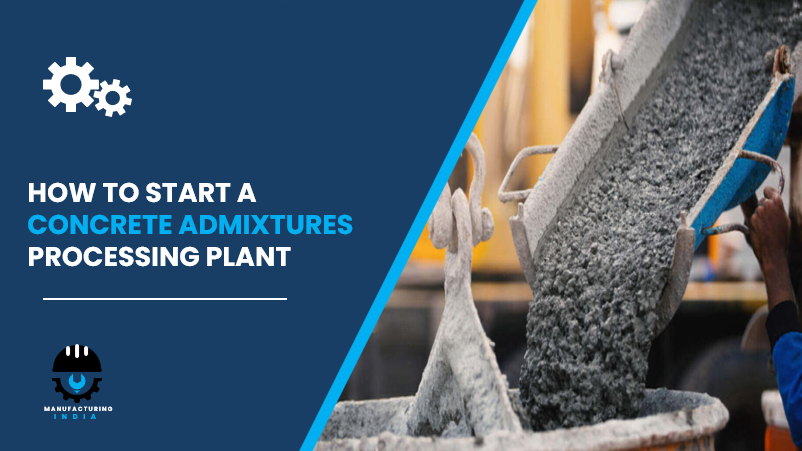
Setting up a concrete admixtures manufacturing plant in India presents a highly compelling investment opportunity as global demand for high-performance, sustainable, and specialty concrete continues to surge across residential and commercial construction, infrastructure development, precast manufacturing, and civil engineering applications. Concrete admixtures have become indispensable in modern construction due to their exceptional ability to optimize workability, durability, setting time, strength, and environmental performance — enabling construction professionals to achieve design specifications that would be impossible with conventional plain concrete alone.
“With a rapidly expanding global market projected to grow at a CAGR of 8.93% through 2034 — one of the highest growth rates in the specialty chemicals and construction materials sector — increasing adoption driven by infrastructure mega-projects, green building standards, and high-performance concrete demand, and gross margins of 35–45%, concrete admixtures manufacturing offers one of the most financially attractive opportunities in the construction chemicals sector — with a break-even window of 3–6 years.”
What are Concrete Admixtures?
Concrete admixtures are specialized chemical formulations added to concrete mixes — in precisely controlled dosages — to modify and enhance specific performance characteristics of concrete beyond what is achievable through variation of cement, aggregate, and water ratios alone. These chemical additions are incorporated either during the batching process at ready-mix concrete plants, at the point of placement on construction sites, or during precast element manufacturing, and they act on the cement hydration chemistry, particle dispersion, air void structure, or setting kinetics of the concrete mix to deliver targeted performance outcomes.
Concrete admixtures are available across several major functional categories, each addressing distinct performance requirements. Superplasticizers and water-reducing admixtures improve concrete workability and flowability while significantly reducing water-to-cement ratios — enabling stronger, denser, and more durable concrete with lower cement consumption. Retarders delay the setting of concrete, essential for long-distance transport, hot weather concreting, and large-volume pours. Accelerators advance setting and early strength gain, critical for cold weather concreting, fast-track construction, and precast operations. Air-entraining agents introduce microscopic air voids into concrete to improve freeze-thaw resistance in cold climates. Corrosion inhibitors protect steel reinforcement from chloride-induced corrosion in marine and coastal structures. Specialty admixtures include shrinkage-reducing agents, expansive agents, permeability-reducing admixtures, and self-consolidating concrete (SCC) formulations for complex architectural applications.
Globally, concrete admixtures have become non-negotiable components of modern construction practice. The United Nations estimates that more than half of the world’s population now lives in urban areas — a figure projected to reach approximately 5 billion by 2030 — creating unprecedented demand for high-quality, durable, and resource-efficient construction materials across rapidly urbanizing economies. India’s ambitious national infrastructure programs — including PM Gati Shakti, smart city missions, metro rail networks, and the National Infrastructure Pipeline — are creating exceptional domestic demand conditions for premium concrete admixture solutions.
Cost of Setting Up a Concrete Admixtures Manufacturing Plant in India
The concrete admixtures manufacturing plant cost depends on several parameters including production capacity, product formulation complexity, technology configuration, plant location, level of automation, raw material sourcing strategy, and regulatory compliance requirements. Here is a structured breakdown of all major cost components:
1. Capital Expenditure (CapEx)
The total capital investment in a concrete admixtures manufacturing plant typically covers the following:
Land and Site Development
This includes land acquisition, boundary development, land registration charges, and basic site preparation. Cost varies significantly depending on whether the land is in a designated chemical industrial zone, construction materials manufacturing park, Special Economic Zone (SEZ), or a privately purchased plot. Proximity to polymer and chemical raw material supply chains, as well as to key construction markets and ready-mix concrete plant clusters, is a critical factor in site selection to minimize both input procurement and product distribution logistics costs.
Request a Sample Report for In-Depth Market Insights: https://www.imarcgroup.com/concrete-admixtures-manufacturing-plant-project-report/requestsample
Civil Works and Construction
Building costs cover the main production facility, chemical raw material storage areas with appropriate segregation and containment, synthesis and blending production bays, quality control and testing laboratory, bulk liquid storage tank farm, finished product warehouse, administrative block, utility area, and worker amenities. Construction must comply with chemical plant safety norms including fire resistance, ventilation systems, secondary chemical containment, spill management infrastructure, and environmental management standards applicable to specialty chemical manufacturing operations.
Machinery and Equipment
This is the single largest component of CapEx. Key machinery required for a concrete admixtures manufacturing plant includes:
- Reactor Vessels for Chemical Synthesis (Jacketed, Agitated Stainless Steel Reactors)
- Industrial Blending and Mixing Tanks
- Precision Dosing and Metering Systems
- Heating and Cooling Systems (Heat Exchangers, Condensers)
- Grinding Mills (for powder admixture production)
- Drying Ovens and Spray Drying Equipment (for dry powder formats)
- Pneumatic Conveying Systems for Powder Transfer
- Bulk Liquid Storage Tanks and Silos
- Automated Bagging Lines (for powder admixtures)
- Drum and IBC Filling Lines (for liquid admixtures)
- Quality Control Laboratory Equipment (Rheometers, Setting Time Testers, Strength Testing)
- Effluent Treatment Plant (ETP) and Chemical Waste Management Systems
- Process Control and Automation Systems (DCS/SCADA)
Machinery costs represent the largest share of overall capital expenditure, reflecting the precision chemical process engineering, corrosion-resistant reactor construction, formulation quality control sophistication, and safety management infrastructure required for specialty concrete admixture manufacturing across both liquid and powder product formats.
Other Capital Costs
These include pre-operative expenses, commissioning charges, import duties (if specialized reactor or blending equipment is sourced internationally), utilities installation, fire suppression and explosion-proof electrical systems, chemical containment and secondary spill infrastructure, Effluent Treatment Plant (ETP) setup for chemical process wastewater management, and environmental management systems for compliance with industrial chemical manufacturing regulations.
2. Operational Expenditure (OpEx)
Once the plant is commissioned, the ongoing cost structure is dominated by raw material costs — reflecting the polymer and specialty chemical intensity of admixture formulation chemistry:
Raw Material Cost (Polymers and Specialty Chemicals): 60–70% of Total OpEx
Polymers — particularly polycarboxylate ether (PCE) polymers, naphthalene sulfonates, melamine sulfonates, and lignosulfonates — are the primary raw materials for superplasticizer and water-reducing admixture production, and account for the largest share of operating expenses. Additional raw materials include retarding agents (sugars, gluconates, phosphonates), accelerating agents (calcium chloride, calcium nitrate, sodium thiocyanate), air-entraining surfactants, corrosion inhibitors (calcium nitrite, organic inhibitors), and specialty functional additives depending on the product formulation and application performance requirements.
Utility Cost: 10–15% of Total OpEx
Utilities include electricity and steam consumed by reactor systems, blending equipment, drying operations, and process control infrastructure, as well as cooling water for exothermic reaction management. Compared to energy-intensive primary chemical manufacturing, concrete admixture blending and formulation operations are relatively utility-efficient, particularly for liquid admixture production. Investment in heat integration between exothermic synthesis reactions and process heating requirements can further optimize utility consumption and reduce operating costs.
Other Operating Costs
The remaining budget covers transportation and distribution logistics to ready-mix concrete plants, precast manufacturers, and construction sites, packaging materials (IBC containers, drums, and bulk tanker deliveries), salaries and wages for chemical process operators and technical service engineers, maintenance, depreciation, insurance, environmental compliance costs including chemical wastewater treatment and VOC emission management, quality certification expenses, taxes, and miscellaneous overhead.
3. Plant Capacity
The proposed manufacturing facility can be designed across a range of production scales:
- Small-Scale Operations: 5,000–10,000 metric tons annually — suitable for regional construction markets, specialty admixture formulations, and technical service-intensive project supply with flexible multi-product blending capability across superplasticizers, retarders, accelerators, and specialty product lines.
- Mid-Scale Plants: 10,000–20,000 metric tons annually — designed for national ready-mix concrete, precast manufacturing, and infrastructure project markets with semi-continuous blending and synthesis operations, moderate automation, and diversified product portfolio across all major admixture functional categories.
- Large-Scale Plants: 20,000–50,000 metric tons annually — built for national and regional export markets with continuous synthesis and blending lines, high automation, multi-product parallel production capability, and comprehensive portfolio spanning water reducers, superplasticizers, retarders, accelerators, air-entraining agents, corrosion inhibitors, and specialty concrete solutions.
Profitability significantly improves with higher capacity utilization and product portfolio optimization toward premium-value formulations — including third-generation PCE-based superplasticizers, self-compacting concrete (SCC) admixtures, shrinkage-reducing formulations, and project-specific engineered admixture systems — which command significantly higher selling prices and stronger margin profiles compared to standard commodity-grade products.
4. Profit Margins and Financial Projections
- Gross Profit Margin: 35–45%
- Net Profit Margin: 15–20%
- Break-Even Period: 3 to 6 years, depending on production scale, product mix, market positioning, raw material cost management, technical service capability, and project approval cycles.
Financial projections must account for capital investment, operating costs, capacity utilization rates, pricing trends, and demand outlook. A thorough analysis should also include sensitivity analysis, Net Present Value (NPV), Internal Rate of Return (IRR), and Payback Period. The gross margin range of 35–45% positions concrete admixtures manufacturing among the highest-margin specialty chemical businesses in the construction materials sector, reflecting the significant technical value-add delivered by precision formulation chemistry and application expertise.
Why Set Up a Concrete Admixtures Manufacturing Plant in India?
The global market environment presents a uniquely favorable opportunity for establishing a concrete admixtures manufacturing facility:
Accelerated Global Infrastructure Investment
Governments worldwide are committing unprecedented levels of capital expenditure to infrastructure development — including highways, bridges, metro rail networks, airports, ports, and smart city projects — all of which require high-performance concrete supported by precision admixture formulations. India’s National Infrastructure Pipeline (NIP) envisages investments exceeding INR 111 lakh crore across priority infrastructure sectors, creating one of the largest and most sustained demand environments for construction chemicals in the world.
Rapid Urbanization and Housing Demand
More than half of the global population now lives in urban areas — projected to reach approximately 5 billion by 2030 — creating massive demand for residential and commercial construction across emerging economies. In India, the Pradhan Mantri Awas Yojana (PMAY) housing scheme and urban development programs are driving large-scale construction activity across tier-1 and tier-2 cities, supporting consistent growth in ready-mix concrete consumption and admixture demand.
Green Building and Sustainability Regulations
Environmental regulations and green building certification programs — including LEED, GRIHA, and IGBC standards — are actively encouraging reduced cement consumption in construction, directly driving demand for superplasticizers and high-range water-reducing admixtures that enable equivalent or superior concrete performance with lower cement content and reduced CO2 footprint. Sustainability requirements in public infrastructure projects are creating regulatory pull for premium admixture solutions.
Ready-Mix Concrete Sector Expansion
The transition from site-mixed to centrally produced ready-mix concrete (RMC) across India’s urban construction market is a major structural demand driver for concrete admixtures. RMC plants are primary consumers of liquid superplasticizers, retarders, and set-control admixtures — and their rapid proliferation across metropolitan and tier-2 Indian cities is creating a growing, geographically expanding, and technically sophisticated customer base for admixture manufacturers.
Industry Consolidation Creating Market Opportunity
The global concrete admixtures sector is witnessing significant strategic consolidation, as exemplified by Saint-Gobain’s completion of the acquisition of FOSROC — a leading global construction chemicals player with strong presence in India, the Middle East, and Asia-Pacific — in February 2025. This consolidation trend, combined with the continued expansion of domestic construction activity, is creating strategic market entry opportunities for quality-focused regional and national admixture manufacturers offering reliable supply, technical service, and competitive pricing.
Manufacturing Process Overview
The concrete admixtures manufacturing process involves precision chemical synthesis, controlled blending, quality testing, and packaging operations tailored to each admixture type and formulation. The principal manufacturing stages are:
- Raw Material Receipt and Quality Verification — Incoming polymer resins, chemical intermediates, and functional additives are received, sampled, and tested against incoming quality specifications for purity, viscosity, molecular weight distribution, and chemical composition before acceptance into production.
- Batch Weighing and Preparation — Raw materials are precisely weighed and measured using automated batch management systems to the formulation recipe specifications, ensuring consistent product quality and performance across production batches.
- Chemical Synthesis (for PCE Superplasticizers) — Polycarboxylate ether polymers are synthesized through free-radical polymerization reactions in jacketed stainless steel reactor vessels under controlled temperature, pH, and agitation conditions. The polymerization reaction is initiated by peroxide or persulfate initiators, and molecular weight and comb-polymer architecture are controlled through precise process parameter management to achieve target performance characteristics.
- Blending and Formulation — Synthesized polymers or purchased active ingredients are combined with functional additives — including retarding agents, accelerators, defoamers, biocides, and stabilizers — in precision blending tanks under controlled temperature and agitation to produce the final admixture formulation meeting customer performance specifications.
- Quality Control Testing — Each production batch undergoes comprehensive quality testing including density measurement, pH verification, viscosity measurement, solid content determination, infrared spectroscopy for chemical fingerprinting, and performance validation through concrete trial mix testing — evaluating slump retention, setting time, compressive strength development, and air content.
- Drying and Powder Production (for Dry Powder Admixtures) — Liquid admixture formulations destined for dry powder format are processed through spray drying or drum drying systems to produce free-flowing, stable powder products with controlled moisture content and particle size distribution.
- Packaging and Dispatch — Approved liquid admixtures are filled into IBC containers, drums, or bulk tanker deliveries using automated filling lines. Powder admixtures are bagged in moisture-resistant multi-wall bags. Products are labeled with dosage information, safety data, and regulatory markings before dispatch to customers.
Key Applications of Concrete Admixtures
Concrete admixtures serve a wide variety of construction applications across every segment of the built environment:
- Residential and Commercial Construction: Superplasticizers and water reducers for ready-mix concrete used in apartment buildings, commercial towers, retail developments, and institutional structures requiring workable, pumpable, and high-strength concrete with reliable finishing quality.
- Infrastructure Projects: High-performance superplasticizers, retarders, and set-control admixtures for bridges, elevated highways, airport runways, metro rail structures, tunnels, and port infrastructure requiring exceptional durability, strength, and longevity under demanding service conditions.
- Precast Manufacturing: Accelerating admixtures, release agents, and high-range water reducers for precast concrete elements including beams, columns, wall panels, pipes, and paving blocks requiring fast demolding, dimensional precision, and consistent surface quality.
- Specialty and High-Performance Concrete: Self-compacting concrete (SCC) admixtures, shrinkage-reducing agents, and specialty formulations for high-rise core walls, post-tensioned slabs, complex architectural concrete, and mass concrete pours in large-scale civil engineering projects.
- Repair and Rehabilitation: Corrosion inhibitors, waterproofing admixtures, chloride-resistant formulations, and repair mortars for restoring and extending the service life of aging concrete infrastructure in bridges, marine structures, and industrial facilities.
- Marine and Coastal Structures: Corrosion inhibitors and permeability-reducing admixtures for harbor walls, offshore platforms, marine foundations, and coastal structures requiring superior resistance to chloride ingress and saltwater exposure.
Global Market Outlook
The global concrete admixtures market size was valued at USD 21.35 Billion in 2025. According to IMARC Group estimates, the market is expected to reach USD 46.10 Billion by 2034, exhibiting a CAGR of 8.93% from 2026 to 2034 — making it one of the fastest-growing segments within the broader specialty chemicals and construction materials industry. This exceptional growth trajectory is driven by accelerating global infrastructure investment, rapid urbanization in emerging economies, adoption of ready-mix concrete and precast solutions, environmental regulations promoting reduced cement usage, and technological innovation in polymer-based and nano-engineered admixture formulations catering to increasingly demanding performance specifications.
Asia Pacific dominates the global concrete admixtures market, led by China, India, South Korea, Japan, and Southeast Asian nations, driven by massive infrastructure investment programs, rapid urban expansion, strong ready-mix concrete sector growth, and increasing adoption of high-performance concrete in commercial and infrastructure construction. India’s infrastructure spending trajectory positions it as one of the most significant and fastest-growing national markets for concrete admixtures globally.
Leading global players in this industry include:
- Sika AG
- BASF SE
- GCP Applied Technologies
- Mapei S.p.A.
- Fosroc International Ltd.
Timeline to Start a Concrete Admixtures Manufacturing Plant
Setting up a concrete admixtures manufacturing plant from ideation to commissioning typically requires 18 to 30 months. This covers:
- Feasibility study and detailed project report (DPR) preparation
- Land acquisition and site development
- Environmental impact assessment and regulatory approvals
- Plant design and engineering
- Machinery procurement and installation
- Utility setup and infrastructure commissioning
- Trial production and quality testing
- Customer qualification, technical approval, and product certification
- Commercial production launch
Licenses and Regulatory Requirements
Starting a concrete admixtures manufacturing unit requires several approvals, which may vary by country and jurisdiction, including:
- Business registration and incorporation
- Factory License under applicable labor and manufacturing laws
- Environmental Clearance from relevant pollution control authorities
- Chemical Manufacturing and Storage License
- Hazardous Waste Management Authorization (for chemical process wastes)
- Fire Safety and Chemical Plant Safety Certification (NOC)
- BIS Certification for applicable admixture standards (IS 9103)
- REACH Compliance (for EU export markets)
- ASTM / EN 934 Compliance Certification (for international project specifications)
- ISO 9001 Quality Management Certification
- ISO 14001 Environmental Management Certification
- Occupational Health and Safety Certifications
Key Challenges to Consider
Before investing, entrepreneurs and investors should be aware of the common challenges in this business:
Raw Material Price Volatility: Polycarboxylate ether polymers and specialty chemical intermediates are linked to petrochemical feedstock markets and global polymer supply chains. Price fluctuations — particularly in monomers such as acrylic acid, maleic anhydride, and polyethylene glycol — can significantly impact formulation costs and profit margins. Securing long-term supply agreements with domestic polymer producers and maintaining strategic raw material inventory are essential for margin protection.
Technical Formulation Complexity and IP: Concrete admixture manufacturing requires deep expertise in polymer chemistry, cement hydration science, and concrete technology. Developing and maintaining a portfolio of high-performance, application-optimized formulations requires significant ongoing investment in R&D and technical service capabilities. The industry is also characterized by extensive proprietary formulation know-how, with global leaders holding substantial patent portfolios that new entrants must navigate carefully.
Customer Qualification and Project Approval Cycles: Major infrastructure and commercial construction projects typically require admixtures to undergo rigorous technical qualification, trial mix evaluation, and specification approval processes before commercial supply commences. These approval cycles can extend from several months to over a year for large projects, requiring patient capital and a strong technical service team to navigate effectively.
Competition from Established Multinationals: The market features deeply entrenched multinational specialty chemical companies — including Sika, BASF, Mapei, and the newly enlarged Saint-Gobain/Fosroc group — with established brand equity, technical service networks, and long-standing relationships with major contractors and ready-mix concrete producers. New entrants must develop strong regional positioning, superior technical service responsiveness, and competitive pricing to build market share against these formidable competitors.
Environmental and Chemical Safety Compliance: Operating a specialty chemical manufacturing facility requires continuous investment in environmental management infrastructure — including chemical effluent treatment, VOC emission control, hazardous waste disposal, and occupational health monitoring — as regulatory standards for chemical plants continue to tighten across India and key export markets.
Frequently Asked Questions
The following questions are answered in the report:
- How much does it cost to set up a concrete admixtures manufacturing plant?
- Is concrete admixtures manufacturing a profitable business in 2026?
- What machinery and equipment are required for a concrete admixtures plant?
- What licenses and approvals are required to start a concrete admixtures manufacturing facility?
- How long does it take to commission a concrete admixtures manufacturing plant?
- What is the best location to set up a concrete admixtures manufacturing plant in India?
- What government incentives are available for construction chemicals manufacturers in India?
- What is the break-even period for a concrete admixtures manufacturing plant?
- What are the IS 9103, ASTM, and EN 934 compliance requirements for concrete admixtures?
- What are the key raw materials and their sourcing strategies for concrete admixtures manufacturing?
Key Takeaways for Investors
The concrete admixtures manufacturing industry represents a strong and highly scalable investment opportunity backed by one of the fastest-growing global demand trajectories in the specialty chemicals and construction materials sector — with a projected CAGR of 8.93% through 2034. With outstanding gross margins of 35–45% and a break-even window of 3–6 years, concrete admixtures manufacturing delivers some of the strongest risk-adjusted financial returns in the construction inputs industry. The convergence of India’s historic infrastructure investment cycle under the National Infrastructure Pipeline, rapid urbanization approaching 5 billion global urban residents by 2030, green building sustainability mandates driving reduced cement consumption, ready-mix concrete sector expansion, and strategic industry consolidation — as evidenced by Saint-Gobain’s acquisition of Fosroc in February 2025 and Sika’s new superplasticizer facility launch in December 2025 — creates an exceptionally robust and diversified demand environment for concrete admixture manufacturers with the technical formulation expertise, quality management systems, and customer service capabilities to capture this compelling market opportunity.
About the Author