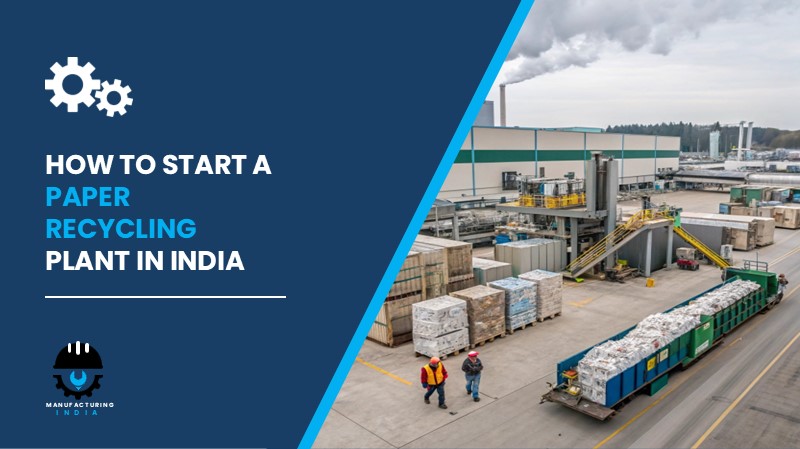
Setting up a paper recycling plant in India presents a compelling investment case as the country rapidly emerges as one of the most cost-competitive and sustainability-driven destinations for recycled paper and paperboard manufacturing. Driven by growing environmental awareness, stricter government regulations on waste management, rising demand for sustainable packaging materials, and the rapidly expanding e-commerce and FMCG packaging sectors, recycled paper has become an increasingly essential input across India’s packaging, publishing, tissue, and construction industries.
“With over 1.4 billion consumers, a rapidly urbanising population, Make in India and Swachh Bharat policy support, and a booming e-commerce and sustainable packaging sector, India offers one of the most financially attractive environments for paper recycling — driven by strong and growing demand for recycled containerboard, newsprint, tissue, and packaging materials across domestic and export markets.”
What is Paper Recycling?
Paper recycling is the process of recovering waste paper and reprocessing it into new paper products. Recycled paper is manufactured from used paper materials which are cleaned, de-inked, and converted into usable pulp. This recycled pulp is commonly utilised in producing newspapers, tissue products, packaging materials, containerboard, and office supplies. Recycled paper supports environmental sustainability by conserving natural resources, reducing landfill waste, and minimising energy consumption in comparison to virgin paper production. A paper recycling plant is an industrial facility dedicated to the collection, processing, and transformation of waste paper into reusable paper products. These facilities employ advanced machinery and water treatment systems to ensure efficiency, environmental compliance, and output quality. The output from a paper recycling plant can include newsprint, tissue paper, cardboard, and packaging materials serving multiple end-use industries including packaging, publishing, and hygiene sectors.
Cost of Setting Up a Paper Recycling Plant in India
The paper recycling plant cost in India depends on several parameters including processing capacity, technology used, plant location, product mix (containerboard, newsprint, tissue, packaging), level of automation, and regulatory compliance requirements. Here is a structured breakdown of all major cost components:
1. Capital Expenditure (CapEx)
The total capital investment in a paper recycling plant typically covers the following:
Land and Site Development
This includes land acquisition, boundary development, land registration charges, and basic site preparation. Cost varies significantly depending on whether the land is in an industrial estate, Special Economic Zone (SEZ), or a privately purchased plot. Proximity to urban waste paper collection networks, paper and cardboard recyclers, industrial waste paper generators such as printing houses and corrugated box manufacturers, and major consumption markets for recycled paper products are all critical site selection factors for a paper recycling facility.
Civil Works and Construction
Building costs cover the main pulping and processing hall, waste paper receiving and sorting yard, water treatment and effluent plant, pulp storage and screening area, paper machine housing, finished roll storage, administrative block, and worker amenities. Construction specifications depend on plant scale, water management infrastructure for high-volume process water use in pulping, and local Pollution Control Board requirements for paper recycling facility design.
Machinery and Equipment
This is the single largest component of CapEx. Key machinery required for a paper recycling plant includes:
- Waste Paper Bale Breakers and Conveyors
- Pulpers (Drum Pulpers or High-Consistency Pulpers)
- Coarse Screens and Cleaners
- Fine Screens and Pressure Screens
- Forward Cleaners and Reverse Cleaners
- De-inking Flotation Cells (for printing and writing paper grades)
- Dispersers and Kneaders
- Bleaching Systems (for higher-brightness grades)
- Disc Filters and Thickeners
- Refiners
- Headbox and Wire Section (Fourdrinier or Twin-Wire)
- Press Section
- Dryer Section
- Calender and Size Press
- Pope Reel and Winder
- Broke Handling and Water Loop Systems
- Effluent Treatment Plant
- Sludge Dewatering and Management Systems
Machinery costs represent the largest share of overall capital expenditure, reflecting the comprehensive wet-end processing, multi-stage screening and cleaning, de-inking systems, and paper machine infrastructure required in a modern paper recycling facility.
Other Capital Costs
These include pre-operative expenses, commissioning charges, import duties on specialised paper machine and de-inking equipment sourced internationally, utilities installation including steam generation and process water systems, fire safety infrastructure, and effluent treatment plant setup for paper recycling process water management and sludge handling.
2. Operational Expenditure (OpEx)
Once the plant is commissioned, the ongoing cost structure is dominated by a few key components:
Raw Material Cost (Waste Paper): Major Share of OpEx
Waste paper — including old corrugated containers (OCC), old newspapers (ONP), mixed office waste, printing and writing paper offcuts, and post-consumer paper — is the primary raw material and accounts for a significant share of operating expenses. Waste paper procurement costs depend on grade, contamination levels, and local market availability. Establishing reliable sourcing networks with waste paper collectors, kabadiwallas, municipal waste management agencies, and corporate paper waste generators is essential for ensuring consistent feedstock quality and cost-effective supply.
Utility Cost: Significant Share of OpEx
Utilities include electricity (consumed by pulpers, refiners, paper machine drives, and effluent treatment systems), steam (used in drying sections), and process water. Water consumption is particularly high in paper recycling, and investment in closed-loop water recycling systems significantly reduces both water intake costs and effluent treatment load. Energy efficiency in the drying section is the primary utility cost management opportunity in a paper recycling facility.
Other Operating Costs
The remaining budget covers transportation and logistics for waste paper intake and finished paper roll delivery, chemical costs for de-inking agents, bleaching chemicals, starch, and sizing agents, salaries and wages for paper technology engineers and production operators, maintenance of paper machine and screening equipment, depreciation, taxes, environmental compliance audits, and miscellaneous overhead.
3. Plant Capacity
The proposed processing facility is designed with a capacity scalable to serve both domestic packaging demand and the growing market for recycled containerboard, newsprint, and tissue grades. Capacity can be customised based on product focus, available waste paper feedstock, and target customer base. Smaller setups targeting corrugated liner and fluting grades can serve regional corrugated box manufacturers, while larger facilities producing multiple grades can supply national packaging converters, tissue manufacturers, and newspaper publishers requiring consistent quality and volume.
4. Profit Margins and Financial Projections
- Gross Profit Margin: Varies with product mix, waste paper procurement cost, energy efficiency, and end-product market pricing across containerboard, newsprint, and tissue grades
- Net Profit Margin: Improves with higher-value product grades, closed-loop water recycling, biomass energy recovery from sludge, and direct supply relationships with packaging converters
- Break-Even Period: 3 to 6 years, depending on plant scale, waste paper feedstock cost management, product grade mix, and the depth of supply agreements with packaging industry customers
Financial projections must account for capital investment, operating costs, capacity utilisation rates, wastepaper commodity price trends, and recycled paper product pricing. A thorough analysis should also include sensitivity analysis, Net Present Value (NPV), Internal Rate of Return (IRR), and Payback Period.
Request a Sample Report for In-Depth Market Insights: https://www.imarcgroup.com/paper-recycling-plant-project-report/requestsample
Why Set Up a Paper Recycling Plant in India?
India presents a uniquely favourable environment for establishing a paper recycling plant:
Surging Domestic Demand from Packaging and E-Commerce
India’s rapidly growing e-commerce sector, expanding FMCG industry, and booming corrugated packaging market are creating strong and sustained demand for recycled containerboard, corrugated liner, and fluting grades. As major consumer brands and e-commerce platforms accelerate their shift to recyclable and sustainable packaging formats, domestic demand for recycled paper and paperboard products is growing at a robust pace, creating a large and reliable end-market for well-positioned recycling facilities.
Policy and Regulatory Tailwinds
The Government of India’s Swachh Bharat Mission, Extended Producer Responsibility (EPR) regulations for paper packaging, promotion of the circular economy under the National Resource Efficiency Policy, and state-level waste paper collection and processing incentives create a strongly policy-supportive environment for paper recycling entrepreneurs. Regulatory pressure on brands and packaging converters to increase the use of recycled content in packaging materials is a structural long-term demand driver for the organised recycling sector.
Cost-Competitive Manufacturing with Abundant Feedstock
India generates large volumes of waste paper from urban households, offices, printing and publishing establishments, corrugated box converters, and industrial packaging users, providing an abundant and geographically distributed feedstock base. India’s large network of informal waste paper collectors and aggregators — the kabadiwalla ecosystem — provides a cost-effective waste paper procurement channel that gives domestic recyclers a structural feedstock advantage over virgin pulp-based manufacturers.
Export Opportunities
India-based paper recycling plants producing high-quality recycled containerboard, kraft liner, and specialty recycled paper grades can access export demand from Southeast Asia, the Middle East, and Africa, where packaging material demand is growing and local recycled paper production capacity remains limited. India’s competitive production costs and improving paper quality through advanced de-inking and screening technology support international market entry.
Sustainability and ESG Alignment
Paper recycling plants play a critical role in conserving forests, reducing landfill usage, lowering greenhouse gas emissions, and minimising energy consumption compared to virgin paper production. Growing corporate ESG commitments, consumer preference for sustainable packaging, and regulatory pressure on packaging brands to use recycled content are reinforcing the commercial attractiveness of recycled paper as a preferred input material, directly benefiting well-operated and certified Indian recycling facilities.
Manufacturing Process Overview
The paper recycling process involves waste paper intake, sorting, pulping, screening and cleaning, de-inking, refining, sheet forming, pressing, drying, and finishing. The complete process flow involves:
- Waste Paper Receiving and Sorting — intake, weighing, and sorting of waste paper bales by grade and contamination level
- Bale Breaking and Feeding — mechanical breaking of compressed bales and controlled feeding into pulping systems
- Pulping — disintegration of waste paper into individual fibres using drum pulpers or high-consistency pulpers with water
- Coarse Screening — removal of large contaminants including staples, plastic films, and adhesive fragments using drum screens
- Cleaning — removal of heavy contaminants such as sand, glass, and metal particles using centrifugal forward cleaners
- Fine Screening — removal of fine contaminants, stickies, and plastics using pressure screens
- De-inking (for graphic paper grades) — removal of printing inks from the fibre suspension using flotation de-inking cells and washing systems
- Dispersion and Kneading — mechanical treatment to break down remaining ink particles and stickies for improved removal
- Bleaching (for high-brightness grades) — chemical brightening of the pulp to achieve required brightness levels
- Refining — mechanical treatment of fibres to develop the required paper strength and formation properties
- Sheet Forming — deposition of the dilute pulp suspension onto the paper machine wire to form a wet paper web
- Pressing — mechanical water removal from the wet web using press rolls
- Drying — evaporative drying of the paper web on steam-heated drying cylinders
- Surface Sizing and Calendering — application of starch or coatings and surface smoothing for required paper properties
- Reeling and Winding — winding of finished paper into master rolls and slitting to customer-specified widths
- Quality Inspection and Dispatch — testing against BIS and customer specifications and dispatch to packaging converters or end users
Key Applications of Recycled Paper
Recycled paper products from India serve a wide variety of end-use industries and applications:
- Packaging Industry: Recycled containerboard, corrugated liner, fluting medium, and kraft paper for corrugated boxes, folding cartons, and industrial packaging used across e-commerce, FMCG, and export packaging
- Printing and Publishing: Recycled newsprint and printing paper for newspapers, books, notebooks, and commercial printing applications
- Tissue and Hygiene Products: Recycled tissue pulp for tissue paper, toilet rolls, napkins, and facial tissues for consumer and institutional use
- Office Supplies: Recycled copy paper, writing paper, and stationery products for domestic and institutional office use
- Construction and Agriculture: Recycled paper-based construction boards, mulch paper, and specialty agricultural paper applications
Global Market Outlook
The global paper recycling market is witnessing robust growth driven by growing environmental awareness, stricter government regulations on waste management, rising demand for sustainable packaging from e-commerce and FMCG brands, and technological advancements in sorting, de-inking, and pulping that are improving the quality and competitiveness of recycled paper products. The packaging sector continues to be the primary driver of growth as more companies seek eco-friendly alternatives for shipping and product packaging. Recycled paper is also seeing steady demand in tissue products, office supplies, newspapers, and notebooks as industries aim to reduce their carbon footprint.
Leading global players in the paper recycling industry include:
- Nine Dragons Paper (Holdings) Limited
- Mondi Group
- International Paper Company
- WestRock Company
- Smurfit Kappa Group
- Sappi Limited
- Cascades Inc.
- Resolute Forest Products
- ND Paper (U.S. arm of Nine Dragons)
- ITC Limited (India)
Timeline to Start a Paper Recycling Plant
Setting up a paper recycling plant from ideation to commissioning typically requires 12 to 18 months. This covers:
- Feasibility study and detailed project report (DPR) preparation
- Land acquisition and site development
- Regulatory approvals and environmental clearances
- Factory licence and fire safety compliance
- Paper machine and processing equipment procurement and installation
- Water treatment and effluent treatment plant commissioning
- Trial production, paper grade qualification, and BIS testing
- Commercial production launch and packaging converter customer supply commencement
Licenses and Regulatory Requirements
Starting a paper recycling unit in India requires several approvals, including:
- Business registration (Proprietorship, LLP, or Private Limited Company)
- Factory Licence under the Factories Act
- Environmental Clearance from the State Pollution Control Board (mandatory for paper manufacturing units above threshold capacity)
- Consent to Establish and Consent to Operate under the Water and Air (Prevention and Control of Pollution) Acts
- GST Registration
- Fire Safety NOC
- BIS Certification for recycled paper grades supplied to regulated end-use applications
- Waste Management Authorisation under the Solid Waste Management Rules and Plastic Waste Management Rules for handling mixed waste paper streams
- Extended Producer Responsibility (EPR) compliance documentation for paper packaging recyclers
- Udyam Registration (for MSME benefits and government scheme eligibility)
Key Challenges to Consider
Before investing, entrepreneurs should be aware of the common challenges in this business:
- Waste Paper Feedstock Quality and Contamination: Inconsistent quality, high contamination levels from plastic films, adhesives, and food residues in collected waste paper streams require robust sorting and cleaning infrastructure, adding both capital and operating costs to achieve consistent output quality.
- High Water Consumption and Effluent Management: Paper recycling is highly water-intensive, and managing process water loops, reducing freshwater intake, and treating effluent to meet Pollution Control Board discharge standards requires significant investment in closed-loop water systems and effluent treatment infrastructure.
- Energy Intensity: Pulping, refining, and paper machine drying operations are major electricity and steam consumers. Energy cost management through steam recovery, efficient drying technology, and cogeneration systems is critical to overall plant profitability.
- Waste Paper Price Volatility: Waste paper procurement prices fluctuate with global recycled fibre market dynamics, export demand for Indian waste paper, and seasonal availability variations, requiring active procurement management and supply chain diversification.
- Competition from Imported Waste Paper: Large Indian paper mills import waste paper, particularly OCC, at competitive international prices, creating feedstock cost competition for domestic recyclers who rely on locally collected waste paper at potentially higher collection and sorting costs.
- Skilled Manpower: Operating paper machines, de-inking systems, and effluent treatment plants requires trained paper technology engineers and wet-end process operators, who are in growing demand across India’s expanding paper and packaging manufacturing sector.
Frequently Asked Questions
The following questions are answered in the report:
- How much does it cost to set up a paper recycling plant in India?
- Is paper recycling profitable in India in 2026?
- What machinery is required for a paper recycling plant in India?
- What raw materials are required for paper recycling?
- What licences and approvals are required to start a paper recycling plant in India?
- How long does it take to commission a paper recycling plant in India?
- What is the best state or location to set up a paper recycling plant in India?
- What government incentives are available for paper recycling plants in India?
- What is the break-even period for a paper recycling plant in India?
- What are the Pollution Control Board and EPR compliance requirements for paper recycling in India?
Key Takeaways for Investors
The paper recycling industry in India represents a strong and scalable investment opportunity backed by the country’s rapidly growing packaging demand, expanding e-commerce sector, supportive sustainability regulations, and abundant waste paper feedstock from India’s large urban waste stream. A well-planned paper recycling plant cost in India remains competitive and financially viable across processing capacities. Investors who combine efficient waste paper sourcing networks, advanced de-inking and screening technology, closed-loop water recycling, and strong supply relationships with packaging converters, tissue manufacturers, and publishing companies stand to benefit significantly from one of India’s fastest-growing and most sustainability-aligned segments of the paper and packaging manufacturing industry.
About the Author