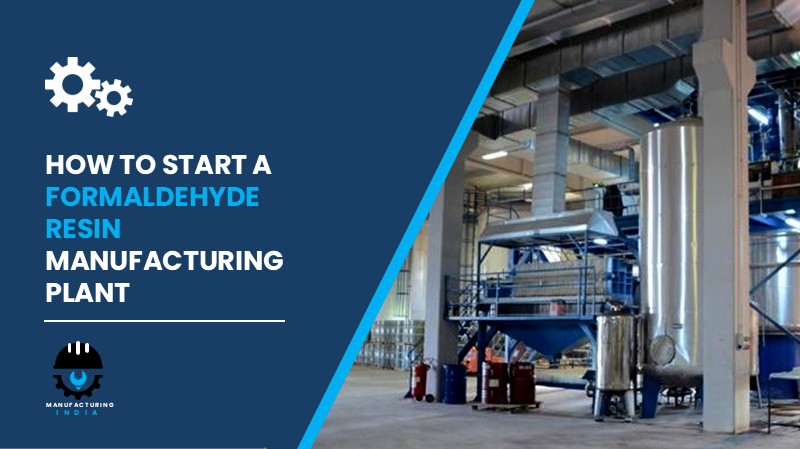
Setting up a formaldehyde resin manufacturing plant in India presents a compelling investment case as the country rapidly emerges as one of the most cost-competitive and high-demand destinations for specialty chemical and industrial resin manufacturing. Driven by booming demand from the construction, furniture, automotive, textiles, and coatings industries, formaldehyde resins have become an indispensable part of India’s industrial economy.
India’s construction sector is scaling rapidly alongside urbanisation, infrastructure development, and growth in engineered wood products such as plywood, particleboard, and MDF — all of which depend on formaldehyde resins as essential binding agents. With a domestic market supported by the Make in India initiative, competitive manufacturing costs, and an expanding industrial base across Gujarat, Maharashtra, and other chemical manufacturing hubs, India offers a strategically sound environment for formaldehyde resin production.
“With a large industrial consumer base, Make in India policy support, cost-competitive chemical manufacturing, and a rapidly expanding construction, furniture, and automotive sector, India offers one of the most financially attractive environments for formaldehyde resin manufacturing — with strong margins and a viable break-even window for well-planned plants.”
What is Formaldehyde Resin?
A formaldehyde resin is a synthetic polymer created when formaldehyde reacts with different organic substances like urea, phenol, or melamine. It is well-known for its superior binding, adhesive, and thermosetting qualities. Formaldehyde resins are strong, long-lasting, and resistant to heat, moisture, and chemicals — making them ideal for creating wood-based composites, coatings, laminates, and molded goods.
These resins offer high-performance bonding and structural integrity, making them essential components in the textile, automotive, furniture, and construction industries. Different types — including urea-formaldehyde, phenol-formaldehyde, and melamine-formaldehyde — are suited to particular applications based on the formulation. The condensation polymerization process is used to manufacture formaldehyde resins, serving end-use industries that span construction, furniture, automotive, textiles, coatings, electrical, and packaging.
Cost of Setting Up a Formaldehyde Resin Manufacturing Plant in India
The Formaldehyde Resin Manufacturing Plant Cost in India depends on several parameters including production capacity, technology used, plant location, level of automation, and regulatory compliance. Here is a structured breakdown of all major cost components:
1. Capital Expenditure (CapEx)
The total capital investment in a formaldehyde resin manufacturing plant typically covers the following:
Land and Site Development: This includes land acquisition, boundary development, land registration charges, and basic site preparation. The cost of land and site development forms a substantial part of the overall investment and ensures a solid foundation for safe and efficient plant operations. Cost varies significantly depending on whether the land is in an industrial estate, Special Economic Zone (SEZ), or a privately purchased plot.
Civil Works and Construction: Building costs cover the main manufacturing shed, utility area, raw material storage, quality control laboratory, administrative block, and worker amenities. Construction specifications depend on plant scale and local compliance norms.
Machinery and Equipment: Machinery costs account for the largest portion of total capital expenditure. Key machinery required for a formaldehyde resin plant includes:
• Chemical Reactors
• Condensers
• Heat Exchangers
• Neutralization Tanks
• Filtration Units
• Cooling Systems
• Storage Tanks
• Mixing and Blending Units
• Quality Control Instruments
• Packaging Systems
Machinery costs represent the largest share of overall capital expenditure, reflecting the high degree of chemical engineering precision involved in formaldehyde resin production.
Other Capital Costs: These include pre-operative expenses, commissioning charges, import duties (if machinery is sourced internationally), utilities installation, safety systems, and Effluent Treatment Plant (ETP) setup.
Request a Sample Report for In-Depth Market Insights: https://www.imarcgroup.com/formaldehyde-resin-manufacturing-plant-project-report/requestsample
2. Operational Expenditure (OpEx)
Once the plant is commissioned, the ongoing cost structure covers the following key components:
Raw Material Cost: Formaldehyde, urea, phenol, melamine, catalyst, and water are the primary raw materials and account for the majority of operating expenses. Long-term contracts with reliable suppliers help mitigate price volatility and ensure a consistent supply of materials.
Utility Cost: Utilities include electricity (consumed by reactors, heat exchangers, and cooling systems), water (used throughout the condensation polymerization process), and steam supply.
Other Operating Costs: The remaining budget covers transportation, packaging, salaries and wages, maintenance, depreciation, taxes, and miscellaneous overhead. By the fifth year of operations, total operational costs are expected to increase due to factors such as inflation, market fluctuations, and potential rises in the cost of key raw materials.
3. Plant Capacity
The proposed manufacturing facility is designed to serve multiple end-use segments including construction, furniture, automotive, textiles, coatings, electrical, and packaging industries. Industry activity indicates significant scale — for instance, Solis Laminates LLP sought environmental clearance in April 2024 to expand formaldehyde resin manufacturing capacity to 1,200 Mt/day at its Gujarat site. Plant capacity can be customized based on investor requirements and target market segments.
Smaller pilot setups with limited automation may start at a lower capacity, but profitability significantly improves with higher capacity utilisation.
4. Profit Margins and Financial Projections
Financial projections for a formaldehyde resin manufacturing plant must account for capital investment, operating costs, capacity utilisation rates, pricing trends, and demand outlook. A thorough analysis includes sensitivity analysis, Net Present Value (NPV), Internal Rate of Return (IRR), Payback Period, and five-year projections covering total income, total expenditure, gross profit, gross margin, net profit, and net margin.
Why Set Up a Formaldehyde Resin Plant in India?
India presents a uniquely favorable environment for establishing a formaldehyde resin manufacturing plant:
Surging Construction and Furniture Demand: Urbanisation and infrastructure development are significantly expanding demand for resins used in adhesives, laminates, and coatings for durable building materials. The construction and furniture sectors are primary drivers of formaldehyde resin consumption in India.
Rising Demand for Engineered Wood Products: The global engineered wood market reached 304.32 Million Cubic Meters in 2024 and is projected to reach 476.80 Million Cubic Meters by 2033. Increasing use of plywood, particleboard, and MDF in furniture and construction is driving formaldehyde resin demand as an essential binding agent.
Policy and Regulatory Tailwinds: The Government of India’s emphasis on domestic manufacturing under the Make in India initiative, circular economy principles, and industrial infrastructure development is creating a policy-friendly environment for chemical manufacturers.
Cost-Competitive Manufacturing: India offers competitive land costs, a large pool of trained chemical and industrial labour, and a well-established raw material supply chain, making it one of the most cost-effective locations for formaldehyde resin production in Asia.
Active Industry Investment: In June 2025, Nakoda Bhairav Laminates LLP announced plans for a new formaldehyde resin manufacturing facility in Gujarat, India. In October 2025, Al-Ahram Chemicals entered a USD 10 Million partnership for an industrial complex manufacturing formaldehyde and its derivatives — signalling strong investor confidence across global markets.
Local Supply Chain Preference: Construction, furniture, and automotive companies increasingly prefer sourcing industrial resins locally to reduce logistics costs, improve responsiveness, and maintain better quality control — a direct opportunity for domestic formaldehyde resin manufacturers.
Manufacturing Process — Step by Step
The formaldehyde resin manufacturing process uses the condensation polymerization process as the primary production method. The complete process flow involves:
- Raw Material Sourcing and Drying — Procurement and quality verification of formaldehyde, urea, phenol, melamine, catalyst, and water
- Reactor Charging — Loading raw materials into chemical reactors under controlled temperature and pH conditions
- Condensation Polymerization — The reaction is carried out under controlled pH and temperature conditions to achieve the required degree of polymerization and resin properties
- Concentration and Viscosity Adjustment — Curing and concentration adjustments to obtain the required viscosity and product specifications
- Heat Exchange and Cooling — Heat exchangers and condensers manage temperature throughout the reaction and post-reaction stages
- Neutralization — Neutralization systems adjust pH to stabilise the resin and ensure product quality
- Filtration — Filtration units remove impurities and ensure product consistency and purity
- Quality Inspection — Analytical instruments monitor product concentration, purity, and stability against quality assurance criteria
- Packaging and Dispatch — Final resins are cooled, packaged using post-processing systems, and dispatched to construction, furniture, automotive, and packaging end-use industries
Key Applications of Formaldehyde Resin
Formaldehyde resins manufactured in India serve a wide variety of end-use industries:
- Construction and Building Materials: Adhesives, laminates, surface coatings, and insulation materials for durable building applications
- Furniture and Engineered Wood: Particle boards, plywood, MDF, and other wood-based composites requiring formaldehyde resins as binding agents
- Automotive: Molded plastics, structural components, and specialized coatings for automotive manufacturing
- Textiles: High-performance bonding, finishing, and wrinkle-resistance treatments in fabric processing
- Coatings and Surface Finishing: Industrial and consumer surface coatings, protective layers, and decorative laminates
- Electrical and Electronics: Specialized resin formulations for electrical component manufacturing and circuit board applications
- Packaging: Molded plastic components and composite packaging materials for industrial use
Leading Formaldehyde Resin Manufacturers
Key players in the global formaldehyde resin market include:
• BASF SE
• Celanese Corporation
• Hexion Inc.
• Georgia-Pacific Chemicals
• Foremark Performance Chemicals
Timeline to Start the Plant
Setting up a formaldehyde resin manufacturing plant from ideation to commissioning requires careful phased planning. The key stages include:
• Feasibility study and project report preparation
• Land acquisition and site development
• Regulatory approvals and environmental clearances
• Factory licence and fire safety compliance
• Machinery procurement and installation
• Raw material supplier agreements and supply chain setup
• Trial production and quality testing
• Commercial production launch
Licences and Regulatory Requirements
Starting a formaldehyde resin manufacturing unit in India requires several approvals, including:
- Business registration (Proprietorship, LLP, or Private Limited Company)
- Factory Licence under the Factories Act
- Environmental Clearance from the State Pollution Control Board
- GST Registration
- Fire Safety NOC
- Hazardous Chemicals compliance under the Manufacture, Storage and Import of Hazardous Chemical Rules
- Effluent Treatment Plant (ETP) operational clearance
- Occupational Health and Safety compliance for formaldehyde handling
Key Challenges to Consider
Before investing, entrepreneurs should be aware of the common challenges in this business:
- High Capital Requirements: Initial CapEx for chemical reactors, heat exchangers, condensers, neutralization systems, and supporting infrastructure is significant, especially for mid to large-scale plants.
- Raw Material Price Volatility: Formaldehyde, urea, phenol, and melamine prices are linked to global petrochemical and chemical markets and can fluctuate, directly impacting margins.
- Regulatory Compliance: Meeting emission standards, effluent treatment requirements, and safety protocols for formaldehyde handling requires continuous investment in quality and compliance systems.
- Low-Emission Formulation Pressure: Innovations in low-emission and formaldehyde-free resin formulations are gaining traction; manufacturers must invest in R&D to remain competitive.
- Competition: The market includes major global players such as BASF SE, Celanese Corporation, and Hexion Inc., requiring a clear differentiation strategy for new entrants.
- Skilled Manpower: Operating precision chemical reactors, heat exchangers, and quality monitoring instruments requires trained technical staff.
Frequently Asked Questions
The following questions are answered in the report:
- How much does it cost to set up a formaldehyde resin manufacturing plant in India?
- Is formaldehyde resin manufacturing profitable in India in 2026?
- What machinery is required for a formaldehyde resin plant in India?
- What licences and approvals are required to start a formaldehyde resin plant in India?
- What raw materials are needed for formaldehyde resin manufacturing?
- What are the environmental compliance requirements for a formaldehyde resin plant in India?
- What is the best state or location to set up a formaldehyde resin plant in India?
- What is the break-even period for a formaldehyde resin manufacturing plant in India?
- What government incentives are available for chemical manufacturers in India?
Key Takeaways for Investors
The formaldehyde resin manufacturing industry in India represents a strong and scalable investment opportunity backed by surging demand from construction, furniture, automotive, and coatings sectors alongside supportive government policy. A well-planned Formaldehyde Resin Manufacturing Plant in India remains competitive and financially viable across plant capacities, with growing end-use markets ensuring long-term demand sustainability. According to a report by the IMARC Group, the global engineered wood market reached 304.32 Million Cubic Meters in 2024 and is projected to reach 476.80 Million Cubic Meters by 2033.
About the Author