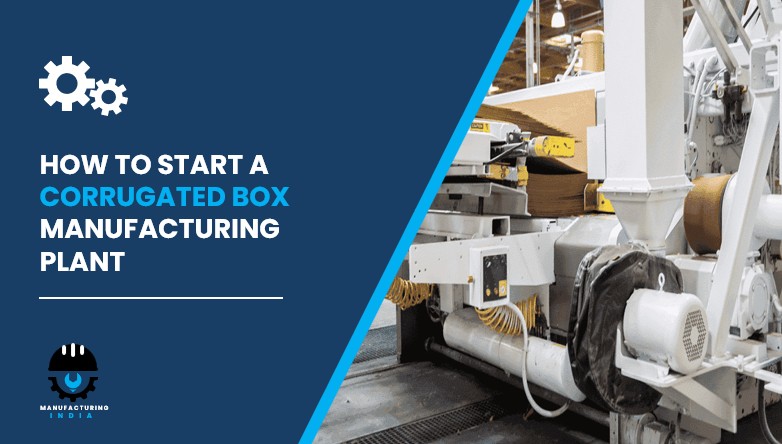
Setting up a corrugated box manufacturing plant in India presents a compelling investment case, driven by surging demand from e-commerce, food and beverage, pharmaceuticals, FMCG, electronics, logistics, and industrial manufacturing. Corrugated boxes form the backbone of modern packaging and distribution systems, enabling retail, export, and manufacturing activities across the country. As India’s organized retail landscape expands and online commerce penetrates tier-2 and tier-3 cities, the need for high-performance, cost-effective packaging containers continues to accelerate at a rapid pace.
India’s urbanization, infrastructure growth, and the Make in India initiative create a strategic environment for domestic corrugated packaging production. States such as Gujarat and Maharashtra — long-established as industrial manufacturing hubs — offer proximity to raw material suppliers, well-developed logistics corridors, and competitive labor costs. For investors seeking a resilient, demand-driven opportunity, establishing a corrugated box manufacturing plant in India combines cost competitiveness with strong policy tailwinds and a vast, diversified addressable market.
This manufacturing venture offers clear financial viability, backed by Make in India policy incentives, cost-competitive operations, and sustained demand from e-commerce, food and beverage, and pharmaceuticals. Gross profit margins of 20–30%, net margins of 8–12%, and a break-even period of 2 to 4 years reflect a robust and scalable investment proposition.
What is Corrugated Box?
Corrugated boxes are strong packaging containers made of corrugated fiberboard, consisting of one or more corrugated medium layers and flat liners glued together. This design delivers an excellent strength-to-weight ratio, cushioning, and compressive strength — making them ideal for storage, handling, and transport. Their light weight, low cost, and recyclability make them the preferred choice for sustainability-conscious industries seeking to minimize ecological footprints. These containers can be customized across flute types, wall construction — single, double, or triple wall — dimensions, and printing options, enabling them to serve diverse packaging applications. The primary production method is a multi-step corrugated box manufacturing process involving paper pulping (optional), corrugation, die-cutting, printing, folding, and gluing. End-use sectors include e-commerce, food and beverage, pharmaceuticals, FMCG, electronics, logistics, and industrial manufacturing.
Cost of Setting Up a Corrugated Box Manufacturing Plant in India
Corrugated box manufacturing plant setup cost depends on plant capacity, technology level, site location, degree of automation, and regulatory compliance requirements.
1. Capital Expenditure (CapEx)
Capital expenditure covers land and site development, civil works, machinery procurement, and other capital costs. Investors may explore Special Economic Zones (SEZs) or industrial estates in states such as Gujarat and Maharashtra, which offer concessional land rates, shared utility infrastructure, and streamlined regulatory processes. Civil works encompass production sheds, quality control laboratories, raw material warehouses, finished goods storage areas, and administrative blocks.
Machinery and equipment constitute the largest share of capital expenditure for a corrugated box manufacturing plant. Key machinery required includes:
- Corrugator machine
- Single facer and double backer
- Slitter-scorer
- Flexographic printing machine
- Die-cutting and slotting machines
- Folder-gluer and stitching machines
Additional capital costs include effluent treatment plant (ETP) installation, pre-operative expenses, and commissioning charges.
Request a Sample Report for In-Depth Market Insights: https://www.imarcgroup.com/corrugated-box-manufacturing-plant-project-report/requestsample
2. Operational Expenditure (OpEx)
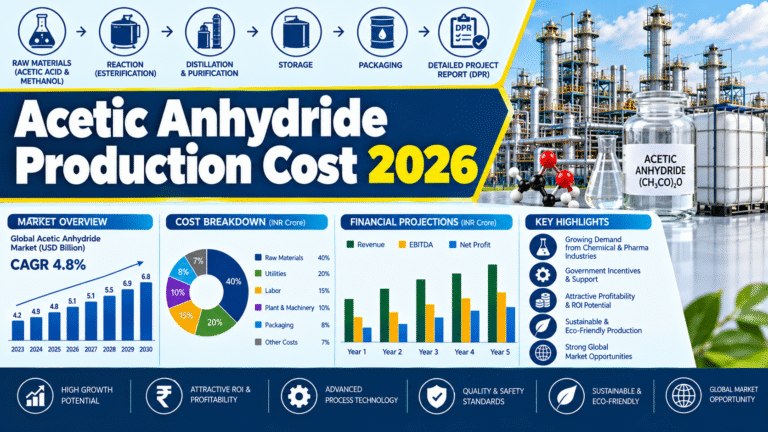
Operating costs are primarily driven by raw material consumption. Kraft paper (liner, fluting), adhesives (starch), and printing inks account for approximately 70–80% of total OpEx, making long-term supplier contracts essential to cost stability. Proximity-based procurement minimizes transportation expenses and reduces supply chain risk. Utility costs — electricity, water, and steam — represent 10–15% of total operating expenses. Other recurring costs include transportation, packaging, salaries and wages, maintenance, depreciation, and taxes. By the fifth year, total operational costs are projected to rise due to inflation, market fluctuations, and increasing raw material prices.
3. Plant Capacity
The proposed facility is designed with an annual production capacity of 40,000–60,000 tons, enabling economies of scale while maintaining operational flexibility. Capacity can be customized to align with investor requirements, and profitability improves progressively as capacity utilization rises, spreading fixed costs over greater output volumes.
4. Profit Margins and Financial Projections
The project delivers healthy financial performance, with gross profit margins of 20–30% and net profit margins of 8–12%. A comprehensive financial analysis covering NPV, IRR, payback period, gross margin, net margin, and sensitivity analysis is detailed in the full feasibility report. The break-even period for this investment typically ranges from 2 to 4 years, depending on production scale, pricing strategy, and prevailing market conditions.
Why Set Up a Corrugated Box Plant in India?
Backbone of E-commerce and Modern Logistics. India’s rapidly expanding e-commerce sector drives consistent demand for shipping containers, branded cartons, and protective packaging. Corrugated boxes support retail, manufacturing, and export distribution activities across the country, serving as an indispensable input for organized supply chains.
Food and Beverage Packaging Growth. Urbanization, rising packaged food consumption, and strict food safety standards sustain corrugated box demand across fresh produce, processed foods, beverages, and frozen products, making the food and beverage sector a key demand engine for domestic producers.
Sustainability-Driven Adoption. Consumer preference for recyclable, biodegradable, and plastic-free packaging is accelerating industry-wide adoption of corrugated solutions. According to the American Forest & Paper Association (AF&PA), the recycling rate for old, corrugated containers reached 93.6% in 2022, reinforcing corrugated packaging’s alignment with circular economy goals and its appeal to ESG-conscious brands.
Policy and Regulatory Tailwinds. Single-use plastic prohibitions, extended producer responsibility (EPR) norms, and make in India incentives strongly favor domestic corrugated packaging production, offering fiscal support and regulatory facilitation for new manufacturing units seeking to establish operations.
Active Global Industry Investment. In November 2025, Mondi expanded its corrugated packaging range following the acquisition of Schumacher Packaging. In June 2025, PALM Group completed the purchase of five corrugated packaging facilities from International Paper across France, Spain, and Portugal — signalling sustained global confidence in the sector’s long-term growth.
Cost-Competitive Manufacturing Advantage. Competitive land, labor, and supply chain costs make India an attractive destination for corrugated packaging production targeting both domestic consumption and export markets.
Manufacturing Process — Step by Step
The corrugated box manufacturing process uses paper pulping (optional), corrugation, die-cutting, printing, folding, and gluing as the primary production method, encompassing multiple unit operations and quality checks.
- Paper Preparation: Kraft paper (liner, fluting) and corrugated medium are sourced and readied for the production line.
- Corrugation: The corrugated medium is shaped into fluted form using the corrugator machine and single facer.
- Bonding: Liner sheets are bonded to the fluted medium using adhesives (starch) via the double backer to form corrugated board.
- Printing: Boards pass through the flexographic printing machine for branding, labelling, and product information.
- Die-Cutting and Folding: Die-cutting and slotting machines cut, crease, and shape boards into the required box format.
- Slotting and Gluing: Folder-gluer and stitching machines assemble, fold, and secure the box structure.
- Stacking and Packaging: Finished boxes are bundled and dispatched to e-commerce, food and beverage, pharmaceutical, FMCG, electronics, and industrial manufacturing customers.
Key Applications
Corrugated boxes serve a wide range of industries requiring protective, branded, and compliant packaging solutions:
- Food and Beverage: Packaging for fresh produce, processed foods, beverages, and frozen products.
- E-commerce and Retail: Shipping containers offering transit protection, brand customization, and automated fulfillment system compatibility.
- Electronics and Electrical: Cushioning and protection for fragile components and appliances during transport.
- Pharmaceuticals: Secondary packaging for medicines and medical supplies, ensuring product safety and regulatory compliance.
- Industrial and Consumer Goods: Bulk packaging, spare parts logistics, and export shipments designed to bear heavy loads.
Leading Manufacturers
The global corrugated box industry is served by multinational companies with extensive production capacities and diverse application portfolios. Key players include:
- DS Smith
- Smurfit Kappa
- Rengo Co. Ltd
- Mondi
- Cascades Inc.
- Georgia-Pacific, LLC
- WestRock Company
- International Paper
- Packaging Corporation of America
- National Carton Factory (NCF)
- Australian Corrugated Packaging
- Nine Dragons Worldwide (China) Investment Group Co., Ltd.
Timeline to Start the Plant
- Feasibility study and project report preparation
- Land acquisition and site development
- Regulatory approvals and environmental clearances
- Factory licence and fire safety compliance
- Machinery procurement and installation
- Raw material supplier agreements and supply chain setup
- Trial production and quality testing
- Commercial production launch
Licences and Regulatory Requirements
Starting a corrugated box manufacturing unit in India requires several approvals:
- Business registration (Proprietorship, LLP, or Pvt Ltd)
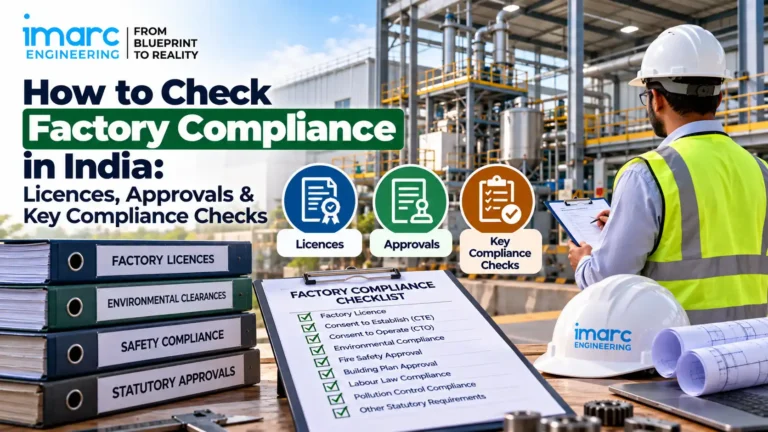
- Factory Licence under the Factories Act
- Environmental Clearance from State Pollution Control Board
- GST Registration
- Fire Safety NOC
- Effluent Treatment Plant (ETP) operational clearance
- Occupational Health and Safety compliance
Key Challenges to Consider
High Capital Requirements. Establishing the facility requires significant upfront investment in land, civil works, corrugator machines, die-cutting equipment, and folder-gluer units, necessitating careful financial structuring and access to adequate project funding.
Raw Material Price Volatility. Kraft paper (liner, fluting), adhesives (starch), and printing inks represent 70–80% of OpEx, exposing the unit to commodity price fluctuations in the global paperboard market. Long-term procurement contracts are essential to manage this exposure.
Regulatory Compliance. Securing environmental clearances, factory licences, and ETP operational approvals involves time and cost, particularly for large-scale, automated facilities with higher environmental impact profiles.
Technology and Innovation Pressure. The industry is advancing toward automated corrugation systems and lightweight Next Generation® corrugated formats, as demonstrated by Progroup’s operational facility in Cessalto, Italy (August 2025). Aligning with evolving technology benchmarks is critical for Indian producers to remain competitive.
Competition from Global Players. Established manufacturers — DS Smith, Smurfit Kappa, WestRock Company, International Paper, and Mondi — command extensive global production capacities and deep distribution networks that new entrants must strategically navigate.
Skilled Manpower. Operating corrugation and flexographic printing equipment requires technically trained personnel, and regional availability of specialized skills may present a recruitment and retention challenge.
Frequently Asked Questions
1. How much does it cost to set up a corrugated box manufacturing plant in India?
Total cost varies by capacity, technology, and location, covering land, civil works, machinery, utilities, and working capital. A detailed project report provides site-specific and capacity-specific cost estimates.
2. Is corrugated box manufacturing profitable in India in 2026?
Yes the project delivers gross profit margins of 20–30% and net margins of 8–12%, supported by demand from e-commerce, food and beverage, pharmaceuticals, and logistics sectors.
3. What machinery is required for a corrugated box plant in India?
Essential equipment includes a corrugator machine, single facer and double backer, slitter-scorer, flexographic printing machine, die-cutting and slotting machines, and folder-gluer and stitching machines.
4. What licences and approvals are required to start a corrugated box plant in India?
Required approvals include business registration, Factory Licence, Environmental Clearance, GST Registration, Fire Safety NOC, ETP clearance, and Occupational Health and Safety compliance.
5. What raw materials are needed for corrugated box manufacturing?
The primary raw materials are kraft paper (liner, fluting), adhesives (starch), and printing inks.
6. What are the environmental compliance requirements for a corrugated box plant in India?
Plants must obtain Environmental Clearance from the State Pollution Control Board and maintain an operational ETP compliant with applicable emission and waste management standards.
7. What is the best location to set up a corrugated box plant in India?
Industrial estates and SEZs in Gujarat and Maharashtra offer clear advantages in raw material proximity, logistics connectivity, utility access, and regulatory efficiency.
8. What is the break-even period for this type of plant in India?
Break-even typically ranges from 2 to 4 years, subject to production scale, pricing strategy, and market demand conditions.
9. What government incentives are available for manufacturers in India?
Incentives may include capital subsidies, tax exemptions, reduced utility tariffs, export benefits, and interest subsidies under Make in India and state-level industrial promotion schemes.
Key Takeaways for Investors
A corrugated box manufacturing plant in India represents a well-grounded investment opportunity, anchored in diversified demand from e-commerce, food and beverage, pharmaceuticals, FMCG, electronics, logistics, and industrial manufacturing. The facility is financially compelling across plant capacities, with gross margins of 20–30%, net margins of 8–12%, and a break-even of 2 to 4 years. The global corrugated box market was valued at USD 208.1 Billion in 2025 and is forecast to reach USD 254.40 Billion by 2034, growing at a CAGR of 2.0% from 2026 to 2034. Backed by sustainability-driven regulatory tailwinds, expanding domestic consumption, and make in India support, corrugated packaging demand in India is positioned for resilient and long-term growth.
About the Author