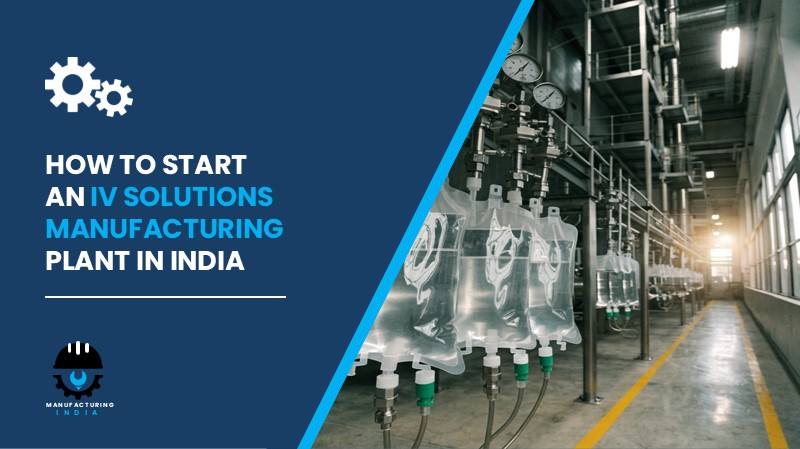
Setting up an IV solutions manufacturing plant in India presents a compelling investment case driven by the country’s rapidly expanding healthcare infrastructure, rising chronic disease burden, and growing demand from hospitals, clinics, home healthcare providers, and Ambulatory Surgical Centers (ASCs). Intravenous (IV) solutions — sterile, pharmacopeial-grade fluids used to deliver fluids, electrolytes, nutrients, and medications directly into the bloodstream — are indispensable in surgical care, trauma management, emergency treatment, and long-term disease management. With non-communicable diseases accounting for more than 70% of all deaths worldwide annually, according to the World Health Organization, and India facing an accelerating burden of diabetes, cardiovascular disease, cancer, and renal ailments, the domestic demand for IV fluids has never been stronger.
India’s strategic manufacturing advantages — including cost-competitive land and labour, a large domestic pharmaceutical supply base, and the government’s active push through the Make in India initiative and the Pradhan Mantri Ayushman Bharat Health Infrastructure Mission — make it an ideal destination for establishing a world-class IV solutions production facility. Industrial clusters in states such as Gujarat, Maharashtra, Himachal Pradesh, and Andhra Pradesh already host significant pharmaceutical manufacturing activity, offering ready access to raw material suppliers, regulatory expertise, and skilled pharmaceutical workforce. Investors looking to enter the IV fluids segment can leverage India’s position as one of the world’s largest generic pharmaceutical exporters, benefiting from both domestic hospital demand and export opportunities to regulated and semi-regulated markets globally.
Setting up an IV solutions manufacturing plant in India is a strategically sound and financially viable investment, underpinned by strong policy support through the Make in India initiative, cost-competitive pharmaceutical-grade manufacturing conditions, and robust demand from hospitals, emergency care centres, and home healthcare providers. With a break-even period typically ranging from three to five years, this facility presents attractive gross and net margin potential for investors of all scales.
What are IV Solutions?
IV solutions, or Intravenous solutions, are pure liquids made of water, electrolytes, and dissolved materials intended to be infused directly into the circulation. They correct fluid balance, administer drugs, and provide life-sustaining nutrients to the patient — particularly during surgery, trauma, or dehydration — where immediate bioavailability and accurate therapy control are paramount. IV solutions manufacturing facility is a specialty plant designed and operated for the production of sterile, pharmacopeial-grade fluids for direct introduction into the human body.
These plants operate under strict pharmaceutical-grade standards in aseptic conditions using cleanroom facilities. Key properties of IV solutions include sterility, precise electrolyte concentration, chemical compatibility, and biological inertness. The manufacturing process follows a multi-step operation involving unit operations, material handling, and rigorous quality checks — including mass balance verification, quality assurance criteria assessments, and technical tests — to meet cGMP and WHO-GMP or USFDA standards.
The end-use industries served include hospitals and clinics, home healthcare providers, and Ambulatory Surgical Centers (ASCs). Applications span dehydration treatment, electrolyte replenishment, parenteral nutrition, and intravenous drug delivery across inpatient, outpatient, and emergency care settings.
Cost of Setting Up an IV Solutions Manufacturing Plant in India
The total cost of establishing this type of plant depends on capacity, technology, location, automation level, and regulatory compliance requirements — all of which vary significantly for pharmaceutical-grade manufacturing.
1. Capital Expenditure (CapEx)
Land and site development costs form a substantial part of the overall investment, covering land registration charges, boundary development, and site preparation for a pharmaceutical-grade facility. Investors may explore options in Special Economic Zones (SEZs) or notified pharmaceutical industrial estates — such as those in Baddi (Himachal Pradesh) or Pharma City (Andhra Pradesh) — to benefit from infrastructure support and potential tax incentives.
Civil works and construction encompass a cleanroom-grade production shed, quality control laboratory, raw material and finished goods storage, utility block, effluent treatment area, and administrative block. Given that the facility must comply with cGMP standards, civil construction costs are notably higher than for conventional manufacturing plants.
Key machinery required includes:
- Water purification system (Reverse Osmosis and EDI systems / WFI generation units)
- Solution preparation tanks / mixing tanks
- Formulation vessels
- Filtration units (sterile filtration systems)
- Form-fill seal machines
- Filling and capping machines
- Sterilizers / autoclaves (for terminal sterilization)
- Leak testing machine
- Labelling and packaging machines
- Quality control systems (for testing solution composition and sterility)
Other capital costs include the installation of an Effluent Treatment Plant (ETP), pre-operative expenses, commissioning charges, and import duties applicable on certain high-precision pharmaceutical equipment.
Request a Sample Report for In-Depth Market Insights: https://www.imarcgroup.com/iv-solutions-manufacturing-plant-project-report/requestsample
2. Operational Expenditure (OpEx)
Raw material cost constitutes the largest share of operating expenditure. The primary raw materials required include purified water (Water for Injection — WFI), Sodium Chloride, Dextrose (Glucose), Potassium Chloride, Calcium Chloride, Sodium Lactate or Sodium Bicarbonate, and other additives, along with sterile packaging materials such as IV bags or bottles. Establishing long-term supplier contracts with approved pharmaceutical-grade raw material vendors is critical to managing price volatility and ensuring consistent quality and supply continuity.
Utility costs — including electricity for cleanroom HVAC systems, autoclave operations, and water purification; water for WFI generation; and steam for sterilization — represent a significant ongoing expenditure for this type of plant. Other operating costs include inward and outward transportation, primary and secondary packaging, salaries and wages for skilled pharmaceutical technicians and quality assurance personnel, equipment maintenance, depreciation on high-value pharmaceutical machinery, and applicable taxes. By the fifth year of operations, total operational cost is expected to increase substantially due to inflation, market fluctuations, and potential rises in the cost of key materials, compounded by supply chain dynamics and rising consumer demand.
3. Plant Capacity
The facility’s production capacity can be customized per investor requirements, ranging from small-scale units supplying regional hospital networks to large-scale operations targeting national distribution or export. The combined output of global IV solutions manufacturing networks can reach approximately 1.4 billion units annually, as seen in recent industry partnerships, illustrating the scale potential of this segment. Profitability improves with higher capacity utilisation, as fixed costs — including cleanroom maintenance, quality systems, and regulatory compliance — are distributed across a larger output volume.
4. Profit Margins and Financial Projections
A comprehensive financial analysis for this investment must include capital cost projections, income and expenditure forecasts, fixed versus variable cost breakdowns, and calculations of Net Present Value (NPV), Internal Rate of Return (IRR), payback period, gross margin, and net margin across a five-year horizon. The break-even period for this type of plant typically ranges from three to five years, with consistent hospital supply agreements and increasing capacity utilisation helping to shorten this timeline. Profitability improves at scale, and the IMARC project report provides detailed profit and loss accounts, sensitivity analysis, and uncertainty modelling to support investor decision-making.
Why Set Up an IV Solutions Plant in India?
Growing chronic disease burden and aging population: The International Diabetes Federation reported that the number of people with diabetes worldwide reached 537 million in 2021, projected to rise to 643 million by 2030 — a substantial portion of whom require IV fluids as part of regular treatment protocols. India, with one of the world’s largest diabetic populations, faces similarly accelerating demand for IV therapy across renal, cardiovascular, and oncology care pathways.
Expanding hospital infrastructure and emergency care readiness: India’s Pradhan Mantri Ayushman Bharat Health Infrastructure Mission has invested billions in upgrading primary and secondary healthcare facilities, directly increasing the consumption of IV solutions across new hospitals, ICUs, and emergency care units. The COVID-19 pandemic further accelerated hospital procurement of IV fluids for critical care preparedness, a trend that continues to shape institutional buying behaviour.
Policy and regulatory tailwinds: India’s pharmaceutical manufacturing sector benefits from active government support through the Make in India initiative, Production Linked Incentive (PLI) schemes for the pharma sector and dedicated pharmaceutical park development programmes. These policies reduce the cost of entry, improve infrastructure access, and strengthen the export competitiveness of domestically produced IV fluids.
Cost-competitive manufacturing environment: India offers significantly lower land acquisition, construction, and labour costs compared to developed markets, enabling investors to build cGMP compliant IV solutions manufacturing plants at a fraction of the cost of equivalent facilities in the United States or Europe. A well-developed domestic pharmaceutical supply chain further reduces raw material procurement lead times and costs.
Active global industry investment: In March 2025, Baxter and the Australian Government announced a historic $40 million investment in IV fluids manufacturing plant expansion, underscoring the global importance of onshore IV production. In November 2024, ICU Medical and Otsuka Pharmaceutical Factory announced a partnership to build one of the largest global manufacturing networks for IV solutions, with a combined output of around 1.4 billion units annually. In October 2024, B. Braun Medical announced plans to increase IV saline solution production by 20%, adding more than 30 million IV sets per year. These developments confirm that IV solutions manufacturing is an actively growing global investment category.
Local supply chain and institutional procurement preference: Indian hospitals, government health programmes, and emergency care networks increasingly prefer locally manufactured IV fluids to reduce supply chain risks and procurement costs. This localisation preference, reinforced by post-pandemic supply chain resilience policies, creates a reliable and growing domestic customer base for new manufacturing entrants.
Manufacturing Process Step by Step
The IV solutions manufacturing process uses a multi-step sterile production operation as the primary production method, combining water purification, aseptic compounding, and terminal sterilization in a cleanroom-grade environment.
- Water Purification and WFI Generation: Raw water is processed through Reverse Osmosis (RO) and Electrodeionization (EDI) systems to produce Water for Injection (WFI), the critical base ingredient for all IV solutions.
- Weighing and Mixing of Active Ingredients: Sodium Chloride, Dextrose (Glucose), Potassium Chloride, Calcium Chloride, Sodium Lactate or Sodium Bicarbonate, and other additives are accurately weighed and dissolved into WFI in solution preparation tanks and formulation vessels.
- Sterile Filtration: The prepared solution is passed through filtration units to remove particulates and microbial contaminants, ensuring pharmaceutical-grade purity before filling.
- Aseptic Filling: Form-fill seal machines and precision filling and capping machines are used to fill the sterile solution into IV bags or bottles under aseptic conditions.
- Sealing and Terminal Sterilization: Sealed containers are subjected to terminal sterilization using sterilizers and autoclaves to ensure complete sterility of the final product.
- Leak Testing: Filled and sealed containers pass through leak testing machines to verify packaging integrity before labelling.
- Inspection, Labelling, and Packaging: Quality control systems verify solution composition and sterility; approved units are then labelled and packed using labelling and packaging machines for dispatch.
- Dispatch to End-Use Industries: Finished IV solutions are dispatched to hospitals and clinics, home healthcare providers, and Ambulatory Surgical Centers (ASCs) through an established cold-chain and pharmaceutical logistics network.
Key Applications
IV solutions serve a broad spectrum of healthcare settings, with demand driven by clinical, surgical, emergency, and home care requirements.
- Hospitals and Clinics: Used extensively for fluid replacement, drug administration, electrolyte correction, and post-operative recovery in inpatient and outpatient settings.
- Home Healthcare: Enables parenteral nutrition, antibiotic infusion, and hydration therapy for patients receiving treatment outside hospital facilities.
- Ambulatory Surgical Centers (ASCs): Supports pre-operative hydration, anaesthetic drug delivery, and post-operative fluid management in day-surgery environments.
Leading Manufacturers
The global IV solutions industry is served by several large-scale multinational manufacturers with extensive production capacities and diverse application portfolios. Key players in the global market include:
- Fresenius Kabi AG
- Pfizer Inc.
- Otsuka Pharmaceutical Co. Ltd.
- Baxter, B. Braun Melsungen AG
- Vifor Pharma Management Ltd.
- JW Life Science
Timeline to Start the Plant
- Feasibility study and project report preparation
- Land acquisition and site development
- Regulatory approvals and environmental clearances
- Factory licence and fire safety compliance
- Machinery procurement and installation
- Raw material supplier agreements and supply chain setup
- Trial production and quality testing
- Commercial production launch
The overall timeline to start IV solutions manufacturing plant typically ranges from 18 to 24 months, depending on regulatory approvals, cleanroom setup, and equipment procurement.
Licences and Regulatory Requirements
Starting IV solutions manufacturing unit in India requires several approvals:
- Business registration (Proprietorship, LLP, or Pvt Ltd)
- Factory Licence under the Factories Act
- Environmental Clearance from State Pollution Control Board
- GST Registration
- Fire Safety NOC
- Drug Manufacturing Licence under the Drugs and Cosmetics Act (mandatory for pharmaceutical-grade IV fluid production)
- Hazardous / Chemical compliance for handling pharmaceutical-grade active ingredients and sterilization agents
- Effluent Treatment Plant (ETP) operational clearance
- Occupational Health and Safety compliance
- cGMP / WHO-GMP certification for pharmaceutical manufacturing (required for hospital supply and export eligibility)
Key Challenges to Consider
High Capital Requirements: Establishing a cGMP-compliant cleanroom-grade IV solutions manufacturing plant demands substantial upfront investment in land, civil works, pharmaceutical-grade machinery, water purification infrastructure, and quality systems, making initial capital mobilisation a significant challenge.
Raw Material Price Volatility: Key raw materials — including purified Water for Injection (WFI), Sodium Chloride, Dextrose (Glucose), Potassium Chloride, Calcium Chloride, and Sodium Lactate or Sodium Bicarbonate — are subject to price fluctuations driven by global supply chain disruptions, inflation, and shifts in the global economy. Long-term supplier contracts are essential to mitigate this risk.
Regulatory Compliance: Achieving and maintaining cGMP, WHO-GMP, and USFDA compliance for IV solutions — which are life-critical pharmaceutical products — requires dedicated quality assurance systems, documentation processes, and ongoing regulatory audits, adding significant cost and complexity to plant operations.
Technology and Innovation Pressure: The global market is seeing growing adoption of premixed IV bags and ready-to-use products that reduce contamination risk and improve ease of administration, requiring manufacturers to continuously upgrade production technology to remain competitive.
Competition from Established Players: The global market is dominated by established multinationals including Fresenius Kabi AG, Pfizer Inc., Baxter, B. Braun Melsungen AG, and Otsuka Pharmaceutical Co. Ltd., which operate large-scale facilities with significant cost and scale advantages. New entrants must differentiate through pricing, product range, or supply reliability.
Skilled Manpower: Operating a pharmaceutical-grade IV solutions facility requires trained cleanroom technicians, qualified pharmacists, microbiologists, quality assurance personnel, and regulatory affairs specialists — a talent pool that remains competitive and commands premium compensation in India’s pharmaceutical manufacturing markets.
Frequently Asked Questions
1. How much does it cost to set up IV solutions manufacturing plant in India?
Capital requirements generally include land acquisition, construction, pharmaceutical-grade equipment procurement, ETP installation, pre-operative expenses, and initial working capital. The total investment varies with plant capacity, technology choice, and location.
2. Is IV solutions manufacturing profitable in India in 2026?
Profitability depends on market demand, production efficiency, pricing strategy, raw material cost management, and operational scale. Profit margins typically improve with capacity expansion and higher capacity utilisation, and the break-even period is generally three to five years.
3. What machinery is required for an IV solutions plant in India?
Key equipment includes water purification systems, solution preparation tanks, filtration units, form-fill seal machines, sterilizers and autoclaves, leak testing machines, and labelling and packaging machines.
4. What licences and approvals are required to start an IV solutions plant in India?
Approvals include business registration, a Drug Manufacturing Licence under the Drugs and Cosmetics Act, Factory Licence, Environmental Clearance, GST Registration, Fire Safety NOC, ETP clearance, and cGMP/WHO-GMP certification.
5. What raw materials are needed for IV solutions manufacturing?
Key raw materials include purified Water for Injection (WFI), Sodium Chloride, Dextrose (Glucose), Potassium Chloride, Calcium Chloride, Sodium Lactate or Sodium Bicarbonate, other additives, and sterile packaging materials such as IV bags or bottles.
6. What are the environmental compliance requirements for an IV solutions plant in India?
An operational Effluent Treatment Plant (ETP) is mandatory, along with Environmental Clearance from the State Pollution Control Board and compliance with emission and waste disposal standards applicable to pharmaceutical manufacturing facilities.
7. What is the best location to set up an IV solutions plant in India?
Locations with established pharmaceutical industrial clusters — such as Baddi in Himachal Pradesh, Pharma City in Andhra Pradesh, and industrial zones in Gujarat and Maharashtra — offer infrastructure support, raw material access, and regulatory familiarity, making them favourable choices.
8. What is the break-even period for this type of plant in India?
The break-even period typically ranges from three to five years, with consistent hospital tie-ups and growing capacity utilisation helping to shorten this timeline.
9. What government incentives are available for manufacturers in India?
Governments may offer capital subsidies, tax exemptions, reduced utility tariffs, export benefits, or interest subsidies under national or regional industrial policies. The PLI scheme for pharmaceuticals and the Ayushman Bharat Health Infrastructure Mission indirectly support IV solutions manufacturing investment.
Key Takeaways for Investors
The IV solutions manufacturing plant in India represents a high-potential investment opportunity, anchored in sustained demand from hospitals and clinics, home healthcare providers, and Ambulatory Surgical Centers, all of which are expanding rapidly as India’s healthcare infrastructure scales. The investment is financially viable across multiple plant capacities, with profitability improving progressively alongside higher capacity utilisation, efficient raw material sourcing, and institutional supply agreements that reduce revenue risk. With the World Health Organization projecting that one in six people globally will be aged above 65 by 2050, and with the International Diabetes Federation forecasting 643 million diabetics worldwide by 2030, long-term demand for IV therapy solutions is structurally underpinned by demographics and disease trends that show no signs of reversing. For investors seeking entry into India’s pharmaceutical manufacturing sector, IV solutions production offers a combination of essential-goods demand resilience, government policy support, and meaningful export potential.
About the Author