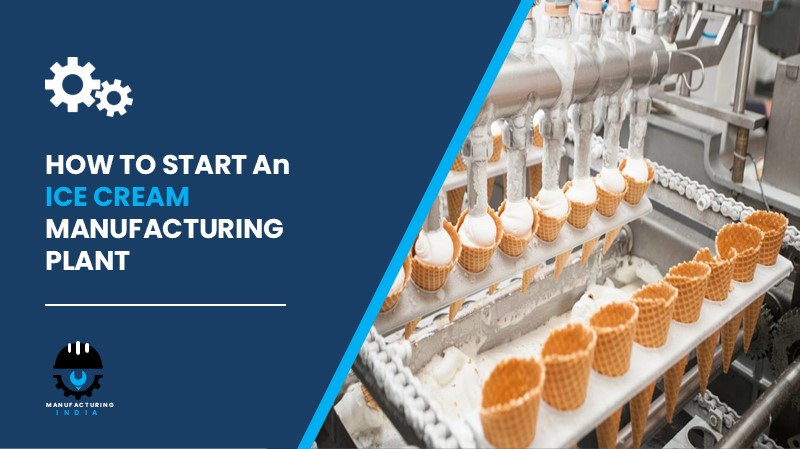
Setting up an ice cream manufacturing plant in India presents a compelling investment case anchored in the country’s surging demand for premium frozen desserts, the rapid growth of organised retail and foodservice channels, and the expanding HoReCa sector driven by urbanisation and rising household incomes. As Indian consumers increasingly seek convenient, indulgent, and ready-to-consume food experiences across supermarkets, quick-commerce platforms, cafés, restaurants, and hotels, the ice cream and frozen dessert segment has emerged as one of the fastest-growing categories within the country’s food processing industry. Changing lifestyles, the influence of global dessert trends, and year-round product availability driven by cold-chain infrastructure improvements are all reinforcing the structural case for domestic ice cream manufacturing at scale.
India’s strategic advantages strengthen the investment rationale further. The country’s large and growing dairy sector provides reliable access to primary raw materials – milk cream, sugar, and stabilisers – at competitive costs, while expanding cold-chain logistics infrastructure across Maharashtra, Gujarat, Uttar Pradesh, Tamil Nadu, and Karnataka ensures efficient distribution to both domestic retail and foodservice markets. The Make in India initiative, food processing sector support under the Ministry of Food Processing Industries (MoFPI), and state-level industrial incentive schemes provide additional policy and financial tailwinds for investors establishing food-grade manufacturing capacity. With a plant capacity range of 10,000 to 20,000 MT per annum and gross margins reaching 40–50%, the ice cream manufacturing plant offers one of the most attractive profitability profiles within the broader food processing investment landscape.
An ice cream manufacturing plant in India is backed by a global market valued at USD 78.57 billion in 2025, growing at a 2.95% CAGR toward USD 102.38 billion by 2034, a large and expanding domestic consumer base across retail, foodservice, and household channels, and attractive gross profit margins of 40–50%. Supported by India’s dairy supply chain strengths, improving cold-chain infrastructure, and Make in India policy incentives, this investment delivers viable returns with a break-even horizon of 3 to 5 years for well-located, efficiently operated facilities.
What is Ice Cream?
Ice cream is a frozen dessert manufactured using a precisely balanced formulation of milk or cream, sugar, stabilisers, emulsifiers, and flavouring ingredients. The mixture is processed through controlled freezing and aeration to deliver a smooth, creamy texture with consistent sensory attributes. This formulation ensures uniform taste, mouthfeel, and melting behaviour while meeting food safety standards and maintaining shelf stability across the cold chain.
The market offers a broad range of ice cream variants – including classic flavours such as vanilla and chocolate, fruit-based options, premium indulgent ranges, gelato-style products, and specialised offerings such as lactose-free, vegan, and fortified ice creams. These products are developed to address both mass-market and premium consumption requirements and are suitable for large-scale industrial production as well as small-scale artisanal manufacturing. Standardised formulations enable consistent quality across retail, foodservice, and household consumption channels. The primary production method involves raw material weighing and batching, dry or liquid blending and homogenisation, filtration and quality inspection, pasteurisation, and packaging and labelling. End-use industries served include the ice cream and frozen dessert industry, foodservice and HoReCa sector, ready-to-serve and convenience food industry, and household and retail dessert segment.
Cost of Setting Up an Ice Cream Manufacturing Plant in India
The total investment required to establish an ice cream manufacturing plant in India depends on plant capacity, technology selection, geographic location, level of automation, and compliance with food safety, cold storage, and environmental regulations. Investors must account comprehensively for both one-time capital expenditure and recurring operational costs when preparing a feasibility study or detailed project report (DPR) for this facility.
1. Capital Expenditure (CapEx)
Land and Site Development constitutes a substantial foundational investment component. Costs associated with land registration, boundary development, site levelling, drainage infrastructure, and internal access road construction vary depending on whether the facility is established within a food processing special economic zone (SEZ), a government-notified industrial estate, or on privately acquired land. Food processing clusters in states such as Maharashtra, Gujarat, and Tamil Nadu typically offer infrastructure-ready plots with reduced pre-development costs and proximity to dairy supply chains.
Civil Works and Construction encompasses the main production building with food-grade construction standards, raw material receiving and storage area, temperature-controlled cold rooms for raw material and finished goods storage, quality control laboratory, utility room for refrigeration plant infrastructure, packaging hall, and administrative block. The requirement for insulated, hygienic construction across the entire production and storage footprint — including food-safe flooring, sealed walls, and pest exclusion design — adds to civil works expenditure relative to standard industrial facilities.
Machinery and Equipment represent the single largest component of capital expenditure. Key machinery required includes:
- Raw material handling systems
- Weighing and batching units
- Mixing and homogenisation equipment
- Filtration and pasteurisation units
- Freezing and ageing tanks
- Batch freezers or continuous freezers
- Flavouring and ingredient mixing equipment
- Filling machines (for tubs, cones, and sticks)
- Packaging and sealing machines
- Refrigeration units for cold storage
- Quality control and testing equipment
Other Capital Costs include the effluent treatment plant (ETP), pre-operative expenses covering regulatory filings and feasibility study preparation, plant commissioning charges, utility connection fees for power and water, and import duties applicable to specialised freezing or homogenisation equipment sourced from international suppliers.
Request a Sample Report for In-Depth Market Insights: https://www.imarcgroup.com/ice-cream-manufacturing-plant-project-report/requestsample
2. Operational Expenditure (OpEx)
Raw Material Cost is the dominant driver of operating expenditure for this plant type, accounting for approximately 60–70% of total OpEx. The primary inputs are milk cream, sugar, stabilisers, flavours, and cones or cups. Given the dairy-linked nature of the primary raw material, input prices are subject to seasonal fluctuation and commodity market dynamics. Investors are advised to negotiate long-term supply contracts with dairy cooperatives, established dairy processors, and dry ingredient suppliers to stabilise pricing and ensure production continuity. Proximity to dairy production regions reduces inbound logistics costs significantly for milk cream procurement.
Utility Costs — covering electricity for refrigeration plant operation, freezers, pasteurisation units, mixing equipment, and facility lighting — account for approximately 15–20% of total OpEx, reflecting the high energy intensity of continuous cold-chain manufacturing environments. The refrigeration infrastructure required to maintain product quality from production through storage and dispatch makes utility cost management a critical operational priority. Investors in regions with competitive industrial electricity tariffs and access to renewable energy options are better positioned to manage this cost escalation over time.
Other Operating Costs include outbound refrigerated transportation to retail chains, foodservice distributors, hospitality clients, and quick-commerce platforms; packaging materials for tubs, cones, sticks, and party packs; employee salaries and wages for production operators and quality technicians; equipment maintenance; quality assurance testing; depreciation on civil and machinery assets; and applicable taxes. By the fifth year of operations, total operational costs are expected to increase substantially due to inflation, market fluctuations, and potential rises in the cost of key raw materials, compounded by supply chain disruptions and growing consumer demand driving volume-led cost pressures.
3. Plant Capacity
The proposed ice cream manufacturing facility is designed with an annual production capacity ranging between 10,000 and 20,000 MT, enabling economies of scale while maintaining operational flexibility across different product formats and flavour variants. This capacity range is aligned with the procurement requirements of organised retail chains, HoReCa distributors, and quick-commerce platforms serving India’s urban consumer base. Capacity can be customised based on investor requirements, target market scale, and product portfolio strategy. Profitability improves consistently with higher capacity utilisation, and the break-even period typically ranges from 3 to 5 years depending on plant size, raw material costs, market demand, and operational efficiency.
4. Profit Margins and Financial Projections
The ice cream manufacturing plant demonstrates among the strongest profitability profiles in the food processing investment category. Gross profit margins typically range between 40–50%, supported by stable year-round demand and the value-added, brand-differentiated nature of premium ice cream and frozen dessert products. Net profit margins range between 15–20%, reflecting the utility and cold-chain logistics intensity of the production and distribution model. A comprehensive financial analysis should include income projections, expenditure forecasts, gross and net margin tracking across Years 1 through 5, net present value (NPV), internal rate of return (IRR), payback period, and a full profit and loss account. Sensitivity analysis and uncertainty analysis are recommended to account for dairy raw material price volatility and seasonal demand patterns.
Why Set Up an Ice Cream Manufacturing Plant in India?
Rising Demand for Frozen Desserts Across All Consumer Segments. Changing lifestyles, higher disposable incomes, and increasing exposure to global dessert trends are driving frozen dessert consumption across all age groups in India’s urban and semi-urban markets. The gradual diminishing of seasonal demand fluctuations — driven by improved year-round cold-chain availability and a wider range of product formats and flavours — is expanding ice cream from a summer-season category into a year-round high-frequency consumer product.
Growth of Organised Retail, Quick-Commerce, and HoReCa Channels. The rapid expansion of supermarkets, convenience stores, specialty dessert outlets, quick-commerce platforms, restaurants, cafés, hotels, and institutional catering services is creating multiple parallel distribution channels for ice cream producers. In April 2025, Kwality Wall’s launched a new ice cream brand, The Dairy Factory, offering slow-churned ice cream in vanilla, butterscotch, mango, and chocolate variants across nearby stores and quick-commerce platforms — illustrating the growing importance of multi-channel distribution in India’s evolving retail environment.
Product Innovation and Premiumisation Driving Margin Improvement. Demand for high-quality ingredients, distinctive flavour profiles, and diet-specific options — including low-fat, low-sugar, plant-based, and protein-enriched ice creams — is supporting improved margins and broadening the consumer base beyond traditional mass-market segments. In July 2025, Walls partnered with Minecraft to launch a limited-edition ice cream targeting the gaming community, demonstrating the innovative brand collaboration strategies that are driving premium segment growth globally and signalling similar opportunities for Indian producers.
India’s Dairy Supply Chain Providing Competitive Raw Material Access. India’s position as one of the world’s largest dairy producers gives ice cream manufacturers in India a structural cost advantage in sourcing the primary input — milk cream — at competitive prices relative to production locations in import-dependent markets. This supply chain advantage directly supports the 40–50% gross margin potential achievable by well-managed domestic producers.
Scalability Through Automated Processing and Cold-Chain Logistics. Ice cream manufacturing scales efficiently through automated processing systems — covering pasteurisation, homogenisation, continuous freezing, and high-speed filling — with moderate capital investment relative to the gross margin returns available. Ongoing advancements in cold-chain infrastructure and the adoption of sustainable packaging solutions are further enhancing market accessibility and supporting growth in both domestic and export markets.
Large and Growing Global Market with Export Potential. The global ice cream market was valued at USD 78.57 billion in 2025 and is projected to reach USD 102.38 billion by 2034, exhibiting a CAGR of 2.95%. India-based manufacturers serving both the domestic market and export corridors — particularly in the Middle East, Southeast Asia, and Indian diaspora markets globally — can leverage this growing international demand alongside a strong domestic consumption base.
Manufacturing Process — Step by Step
The ice cream manufacturing process uses raw material weighing and batching, blending and homogenisation, filtration, pasteurisation, freezing, and packaging as the primary production method. Below are the main stages involved in the ice cream manufacturing process flow:
- Raw Material Receipt and Inspection: Core ingredients — including milk cream, sugar, stabilisers, flavours, and cones or cups — are received, weighed, and quality-inspected for composition, microbial safety, and supplier specification compliance before entering the production line.
- Weighing and Batching: Raw material handling systems and weighing and batching units accurately measure and combine the required quantities of each ingredient per the standardised formulation for each product variant.
- Mixing and Homogenisation: Mixing and homogenisation equipment blends all liquid and dry ingredients into a uniform mix and reduces fat globule size to achieve the smooth, consistent mouthfeel and emulsion stability required for quality ice cream production.
- Filtration and Quality Inspection: The blended mix passes through filtration systems to remove any undissolved particles or foreign matter, followed by in-line quality inspection to verify mix composition and consistency before pasteurisation.
- Pasteurisation: Filtration and pasteurisation units apply controlled heat treatment to the ice cream mix to eliminate pathogenic microorganisms, ensuring food safety compliance and extending product shelf life without compromising ingredient functionality.
- Ageing: The pasteurised mix is transferred to freezing and ageing tanks where it is held at low temperature for several hours, allowing stabilisers and emulsifiers to fully hydrate and the mix to develop optimal viscosity and aeration characteristics for freezing.
- Freezing and Churning: Batch freezers or continuous freezers freeze the aged mix under controlled conditions while incorporating air — a process called overrun — to achieve the light, smooth texture characteristic of quality ice cream.
- Flavouring and Ingredient Addition: Flavouring and ingredient mixing equipment introduces flavour concentrates, fruit pieces, nuts, chocolate chips, or other inclusions into the semi-frozen mix at the appropriate stage to ensure even distribution without texture degradation.
- Filling and Moulding: Filling machines dispense the flavoured ice cream into product formats — tubs, cones, sticks, or party packs — at controlled temperatures with consistent fill weights and portion accuracy.
- Hardening and Cold Storage: Filled products are transferred to hardening tunnels or blast freezers to achieve full structural solidification, then stored in refrigeration units at the required temperature to maintain product integrity through the cold chain.
- Quality Control and Testing: Quality control and testing equipment verifies overrun, flavour intensity, texture, microbial safety, and packaging integrity at multiple production checkpoints, ensuring product consistency and regulatory compliance.
- Packaging, Labelling, and Dispatch: Packaging and sealing machines apply outer packaging, labels, and batch codes to finished products before despatch to retail supermarkets, foodservice distributors, HoReCa clients, quick-commerce platforms, and institutional catering operators.
Key Applications
Ice cream produced at this type of facility serves a wide range of consumption channels and end-use categories, each with specific product format, flavour, and quality requirements:
- Retail Sector: Widely sold through supermarkets, convenience stores, and specialty dessert outlets, supporting both impulse buying and planned household purchases across a range of price points and pack formats.
- Foodservice Industry: Restaurants, cafés, and quick-service restaurants use ice cream as a standalone dessert and as an ingredient in plated desserts, sundaes, milkshakes, and beverages.
- Hospitality Sector: Hotels and resorts serve ice cream across buffets, banquets, in-room dining, and premium dining experiences, often requiring customised flavour profiles or branded product formats.
- Institutional Catering: Catering service providers supply ice cream for corporate events, schools, recreational facilities, and large-scale catering operations requiring consistent portion formats and cold-chain reliability.
- Household Consumption: Families and individuals purchase ice cream for at-home consumption across a variety of occasions, driven by convenience, value-for-money party pack formats, and premium tub offerings.
Leading Ice Cream Manufacturers
The global ice cream industry is served by several large-scale manufacturers with diversified production capacities and strong multi-channel market presence across retail, foodservice, and household segments. Key players include:
- Unilever PLC
- Inspire Brands, Inc. (Baskin Robbins)
- General Mills, Inc.
- American Dairy Queen Corporation
- Nestlé SA
Timeline to Start the Plant
Investors planning to establish an ice cream manufacturing plant in India should anticipate the following project development phases, with an overall timeline typically ranging from 12 to 18 months from initiation to commercial production:
- Feasibility study and project report preparation
- Land acquisition and site development
- Regulatory approvals and environmental clearances
- Factory licence and fire safety compliance
- Machinery procurement and installation
- Raw material supplier agreements and supply chain setup
- Trial production and quality testing
- Commercial production launch
Licences and Regulatory Requirements
Starting an ice cream manufacturing unit in India requires several approvals:
- Business registration (Proprietorship, LLP, or Private Limited Company)
- Factory Licence under the Factories Act
- FSSAI (Food Safety and Standards Authority of India) licence for frozen dessert manufacturing
- Environmental Clearance from the State Pollution Control Board
- GST Registration
- Fire Safety NOC
- Effluent Treatment Plant (ETP) operational clearance for dairy processing waste streams
- Occupational Health and Safety compliance covering food-grade production environments and cold storage operations
- BIS certification for applicable food product standards where required under FSSAI regulations
Key Challenges to Consider
High Capital Requirements. Establishing a food-grade ice cream manufacturing plant with the required refrigeration infrastructure, freezing systems, pasteurisation equipment, and cold storage capacity involves significant upfront investment that may present a financing challenge for first-time investors without access to institutional funding or government scheme support.
Raw Material Price Volatility. Milk cream — the primary input accounting for 60–70% of total operating expenditure — is subject to seasonal price fluctuation linked to dairy commodity cycles and monsoon-dependent milk production patterns. Sugar and flavouring ingredient prices add further volatility exposure. Long-term supply contracts with dairy cooperatives and established processors are essential risk mitigation measures.
Regulatory Compliance. Ice cream manufacturing in India is subject to stringent FSSAI standards governing frozen dessert formulation, labelling, cold-chain temperature compliance, and microbial safety. Maintaining continuous compliance demands dedicated quality assurance infrastructure, regular third-party audits, and comprehensive documentation for regulatory traceability.
Utility and Cold-Chain Cost Intensity. The continuous refrigeration requirements of ice cream manufacturing — from production through storage, transportation, and retail display — make utility cost management a persistent operational challenge. Electricity costs for refrigeration account for 15–20% of total OpEx, and any disruption to power supply or cold-chain integrity can result in significant product loss and quality failure.
Competition from Established Brands. The Indian market is served by strong domestic and multinational brands including Unilever PLC’s Kwality Wall’s, Nestlé SA, General Mills, and established Indian players. New entrants must differentiate through regional flavour relevance, premium ingredient positioning, or specialised product formats to build market share against entrenched brand loyalty.
Skilled Manpower. Operating pasteurisation systems, continuous freezers, homogenisation equipment, and automated filling lines in a food-grade environment requires technicians trained in dairy processing, food safety protocols, and cold-chain quality management. Sourcing and retaining qualified personnel in this specialised domain remains a challenge in many Indian industrial locations.
Frequently Asked Questions
1. How much does it cost to set up an ice cream manufacturing plant in India?
The total cost depends on plant capacity (10,000–20,000 MT per annum), equipment selection, location, and automation level. CapEx covers land, food-grade civil construction, and machinery including pasteurisation units, homogenisers, freezers, ageing tanks, filling machines, packaging equipment, and refrigeration units, along with pre-operative and regulatory costs.
2. Is ice cream manufacturing profitable in India in 2026?
Yes. With gross profit margins of 40–50% and net margins of 15–20%, supported by growing domestic demand across retail, foodservice, and household segments and a global market expanding toward USD 102.38 billion by 2034, the investment presents a strong profitability case for well-located and efficiently operated facilities.
3. What machinery is required for an ice cream manufacturing plant in India?
Key equipment includes raw material handling systems, weighing and batching units, mixing and homogenisation equipment, filtration and pasteurisation units, freezing and ageing tanks, batch or continuous freezers, flavouring and ingredient mixing equipment, filling machines, packaging and sealing machines, refrigeration units for cold storage, and quality control and testing equipment.
4. What licences and approvals are required to start an ice cream manufacturing plant in India?
Required approvals include business registration, FSSAI licence for frozen dessert manufacturing, Factory Licence, Environmental Clearance, GST Registration, Fire Safety NOC, ETP operational clearance, and Occupational Health and Safety compliance.
5. What raw materials are needed for ice cream manufacturing?
The primary raw materials are milk cream, sugar, stabilisers, emulsifiers, flavours, and cones or cups. Optional ingredients include fruit pieces, nuts, chocolate chips, and natural or artificial colorants.
6. What are the environmental compliance requirements for an ice cream manufacturing plant in India?
An operational effluent treatment plant is mandatory for managing dairy processing waste streams, along with Environmental Clearance from the State Pollution Control Board and compliance with food processing waste disposal and emission standards applicable under state environmental frameworks.
7. What is the best location to set up an ice cream manufacturing plant in India?
States with strong dairy supply chains and developed cold-chain and retail distribution infrastructure — such as Gujarat, Maharashtra, Uttar Pradesh, and Tamil Nadu — offer the best combination of raw material access, logistics connectivity, consumer market proximity, and state-level food processing incentives.
8. What is the break-even period for this type of plant in India?
The break-even period typically ranges from 3 to 5 years, depending on plant size, raw material costs, market demand, and operational efficiency. Stable dairy supply contracts and efficient production scheduling can help shorten the payback period.
9. What government incentives are available for ice cream manufacturers in India?
The Make in India initiative, PLI and capital subsidy schemes under the Ministry of Food Processing Industries (MoFPI), state-level industrial incentive programs in Gujarat and Maharashtra, and food processing cluster development grants all provide meaningful financial, infrastructure, and regulatory support for eligible ice cream manufacturing investments.
Key Takeaways for Investors
An ice cream manufacturing plant in India represents a high-margin, consumer-demand-driven investment opportunity anchored by strong and diversifying consumption across retail, foodservice, hospitality, institutional catering, and household segments. Financial viability is well-supported across a plant capacity range of 10,000 to 20,000 MT per annum, with gross margins of 40–50% and net margins of 15–20% achievable under normal operating and market conditions — one of the most attractive profitability profiles in India’s food processing investment landscape. The global ice cream market, valued at USD 78.57 billion in 2025, is projected to reach USD 102.38 billion by 2034 at a CAGR of 2.95%, providing a sustained and growing demand backdrop for domestic producers targeting both Indian consumers and export markets. With ongoing product innovation in premium, plant-based, and health-focused ice cream variants — as demonstrated by Kwality Wall’s The Dairy Factory launch in April 2025 and Walls’ Minecraft collaboration in July 2025 — long-term demand dynamism and brand differentiation opportunities for Indian ice cream manufacturing investors are well-supported for the decade ahead.
About the Author