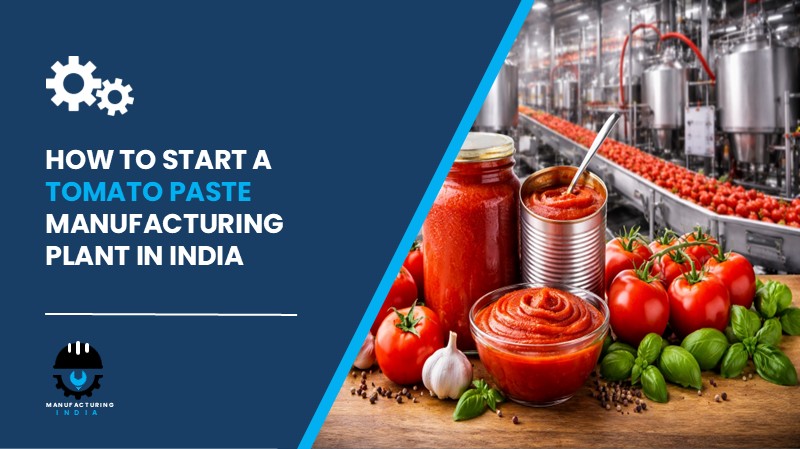
Setting up a tomato paste manufacturing plant in India presents a compelling investment case driven by surging demand from the food and beverages sector, rapid expansion of the foodservice and HoReCa segment, and a growing institutional catering and packaged food processing industry. Tomato paste a concentrated, shelf-stable culinary ingredient sits at the heart of India’s fast-evolving processed food economy, serving as a foundational raw material for ketchups, pasta sauces, ready meals, and seasoning blends consumed daily by millions of households and commercial kitchens.
India’s structural advantages make it a strategically sound location for this type of production. Rising urbanisation, a young and food-savvy population, and the government’s Make in India initiative collectively create a favourable climate for agro-processing investments. States such as Maharashtra, Andhra Pradesh, and Madhya Pradesh which are prominent tomato-growing belts offer natural backward-integration opportunities, reducing raw material logistics costs and securing consistent supply. Combined with cost-competitive land, labour, and a maturing cold-chain infrastructure, India stands out as one of the most viable emerging markets for tomato paste manufacturing.
India’s strong tomato cultivation base, policy-backed agro-processing support, and multi-sector demand from food manufacturers, cloud kitchens, and institutional caterers create an investment environment where a well-structured tomato paste manufacturing unit can achieve gross margins of 25-35%, healthy net margins, and a clearly defined break-even horizon within a scalable and future-ready production framework.
What is Tomato Paste?
Tomato paste is a concentrated form of tomatoes produced by removing seeds and skins and then cooking the pulp for multiple hours until the desired moisture reduction is achieved. The finished product displays a dense texture, a dark red hue, and a strong savoury taste. Producing tomato paste requires ripe tomatoes with high solids content to deliver consistent flavour strength, acidity, and texture across batches.
The long shelf life, robust flavour, and multi-use versatility of tomato paste make it an essential ingredient base for cooking, industrial food processing, and institutional food service operations. The primary production method is a sequential process involving washing, sorting, crushing, pulping, evaporation, sterilization, and aseptic packaging.
The end-use industries served by this facility span food and beverages, foodservice and HoReCa, institutional catering, and packaged food processing all of which are sectors experiencing strong and sustained demand growth in India.
Cost of Setting Up a Tomato Paste Manufacturing Plant in India
The total cost of establishing this type of facility depends on plant capacity, technology selected, geographic location, level of automation, and the extent of regulatory compliance infrastructure required.
1. Capital Expenditure (CapEx)
Land and Site Development form a substantial part of the overall capital investment, covering land registration charges, boundary development, and site preparation. Investors may consider locating within a Special Economic Zone (SEZ) or state-designated industrial estate to benefit from infrastructure subsidies and expedited clearances.
Civil Works and Construction costs encompass the main production shed, quality control laboratory, cold storage area, raw material receiving bay, packaging and dispatch area, and administrative block. The layout should be planned to optimize workflow efficiency, separate raw material storage from production zones, and accommodate future capacity expansion.
Machinery and Equipment represent the largest single component of capital expenditure. Key machinery required includes:
- Washers
- Crushers
- Pulpers
- Evaporators
- Sterilizers
- Aseptic filling systems
Other Capital Costs include the Effluent Treatment Plant (ETP), pre-operative expenses, trial run costs, import duties on specialised equipment where applicable, and commissioning charges.
Access the Detailed Feasibility Analysis: https://www.imarcgroup.com/tomato-paste-manufacturing-plant-project-report/requestsample
2. Operational Expenditure (OpEx)
Raw Material Cost is the dominant driver of the operating cost structure. Fresh tomatoes and aseptic packaging together account for approximately 70-80% of total OpEx. Securing long-term supply contracts with tomato farming clusters or contract farming networks is essential to stabilise input costs and ensure uninterrupted production across seasons.
Utility Cost covering electricity for evaporators and sterilizers, process water, and steam generation accounts for approximately 10-15% of total OpEx. Investing in energy-efficient evaporators and heat recovery systems can meaningfully reduce this component over time.
Other Operating Costs include transportation of raw materials and finished goods, aseptic packaging materials, salaries and wages for production and quality control staff, routine machinery maintenance, depreciation on fixed assets, and applicable taxes. By the fifth year of operations, total operational cost is projected to increase substantially due to inflation, market fluctuations, and potential rises in the cost of key input materials, alongside supply chain shifts and rising consumer demand.
3. Plant Capacity
The proposed manufacturing facility is designed with an annual production capacity ranging between 20,000 and 40,000 MT, enabling economies of scale while maintaining operational flexibility. Capacity can be customised based on individual investor requirements, and financial performance improves progressively as capacity utilisation increases toward optimal operating levels.
4. Profit Margins and Financial Projections
The project demonstrates healthy profitability under normal operating conditions. Gross profit margins typically range between 25-35%, supported by stable end-market demand and the value-added nature of processed tomato products. Net profit margins are projected at 10-15%. A comprehensive financial analysis covering NPV, IRR, payback period, liquidity ratios, sensitivity analysis, and a full profit and loss account is available in the detailed project report.
Why Set Up a Tomato Paste Plant in India?
Essential Processed Food Ingredient. Tomato paste functions as a primary raw material which food manufacturers use to create various products across the worldwide food processing industry. In India, the rapid proliferation of packaged food brands, ready-to-eat meal manufacturers, and regional food processors creates a deep and diversified domestic demand base for bulk tomato paste supply.
Alignment with Convenience Food Trends. Global and Indian consumption of tomato paste grows due to rapid urbanisation, evolving dietary patterns, and the increasing popularity of foods that require minimum cooking time. The expansion of cloud kitchens, quick-service restaurant (QSR) chains, and meal-kit delivery services in India directly amplifies industrial demand for shelf-stable tomato-based ingredients.
Seasonality Risk Mitigation and Value Addition. The process of converting fresh tomatoes into paste decreases post-harvest waste while maintaining a consistent supply throughout the year, which benefits agro-processing enterprises. India’s significant tomato cultivation losses during peak harvest seasons present a direct opportunity for processing units to add value while reducing systemic waste.
Export-Oriented Opportunity. Tomato paste exportation provides access to international markets for manufacturers who meet quality requirements and packaging standards. India’s competitive processing costs position domestically manufactured paste favourably for export to Middle Eastern, Southeast Asian, and African markets seeking natural, affordable tomato ingredients.
Scope for Backward Integration. Manufacturers can establish stronger tomato supply chains by combining processing operations with existing tomato farming regions, contract farming arrangements, and agro-procurement systems a model that reduces input cost volatility and supports margin stability.
Active Industry Investment. The global tomato paste industry continues to attract product innovation and market investment. In June 2025, Ajinomoto Health and Nutrition North America introduced the FL-TM solution using fermentation-derived technology to deliver clean, authentic tomato profiles enabling partial or full replacement of tomato powder or puree. In May 2025, Hebei Tomato Industry Co., Ltd. presented its 28–36% Brix tomato paste at THAIFEX – Anuga Asia 2025, targeting global food manufacturers with ISO, HACCP, Halal, and Kosher certified solutions. Also in May 2025, Casalasco Group launched De Rica’s double-concentrated datterino tomato paste in a 140g tube, underscoring the market’s move toward convenience-oriented premium formats.
Manufacturing Process – Step by Step
The tomato paste manufacturing process uses washing, sorting, crushing, pulping, evaporation, sterilization, and aseptic packaging as the primary production method. Each stage is a critical unit operation that determines the final product’s concentration, colour, flavour stability, and shelf life.
- Washing: Incoming fresh tomatoes are thoroughly washed to remove field soil, pesticide residues, and surface contaminants.
- Sorting: Tomatoes are inspected and sorted to remove defective, underripe, or damaged fruit that could compromise product quality.
- Crushing: Sorted tomatoes are mechanically crushed to break down cell walls and release pulp and juice for further processing.
- Pulping: The crushed material passes through pulpers that separate seeds and skins from the tomato pulp, yielding a clean, uniform slurry.
- Evaporation: The pulp is passed through industrial evaporators where water content is progressively reduced under controlled heat and vacuum conditions to achieve the desired Brix concentration.
- Sterilization: The concentrated paste is subjected to high-temperature sterilization to eliminate microbial contamination and ensure product safety and shelf stability.
- Aseptic Packaging: Sterilized paste is filled into aseptic pouches, drums, or consumer packs under sterile conditions, preventing recontamination before dispatch.
- Dispatch: Finished goods are palletised and dispatched to food and beverage manufacturers, foodservice operators, institutional caterers, and packaged food processors.
Key Applications
Tomato paste manufactured at this facility serves a broad range of industries within the food sector, enabling its use across multiple product categories:
- Sauces and Condiments: Widely used in the production of ketchup, pasta sauces, pizza sauces, and marinades.
- Processed and Ready-to-Eat Foods: Serves as a foundational ingredient in canned foods, frozen meals, instant noodles, and ready gravies.
- Foodservice and HoReCa: Utilized in commercial kitchens, cloud kitchens, and institutional caterers for large-volume preparation.
- Snack and Seasoning: Used in seasoning powders, snack coatings, and flavour blends across the snack food industry.
Leading Manufacturers
The global tomato paste market is served by a combination of large multinational corporations and regional specialists with extensive production capacities. Key players operating in this industry include:
- The Kraft Heinz Company
- Mutti S.p.A.
- Galla Foods
- Dabur
- Olam Group
- Del Monte Foods, Inc.
- Ariza b.v.
- Chitale Agro
- Neil Jones Food Company
- General Mills Inc.
- Pacific Coast Producers
- Conagra Brands, Inc.
- Riviana Foods Pty Ltd.
- The Morning Star Company
Timeline to Start the Plant
Establishing a tomato paste manufacturing unit from concept to commercial production typically spans 18–30 months depending on plant scale, location, and regulatory complexity:
- Feasibility study and project report preparation
- Land acquisition and site development
- Regulatory approvals and environmental clearances
- Factory licence and fire safety compliance
- Machinery procurement and installation
- Raw material supplier agreements and supply chain setup
- Trial production and quality testing
- Commercial production launch
Licences and Regulatory Requirements
Starting a tomato paste manufacturing unit in India requires several approvals:
- Business registration (Proprietorship, LLP, or Pvt Ltd)
- Factory Licence under the Factories Act
- Environmental Clearance from State Pollution Control Board
- GST Registration
- Fire Safety NOC
- Effluent Treatment Plant (ETP) operational clearance
- FSSAI (Food Safety and Standards Authority of India) licence for food processing operations
- Occupational Health and Safety compliance
Key Challenges to Consider
High Capital Requirements. The machinery-intensive nature of the production line particularly evaporators, sterilizers, and aseptic filling systems means that upfront capital expenditure is substantial, requiring careful financial structuring and phased investment planning.
Raw Material Price Volatility. Fresh tomatoes, the primary input accounting for 70-80% of OpEx, are subject to seasonal price swings and harvest-related supply disruptions. Establishing long-term contract farming arrangements is essential to stabilise margins.
Regulatory Compliance. Food processing facilities in India must navigate multiple regulatory frameworks including FSSAI standards, Pollution Control Board norms, and factory safety regulations, all of which require dedicated compliance resources and ongoing monitoring.
Technology and Innovation Pressure. As evidenced by recent industry developments including the adoption of fermentation-derived tomato flavour technology and advanced aseptic formats staying competitive requires continued investment in processing efficiency and product quality improvements.
Competition from Established Players. The presence of global manufacturers such as The Kraft Heinz Company, Del Monte Foods, Conagra Brands, and Olam Group, alongside domestic players like Dabur and Chitale Agro, means that new entrants must differentiate on quality, pricing, or niche application focus.
Skilled Manpower. Operating evaporators, sterilizers, and aseptic packaging systems at commercial scale requires trained food technologists and process engineers, making talent acquisition and retention a key operational consideration.
Frequently Asked Questions
1. How much does it cost to set up a tomato paste manufacturing plant in India? The total investment depends on plant capacity (20,000-40,000 MT per year), machinery selection, location, and automation level. A detailed breakdown of CapEx and OpEx is available in the project report.
2. Is tomato paste manufacturing profitable in India in 2026? Yes. Gross margins of 25-35% and net margins of 10-15% are achievable under normal operating conditions, supported by consistent demand from food processors and foodservice operators.
3. What machinery is required for a tomato paste plant in India? Essential equipment includes washers, crushers, pulpers, evaporators, sterilizers, and aseptic filling systems.
4. What licences and approvals are required to start a tomato paste plant in India? Required approvals include business registration, Factory Licence, Environmental Clearance, GST Registration, FSSAI licence, Fire Safety NOC, and ETP clearance.
5. What raw materials are needed for tomato paste manufacturing? The primary raw materials are fresh tomatoes and aseptic packaging materials. Fresh tomatoes alone account for most of the total operating cost.
6. What are the environmental compliance requirements for a tomato paste plant in India? Units must obtain Environmental Clearance from the State Pollution Control Board, operate a compliant Effluent Treatment Plant, and maintain emission and effluent standards per applicable norms.
7. What is the best location to set up a tomato paste plant in India? Sites with proximity to major tomato-growing regions, reliable utility infrastructure, and access to transportation networks are optimal. Industrial estates in Maharashtra, Andhra Pradesh, and Madhya Pradesh offer strong raw material access and logistical advantages.
8. What is the break-even period for this type of plant in India? Break-even timelines are detailed in the financial projections of the project report and vary based on capacity utilisation, pricing, and operating cost management.
9. What government incentives are available for manufacturers in India? Agro-processing investors may access incentives under the Production Linked Incentive (PLI) Scheme for food processing, state-level capital subsidy schemes, and SEZ benefits depending on plant location and applicable policy frameworks.
Key Takeaways for Investors
A tomato paste manufacturing plant in India represents a well-defined investment opportunity underpinned by durable demand from food and beverage manufacturers, foodservice operators, institutional caterers, and the packaged food processing sector. The project demonstrates strong financial viability across the proposed capacity range of 20,000-40,000 MT per year, with gross margins of 25-35% and net margins of 10–15% achievable under standard operating conditions. The global tomato paste market was valued at USD 12,452.90 million in 2025 and is projected to reach USD 20,329.88 million by 2034 at a CAGR of 5.6% from 2026 to 2034, underscoring long-term demand sustainability. With India’s agro-processing advantages, Make in India policy support, and the expanding domestic consumption of convenience and processed foods, the forward-looking demand outlook for tomato paste manufacturing in India remains robust and investor-ready.
About the Author