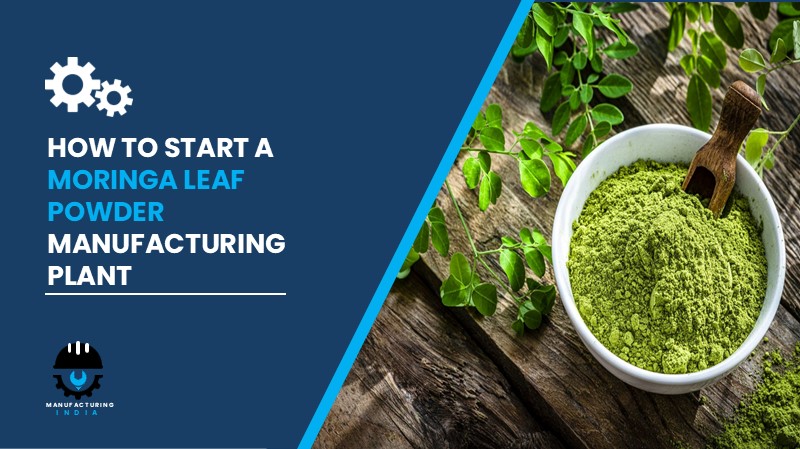
Setting up a moringa leaf powder manufacturing plant in India presents a compelling investment case grounded in the country’s status as one of the world’s largest producers of the moringa oleifera tree, the rapidly expanding global and domestic demand for natural, plant-based health supplements and functional food ingredients, and the growing adoption of moringa as a premium superfood ingredient across food and beverage, cosmetics, pharmaceutical, and animal nutrition sectors. Moringa leaf powder derived from the dried leaves of the moringa oleifera tree native to parts of Asia and Africa has emerged as one of the most nutritionally dense and commercially versatile plant-based ingredients available, commanding strong price premiums in health-conscious consumer markets globally. The moringa products market has positioned the leaf powder segment as its dominant category, accounting for a revenue share of 32.9%, reflecting the widespread commercial preference for powdered moringa as the most accessible, processable, and formulation-ready product format across its diverse application industries.
India’s structural advantages make it an exceptionally well-positioned location for establishing a moringa leaf powder manufacturing facility. The country’s tropical and semi-arid agricultural zones particularly in Andhra Pradesh, Tamil Nadu, Rajasthan, Gujarat, Maharashtra, and Karnataka provide abundant and year-round access to fresh moringa leaves from both dedicated cultivation and agroforestry systems. The moringa tree requires minimal water, grows rapidly, and is hardy under diverse soil conditions, making it a sustainable and cost-competitive raw material source that aligns with the growing global demand for environmentally responsible, clean-label nutrition ingredients. Government support for agro-processing under the Ministry of Food Processing Industries (MoFPI), Pradhan Mantri Kisan Sampada Yojana infrastructure grants, and APEDA export promotion for value-added agri-products collectively provide investors with policy, financial, and market access support for building export-competitive moringa leaf powder production capacity in India.
A moringa leaf powder manufacturing plant in India leverages one of the world’s most abundant moringa cultivation bases, the dominant 32.9% revenue share that leaf powder holds in the global moringa products market, and strong multi-sector demand from food and beverage, cosmetics, pharmaceuticals, and animal nutrition buyers globally. With gross profit margins of 35–45% and net margins of 18–25% achievable at a production capacity of 1,000–5,000 MT per annum, and backed by the U.S. health supplement market spending approximately USD 60 billion annually and growing worldwide demand for clean-label superfoods, this investment delivers exceptional returns in one of the most commercially accessible agri-processing categories available to Indian investors today.
What is Moringa Leaf Powder?
Moringa leaf powder is derived from the dried leaves of the moringa oleifera tree, a plant native to parts of Asia and Africa. It is considered a superfood due to its high nutrient content, which includes vitamins A, C, and E, minerals calcium and potassium, protein, and antioxidants. The powder is known for its anti-inflammatory, anti-diabetic, and cholesterol-lowering properties. It is commonly used as a dietary supplement, in smoothies, as a nutritional additive in health foods, and as an ingredient in skin care products due to its nourishing qualities. Moringa leaf powder is typically green in colour and has a strong, earthy flavour, making it a versatile product in health-focused markets.
The primary production method involves harvesting, washing and cleaning, drying, grinding, sieving, and packaging a multi-step agri-processing operation that integrates agricultural raw material management, controlled-temperature drying, and food-grade milling and quality control at each stage. End-use industries served include food and beverage, cosmetics, pharmaceuticals, and animal feed covering applications across health supplements, smoothies and energy drinks, cosmetic products, and animal nutrition. In the moringa products market, the leaf powder segment dominates with a 32.9% revenue share, confirming its commercial primacy across all moringa product formats and making this processing category the most commercially validated entry point for investors in the moringa value chain.
Cost of Setting Up a Moringa Leaf Powder Manufacturing Plant in India
The total investment required to establish a moringa leaf powder manufacturing plant in India depends on plant capacity, drying technology selection, geographic location, level of automation, and compliance with FSSAI food safety and export certification regulatory requirements. Investors must account comprehensively for both one-time capital expenditure and recurring operational costs when preparing a feasibility study or detailed project report (DPR).
1. Capital Expenditure (CapEx)
Land and Site Development constitutes a foundational investment. Costs for land registration, boundary development, internal road layout, drainage infrastructure, and site levelling vary based on whether the facility is within a government-notified agro-processing industrial estate, a food processing SEZ, a Mega Food Park under MoFPI schemes, or on privately acquired agricultural or industrial land. Agro-processing clusters in moringa-producing states such as Andhra Pradesh, Tamil Nadu, and Rajasthan offer proximity to fresh leaf supply networks, competitive land costs, and established export logistics infrastructure.
Civil Works and Construction encompasses the main leaf processing and washing hall, drying facility which must maintain controlled temperature conditions to preserve the chlorophyll, vitamins, and antioxidant content of dried moringa leaf grinding and milling room with dust containment infrastructure, sieving and blending area, quality control laboratory, finished goods warehouse, and administrative block. Food-grade facility construction requirements including pest-proof design, hygienic wall and floor surfaces, and controlled-environment drying rooms add to civil construction costs relative to standard industrial buildings.
Machinery and Equipment represent the single largest component of capital expenditure. Key machinery required for a moringa leaf powder manufacturing plant includes:
- Dryers (tray dryers, tunnel dryers, or spray dryers)
- Grinding mills
- Sieving machines
- Blenders and mixers
- Packaging machines
Other Capital Costs include the effluent treatment plant (ETP) for managing leaf washing process water and organic waste streams, pre-operative expenses covering regulatory filings and feasibility study preparation, plant commissioning charges, utility connection fees, and import duties applicable to specialised low-temperature drying equipment sourced internationally to preserve moringa’s heat-sensitive nutritional content.
Request a Sample Report for In-Depth Market Insights: https://www.imarcgroup.com/moringa-leaf-powder-manufacturing-plant-project-report/requestsample
2. Operational Expenditure (OpEx)
Raw Material Cost is the dominant driver of operating expenditure, accounting for approximately 65–75% of total OpEx. The primary inputs are fresh moringa leaves and drying fuel. Fresh moringa leaf procurement costs vary seasonally and by cultivation region, with price driven by harvest frequency moringa can be harvested multiple times per year under optimal tropical conditions leaf quality grade, and transportation distance from cultivation areas to the processing plant. Investors are advised to establish long-term procurement contracts with moringa farmers, farmer producer organisations (FPOs), and contract farming networks particularly in Andhra Pradesh, Tamil Nadu, and Rajasthan — to stabilise input pricing and ensure production continuity. Drying fuel costs whether electricity, biomass, or LPG represent the second most significant raw material input. The choice of drying technology directly impacts both energy cost and product quality, with low-temperature or shade drying methods better preserving the heat-sensitive vitamins and antioxidants that justify moringa’s premium market positioning.
Utility Costs covering electricity and fuel for dryers, grinding mills, and facility operations account for approximately 15–20% of total OpEx, the second-highest utility cost proportion among agri-processing plant types. Drying operations are the most energy-intensive step in the moringa leaf powder production chain, and managing drying energy consumption through efficient dryer technology selection, heat recovery systems, and renewable energy sourcing is a material operational priority for margin management.
Other Operating Costs include outbound transportation to health supplement manufacturers, nutraceutical brands, cosmetics ingredient distributors, pharmaceutical formulators, and export buyers; packaging materials for retail consumer pouches, bulk export bags, and airlock-sealed containers for moisture-sensitive powder; employee salaries and wages for leaf sorting operators, drying technicians, grinding operators, quality inspectors, and regulatory affairs personnel; equipment maintenance; quality assurance testing for FSSAI and export certification compliance; depreciation on civil and machinery assets; and applicable taxes. By the fifth year of operations, total operational costs are expected to increase substantially due to inflation, market fluctuations, and potential rises in fresh moringa leaf and drying fuel procurement costs, compounded by supply chain disruptions and rising global demand for the product.
3. Plant Capacity
The proposed moringa leaf powder manufacturing facility is designed with an annual production capacity ranging between 1,000 and 5,000 MT, enabling economies of scale while maintaining operational flexibility across different product grades standard, organic, and export-certified and customer specification requirements. This capacity range is well-aligned with the requirements of nutraceutical brands, cosmetics ingredient buyers, pharmaceutical formulators, animal nutrition companies, and export buyers in North America, Europe, and the Middle East. Capacity can be customised based on investor requirements, fresh leaf procurement network scale, and target market focus. Profitability improves consistently with higher capacity utilisation, and moringa leaf powder plants support phased capacity expansion through additional drying capacity and milling lines with contained incremental CapEx.
4. Profit Margins and Financial Projections
The moringa leaf powder manufacturing plant demonstrates among the strongest profitability profiles in the agri-processing investment category. Gross profit margins typically range between 35–45%, supported by the high value-added, nutritionally differentiated, and premium market-positioned nature of certified moringa leaf powder relative to undifferentiated agricultural commodity outputs. Net profit margins range between 18–25%, reflecting the moderate utility intensity and relatively contained labour cost of the drying and milling production model. A comprehensive financial analysis should include income projections, expenditure forecasts, gross and net margin tracking across Years 1 through 5, net present value (NPV), internal rate of return (IRR), payback period, and a full profit and loss account. Sensitivity analysis covering fresh moringa leaf price movements and export market pricing variability is recommended for investment-grade financial planning.
Why Set Up a Moringa Leaf Powder Manufacturing Plant in India?
Large and Growing Global Health Supplement Market Creating Structural Demand. U.S. consumers alone spend approximately USD 60 billion annually on health supplements such as multivitamins, digestive supplements, and muscle-building supplements. This enormous established market for health and nutrition products, combined with growing consumer awareness of moringa’s anti-inflammatory, anti-diabetic, and cholesterol-lowering properties, is accelerating the incorporation of moringa leaf powder into supplement formulations worldwide. Indian manufacturers with certified, export-grade production capacity are uniquely positioned to supply this demand at globally competitive prices.
Dominant Market Position of Leaf Powder Segment Confirming Commercial Viability. In the moringa products market, the leaf powder segment dominates and accounts for a revenue share of 32.9% confirming that this processing format represents the most commercially validated and buyer-preferred product form across all moringa value-chain outputs. This market leadership position means that new investors entering moringa leaf powder production are targeting the most established and liquid buyer market within the entire moringa products category.
Growing Demand for Clean-Label and Plant-Based Natural Products. The increasing demand for clean-label products makes moringa an extremely sought-after ingredient owing to its high nutritional value and chemical-free, plant-derived profile. The shift towards natural and organic products positions moringa leaf powder perfectly within the demand for clean-label, preservative-free ingredients across food and beverage, wellness, and personal care markets a trend that is accelerating at pace across India’s own domestic natural health products sector alongside its export markets.
Scientific Validation Supporting Product Acceptability Claims. In March 2025, a study published in the National Institutes of Health (NIH) named “Acceptability of Moringa oleifera leaf powder among healthy adults in the United States” evaluated the acceptability of moringa leaf powder among healthy adults in California. The research revealed high compliance among all dose groups, with no significant differences in consumption, preference, or skin carotenoid concentrations. The findings indicate that moringa powder supplemental doses of 1–3 teaspoons are well tolerated and acceptable for future trials providing manufacturers with peer-reviewed evidence that supports regulatory claims, consumer education, and retailer acceptance of moringa as a mainstream dietary supplement.
Sustainability Credentials Strengthening Market Premium. Moringa trees require minimal water and are hardy under diverse soil and climate conditions, making them a sustainable source of nutrition and income for farmers a credential that resonates strongly with environmentally conscious buyers in North American and European markets who increasingly require sustainable sourcing documentation from their ingredient suppliers. The alignment of moringa cultivation with sustainable agricultural practices supports premium pricing and access to organic and sustainability-certified market segments.
Diverse Application Range Across Multiple High-Value Industries. Moringa leaf powder’s broad range of applications across health supplements, smoothies and energy drinks, cosmetics and skincare, pharmaceuticals, and animal nutrition provides manufacturers with multiple buyer segments and revenue diversification pathways that reduce dependence on any single industry’s procurement cycle or pricing dynamics.
Manufacturing Process — Step by Step
The moringa leaf powder manufacturing process uses harvesting, washing and cleaning, drying, grinding, sieving, and packaging as the primary production method. Below are the main stages involved in the moringa leaf powder manufacturing process flow:
- Harvesting and Raw Leaf Receipt: Fresh moringa leaves are harvested from contracted farms or FPO supply networks, weighed, and inspected for leaf freshness, colour, contamination level, and absence of diseased or damaged material before being cleared for the processing line.
- Leaf Sorting and Pre-Selection: Incoming fresh moringa leaves are manually or mechanically sorted to remove stems, petioles, yellowed or damaged leaves, foreign matter, and any material that does not meet the quality grade specification for the target product category.
- Washing and Cleaning: Sorted leaves are washed thoroughly in clean, food-grade water using washing equipment to remove soil, dust, pesticide residues, and surface microbial contamination. Multiple wash stages and potable water quality are maintained to meet food safety specifications.
- Draining and Pre-Drying: Washed leaves are drained and spread on pre-drying trays or conveyors to remove surface moisture before entering the primary drying stage, reducing the energy load on drying equipment and improving throughput efficiency.
- Drying: Dryers using tray drying, tunnel drying, or low-temperature spray drying technology remove residual moisture from the washed moringa leaves at controlled temperatures designed to preserve the heat-sensitive vitamins, antioxidants, and chlorophyll content that determine the product’s nutritional value and market premium. Final moisture content is brought to below the specification level required for microbial safety and powder quality stability during storage and transport.
- Grinding: Grinding mills process the dried moringa leaves into a fine, uniform green powder. Grinding parameters including mill speed, screen size, and feed rate are controlled to achieve the target particle size distribution and powder fineness specification required by food, nutraceutical, or cosmetics buyers.
- Sieving: Sieving machines pass the ground moringa powder through mesh screens of defined aperture sizes to remove oversized particles, ensure particle size uniformity, and separate any residual stem or fibre fragments that did not fully grind during milling.
- Blending and Mixing: Blenders and mixers combine moringa leaf powder from multiple drying and grinding batches to achieve consistent colour, flavour, and nutritional content uniformity across production lots ensuring that each outgoing batch meets the buyer’s specification for colour, aroma, and nutritional profile.
- Quality Inspection and Testing: Analytical instruments and quality inspection systems test finished moringa leaf powder for moisture content, particle size distribution, colour (CIEL*a*b* values), microbial safety including total plate count and pathogen absence, heavy metal content, and pesticide residue levels. Batch release is conditional on all parameters meeting FSSAI and buyer specification acceptance criteria. For export-certified organic product, NPOP or NOP organic certification testing documentation is prepared.
- Packaging: Packaging machines fill finished moringa leaf powder into moisture-barrier-sealed retail pouches, bulk kraft bags with inner poly liner, or airlock-sealed export containers depending on the customer format requirement. Labels apply product name, net weight, nutritional information, batch code, best-before date, FSSAI licence number, and organic certification marks where applicable, with full supply chain traceability documentation maintained.
- Dispatch to End-Use Channels: Finished moringa leaf powder is dispatched to health supplement manufacturers, nutraceutical and wellness brands, cosmetics ingredient distributors, pharmaceutical formulators, animal nutrition companies, and export buyers in international natural food, wellness, and ingredients markets.
Key Applications
Moringa leaf powder produced at this type of facility serves four primary end-use industries across domestic and international markets:
- Food and Beverage: Used in health-conscious products like smoothies, shakes, and energy drinks, providing a nutrient boost due to its rich vitamin and antioxidant profile, and as a nutritional additive or functional ingredient in health bars, breakfast cereals, and fortified food products.
- Cosmetics and Skincare: Used in face creams, body lotions, and masks to improve skin health, reduce signs of ageing, and promote a healthy complexion leveraging the antioxidant and anti-inflammatory properties that make moringa a sought-after active ingredient in the natural beauty and wellness market.
- Pharmaceuticals and Nutraceuticals: Formulated into dietary supplement pills, capsules, or powders aimed at supporting overall health, enhancing immunity, managing chronic conditions, and delivering anti-inflammatory, anti-diabetic, and cholesterol-lowering benefits as a plant-based therapeutic ingredient.
- Animal Feed and Nutrition: Incorporated into animal feed formulations to improve nutrition and health outcomes in both pets and livestock a growing application driven by the natural pet food premiumisation trend and demand for plant-based performance nutrition in livestock management.
Leading Moringa Leaf Powder Manufacturers
The global moringa leaf powder industry is served by a group of specialist producers with strong domestic and international supply chain relationships. Key players include:
- Medikonda Nutrients
- Elven Agri
- Unicorn Natural Products
- Moringa Initiative
- AGF Organics
- Venkatesh Natural Extract
- Jeeva Organic Private Limited
Timeline to Start the Plant
Investors planning to establish a moringa leaf powder manufacturing plant in India should anticipate the following project development phases:
- Feasibility study and project report preparation
- Land acquisition and site development
- Regulatory approvals and environmental clearances
- Factory licence and fire safety compliance
- Machinery procurement and installation
- Raw material supplier agreements and supply chain setup
- Trial production and quality testing
- Commercial production launch
Licences and Regulatory Requirements
Starting a moringa leaf powder manufacturing unit in India requires several approvals:
- Business registration (Proprietorship, LLP, or Private Limited Company)
- Factory Licence under the Factories Act
- FSSAI (Food Safety and Standards Authority of India) licence for food processing and manufacture of dietary supplement and functional food products
- Environmental Clearance from the State Pollution Control Board
- GST Registration
- Fire Safety NOC
- Effluent Treatment Plant (ETP) operational clearance for leaf washing process water and organic waste management
- NPOP (National Programme for Organic Production) or NOP (National Organic Program) certification for organic-grade moringa leaf powder targeting premium domestic and export markets
- APEDA registration and export certification for manufacturers targeting international health food, nutraceutical, and cosmetics ingredient markets
- Occupational Health and Safety compliance covering processing and milling operations
Key Challenges to Consider
Fresh Leaf Supply Chain Seasonality and Quality Variability. Fresh moringa leaves accounting for 65–75% of total OpEx are subject to seasonal harvest patterns, weather variability, and leaf quality differences across cultivation regions and tree maturity stages. Managing supply continuity, leaf quality consistency, and procurement cost stability across harvest and lean seasons requires proactive contract farming relationships, multi-supplier procurement networks, and strategic inventory management of dried leaf or partially processed intermediates.
Drying Process Impact on Nutritional Quality. The temperature and duration of the drying process directly determine the final product’s nutritional content particularly its heat-sensitive vitamins A, C, and E, and chlorophyll content. Excessive drying temperatures cause nutrient degradation that reduces the product’s premium market value. Investing in appropriate low-temperature drying technology and maintaining strict process control is essential to producing the high-nutritional-quality powder that commands the gross margins of 35–45% available in certified superfood ingredient markets.
Export Market Certification and Compliance Requirements. International buyers in North American and European health food and nutraceutical markets require organic certification (NPOP, NOP, or EU Organic), FSSAI export documentation, heavy metal and pesticide residue test reports, and in many cases third-party quality audits for each production batch. Meeting and maintaining these certification and testing requirements adds ongoing compliance overhead and testing cost that must be built into the production economics from the outset.
Competition from Established Indian and International Producers. The Indian moringa leaf powder export market is served by a number of established processors including Medikonda Nutrients, Venkatesh Natural Extract, and Jeeva Organic, with established international buyer relationships and quality track records. New entrants must differentiate through certified organic production, superior colour and nutritional specifications, consistent year-round supply capability, or private-label service capability for international brand buyers.
Regulatory Compliance Under FSSAI Nutraceutical Standards. Moringa leaf powder marketed as a dietary supplement in India must comply with FSSAI standards for health supplements and nutraceuticals, including permissible ingredient status, label claim restrictions, and packaging requirements. Navigating FSSAI’s evolving nutraceutical regulatory framework requires dedicated regulatory affairs expertise and documentation management.
Skilled Manpower for Food-Grade Agri-Processing Operations. Operating dryers, grinding mills, sieving equipment, and automated packaging lines in a food-grade environment while maintaining FSSAI and organic certification quality management systems requires processing technicians and quality assurance personnel trained in food safety, HACCP implementation, and nutraceutical quality standards. Recruiting and retaining qualified staff for facilities located in agricultural processing zones outside major cities presents an ongoing operational challenge.
Frequently Asked Questions
1. How much does it cost to set up a moringa leaf powder manufacturing plant in India?
The total cost depends on plant capacity (1,000–5,000 MT per annum), drying technology selection, location, and automation level. CapEx covers land, food-grade civil construction, and machinery including dryers, grinding mills, sieving machines, blenders and mixers, and packaging machines, along with pre-operative and regulatory costs including FSSAI and organic certification fees.
2. Is moringa leaf powder manufacturing profitable in India in 2026?
Yes. With gross margins of 35–45% and net margins of 18–25% among the highest in Indian agri-processing supported by the moringa leaf powder segment’s dominant 32.9% revenue share in the global moringa products market, strong demand from health supplement, cosmetics, and pharmaceutical buyers, and growing U.S. and European clean-label superfood market spending, the investment presents an exceptional profitability case.
3. What machinery is required for a moringa leaf powder manufacturing plant in India?
Key equipment includes dryers (tray, tunnel, or low-temperature spray dryers), grinding mills, sieving machines, blenders and mixers, and packaging machines. Supporting systems include washing equipment, leaf sorting conveyors, dust collection systems, and quality testing laboratory instruments.
4. What licences and approvals are required to start a moringa leaf powder manufacturing plant in India?
Required approvals include business registration, FSSAI licence for food and dietary supplement manufacturing, Factory Licence, Environmental Clearance, GST Registration, Fire Safety NOC, ETP operational clearance, NPOP or NOP organic certification where applicable, and APEDA export registration for international market access.
5. What raw materials are needed for moringa leaf powder manufacturing?
The primary raw materials are fresh moringa leaves and drying fuel. Additional inputs include clean water for washing, packaging materials including moisture-barrier pouches, bulk bags, and export cartons, and quality testing reagents for nutritional and safety analysis.
6. What are the environmental compliance requirements for a moringa leaf powder manufacturing plant in India?
Environmental Clearance from the State Pollution Control Board is required, along with an operational ETP for managing leaf washing process water and organic waste streams, compliance with organic waste composting or disposal rules for leaf residues, and adherence to water usage and discharge standards applicable to agri-processing facilities.
7. What is the best location to set up a moringa leaf powder manufacturing plant in India?
States with the highest moringa cultivation density and year-round leaf availability — particularly Andhra Pradesh, Tamil Nadu, Rajasthan, Gujarat, and Maharashtra — offer the best combination of raw material access at competitive prices, established agri-processing infrastructure, export logistics connectivity, and government agro-processing incentive support for moringa leaf powder manufacturing investment.
8. What is the break-even period for this type of plant in India?
The break-even period depends on plant capacity, product grade mix between standard and organic-certified moringa powder, export market development speed, and fresh leaf procurement cost management. A full NPV and IRR analysis incorporating sensitivity testing for leaf price movements and export selling price variability is recommended for investment-grade financial planning.
9. What government incentives are available for moringa leaf powder manufacturers in India?
The PLI scheme for food processing, Pradhan Mantri Kisan Sampada Yojana agro-processing infrastructure grants, MoFPI capital subsidy schemes for food processing units, APEDA export development and market promotion support, organic farming support under the National Mission for Sustainable Agriculture (NMSA), and state-level agro-industrial incentive schemes in Andhra Pradesh and Tamil Nadu all provide meaningful financial and market access support for qualifying moringa leaf powder manufacturing investments.
Key Takeaways for Investors
A moringa leaf powder manufacturing plant in India represents one of the most financially attractive and commercially accessible agri-processing investment opportunities available — combining the moringa leaf powder segment’s dominant 32.9% revenue share in the global moringa products market, gross profit margins of 35–45% and net margins of 18–25% among the highest in agri-processing, and structural demand growth driven by the U.S. health supplement market’s USD 60 billion annual consumer spend and rapidly expanding global demand for clean-label, plant-based, and organic superfood ingredients. Production capacity of 1,000 to 5,000 MT per annum is commercially viable for serving both domestic nutraceutical buyers and international export markets in North America, Europe, and the Middle East. The March 2025 NIH study confirming high tolerability and acceptability of moringa powder doses of 1–3 teaspoons among healthy U.S. adults provides manufacturers with peer-reviewed evidence supporting mainstream supplement market positioning. With India’s tropical agricultural base offering year-round moringa leaf availability at globally competitive procurement costs, the country’s established organic certification infrastructure enabling premium export market access, and growing domestic awareness of moringa’s anti-inflammatory, anti-diabetic, and cholesterol-lowering properties expanding the home market simultaneously, the long-term demand sustainability and investment returns for moringa leaf powder manufacturing in India are comprehensively and multiply well-supported for the decade ahead.
About the Author