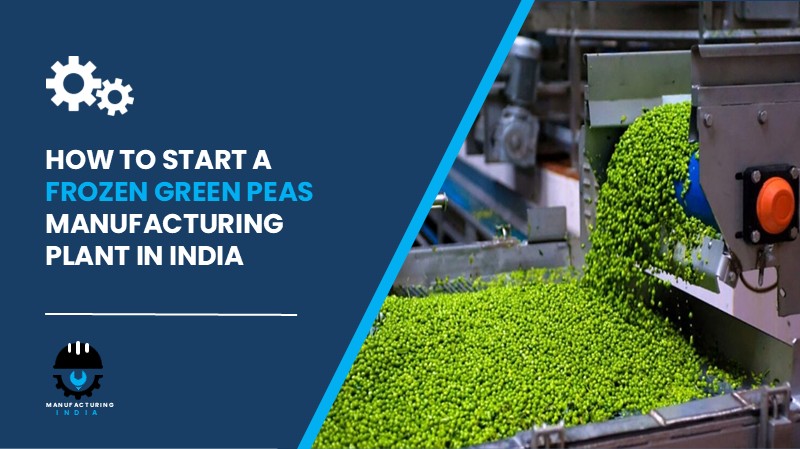
Setting up a frozen green peas manufacturing plant in India presents a compelling investment case rooted in strong structural demand across retail grocery, food service, prepared food manufacturing, and institutional food supply. As urbanisation accelerates and the quick service restaurant sector expands rapidly, the demand for convenient, nutritious, and ready-to-cook frozen vegetables has risen sharply. Frozen green peas, valued for their year-round availability and retention of nutritional properties, have become a staple ingredient across consumer households, food processors, and institutional buyers creating a dependable and growing revenue base for new entrants.
India’s strategic advantages further strengthen the investment rationale for a frozen green peas manufacturing plant in India. The country’s vast agricultural base ensures consistent raw material availability, while the government’s focus on food processing through agri-export promotion, cold storage infrastructure, and farmer organisation linkages has created a supportive policy environment. States with strong horticulture output and cold chain connectivity including Uttar Pradesh, Punjab, Himachal Pradesh, and Maharashtra offer ideal conditions for siting this type of plant. Combined with India’s cost-competitive labour, improving logistics networks, and the Make in India initiative, the production economics are highly favourable for investors targeting both domestic consumption and export markets.
India’s frozen green peas sector is at an inflection point: government policy support for food processing, a cost-competitive manufacturing environment, and sustained demand from retail, foodservice, and institutional buyers all converge to make this a financially viable, break-even-ready investment. With gross margins of 25-35% and a payback period of 3-6 years, this is a well-defined opportunity for investors seeking defensible returns in the agri-food space.
What are Frozen Green Peas?
Frozen green peas are peas that have been harvested at the height of their maturity, then washed, blanched, and frozen immediately to retain their flavour, texture, and nutritional value. The freezing process ensures that the peas retain their bright green colour, remain tender, and carry the highest sugar content at the point of consumption. The product is typically packed in bags or containers of varying capacities for both commercial and industrial use, and its principal advantage is a long shelf life without any deterioration in health benefits.
The primary production method is blanching combined with individual quick freezing (IQF) and packaging a proven process that preserves the organoleptic and nutritional qualities of the peas at scale. The end-use industries served by this facility include retail grocery, food service, prepared food manufacturing, and institutional food supply. Specific applications range from frozen vegetable medleys, side dishes, and prepared meals to soups, stews, and use as a direct ingredient in foodservice operations.
Cost of Setting Up a Frozen Green Peas Manufacturing Plant in India
The total cost of establishing a frozen green peas manufacturing plant depends on several interlinked factors: plant capacity, technology choice, geographic location, level of automation, and regulatory compliance requirements. Investors should evaluate both upfront capital expenditure and ongoing operational costs carefully before committing to a project scale.
1. Capital Expenditure (CapEx)
The capital investment covers several major heads. Land and site development includes land acquisition, boundary development, registration charges, and related preliminary costs — this forms a substantial portion of total CapEx and must account for zoning compliance and proximity to pea-growing regions. Investors may consider positioning the facility within a Special Economic Zone or notified industrial estate to benefit from infrastructure support and potential fiscal incentives.
Civil works and construction costs cover the factory shed, processing hall, cold storage rooms, quality control laboratory, packaging area, raw material receiving zone, utility block, and administrative offices. Adequate space planning for future capacity expansion should be built into the design from the outset.
Machinery and equipment account for the largest single component of capital expenditure. Key machinery required includes:
- Pea shelling machines
- Blanching units
- Sorting and grading machines
- Cooling conveyors
- IQF (Individual Quick Freezing) tunnels
- Packing and sealing machines
- Weighing and labeling equipment
- Cold storage rooms
- Water treatment systems
- Quality control instruments
Other capital costs include effluent treatment plant (ETP) installation, pre-operative expenses, commissioning charges, and any applicable import duties on specialised IQF or food processing equipment not manufactured domestically.
Request a Sample Report for In-Depth Market Insights: https://www.imarcgroup.com/frozen-green-peas-manufacturing-plant-project-report/requestsample
2. Operational Expenditure (OpEx)
Raw material cost is the dominant driver of operating expenditure, accounting for approximately 65-75% of total OpEx. The primary raw material is fresh, high-quality green peas, supplemented by water for washing and blanching, and food-grade poly-lined bags or containers for the finished product. Securing long-term supply contracts with pea farmers or aggregators particularly in high-yield states such as Uttar Pradesh, Punjab, and Himachal Pradesh is essential to stabilise input costs and maintain consistent production quality.
Utility costs represent 15–20% of OpEx and cover electricity (primarily for IQF tunnels and cold storage), water (for washing and blanching operations), and associated effluent management. Energy efficiency investments in cold chain and freezing systems can materially reduce this cost head over the plant’s operating life.
Other operating costs include transportation and outbound logistics, packaging procurement, salaries and wages for production and quality staff, routine maintenance, depreciation on fixed assets, and applicable taxes. By the fifth year of operations, total operational costs are projected to increase substantially, driven by inflation, market fluctuations, rising raw material prices, and evolving consumer demand — all factors that investors should model conservatively in their financial planning.
3. Plant Capacity
The proposed manufacturing facility is designed with an annual production capacity ranging between 10,000 and 20,000 MT, enabling economies of scale while maintaining operational flexibility. Capacity can be customised depending on investor requirements, target markets, and available capital. Profitability improves materially with higher capacity utilisation rates, making ramp-up strategy a critical variable in the investment thesis.
4. Profit Margins and Financial Projections
The frozen green peas manufacturing plant project demonstrates healthy profitability potential under normal operating conditions. Gross profit margins typically range between 25–35%, supported by stable demand and value-added applications across food service and retail. Net profit margins average between 10-15% over the operating period. A comprehensive financial analysis — including net present value (NPV), internal rate of return (IRR), payback period assessment, and sensitivity analysis should be completed before final investment decisions are made. The break-even period for this type of plant typically ranges from 3 to 6 years, depending on capacity scale, raw material pricing, and market penetration speed.
Why Set Up a Frozen Green Peas Plant in India?
Rising Demand for Convenient, Nutritious Food. The growing preference for convenient, nutritious, and cost-effective food options among Indian consumers is a primary demand driver for frozen green peas. The rise of working households, busier lifestyles, and the proliferation of quick service restaurants have all contributed to sustained growth in frozen vegetable consumption.
Cold Chain Infrastructure Expansion. Improved cold storage and distribution networks across India are making frozen food products more accessible to a wider consumer base. This infrastructure build-out directly supports the operational viability and distribution economics of a new frozen green peas manufacturing facility.
Policy and Agricultural Support. Government measures supporting food processing, cold storage development, linking farmer organisations, and promoting agri-exports have had an overall positive effect on the frozen vegetable sector. Notably, the Ministry of Food Processing Industries reported that the share of processed food exports in agri-food exports rose from 13.7% in 2014-15 to 20.4% in 2024–25 — a clear signal of policy commitment to the sector.
Health-Conscious and Plant-Based Trends. The rising health-conscious consumer segment and growing interest in plant-based diets are expected to fuel demand for frozen green peas across both retail and foodservice channels. These secular consumption trends make demand durable and less susceptible to short-term cyclical fluctuations.
Active Industry Investment. In November 2025, Natural Grocers a leader in organic produce expanded its 100% USDA-certified organic selection with 10 new frozen vegetables, including green peas, under its house brand. This development reflects accelerating institutional interest in frozen vegetable categories and validates the investment case for new production capacity.
Local Supply Chain Preference. A growing number of food retailers and institutional purchasers are actively preferring local or regional frozen food manufacturers to guarantee freshness, facilitate logistics, address crop variability, and develop reliable supply continuity presenting a significant and addressable opportunity for responsible domestic producers.
Manufacturing Process – Step by Step
The frozen green peas manufacturing process uses blanching, individual quick freezing (IQF), and packaging as the primary production method. The sequence of operations is tightly controlled to preserve nutritional quality, visual appeal, and shelf life.
- Harvest and Receiving: Fresh green peas are transported to the factory and received at the raw material handling area for initial inspection
- Washing and Cleaning: Peas are washed thoroughly to remove debris, soil, and foreign materials using water treatment systems
- Blanching: Peas pass through blanching units, where brief heat exposure preserves colour, halts enzyme activity, and locks in nutrients
- Cooling: Blanched peas are rapidly cooled using chilled water or air systems delivered via cooling conveyors
- Sorting and Grading: Sorting and grading machines separate peas by size and quality, removing defective units to ensure consistency
- IQF Freezing: Peas enter IQF (Individual Quick Freezing) tunnels, where each pea is frozen individually at ultra-low temperatures to prevent clumping
- Weighing, Packing, and Sealing: Frozen peas are accurately weighed using weighing and labeling equipment, then packed into food-grade poly-lined bags or containers using packing and sealing machines
- Cold Storage and Dispatch: Finished product is stored in cold storage rooms under controlled temperature conditions before dispatch to retail grocery, food service, prepared food manufacturing, and institutional food supply customers
Key Applications
Frozen green peas serve a broad spectrum of industries, from household retail to large-scale institutional food operations.
- Retail Grocery: Sold directly to consumers as packaged frozen vegetables for home cooking
- Food Service: Used by restaurants, quick service chains, and catering companies as a ready-to-use ingredient
- Prepared Food Manufacturing: Incorporated into frozen vegetable medleys, ready meals, soups, and stews by food processors
- Institutional Food Supply: Supplied to hospitals, schools, canteens, and other institutional kitchens requiring consistent, bulk-format ingredients
Leading Manufacturers
The global frozen green peas market is served by several established multinational and regional players with extensive production capacities and diversified distribution networks. Key manufacturers operating in this space include:
- Green Giant (General Mills)
- McCain Foods
- The Birds Eye
- Farm Fresh
- Bonduelle
- Sahyadri Farms
- Masfrost
- Alfa-Nistru
- Nestlé
Timeline to Start the Plant
Investors should plan for a realistic setup timeline of 12 to 24 months, structured across these key phases:
- Feasibility study and project report preparation
- Land acquisition and site development
- Regulatory approvals and environmental clearances
- Factory licence and fire safety compliance
- Machinery procurement and installation
- Raw material supplier agreements and supply chain setup
- Trial production and quality testing
- Commercial production launch
Licences and Regulatory Requirements
Starting a frozen green peas manufacturing unit in India requires several approvals:
- Business registration (Proprietorship, LLP, or Pvt Ltd)
- Factory Licence under the Factories Act
- Environmental Clearance from State Pollution Control Board
- GST Registration
- Fire Safety NOC
- FSSAI (Food Safety) licence for food processing operations
- Effluent Treatment Plant (ETP) operational clearance
- Occupational Health and Safety compliance
Key Challenges to Consider
High Capital Requirements. Establishing a frozen green peas manufacturing plant involves significant upfront investment in cold chain infrastructure, IQF freezing systems, and food safety compliance creating a meaningful barrier for undercapitalised entrants.
Raw Material Price Volatility. Fresh green peas the primary input, representing 65-75% of total OpEx are subject to seasonal availability and crop variability. Securing long-term supply agreements and geographic diversification of sourcing are essential risk mitigation strategies.
Regulatory Compliance. Food processing facilities in India must navigate multi-agency regulatory frameworks covering food safety, environmental standards, effluent treatment, and factory licensing each adding time and cost to the pre-commissioning phase.
Technology and Cold Chain Pressure. The production process requires continuous investment in IQF technology, cold storage maintenance, and food safety systems. Operational gaps in any part of the cold chain can compromise product quality and shelf life.
Competition from Established Players. The market includes well-resourced global manufacturers such as McCain Foods, Bonduelle, Green Giant (General Mills), and The Birds Eye, alongside domestic players like Sahyadri Farms. New entrants must differentiate through supply chain efficiency, quality consistency, or regional market focus.
Skilled Manpower. Operating IQF systems, quality control instruments, and maintaining FSSAI-compliant production lines requires trained technical and supervisory staff, which may be a constraint in certain locations.
Frequently Asked Questions
1. How much does it cost to set up a frozen green peas manufacturing plant in India? Total capital investment varies with plant capacity, technology, and location. Cost components include land and site development, civil construction, IQF machinery, cold storage, utilities, and pre-operative expenses. A detailed project report provides capacity-specific cost breakdowns.
2. Is frozen green peas manufacturing profitable in India in 2026? Yes, the sector demonstrates healthy profitability. Gross profit margins typically range between 25–35% and net profit margins between 10–15%, supported by stable demand across retail, food service, and institutional channels.
3. What machinery is required for a frozen green peas plant in India? Key equipment includes pea shelling machines, blanching units, sorting and grading machines, cooling conveyors, IQF tunnels, packing and sealing machines, weighing and labeling equipment, cold storage rooms, water treatment systems, and quality control instruments.
4. What licences and approvals are required to start a frozen green peas plant in India? Requirements include business registration, Factory Licence, Environmental Clearance from the State Pollution Control Board, GST Registration, Fire Safety NOC, FSSAI food processing licence, ETP operational clearance, and occupational health and safety compliance.
5. What raw materials are needed for frozen green peas manufacturing? The primary raw material is fresh, high-quality green peas. Supporting materials include water for washing and blanching operations, and food-grade poly-lined bags or containers for the finished packaged product.
6. What are the environmental compliance requirements for a frozen green peas plant in India? Operators must obtain Environmental Clearance from the State Pollution Control Board, install and operate a functional Effluent Treatment Plant, and adhere to wastewater discharge standards and solid waste management protocols applicable to food processing units.
7. What is the best location to set up a frozen green peas plant in India? Optimal locations combine proximity to fresh pea growing regions (Uttar Pradesh, Punjab, Himachal Pradesh), access to reliable utilities and transportation infrastructure, and availability of industrial land or notified food processing zones.
8. What is the break-even period for this type of plant in India? The break-even period typically ranges from 3 to 6 years, depending on plant scale, capacity utilisation, raw material costs, and market access. Efficient manufacturing and export opportunities can accelerate returns.
9. What government incentives are available for manufacturers in India? Governments may offer capital subsidies, tax exemptions, reduced utility tariffs, export benefits, or interest subsidies under national or state-level industrial promotion schemes. The food processing sector specifically benefits from several Ministry of Food Processing Industries programmes supporting cold chain development and agri-export promotion.
Key Takeaways for Investors
The frozen green peas manufacturing plant opportunity in India is underpinned by durable demand from retail grocery, food service, prepared food manufacturing, and institutional food supply sectors all of which require consistent, high-quality frozen vegetable inputs year-round. The financial profile of this investment is well-defined: gross margins of 25-35% and net margins of 10-15% are achievable across a plant capacity of 10,000-20,000 MT per annum, with break-even viability within 3-6 years under normal operating conditions. The global frozen green peas market, valued at USD 19.35 million in 2025, is projected to reach USD 26.38 million by 2034 at a CAGR of 3.5%, reflecting steady and expanding end-market demand over the investment horizon. Supported by India’s improving cold chain infrastructure, government policy tailwinds for food processing, and growing domestic and export appetite for frozen vegetables, demand sustainability for this production category is firmly established.
About the Author