Setting up a soda water manufacturing plant in India presents a compelling investment case driven by the country’s rapidly expanding food and beverage sector, a booming hospitality industry, and an urban population increasingly gravitating toward low-calorie, calorie-free refreshment options. Soda water – a carbonated beverage produced by dissolving carbon dioxide (CO₂) in purified water under controlled pressure – serves the food and beverage, hospitality, retail, and catering services industries. As one of the fastest-growing segments in the non-alcoholic carbonated beverages space, demand for this product is consistent across household consumption, HoReCa establishments, and large-scale catering services. Its role as a base for flavored sodas, a mixer for alcoholic and non-alcoholic drinks, and a palate cleanser in foodservice establishments makes it indispensable across consumption channels.
India’s structural advantages – rapid urbanisation, growing nightlife and restaurant culture, rising disposable incomes, and the government’s Make in India initiative – make it a strategically sound location for setting up this production facility. States with well-developed industrial infrastructure and beverage manufacturing clusters offer cost-competitive land acquisition, readily available utility connections, and proximity to raw material suppliers. With consistent year-round demand from the HoReCa segment and retail channels, and a relatively low-complexity formulation requiring manageable capital to initiate production, a soda water manufacturing plant in India is well-positioned to generate healthy returns across varying production scales.
A soda water manufacturing plant in India benefits from strong policy support under the Make in India initiative, cost-competitive land and labour, and consistent demand from the food and beverage, hospitality, retail, and catering services sectors. With gross profit margins typically ranging between 30–45% and net profit margins of 15–25%, the investment demonstrates viable profitability and break-even potential across different capacity levels.
What is Soda Water?
Soda water is a carbonated beverage which results from the process of carbon dioxide (CO₂) being dissolved in purified water under controlled pressure conditions. The beverage may contain mineral additives such as sodium bicarbonate and potassium salts to improve its taste and mouthfeel. It serves as a flavorless and calorie-free beverage which people drink alone or use to create mocktails and cocktails and flavored carbonated drinks.
The production process involves water purification, carbonation, filling, sealing, and packaging – a multi-stage operation involving material handling, unit operations, and quality checks at every stage. Soda water’s core appeal lies in its refreshing bubbles, clean label profile, and alignment with sugar-free and zero-calorie consumption trends that are reshaping the global beverages market.
Soda water serves end-use industries including food and beverage, hospitality, retail, and catering services. Applications span across its use as a mixer for alcoholic and non-alcoholic drinks, as a base for flavored carbonated drinks, and as a palate cleanser in foodservice establishments. People in the foodservice industry, hospitality businesses, and residential homes prefer it as their carbonation method of choice.
Cost of Setting Up a Soda Water Manufacturing Plant in India
The cost of establishing a soda water manufacturing plant depends on plant capacity, technology selection, location, degree of automation, and regulatory compliance requirements. A detailed project economics analysis covering capital investment, operating costs, income projections, and break-even analysis is essential before committing capital.
1. Capital Expenditure (CapEx)
Capital investment is the largest initial financial commitment for this facility. Land and site development costs – covering land registration, boundary development, and related charges – form a substantial part of the overall investment. For cost optimization, investors should evaluate options within Special Economic Zones (SEZs) or state-designated industrial estates in beverage manufacturing clusters, which often offer concessional land rates and faster approvals.
Civil works and construction include the production shed, quality control laboratory, raw material storage area, finished goods warehouse, and the administrative block – all of which must comply with factory safety and food processing standards. Effluent treatment plant (ETP) construction and pre-operative expenses such as commissioning trials and import duties on specialized equipment are additional capital-side costs.
Machinery and equipment represent the single largest portion of total capital expenditure for this facility. Key machinery required includes:
- Water treatment systems
- Carbonation units
- CO₂ storage tanks
- Filling and capping machines
- Bottle washers
- Labeling machines
- Packaging systems
The scale of production and the chosen automation level determine the total machinery cost, and equipment must comply with industry standards for safety, efficiency, and reliability.
Request a Sample Report for In-Depth Market Insights: https://www.imarcgroup.com/soda-water-manufacturing-plant-project-report/requestsample
2. Operational Expenditure (OpEx)
Ongoing operational costs for a soda water manufacturing plant are primarily driven by raw material consumption. Raw materials required for production include carbonated water (water + CO₂), bottles and caps (PET/glass), and sugar/artificial sweeteners and flavors. Raw material costs account for approximately 65–75% of total operating expenditure. Negotiating long-term supplier contracts with reliable, nearby vendors is a critical strategy to stabilize pricing and protect margins against commodity price volatility.
Utility costs – covering electricity, water, and steam – account for approximately 15–20% of total OpEx. Other operating cost components include transportation, packaging, salaries and wages, maintenance, depreciation, and taxes. By the fifth year of operations, total operational cost is expected to increase substantially due to inflation, market fluctuations, and potential rises in the cost of key materials, as well as factors including supply chain disruptions, rising consumer demand, and shifts in the global economy.
3. Plant Capacity
The proposed manufacturing facility is designed with an annual production capacity ranging between 5 million liters, enabling economies of scale while maintaining operational flexibility. Plant capacity can be customized based on investor requirements and target market coverage. As with most process manufacturing operations, profitability improves progressively with higher capacity utilization, making ramp-up planning a critical aspect of the investment strategy.
4. Profit Margins and Financial Projections
This investment demonstrates healthy profitability potential under normal operating conditions. Gross profit margins typically range between 30–45%, supported by stable demand and value-added applications across the food and beverage, hospitality, and retail segments. Net profit margins stand at 15–25% on average. Comprehensive financial projections – including NPV (net present value), IRR (internal rate of return), payback period analysis, and a full profit and loss account – are developed based on realistic assumptions covering capital investment, operating costs, production capacity utilization, pricing trends, and demand outlook.
Why Set Up a Soda Water Plant in India?
Consistent Demand Across Consumption Channels: The demand for soda water remains stable throughout the year, with households, HoReCa establishments, and retail markets creating a continuous and diversified requirement for the product. This multi-channel demand profile significantly reduces revenue concentration risk for new manufacturers.
Alignment with Health and Wellness Trends: The rise in consumer demand for sugar-free beverages with zero calories and clean-label identification demonstrates that soda water serves as a healthier choice than sugary soft drinks. Increasing awareness regarding lifestyle-related health issues has encouraged consumers to replace sugary carbonated drinks with calorie-free alternatives such as soda water.
Expanding Hospitality and Urban Lifestyle Markets: Increasing urbanization, growing nightlife culture, restaurant expansion, and home entertaining activities have led to greater consumption of soda water as both a beverage mixer and a standalone drink. This structural shift in social consumption patterns is particularly pronounced in India’s Tier 1 and Tier 2 cities.
Low to Moderate Entry Barriers: New companies can enter the soda water market with relatively manageable capital requirements. The less complex formulation and ingredient requirements compared to flavored beverage production make quality control achievable even for early-stage manufacturers.
Active Industry Investment and Innovation: In February 2025, Coca-Cola entered the prebiotic soda segment with the launch of Simply Pop, targeting the fast-expanding functional beverage market and placing itself in competition with brands such as Olipop, SunSip, and Poppi. In March 2025, Evocus unveiled Black Soda, billed as the world’s first black-colored soda, targeting the HoReCa sector with premium positioning. Also in February 2025, Spindrift Beverage Co launched Spindrift Soda, made using real squeezed fruit with no added sugar, reflecting surging demand for cleaner-label alternatives. These developments confirm strong growth momentum across the category.
Scalability and Brand Extension Potential: A soda water manufacturing plant can easily transition into producing flavored sparkling water, tonic water, and functional beverages, providing long-term business growth and product line development opportunities.
Manufacturing Process – Step by Step
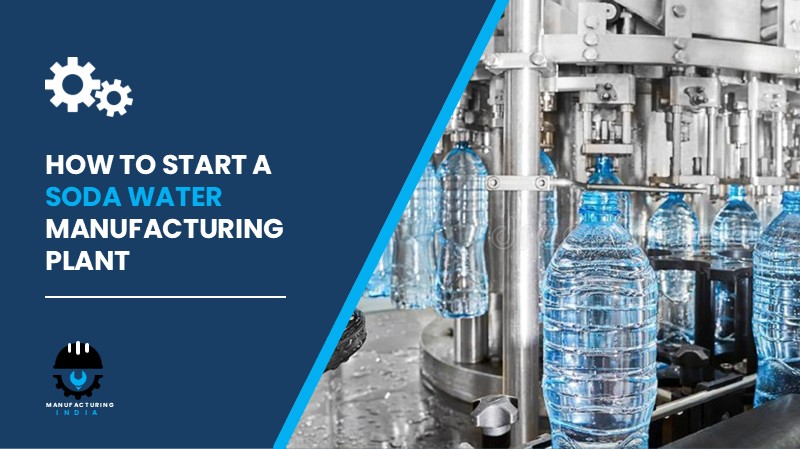
The soda water manufacturing process uses water purification, carbonation, filling, sealing, and packaging as the primary production method. This is a multi-step operation involving several unit operations, material handling, and quality checks.
- Water Sourcing and Pre-Treatment: Source water is subjected to preliminary filtration and pre-treatment to remove suspended solids and impurities before entering the primary treatment line.
- Water Purification: Water treatment systems are used to achieve the required purity levels through processes including filtration, softening, and reverse osmosis.
- CO₂ Carbonation: Purified water is fed into carbonation units where carbon dioxide (CO₂) from CO₂ storage tanks is dissolved under controlled pressure conditions to produce soda water.
- Quality Assurance and Testing: Carbonation levels, purity, product concentration, and stability are monitored using analytical instruments; technical tests and quality assurance criteria are applied at this stage.
- Filling and Capping: Carbonated water is transferred to filling and capping machines where it is dispensed into PET or glass bottles and sealed.
- Bottle Washing: Bottle washers clean and sanitize containers prior to or after filling, depending on plant configuration.
- Labeling: Labeling machines apply product labels and batch information in compliance with regulatory and traceability requirements.
- Packaging: Finished bottles are grouped and packed using packaging systems, ready for dispatch to food and beverage manufacturers, hospitality businesses, retail channels, and catering services.
Key Applications
Soda water manufactured at this facility serves end-use industries across food and beverage, hospitality, retail, and catering services:
- Hospitality and Foodservice: Widely used in hotels, restaurants, cafés, and bars as a mixer and standalone beverage.
- Retail and FMCG: Packaged soda water is sold through supermarkets, convenience stores, and online channels.
- Household Consumption: Consumed at home as a daily refreshment or digestive aid, driven by rising awareness about low-calorie beverage alternatives.
- Event and Catering Services: Used extensively in large-scale catering, parties, and corporate events.
Leading Soda Water Manufacturers
The global soda water industry is served by several multinational companies with extensive production capacities and diverse application portfolios across food and beverage, hospitality, retail, and catering services. Key players include:
- Nestlé S.A.
- PepsiCo, Inc.
- Keurig Dr. Pepper Inc.
- The Coca-Cola Company
- Sanpellegrino S.P.A.
- WakeWater Beverage Co.
- National Beverage Corp.
Timeline to Start the Plant
- Feasibility study and project report preparation
- Land acquisition and site development
- Regulatory approvals and environmental clearances
- Factory licence and fire safety compliance
- Machinery procurement and installation
- Raw material supplier agreements and supply chain setup
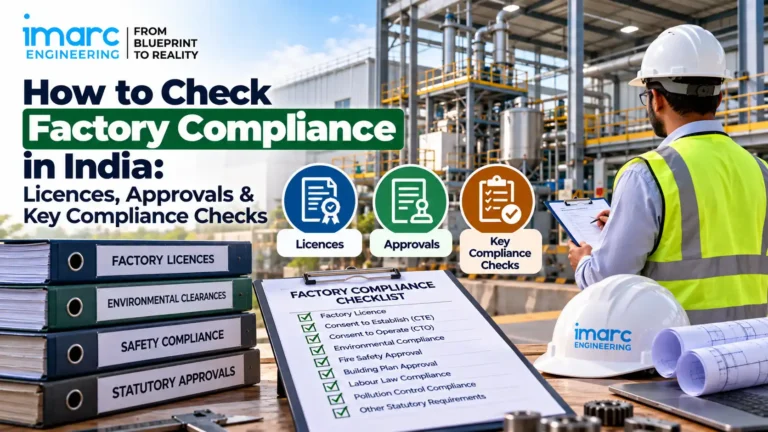
- Trial production and quality testing
- Commercial production launch
Licences and Regulatory Requirements
Starting a soda water manufacturing unit in India requires several approvals:
- Business registration (Proprietorship, LLP, or Pvt Ltd)
- Factory Licence under the Factories Act
- Environmental Clearance from State Pollution Control Board
- GST Registration
- Fire Safety NOC
- Effluent Treatment Plant (ETP) operational clearance
- Food Safety and Standards Authority of India (FSSAI) licence for beverage manufacturing
- Occupational Health and Safety compliance
Key Challenges to Consider
High Capital Requirements: Land and site development, civil construction, and machinery for water treatment systems, carbonation units, CO₂ storage tanks, and filling lines represent a significant upfront investment that requires careful financial planning and funding strategy.
Raw Material Price Volatility: Key raw materials including carbonated water (water + CO₂), bottles and caps (PET/glass), and sugar/artificial sweeteners and flavors are subject to commodity price fluctuations and supply chain disruptions, which can affect OpEx predictability. Long-term supplier contracts are a critical mitigation measure.
Regulatory Compliance: Environmental clearances, ETP operational requirements, food safety standards, and factory licensing require dedicated resources for documentation and ongoing compliance monitoring.
Technology and Innovation Pressure: The industry is evolving rapidly, with players such as Coca-Cola, Spindrift, and Evocus launching prebiotic sodas, fruit-based sparkling drinks, and premium-positioned products that redefine consumer expectations in the category.
Competition from Global Players: The presence of Nestlé S.A., PepsiCo Inc., Keurig Dr. Pepper Inc., The Coca-Cola Company, Sanpellegrino S.P.A., WakeWater Beverage Co., and National Beverage Corp. in the global market means that new manufacturers must compete on quality, price, and distribution efficiency.
Skilled Manpower: Operating water treatment systems, carbonation equipment, and automated filling and packaging lines requires trained technical staff, and retaining qualified personnel in food and beverage manufacturing can be a consistent operational challenge.
Frequently Asked Questions
1. How much does it cost to set up a soda water manufacturing plant in India?
The total cost depends on plant capacity, technology selection, automation level, location, and regulatory compliance requirements. It covers land and site development, civil works, machinery including water treatment systems and carbonation units, and pre-operative expenses. Request a sample report for detailed CapEx figures.
2. Is soda water manufacturing profitable in India in 2026?
Yes. The facility demonstrates healthy profitability potential under normal operating conditions, with gross profit margins of 30–45% and net profit margins of 15–25%, supported by stable demand from the food and beverage, hospitality, retail, and catering services sectors.
3. What machinery is required for a soda water plant in India?
Key machinery includes water treatment systems, carbonation units, CO₂ storage tanks, filling and capping machines, bottle washers, labeling machines, and packaging systems.
4. What licences and approvals are required to start a soda water plant in India?
Required approvals include business registration, Factory Licence, Environmental Clearance from the State Pollution Control Board, GST Registration, Fire Safety NOC, FSSAI licence, ETP operational clearance, and Occupational Health and Safety compliance.
5. What raw materials are needed for soda water manufacturing?
The key raw materials are carbonated water (water + CO₂), bottles and caps (PET/glass), and sugar/artificial sweeteners and flavors.
6. What are the environmental compliance requirements for a soda water plant in India?
An Effluent Treatment Plant (ETP) must be operational to minimize environmental impact and comply with emission and effluent standards. Environmental Clearance from the State Pollution Control Board and ongoing monitoring of effluent and waste streams are mandatory.
7. What is the best location to set up a soda water plant in India?
The ideal location offers easy access to raw materials such as CO₂, PET/glass bottles, and flavoring inputs; proximity to the target HoReCa and retail markets; robust utilities; and compliance with local zoning and environmental regulations. Industrial estates and SEZs in states with established food and beverage manufacturing clusters are recommended.
8. What is the break-even period for this type of plant in India?
Break-even period depends on capacity utilization, pricing strategy, and operating cost management. A detailed financial analysis including payback period, NPV, and IRR is available in the full project report.
9. What government incentives are available for manufacturers in India?
Manufacturers in India can explore incentives under the Make in India initiative, state-level industrial promotion schemes, PLI (Production Linked Incentive) schemes applicable to food processing, and concessional financing available through institutions such as SIDBI and NABARD for food and beverage manufacturing units.
Key Takeaways for Investors
A soda water manufacturing plant in India presents a well-grounded investment opportunity underpinned by consistent demand from the food and beverage, hospitality, retail, and catering services sectors. The investment demonstrates financial viability across plant capacities, with gross margins of 30–45% and net margins of 15–25% achievable under stable operating conditions. The global soda water market was valued at USD 15.76 billion in 2025 and is projected to reach USD 25.74 billion by 2034 at a CAGR of 5.6% from 2026 to 2034, underscoring the long-term scale of the opportunity. With rising urbanisation, health-conscious consumption patterns, and expanding HoReCa infrastructure in India’s cities, demand sustainability for this production category is structurally supported for the foreseeable future.
About the Author