Setting up an ice cream cone manufacturing plant in India presents a compelling investment case backed by robust and expanding demand across ice cream parlors and dessert chains, the foodservice and HoReCa sector, the retail and convenience food industry, and the household segment. Ice cream cones are crisp, baked edible wafers that serve as the primary delivery format for one of the world’s most universally consumed frozen desserts. As urbanisation accelerates and disposable incomes rise across Tier-1 and Tier-2 Indian cities, demand for ready-to-eat frozen treats is growing at a pace that far outstrips current domestic cone production capacity, making this an opportune moment for new entrants and existing food manufacturers to invest in this segment.
India’s structural advantages — abundant agricultural raw material supply including wheat flour and sugar, a cost-competitive labour force, improving cold-chain infrastructure, and government-backed initiatives such as Make in India — create an enabling environment for food manufacturing investment. Key states such as Gujarat, Maharashtra, Uttar Pradesh, and Punjab offer well-established food processing zones, reliable utility infrastructure, and proximity to both raw material suppliers and large consumer markets. For investors seeking a scalable, moderate-capital food manufacturing opportunity with healthy profit margins, the ice cream cone manufacturing plant in India presents a strategically sound proposition.
Establishing an ice cream cone manufacturing unit in India is supported by strong policy tailwinds, cost-competitive production inputs, and surging demand from ice cream parlors, foodservice operators, and retail channels. With gross profit margins ranging between 25–40% and net margins of 10–20%, the investment offers compelling financial viability and a realistic break-even horizon for plants operating across a range of capacities.
What are Ice Cream Cones?
Ice cream cones are crisp, baked edible wafers designed to hold and serve ice cream conveniently. They are typically made from a blend of flour, sugar, fats, emulsifiers, and natural or artificial flavoring agents, which together ensure consistent texture, taste, and structural integrity. The product’s long shelf life and durability make it suitable for large-scale industrial production as well as small commercial and household use.
Manufacturers produce ice cream cones in a variety of types to cater to diverse consumer preferences, including plain, sweet, chocolate-coated, multigrain, gluten-free, and fortified options enriched with nutrients or fiber. This range of variants enables producers to address both mass-market demand and premium or health-conscious consumer segments simultaneously. Ice cream cones are also compatible with both fully automated and semi-automated manufacturing systems, facilitating efficient production while maintaining uniform quality across batches.
The primary production method involves raw material weighing and batching, dry blending and homogenization, dough preparation and extrusion, baking and cooling, quality inspection, and packaging and labelling. End-use industries served include ice cream parlors and dessert chains, the foodservice and HoReCa sector, the retail and convenience food industry, and the household segment.
Cost of Setting Up an Ice Cream Cone Manufacturing Plant in India
The total cost of establishing an ice cream cone manufacturing plant depends on several interrelated variables, including plant capacity, technology choice, geographic location, degree of automation, and regulatory compliance requirements. Investors must account for both one-time capital expenditure and recurring operational costs when evaluating project economics.
1. Capital Expenditure (CapEx)
The capital investment covers all fixed asset creation required to bring the facility into operation. Land and site development form a substantial part of the overall investment and include charges for land registration, boundary development, and site preparation. Investors may consider locating within a Special Economic Zone (SEZ) or a notified food processing industrial estate to benefit from lower land costs, shared utilities, and available regulatory facilitation.
Civil works and construction costs cover the fabrication of the production shed, quality control laboratory, raw material and finished goods storage areas, utility rooms, and the administrative block. These must comply with food safety and factory design standards applicable in India.
Machinery and equipment costs represent the largest single component of capital expenditure. Key machinery required for an ice cream cone manufacturing plant includes:
- Mixers (for dough preparation and homogenization)
- Extruders (for shaping the cone dough)
- Baking ovens (for baking cones to the required texture and crispness)
- Cooling conveyors (for post-bake cooling before quality inspection)
- Sieving and screening units (for raw material preparation)
- Packaging machines (for automated or semi-automated packing)
- Quality inspection systems (for in-line product quality checks)
Other capital costs include effluent treatment plant (ETP) setup, pre-operative expenses, plant commissioning charges, and applicable import duties on specialized baking and extrusion equipment not manufactured domestically.
Request a Sample Report for In-Depth Market Insights: https://www.imarcgroup.com/ice-cream-cone-manufacturing-plant-project-report/requestsample
2. Operational Expenditure (OpEx)
Operating costs begin accumulating from the first year of commercial production and must be carefully managed to preserve profitability. Raw material cost is the dominant driver, accounting for approximately 45–55% of total operating expenses. Key raw materials required for ice cream cone production include wheat flour, sugar, vegetable oil, water, flavorings, and salt. Establishing long-term supplier contracts with domestic agricultural commodity traders and food ingredient suppliers can mitigate price volatility and ensure a consistent material supply throughout the year.
Utility costs — covering electricity, water, and steam — represent the second-largest operating expense category, typically accounting for 15–20% of total OpEx. Baking and extrusion processes are energy-intensive, and facilities should plan for reliable grid connectivity or captive power backup.
Other operating costs include transportation and logistics, packaging materials, salaries and wages, equipment maintenance and repairs, depreciation of fixed assets, and applicable taxes. By the fifth year of operations, total operational cost is expected to increase substantially due to factors such as inflation, market fluctuations, and potential rises in the cost of key raw materials. Supply chain disruptions, rising consumer demand, and shifts in the broader economy are also expected to contribute to this increase over the medium term.
3. Plant Capacity
The proposed manufacturing facility for an ice cream cone plant is designed with an annual production capacity ranging between 15 and 45 million cones per year, enabling economies of scale while maintaining operational flexibility. This capacity range can be customized per investor requirements depending on target market size, available capital, and land footprint. Profitability improves meaningfully with higher capacity utilisation, and investors are encouraged to plan for ramp-up schedules that progressively increase output utilisation from Year 1 through Year 3.
4. Profit Margins and Financial Projections
The ice cream cone manufacturing project demonstrates healthy profitability potential under normal operating conditions. Gross profit margins typically range between 25–40%, supported by stable demand and value-added product applications. Net profit margins are projected at 10–20% on an average basis across the five-year projection horizon. Financial viability is further assessed through net present value (NPV), internal rate of return (IRR), payback period analysis, liquidity ratios, and sensitivity analysis across key cost and pricing assumptions. These projections provide a comprehensive view of the project’s financial viability and long-term sustainability.
Why Set Up an Ice Cream Cone Plant in India?
Rising Demand for Frozen Desserts. The growing consumption of ice cream and frozen treats is the primary demand driver for ready-to-use cones across all consumer segments. Changing lifestyles and the rise of dual-income households have driven greater demand for convenient, on-the-go snacks, creating lucrative market opportunities for ice cream cone manufacturers supplying both retail and foodservice channels.
Expanding Retail and Foodservice Sector. The proliferation of ice cream parlors, cafes, dessert chains, and quick-service restaurants is fueling commercial demand for standardized, high-quality cones. Organized retail and e-commerce channels have also improved product accessibility, broadening the addressable market for packaged cone products in India’s semi-urban and rural markets.
Product Customization Opportunities. Manufacturers can produce specialty cones such as chocolate-coated, gluten-free, or multigrain variants to cater to changing consumer preferences. A rise in consumer interest in innovative flavors, textures, and health-oriented variants such as low-sugar, fortified, and gluten-free cones further supports long-term market growth and allows domestic manufacturers to command premium pricing.
Policy and Regulatory Tailwinds. India’s Make in India initiative and the government’s sustained focus on expanding the food processing sector provide a supportive policy environment. Industrial estates and food parks across Gujarat, Maharashtra, and Uttar Pradesh offer infrastructure support, fiscal incentives, and streamlined regulatory facilitation for new manufacturing investments in the food sector.
Active Industry Investment. The global ice cream cone industry continues to see active product development and brand investment. In December 2025, Dairy Queen announced plans to expand its Crunchin’ Cookie Dipped Cone lineup with a new Mint Crunchin’ Cookie flavor, highlighting the ongoing strategy of introducing innovative seasonal flavors. Also in December 2025, F&N MAGNOLIA and HERSHEY’S launched a limited-edition Mini ice cream range featuring Chocolate Overload Mini Cones, demonstrating sustained brand interest in cone-format products across multiple consumer formats.
Cost-Competitive Manufacturing and Local Supply Chain. India’s cost-competitive land, labour, and agricultural raw material ecosystem positions domestic manufacturers favourably relative to import-dependent supply chains. Proximity to established wheat flour, sugar, and vegetable oil supply chains in key agricultural states significantly reduces input logistics costs and supports stable year-round production.
Manufacturing Process – Step by Step
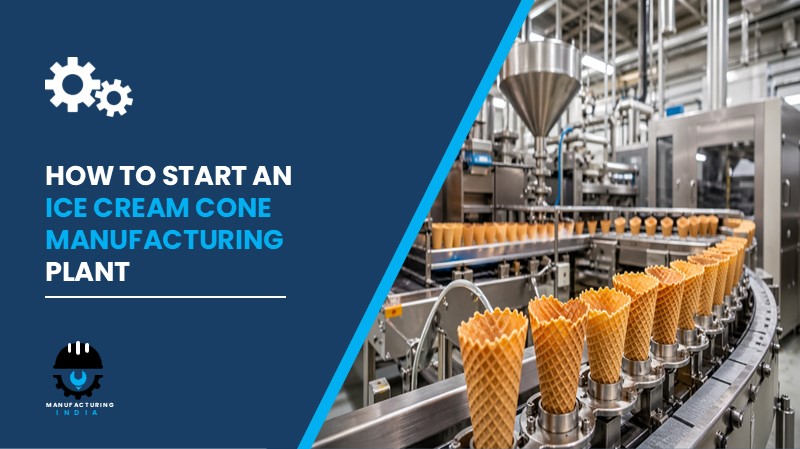
The ice cream cone manufacturing process uses raw material weighing and batching, dry blending and homogenization, dough preparation and extrusion, baking and cooling, quality inspection, and packaging and labelling as the primary production method.
- Raw Material Weighing and Batching: Wheat flour, sugar, vegetable oil, water, flavorings, and salt are measured precisely to achieve consistent batch composition and product quality.
- Dry Blending and Homogenization: Dry ingredients are blended uniformly using mixers and sieving and screening units to ensure even distribution before liquid ingredients are introduced.
- Dough Preparation and Extrusion: The blended ingredients are combined to form a smooth dough, which is then processed through extruders to achieve the required cone shape and wall thickness.
- Baking and Cooling: Shaped cone dough is passed through baking ovens at controlled temperatures to develop the characteristic crisp texture and golden colour. Post-bake, cones travel along cooling conveyors to achieve ambient temperature before inspection.
- Quality Inspection: Quality inspection systems check cones for dimensional accuracy, structural integrity, colour uniformity, and absence of defects before they are cleared for packaging.
- Packaging and Labelling: Approved cones are fed into packaging machines for automated or semi-automated packing into retail or bulk foodservice formats, followed by labelling with product information, batch codes, and shelf-life data before dispatch to ice cream parlors, HoReCa operators, retail distributors, and household consumers.
Key Applications
The ice cream cone plant serves a broad range of end-use industries, enabling consistent and scalable supply to both commercial and household markets:
- Ice Cream Parlors and Dessert Chains: Ensures consistent cone quality, texture, and taste for serving ice cream across high-volume retail dessert formats.
- Foodservice and HoReCa Sector: Supports quick service, low labour requirements, and product uniformity in cafes, hotels, and restaurants serving ice cream as a dessert offering.
- Retail and Convenience Food Industry: Enables packaged and ready-to-serve ice cream products for consumers purchasing through supermarkets, convenience stores, and e-commerce platforms.
- Household Segment: Allows home users to serve ice cream with high-quality cones without specialized skills or equipment, supporting everyday dessert consumption.
Leading Manufacturers
The global ice cream cone industry is served by several multinational companies with extensive production capacities and diverse application portfolios. Key players in the global market include:
- Joy Cone Company
- Waffle Cone Company
- Daiwabev Co. Ltd.
- Baldwin Richardson Foods Company
- Kokomo Cones
- Breyers
- Blue Bunny
- Nestlé
- Unilever
- Pinnacle Foods
Timeline to Start the Plant
The following phases outline a structured approach to commissioning an ice cream cone manufacturing unit in India:
- Feasibility study and project report preparation
- Land acquisition and site development
- Regulatory approvals and environmental clearances
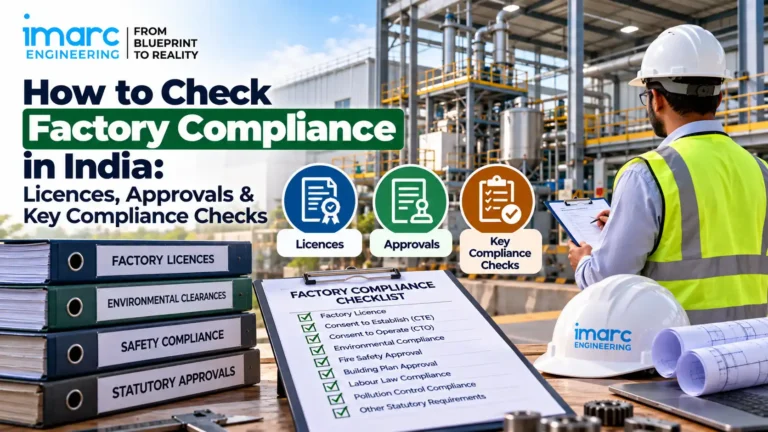
- Factory licence and fire safety compliance
- Machinery procurement and installation
- Raw material supplier agreements and supply chain setup
- Trial production and quality testing
- Commercial production launch
Licences and Regulatory Requirements
Starting an ice cream cone manufacturing unit in India requires several approvals:
- Business registration (Proprietorship, LLP, or Private Limited Company)
- Factory Licence under the Factories Act
- Environmental Clearance from the State Pollution Control Board
- GST Registration
- Fire Safety NOC
- Food Business Operator (FBO) Licence under FSSAI
- Effluent Treatment Plant (ETP) operational clearance
- Occupational Health and Safety compliance
Key Challenges to Consider
High Capital Requirements. Establishing a fully equipped ice cream cone manufacturing facility requires substantial upfront investment in baking ovens, extruders, cooling conveyors, and automated packaging lines. New investors must plan capital allocation carefully across land, civil works, machinery, and pre-operative costs.
Raw Material Price Volatility. Key raw materials including wheat flour, sugar, and vegetable oil are subject to commodity price fluctuations driven by agricultural output cycles, global trade dynamics, and seasonal demand. Long-term supplier contracts can partially mitigate this risk.
Regulatory Compliance. Food manufacturing in India is subject to multi-layered compliance requirements across FSSAI, Pollution Control Boards, the Factories Act, and GST. Maintaining ongoing compliance demands dedicated resources and regulatory expertise.
Competition from Established Players. The global ice cream cone market includes established multinational manufacturers such as Nestlé, Unilever, and Joy Cone Company with significant scale advantages. Domestic Indian producers must differentiate through product customization, cost efficiency, and responsive supply to local ice cream brands.
Technology and Innovation Pressure. Rising consumer interest in specialty formats such as gluten-free, multigrain, and fortified cones requires manufacturers to invest in flexible production systems capable of handling diverse raw material formulations without significant line changeovers.
Skilled Manpower. Operating baking, extrusion, and automated quality inspection equipment requires trained technical personnel. Recruiting and retaining skilled operators and quality control staff in food manufacturing industrial zones can be a persistent operational challenge.
Frequently Asked Questions
1. How much does it cost to set up an ice cream cone manufacturing plant in India?
The total setup cost depends on plant capacity, location, automation level, and technology choice. Key cost components include land and site development, civil construction, machinery (mixers, extruders, baking ovens, cooling conveyors, packaging machines), utilities, and pre-operative expenses. A detailed cost breakdown is available in the IMARC Group project report.
2. Is ice cream cone manufacturing profitable in India in 2026?
Yes. The ice cream cone manufacturing plant project demonstrates healthy profitability, with gross profit margins of 25–40% and net profit margins of 10–20% under normal operating conditions, supported by stable and growing demand across foodservice, retail, and household segments.
3. What machinery is required for an ice cream cone plant in India?
Essential equipment includes mixers, extruders, baking ovens, cooling conveyors, sieving and screening units, packaging machines, and quality inspection systems.
4. What licences and approvals are required to start an ice cream cone plant in India?
Required approvals include business registration, a Factory Licence under the Factories Act, Environmental Clearance, FSSAI Food Business Operator Licence, GST Registration, Fire Safety NOC, ETP operational clearance, and Occupational Health and Safety compliance.
5. What raw materials are needed for ice cream cone manufacturing?
The core raw materials are wheat flour, sugar, vegetable oil, water, flavorings, and salt.
6. What are the environmental compliance requirements for an ice cream cone plant in India?
Manufacturers must obtain Environmental Clearance from the State Pollution Control Board, operate a functional Effluent Treatment Plant (ETP), and comply with applicable emission and waste management standards under Indian environmental regulations.
7. What is the best location to set up an ice cream cone plant in India?
Ideal locations include food processing industrial estates in Gujarat, Maharashtra, Uttar Pradesh, or Punjab, offering proximity to wheat flour and sugar supply chains, reliable utility infrastructure, cold-chain connectivity, and access to large consumer markets.
8. What is the break-even period for this type of plant in India?
The break-even period varies by plant capacity, capital investment, and capacity utilisation rate. A detailed payback period analysis is provided in the IMARC Group feasibility report, covering NPV and IRR projections across a five-year financial model.
9. What government incentives are available for manufacturers in India?
Food processing manufacturers in India can access capital subsidies, credit-linked schemes, and infrastructure support through programs under the Ministry of Food Processing Industries (MoFPI), PLI schemes for food processing, and state-level industrial investment promotion policies.
Key Takeaways for Investors
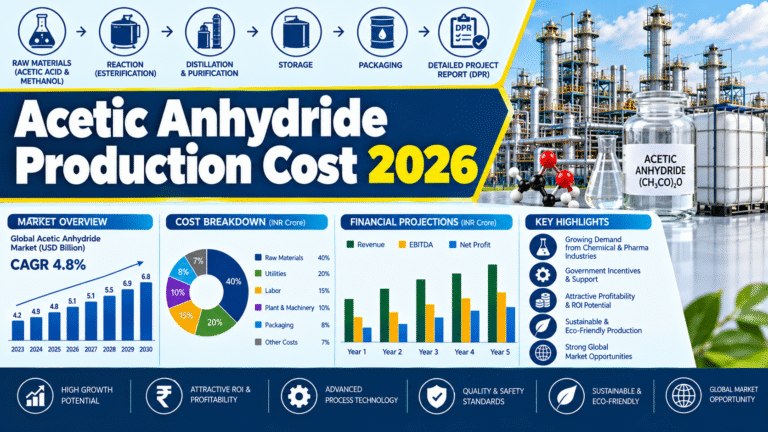
The ice cream cone manufacturing plant in India represents a compelling investment opportunity driven by growing demand from ice cream parlors and dessert chains, the HoReCa sector, organized retail, and household consumers across India’s expanding urban and semi-urban markets. The project demonstrates financial viability across a range of plant capacities — from 15 million to 45 million cones per year — with gross margins of 25–40% and net margins of 10–20% supporting a realistic return on investment. The global ice cream cone market was valued at USD 3.36 Billion in 2025 and is projected to reach USD 5.04 Billion by 2034, growing at a CAGR of 4.6%, reflecting durable long-term demand tailwinds that favour early-mover domestic manufacturers in India’s under-supplied cone production landscape.
About the Author