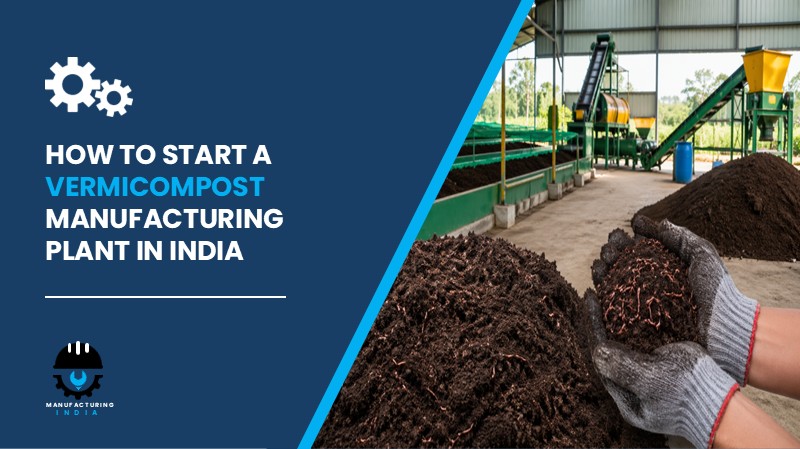
Setting up a vermicompost manufacturing plant in India presents a compelling investment case at a time when the country’s agricultural sector is undergoing a decisive shift toward organic farming, rising consumer demand for organic food is accelerating, and the government’s commitment to reducing chemical fertiliser dependence through schemes like the Parampara at Krishi Vikas Yojana (PKVY) is creating policy-supported demand for organic soil enrichment products at scale. Vermicompost — a nutrient-rich organic fertiliser produced by earthworms that break down organic waste materials such as cattle dung, food scraps, agricultural residues, and manure — is emerging as the most commercially viable and agronomically effective natural alternative to chemical fertilisers for Indian farmers seeking to improve soil health, boost crop yields, and meet the growing export demand for organically certified produce. Rich in essential nutrients like nitrogen, phosphorus, potassium, and micronutrients essential for plant growth, vermicompost simultaneously improves soil structure, promotes microbial activity, and enhances moisture retention — delivering multiple benefits that no single synthetic fertiliser can replicate.
India’s structural advantages for vermicompost manufacturing are exceptional and distinctly aligned with this product’s raw material requirements. The country’s vast cattle population — the world’s largest — provides an abundant and largely cost-free supply of cattle dung, the primary feedstock for vermicomposting operations. Agricultural residues, food waste, and organic by-products are available at scale across India’s farming belts, creating a near-zero-cost raw material base that makes vermicompost one of the most capital-light, high-margin organic product manufacturing investments available anywhere in the country. The Make in India initiative and government support for organic farming and waste-to-wealth programmes are providing policy tailwinds, while the Tripura government’s inauguration of a common facility centre in January 2026 to convert agricultural waste including banana pseudo stems into vermicompost and other value-added products signals active state-level investment momentum that complements the national policy framework.
Investing in a vermicompost manufacturing plant in India today aligns India’s vast organic waste availability, the national shift to organic farming, and rising consumer demand for certified organic produce with a global vermicompost market growing from USD 95.72 Billion in 2025 to USD 263.31 Billion by 2034 at an exceptional CAGR of 11.9%. With gross profit margins of 50–65% and net profit margins of 25–40% — among the highest of any agri-input manufacturing investment — the unit economics are extraordinary, and the facility’s low-energy, biology-driven production model supports commercially robust returns at the proposed annual capacity of 2,000 metric tonnes.
What is Vermicompost?
Vermicompost is a type of organic fertiliser produced by earthworms that break down organic waste materials such as food scraps, agricultural residues, and manure. The process of vermicomposting results in a nutrient-rich product that enhances soil health and fertility. It is rich in essential nutrients like nitrogen, phosphorus, potassium, and micronutrients which are essential for plant growth. Additionally, vermicompost improves soil structure, promotes microbial activity, and enhances moisture retention — benefits that accumulate over multiple growing seasons as the organic matter becomes incorporated into the soil ecosystem.
This organic fertiliser is non-toxic, eco-friendly, and contributes to sustainable agriculture by reducing waste and reliance on chemical fertilisers. Vermicompost is suitable for use across agriculture, gardening, nurseries and plant cultivation, greenhouses and hydroponics, landscaping and turf management, and waste management applications, making a single production facility capable of serving multiple distinct customer channels simultaneously. The production process covers organic waste collection, composting and earthworm introduction, the vermicomposting process itself, harvesting and screening, and packaging — a biology-driven, low-energy process that requires minimal machinery investment relative to the gross value of product it generates.
Cost of Setting Up a Vermicompost Manufacturing Plant in India
The cost of establishing a vermicompost manufacturing plant in India depends on production capacity, the range of organic feedstock types processed, bed infrastructure design, earthworm population management, geographic location — particularly access to cattle dung and agro-waste supply — and the quality certification requirements applicable to organic fertiliser sold to farming, gardening, and horticultural customers in India and export markets.
1. Capital Expenditure (CapEx)
Land and Site Development forms a foundational component of total capital investment, covering land acquisition charges, site registration, boundary development, drainage to manage leachate from vermicomposting beds, and site utilities. Unlike capital-intensive chemical plants, a vermicompost manufacturing plant requires relatively modest land preparation — primarily levelling, drainage provision, and shaded or covered bed area infrastructure to protect earthworms and composting material from excessive heat, rain, and predators. Investors may explore agricultural land or agri-processing zones adjacent to cattle-rearing areas in states such as Uttar Pradesh, Madhya Pradesh, Rajasthan, Maharashtra, and Andhra Pradesh, where cattle dung availability and agricultural residue supply are most abundant and transport costs for primary feedstock are minimised.
Civil Works and Construction cover the construction of vermicomposting beds — typically raised concrete or brick structures 1–1.5 metres wide and of varying length depending on capacity — covered shed structures to protect beds from direct rainfall and excessive sun, raw material pre-composting areas, a screening and processing building, a quality control area, finished goods storage with appropriate moisture management, and an administrative block.
Machinery and Equipment represent a significant component of total CapEx for a vermicompost manufacturing plant, though at considerably lower absolute levels than most manufacturing categories. Key machinery required includes:
- Vermiculture beds or containers
- Shredders and grinders
- Screening equipment
- Packaging equipment
- Composting tanks
Other Capital Costs include an effluent treatment plant (ETP) or leachate management system for managing the liquid runoff from composting beds — vermicompost leachate being itself a valuable liquid fertiliser that can be collected and sold — pre-operative expenses, organic fertiliser certification costs, commissioning charges, and earthworm colony establishment investment.
Request a Sample Report for In-Depth Market Insights: https://www.imarcgroup.com/vermicompost-manufacturing-plant-project-report/requestsample
2. Operational Expenditure (OpEx)
Raw Material Cost is the primary operational expense, accounting for approximately 20–30% of total OpEx — a remarkably low raw material cost proportion that is the defining financial characteristic of vermicompost manufacturing and the primary driver of its exceptional gross margins. The primary raw materials are cattle dung, earthworms (Eisenia fetida), and agro-waste for bedding. Cattle dung — consumed in the largest volumes as the primary carbon and nitrogen substrate for earthworm feeding — is widely available at very low or near-zero cost from cattle farms, goshalas, dairy operations, and rural households across India’s agricultural states. Agro-waste including crop residues, straw, and husk provides bedding material similarly available at minimal cost from local farming operations. Earthworms, once the colony is established, self-replicate and the ongoing earthworm procurement cost is limited to colony top-ups. Long-term supplier relationships with local cattle operations and farmer groups ensure supply continuity.
Utility Cost is the second-largest OpEx component, representing only 5% of total operating expenses — the lowest utility proportion of any manufacturing category in this investment guide series — reflecting the entirely biology-driven, low-energy nature of vermicomposting where the earthworms do the processing work without requiring heat, pressure, or chemical inputs. Electricity for shredders, grinders, screening equipment, and packaging machinery constitutes the entire utility requirement.
Other Operating Costs include transportation and distribution to agricultural input dealers, organic farms, nurseries, horticulture companies, landscaping contractors, and online retail channels, packaging materials for bagged vermicompost in 1 kg, 5 kg, and 50 kg formats, salaries and wages for bed management workers, screening operators, and quality control staff, routine maintenance of shredding and screening equipment, depreciation on machinery and civil structures, and applicable taxes. By the fifth year of operations, total operational costs are projected to increase substantially due to inflation, market fluctuations, and rising consumer demand for organic products — requiring careful multi-year financial planning.
3. Plant Capacity
The proposed manufacturing facility for vermicompost is designed with an annual production capacity of 2,000 metric tonnes, enabling economies of scale while maintaining operational flexibility across multiple product grades — standard agricultural vermicompost, premium bagged garden vermicompost, and certified organic vermicompost for export markets. Plant capacity can be customised per investor requirements and expanded through additional bed infrastructure and earthworm colony scaling, both of which require minimal incremental capital. This modular scalability is a distinctive commercial advantage of vermicompost manufacturing: capacity can be added incrementally as market demand grows and customer relationships are established, without the large indivisible capital commitments required in chemical or mechanical manufacturing.
4. Profit Margins and Financial Projections
The financial projections for a vermicompost manufacturing plant represent the most attractive margin profile of any agri-input manufacturing investment. Gross profit margins typically range between 50–65% — driven by the near-zero cost of raw materials relative to the market selling price of finished vermicompost — and net profit margins are projected at 25–40%. These exceptional margins reflect the fundamental economics of vermicomposting: converting widely available, low-cost or free organic waste inputs into a nutrient-rich, premium-priced organic fertiliser product through a biological process that requires minimal energy, chemical inputs, or sophisticated machinery. A comprehensive financial analysis covering NPV, IRR, payback period, and five-year projections is essential before committing capital to optimise capacity, product mix, and market channel strategy.
Why Set Up a Vermicompost Plant in India?
Rising Demand for Organic Fertilisers Across India’s Farming Sector. As consumers increasingly demand organic food, farmers are turning to organic fertilisers like vermicompost to meet certification and market requirements. The Organic Trade Association stated that sales of certified organic products in the U.S. surged in 2024, with an annual growth rate of 5.2%, reaching USD 71.6 Billion — a global benchmark that illustrates the scale of consumer-driven demand for organic products that is driving farmer adoption of organic inputs including vermicompost. In India, government programmes supporting organic farming and the growing domestic market for certified organic food produce are creating an immediate and expanding domestic demand base.
Sustainability and Soil Health Benefits Driving Institutional Adoption. Vermicompost manufacturing supports sustainable agriculture by reducing the need for chemical fertilisers and promoting healthier soils. Vermicompost not only provides essential nutrients to plants but also improves soil structure, aeration, and water retention, leading to healthier plants, higher yields, and reduced soil erosion. This multi-dimensional agronomic benefit profile — combining fertility, structure improvement, and biological activity enhancement — is driving institutional adoption across government-backed organic farming programmes, large agricultural estates, and export-oriented organic farm clusters.
Waste Management and Resource Recovery Creating Circular Economy Opportunity. Vermicomposting provides an eco-friendly solution for managing organic waste by converting agricultural, food, and other organic waste into valuable fertilisers. In January 2026, the Government of Tripura inaugurated a common facility centre to convert banana pseudo stems into value-added products including vermicompost, liquid fertiliser, yarn, fibre, fabric, and biodegradable paper — a government-backed waste-to-wealth model that helps farmers earn additional income and promotes sustainable agriculture. This initiative demonstrates active state government support for vermicompost production as a solution to agricultural waste management alongside its role as an organic fertiliser.
Urban Farming, Home Gardening, and Hydroponics Expansion. The rise in urban farming, home gardening, and the popularity of greenhouses and hydroponic systems contributes significantly to vermicompost market growth beyond traditional agricultural applications. India’s growing urban middle class with balcony gardens, kitchen gardens, and community farming initiatives is creating a new and premium-priced consumer channel for packaged vermicompost in small formats — a higher-margin product segment that domestic producers can serve through organised retail, e-commerce, and direct-to-consumer channels.
Active Global Investment Confirming Market Growth. In January 2025, Worm Power secured a USD 900,000 USDA Fertilizer Production Expansion Program grant to expand and modernise its 10-acre vermicomposting facility in Avon, New York — with upgrades to equipment, storage, and logistics aimed at boosting production capacity to meet growing demand for its organic vermicompost. This US government investment in domestic vermicompost capacity signals the global commercial momentum and institutional demand scale that the category is achieving — a trend directly relevant to India’s own organic fertiliser transition.
Cost-Effective Production with Locally Abundant Raw Materials. Vermicomposting is an energy-efficient and low-cost process compared to other methods of composting and fertiliser production. The raw materials — agricultural waste, food scraps, and animal manure — are typically inexpensive and readily available throughout India’s agricultural states, making vermicompost manufacturing one of the most accessible, low-capital-barrier agri-business investments available to entrepreneurs across India’s rural and peri-urban geographies.
Manufacturing Process — Step by Step
The vermicompost manufacturing process uses organic waste collection, composting and earthworm introduction, the vermicomposting process, harvesting and screening, and packaging as the primary production method. Each stage requires careful biological process management — monitoring moisture, temperature, pH, and earthworm population health — rather than mechanical or chemical process control, making experienced bed management and biological understanding the key operational competency for consistent, high-quality vermicompost production.
- Organic Waste Collection and Preparation: Cattle dung, agro-waste, food scraps, and other organic feedstocks are collected from local sources, inspected for quality and contamination, and transported to the production facility. Feedstock is initially assessed for carbon-to-nitrogen ratio, moisture content, and the absence of toxicants — particularly pesticide residues and antibiotics — that would harm earthworm populations.
- Pre-Composting: Collected organic waste — particularly cattle dung mixed with agro-waste — is pre-composted in composting tanks or open windrows for 15–20 days to reduce pathogens, stabilise pH, lower temperature, and partially break down complex organic molecules to a substrate suitable for earthworm feeding. Pre-composting is critical for preventing earthworm mortality from excess heat or toxic compounds present in raw materials.
- Bed Preparation and Earthworm Introduction: Vermicomposting beds or containers are prepared with a base layer of bedding material — shredded agro-waste, straw, or coconut coir — moistened to approximately 60–70% moisture content. Pre-composted organic substrate is loaded onto beds, and earthworms — predominantly Eisenia fetida (red wigglers) — are introduced at the specified stocking density per square metre of bed area.
- Vermicomposting Process: Earthworms feed on the organic substrate, breaking it down through ingestion, digestion, and excretion into vermicast — the fine-grained, nutrient-rich organic material that constitutes finished vermicompost. The beds are maintained at optimal temperature (15–25°C), moisture (60–70%), and pH (6.5–7.5) throughout the composting cycle, which typically spans 45–90 days depending on feedstock type and earthworm population density. Regular feeding of fresh substrate is applied as the existing material is processed.
- Harvesting: When the composting cycle is complete — indicated by the characteristic dark brown, odour-free, crumbly texture of finished vermicompost — earthworms are separated from the finished product by migration harvesting techniques that encourage worms to move to fresh substrate, or by gentle manual or mechanical separation to minimise earthworm mortality during harvesting.
- Screening: Harvested vermicompost is processed through screening equipment — typically rotary or vibrating screens of 4–6 mm mesh — to remove unprocessed organic material, stones, and oversize particles, producing a uniform, fine-grained finished product of consistent texture and appearance.
- Curing and Quality Testing: Screened vermicompost is cured in covered areas for 7–10 days to stabilise the biological activity and moisture content, then tested for nitrogen, phosphorus, potassium content, pH, moisture level, and microbial load to verify compliance with Fertiliser Control Order (FCO) specification requirements for organic fertilisers.
- Packaging and Dispatch: Specification-compliant vermicompost is filled and sealed into bags of specified weights — 1 kg for retail gardening, 5 kg for premium horticulture, and 50 kg for agricultural bulk supply — using packaging equipment, then dispatched to agriculture input dealers, organic farms, nurseries and plant cultivation businesses, greenhouse and hydroponic operators, landscaping and turf management contractors, and waste management programme buyers.
Key Applications
Vermicompost manufactured in India serves a commercially broad and rapidly expanding range of agricultural, horticultural, and environmental applications:
- Agriculture: Widely used in organic farming as a natural fertiliser to improve soil health, boost plant growth, and increase crop yield across food grain, vegetable, fruit, and export crop production systems.
- Gardening and Landscaping: Used extensively in home gardening and professional landscaping to enrich soil, enhance plant growth, and improve plant resistance to diseases across residential, commercial, and institutional green space management.
- Greenhouses and Hydroponics: Used as a soil amendment in greenhouse farming and hydroponic systems to promote healthy root development and provide essential nutrients, enhancing health and productivity of crops grown in controlled environments.
- Lawn and Turf Management: Applied to lawns and sports fields to improve soil structure, increase nutrient availability, and enhance the aesthetic quality and resilience of turf under intensive use conditions.
- Waste Management and Recycling: The vermicomposting process helps manage organic waste by converting kitchen and agricultural waste into valuable compost, thereby reducing landfill waste and supporting circular economy waste management objectives.
Leading Manufacturers
The global vermicompost industry is served by a growing group of specialist producers with diverse production capacities and application portfolios across agricultural, horticultural, and waste management segments. Key players in the global market include:
- MyNoke
- Nutrisoil Pty Ltd
- Worm Power
- Woemtech Pty Ltd.
- Sri Gayathri Biotech
Timeline to Start the Plant
Establishing a vermicompost manufacturing plant in India involves a structured multi-phase development sequence. Investors should plan for the following phases:
- Feasibility study and project report preparation
- Land acquisition and site development
- Regulatory approvals and environmental clearances
- Factory licence and fire safety compliance
- Machinery procurement and installation
- Raw material supplier agreements and supply chain setup
- Trial production and quality testing
- Commercial production launch
Licences and Regulatory Requirements
Starting a vermicompost manufacturing unit in India requires several approvals spanning business registration, organic fertiliser certification, environmental, and agricultural compliance domains:
- Business registration (Proprietorship, LLP, or Pvt Ltd)
- Factory Licence under the Factories Act
- Environmental Clearance from the State Pollution Control Board
- GST Registration
- Fire Safety NOC
- Fertiliser Control Order (FCO) registration for organic fertilisers under the Ministry of Agriculture, mandatory for commercial sale of vermicompost as an agricultural input in India
- National Centre of Organic Farming (NCOF) certification for vermicompost quality compliance applicable to organic farming programme supply
- Effluent Treatment Plant (ETP) or leachate management system operational clearance
- Occupational Health and Safety compliance
Key Challenges to Consider
Earthworm Population Management and Biological Process Control. The performance of a vermicompost plant depends fundamentally on maintaining healthy, productive earthworm populations — requiring consistent monitoring of moisture, temperature, pH, and feedstock quality across all beds. Earthworm mortality from overheating, flooding, toxic feedstock, predator ingress, or incorrect moisture levels can disrupt production cycles and reduce throughput significantly. Building operational expertise in earthworm colony management is the most critical non-capital investment the business requires.
Feedstock Quality Consistency and Contamination Risk. While cattle dung and agro-waste are widely available at low cost, their quality can vary significantly depending on source, season, and management practices. Antibiotic and hormone residues in cattle dung from intensively managed dairy operations, pesticide residues in agricultural waste, and heavy metal contamination from industrial organic waste can harm earthworm populations and compromise finished product quality — requiring careful supplier screening and incoming material quality assessment protocols.
FCO Certification and Regulatory Compliance for Agricultural Market Access. Vermicompost sold commercially as an agricultural input in India must be registered under the Fertiliser Control Order, with product composition meeting specified minimum standards for nutrient content, pH, moisture, and absence of contaminants. Achieving and maintaining FCO registration requires product testing at accredited laboratories, documentation of production standards, and ongoing compliance with regulatory updates — an administrative requirement that is manageable but must be planned and resourced from the outset.
Seasonal Demand and Monsoon Impact on Production. Agricultural demand for vermicompost is seasonal in nature, peaking ahead of Kharif and Rabi sowing seasons, which requires production planning, finished goods inventory management, and working capital management aligned to the agricultural calendar. Additionally, the vermicomposting process is sensitive to extreme weather conditions — excessive heat in summer and waterlogging during monsoon — requiring covered bed infrastructure and drainage management to maintain year-round production continuity.
Competition in a Fragmented Market. India’s vermicompost market includes a large number of small unorganised producers alongside established players like Sri Gayathri Biotech, creating competitive pressure on pricing for standard agricultural-grade vermicompost. New entrants must differentiate through product quality certification, consistent supply reliability, premium packaging for urban gardening and retail channels, and export market development to achieve commercial-scale margin realisation beyond the commodity agricultural segment.
Scaling Production While Maintaining Biological Quality. Scaling a vermicompost operation requires proportional expansion of earthworm colony populations, bed infrastructure, and feedstock supply chains simultaneously — a coordination challenge that differs from conventional manufacturing where capacity addition is primarily mechanical. Managing this biological scaling effectively while maintaining consistent product quality across expanded bed area requires experienced production management and careful capacity planning.
Frequently Asked Questions
1. How much does it cost to set up a vermicompost manufacturing plant in India?
The total setup cost depends on production capacity, bed infrastructure design, earthworm colony establishment scale, location, and automation level. CapEx covers land and site development, vermicomposting bed civil construction, covered shed infrastructure, core machinery including vermiculture beds or containers, shredders and grinders, screening equipment, packaging equipment, and composting tanks, along with leachate management, FCO certification costs, and other capital costs. A detailed project report with full CapEx and OpEx breakdowns is available on request.
2. Is vermicompost manufacturing profitable in India in 2026?
Exceptionally so. The project demonstrates gross profit margins of 50–65% and net profit margins of 25–40% — among the highest margin profiles across all agri-input manufacturing investments — driven by the near-zero cost of primary raw materials (cattle dung and agro-waste) relative to the market value of finished vermicompost. These economics are further supported by a global vermicompost market growing at 11.9% CAGR from USD 95.72 Billion in 2025 to USD 263.31 Billion by 2034.
3. What machinery is required for a vermicompost plant in India?
Key machinery includes vermiculture beds or containers, shredders and grinders for feedstock size reduction, screening equipment for finished product grading, packaging equipment for bagging, and composting tanks for pre-composting operations. The relatively modest machinery requirement is a distinctive advantage of vermicompost manufacturing compared to other agri-input production investments.
4. What licences and approvals are required to start a vermicompost plant in India?
Required approvals include business registration, a Factory Licence under the Factories Act, Environmental Clearance from the State Pollution Control Board, GST registration, a Fire Safety NOC, FCO registration for organic fertiliser commercial sale, NCOF quality certification for organic farming market supply, leachate management system clearance, and Occupational Health and Safety compliance.
5. What raw materials are needed for vermicompost manufacturing?
The primary raw materials are cattle dung, earthworms (Eisenia fetida), and agro-waste for bedding. Cattle dung accounts for approximately 20–30% of total operating expenses — the lowest raw material cost proportion of any manufacturing category — making feedstock procurement logistics and earthworm colony management rather than raw material cost the primary operational focus of the business.
6. What are the environmental compliance requirements for a vermicompost plant in India?
The unit must obtain Environmental Clearance from the State Pollution Control Board, implement a leachate management system for collecting and treating or utilising vermicompost bed runoff, ensure covered bed infrastructure prevents organic odour nuisance to neighbouring properties, and comply with solid organic waste management norms applicable to agricultural processing facilities.
7. What is the best location to set up a vermicompost plant in India?
Optimal locations offer proximity to abundant cattle dung supply from dairy farms, goshalas, or cattle markets, easy access to agricultural residue feedstock, reliable water supply for bed moisture management, and logistics connectivity to organic farming clusters, horticulture markets, and urban retail channels. Agricultural processing zones in Uttar Pradesh, Madhya Pradesh, Rajasthan, Maharashtra, and Andhra Pradesh are among the most strategically relevant options for this investment.
8. What is the break-even period for this type of plant in India?
The break-even period depends on production capacity, feedstock procurement costs, capacity utilisation rate, and the product mix balance between agricultural bulk supply and higher-margin retail and horticultural channels. Given the exceptional gross margins of 50–65% and low utility costs of 5% of OpEx, the break-even timeline is among the shortest of any manufacturing investment at comparable capital scale. A detailed financial analysis including payback period, NPV, and IRR projections is available via the sample request link.
9. What government incentives are available for manufacturers in India?
The Make in India initiative, Paramparagat Krishi Vikas Yojana (PKVY) for organic farming support, National Mission for Sustainable Agriculture (NMSA) programmes, and state-level organic farming promotion schemes provide financial and regulatory support for vermicompost manufacturing investments. Capital subsidies, interest subvention, and marketing support for organic fertiliser producers are available under NABARD and state agricultural department programmes in multiple states.
Key Takeaways for Investors
A vermicompost manufacturing plant in India represents one of the most financially extraordinary and environmentally purposeful agri-input investments available in the country today — where gross profit margins of 50–65% and net profit margins of 25–40% combine with a global market growing from USD 95.72 Billion in 2025 to USD 263.31 Billion by 2034 at an 11.9% CAGR to create an investment case that is simultaneously commercially compelling and aligned with India’s sustainable agriculture and waste-to-wealth policy priorities. The project demonstrates exceptional financial viability at the proposed 2,000 MT annual capacity, with low raw material costs of 20–30% of OpEx and minimal utility consumption of just 5% of OpEx confirming that vermicompost manufacturing is among the most capital-efficient, margin-rich, and scalable agri-processing investments accessible to Indian entrepreneurs across a wide range of operational scales. With certified organic product sales in the U.S. alone reaching USD 71.6 Billion in 2024 at 5.2% annual growth, the Tripura government’s January 2026 waste-to-wealth facility inauguration signalling active state support, and Worm Power’s USD 900,000 USDA grant expansion confirming institutional demand momentum globally, demand sustainability for India-based vermicompost production is structurally robust, policy-supported, and commercially compelling across the full investment horizon and well beyond.
About the Author