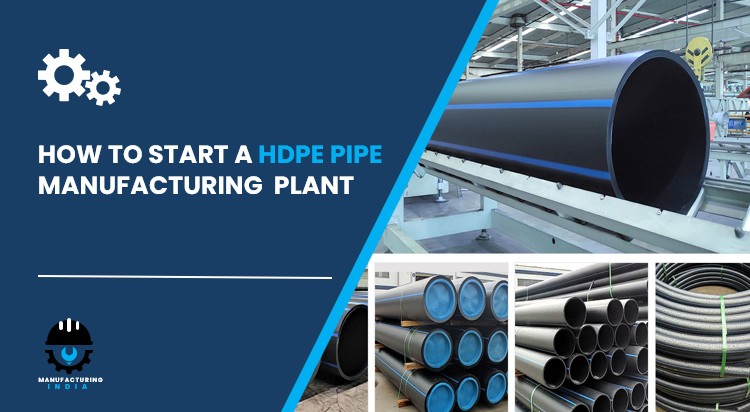
Setting up an HDPE pipe manufacturing plant in India presents a compelling investment opportunity, driven by rapid expansion of global water and sanitation infrastructure, rising agricultural modernisation initiatives, and the accelerating replacement of ageing metal and concrete pipelines with corrosion-resistant polymer systems. As one of the most versatile and structurally robust categories within the broader plastics piping industry, High-Density Polyethylene (HDPE) pipes combine superior chemical resistance, long service life, and cost-effective installation to serve a vast range of end-use applications across municipal, agricultural, industrial, and energy sectors.
The global HDPE pipe market is propelled by a convergence of infrastructure investment, sustainability mandates, and technological advancement. Government-led programmes targeting universal safe drinking water access, efficient wastewater treatment, irrigation network expansion, and urban drainage upgrades are creating consistent and substantial demand for HDPE piping systems. The material’s compatibility with trenchless installation techniques further reduces civil works costs, making it the preferred choice for urban infrastructure upgrades. The global HDPE pipe market size was valued at USD 22.0 Billion in 2025. According to IMARC Group estimates, the market is expected to reach USD 30.9 Billion by 2034, exhibiting a CAGR of 3.88% from 2026 to 2034.
Rapid urbanisation, population growth, and industrial expansion continue to elevate demand for reliable fluid transport systems, while the shift toward smart water management systems integrates HDPE pipes as a core infrastructure component.
HDPE pipe production sits at the intersection of polymer processing innovation, infrastructure development, and multi-sector demand growth. With gross profit margins typically ranging between 20–30% and a well-defined break-even trajectory, a dedicated HDPE pipe manufacturing plant represents both a financially robust and strategically well-timed investment for entrepreneurs, polymer processors, and institutional investors targeting the evolving global construction and infrastructure markets.
What is HDPE Pipe?
HDPE (High-Density Polyethylene) pipes are thermoplastic piping solutions manufactured from polyethylene resin with a high strength-to-density ratio. These pipes are produced through extrusion processes that result in lightweight, flexible, corrosion-resistant, and chemically inert piping systems. HDPE pipes exhibit excellent resistance to impact, abrasion, and environmental stress cracking, along with superior pressure-handling capability. Their smooth internal surface ensures low friction losses and long service life, often exceeding 50 years under normal operating conditions.
HDPE pipes span a wide dimensional range, from small-diameter irrigation laterals to large-diameter municipal water mains and industrial process lines, available in pressure-rated (PN) classifications aligned to international standards such as ISO 4427, EN 12201, and ASTM D3350. Common end-use configurations include straight pipe sections, coiled pipes for flexible service connections, and fittings for complex pipeline assemblies. Due to their durability and leak-proof jointing methods such as butt fusion, electrofusion, and mechanical compression fittings, HDPE pipes are widely used in water supply, sewerage, gas distribution, industrial fluid transfer, and agricultural irrigation systems.
The production process broadly involves polymer resin feeding, single or twin-screw extrusion, pipe die forming, vacuum calibration, water cooling, haul-off, cutting to length, printing, and quality inspection, with optional compounding for colour or UV stabilisation. End-use segments served by HDPE pipe manufacturers include municipal water authorities, irrigation departments, oil and gas operators, construction and civil engineering firms, industrial process plants, and mining operations across domestic and international markets.
Cost of Setting Up an HDPE Pipe Manufacturing Plant
The total cost of establishing an HDPE pipe manufacturing plant depends on several variables including plant capacity, level of automation, pipe diameter and pressure rating range, geographic location, raw material sourcing strategy, and applicable regulatory and environmental compliance requirements. A thorough feasibility assessment covering all CapEx and OpEx components is essential before committing capital.
1. Capital Expenditure (CapEx)
Capital investment for an HDPE pipe manufacturing plant covers several broad cost heads. Land and site development forms a substantial part of the overall investment, encompassing land registration charges, boundary development, drainage, and related site preparation expenses. Investors may consider locating the facility within a designated plastics processing or industrial manufacturing zone to benefit from land cost efficiencies, plug-and-play infrastructure, and state-level incentives. Civil works and construction costs cover the production hall, resin storage silos, finished goods warehouse, quality control laboratory, effluent management infrastructure, and the administrative block.
Machinery and equipment costs represent the largest single portion of total capital expenditure for an HDPE pipe plant. Key machinery required includes:
- Resin storage silos and gravimetric material loaders
- Single or twin-screw extruders (sized by output capacity and pipe diameter range)
- Pipe die heads and crosshead assemblies
- Vacuum calibration tanks and sizing sleeves
- Cooling troughs (water spray and immersion systems)
- Haul-off units (caterpillar or belt type)
- Planetary cutting saws or rotary cutters
- Pipe coiling equipment (for small-diameter flexible pipes)
- Printing and marking machines (inkjet or hot stamp)
- Pipe stacking and bundling systems
- Quality control and testing equipment (hydrostatic pressure testers, dimension gauges, MFI testers, tensile testing machines)
- Material handling and logistics equipment
Other capital costs include the effluent management infrastructure, pre-operative expenses, product development and testing costs, utility connections (power, water, compressed air), and applicable import duties on specialised extrusion equipment not manufactured domestically.
Request a Sample Report for In-Depth Market Insights: https://www.imarcgroup.com/hdpe-pipe-manufacturing-plant-project-report/requestsample
2. Operational Expenditure (OpEx)
The operating cost structure of an HDPE pipe manufacturing plant is heavily weighted towards raw materials. Raw material cost accounts for 75–85% of total OpEx, with the primary input being HDPE resin in the form of pellets or granules (PE 80, PE 100, or PE 100-RC grade depending on application), along with additives including UV stabilisers, antioxidants, carbon black masterbatch, and colour pigments. Entering long-term procurement contracts with reliable domestic petrochemical suppliers and resin distributors is essential to mitigate price volatility and ensure supply continuity.
Utility cost, covering electricity (for extruder drive motors, vacuum pumps, cooling systems, and lighting), water (for cooling circuits), and compressed air, accounts for 5–10% of OpEx given the energy-intensive nature of high-output extrusion operations. Additional operating costs include packaging materials (strapping, stretch wrap, protective end caps, pallets), transportation and logistics, salaries and wages, quality assurance, maintenance, depreciation, environmental compliance, and applicable taxes. Operational expenditure is projected to increase substantially by year five of operations, driven by resin cost inflation, utility cost escalation, and potential rises in additive and packaging material prices.
3. Plant Capacity
The proposed HDPE pipe manufacturing facility is designed with an annual production capacity ranging between 20,000 and 100,000 MT, enabling meaningful economies of scale while preserving operational flexibility across pipe diameter ranges from 20 mm to 1,200 mm and pressure ratings from PN 4 to PN 25. Plant capacity can be customised based on the investor’s specific capital availability, target market scale, and chosen product mix across applications such as potable water distribution, irrigation, sewerage, gas distribution, and industrial process piping. Profitability improves considerably at higher capacity utilisation levels, making early off-take agreements with municipal authorities, irrigation agencies, construction contractors, and industrial clients strategically important.
4. Profit Margins and Financial Projections
An HDPE pipe manufacturing plant demonstrates healthy profitability potential under normal operating conditions. Gross profit margins typically range between 20–30%, supported by stable infrastructure demand, the growing replacement cycle for ageing pipeline systems, long-term off-take agreements with government and municipal clients, and value-added product differentiation through diameter range breadth and certified quality. Net profit margins range between 8–15%. Financial projections incorporate NPV analysis, IRR calculations, payback period modelling, and sensitivity analysis across production capacity, resin pricing, utility costs, and infrastructure spending scenarios. These projections are developed based on realistic assumptions related to capital investment, operating costs, capacity utilisation, and demand outlook, providing investors with a comprehensive view of long-term financial viability.
Why Set Up an HDPE Pipe Manufacturing Plant?
Essential Infrastructure Material: HDPE pipes are integral to modern water management, sanitation, irrigation, and gas distribution systems, making them a critical component of urban and rural infrastructure development. Government investments in smart cities, rural water supply schemes, and industrial corridors create a sustained and growing demand base.
Strong Replacement Demand: Increasing replacement of aging metal, concrete, and PVC pipelines with corrosion-free HDPE systems is accelerating market penetration across municipalities and industries. The low maintenance requirements and long service life of HDPE pipes make them the preferred long-term infrastructure investment for water authorities worldwide.
Alignment with Sustainability Goals: HDPE pipes are recyclable, energy-efficient to manufacture, and enable water conservation through leak-proof fusion-jointed systems, supporting global sustainability and ESG investment mandates. The material’s compatibility with trenchless installation reduces surface disruption and construction waste.
Policy and Infrastructure Push: Government-led investments in smart cities, water supply schemes, irrigation expansion, gas pipeline networks, and industrial corridor development significantly boost HDPE pipe demand. National programmes targeting universal safe drinking water access and modernised sanitation infrastructure are long-term structural demand drivers.
Localized Manufacturing Advantage: Proximity to infrastructure projects reduces transportation costs for large-diameter heavy pipes, improves delivery responsiveness, and enhances competitiveness against distant suppliers. Local manufacturers can respond rapidly to project-specific diameter and pressure rating requirements.
Product Innovation Opportunities: Manufacturers can introduce diverse product lines including large-diameter gravity sewer pipes, corrugated double-wall drainage pipes, electrofusion fittings, and custom-coloured utility ducting to address evolving infrastructure specifications and premium price points. PE 100-RC grade pipes for trenchless applications command significant price premiums over standard grades.
Export Opportunities: HDPE pipe producers with internationally certified quality systems (ISO 4427, ISO 9001, NSF-61, WRAS) and competitive manufacturing cost structures are well positioned to serve export markets across Asia-Pacific, the Middle East, Africa, and South Asia. Government-to-government infrastructure financing creates large-volume tender opportunities for certified exporters.
Active Industry Investment: The global HDPE pipe sector continues to attract significant manufacturing capacity expansion and technology investment. Major polymer companies and infrastructure material conglomerates are actively expanding dedicated HDPE pipe production lines and entering new geographic markets to capitalise on long-term infrastructure development spending.
Manufacturing Process Step by Step
The HDPE pipe manufacturing process encompasses raw material preparation, extrusion, vacuum calibration, cooling, haul-off, cutting, inspection, and packaging as the core stages of production. Each stage involves specific unit operations, quality assurance checkpoints, and process control protocols aligned to ISO, ASTM, and EN pipe manufacturing standards.
- Preparation of Raw Materials: HDPE resin (PE 80, PE 100, or PE 100-RC grade pellets) and additive masterbatches including carbon black, UV stabilisers, and antioxidants are sourced, inspected, and tested against specification for melt flow index (MFI), density, and contamination before entering the production sequence. Resin is transferred pneumatically from storage silos to gravimetric blending units.
- Extrusion: Blended HDPE resin is fed into the single or twin-screw extruder barrel where it is melted and homogenised under controlled temperature and pressure conditions. The molten polymer melt is conveyed through the screw and barrel zones before being delivered to the pipe die head at consistent melt temperature and pressure.
- Pipe Die and Forming: The molten HDPE is shaped into a continuous cylindrical pipe form as it passes through the annular pipe die. Die design determines the pipe wall thickness, diameter, and concentricity. Multiple die sizes and die heads are used to produce different pipe diameter ranges.
- Vacuum Calibration: The extruded pipe immediately enters a vacuum calibration tank where the outer diameter is precisely sized and fixed against a calibration sleeve under controlled vacuum and water cooling. This stage determines the final pipe outer diameter and dimensional tolerance.
- Cooling: The calibrated pipe passes through a series of cooling water troughs where it is progressively cooled to below the crystallisation temperature. Adequate cooling length ensures the pipe retains its dimensional stability and mechanical properties before haul-off and cutting.
- Haul-off: Caterpillar or belt-type haul-off units pull the pipe through the calibration and cooling systems at a controlled and consistent line speed, coordinated with extruder output rate to maintain wall thickness specification and ensure dimensional accuracy.
- Cutting: Planetary circular saws or rotary pipe cutters segment the continuous pipe into specified lengths, typically 6 m, 12 m, or custom project-specific lengths, with automatic length measurement systems ensuring accuracy. Small-diameter pipes may be coiled rather than cut.
- Printing and Marking: Inkjet or hot-stamp printing machines apply permanent identification markings to the pipe surface including manufacturer name, pipe grade (PE 100), outer diameter, wall thickness (SDR/PN rating), production date, batch number, and applicable certification marks.
- Quality Testing: Dimensional checks (OD, wall thickness, ovality), hydrostatic pressure tests, melt flow index tests, tensile strength tests, elongation at break, impact resistance, and environmental stress crack resistance tests are conducted throughout production and on finished goods to verify compliance with applicable pipe standards.
- Packaging and Dispatch: Finished pipes are bundled, strapped, and labelled before being loaded onto vehicles or stored in the finished goods warehouse. Coiled pipes are secured and palletised. Products are dispatched to end-use channels including civil contractors, municipal procurement, water utilities, agricultural distributors, and industrial clients.
Key Applications
HDPE pipes produced at a manufacturing facility serve a broad range of end-use channels, each with specific diameter, pressure rating, and certification requirements.
- Water Supply and Distribution: HDPE pipes are the material of choice for potable water supply mains, distribution networks, and service connections in municipal, peri-urban, and rural water supply schemes. Their leak-proof fusion-jointed systems dramatically reduce non-revenue water losses compared to traditional jointed pipe systems.
- Sewerage and Drainage Systems: Large-diameter HDPE pipes and corrugated double-wall pipes serve gravity sewer mains, stormwater drainage networks, and culverts in urban and highway infrastructure. Their chemical resistance to sewage and industrial effluent ensures long service life without corrosion or degradation.
- Gas Distribution: Medium-density and high-density polyethylene pipes in yellow or yellow-striped variants are widely specified for natural gas and industrial gas distribution networks at low and medium pressure, benefiting from their flexibility, ease of fusion jointing, and corrosion immunity.
- Agricultural Irrigation: HDPE pipes serve as the primary conveyance and lateral distribution system in pressurised drip, sprinkler, and flood irrigation networks, replacing ageing metal pipes in national irrigation modernisation programmes and providing reliable service life in soil-buried and UV-exposed agricultural environments.
- Industrial Applications: Chemical plants, mining operations, desalination facilities, and industrial process plants utilise HDPE pipes for chemical transport, slurry pipelines, cooling water circuits, and effluent management systems, exploiting the material’s broad chemical resistance and pressure capability.
- Telecommunications and Power Ducting: High-density polyethylene microduct and conduit systems protect telecommunications cables, fibre optic networks, and electrical power cables in buried and surface-mounted infrastructure applications, providing mechanical protection and enabling cable pulling and future upgrades.
Leading Manufacturers
The global HDPE pipe industry is served by several multinational and large regional polymer pipe manufacturers with extensive production capacities and diverse application portfolios across municipal, agricultural, industrial, and energy sectors. Key players active across infrastructure, contractor supply, and export channels include:
- JM Eagle (USA)
- Advanced Drainage Systems Inc. (USA)
- Aliaxis Group (Belgium)
- WL Plastics (USA)
- China Lesso Group Holdings Limited (China)
- Prinsco Inc. (USA)
- Jain Irrigation Systems Limited (India)
- Supreme Industries Limited (India)
- Uponor Oyj (Finland)
- Formosa Plastics Corporation (Taiwan)
- Apl Apollo Tubes Limited (India)
- Astral Limited (India)
Timeline to Start the Plant
Investors planning an HDPE pipe manufacturing plant should anticipate the following phased development timeline, typically ranging from 12 to 18 months:
- Feasibility study and detailed project report preparation
- Land acquisition, site assessment, and environmental impact review
- Regulatory approvals, factory licence, environmental clearances, and utility connections
- Civil construction: production hall, resin storage, finished goods warehouse, and utility infrastructure
- Extrusion machinery procurement, delivery, installation, and commissioning
- Raw material and additive supplier agreements and supply chain setup
- Product development, trial runs, dimensional and mechanical qualification testing
- Quality management system certification (ISO 9001, product certifications)
- Distribution and project client relationships, commercial production ramp-up
Licences and Regulatory Requirements
Starting an HDPE pipe manufacturing unit requires several approvals, which vary by country and jurisdiction:
- Business registration (Proprietorship, LLP, or Private Limited Company)
- Factory Licence under applicable factories legislation
- Environmental Clearance and Consent to Operate from the relevant Pollution Control Board
- GST / VAT Registration
- Fire Safety NOC
- Bureau of Indian Standards (BIS) licence for IS-coded HDPE pipe products (mandatory for supply to government infrastructure projects in India)
- NSF-61 or WRAS certification for potable water contact applications (export and premium domestic markets)
- ISO 9001 Quality Management System certification (recommended for institutional and government procurement)
- Product certifications to applicable pipe standards (ISO 4427, ASTM D3350, EN 12201, IS 4984)
- Import/export code (for international trade)
- MSME registration (for access to government subsidy and incentive schemes in India)
Key Challenges to Consider
High Capital Requirements: Extrusion infrastructure including large-diameter extruders, vacuum calibration systems, cooling lines, and automated haul-off and cutting units represents a significant capital commitment. Resin storage silos, material handling systems, and quality testing equipment add further investment requirements for new entrants targeting a broad product range.
Raw Material Price Volatility: HDPE resin, the primary input accounting for 75–85% of OpEx, is priced with reference to global ethylene and naphtha feedstock markets and is subject to significant cyclical and geopolitical price fluctuations. Resin supply and pricing can be affected by petrochemical plant outages, global shipping disruptions, and crude oil price movements. Long-term supply contracts and strategic inventory management can partially mitigate this risk.
Regulatory and Product Certification Requirements: Supply to municipal water authorities, government irrigation schemes, and gas distribution companies requires mandatory product certification against applicable national and international pipe standards. Achieving and maintaining BIS, NSF-61, WRAS, or equivalent certifications involves investment in quality management systems, third-party testing, and annual surveillance audits. Non-certified products are typically ineligible for institutional procurement tenders.
Competition and Market Consolidation: The HDPE pipe market is served by a growing number of well-capitalised national manufacturers, global polymer pipe conglomerates, and regional extruders. New entrants must establish clear differentiation on product range breadth, certified quality credentials, customer service responsiveness, and pricing competitiveness, particularly in tender-driven institutional markets where lowest qualified bid often determines supply selection.
Skilled Manpower: Operating commercial extrusion lines, vacuum calibration systems, and high-speed cutting and coiling equipment at consistent quality requires technically trained personnel in polymer processing, mechanical engineering, quality control, and plant maintenance. Attracting and retaining qualified extrusion technicians and process engineers adds an ongoing cost and HR management dimension, particularly in regions with limited plastics processing industry infrastructure.
Infrastructure and Logistics Constraints: Large-diameter HDPE pipes are bulky, high-volume products with relatively low value-to-weight ratios over long distances. Transportation costs can represent a meaningful portion of delivered cost for distant markets, limiting effective supply radius and creating natural regional market boundaries that favour localised manufacturing over centralised production.
Frequently Asked Questions
1. How much does it cost to set up an HDPE pipe manufacturing plant?
Total setup cost depends on plant capacity, pipe diameter range, level of automation, product application mix, geographic location, and chosen extrusion technology. Capital investment covers land, civil works, extrusion and calibration machinery, utility infrastructure, quality testing equipment, and pre-operative costs. A detailed project report provides capacity-specific cost estimates.
2. Is HDPE pipe manufacturing profitable?
Yes. Gross profit margins typically range between 20–30% and net margins between 8–15%, supported by stable infrastructure demand, long-term institutional procurement contracts, growing replacement cycles for ageing pipeline systems, and value-added product differentiation through diameter and grade range breadth.
3. What machinery is required for an HDPE pipe manufacturing plant?
Essential machinery includes resin storage silos and gravimetric loaders, single or twin-screw extruders, pipe die heads, vacuum calibration tanks, cooling troughs, haul-off units, planetary cutting saws, pipe coiling equipment, inkjet printing machines, and quality control and testing instruments including hydrostatic pressure testers, MFI testers, and dimensional gauges.
4. What licences and approvals are required to start an HDPE pipe plant?
Required approvals include business registration, a Factory Licence, Environmental Clearance and Consent to Operate, GST/VAT registration, a Fire Safety NOC, and mandatory product certifications such as BIS for Indian government supply, and ISO 9001 for quality management compliance. NSF-61 and WRAS certifications are recommended for potable water and export markets.
5. What raw materials are needed for HDPE pipe production?
The primary raw material is HDPE resin in PE 80, PE 100, or PE 100-RC grade pellets, which accounts for 75–85% of total operating costs. Additives including carbon black masterbatch, UV stabilisers, antioxidants, and colour pigments are used in specific product variants. Resin grade selection is determined by the target pipe application and applicable product standard.
6. What are the food safety and environmental compliance requirements?
Operators must obtain Environmental Clearance and Consent to Operate from the relevant authority, install and maintain effluent and waste management systems for production scrap and cooling water, and ensure workplace safety compliance under applicable factories legislation. Potable water contact applications require NSF-61 or WRAS certification confirming no leaching of harmful substances into drinking water. ISO 9001 certification is strongly recommended.
7. What is the best location to set up an HDPE pipe plant?
Ideal locations offer proximity to HDPE resin supply chains and petrochemical distribution hubs, access to reliable high-voltage power supply for heavy extrusion motor loads, robust road transportation infrastructure for bulky finished goods dispatch, compliance with industrial zoning for polymer processing, and access to skilled mechanical and process engineering talent. Industrial processing zones or plastics manufacturing clusters often provide cost and infrastructure advantages.
8. How long does it take to start an HDPE pipe production plant?
The timeline typically ranges from 12 to 18 months, depending on site development, extrusion machinery procurement lead times, civil works completion, product certification testing timelines, quality management system implementation, and distribution relationship setup.
9. What government incentives are available for HDPE pipe manufacturers?
In India, the Make in India initiative, PLI Scheme for Chemical and Petrochemical downstream products, state-level manufacturing incentives, MSME support schemes, and capital subsidy programmes for industrial development zones provide meaningful support to new investors in the plastics pipe manufacturing sector. Other jurisdictions offer equivalent investment, export promotion, and infrastructure manufacturing support frameworks.
10. What is the break-even period for an HDPE pipe plant?
Break-even typically ranges from 3 to 5 years, depending on scale, automation level, resin pricing cycles, institutional procurement order flow, and distribution reach. Securing early off-take agreements with government infrastructure projects, municipal water authorities, and large-scale irrigation programmes can significantly accelerate the break-even timeline.
Key Takeaways for Investors
The HDPE pipe manufacturing plant opportunity is underpinned by sustained demand growth across municipal water supply, sanitation, agricultural irrigation, gas distribution, and industrial process sectors — all aligned with global infrastructure development spending, smart city programmes, water security initiatives, and the long-term replacement cycle for ageing pipeline assets. With stable gross profit margins of 20–30%, strong policy tailwinds in key manufacturing geographies, a rich landscape of product grade and application differentiation opportunities, and the structural shift toward corrosion-resistant, leak-proof, and sustainable piping materials creating consistent institutional demand, HDPE pipe production offers both near-term profitability and long-term demand sustainability for well-positioned manufacturers.
About the Author