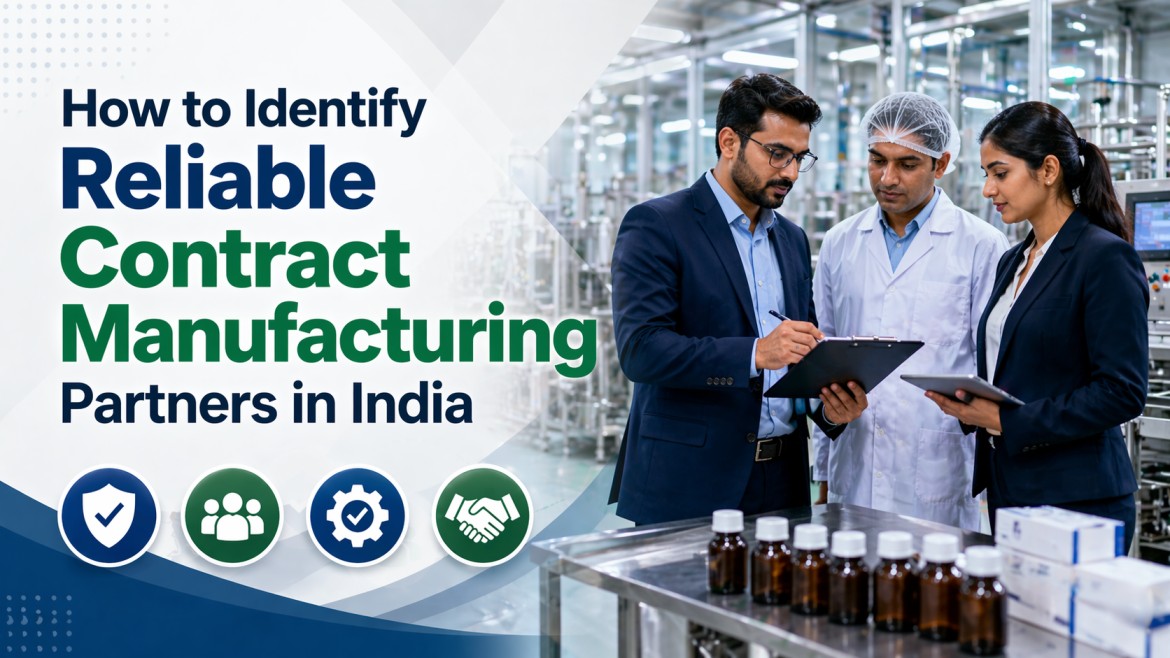
India has emerged as a key global manufacturing hub, supported by cost competitiveness, a skilled workforce, and policy initiatives such as Make in India and Production Linked Incentive (PLI) schemes. As businesses look to scale operations efficiently, contract manufacturing has become a strategic approach to reduce capital expenditure and accelerate market entry.
However, the success of outsourcing depends significantly on selecting the right manufacturing partner. An unreliable partner can lead to quality inconsistencies, supply chain disruptions, and financial losses. This makes contract manufacturer identification services in India a critical component of any manufacturing strategy.
This guide outlines a structured, step-by-step approach to identifying reliable contract manufacturing partners in India.
Understanding Contract Manufacturing in India
Contract manufacturing refers to outsourcing the production of goods to a third-party manufacturer who produces products based on predefined specifications, quality standards, and branding requirements.
In India, this model is widely adopted across industries such as:
- Pharmaceuticals
- FMCG and food processing
- Electronics and consumer goods
- Textiles and apparel
- Chemicals and specialty materials
With increasing supply chain complexity and competition, businesses are increasingly engaging a contract manufacturing consultant in India to streamline partner identification, evaluation, and onboarding processes.
This approach allows companies to focus on core functions such as branding, marketing, and distribution while leveraging specialized manufacturing capabilities.
Talk to Our Expert: https://www.imarcengineering.com/services/contract-manufacturer-identification
Why Choosing the Right Manufacturing Partner Matters
Selecting a contract manufacturer is not just an operational decision—it directly impacts product quality, delivery timelines, and long-term profitability.
A reliable partner ensures:
- Consistent product quality and standardization
- Timely delivery and supply chain stability
- Compliance with regulatory and industry standards
- Cost optimization over the long term
On the other hand, poor partner selection can result in:
- Production delays and inefficiencies
- Quality failures and product rejections
- Legal and compliance risks
- Increased operational costs
This is why businesses invest in contract manufacturing partner selection services to minimize risks and build sustainable manufacturing ecosystems.
Step-by-Step Process to Identify Reliable Contract Manufacturing Partners
1. Define Your Manufacturing Requirements Clearly
The first step is to establish clear and detailed requirements before initiating the search process. This ensures alignment between your business needs and the capabilities of potential manufacturing partners.
This includes:
- Product specifications and design requirements
- Production volume and scalability needs
- Quality standards and certifications
- Budget and cost expectations
- Location preferences (if any)
A well-defined requirement framework ensures that contract manufacturer sourcing services in India are targeted, efficient, and aligned with business objectives.
2. Conduct Market Research and Shortlisting
Once requirements are defined, businesses should conduct structured market research to identify and shortlist potential manufacturers. This helps filter out unsuitable vendors and focus on qualified partners.
This involves:
- Industry database research
- Supplier directories and trade platforms
- Industry associations and networks
- Referrals and existing vendor ecosystems
At this stage, companies often rely on third party manufacturing partner identification services to access a broader and pre-verified supplier base.
3. Evaluate Technical Capabilities
A detailed technical evaluation is essential to ensure that the manufacturer can meet production requirements consistently and scale operations when needed.
Key factors to assess:
- Manufacturing infrastructure and machinery
- Production capacity and scalability
- Technology adoption and automation level
- R&D and product development support
This step helps ensure long-term operational compatibility and reduces production risks.
4. Assess Quality Standards and Certifications
Quality is a critical factor in contract manufacturing, particularly in regulated industries. A comprehensive evaluation ensures that the manufacturer adheres to required quality standards.
Evaluation should include:
- ISO certifications and industry-specific approvals
- Quality control processes and testing capabilities
- Track record of quality compliance
- Client references and past performance
Engaging contract manufacturer evaluation and qualification services helps businesses perform structured audits and maintain consistent product quality.
5. Review Financial Stability and Business Credibility
A manufacturer’s financial health directly impacts its ability to sustain operations and meet commitments. Evaluating financial stability ensures long-term reliability.
Important checks include:
- Financial health and creditworthiness
- Business longevity and market reputation
- Existing client portfolio
- Legal and compliance history
This step minimizes risks associated with operational disruptions and unreliable partnerships.
6. Analyze Supply Chain and Logistics Capabilities
A strong supply chain is essential for ensuring timely production and cost efficiency. Businesses should evaluate the manufacturer’s logistics and sourcing capabilities.
Consider:
- Raw material sourcing network
- Inventory management systems
- Logistics and distribution capabilities
- Proximity to key markets or ports
Efficient supply chain management is often a key differentiator in outsourcing manufacturing partner identification services.
7. Conduct Site Visits and Audits
Physical site visits provide practical insights into a manufacturer’s actual operational capabilities. This step helps validate claims and assess real-world performance.
Site visits help in:
- Validating infrastructure and machinery
- Assessing workforce capability
- Observing production processes
- Verifying compliance and safety standards
This ensures transparency and reduces the risk of selecting an unsuitable partner.
8. Compare Cost Structures and Commercial Terms
Cost analysis should be comprehensive and go beyond basic price comparisons. Businesses must evaluate the total cost of engagement to make informed decisions.
A comprehensive cost analysis should include:
- Production cost per unit
- Tooling and setup costs
- Logistics and transportation expenses
- Hidden or variable costs
The focus should be on achieving the best value rather than simply choosing the lowest-cost option.
9. Negotiate Contracts and Define SLAs
A well-structured contract establishes clarity and accountability between both parties. It helps define expectations and reduce potential conflicts.
Key elements to include:
- Service level agreements (SLAs)
- Quality benchmarks
- Delivery timelines
- Penalty clauses for non-compliance
- Intellectual property protection
Clear contractual agreements ensure a smooth and transparent partnership.
10. Start with a Pilot Project
Before scaling operations, initiating a pilot project helps evaluate the manufacturer’s performance under real conditions. This step reduces risks and builds confidence.
This helps in:
- Testing product quality
- Evaluating operational efficiency
- Identifying potential challenges
- Building trust and coordination
A successful pilot phase ensures readiness for full-scale production.
Common Challenges in Contract Manufacturer Identification
Despite a structured approach, businesses often encounter several challenges during the partner identification process, including:
- Limited access to reliable supplier data
- Inconsistent quality standards across vendors
- Communication and coordination gaps
- Hidden costs and pricing inconsistencies
- Regulatory and compliance complexities
These challenges highlight the importance of professional contract manufacturer identification services in India, which provide structured evaluation and risk mitigation.
Role of Professional Consultants in Partner Identification
Engaging a specialized contract manufacturing consultant in India can significantly streamline the entire process of identifying and onboarding reliable partners.
Consultants typically offer:
- Market mapping and supplier identification
- Technical, financial, and operational evaluation
- Risk assessment and due diligence
- Negotiation and onboarding support
Their structured and data-driven approach ensures that businesses select partners aligned with both operational requirements and long-term strategic goals.
Key Takeaways
Identifying reliable contract manufacturing partners in India requires a structured, multi-step approach that combines technical evaluation, financial analysis, and operational due diligence.
A successful strategy should focus on:
- Clear requirement definition
- Comprehensive supplier research
- Technical and quality assessment
- Financial and credibility evaluation
- Pilot testing before scaling
By leveraging contract manufacturing partner selection services, businesses can reduce risks, improve operational efficiency, and build scalable manufacturing partnerships.
About the Author