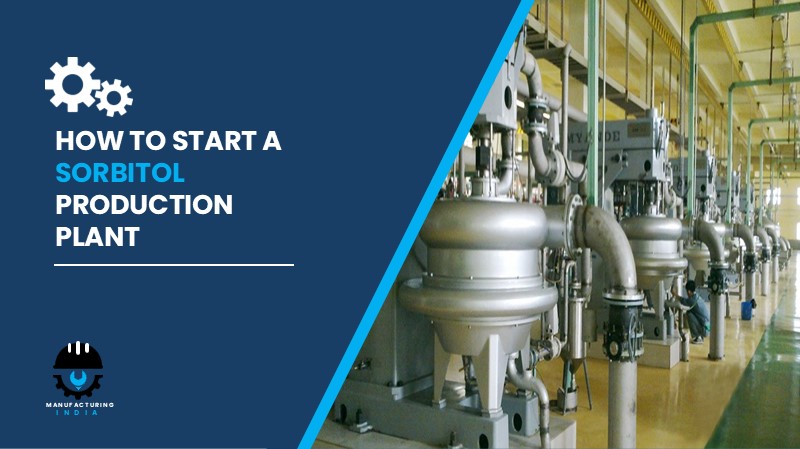
Setting up a sorbitol manufacturing plant in India presents a compelling investment case grounded in the country’s rapidly expanding food processing, pharmaceutical, and personal care industries, the accelerating shift toward low-calorie, sugar-free, and functional food formulations driven by rising diabetes and obesity prevalence, and the availability of cost-competitive starch-based raw materials from India’s large corn and wheat processing sector. Sorbitol a sugar alcohol produced by the catalytic hydrogenation of glucose derived from corn, wheat, and other starch-containing materials serves as a universally versatile functional ingredient across the food and beverage, pharmaceutical, and personal care industries, functioning simultaneously as a low-calorie sweetener, humectant, stabiliser, and texturiser. The global sorbitol market was valued at 2.79 million tons in 2025 and is projected to reach 3.09 million tons by 2034, exhibiting a CAGR of 1.1%, supported by the consistent structural demand that health and wellness food trends, pharmaceutical formulation requirements, and personal care product development continue to generate across every major consuming market.
India’s structural advantages make it a strategically well-positioned location for establishing a sorbitol production facility. The country’s large starch processing industry particularly glucose syrup manufacturing operations in Uttar Pradesh, Maharashtra, and Gujarat provides investors with direct, cost-competitive access to the primary raw material, reducing import dependency and inbound logistics costs relative to producers in countries without domestic starch processing infrastructure. The growing prevalence of diabetes and obesity in India is directly driving domestic demand for sugar alternatives including sorbitol in food and beverage formulations, while the country’s expanding pharmaceutical manufacturing base and personal care industry are creating parallel institutional buyer demand streams. India’s own capacity expansion is already underway in February 2024, Gujarat Ambuja Exports commissioned a 100 TPD sorbitol unit at its Hubli facility, making it India’s largest sorbitol producer with a total capacity of 500 TPD across four locations confirming domestic market and investment confidence in this production category.
A sorbitol manufacturing plant in India leverages the country’s cost-competitive glucose syrup supply chain, a global sorbitol market of 2.79 million tons in 2025 growing toward 3.09 million tons by 2034, and multi-sector demand across food and beverage, pharmaceuticals, and personal care industries. With gross profit margins of 25–35% and net margins of 10–15% at 50,000–100,000 MT annual production capacity, and with Asia-Pacific emerging as the fastest-growing regional market, this investment delivers commercially stable and multi-channel-backed financial returns.
What is Sorbitol?
Sorbitol is a sugar alcohol that scientists create by using catalytic hydrogenation to convert glucose obtained from corn, wheat, and other starch-containing materials. The substance serves multiple purposes in food and beverage products, pharmaceutical syrups, toothpaste, and cosmetic formulations as a low-calorie sweetener, humectant, stabiliser, and texturiser. The dietary products, personal care items, and medical applications of sorbitol benefit from its non-cariogenicity, its ability to retain water, and its exceptional solubility properties characteristics that make it a preferred functional ingredient across a wide range of industrial food and consumer product formulations.
The primary production method involves catalytic hydrogenation of glucose, followed by purification, crystallisation, and drying a multi-step chemical process that integrates starch hydrolysis feedstock management, high-pressure hydrogenation reactor operation, and purification and product finishing at each stage. End-use industries served include food and beverages, pharmaceuticals, and personal care. Key product applications include use as a sweetener and moisture retainer in sugar-free candies, chewing gums, dietetic products, and baked goods; as a formulation ingredient in pharmaceutical syrups, cough medicines, and chewable tablets; and as a moisturiser and stabiliser in toothpaste, creams, and lotions providing manufacturers with a single production investment that addresses multiple high-volume, recurring-demand buyer markets simultaneously.
Cost of Setting Up a Sorbitol Manufacturing Plant in India
The total investment required to establish a sorbitol manufacturing plant in India depends on plant capacity, technology selection, geographic location, level of automation, and compliance with food-grade chemical safety and environmental regulations. Investors must account comprehensively for both one-time capital expenditure and recurring operational costs when preparing a feasibility study or detailed project report (DPR).
1. Capital Expenditure (CapEx)
Land and Site Development constitutes a substantial foundational investment. Costs for land registration, boundary construction, internal road layout, drainage infrastructure, and site levelling vary based on whether the facility is within a government-notified chemical or food processing industrial estate, a Special Economic Zone (SEZ), or on privately acquired industrial land. Chemical processing clusters in Gujarat, Uttar Pradesh, and Maharashtra offer infrastructure-ready sites with proximity to glucose syrup suppliers and established logistics networks for pharmaceutical and food ingredient buyers.
Civil Works and Construction encompasses the hydrogenation reactor building which requires pressure-rated construction specifications for high-pressure process vessels along with the glucose syrup storage facility, purification and ion exchange area, crystallisation and drying hall, quality control laboratory, finished sorbitol storage and bagging facility, effluent treatment plant, and administrative block. High-pressure reactor containment requirements and hydrogen gas handling infrastructure including ventilation systems, hydrogen detector arrays, and explosion-proof electrical installations throughout the production area add significantly to civil construction costs and specification standards relative to ambient-pressure food processing facilities.
Machinery and Equipment represent the single largest component of capital expenditure. Key machinery required for a sorbitol manufacturing plant includes:
- Catalytic reactors
- Filtration units
- Crystallisers
- Dryers
- Packaging machines
Other Capital Costs include the effluent treatment plant (ETP) for managing process water and chemical waste streams, hydrogen gas storage and distribution infrastructure, pre-operative expenses covering regulatory filings and feasibility study preparation, plant commissioning charges, utility connection fees, and import duties applicable to specialised high-pressure hydrogenation reactor vessels or automated crystallisation systems sourced internationally.
Request a Sample Report for In-Depth Market Insights: https://www.imarcgroup.com/sorbitol-manufacturing-plant-project-report/requestsample
2. Operational Expenditure (OpEx)
Raw Material Cost is the dominant driver of operating expenditure, accounting for approximately 70–80% of total OpEx. The primary and most cost-significant input is glucose syrup typically derived from corn or wheat starch hydrolysis which serves as the direct feedstock for the catalytic hydrogenation reaction. Glucose syrup pricing is linked to corn and wheat commodity markets and is subject to seasonal agricultural price fluctuations. Additional critical inputs include hydrogen gas, nickel-based catalysts, and purification system chemicals including ion exchange resins. Investors are advised to secure long-term supply contracts with domestic glucose syrup manufacturers prioritising suppliers in geographic proximity to the plant site to minimise inbound transportation costs and with industrial gas suppliers for continuous hydrogen supply. Catalyst management including periodic regeneration and replacement of nickel hydrogenation catalysts is an important ongoing cost and quality management activity that must be built into the production economics from the outset.
Utility Costs – covering electricity and steam for hydrogenation reactors, evaporators, crystallisers, and dryers account for approximately 10–15% of total OpEx. Hydrogenation and evaporation are the most energy-intensive process steps, requiring continuous heat input and maintained high-pressure conditions. Investors in regions with competitive industrial electricity and steam tariffs and reliable utility supply are materially better positioned to manage this significant cost component over the plant’s operational life.
Other Operating Costs include outbound transportation to food ingredient distributors, pharmaceutical formulators, personal care product manufacturers, and industrial buyers; packaging materials for liquid sorbitol tanker shipments, 50 kg bags of crystalline sorbitol, and bulk intermediate bulk container (IBC) formats; employee salaries and wages for chemical process engineers, reactor operators, quality assurance chemists, and safety personnel; equipment maintenance; quality assurance testing for food-grade purity, pharmaceutical-grade specifications, and BIS standards compliance; depreciation on civil and machinery assets; and applicable taxes including GST. By the fifth year of operations, total operational costs are expected to increase substantially due to inflation, market fluctuations, potential rises in glucose syrup and hydrogen gas prices, supply chain disruptions, and rising consumer demand in food, pharmaceutical, and cosmetic sectors.
3. Plant Capacity
The proposed sorbitol manufacturing facility is designed with an annual production capacity ranging between 50,000 and 100,000 MT, enabling significant economies of scale while maintaining operational flexibility across liquid and crystalline sorbitol product grades. This capacity range is well-aligned with the procurement requirements of food ingredient buyers, pharmaceutical formulators, personal care manufacturers, and confectionery and baking industry buyers across India’s domestic market and export channels. Capacity can be customised based on investor requirements and glucose syrup procurement network scale. The break-even period for a sorbitol manufacturing business typically ranges from 3 to 6 years, depending on raw material sourcing, plant efficiency, market pricing, and sales volume. Profitability improves consistently with higher capacity utilisation, and sorbitol plants support phased capacity expansion through additional reactor trains with contained incremental investment.
4. Profit Margins and Financial Projections
The sorbitol manufacturing plant demonstrates healthy and stable profitability potential under normal operating conditions. Gross profit margins typically range between 25–35%, supported by stable multi-sector demand and the functional value-added nature of purified, food-grade sorbitol relative to commodity glucose feedstock. Net profit margins range between 10–15%, reflecting the raw material intensity and moderate utility costs of the hydrogenation-based production model. A comprehensive financial analysis should include income projections, expenditure forecasts, gross and net margin tracking across Years 1 through 5, net present value (NPV), internal rate of return (IRR), payback period, and a full profit and loss account. Sensitivity analysis covering glucose syrup price movements and sorbitol selling price variability across food, pharmaceutical, and personal care segments is recommended for investment-grade financial planning.
Why Set Up a Sorbitol Manufacturing Plant in India?
Rising Prevalence of Diabetes and Obesity Structurally Driving Sugar Substitute Demand. The growing prevalence of diabetes and obesity in India and globally is boosting demand for sugar alternatives such as sorbitol across food and beverage formulations. India’s large and rapidly growing diabetic population among the highest in the world — creates a structurally expanding domestic consumer base for sugar-free, reduced-calorie products that use sorbitol as both a sweetening and texturising ingredient in confectionery, baked goods, and dietetic food products.
Expanding Pharmaceutical Sector Creating Consistent Industrial Demand. In the pharmaceutical sector, sorbitol is widely used in syrups, chewable tablets, and liquid formulations due to its stability and sweetening properties. India’s pharmaceutical industry one of the world’s largest and fastest-growing provides sorbitol manufacturers with a large and stable institutional buyer base that procures food-grade and pharmaceutical-grade sorbitol on long-term supply contracts, offering revenue predictability that complements the more variable retail food channel demand.
Personal Care Industry Growth Supporting Humectant and Stabiliser Demand. Sorbitol functions as a moisturiser and stabiliser in toothpaste, creams, and lotions, making it a key ingredient across India’s expanding personal care and oral care product manufacturing sector. The rapid growth of organised personal care brands, the increasing consumer preference for moisturising and functional skincare products, and the rising demand for fluoride and whitening toothpaste formulations all support consistent and growing demand for pharmaceutical-quality sorbitol as a personal care ingredient.
India’s Agro-Processing Expansion Directly Expanding Sorbitol Market. The agro-processing sector is witnessing significant expansion as companies invest in high-capacity production of key ingredients like sorbitol. In February 2024, Gujarat Ambuja Exports commissioned a 100 TPD sorbitol unit at its Hubli facility, making it India’s largest sorbitol producer with a total capacity of 500 TPD across four locations. This domestic capacity expansion highlights rising demand and signals robust growth prospects for India’s sorbitol market in food, pharmaceutical, and industrial applications — validating the commercial opportunity for new production investment.
Roquette’s Strategic Acquisition Strengthening Global Sorbitol Market. In May 2025, Roquette completed its acquisition of IFF pharma solutions, strengthening Roquette’s presence in the health and pharma sectors and integrating IFF’s expertise and product portfolio to deliver innovative drug delivery solutions and support growth in global pharmaceutical markets. This acquisition by one of the world’s leading producers of sorbitol and specialty starch derivatives confirms the sustained strategic investment and consolidation that is occurring in the global sorbitol and sugar alcohol market reflecting the commercial importance and growth trajectory of this ingredient category.
Asia-Pacific as the Fastest-Growing Regional Market. Asia-Pacific, led by China and India, is expected to emerge as the fastest-growing sorbitol market due to expanding food processing and pharmaceutical sectors. India’s combination of a large domestic consumer market, a competitive starch-processing raw material supply chain, and growing export potential to Southeast Asian, Middle Eastern, and African markets positions domestic sorbitol manufacturers well to capture both domestic market growth and regional export revenue opportunities simultaneously.
Manufacturing Process – Step by Step
The sorbitol manufacturing process uses catalytic hydrogenation of glucose, purification, crystallisation, and drying as the primary production method. Below are the main stages involved in the sorbitol manufacturing process flow:
- Glucose Syrup Receipt and Quality Testing: Glucose syrup derived from corn or wheat starch hydrolysis by domestic glucose manufacturers is received at the facility in tanker deliveries, tested for dextrose equivalent (DE), purity, colour, and microbial safety, and cleared for the production process following quality verification.
- Glucose Solution Preparation: The received glucose syrup is diluted or concentrated to the target dry solids concentration required for optimal hydrogenation yield and catalyst performance, with pH adjustment and temperature conditioning applied as specified.
- Catalytic Hydrogenation: The prepared glucose solution is fed into catalytic reactors operating at elevated temperature and pressure in the presence of hydrogen gas and a nickel-based catalyst. The hydrogenation reaction converts the glucose (aldose) to sorbitol (sugar alcohol) with high conversion efficiency by reducing the carbonyl group to a hydroxyl group. Reactor pressure, temperature, and catalyst loading are precisely controlled to maximise yield, minimise side reactions, and extend catalyst service life.
- Catalyst Filtration: Following hydrogenation, filtration units remove catalyst particles from the sorbitol solution, recovering the nickel catalyst for regeneration or disposal according to hazardous waste management protocols, and producing a clear sorbitol solution free of solid contaminants.
- Decolourisation and Ion Exchange Purification: The filtered sorbitol solution passes through activated carbon treatment for colour removal and ion exchange resin columns for demineralisation and purification, removing impurities, residual sugars, organic acids, and ionic contaminants that would reduce product purity and stability below food-grade and pharmaceutical-grade specifications.
- Evaporation and Concentration: The purified sorbitol solution is concentrated in evaporators under vacuum to achieve the target dry solids content either to the 70% w/w liquid sorbitol specification for direct sale as liquid product, or to a higher concentration suitable for crystallisation into solid sorbitol.
- Crystallisation (for Crystalline Sorbitol): Crystallisers cool the concentrated sorbitol solution under controlled rate and seeding conditions to produce sorbitol crystals of the target particle size distribution, purity, and yield with mother liquor recycled or further processed.
- Drying: Dryers process the filtered sorbitol crystals to the specified final moisture content, producing free-flowing, stable crystalline sorbitol powder suitable for direct use in pharmaceutical tableting, confectionery blending, or personal care formulation.
- Quality Inspection and Testing: Analytical instruments monitor the finished sorbitol product for purity (sorbitol content), residual reducing sugars, moisture content, pH, heavy metal content, microbial safety, and colour against food-grade and pharmaceutical-grade specification acceptance criteria. Batch release is conditional on all parameters meeting applicable standards.
- Packaging: Packaging machines fill liquid sorbitol into tanker vehicles or IBCs for bulk industrial supply, and crystalline sorbitol into 25 kg or 50 kg multi-wall bags for food ingredient, pharmaceutical, and personal care customers, with batch coding and product labelling for full supply chain traceability and FSSAI compliance.
- Dispatch to End-Use Industries: Finished sorbitol is dispatched to food and beverage manufacturers, pharmaceutical formulators, personal care product manufacturers, confectionery and baking ingredient distributors, and export buyers.
Key Applications
Sorbitol produced at this type of facility serves four primary end-use sectors with specific product grade, purity, and format requirements for each:
- Food and Beverages: Used in sugar-free candies, chewing gums, dietetic products, and baked goods as a low-calorie sweetener, moisture retainer, and texturiser that provides bulk, mouthfeel, and shelf-life extension without contributing to caries or raising blood glucose levels significantly.
- Pharmaceuticals: Incorporated in syrups, cough medicines, and chewable tablets as a sweetening agent, solubiliser, and formulation stabiliser one of the most widely used sugar alcohols in pharmaceutical liquid and solid dosage formulations globally.
- Personal Care: Acts as a moisturiser and stabiliser in toothpaste, creams, and lotions providing humectancy, plasticising properties, and viscosity modification in oral care and skincare product formulations.
- Confectionery and Baking: Provides texture, moisture retention, and low-calorie sweetness in sugar-free chocolate, fondants, toffees, and baked goods where sorbitol’s hygroscopic properties help maintain product softness, freshness, and shelf life throughout the distribution chain.
Leading Sorbitol Producers
The global sorbitol industry is served by several large-scale producers with extensive production capacities and diversified end-use market portfolios. Key players include:
- Archer Daniels Midland Company
- Ingredion Incorporated
- Tereos Group
- Cargill
- Merck KGaA
Timeline to Start the Plant
Investors planning to establish a sorbitol manufacturing plant in India should anticipate the following project development phases, with an overall timeline typically ranging from 12 to 36 months:
- Feasibility study and project report preparation
- Land acquisition and site development
- Regulatory approvals and environmental clearances
- Factory licence and fire safety compliance
- Machinery procurement and installation
- Raw material supplier agreements and supply chain setup
- Trial production and quality testing
- Commercial production launch
Licences and Regulatory Requirements
Starting a sorbitol manufacturing unit in India requires several approvals:
- Business registration (Proprietorship, LLP, or Private Limited Company)
- Factory Licence under the Factories Act
- FSSAI (Food Safety and Standards Authority of India) licence for manufacturing food-grade sorbitol for food and beverage applications
- Environmental Clearance from the State Pollution Control Board — including EIA for chemical manufacturing involving high-pressure hydrogenation processes and nickel catalyst handling
- Hazardous chemical safety compliance under the Manufacture, Storage and Import of Hazardous Chemical (MSIHC) Rules for hydrogen gas storage and handling
- GST Registration
- Fire Safety NOC – including hydrogen gas flammability hazard compliance
- Effluent Treatment Plant (ETP) operational clearance for process water and chemical waste management
- Occupational Health and Safety compliance covering high-pressure reactor operations, hydrogen gas exposure monitoring, and nickel catalyst handling
- Petroleum and Explosives Safety Organisation (PESO) approval for hydrogen gas storage vessels where applicable
Key Challenges to Consider
Glucose Syrup Price Volatility as the Dominant Cost Variable. Glucose syrup accounts for 70–80% of total OpEx and is priced against corn and wheat commodity markets subject to monsoon-driven seasonal variability and global agricultural commodity cycles. Any significant increase in corn or wheat prices directly compresses sorbitol gross margins. Long-term glucose syrup supply contracts at formula-based pricing and geographic proximity to domestic glucose manufacturers are the primary risk mitigation strategies.
High-Pressure Hydrogenation Safety Management. The catalytic hydrogenation process operates at elevated temperature and pressure using hydrogen gas a highly flammable, low-ignition-energy gas requiring comprehensive safety infrastructure including hydrogen detection systems, explosion-proof electrical installations, pressure relief systems, and emergency response protocols. Managing hydrogen safety compliance is a continuous operational discipline requirement that adds to facility operating overhead beyond standard chemical plant requirements.
Catalyst Management and Performance Maintenance. Nickel-based hydrogenation catalysts are subject to gradual deactivation through poisoning, coking, and sintering over their operational life, requiring periodic regeneration or replacement to maintain conversion efficiency and product purity. Catalyst management including spent catalyst disposal under hazardous waste management regulations is a specialised operational and compliance requirement unique to hydrogenation-based chemical manufacturing.
Regulatory and Food Safety Compliance Complexity. Sorbitol sold into food, pharmaceutical, and personal care markets must meet different grade specifications and purity standards including FSSAI food-grade, IP/BP pharmaceutical-grade, and personal care industry specifications requiring separate quality management documentation and testing protocols for each product grade. Maintaining compliance across multiple regulatory frameworks adds ongoing quality system overhead.
Competition from Established Domestic and Global Producers. India’s sorbitol market is served by established domestic producers including Gujarat Ambuja Exports, which with 500 TPD total capacity is India’s largest producer, alongside imports from global players including Cargill, ADM, and Tereos. New entrants must build competitive positioning through production cost efficiency, product quality differentiation for pharmaceutical-grade applications, or geographic proximity advantages for serving specific regional buyer markets.
Skilled Chemical Process Engineering Workforce. Operating high-pressure catalytic reactors, ion exchange purification systems, crystallisers, and evaporators requires chemical engineers with specialised training in sugar alcohol process chemistry, high-pressure reactor safety, and food-grade chemical manufacturing quality management. Sourcing and retaining qualified personnel with this combination of skills particularly for facilities located outside established chemical processing industry clusters presents an ongoing operational staffing challenge.
Frequently Asked Questions
1. How much does it cost to set up a sorbitol manufacturing plant in India?
The total cost depends on plant capacity (50,000–100,000 MT per annum), technology selection, location, and automation level. CapEx covers land, high-pressure chemical plant civil construction, and machinery including catalytic reactors, filtration units, crystallisers, dryers, and packaging machines, along with hydrogen gas handling infrastructure and pre-operative regulatory costs.
2. Is sorbitol manufacturing profitable in India in 2026?
Yes. With gross margins of 25–35% and net margins of 10–15%, supported by multi-sector demand across food and beverage, pharmaceuticals, and personal care industries, India’s emerging position as the largest sorbitol producer domestically validated by Gujarat Ambuja Exports’ expansion, and Asia-Pacific’s status as the fastest-growing global market, the investment presents a commercially sound profitability case.
3. What machinery is required for a sorbitol manufacturing plant in India?
Key equipment includes catalytic reactors, filtration units, crystallisers, dryers, and packaging machines. Supporting systems include glucose syrup storage tanks, hydrogen gas supply and distribution infrastructure, ion exchange resin purification columns, activated carbon decolourisation units, evaporators, and analytical quality control instruments.
4. What licences and approvals are required to start a sorbitol manufacturing plant in India?
Required approvals include business registration, Factory Licence, FSSAI food-grade manufacturing licence, Environmental Clearance, MSIHC hazardous chemical compliance for hydrogen gas, GST Registration, Fire Safety NOC with hydrogen hazard compliance, ETP operational clearance, PESO approval for hydrogen storage vessels, and Occupational Health and Safety compliance.
5. What raw materials are needed for sorbitol manufacturing?
The primary raw materials are glucose syrup, hydrogen gas, and nickel-based catalysts. Additional process inputs include ion exchange resins, activated carbon, water for process operations, and packaging materials for liquid and crystalline sorbitol product formats.
6. What are the environmental compliance requirements for a sorbitol manufacturing plant in India?
Environmental Clearance from the State Pollution Control Board is required, along with ETP for process water and chemical waste management, MSIHC compliance for hydrogen gas handling, hazardous waste management authorisation for spent nickel catalyst disposal, and compliance with ambient air and water emission standards applicable to chemical manufacturing operations.
7. What is the best location to set up a sorbitol manufacturing plant in India?
States with established glucose syrup manufacturing infrastructure and starch processing industries — including Uttar Pradesh, Maharashtra, and Gujarat — offer the best combination of raw material access at procurement-level costs, chemical industrial zone infrastructure, skilled chemical engineering talent availability, and proximity to domestic pharmaceutical, food ingredient, and personal care manufacturer buyer networks.
8. What is the break-even period for this type of plant in India?
The break-even period typically ranges from 3 to 6 years, depending on raw material sourcing efficiency, plant capacity utilisation, market pricing for food-grade and pharmaceutical-grade sorbitol, and sales volume across domestic and export channels. Strategic glucose syrup procurement contracts and consistent institutional buyer relationships can shorten the payback period.
9. What government incentives are available for sorbitol manufacturers in India?
Government initiatives promoting local sugar substitute production, PLI scheme benefits for specialty chemical and food ingredient manufacturers, MoFPI food processing infrastructure grants where sorbitol is classified under agri-processing, state-level chemical industrial incentive schemes in Gujarat and Maharashtra, and export promotion support through chemical and food ingredient export councils all provide relevant financial and regulatory support for qualifying sorbitol manufacturing investments.
Key Takeaways for Investors
A sorbitol manufacturing plant in India represents a commercially well-grounded investment opportunity anchored by consistent multi-sector demand across food and beverage, pharmaceutical, and personal care industries, a global market of 2.79 million tons in 2025 growing toward 3.09 million tons by 2034, and India’s domestic market expansion driven by rising diabetes and obesity prevalence, pharmaceutical sector growth, and personal care industry expansion. Financial viability is demonstrated across a plant capacity range of 50,000 to 100,000 MT per annum, with gross margins of 25–35% and net margins of 10–15% achievable under competitive glucose syrup procurement and efficient hydrogenation and purification operations — with a break-even horizon of 3 to 6 years. India-specific market validation is confirmed by Gujarat Ambuja Exports’ February 2024 commissioning of a 100 TPD sorbitol unit making it India’s largest domestic producer at 500 TPD total capacity, while global market development is reinforced by Roquette’s May 2025 acquisition of IFF pharma solutions signalling continued strategic consolidation around sorbitol and specialty ingredient capabilities. With Asia-Pacific identified as the fastest-growing regional sorbitol market, India’s starch processing supply chain providing raw material cost competitiveness, and growing domestic health-conscious consumer demand for sugar-free and functional food products sustaining long-term demand momentum, the investment returns for sorbitol manufacturing in India are commercially viable and well-supported throughout the decade ahead.
About the Author