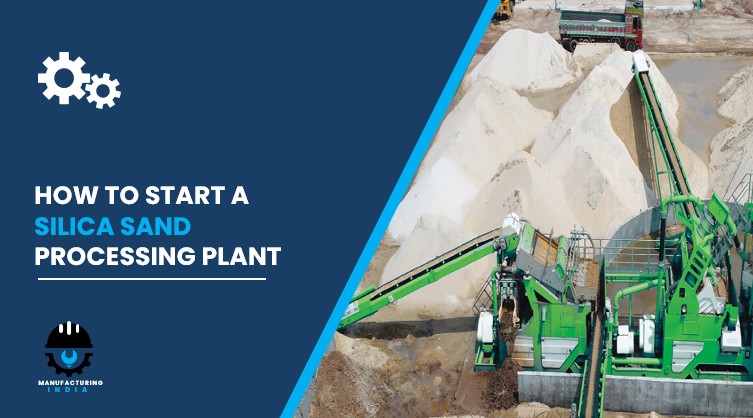
Setting up a silica sand processing plant in India presents a compelling investment opportunity, driven by rapid expansion of global construction activities, rising demand for glass manufacturing, growing foundry casting requirements, and accelerating hydraulic fracturing operations in the energy sector. As one of the most versatile and commercially critical industrial minerals, silica sand combines high chemical purity, controlled grain size distribution, exceptional hardness, and a high melting point to serve a vast range of end-use applications across glass, construction, foundry, chemicals, energy, and filtration sectors.
The global silica sand market is propelled by a convergence of infrastructure investment, industrial expansion, and technological advancement. The global silica sand market size was valued at USD 25.4 Billion in 2025. According to IMARC Group estimates, the market is expected to reach USD 38.3 Billion by 2034, exhibiting a CAGR of 4.7% from 2026 to 2034.
Rapid urbanisation, population growth, and industrial expansion continue to elevate demand for high-purity silica sand, while the shift toward renewable energy technologies particularly solar PV glass manufacturing integrates high-specification silica sand as a core industrial input material.
Silica sand processing sits at the intersection of mineral beneficiation innovation, infrastructure development, and multi-sector demand growth. With gross profit margins typically ranging between 30–40% and a well-defined break-even trajectory, a dedicated silica sand processing plant represents both a financially robust and strategically well-timed investment for entrepreneurs, mineral processors, and institutional investors targeting the evolving global construction and industrial materials markets.
What is Silica Sand?
Silica sand is a granular material that predominantly consists of silicon dioxide (SiO₂), generally originating from weathered quartz-rich rocks. It is characterised by high chemical purity, controlled grain size distribution, a high melting point, and excellent hardness. Silica sand is processed primarily by washing, screening, classification, and at times drying to eliminate impurities such as clay, iron oxides, and organic matter. It may, based on end-use requirements, require further beneficiation to meet specific specifications in terms of particle size, sphericity, and chemical composition.
These qualities ensure a strong balance of strength and consistency across its specifications in various industrial applications including the manufacture of glass, foundry molds, construction materials, and industrial fillers. The processing of silica sand broadly involves crushing and screening, washing and scrubbing, attrition scrubbing, classification, magnetic separation, flotation, dewatering, drying, and quality inspection, with optional beneficiation steps for colour removal, iron reduction, or particle size engineering.
End-use segments served by silica sand processors include float glass manufacturers, container glass producers, specialty glass manufacturers, metal foundries, cement and concrete producers, oil and gas well operators (hydraulic fracturing), water treatment facilities, industrial abrasives producers, and ceramics and tile manufacturers across domestic and international markets.
Cost of Setting Up a Silica Sand Processing Plant
The total cost of establishing a silica sand processing plant depends on several variables including plant capacity, level of automation, ore grade and deposit characteristics, geographic location, raw material sourcing strategy, beneficiation requirements, and applicable regulatory and environmental compliance requirements. A thorough feasibility assessment covering all CapEx and OpEx components is essential before committing capital.
1. Capital Expenditure (CapEx)
Capital investment for a silica sand processing plant covers several broad cost heads. Land and site development forms a substantial part of the overall investment, encompassing land registration charges, boundary development, drainage, quarry access road construction, and related site preparation expenses. Investors may consider locating the facility in proximity to silica sand deposits, quarry operations, or established mineral processing clusters to benefit from raw material cost efficiencies and logistical advantages.
Civil works and construction costs cover the processing plant hall, raw sand stockpile areas, wet processing infrastructure, product storage silos and covered storage areas, quality control laboratory, effluent management infrastructure, and the administrative block. Machinery and equipment costs represent the largest single portion of total capital expenditure for a silica sand processing plant. Key machinery required includes:
- Crushers and jaw crushers (for coarse size reduction of run-of-mine material)
- Trommel screens and vibrating screens (for initial sizing and oversize removal)
- Scrubbers and log washers (for clay and surface coating removal)
- Attrition cells and scrubbing units (for inter-grain abrasion and contaminant removal)
- Hydrocyclones and spiral classifiers (for particle size classification)
- Magnetic separators (high-intensity wet and dry, for iron mineral removal)
- Flotation columns and conditioning tanks (for premium grade silica beneficiation)
- Dewatering screens and vacuum belt filters (for moisture reduction)
- Fluidised bed dryers and rotary dryers (for product drying to specification)
- Pneumatic and mechanical conveying and loading systems
- Quality control and testing equipment (laser particle size analysers, XRF analysers, loss-on-ignition furnaces, sieve shakers, turbidity meters)
- Material handling and logistics equipment
Other capital costs include the effluent management and water recycling infrastructure, tailings management facilities, pre-operative expenses, product development and testing costs, utility connections (power, water, compressed air), and applicable import duties on specialised beneficiation equipment not manufactured domestically.
Request a Sample Report for In-Depth Market Insights: https://www.imarcgroup.com/silica-sand-processing-plant-project-report/requestsample
2. Operational Expenditure (OpEx)
The operating cost structure of a silica sand processing plant is heavily weighted towards raw materials and utilities. Raw material cost (raw silica sand) accounts for approximately 40–50% of total OpEx, reflecting the high volume of ore input required relative to finished product yield. Entering long-term quarrying agreements or captive mining arrangements with reliable domestic silica sand deposits is essential to mitigate supply interruption risk and ensure grade consistency.
Utility cost, covering electricity (for crushing and grinding motors, scrubbers, pumps, dryers, classifiers, and conveyors), water (for wet processing circuits), and compressed air, accounts for 20–30% of OpEx given the energy-intensive nature of high-throughput mineral processing operations. Water recycling and recirculation systems are essential to managing water consumption costs and regulatory compliance. Additional operating costs include packaging materials (bulk bags, silo tankers, pallets), transportation and logistics, salaries and wages, quality assurance, maintenance, depreciation, tailings management, environmental compliance, and applicable taxes. Operational expenditure is projected to increase substantially by year five of operations, driven by raw material cost inflation, utility cost escalation, and potential rises in logistics and maintenance costs.
3. Plant Capacity
The proposed silica sand processing facility is designed with an annual production capacity ranging between 200,000 and 500,000 MT, enabling meaningful economies of scale while preserving operational flexibility across product grade ranges from standard construction-grade silica to high-purity glass-grade and foundry-grade specifications. Plant capacity can be customised based on the investor’s specific capital availability, target market scale, and chosen product mix across applications such as float glass, container glass, foundry casting, hydraulic fracturing, water filtration, and industrial abrasives. Profitability improves considerably at higher capacity utilisation levels, making early off-take agreements with glass manufacturers, foundries, construction contractors, and industrial clients strategically important.
4. Profit Margins and Financial Projections
A silica sand processing plant demonstrates healthy profitability potential under normal operating conditions. Gross profit margins typically range between 30–40%, supported by stable industrial demand across glass, construction, foundry, and energy sectors, the growing adoption of silica sand in solar glass manufacturing, long-term off-take agreements with industrial clients, and value-added product differentiation through purity grade range and particle size specification capability. Net profit margins range between 15–20%. Financial projections incorporate NPV analysis, IRR calculations, payback period modelling, and sensitivity analysis across production capacity, raw material pricing, utility costs, and market demand scenarios. These projections are developed based on realistic assumptions related to capital investment, operating costs, capacity utilisation, and demand outlook, providing investors with a comprehensive view of long-term financial viability.
Why Set Up a Silica Sand Processing Plant?
Critical Industrial Material: Silica sand serves as a key raw material across multiple industries, including glass manufacturing, foundries, construction, chemicals, and filtration positioning it as an essential input for industrial production, quality products, and process reliability. Government investments in infrastructure development, urban housing, and renewable energy create a sustained and growing demand base.
Strong Demand Across Multiple Sectors: Silica sand consumption spans diverse end-use markets including float glass, container glass, specialty glass, foundry molds, hydraulic fracturing (frac sand), construction aggregates, water treatment filtration media, and industrial abrasives. This multi-sector demand base provides significant commercial resilience against sector-specific downturns.
Megatrend Alignment: Growth in solar PV glass production, urban infrastructure, renewable energy, water treatment, and high-tech manufacturing is driving sustained demand for high-quality silica sand. Sectors like solar PV glass and engineered construction materials are expanding rapidly on a global scale, creating premium price points for specification-grade processed silica.
Policy and Infrastructure Support: Government initiatives in infrastructure development, renewable energy, urban housing, and domestic manufacturing including Make in India programmes and industrial incentives indirectly boost demand for high-purity silica sand across construction, glass, and energy applications. National programmes targeting renewable energy capacity expansion and smart cities generate structural demand.
Localisation and Supply Chain Reliability: Industrial buyers and EPC contractors increasingly prefer local, dependable suppliers to reduce logistics costs, secure high-quality sand, and ensure uninterrupted supply creating opportunities for regional producers with optimised operations and sourcing. Proximity to glass manufacturing clusters, foundry hubs, and construction markets provides a meaningful competitive advantage.
Product Innovation Opportunities: Processors can introduce diverse product lines including ultra-high-purity glass-grade silica, low-iron solar glass-grade sand, engineered frac sand, ceramic-grade silica, and specialty filtration media to address evolving industrial specifications and premium price points. High-purity grades for solar and electronics applications command significant price premiums over standard grades.
Export Opportunities: Silica sand processors with internationally certified quality systems and competitive cost structures are well positioned to serve export markets across Asia-Pacific, the Middle East, Africa, and South Asia. Growing regional demand for high-purity glass-grade and frac-grade silica sand from glass manufacturers and oil and gas operators creates large-volume export opportunities for certified producers.
Active Industry Investment: The global silica sand processing sector continues to attract significant capacity expansion and technology investment. Mineral processing companies and glass manufacturing conglomerates are actively expanding dedicated silica sand beneficiation plants and entering new geographic markets to capitalise on long-term industrial demand growth.
Processing Steps How Silica Sand is Processed
The silica sand processing sequence encompasses raw material reception, size reduction, washing and scrubbing, attrition, classification, magnetic separation, flotation (where required), dewatering, drying, quality inspection, and packaging as the core stages of production. Each stage involves specific unit operations, quality assurance checkpoints, and process control protocols aligned to customer specifications and applicable industrial standards.
- Reception and Stockpiling: Run-of-mine silica sand or quarry-extracted material is received at the plant, weighed, sampled, and tested for SiO₂ content, moisture, and contaminant loading before being stockpiled for processing. Automated sampling systems ensure representative grade assessment across incoming material batches.
- Crushing and Primary Screening: Coarse silica stone is processed through jaw crushers or primary impactors for size reduction, followed by vibrating screens for initial sizing and separation of oversize material requiring further reduction from process-ready feed.
- Washing and Scrubbing: The sized silica feed enters log washers or drum scrubbers where water-based washing removes surface clay coatings, fine contaminants, and organic matter adhering to grain surfaces. Efficient scrubbing is critical to achieving the surface cleanliness required for downstream attrition and classification.
- Attrition Scrubbing: Attrition cells subject the silica particles to high-intensity inter-grain abrasion in a densified slurry, breaking the bonds between silica grains and iron-bearing surface coatings, clay films, and other contaminants that cannot be removed by conventional washing alone.
- Hydrocyclone Classification and Screening: Hydrocyclones and dewatering screens classify the attrition-treated slurry by particle size, separating product-grade silica from fines, slimes, and oversize material. This stage is critical for producing the precise particle size distribution required for specific end-use applications.
- Magnetic Separation: High-intensity wet magnetic separators remove paramagnetic iron-bearing minerals, dark minerals, and other magnetic contaminants from the classified silica slurry. Multiple magnetic separation passes are deployed for glass-grade and high-purity applications requiring low iron content.
- Flotation (for Premium Grades): Froth flotation using anionic or cationic collectors removes feldspar, mica, and other non-silica minerals from high-purity glass-grade and specialty-grade silica products. This advanced beneficiation step achieves the ultra-high SiO₂ purity required for float glass, solar glass, and electronics-grade applications.
- Dewatering: Dewatering screens, vacuum belt filters, and cyclone overflow thickeners reduce the moisture content of the processed silica product to levels suitable for efficient drying, minimising energy consumption in the subsequent drying stage.
- Drying: Fluidised bed dryers or rotary drum dryers reduce product moisture to specification levels (typically below 0.5% for most applications) using controlled temperature hot gas streams. Precise moisture control is essential for product flowability, bulk density specification, and shelf stability.
- Quality Testing: Chemical analysis (XRF for SiO₂, Al₂O₃, Fe₂O₃, TiO₂, and other oxides), particle size distribution (laser diffraction), turbidity, moisture, acid demand value (ADV), and bulk density tests are conducted throughout processing and on finished goods to verify compliance with applicable specifications for each product grade.
- Packaging and Dispatch: Finished silica sand products are loaded into bulk bags (500–1,000 kg), small bags (25–50 kg), silo tankers, or bulk conveyors for dispatch to glass manufacturers, foundries, construction suppliers, industrial users, or export terminals.
Key Applications
Silica sand processed at a beneficiation facility serves a broad range of end-use channels, each with specific purity, particle size, and certification requirements.
- Glass Manufacturing: Silica sand is the primary raw material for float glass (architectural and automotive applications), container glass (bottles and jars), specialty glass, fibre glass, and solar photovoltaic glass. High-purity, low-iron silica sand (>99.5% SiO₂, <0.015% Fe₂O₃) is essential for high-transmission solar glass and optical glass applications.
- Foundry Casting: Silica sand serves as the principal mould and core material in metal casting operations for automotive components, industrial machinery, and engineering parts. Foundry-grade silica requires precise grain size distribution, high refractoriness, and low clay content for reliable casting performance.
- Construction Materials: Silica sand is a key input in cement production, concrete and mortar formulation, plaster, tile adhesives, and asphalt. Construction-grade silica sand is used in large volumes across residential, commercial, and infrastructure building projects globally.
- Hydraulic Fracturing (Frac Sand): High-sphericity, high-strength silica sand is pumped into oil and gas wells during hydraulic fracturing operations to prop open fractures and enable hydrocarbon flow. Northern White and regional frac sands in specific mesh sizes (20/40, 30/50, 40/70) are essential inputs for unconventional oil and gas production.
- Water Filtration: Graded silica sand serves as the principal filter media in slow and rapid sand filters for potable water treatment, industrial process water filtration, swimming pool filtration, and wastewater tertiary treatment. Filtration-grade silica requires precise grain size ranges and low contaminant content.
- Industrial Abrasives and Chemical Applications: Silica sand and ground silica are used as abrasive media in shot blasting and sandblasting, as a source material for silicon compounds and silicones, and as functional fillers in paints, coatings, rubber, and plastics.
Leading Silica Sand Processors
The global silica sand processing industry is served by several multinational and large regional mineral processors with extensive production capacities and diverse application portfolios across glass, foundry, construction, ceramics, chemicals, and energy sectors. Key players active across industrial supply, contractor supply, and export channels include:
- Sibelco
- U.S. Silica Holdings, Inc.
- Covia Holdings LLC
- Quarzwerke Group
- Badger Mining Corporation
- Fairmount Santrol (now part of Covia Holdings)
- Hi-Crush Partners
- Tronox Holdings
- Minerali Industriali Srl
- VRX Silica Limited
Timeline to Start the Plant
Investors planning a silica sand processing plant should anticipate the following phased development timeline, typically ranging from 12 to 18 months:
- Feasibility study and detailed project report preparation
- Mining lease / quarry access agreement and deposit assessment
- Land acquisition, site assessment, and environmental impact review
- Regulatory approvals, factory licence, environmental clearances, mining approvals, and utility connections
- Civil construction: processing plant hall, stockpile areas, product storage, and utility infrastructure
- Processing machinery procurement, delivery, installation, and commissioning
- Raw material and additive supplier agreements and supply chain setup
- Product development, trial processing runs, grade qualification testing
- Quality management system certification
- Distribution and industrial client relationships, commercial production ramp-up
Licences and Regulatory Requirements
Starting a silica sand processing unit requires several approvals, which vary by country and jurisdiction:
- Business registration (Proprietorship, LLP, or Private Limited Company)
- Mining Lease or Quarry Licence under applicable Mines and Minerals legislation
- Factory Licence under applicable factories legislation
- Environmental Clearance and Consent to Operate from the relevant Pollution Control Board
- GST / VAT Registration
- Fire Safety NOC
- Dust Control and Occupational Health Compliance certifications (silica dust exposure regulations)
- Water Extraction Permit and Effluent Treatment Consent
- Bureau of Indian Standards (BIS) licence for IS-coded silica sand products (where applicable)
- ISO 9001 Quality Management System certification (recommended for institutional procurement)
- Product specifications certification to applicable industrial standards (ASTM C778, ISO standards for glass sand, foundry sand standards)
- Import/export code (for international trade)
- MSME registration (for access to government subsidy and incentive schemes in India)
Key Challenges to Consider
Environmental and Dust Management: Silica sand processing generates significant quantities of airborne crystalline silica dust, which poses serious occupational health risks (silicosis) for plant workers and regulatory risks for operators. Comprehensive dust suppression systems, enclosed conveying equipment, respiratory protection programmes, and occupational health monitoring are mandatory requirements. Environmental compliance for process water management, tailings disposal, and land rehabilitation must be integrated from the design stage.
Raw Material Grade Variability: Natural silica deposits are subject to grade variability in SiO₂ content, iron oxide levels, clay content, and particle size distribution. Inconsistent ore grade can significantly affect product quality, processing cost, and finished product specifications. Comprehensive deposit characterisation, selective mining, and blending strategies are essential to maintaining consistent processing plant feed quality.
High Processing and Utility Costs: Wet processing circuits, attrition scrubbing, magnetic separation, and drying operations are energy-intensive unit operations. Utility cost management through water recirculation, variable-speed drive installation, waste heat recovery in drying systems, and solar power integration are important levers for maintaining cost competitiveness. Water scarcity and treatment costs are particularly significant in arid or semi-arid processing locations.
Regulatory and Mining Compliance: Mining lease approvals, environmental clearances, quarry rehabilitation bonds, and ongoing compliance with occupational health regulations for crystalline silica exposure add regulatory complexity and cost for silica sand producers. Regulatory timelines for new mining approvals can significantly extend the project development schedule and require dedicated regulatory expertise.
Competition and Market Consolidation: The silica sand processing market is served by a growing number of well-capitalised national producers, global mineral processing companies, and regional operators. New entrants must establish clear differentiation on product purity, particle size specification consistency, certified quality credentials, and customer service responsiveness, particularly in high-value glass and specialty applications where product specification compliance is critical.
Logistics and Transportation Constraints: Silica sand is a high-volume, low-value-to-weight commodity where transportation costs represent a meaningful portion of delivered cost over long distances. Proximity to key industrial customers, glass manufacturing plants, foundry clusters, and construction markets is a critical competitive advantage. Bulk logistics infrastructure including rail access, port loading facilities, and silo truck fleets are important capital investments for large-scale producers targeting export or multi-regional markets.
Frequently Asked Questions
1. How much does it cost to set up a silica sand processing plant?
Total setup cost depends on plant capacity, ore grade, beneficiation requirements, level of automation, product application mix, geographic location, and chosen processing technology. Capital investment covers land, civil works, processing and beneficiation machinery, utility infrastructure, quality testing equipment, and pre-operative costs. A detailed project report provides capacity-specific cost estimates.
2. Is silica sand processing profitable?
Yes. Gross profit margins typically range between 30–40% and net margins between 15–20%, supported by stable industrial demand across glass, construction, foundry, and energy sectors, growing adoption in solar glass manufacturing, long-term industrial procurement contracts, and value-added product differentiation through purity grade and particle size specification breadth.
3. What machinery is required for a silica sand processing plant?
Essential machinery includes crushers, trommel screens and vibrating screens, log washers and scrubbers, attrition cells, hydrocyclones and spiral classifiers, high-intensity wet and dry magnetic separators, flotation columns (for premium grades), dewatering screens and vacuum belt filters, fluidised bed or rotary dryers, pneumatic conveying and loading systems, and quality control instruments including XRF analysers, laser particle size analysers, and sieve shakers.
4. What licences and approvals are required to start a silica sand processing plant?
Required approvals include business registration, a Mining Lease or Quarry Licence, a Factory Licence, Environmental Clearance and Consent to Operate, dust control and occupational health compliance certifications, water extraction permits, GST/VAT registration, a Fire Safety NOC, and ISO 9001 quality management certification for industrial procurement.
5. What raw materials are needed for silica sand processing?
The primary raw material is run-of-mine silica sand or quarried silica stone (quartz-rich rock), which accounts for 40–50% of total operating costs. Reagents including anionic and cationic flotation collectors, pH modifiers, and flocculants are used in premium-grade beneficiation. Water is a critical processing input, and efficient recirculation systems are essential for cost and environmental compliance management.
6. What are the occupational health and environmental compliance requirements?
Operators must obtain Environmental Clearance and Consent to Operate, install and maintain dust suppression and ventilation systems for crystalline silica dust control, implement effluent treatment and water recycling systems, and manage tailings responsibly. Silica dust exposure regulations under applicable occupational health legislation require respiratory protection programmes, regular medical surveillance, and engineering controls to protect worker health.
7. What is the best location to set up a silica sand processing plant?
Ideal locations offer proximity to high-grade silica sand deposits or quarries, access to reliable high-voltage power supply for energy-intensive processing operations, robust road and bulk logistics infrastructure for high-volume finished product dispatch, availability of process water, compliance with industrial and mining zoning regulations, and access to skilled mineral processing and mechanical engineering personnel.
8. How long does it take to start a silica sand processing plant?
The timeline typically ranges from 12 to 18 months, depending on deposit assessment, mining lease and environmental approval timelines, site development, processing machinery procurement lead times, civil works completion, product grade qualification testing, and distribution relationship setup.
9. What government incentives are available for silica sand processors?
In India, the Make in India initiative, state-level manufacturing incentives, MSME support schemes, capital subsidy programmes for industrial development zones, and mineral processing investment promotion policies provide meaningful support to new investors in the silica sand processing sector. Other jurisdictions offer equivalent investment promotion, export incentive, and mining sector development support frameworks.
10. What is the break-even period for a silica sand processing plant?
Break-even typically ranges from 3 to 5 years, depending on scale, automation level, product grade mix, raw material quarrying cost, utility pricing, and industrial off-take contract flow. Securing early supply agreements with glass manufacturers, foundries, construction contractors, and industrial filtration clients can significantly accelerate the break-even timeline.
Key Takeaways for Investors
The silica sand processing plant opportunity is underpinned by sustained demand growth across glass manufacturing, foundry casting, construction materials, hydraulic fracturing, water filtration, and industrial chemicals all aligned with global infrastructure development spending, renewable energy capacity expansion, smart city programmes, and the long-term structural growth of solar PV glass, specialty glass, and engineered construction materials. With stable gross profit margins of 30–40%, strong policy tailwinds in key manufacturing geographies, a rich landscape of product grade and application differentiation opportunities, and the fundamental role of high-purity processed silica sand in the clean energy transition and industrial modernisation creating consistent institutional demand, silica sand processing offers both near-term profitability and long-term demand sustainability for well-positioned processors.
About the Author