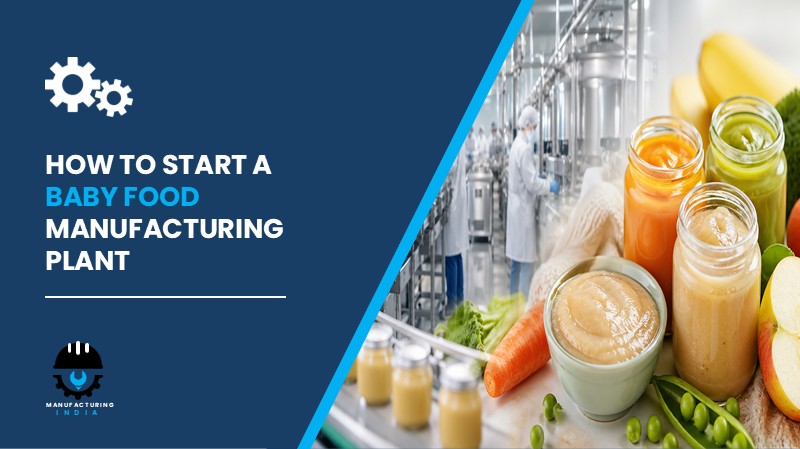
Setting up a baby food manufacturing plant in India presents a compelling investment case driven by rising parental awareness of infant nutrition, increasing working-parent households, higher disposable incomes, and surging demand for safe, nutritionally balanced, and ready-to-consume infant food products. The infant nutrition industry, healthcare and pediatric nutrition sector, retail and e-commerce food segment, and institutional childcare facilities are all expanding their consumption of quality baby food, making this a strategically timed entry point for investors. India’s rapidly urbanising population and changing family structures directly mirror the demand drivers that have made this segment one of the most resilient in the food manufacturing landscape.
India’s manufacturing ecosystem offers a distinct competitive advantage for investors looking to establish a baby food production facility. The country’s rapid urbanisation and rising female workforce participation-mirroring a global trend where women’s workforce participation reached 41.2% in 2024-translate directly into growing demand for ready-to-feed and easy-to-prepare products. The Make in India initiative, combined with India’s cost-competitive land, labour, and supply chain infrastructure, creates a powerful foundation. States such as Gujarat, Maharashtra, and Uttar Pradesh offer established food processing zones, industrial estates, and Special Economic Zones (SEZs) that provide regulatory support and infrastructure access for efficient plant commissioning.
Investing in a baby food manufacturing plant in India combines strong policy tailwinds from the Make in India initiative with a cost-competitive manufacturing environment and robust multi-sector demand from infant nutrition, healthcare, and retail channels. With gross profit margins of 25-35% and stable long-term demand, the project presents a financially viable and strategically sound opportunity, with a break-even trajectory supported by scalable production capacities ranging from 10,000 to 20,000 MT per annum.
What is Baby Food?
Baby food refers to specially designed products intended to cover the nutritional requirements of infants and toddlers in a way that is safe and convenient for them during their growth and development. These products are made from a mix of natural and artificial flavors that add sweetness and aroma, incorporating cereals, fruits, vegetables, milk solids, pulses, and essential micronutrients to deliver balanced nutrition in every serving.
The product category is diverse. Different types available in the market include infant cereals, purees, mashed foods, ready-to-eat meals, and powdered formulations that facilitate ease of consumption and digestion. These products are highly controlled in terms of hygiene, safety, and quality, guaranteeing the retention of nutrients, high digestibility, and long shelf life. Their uniform composition and regulated processing render baby food not only suitable for extensive commercial manufacturing but also for reliable retail distribution through outlets, healthcare institutions, and nutrition programs that support infant and child health.
The primary production method involves raw material cleaning and sorting, thermal processing or cooking, blending and homogenization, drying or pureeing, fortification, quality testing, and hygienic packaging. End-use industries served include the infant nutrition industry, healthcare and pediatric nutrition sector, retail and e-commerce food segment, and institutional childcare facilities.
Cost of Setting Up a Baby Food Manufacturing Plant in India
The cost of establishing a baby food manufacturing plant in India depends on plant capacity, technology selection, geographic location, degree of automation, and regulatory compliance requirements. A thorough understanding of both capital expenditure (CapEx) and operational expenditure (OpEx) is essential before committing to this investment.
1. Capital Expenditure (CapEx)
The total capital investment in a baby food manufacturing facility covers several major cost heads.
Land and Site Development: represents a substantial share of total CapEx, encompassing land registration charges, boundary development, and related pre-construction costs. Investors in India can reduce land costs by opting for industrial estates, food processing parks, or Special Economic Zones (SEZs) that offer subsidised land and shared infrastructure.
Civil Works and Construction cost: include construction of the production shed, quality control laboratory, raw material storage warehouse, finished goods storage, and administrative block. Hygienic construction standards must be maintained throughout, as baby food manufacturing demands clean-room-level compliance in several production zones.
Machinery and Equipment: represent the largest single component of capital expenditure. Key machinery required includes:
- Washers
- Cookers
- Mixers
- Homogenizers
- Dryers
- Filling machines
- Quality testing equipment
Other Capital Cost: include effluent treatment plant (ETP) installation, pre-operative expenses, trial production costs, and import duties where applicable on specialised machinery.
Request a Sample Report for In-Depth Market Insights: https://www.imarcgroup.com/baby-food-manufacturing-plant-project-report/requestsample
2. Operational Expenditure (OpEx)
Raw Material Cost: is the dominant driver of operational expenditure, accounting for 60-70% of total OpEx. Core raw materials required for the baby food manufacturing process include cereals, milk powder, and vitamins. To mitigate price volatility and secure supply continuity, investors should establish long-term procurement contracts with reliable domestic suppliers, particularly for cereals, which carry the highest weight in the input cost structure.
Utility Cost: covers electricity, water, and steam consumption across the production facility, and is estimated at approximately 10-15% of total OpEx. Thermal processing, drying operations, and packaging lines are the primary utility-intensive stages in this production model.
Other Operating Cost: include transportation and logistics, packaging materials, salaries and wages, maintenance, depreciation, and applicable taxes. By the fifth year of operations, the total operational cost is expected to increase substantially due to inflation, market fluctuations, rising input material costs, supply chain dynamics, and shifts in global economic conditions.
3. Plant Capacity
The proposed baby food manufacturing facility is designed with an annual production capacity ranging between 10,000 and 20,000 MT, enabling economies of scale while maintaining operational flexibility. This capacity band can be customized per individual investor requirements, allowing both small-scale entrants and large integrated food companies to structure the investment appropriately. Profitability improves meaningfully with higher capacity utilisation, making early ramp-up of production volumes a key financial priority post-commissioning.
4. Profit Margins and Financial Projections
The baby food manufacturing plant project demonstrates healthy profitability under normal operating conditions. Gross profit margins typically range between 25-35%, supported by stable demand and value-added applications across multiple end-use sectors. Net profit margins are projected in the range of 8-12%. Financial projections for the project encompass net present value (NPV), internal rate of return (IRR), payback period analysis, gross margin, and net margin across a five-year financial model. These projections have been developed based on realistic assumptions related to capital investment, operating costs, production capacity utilisation, pricing trends, and demand outlook, providing a comprehensive view of the project’s long-term financial viability.
Why Set Up a Baby Food Plant in India?
Rising Focus on Infant Health: Growing awareness among parents regarding early-life nutrition is driving demand for scientifically formulated baby food products. This shift in consumer consciousness is creating a durable, long-cycle demand base that is relatively insulated from economic downturns.
Convenience for Working Parents: Rising female workforce participation is a structural demand driver for this category. Ready-to-feed and easy-to-prepare baby food products reduce meal preparation time while ensuring nutritional adequacy, making them essential for dual-income urban households across India’s tier-1 and tier-2 cities.
Policy and Regulatory Tailwinds: Favorable government initiatives and public health programs promoting infant and child nutrition play a significant role in expanding market reach, particularly in developing regions like India. The Make in India initiative further incentivizes domestic manufacturing through financial and regulatory support for food processing units.
Cost-Competitive Manufacturing: India offers significant cost advantages in land, labour, and supply chain infrastructure relative to other major manufacturing geographies. Access to key raw materials such as cereals and milk powder from established domestic agricultural supply chains supports a lean input cost structure.
Active Industry Investment: The sector continues to attract brand launches and product innovation. In September 2025, Little Spoon launched nationally at Target across six aisles and seven categories, with 23 products spanning baby food, refrigerated pouches, and frozen meals, emphasising clean ingredients and stage-based nutrition. In June 2025, Petite Palates launched two shelf-stable, savory infant meals featuring lentils, chickpeas, and greens-plant-based products high in protein, fiber, and iron, free from added sugar.
Local Supply Chain Preference: Retail and e-commerce channels, healthcare institutions, and institutional childcare facilities are actively expanding their sourcing of locally manufactured baby food products to reduce import dependence and ensure fresher, more compliant supply chains.
Manufacturing Process – Step by Step
The baby food manufacturing process uses raw material cleaning and sorting, thermal processing, blending, and hygienic packaging as the primary production method. Each stage involves careful quality oversight to ensure nutritional integrity and food safety compliance.
- Raw Material Cleaning and Sorting: Incoming cereals, milk powder, vitamins, fruits, and vegetables are cleaned, sorted, and inspected for quality before entering the production line.
- Thermal Processing or Cooking: Raw materials are subjected to controlled heat treatment using cookers to ensure safety, digestibility, and pathogen elimination.
- Blending and Homogenization: Cooked materials are blended in mixers and passed through homogenizers to achieve uniform composition, smooth texture, and consistent nutritional content.
- Drying or Pureeing: Depending on the product type (powdered formulation or puree), the blended mixture is either spray-dried using dryers or processed into smooth purees.
- Fortification: Essential micronutrients, vitamins, and minerals are added at this stage to achieve the targeted nutritional profile for infants and toddlers.
- Quality Testing: Comprehensive analytical testing using quality testing equipment is carried out to verify concentration, purity, nutrient levels, and product stability.
- Hygienic Packaging and Dispatch: Finished products are filled using filling machines into regulated packaging and dispatched to infant nutrition outlets, retail chains, e-commerce platforms, healthcare institutions, and childcare facilities.
Key Applications
Baby food products serve a wide range of end-use sectors centred on infant and child health and nutrition:
- Infant Nutrition Industry: Producing nutritionally balanced cereals, purees, and fortified foods for infants and toddlers.
- Healthcare and Pediatric Sector: Supporting dietary needs in hospitals, clinics, and nutrition programs for medically managed infant care.
- Retail and E-commerce Channels: Supplying convenient packaged baby food products for urban consumers through organized retail and digital commerce platforms.
- Institutional Childcare Facilities: Providing standardized feeding solutions for daycare centers and early learning institutions.
Leading Manufacturers
The global baby food industry is served by a combination of multinational corporations and regional players with extensive production capacities and diverse application portfolios. Key players in the market include:
- Nestle
- Abbott
- Danone
- Anand Milk Union Limited
- Mead Johnson Nutrition India / Reckitt Benckiser
- Manna Foods
Timeline to Start the Plant
Establishing a baby food manufacturing unit in India involves a structured multi-phase timeline:
- Feasibility study and project report preparation
- Land acquisition and site development
- Regulatory approvals and environmental clearances
- Factory licence and fire safety compliance
- Machinery procurement and installation
- Raw material supplier agreements and supply chain setup
- Trial production and quality testing
- Commercial production launch
Licences and Regulatory Requirements
Starting a baby food manufacturing unit in India requires several approvals:
- Business registration (Proprietorship, LLP, or Pvt Ltd)
- Factory Licence under the Factories Act
- Environmental Clearance from State Pollution Control Board
- GST Registration
- Fire Safety NOC
- Food Safety and Standards Authority of India (FSSAI) licence – mandatory for all baby food manufacturers
- Effluent Treatment Plant (ETP) operational clearance
- Occupational Health and Safety compliance
Key Challenges to Consider
High Capital Requirements: Establishing a baby food manufacturing plant involves significant upfront investment across land, civil works, and specialised food-grade machinery including washers, cookers, homogenizers, and filling machines, requiring careful financial planning and access to project funding.
Raw Material Price Volatility: Key raw materials – cereals, milk powder, and vitamins – are subject to seasonal agricultural fluctuations and global commodity price swings. Long-term supplier contracts are essential to stabilise the input cost base.
Regulatory Compliance: Baby food is among the most heavily regulated food categories globally. Meeting hygiene, safety, labelling, and nutritional standards as stipulated by Indian food safety authorities demands ongoing investment in quality systems and documentation.
Technology and Innovation Pressure: Growing demand for organic, allergen-free, fortified, and region-specific baby food formulations means manufacturers must continuously invest in product development and process upgrades to remain competitive.
Competition: The market is led by well-capitalised global players including Nestle, Abbott, Danone, Mead Johnson Nutrition India / Reckitt Benckiser, Anand Milk Union Limited, and Manna Foods, requiring new entrants to differentiate on quality, price point, or niche product positioning.
Skilled Manpower: Operating food-grade processing equipment such as homogenizers and filling machines, alongside maintaining quality control and regulatory documentation, demands a trained and technically qualified workforce.
Frequently Asked Questions
1. How much does it cost to set up a baby food manufacturing plant in India?
The cost depends on plant capacity, technology, location, and automation. The proposed facility covers plant capacities between 10,000 and 20,000 MT per annum.
2. Is baby food manufacturing profitable in India in 2026?
Yes. Gross profit margins typically range between 25-35% and net profit margins between 8-12%, making this a financially viable manufacturing investment under normal operating conditions.
3. What machinery is required for a baby food plant in India?
Key equipment includes washers, cookers, mixers, homogenizers, dryers, filling machines, and quality testing equipment.
4. What licences and approvals are required to start a baby food plant in India?
Requirements include business registration, Factory Licence, FSSAI licence, Environmental Clearance, GST Registration, Fire Safety NOC, ETP clearance, and Occupational Health and Safety compliance.
5. What raw materials are needed for baby food manufacturing?
Core raw materials include cereals, milk powder, and vitamins, along with fruits, vegetables, milk solids, and pulses depending on the product formulation.
6. What are the environmental compliance requirements for a baby food plant in India?
Manufacturers must obtain Environmental Clearance from the State Pollution Control Board and maintain an operational Effluent Treatment Plant (ETP) to meet discharge and environmental compliance standards.
7. What is the best location to set up a baby food plant in India?
States with strong food processing infrastructure, reliable utility supply, and proximity to agricultural raw material supply chains – such as Gujarat, Maharashtra, and Uttar Pradesh – are strategically suitable. Industrial estates, food parks, and SEZs offer additional cost and compliance advantages.
8. What is the break-even period for this type of plant in India?
Break-even timelines depend on capacity utilisation, pricing strategy, and operating cost management. The detailed financial projections including NPV and IRR analysis are available in the full feasibility report.
9. What government incentives are available for manufacturers in India?
India offers a range of incentives for food processing manufacturers including Production Linked Incentive (PLI) schemes, Pradhan Mantri Kisan Sampada Yojana, MSME credit-linked subsidies, and state-level industrial promotion schemes. Investors in SEZs and food processing clusters also benefit from land subsidies and tax concessions.
Key Takeaways for Investors
A baby food manufacturing plant in India represents a high-potential investment backed by sustained demand from the infant nutrition industry, healthcare and pediatric nutrition sector, retail and e-commerce channels, and institutional childcare facilities. The project demonstrates financial viability across plant capacities of 10,000 to 20,000 MT per annum, with gross margins of 25-35% and net margins of 8-12% under stable operating conditions. The global baby food market was valued at USD 56.19 billion in 2025 and is projected to reach USD 84.08 billion by 2034, growing at a CAGR of 4.6% from 2026 to 2034, indicating a long runway of demand growth that investors in Indian manufacturing are well-positioned to capture. With urbanisation deepening, female workforce participation rising, and government nutrition programs expanding access in developing regions, demand sustainability for quality baby food products in India is structurally assured over the medium and long term.
About the Author