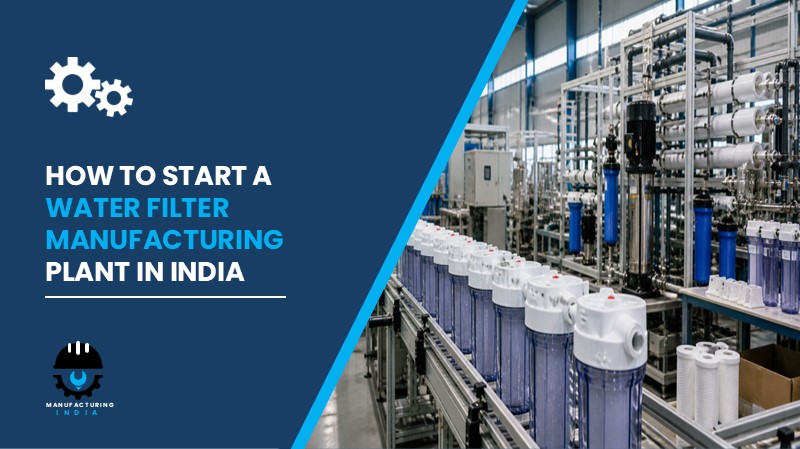
Setting up a water filter manufacturing plant in India presents a compelling investment case driven by converging demand across residential housing, commercial buildings, food and beverage processing, pharmaceuticals and biotechnology, electronics manufacturing, municipal water treatment, power generation, and chemical processing sectors. As waterborne disease burden intensifies and public awareness of contamination risks deepens — the World Health Organization reported that in 2022, around 1.7 billion people worldwide were using drinking water sources contaminated with fecal matter — the urgency for reliable, scalable purification solutions has never been greater. India, with its vast population and rapidly expanding urban centres, sits at the epicentre of this demand surge.
India’s structural advantages make it particularly well-suited for water filter manufacturing. The country’s ongoing urbanisation wave is generating millions of new households that require safe drinking water solutions, while infrastructure growth across industrial corridors in Gujarat, Maharashtra, Uttar Pradesh, and Tamil Nadu provides excellent connectivity for raw material sourcing and product distribution. The Government of India’s Make in India initiative further incentivises domestic manufacturing through land allocation support, reduced import duties on capital goods, and subsidised credit for first-generation manufacturers. For investors seeking a scalable, socially impactful, and financially rewarding industrial venture, a water filter manufacturing plant in India is a strategically sound choice.
India’s growing concern over microbial contamination in drinking water, combined with government-backed manufacturing policies and a global water filter market projected to reach USD 92 Billion by 2034, makes this one of the most compelling manufacturing investment opportunities available today. With gross margins of 35–45% and net margins of 10–20%, a well-planned facility can achieve financial viability across multiple capacity scales, with strong demand sustainability from residential, industrial, and municipal end-users.
What is a Water Filter?
A water filter is a device designed to remove unwanted particulates and dissolved contaminants from the water stream through various methods. These methods include removing large particulates by mechanical means (mechanical filtration), removing dissolved contaminants through physical or chemical absorption (adsorption), changing the chemical composition of contaminants (ion exchange), separating contaminants from clean water (membrane separation), or a combination of these approaches. Typical product types include sediment filters, activated carbon filters, microfiltration units, ultrafiltration systems, reverse osmosis (RO) membranes, and ultraviolet (UV) light systems. These filters deliver benefits such as better-tasting water, odour elimination, safe microbiological conditions, and reduced scaling.
Key characteristics that make water filters industrially and commercially versatile include high contaminant removal efficiency, multi-stage purification capability, long operational lifespan with minimal maintenance, compatibility with diverse water sources, energy-efficient purification in non-RO configurations, modular and scalable system design, and enhanced microbial reduction and odour control. The water filter manufacturing process employs a combination of injection moulding, membrane casting, media treatment, and precision assembly as its primary production methods. Industries served span from individual households and commercial buildings to pharmaceuticals, electronics manufacturing, municipal water utilities, power generation plants, and chemical processing facilities.
Cost of Setting Up a Water Filter Manufacturing Plant in India
The investment required for a water filter manufacturing plant setup depends on multiple variables including production capacity, degree of automation, choice of location, technology configuration, and regulatory compliance obligations. A detailed feasibility study is essential before committing capital, as cost structures vary considerably between a greenfield facility targeting 2 million units per year and a fully scaled plant targeting 4 million units per year.
1. Capital Expenditure (CapEx)
Land and site development constitutes a substantial share of upfront investment. Investors in India can optimise this component by choosing plots within Special Economic Zones (SEZs) or state-designated industrial estates, which offer concessional land rates, pre-approved infrastructure, and streamlined regulatory processes. Civil works covering the production shed, quality control laboratory, raw material storage warehouse, finished goods warehouse, administrative block, and utility zone must be constructed to accommodate the multi-zone plant layout required for water filter production.
Machinery procurement and installation represents the largest single component of capital expenditure. Key machinery required includes:
- Injection moulding machines (for plastic housing fabrication)
- Extrusion systems (for metal or composite housing profiles)
- Membrane casting and curing equipment
- Activated carbon activation and treatment units
- Filter media washing, drying, and grading systems
- Cartridge assembly lines with automated filling and sealing
- UV lamp integration and sensor fitting stations
- Pump and valve assembly fixtures
- Automated quality control and flow-rate testing rigs
- Packaging and labelling machines
Other capital costs include the effluent treatment plant (ETP), pre-operative expenses, trial production costs, commissioning charges, and applicable import duties on specialised equipment not manufactured domestically.
Request a Sample Report for In-Depth Market Insights: https://www.imarcgroup.com/water-filter-manufacturing-plant-project-report/requestsample
2. Operational Expenditure (OpEx)
Raw material cost is the dominant operating expense, accounting for 60–70% of total OpEx. The three primary raw material categories are filter media (activated carbon, membranes, resins), housings and parts (injection-moulded plastic or metal enclosures, end caps, adhesives), and system components (pumps, valves, UV lamps, sensors, fittings). Investors should establish long-term procurement contracts with domestic suppliers to hedge against raw material price volatility, which is the most significant cost risk in the water filter manufacturing process.
Utility cost, covering electricity for machinery operation, water for cooling and processing, fuel for heating, and compressed air systems, accounts for 4–6% of total OpEx. Additional operating costs include transportation and logistics for outbound product delivery, protective packaging materials such as corrugated boxes, shrink-wrapped units, reinforced cartons, and polybag-sealed cartridges, salaries and wages across production, maintenance, quality control, and administration, routine equipment maintenance and spares, depreciation on civil and mechanical assets, and applicable taxes. By the fifth year of operations, total operational costs are projected to increase substantially due to inflation, market fluctuations, potential rises in key material costs, supply chain disruptions, and rising consumer demand.
3. Plant Capacity
A medium-scale water filter plant is typically configured for a production capacity of 2–4 million units per year. This range allows investors to begin at the lower end, establish market relationships, and scale output as commercial traction builds. Capacity can be customised to suit individual investor requirements, with modular plant design enabling phased expansion without full-facility reconstruction. Profitability improves meaningfully with higher capacity utilisation, as fixed costs — including civil depreciation, management salaries, and land costs — are spread across a larger production volume.
4. Profit Margins and Financial Projections
A water filter manufacturing plant in India offers an attractive financial profile. Gross margins are projected at 35–45% and net margins at 10–20%, making the unit economics competitive with most consumer goods manufacturing segments. Comprehensive financial analysis covers liquidity assessment, profitability ratios, payback period calculation, net present value (NPV) determination, and internal rate of return (IRR) analysis. Sensitivity analysis against raw material price changes and capacity utilisation scenarios is essential, given that raw materials represent 60–70% of operating costs.
Why Set Up a Water Filter Plant in India?
Rising Concern Over Waterborne Contamination. The WHO’s finding that approximately 1.7 billion people globally were using fecal-contaminated drinking water sources in 2022 underscores the scale of unmet need. As awareness of the link between microbial presence in water and health risks widens, consumers across India’s urban and peri-urban markets are actively seeking advanced water filtration systems, driving sustained first-time and replacement demand.
Diverse End-Use Industry Demand. The water filter market in India is not limited to residential consumers. Demand from food and beverage processing, pharmaceuticals and biotechnology, electronics manufacturing, municipal water treatment, power generation, and chemical processing ensures that production from a well-positioned facility is absorbed across multiple revenue streams, reducing dependence on any single buyer category.
Policy and Regulatory Tailwinds. The Government of India’s Make in India initiative directly supports domestic manufacturing through industrial land development, capital goods duty concessions, and priority credit access for new industrial ventures. State governments in Gujarat, Maharashtra, and Uttar Pradesh have established dedicated industrial corridors with pre-cleared environmental zones, reducing regulatory lead times for new plant commissioning.
Cost-Competitive Manufacturing. India offers a compelling cost base for water filter manufacturing, combining competitive industrial land rates, a large and trainable labour pool spanning assembly, quality control, and maintenance functions, and a domestic supply chain for plastics, activated carbon, and basic system components. Together, these factors enable Indian manufacturers to produce at costs that support both domestic pricing competitiveness and potential export ambitions.
Active Industry Investment and Innovation. The sector is seeing continuous product development. In December 2025, Livpure introduced its new 2X Power Filter Water Purifier for Indian households. In July 2025, Eureka Forbes launched a new Aquaguard range featuring Longlife nanopore filter technology ensuring purification for up to two years without replacement. In April 2025, Tappwater, part of the Bluewater Group, launched environmentally friendly water filters capable of reducing over 80 contaminants including PFAS, chlorine, and heavy metals. These launches signal robust innovation activity and strong consumer appetite for new solutions.
Strategic Partnerships Expanding Market Access. In July 2025, ANGEL announced a major partnership with Mazuma and HomePro to expand its advanced water purifiers across Thailand, leveraging HomePro’s nationwide retail network. This reflects a broader industry shift toward distribution-led growth strategies that India-based manufacturers can replicate domestically through retail chains and e-commerce partnerships.
Manufacturing Process – Step by Step
The water filter manufacturing process employs a multi-method production approach — combining mechanical filtration, adsorption, ion exchange, and membrane separation — as its primary production methodology.
- Raw Material Preparation: Selection and preprocessing of filter media such as activated carbon, membranes, resins, and housings to meet defined quality specifications.
- Filter Media Treatment: Activation, washing, drying, and grading of media to achieve required porosity and adsorption characteristics for target contaminant removal.
- Housing Fabrication: Injection moulding or extrusion of plastic or metal housings used to encase filter elements.
- Membrane Formation (for RO/UF/MF): Casting and curing of polymeric membranes to achieve selective permeability for reverse osmosis, ultrafiltration, and microfiltration products.
- Assembly of Filter Cartridges: Packing filter media, fixing membrane sheets, and sealing cartridges with end caps and adhesives.
- System Integration: Incorporating cartridges into housings and adding components including pumps, valves, UV lamps, and sensors.
- Quality Control Testing: Verifying flow rate, pressure tolerance, microbiological safety, and filtration efficiency against defined acceptance criteria.
- Packaging and Labelling: Sealed, moisture-protected packaging with batch identification and regulatory compliance labels, followed by dispatch to residential, commercial, and industrial end-use sectors.
Key Applications
Water filters serve a broad range of industries, from individual households to large-scale industrial and municipal facilities.
- Residential Housing: Drinking water purification in homes using RO, UV, and activated carbon systems.
- Commercial Buildings: Central filtration for offices, hotels, and institutions requiring consistent water quality at scale.
- Food and Beverage Processing: Pre-treatment of process water and ingredient water to meet food safety standards.
- Pharmaceuticals and Biotechnology: High-purity water production for drug formulation, laboratory use, and sterile manufacturing.
- Electronics Manufacturing: Ultra-pure water supply for semiconductor fabrication and component cleaning processes.
- Municipal Water Treatment: Large-scale community filtration for urban and peri-urban drinking water supply networks.
- Power Generation: Boiler feedwater preparation and cooling water treatment to protect plant equipment.
- Chemical Processing: Water polishing and process water management to improve reaction quality and equipment longevity.
Leading Manufacturers
The global water filter industry is served by several multinational companies operating across diverse product categories and geographies. Key players in the market include:
- Aquametro AG
- 3M Purification
- GE Appliances
- Philips Carbon
- Best Water Technology (BWT)
- Honeywell International Inc.
- Pentair Aqua Pure Solutions
- Culligan International Company
- Kent RO Systems Limited
- Philips Home Water Filtration System
Timeline to Start the Plant
- Feasibility study and project report preparation
- Land acquisition and site development
- Regulatory approvals and environmental clearances
- Factory licence and fire safety compliance
- Machinery procurement and installation
- Raw material supplier agreements and supply chain setup
- Trial production and quality testing
- Commercial production launch
Licences and Regulatory Requirements
Starting a water filter manufacturing unit in India requires several approvals:
- Business registration (Proprietorship, LLP, or Pvt Ltd)
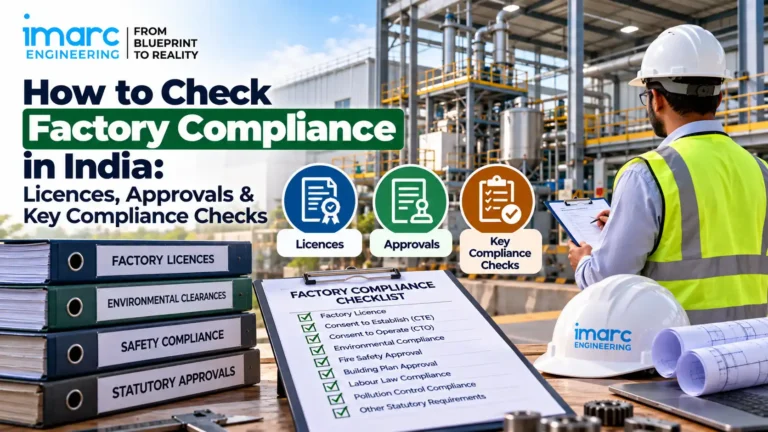
- Factory Licence under the Factories Act
- Environmental Clearance from State Pollution Control Board
- GST Registration
- Fire Safety NOC
- Chemical and component handling compliance (relevant to activated carbon and membrane chemicals used in production)
- Effluent Treatment Plant (ETP) operational clearance
- Occupational Health and Safety compliance
Key Challenges to Consider
High Capital Requirements. Establishing a medium-scale water filter manufacturing plant capable of producing 2–4 million units per year demands significant upfront investment in land, civil works, specialised machinery, and working capital, making access to structured financing a critical success factor.
Raw Material Price Volatility. Filter media (activated carbon, membranes, resins), housings, and system components together represent 60–70% of operational costs. Price swings in these inputs — driven by petrochemical market movements, import disruptions, or supply chain constraints — can materially compress margins.
Regulatory Compliance. Multi-agency approvals covering environmental clearances, factory licensing, ETP compliance, and chemical handling norms add complexity to the pre-commissioning phase and require dedicated legal and environmental management resources.
Technology and Innovation Pressure. The sector is seeing rapid product evolution — smart IoT-enabled filters, energy-efficient RO membranes, nanopore filter technology (as launched by Eureka Forbes in July 2025), and high-capacity activated carbon modules — requiring manufacturers to invest in R&D and product adaptation to remain competitive.
Competition from Established Players. The market is served by well-capitalised global players including Honeywell International Inc., 3M Purification, Pentair Aqua Pure Solutions, and Kent RO Systems Limited, as well as active domestic brands such as Livpure and Eureka Forbes, meaning that new entrants must differentiate on price, distribution, or product innovation.
Skilled Manpower. Membrane casting, precision cartridge assembly, system integration, and quality control testing require technically trained personnel. Sourcing and retaining skilled workers — particularly in specialised membrane and filtration technology roles — remains a persistent challenge for manufacturing operations in India.
Frequently Asked Questions
1. How much does it cost to set up a water filter manufacturing plant in India?
Setup cost depends on plant capacity, location, machinery specification, and degree of automation. A medium-scale facility with a capacity of 2–4 million units per year requires significant capital expenditure covering land, civil works, machinery, utilities, and working capital. A detailed project report provides a full CapEx and OpEx breakdown.
2. Is water filter manufacturing profitable in India in 2026?
Yes. A water filter plant in India generates gross margins of 35–45% and net margins of 10–20%, underpinned by strong residential, commercial, and industrial demand and a globally growing market projected to reach USD 92 Billion by 2034.
3. What machinery is required for a water filter plant in India?
Key equipment includes injection moulding machines, membrane casting and curing units, filter media treatment systems, cartridge assembly lines, UV lamp and sensor integration stations, quality control testing rigs, and automated packaging and labelling machines.
4. What licences and approvals are required to start a water filter plant in India?
Required approvals include business registration, Factory Licence under the Factories Act, Environmental Clearance from the State Pollution Control Board, GST registration, Fire Safety NOC, ETP operational clearance, and Occupational Health and Safety compliance.
5. What raw materials are needed for water filter manufacturing?
The three primary raw material categories are filter media (activated carbon, membranes, resins), housings and parts (moulded enclosures, end caps, adhesives), and system components (pumps, valves, UV lamps, sensors). These account for 60–70% of operational expenses.
6. What are the environmental compliance requirements for a water filter plant in India?
A water filter manufacturing unit must obtain Environmental Clearance from the State Pollution Control Board, install and operate a compliant Effluent Treatment Plant (ETP), and meet chemical handling norms applicable to activated carbon and membrane production chemicals.
7. What is the best location to set up a water filter plant in India?
Optimal locations include industrial estates and SEZs in Gujarat, Maharashtra, Uttar Pradesh, and Tamil Nadu, offering connectivity to raw material suppliers, access to skilled labour, established logistics networks, and pre-cleared environmental zones.
8. What is the break-even period for this type of plant in India?
The break-even period depends on plant capacity, capacity utilisation rate, product pricing, and operating cost management. A comprehensive financial analysis covering NPV, IRR, payback period, and sensitivity analysis is included in the detailed project report.
9. What government incentives are available for manufacturers in India?
Manufacturers can access incentives under the Make in India initiative, state-level industrial policy schemes, concessional land allotment within SEZs and industrial corridors, capital goods import duty relief, and priority credit schemes from scheduled banks and development finance institutions.
Key Takeaways for Investors
A water filter manufacturing plant in India offers a multi-sector revenue opportunity spanning residential housing, commercial buildings, food and beverage processing, pharmaceuticals, electronics, municipal water treatment, power generation, and chemical processing — ensuring demand diversification and resilience across economic cycles. The investment delivers gross margins of 35–45% and net margins of 10–20%, with financial viability demonstrated across medium-scale capacities of 2–4 million units per year. The global water filter market, valued at USD 48 Billion in 2025, is projected to reach USD 92 Billion by 2034 at a CAGR of 7.50%, providing a long and expanding runway for Indian manufacturers. With microbial contamination of drinking water sources remaining a global public health challenge, demand for advanced water filtration solutions is structurally driven and unlikely to abate — making this a resilient, future-proof investment for the Indian manufacturing sector.
About the Author