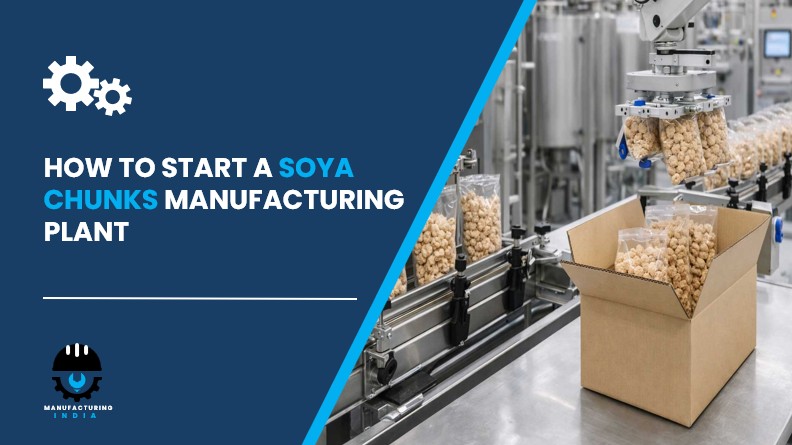
Setting up a soya chunks manufacturing plant in India presents a highly compelling investment opportunity, driven by accelerating demand for affordable plant-based protein, expanding vegetarian and flexitarian populations, rising consumer awareness regarding protein malnutrition, sustained growth in the processed and packaged food sector, and the increasing penetration of meat alternatives, nutritional supplements, and institutional feeding programmes across consumer, retail, and export markets. As one of the most strategically significant segments of the global plant-based protein and textured vegetable protein industry, soya chunks manufacturing combines defatted soy flour conditioning, high-moisture extrusion-cooking, texturisation, drying, sizing, flavour application, and packaging operations to serve a broad range of household, food service, institutional, industrial, and animal feed end-use markets.
The global soya chunks market size was valued at USD 2,079.17 Million in 2025. According to IMARC Group estimates, the market is expected to reach USD 3,887.25 Million by 2034, exhibiting a CAGR of 7.2% from 2026 to 2034. The market is propelled by sustained growth in plant-protein consumption, accelerating urbanisation and dietary shifts in emerging economies, rising consumer preference for affordable and shelf-stable protein-rich foods, and the increasing penetration of soya-based products across retail, ready-to-eat, nutraceutical, and institutional catering applications. Asia-Pacific accounts for the largest share of the overall market, supported by India’s deeply established soya chunks consumption base, expanding domestic processed food capacity, and active government nutrition and food security programmes.
Expanding adoption of high-protein textured vegetable protein variants, growing demand for value-added soya formats across ready-to-cook and ready-to-eat segments, and the increasing use of soya chunks across vegetarian curry preparations, snack and cereal formulations, and meat-analogue applications continue to elevate demand for high-quality soya chunks products. The shift from low-cost commodity grades toward dimensionally consistent, flavour-enhanced, and application-specific formats integrates soya chunks manufacturing as a core operation in modern food processing, FMCG, institutional catering, and nutritional supplementation supply chains.
Soya chunks manufacturing sits at the intersection of agricultural value addition, food processing engineering, and downstream FMCG, institutional, and nutraceutical value chains, supported by a structurally growing global plant-based protein industry. With gross profit margins typically ranging between 25 to 35% and a well-defined break-even trajectory at scale, a dedicated soya chunks manufacturing plant represents both a financially sound and strategically well-timed investment for food processing companies, FMCG brands, agricultural cooperatives, and institutional investors targeting the evolving global plant-protein, vegetarian foods, and nutritional supplementation markets.
What are Soya Chunks?
Soya chunks, also known as textured vegetable protein (TVP) or textured soy protein (TSP), are extrusion-cooked, defatted-soy-flour-based protein products designed to deliver a meat-like fibrous texture upon hydration, while offering high protein content, low fat, dietary fibre, and a long ambient shelf life. Soya chunks are manufactured in a broad range of sizes, shapes, densities, and flavour profiles to address the specific requirements of household cooking, institutional catering, ready-to-eat meal manufacturing, nutritional supplementation, meat-analogue formulation, and animal feed applications.
The base raw material is defatted soy flour, produced as a co-product of soybean oil extraction, with protein contents typically ranging between 50 and 54%. Defatted soy flour is selected based on protein dispersibility index (PDI), particle size, urease activity, residual fat content, and microbial profile, all of which directly influence the texturization behaviour, hydration capacity, bite, and chewiness of the finished soya chunks. Premium product grades are produced from selected high-PDI flours, while standard commercial grades use industrial-grade defatted soy flour processed through optimised extrusion cooking to deliver consistent functional and sensory characteristics.
Standard soya chunks product types include large nuggets, medium chunks, mini chunks, soya granules (mince-like), shaped soya pieces (strips, cubes, and flakes), flavoured chunks (masala, peri-peri, tandoori, and spice variants), high-protein variants for nutritional supplementation, and bulk industrial-grade chunks for institutional catering and ready-meal manufacturing. Packaging formats range from small consumer-pack pouches (typically 50 g to 1 kg) to bulk institutional bags (10 to 50 kg) and industrial bulk bags for B2B food processing customers.
The soya chunks manufacturing sequence broadly involves raw material receipt and quality inspection, defatted soy flour conditioning and pre-blending, dough preparation and moisture adjustment, twin-screw extrusion cooking and texturisation, cutting and shaping, hot-air drying, cooling, sizing and grading, optional flavour and seasoning application, metal detection and quality inspection, and retail or bulk packaging. End-use segments served include household consumer cooking, institutional catering (hostels, schools, hospitals, canteens, and defence establishments), ready-to-eat and ready-to-cook food manufacturing, meat-analogue and plant-protein product formulation, nutritional supplements, sports and clinical nutrition, and animal feed and pet food applications.
Cost of Setting Up a Soya Chunks Manufacturing Plant
The total cost of establishing a soya chunks manufacturing plant depends on several variables including plant capacity, level of automation, chosen manufacturing technology (high-moisture twin-screw extrusion versus single-screw extrusion or semi-automated lines), geographic location, raw material sourcing strategy, product mix across chunks, granules and flavoured variants, and applicable food safety and regulatory compliance requirements. A thorough feasibility assessment covering all CapEx and OpEx components is essential before committing capital, given the food-grade and specification-driven nature of soya chunks manufacturing.
1. Capital Expenditure (CapEx)
Capital investment for a soya chunks manufacturing plant covers several broad cost heads. Land and site development forms a meaningful part of the overall investment, encompassing land registration charges, boundary development, drainage, site grading, and related civil infrastructure expenses. A typical soya chunks facility requires a land parcel sized to accommodate the production floor, defatted soy flour silo and storage area, extrusion and texturisation hall, drying and cooling section, flavouring and packaging zone, finished goods warehousing, quality control laboratory, and on-site utility installations. Investors may consider locating the facility in proximity to soybean-processing belts (Madhya Pradesh, Maharashtra, Rajasthan, and Gujarat in India), defatted soy flour mills, FMCG and food processing clusters, institutional catering hubs, or port-connected logistics centres for export-oriented strategies.
Civil works and construction costs cover the production shed, raw material silo and bulk storage area, extrusion processing hall, drying and cooling bay, flavouring and packaging zone, finished goods warehousing, microbiological and quality control laboratory, and the administrative block. Machinery and equipment costs represent the largest single portion of total capital expenditure. Key machinery and equipment required includes:
- Raw material handling and storage systems (defatted soy flour silos with pneumatic conveying, bulk bag unloading stations, sifters and magnetic separators, ingredient pre-mix bins, additive dosing systems, water treatment and storage tanks, and automated material conveyors)
- Pre-conditioning and dough preparation equipment (high-speed ribbon blenders and paddle mixers for soy flour and water blending, pre-conditioning units for moisture and steam injection, ingredient dosing and metering systems, and dough holding tanks for residence-time control before extrusion)
- Twin-screw extrusion cooking systems (high-shear twin-screw extruders with co-rotating intermeshing screws, segmented barrels with thermocouple-controlled heating and cooling zones, variable-frequency-drive motor systems, configurable die plates for chunk and granule profile formation, and rotating face cutters for primary sizing)
- Cutting, shaping, and sizing equipment (rotating-knife cutters, guillotine cutters for cube and strip profiles, vibratory sizing screens, granule classifiers for fine and coarse separation, and shape-setting forms for specialty product variants)
- Drying and cooling systems (continuous belt dryers with multi-zone temperature control, fluidised-bed dryers for granular product variants, hot-air recirculation systems, drying air heat-recovery units, vibratory cooling conveyors, and ambient-air cooling tunnels for residual moisture stabilisation)
- Flavour and seasoning application lines (rotary drum coaters, spray-coating systems for liquid seasoning application, dry-blender tumblers for masala and spice mix dosing, flavour storage and metering pumps, and hot-air seasoning fixation tunnels for flavoured chunk variants)
- Sieving, grading, and metal detection units (vibratory sieves for length and weight classification, gravity separators for density-based grading, in-line metal detection systems for ferrous and non-ferrous contamination removal, and X-ray inspection units for premium and export-grade product lines)
- Quality control and laboratory equipment (protein analysers (Kjeldahl or Dumas), moisture analysers, fat analysers, NIR rapid composition testers, water-absorption and rehydration testers, bulk-density measurement equipment, microbiological incubators, total-plate-count analysers, mycotoxin testing kits, and standard analytical balances and pH meters)
- Automated packaging lines (vertical form-fill-seal (VFFS) machines for consumer pouches, multi-head weighers for accurate fill control, bulk bagging machines for institutional and B2B packaging, nitrogen-flush packaging units for shelf-life extension, carton sealing and case packers, barcode and date-code printing systems, and palletising and stretch-wrapping equipment)
- Utility systems (electrical substations and transformers, steam boilers (typically biomass, natural gas, or electric) for extrusion conditioning, compressed air compressors and dryers, chilled water plants, water softening and RO treatment systems, hot air generators for drying ovens, and process exhaust handling units)
- Effluent and emission control equipment (flour-dust extraction and filtration systems, baghouse and cyclone separators for ambient air quality control, wastewater treatment plants for cleaning-in-place (CIP) effluents, biomass boiler stack emission controls, and odour-management systems for flavouring operations)
- Material handling and transport equipment (overhead pneumatic conveyors for soy flour, bucket elevators, forklifts, pallet trucks, mobile silos, ingredient totes, and on-site logistics infrastructure for movement of raw materials, work-in-progress, and finished goods)
Other capital costs include utility connections (electricity, water, steam, and process gas supply), pre-operative expenses, plant commissioning costs, tooling and die plate costs for extrusion machines, product qualification and trial production runs, and applicable import duties on specialised twin-screw extrusion lines, multi-head weighers, and analytical instruments not manufactured domestically.
Request a Sample Report for In-Depth Market Insights: https://www.imarcgroup.com/soya-chunks-manufacturing-plant-project-report/requestsample
2. Operational Expenditure (OpEx)
The operating cost structure of a soya chunks manufacturing plant is heavily weighted toward raw materials. Raw material costs (encompassing defatted soy flour, ingredient additives such as salt, calcium chloride, and emulsifiers, flavouring and seasoning materials for value-added variants, and packaging components) account for approximately 70 to 80% of total OpEx, with defatted soy flour typically representing the single largest raw material cost component due to its global soybean commodity-pricing exposure and the protein-grade quality required for consistent texturisation performance. Entering long-term supply agreements with reliable defatted soy flour producers, soybean processors, flavouring vendors, and packaging suppliers is essential to mitigate input price volatility and maintain production continuity.
Utility costs, particularly electricity for extrusion drives and pneumatic conveying, steam for pre-conditioning, hot air for drying ovens, and chilled water for cooling systems, account for 10 to 15% of OpEx. Additional operating costs include packaging materials (laminated film pouches, cartons, bulk bags, and palletisation materials), transportation and distribution logistics, salaries and wages for extrusion line operators, drying and packaging technicians, quality control microbiologists, and sales personnel, periodic die plate and screw element replacement, maintenance of extruders and ancillary equipment, cleaning chemicals and CIP consumables, microbiological testing consumables, and applicable food safety, FSSAI, and product certification costs.
3. Plant Capacity
The proposed soya chunks manufacturing facility is designed with an annual production capacity ranging between 10,000 to 20,000 metric tonnes, enabling meaningful economies of scale while preserving operational flexibility across the full product range, from standard commodity-grade soya chunks and granules to premium high-protein, flavoured, and shaped specialty variants for FMCG retail, ready-to-eat, institutional, and export channels. Plant capacity can be customised based on the investor’s specific capital availability, target market scale, and chosen product mix across end-use segments such as household retail, institutional catering, ready-to-eat manufacturing, nutritional supplements, meat-analogues, and animal feed.
Profitability improves considerably at higher capacity utilisation levels, given the fixed-cost component of extrusion, drying, and packaging operations, making early off-take agreements with FMCG brands, modern retail chains, institutional caterers, government food programmes, ready-meal manufacturers, and private label export customers strategically important.
4. Profit Margins and Financial Projections
A soya chunks manufacturing plant demonstrates healthy profitability potential under normal operating conditions. Gross profit margins typically range between 25 to 35%, supported by stable and growing demand across household, institutional, ready-to-eat, nutritional, and meat-analogue markets; the structural shift toward affordable plant-protein nutrition; growing health and wellness consumer spending across emerging economies; and differentiation opportunities through premium high-protein, flavoured, organic, and clean-label product lines. Net profit margins range between 10 to 15%.
Financial projections incorporate NPV analysis, IRR calculations, payback period modelling, and sensitivity analysis across plant capacity utilisation, raw material pricing, utility costs, and end-market demand scenarios. These projections are developed based on realistic assumptions related to capital investment, operating costs, capacity utilisation, and demand outlook, providing investors with a comprehensive view of long-term financial viability.
Why Set Up a Soya Chunks Manufacturing Plant?
- Essential Plant-Protein Staple: Soya chunks are an indispensable, affordable source of high-quality plant protein consumed across virtually every household, institutional kitchen, vegetarian-meal segment, and nutritional supplementation channel, making them a high-volume, daily-consumption product category with sustained replacement and consumption cycles across the global plant-based food and FMCG ecosystem.
- Protein-Demand Megatrend and Health Awareness: Rising consumer awareness of protein malnutrition, growing vegetarian and flexitarian populations across India, Southeast Asia, the Middle East, and increasingly North America and Europe, combined with the global shift toward affordable plant-based nutrition, are driving sustained demand for soya chunks across emerging and developed economies.
- Plant-Based Food Industry Structural Growth: The global plant-based protein and meat-alternative industry continues to expand rapidly, driven by health, sustainability, animal-welfare, and affordability concerns. India’s processed food exports alone reached USD 10.09 billion in 2024-2025 according to the Ministry of Food Processing Industries, with significant share in pulses, cereal preparations, and processed vegetables, directly creating robust and structurally growing demand for soya-based protein products.
- Extrusion Technology and Product Innovation Driving Margins: Growing adoption of high-moisture extrusion technology, advanced twin-screw extruder systems, premium high-PDI defatted soy flour grades, and novel flavoured and shaped soya variants are creating attractive value-added margin opportunities for soya chunks manufacturers with in-house processing and product development capabilities.
- Institutional Catering and Government Nutrition Programmes: The accelerating expansion of mid-day meal schemes, public distribution systems, hostel and hospital catering networks, defence establishment supply contracts, and Anganwadi nutrition programmes is creating a structurally growing demand stream for institutional-grade soya chunks, opening a stable, high-volume off-take channel for established manufacturers and approved suppliers.
- Meat-Alternative and Ready-Meal End-Market Off-Take: Continued growth in the global plant-based meat-analogue industry, expanding ready-to-eat and ready-to-cook food manufacturing, and rising health-food and nutraceutical formulation supports stable industrial demand for high-protein soya chunks, granules, and texturised soy ingredients used in meat substitutes, vegetarian patties, snack bars, and protein-enriched packaged foods.
- Moderate Entry Barriers with Brand Differentiation Potential: Soya chunks manufacturing requires consistent defatted soy flour quality, controlled extrusion processing, and precise product specification discipline, creating moderate but justifiable entry barriers and supporting structurally protected margins for established and well-capitalised producers operating at scale with strong brand recognition, FSSAI compliance, and modern retail and institutional channel relationships.
- Government Policy and Manufacturing Support: Public sector investment in nutrition security, food processing infrastructure, and manufacturing incentive schemes such as India’s Make in India, Pradhan Mantri Kisan Sampada Yojana (PMKSY), and the Pradhan Mantri Formalisation of Micro Food Processing Enterprises (PMFME) scheme directly support sustained soya chunks consumption growth and provide favourable policy frameworks for new domestic manufacturing capacity.
- Import Substitution and Export Potential: Many regional markets continue to rely on imported textured vegetable protein and specialty soya products, creating attractive import substitution opportunities for new domestic capacity, while strategically located plants near port logistics can also serve regional export markets across South Asia, Africa, the Middle East, and emerging plant-protein markets in Europe and North America.
- High-Volume Recurring Consumption Economics: Soya chunks are a frequently purchased, low-unit-price food staple with a steady and predictable replenishment cycle that provides long-term revenue visibility when paired with a stable retail distribution and institutional customer portfolio, supporting consistent volume off-take across both modern trade and traditional general trade channels.
How Soya Chunks are Manufactured
The soya chunks manufacturing sequence encompasses raw material reception and quality inspection, defatted soy flour conditioning and pre-blending, dough preparation and moisture adjustment, twin-screw extrusion cooking and texturisation, cutting and shaping, drying and cooling, optional flavour and seasoning application, sieving, metal detection and quality inspection, and retail or bulk packaging as the core stages of production. Each stage involves specific unit operations, quality assurance checkpoints, and process control protocols aligned to product specifications and applicable food safety standards (FSSAI, BIS, ISO 22000, HACCP, and FSSC 22000).
- Raw Material Reception and Quality Inspection: Defatted soy flour, ingredient additives (salt, calcium chloride, emulsifiers, and stabilisers), flavouring and seasoning materials, and packaging components are received from suppliers, sampled, and tested for protein content (Kjeldahl or Dumas method), protein dispersibility index (PDI), moisture, fat residual, urease activity, particle size distribution, microbial load, and aflatoxin levels before being conveyed to dedicated storage silos and ingredient bins.
- Defatted Soy Flour Conditioning and Pre-Blending: Approved defatted soy flour is sifted through vibratory screens to remove oversize particles and foreign matter, passed through magnetic separators for ferrous contamination removal, conditioned to achieve target moisture content, and pre-blended with measured quantities of minor ingredients (salt, calcium salts, and processing aids) in high-speed ribbon or paddle mixers to ensure homogenous composition before extrusion.
- Dough Preparation and Moisture Adjustment: Pre-blended soy flour mixture is fed to the pre-conditioner where measured quantities of water and steam are injected to achieve the target dough moisture (typically 25 to 35% on a wet basis), residence time, and temperature profile required for optimal protein hydration, denaturation, and texturisation behaviour during the subsequent extrusion stage.
- Twin-Screw Extrusion Cooking and Texturisation: The conditioned dough is fed into the twin-screw extruder, where co-rotating intermeshing screws subject the material to high shear, mechanical work, and thermal energy under controlled barrel temperatures (typically 130°C to 180°C) and pressures. Soy proteins are denatured, realigned, and re-aggregated into a fibrous, anisotropic structure, and the cooked melt is forced through a die plate that imparts the target chunk, granule, or shaped profile.
- Cutting and Shaping: The extruded melt strand exiting the die is cut by a rotating face cutter to achieve the specified chunk length, granule size, or specialty shape. Cut pieces are conveyed via vibratory or pneumatic conveyors to the drying section, with size and shape consistency monitored through in-line image analysis or sampling-based dimensional verification.
- Drying and Cooling: Cut soya chunks are conveyed through continuous multi-zone hot-air belt dryers or fluidised-bed dryers to reduce moisture content from approximately 25 to 30% post-extrusion to a shelf-stable level of 6 to 8%. Drying air temperature, velocity, and residence time are precisely controlled to ensure uniform moisture profile, retain texturisation quality, and avoid case-hardening or cracking. Dried chunks are cooled in vibratory cooling conveyors to ambient temperature before further processing.
- Sizing, Grading, and Quality Sorting: Cooled chunks are passed through vibratory sizing sieves and gravity separators to classify product into specified size grades (large nuggets, medium chunks, mini chunks, and granules), remove fines and oversize particles, and ensure dimensional consistency. Off-spec material is segregated for rework or downgrading to animal feed applications, while in-spec product is conveyed to the next processing stage.
- Flavour and Seasoning Application (Optional): For value-added flavoured product variants, sized chunks are conveyed to rotary drum coaters or spray-coating systems where measured quantities of liquid or dry flavouring (masala, peri-peri, tandoori, herb, or other seasoning blends) are uniformly applied. Coated product is passed through hot-air fixation tunnels to set the flavour coating, ensuring adherence and shelf stability before final packaging.
- Metal Detection and Inspection: All finished soya chunks pass through in-line metal detection systems for ferrous, non-ferrous, and stainless-steel contamination removal. Premium and export-grade products may also be subject to X-ray inspection for foreign matter and density-based defect detection. Statistical sampling-based laboratory testing verifies protein content, moisture, water absorption capacity, microbial counts, and sensory parameters.
- Quality Testing and Microbiological Verification: Finished product samples are tested for protein content (target typically ≥ 50%), moisture (≤ 8%), fat (≤ 1.5%), water absorption capacity, bulk density, total plate count, yeast and mould count, coliform count, Salmonella absence, and sensory attributes (colour, texture, odour, and taste). Statistical process control is maintained for each production lot to ensure compliance with FSSAI, BIS, Codex Alimentarius, and applicable export market quality standards.
- Packaging and Dispatch: Inspected chunks are packed via vertical form-fill-seal (VFFS) machines into laminated film consumer pouches (50 g to 1 kg), nitrogen-flushed for shelf-life extension where required, assembled into outer cartons or shrink-wrapped bundles, barcode and date-code printed, and palletised for dispatch to FMCG distribution centres, modern retail chains, e-commerce fulfilment hubs, institutional buyers, and export customers. Bulk industrial-grade product is packed in 10 kg, 25 kg, or 50 kg laminated bags or bulk-bag liners for B2B food processing customers.
- Final Quality Audit: Production samples from each lot undergo final dimensional verification, moisture and protein content testing, water absorption performance verification, microbiological safety testing, and packaging integrity inspection. Each batch is released only upon passing all specified quality parameters and FSSAI, BIS, and export certification requirements.
Key Applications
Soya chunks manufactured at a dedicated processing facility serve a broad range of end-use channels, each with specific size grade, protein content, flavour profile, and packaging requirements.
- Household Consumer Cooking: Soya chunks are widely used in domestic kitchens for preparing curries, stir-fries, stuffings, kebabs, and vegetarian main-course dishes, supplied through modern retail chains, traditional general trade, neighbourhood kirana stores, and online grocery platforms in retail-pack pouches.
- Institutional Catering and Mass Feeding: Bulk-pack soya chunks are extensively used in hostel kitchens, hospital catering, school mid-day meal programmes, defence establishment messes, corporate cafeterias, religious-institution food services, and government nutrition schemes for delivering affordable, high-protein vegetarian meals to large beneficiary groups.
- Ready-to-Eat and Ready-to-Cook Food Manufacturing: Food processing companies use soya chunks and granules as core ingredients in ready-to-eat curries, frozen vegetarian meals, instant pulao and biryani mixes, soya-based gravies, and shelf-stable meal kits, supplied through modern retail, quick-commerce, and e-commerce channels.
- Meat-Alternative and Plant-Protein Manufacturing: Plant-based meat manufacturers use textured soya protein chunks and granules as foundational protein ingredients in vegetarian patties, plant-based mince, soya-based sausages, vegetarian nuggets, and meat-analogue formulations targeting flexitarian and vegetarian consumer segments.
- Nutritional Supplements and Sports Nutrition: High-protein soya chunks and texturised soy ingredients are used in protein-enriched cereal bars, meal-replacement formulations, sports nutrition products, and clinical nutrition foods designed for protein supplementation, weight management, and dietary intervention applications.
- Snack and Cereal Industry: Soya chunks and granules are incorporated as protein-fortification ingredients in extruded snacks, savoury crackers, breakfast cereals, granola formulations, and protein-enriched bakery applications, leveraging their neutral flavour profile and high protein content.
- Retail and FMCG Branded Products: Major FMCG brands package soya chunks under proprietary branded SKUs across retail-pack, value-pack, family-pack, and bulk-pack formats, sold through supermarkets, hypermarkets, modern trade, traditional retail, and direct-to-consumer e-commerce platforms to homeowners, institutional buyers, and gifting consumers.
- Animal Feed and Pet Food: Off-grade and bulk soya chunks and granules are used in animal feed formulations for poultry, cattle, aquaculture, and pet food manufacturing, where high-protein content, digestibility, and cost-effectiveness make them an attractive plant-protein ingredient alongside soybean meal and other protein sources.
Leading Soya Chunks Manufacturers
The global soya chunks manufacturing industry is served by several large regional and multinational companies with extensive production capacities and diverse product portfolios across retail, institutional, ready-meal, nutraceutical, and animal feed markets. Key players include:
- Ruchi Soya Industries Limited (now Patanjali Foods Limited)
- Nutrela (Patanjali Foods)
- Vippy Industries Ltd.
- Shree Renuka Sugars (Soy Division)
- Sonic Biochem Extractions Ltd.
- Sakthi Soyas Limited
- MDH Spices (Soya Division)
- Fortune Foods (Adani Wilmar)
- ADM (Archer Daniels Midland)
- Cargill, Incorporated
- DuPont Nutrition & Biosciences (IFF)
- Bunge Limited
- Wilmar International Limited
- CHS Inc.
Recent Industry Developments
- January 2026: Annapurna Swadisht Limited announced the acquisition of a 75% stake in Andri Agro Foods, expanding its product portfolio into soya-based foods and seeking broader penetration across domestic and international markets, reflecting growing consolidation in the value-added soya processing segment.
- October 2025: Patanjali Foods (Ruchi Soya) expanded its Nutrela soya chunks product range with new flavoured high-protein variants targeting health-conscious urban consumers, leveraging its strong distribution network and growing demand for value-added plant-protein products in the Indian retail market.
- June 2025: Adani Wilmar (Fortune Foods) announced capacity expansion at its soybean processing and value-added foods facility, including additional textured vegetable protein and soya chunks manufacturing lines aimed at meeting growing institutional and retail demand across India and select export markets in the Middle East and Africa.
Timeline to Start the Plant
Investors planning a soya chunks manufacturing plant should anticipate the following phased development timeline, typically ranging from 10 to 14 months depending on site development requirements, regulatory approval timelines, and the lead time for twin-screw extrusion equipment, drying systems, and automated packaging lines:
- Feasibility study and detailed project report preparation
- Land acquisition, site assessment, and environmental impact review
- Regulatory approvals, FSSAI licence, factory licence, environmental clearances, and utility connections
- Civil construction: production floor, soy flour silos and raw material storage, extrusion hall, drying and cooling section, packaging area, quality laboratory, and finished goods warehousing
- Specialised machinery procurement, twin-screw extruder installation, drying and packaging line commissioning, and utility infrastructure setup
- Raw material supplier agreements (defatted soy flour, ingredient additives, flavouring materials, and packaging components) and electricity, steam, and utility contracts
- Plant commissioning, trial production runs, and process parameter optimisation
- Product qualification, FSSAI approval, BIS certification, and downstream FMCG, retail, and institutional buyer technical qualification
- Distribution channel development and key account relationships, commercial production ramp-up to design capacity
Licences and Regulatory Requirements
Starting a soya chunks manufacturing unit requires several approvals, which vary by country and jurisdiction:
- Business registration (Proprietorship, LLP, or Private Limited Company)
- FSSAI Central Licence under the Food Safety and Standards Act (mandatory for food manufacturing in India)
- Factory Licence under applicable factories legislation
- Industrial Entrepreneur Memorandum (IEM) filing with the Department for Promotion of Industry and Internal Trade (India)
- Environmental Clearance from the relevant national authority (where applicable based on project scale)
- Consent to Establish and Consent to Operate from the relevant State Pollution Control Board
- Air emission compliance permits for biomass and gas-fired boiler operations
- Hazardous waste authorisation (where applicable for boiler ash, spent oils, and laboratory chemical waste)
- Bureau of Indian Standards (BIS) certification under applicable food product and labelling standards
- ISO 22000 / FSSC 22000 Food Safety Management System certification
- HACCP (Hazard Analysis and Critical Control Points) certification
- GST Registration
- Fire Safety NOC (mandatory for food processing facilities)
- Electricity Board approval and grid connectivity permits
- ISO 9001 Quality Management System certification (recommended for retail, institutional, and export supply)
- ISO 14001 Environmental Management System certification
- ISO 45001 Occupational Health and Safety Management System certification
- Halal, Kosher, Organic, and Non-GMO certifications (recommended for export markets and premium product positioning)
- Import or export code (IEC) for international trade in soya chunks and processed food products
- MSME registration (where applicable, for access to government subsidy and incentive schemes in India)
- EPR (Extended Producer Responsibility) registration for plastic packaging compliance
- APEDA registration (for export of agricultural and processed food products from India)
Key Challenges to Consider
- Raw Material Price Volatility: Defatted soy flour pricing is subject to global soybean commodity market fluctuations, monsoon-driven domestic crop variability, soybean oil extraction margin dynamics, and international trade policy shifts. Managing raw material cost volatility through long-term procurement agreements with soybean processors, multi-source qualification, strategic inventory management, and proximity to soybean processing belts is a critical commercial priority.
- Protein Content and Process Consistency: Soya chunks are highly specification-sensitive food products where minor deviations in defatted soy flour PDI, extrusion barrel temperature profile, dough moisture content, screw configuration, or drying parameters directly impact protein content, water absorption capacity, texture, bite, and bulk density. Maintaining tight statistical process control across pre-conditioning, extrusion, drying, and quality testing operations is essential to deliver consistent product quality and protect brand reputation.
- Competition from Established Brands and Private Label: The global soya chunks market is dominated by large established brands such as Nutrela (Patanjali Foods), Fortune Foods (Adani Wilmar), and several regional FMCG players, in addition to growing private label volumes from modern retail chains. Differentiated product positioning, premium high-protein and flavoured variants, regional cost advantage, private label arrangements, and strong retailer and institutional relationships are essential for new entrants to gain and defend market share.
- Food Safety and Microbiological Compliance: Soya chunks are protein-rich, low-moisture food products where microbiological safety, mycotoxin (particularly aflatoxin) management, and absence of pathogenic contamination are critical food-safety parameters. Increasingly stringent FSSAI, Codex Alimentarius, and export-market regulations require investment in HACCP-compliant facility design, validated CIP cleaning regimes, in-line metal detection, microbiological laboratory infrastructure, and ongoing food-safety audit and certification programmes.
- Energy Cost Management: Twin-screw extrusion, hot-air drying, and steam pre-conditioning are energy-intensive operations that account for a significant share of total operating costs. Rising electricity tariffs, biomass fuel price volatility, and regulatory pressure on coal- and oil-fired boilers may require investment in energy-efficient extrusion drives, heat-recovery systems, biomass boiler upgrades, and renewable energy installations to manage long-term operating cost competitiveness.
- Counterfeit and Sub-Standard Product Competition: The soya chunks market in many emerging economies is exposed to counterfeit branded products, sub-standard regional brands, and adulterated or low-protein variants that compete on price through inferior ingredient quality and weak quality controls. Investing in brand building, quality assurance, consumer education, and modern-trade and digital channel partnerships is critical to defending market share and consumer trust.
- Skilled Workforce Availability: Twin-screw extrusion operation, dough conditioning, drying optimisation, food safety management, and microbiological quality control require skilled operators, food technologists, and laboratory analysts with formal training and attention to process discipline. Building and retaining a capable workforce through structured training programmes, food technology institute partnerships, and competitive compensation is essential in markets with limited skilled food-processing labour.
- Distribution Channel Concentration Risk: A significant portion of soya chunks volumes in modern markets is concentrated in large modern retail chains, e-commerce platforms, and institutional buyers, creating exposure to channel pricing pressure, listing fees, and payment-cycle risks. Building balanced channel exposure across modern trade, traditional general trade, institutional supply, e-commerce, and export markets reduces concentration risk and supports revenue resilience.
Project Economics
Capital Expenditure (CapEx) and Operational Expenditure (OpEx) Analysis
Capital Investment (CapEx)
Machinery costs account for the largest portion of the total capital expenditure, with twin-screw extrusion lines, hot-air drying systems, flavour application equipment, automated packaging lines, and supporting utility infrastructure (steam boilers, compressed air systems, and water treatment plants) together representing the most significant equipment investments. The cost of land and site development, including charges for land registration, boundary development, and other related expenses, forms a substantial part of the overall investment. This allocation ensures a solid foundation for safe, hygienic, and efficient plant operations across the multi-year asset depreciation cycle.
Operating Expenditure (OpEx)
In the first year of operations, the operating cost for the soya chunks manufacturing plant is projected to be significant, covering raw materials (with defatted soy flour and ingredient additives accounting for 70 to 80% of total OpEx), utilities (particularly electricity and steam at 10 to 15% of OpEx), depreciation, taxes, packaging, transportation, and repairs and maintenance. By the fifth year, the total operational cost is expected to increase substantially due to factors such as inflation, market fluctuations, soybean and defatted soy flour price escalation, energy cost increases, and potential rises in labour and logistics costs.
Frequently Asked Questions
1. How much does it cost to set up a soya chunks manufacturing plant?
Total setup cost depends on plant capacity, level of automation, manufacturing technology configuration (single-screw versus high-throughput twin-screw extrusion lines), product range, geographic location, and applicable regulatory requirements. Capital investment covers land, civil works, defatted soy flour silos and pneumatic conveying systems, pre-conditioning and dough preparation equipment, twin-screw extrusion lines, drying and cooling systems, flavour application units, sieving and metal detection equipment, automated packaging lines, utility infrastructure, food-safety laboratory equipment, emission control systems, and pre-operative costs. A detailed project report provides capacity-specific cost estimates.
2. Is soya chunks manufacturing profitable?
Yes. Gross profit margins typically range between 25 to 35% and net margins between 10 to 15%, supported by growing demand across household, institutional, ready-to-eat, nutritional, and meat-alternative markets; the structural shift toward affordable plant-protein nutrition; rising health awareness and vegetarian and flexitarian consumption growth across emerging and developed economies; and product differentiation opportunities through premium high-protein, flavoured, organic, and clean-label variants.
3. What machinery is required for a soya chunks manufacturing plant?
Essential machinery and equipment includes defatted soy flour silos and pneumatic conveying systems, vibratory sifters and magnetic separators, ribbon and paddle blenders, pre-conditioning units, twin-screw extrusion cooking lines with configurable die plates, rotating face cutters, continuous belt or fluidised-bed dryers, vibratory cooling conveyors, sieving and grading systems, rotary drum coaters and spray-coating systems for flavoured variants, in-line metal detection units, vertical form-fill-seal packaging machines, multi-head weighers, carton sealers, palletisers, utility infrastructure (steam boilers, compressed air, chilled water, RO water treatment), microbiological and analytical laboratory equipment, and effluent and dust-control systems.
4. What licences and approvals are required to start a soya chunks manufacturing plant?
Required approvals include business registration, FSSAI Central Licence (mandatory for food manufacturing in India), Factory Licence, Industrial Entrepreneur Memorandum filing (India), Environmental Clearance from the relevant national authority where applicable, Consent to Establish and Operate from the State Pollution Control Board, fire safety NOC, GST registration, ISO 22000 / FSSC 22000 food safety management certification, HACCP certification, ISO 9001 quality management certification, ISO 14001 environmental management certification, and ISO 45001 occupational health and safety certification. Halal, Kosher, Organic, and Non-GMO certifications are recommended for export and premium-segment positioning.
5. What raw materials are needed for soya chunks manufacturing?
Primary raw materials include defatted soy flour (the principal raw material, typically with 50 to 54% protein content and high protein dispersibility index), ingredient additives (food-grade salt, calcium chloride, calcium carbonate, emulsifiers, and processing aids), flavouring and seasoning materials for value-added variants (masala, peri-peri, tandoori, herb, and proprietary spice blends), water (potable food-grade, typically RO-treated), and packaging materials (laminated film pouches, cartons, bulk laminated bags, palletisation materials, and printing inks). Raw materials collectively account for approximately 70 to 80% of total operating costs.
6. What are the environmental compliance requirements?
Operators must obtain Consent to Operate, install and maintain effective flour-dust extraction and filtration systems, manage boiler stack emissions through baghouse filters and stack monitoring (where applicable for biomass and fossil-fuel boilers), treat wastewater from cleaning-in-place (CIP) and equipment washing operations through dedicated effluent treatment plants, manage solid waste (off-grade product, packaging waste, and laboratory chemical waste), and adhere to applicable air-quality and water-discharge norms. Transition to renewable energy sources, biomass boilers with stack emission controls, and water-recycling systems supports compliance with increasingly stringent environmental regulations.
7. What is the best location to set up a soya chunks manufacturing plant?
Ideal locations offer proximity to soybean-processing belts and defatted soy flour mills (Madhya Pradesh, Maharashtra, Rajasthan, and Gujarat in India) to minimise raw material procurement and logistics costs; access to reliable and competitively priced electricity, steam, and water for extrusion and drying operations; compliance with industrial zoning and food-safety regulations; availability of a skilled food-processing and quality-control workforce; robust road and rail logistics infrastructure for nationwide distribution; access to FMCG, institutional, and ready-meal customer hubs; and port logistics for export markets across South Asia, the Middle East, Africa, and Europe.
8. How long does it take to start a soya chunks manufacturing plant?
The timeline typically ranges from 10 to 14 months, depending on site development requirements, regulatory approval timelines (particularly FSSAI Central Licence and Environmental Clearance), twin-screw extrusion line and packaging equipment procurement lead times, civil works completion, equipment installation and commissioning, trial production runs, and product qualification testing under applicable FSSAI, BIS, ISO 22000, and HACCP standards.
9. What government incentives are available for soya chunks manufacturers?
In India, the Pradhan Mantri Kisan Sampada Yojana (PMKSY), Pradhan Mantri Formalisation of Micro Food Processing Enterprises (PMFME) scheme, MSME capital subsidy programmes, state-level industrial promotion policies, food-park infrastructure incentives, and APEDA export promotion schemes provide meaningful support to new soya chunks manufacturers. State-level concessions on power tariffs, stamp duty, and GST reimbursement, along with priority allocation of land in food-processing parks and agri-export zones, offer additional benefits. The Make in India initiative, the Production Linked Incentive (PLI) scheme for the food processing sector, and APEDA export incentives create favourable frameworks for domestic capacity expansion and export-oriented production.
10. What is the break-even period for a soya chunks manufacturing plant?
Break-even typically ranges from 3 to 5 years, depending on scale, automation level, raw material and energy procurement strategy, product mix between commodity-grade and premium high-protein, flavoured, and branded variants, and customer off-take contract flow. Securing early supply agreements with FMCG brands, modern retail chains, institutional caterers, government nutrition programmes, ready-meal manufacturers, and private label export customers can significantly support a smoother ramp-up and faster break-even achievement.
Key Takeaways for Investors
The soya chunks manufacturing plant opportunity is underpinned by sustained demand growth across household consumer cooking, institutional catering and government nutrition programmes, ready-to-eat and ready-to-cook food manufacturing, meat-alternative and plant-protein product formulation, nutritional supplements and sports nutrition, snack and cereal industry, retail and FMCG branded products, and animal feed markets — all aligned with global plant-protein consumption, health and wellness, urbanisation, and food-security megatrends.
The structural shift toward affordable, shelf-stable, high-protein plant-based foods, the growing institutional and government nutrition market, rising consumer preference for clean-label and flavoured value-added soya variants, and the long-term expansion of vegetarian, flexitarian, and health-focused dietary patterns across emerging and developed markets create a robust and diversified demand base for well-positioned soya chunks manufacturers. With a well-defined market demand base across multiple end-use segments, rich product differentiation opportunities across chunk sizes, granule grades, flavoured variants, premium high-protein formulations, and branded and private-label formats, capital-efficient processing economics with multi-year asset life, and the fundamental role of soya chunks in delivering affordable plant-protein nutrition demanded by household, institutional, FMCG, and nutraceutical applications, soya chunks manufacturing offers both medium-term commercial viability and long-term demand sustainability for well-positioned producers operating at scale with strong brand, distribution, food-safety, and quality foundations.
About the Author