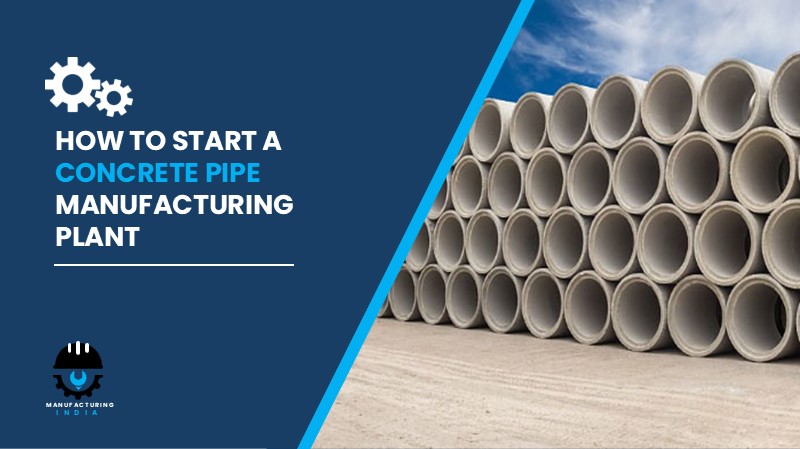
Setting up a concrete pipe manufacturing plant in India presents a compelling investment case anchored in the country’s massive and accelerating infrastructure development pipeline, the government’s ambitious water supply, sanitation, and stormwater management programmes, the rapid growth of residential and commercial real estate, and the expanding transportation infrastructure network of highways, railways, and urban transit systems that consistently require underground drainage and culvert solutions. Concrete pipes cylindrical structures manufactured from reinforced or non-reinforced concrete using cement, aggregates, water, and steel reinforcement are the foundational material for every urban drainage, sewer, irrigation, and culvert system in India’s infrastructure build-out, providing high compressive strength, durability, resistance to external loads, and long service life that no cost-effective alternative can match for large-diameter underground applications. The global concrete pipe market was valued at USD 13.43 billion in 2025 and is projected to reach USD 19.96 billion by 2034 at a CAGR of 4.5%, driven by expanding urban infrastructure development, increasing investments in water supply and sewage networks, and rising stormwater management project activity worldwide.
India’s structural advantages make it an exceptionally well-positioned location for establishing a concrete pipe manufacturing facility. The country’s abundant domestic supply of cement, coarse aggregates, sand, and reinforcing steel the four primary raw materials provides manufacturers with direct, cost-competitive access to the inputs required for large-scale production. The government’s Jal Jeevan Mission targeting universal potable water supply, the Atal Mission for Rejuvenation and Urban Transformation (AMRUT) for urban water and sewerage infrastructure, and the National Infrastructure Pipeline’s investments in roads, railways, and urban drainage collectively create a large, government-funded, and geographically distributed domestic demand environment that directly benefits concrete pipe manufacturers across every Indian state. The investment case is reinforced by major global acquisitions in December 2025, Commercial Metals Company (CMC) finalised its USD 675 million acquisition of Concrete Pipe & Precast, LLC (CP&P), and in October 2025, CMC announced agreement to acquire Foley Products Company for approximately USD 1.84 billion demonstrating the scale of strategic investment confidence in this sector.
A concrete pipe manufacturing plant in India is positioned within a global market growing at 4.5% CAGR from USD 13.43 billion in 2025 toward USD 19.96 billion by 2034, driven by urban infrastructure development, Jal Jeevan Mission water supply programmes, AMRUT sanitation investments, stormwater management projects, and transportation infrastructure expansion. With gross margins of 30–40% and net margins of 15–25% at 500–2,000 km annual capacity, and a break-even horizon, this investment delivers commercially stable infrastructure material manufacturing returns.
What are Concrete Pipes?
Concrete pipes are cylindrical structures manufactured from reinforced or non-reinforced concrete and used primarily for underground water conveyance systems. They are produced using cement, aggregates, water, and steel reinforcement in reinforced variants to provide high compressive strength, durability, and resistance to external loads. Concrete pipes are widely used for stormwater drainage, sewer systems, irrigation networks, and culverts. They offer excellent structural integrity, long service life, and resistance to corrosion when properly designed and coated. Available in various diameters and strength classes, concrete pipes are engineered to withstand heavy traffic loads and environmental stress conditions in infrastructure applications.
The primary production method involves raw material sourcing, batching and mixing, mold preparation, pipe formation, curing, demolding and finishing, and packaging a multi-step manufacturing process integrating materials handling, precision concrete mix design, mechanical forming, and quality verification at each stage. End-use industries served include municipal infrastructure, construction and real estate, agriculture and irrigation, transportation, and industrial infrastructure covering applications from sewerage systems and stormwater drainage networks through to culverts under highways, irrigation channels, and industrial effluent pipelines.
Cost of Setting Up a Concrete Pipe Manufacturing Plant in India
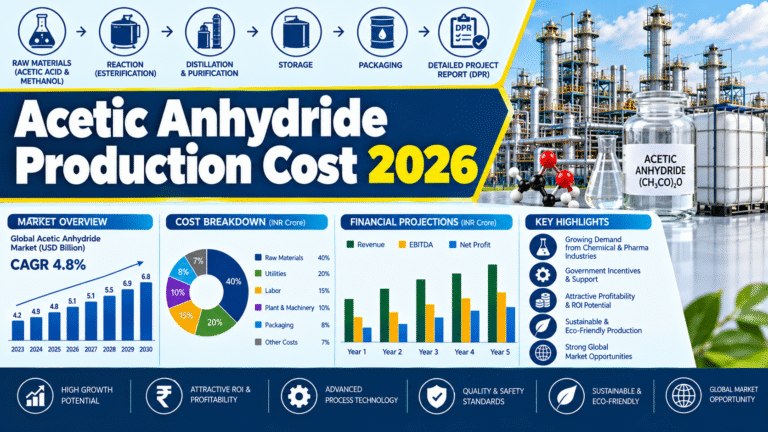
The total investment required to establish a concrete pipe manufacturing plant in India depends on plant capacity, pipe diameter and strength class range, geographic location, production technology selection, and compliance with IS standards and environmental regulatory requirements. Investors must account comprehensively for both one-time capital expenditure and recurring operational costs when preparing a feasibility study or detailed project report (DPR).
1. Capital Expenditure (CapEx)
Land and Site Development constitutes a substantial foundational investment. Costs for land registration, boundary construction, internal road layout, drainage infrastructure, and site levelling vary based on whether the facility is within a government-notified construction materials or building products manufacturing zone, a concrete products industrial estate, or on privately acquired land near construction activity clusters. Sites with direct vehicular access for heavy-goods material delivery and finished pipe despatch including proximity to aggregate quarries, cement depots, and active infrastructure project corridors are preferred locations that minimise raw material and logistics costs.
Civil Works and Construction encompasses the main pipe manufacturing production hall requiring large-bay, heavy-load-rated floor construction to accommodate batching plants, pipe-forming machines, and overhead cranes along with the raw material aggregate and cement storage area, reinforcing steel storage and cage fabrication zone, curing chambers or curing yard, demolding and finishing area, quality control laboratory, finished pipe storage yard with hard-standing, and administrative block. The requirement for heavy-duty industrial floors to bear the loads of batching plants, pipe-forming machines, and finished concrete pipe storage adds significantly to civil construction costs relative to lighter manufacturing facilities.
Machinery and Equipment represent the single largest component of capital expenditure. Key machinery required for a concrete pipe manufacturing plant includes:
- Concrete batching units
- Mixers
- Reinforcement cage welding machines
- Curing chambers
- Demolding equipment
- Pipe-making machines (spinning, vertical vibration, or roller-compacted)
- Vibration tables
- Cranes and material handling equipment
Other Capital Costs include the effluent treatment plant (ETP) for managing concrete washout and curing yard runoff water, pre-operative expenses covering regulatory filings and feasibility study preparation, plant commissioning charges, utility connection fees for electricity and water, and import duties applicable to specialised pipe-forming machines or automated cage welding equipment sourced internationally.
Request a Sample Report for In-Depth Market Insights: https://www.imarcgroup.com/concrete-pipe-manufacturing-plant-project-report/requestsample
2. Operational Expenditure (OpEx)
Raw Material Cost is the dominant driver of operating expenditure, accounting for approximately 60–70% of total OpEx. The primary inputs are Portland cement, sand, coarse aggregates, and reinforcing steel for reinforced pipe variants. Supplementary materials including fly ash, silica fume, and admixtures are used to improve strength and durability in specific specification classes. Cement the binding material whose quality and proportion directly determine concrete compressive strength and pipe performance represents the largest single raw material cost item. Cement prices are linked to coal, limestone, and energy commodity market dynamics and are subject to significant seasonal and supply-driven fluctuations. Reinforcing steel prices follow their own commodity cycle. Aggregates sourced from local quarries where possible represent the second-largest volume input by mass. Investors are advised to negotiate long-term supply contracts with cement manufacturers, steel suppliers, and aggregate quarry operators to stabilise input costs and ensure production continuity for large infrastructure contract volumes.
Utility Costs – covering electricity for batching plants, mixers, pipe-forming machines, cage welding equipment, curing chambers, and overhead cranes account for approximately 15–20% of total OpEx, the second-highest utility cost proportion reviewed across construction materials manufacturing categories. Steam or hot water for accelerated curing chambers adds further energy requirements in facilities operating year-round production with accelerated curing capability. Water consumption for concrete mixing and curing operations also contributes meaningfully to utility expenses. Investors in regions with competitive industrial electricity and water tariffs, reliable grid supply, and proximity to industrial water sources are materially better positioned to manage this significant cost component.
Other Operating Costs include outbound transportation of finished concrete pipes to municipal project sites, residential and commercial construction projects, highway and railway infrastructure works, irrigation projects, and industrial facilities — requiring heavy goods vehicles capable of carrying multi-tonne concrete pipe loads on variable road infrastructure; packaging and protective materials for pipe joint seals and end caps; employee salaries and wages for batching operators, cage fabricators, pipe-forming machine operators, curing technicians, quality inspectors, and logistics coordinators; equipment maintenance; quality assurance testing for compressive strength, dimensional accuracy, and IS 458 compliance; depreciation on civil and machinery assets; and applicable taxes including GST. By the fifth year of operations, total operational costs are expected to increase substantially due to inflation, market fluctuations, potential rises in cement and steel input prices, supply chain disruptions, and infrastructure project demand variability.
3. Plant Capacity
The proposed concrete pipe manufacturing facility is designed with an annual production capacity ranging between 500 and 2,000 km of pipe, enabling significant economies of scale while maintaining operational flexibility across different pipe diameters, strength classes, and specification requirements for municipal, agricultural, transportation, and industrial buyers. This capacity range is well-aligned with the requirements of state and local government municipal infrastructure departments, large construction contractors, irrigation project developers, highway and railway project implementers, and industrial facility developers across India’s active infrastructure investment pipeline. Capacity can be customised based on investor requirements, site area, and target market project volumes. Profitability improves consistently with higher capacity utilisation, and concrete pipe plants support phased capacity expansion through additional pipe-forming machine installations and curing chamber capacity with contained incremental CapEx. The break-even period typically ranges from 5 to 8 years, depending on scale, regulatory compliance costs, raw material pricing, and market demand, with efficient manufacturing and active infrastructure project tender participation helping accelerate returns.
4. Profit Margins and Financial Projections
The concrete pipe manufacturing plant demonstrates healthy profitability potential under normal operating conditions. Gross profit margins typically range between 30–40%, supported by stable and government-funded infrastructure demand and the structural material nature of engineered concrete pipe products. Net profit margins range between 15–25%, reflecting the high raw material and utility cost intensity of the production model. A comprehensive financial analysis should include income projections, expenditure forecasts, gross and net margin tracking across Years 1 through 5, net present value (NPV), internal rate of return (IRR), payback period, and a full profit and loss account. Sensitivity analysis covering cement and steel commodity price movements and infrastructure project award timing variability is recommended for investment-grade financial planning.
Why Set Up a Concrete Pipe Manufacturing Plant in India?
India’s Urban Infrastructure Pipeline Creating Structural Demand. India’s massive urbanisation and the government’s active investment in water supply, sewerage, stormwater drainage, and smart city infrastructure are generating sustained large-volume demand for concrete pipes across every Indian state. Government programmes including Jal Jeevan Mission, AMRUT, and the National Infrastructure Pipeline are directly funding the underground pipe networks that concrete pipe manufacturers supply providing a government-backed demand floor that distinguishes concrete pipe from purely market-driven construction material categories.
Expanding Wastewater and Sewer Infrastructure Addressing Critical Gaps. According to a report by the Environmental Protection Agency, about 700 communities in the U.S. have combined sewer systems that are prone to overflow discharges, indicating the strain on existing wastewater infrastructure globally. India faces comparable or greater sewerage infrastructure gaps, making the expansion of sewer and drainage pipeline infrastructure a multi-decade investment priority for municipal and state governments creating a long, predictable procurement pipeline for domestic concrete pipe manufacturers who can supply IS 458-compliant product at competitive cost.
Transportation Infrastructure Investment Driving Culvert and Drainage Demand. Rising investments in transportation infrastructure projects including highway construction under Bharatmala, railway expansion under RRTS and the dedicated freight corridor programme, and airport access road development are generating large and consistent demand for concrete pipes as culverts and underground drainage solutions where water flow management under road and rail embankments is required. These transportation infrastructure projects provide manufacturers with project-based, bulk procurement opportunities that complement the steady municipal infrastructure demand stream.
Local Production Advantage Over Long-Haul Transport. Unlike lighter construction materials, concrete pipes are heavy, bulky products with transport cost profiles that strongly favour proximity between manufacturing location and project site. Manufacturing plants established near active infrastructure construction corridors and municipal project deployment zones can offer shorter lead times, lower delivered costs, and greater supply reliability than distant alternatives creating a structural commercial advantage for strategically located domestic producers that is difficult for remote competitors to overcome.
Major Global Acquisitions Confirming Strategic Sector Confidence. In December 2025, Commercial Metals Company (CMC) finalised its USD 675 million acquisition of Concrete Pipe & Precast, LLC (CP&P) from Eagle Corporation and ECPP, LLC CP&P being a leading supplier of precast concrete and pipe products serving the Mid-Atlantic and South Atlantic regions, with the deal aimed at strengthening CMC’s regional footprint. In October 2025, CMC announced agreement to acquire Foley Products Company for approximately USD 1.84 billion, with Foley operating 18 facilities across nine states supplying precast concrete and pipe products for drainage, water management, utilities, and road construction. These two multi-billion-dollar acquisitions within months of each other by the same strategic buyer directly confirm the high commercial value that sophisticated infrastructure materials investors place on concrete pipe and precast manufacturing capacity in markets with active infrastructure investment pipelines a signal directly applicable to India’s comparable investment environment.
Climate Change and Flooding Driving Stormwater Infrastructure Investment. Growth in instances of flooding and climate change impacts on urban drainage capacity are fuelling investments in stormwater management solutions globally and in India specifically. As Indian cities experience increasingly intense monsoon events, the inadequacy of existing stormwater drainage infrastructure is becoming both economically and politically prominent driving municipal and state government investment in upgraded drainage pipe networks that directly benefit concrete pipe manufacturers who can supply engineered drainage solutions at the required project volumes and specifications.
Manufacturing Process – Step by Step
The concrete pipe manufacturing process uses raw material sourcing, batching and mixing, mold preparation, pipe formation, curing, demolding and finishing, and packaging as the primary production method. Below are the main stages involved in the concrete pipe manufacturing process flow:
- Raw Material Receipt and Quality Testing: Portland cement, sand, coarse aggregates, reinforcing steel, and admixtures are received, tested for conformance to applicable IS specifications including cement strength class, aggregate grading, and steel yield strength and cleared for production scheduling following quality verification.
- Steel Reinforcement Cage Fabrication: Reinforcement cage welding machines fabricate helical and longitudinal steel reinforcement cages to the specified diameter, pitch, and cover dimensions for each pipe size class — with cage geometry and weld quality verified against engineering drawings before integration with pipe molds.
- Concrete Batching and Mixing: Concrete batching units weigh and combine Portland cement, sand, coarse aggregates, water, and permitted admixtures in the precisely controlled proportions specified by the concrete mix design for the target pipe strength class. Mixers achieve a homogeneous, workable concrete mix at the target slump and air content before transfer to the pipe-forming machine.
- Mold Preparation: Pipe molds are cleaned, inspected for dimensional integrity, and lubricated with release agent before the reinforcement cage for reinforced pipe variants is positioned concentrically within the mold to achieve the specified concrete cover over the steel.
- Pipe Formation: Pipe-making machines using spinning, vertical vibration compaction, or roller-compacted dry-cast processes depending on pipe diameter, specification, and production technology consolidate the freshly mixed concrete into the mold cavity around the reinforcement cage, forming the pipe shape with the required wall thickness, density, and surface finish. Vibration tables are used in some formation methods to improve concrete consolidation and reduce void content.
- Initial Setting and Stripping: Freshly formed pipes are allowed to achieve sufficient initial set for safe demolding either at ambient temperature or using accelerated warm curing in enclosed chambers for rapid turnover of high-production-rate operations before demolding equipment carefully removes the outer mold forms without damaging the green concrete surface.
- Curing: Cured in steam or moist conditions in curing chambers or under wet burlap and polythene sheeting on the curing yard for the specified curing period typically a minimum of 7 to 28 days depending on the curing method to achieve the design compressive strength, impermeability, and durability properties required by IS 458 and project specification.
- Demolding and Finishing: Following completion of the curing period, mold cores are extracted, pipe ends are trimmed to dimensional tolerance, and surface defects are repaired using approved repair mortars. Joint faces are finished to the required socket and spigot or flush joint profile dimensions for watertight jointing during installation.
- Quality Inspection and Testing: Quality control instruments and testing equipment verify each pipe production batch for external and internal diameter, wall thickness, length, straightness, three-edge bearing strength, hydrostatic test performance, and surface finish against IS 458 acceptance criteria. Non-conforming pipes are segregated and rejected before despatch.
- Packaging and Marking: Finished pipes are marked with pipe size, strength class, manufacturer identification, and production batch reference for full supply chain traceability. Rubber joint rings, end caps, or protective foam are applied where required for transit protection and joint integrity during storage and handling.
- Storage and Dispatch: Finished concrete pipes are stored on hard-standing in the finished goods yard, stacked in accordance with diameter and weight limitations, and dispatched by heavy goods vehicles to municipal project sites, construction projects, irrigation works, highway and railway culvert installations, and industrial facility development projects.
Key Applications
Concrete pipes produced at this type of facility serve five primary end-use sectors with specific diameter, strength class, joint type, and specification requirements for each:
- Municipal Infrastructure: Extensively used in sewerage systems, stormwater drainage networks, and wastewater management infrastructure for urban and peri-urban populations the largest single volume application for domestic concrete pipe production in India.
- Construction and Real Estate: Used for underground utility lines and drainage systems in residential, commercial, and industrial developments requiring reliable underground water management infrastructure.
- Agriculture and Irrigation: Applied in irrigation systems, water conveyance channels, and rural drainage projects serving India’s vast agricultural sector where concrete pipes provide durable underground water distribution and drainage at competitive installed cost.
- Transportation Infrastructure: Installed as culverts under highways and railways to manage water flow and prevent structural damage to road and rail embankments a large and consistently procured application driven by India’s active highway and railway expansion programmes.
- Industrial Infrastructure: Utilised for industrial effluent management and large-scale water transfer systems in manufacturing facilities, power plants, and other industrial infrastructure where underground pipe networks handle process water and effluent management requirements.
Leading Concrete Pipe Manufacturers
The global concrete pipe industry is served by several large-scale manufacturers with extensive production capacities and diversified end-use application portfolios. Key players include:
- Cemex S.A.B. de C.V.
- Forterra, Inc.
- Oldcastle Infrastructure, Inc.
- Jensen Precast
- Rinker Materials
- AmeriTex Pipe & Products, LLC
- Del Zotto Products, Inc.
Timeline to Start the Plant
Investors planning to establish a concrete pipe manufacturing plant in India should anticipate the following project development phases, with an overall timeline typically ranging from 12 to 24 months:
- Feasibility study and project report preparation
- Land acquisition and site development
- Regulatory approvals and environmental clearances
- Factory licence and fire safety compliance
- Machinery procurement and installation
- Raw material supplier agreements and supply chain setup
- Trial production and quality testing
- Commercial production launch
Licences and Regulatory Requirements
Starting a concrete pipe manufacturing unit in India requires several approvals:
- Business registration (Proprietorship, LLP, or Private Limited Company)
- Factory Licence under the Factories Act
- Bureau of Indian Standards (BIS) certification under IS 458 for precast concrete pipes mandatory for supply to government infrastructure projects and municipal procurement tenders
- Environmental Clearance from the State Pollution Control Board
- GST Registration
- Fire Safety NOC
- Effluent Treatment Plant (ETP) operational clearance for concrete washout and curing yard runoff water management
- Occupational Health and Safety compliance covering heavy material handling, cement dust exposure monitoring, and machinery operation safety
- Mining or quarrying permits or approved supplier agreements for aggregate raw material procurement where applicable under state mining regulations
- Consent to Establish and Consent to Operate from the State Pollution Control Board
Key Challenges to Consider
Cement and Steel Price Volatility as the Primary Cost Variables. Cement and reinforcing steel together account for 60–70% of total OpEx and are subject to significant commodity price fluctuations driven by energy cost cycles, government infrastructure demand patterns, and global commodity markets. Any meaningful increase in cement or steel prices directly compresses gross margins in this high-raw-material-intensity manufacturing model. Long-term supply contracts, multi-supplier procurement strategies, and strategic inventory management during price-advantageous procurement windows are essential risk mitigation practices.
High Utility Cost Intensity for Curing Operations. Utility costs at 15–20% of total OpEx the highest among construction material manufacturing categories reviewed in this series are driven primarily by the electricity and steam requirements of accelerated curing chambers, batching equipment, and heavy material handling infrastructure. Managing curing energy costs through steam economy optimisation, heat recovery, and renewable energy sourcing is a material operational priority for margin management.
Infrastructure Project Pipeline Dependency and Payment Cycle Management. Concrete pipe demand is directly correlated with government infrastructure project award and execution timelines, which are subject to tender cycle delays, political priorities, and budget allocation patterns. Managing production volume, working capital, and inventory effectively across the variability of government project award timelines requires disciplined financial planning and access to adequate working capital facilities to bridge payment collection cycles from government procurement clients.
Is 458 Quality Compliance and Testing Requirements. Supplying concrete pipes for government municipal, transportation, and irrigation infrastructure projects requires BIS certification under IS 458 and ongoing batch-by-batch quality testing documentation for compressive strength, hydrostatic performance, and dimensional conformance. Maintaining this certification currency and quality documentation discipline across all production batches adds ongoing quality system management overhead that must be built into facility operations from the outset.
Competition from Alternative Pipe Materials for Smaller Diameter Applications. While concrete pipes maintain a strong cost advantage over alternative materials for large-diameter applications, PVC and HDPE pipes are increasingly competitive for smaller-diameter sewer and drainage applications due to their lighter weight, lower transportation cost, and easier installation. Concrete pipe manufacturers must focus commercial development on the diameter ranges and project types where concrete’s structural and cost advantages are most defensible particularly large-diameter stormwater, sewer trunk mains, and heavy-load culverts.
Logistics and Heavy Transport Requirement. Concrete pipes are among the heaviest per-unit construction products manufactured, requiring specialist heavy goods vehicles and skilled operators for safe transportation and project site delivery. Building and maintaining a reliable dedicated heavy transport fleet or logistics contractor network capable of serving remote infrastructure project sites adds to operational complexity and cost relative to lighter building material categories.
Frequently Asked Questions
1. How much does it cost to set up a concrete pipe manufacturing plant in India?
The total cost depends on plant capacity (500–2,000 km per annum), pipe diameter and strength class range, location, and production technology. CapEx covers land, heavy-duty industrial civil construction, and machinery including concrete batching units, mixers, reinforcement cage welding machines, curing chambers, demolding equipment, pipe-making machines, and cranes, along with pre-operative and regulatory costs including BIS certification.
2. Is concrete pipe manufacturing profitable in India in 2026?
Yes. With gross margins of 30–40% and net margins of 15–25%, supported by government-funded infrastructure demand under Jal Jeevan Mission, AMRUT, and the National Infrastructure Pipeline, a global market growing at 4.5% CAGR toward USD 19.96 billion by 2034, and local production cost advantages for heavy pipe delivery logistics, the investment presents a commercially sound and government-demand-backed profitability case.
3. What machinery is required for a concrete pipe manufacturing plant in India?
Key equipment includes concrete batching plants, pipe-making machines (spinning, vertical vibration, or roller-compacted), reinforcement cage welding machines, concrete mixers, vibration tables, curing chambers, demolding equipment, overhead cranes, and quality testing laboratory equipment including three-edge bearing test rigs and hydrostatic testing apparatus.
4. What licences and approvals are required to start a concrete pipe manufacturing plant in India?
Required approvals include business registration, BIS certification under IS 458 for precast concrete pipes, Factory Licence, Environmental Clearance, GST Registration, Fire Safety NOC, ETP operational clearance, State Pollution Control Board Consent to Operate, and Occupational Health and Safety compliance.
5. What raw materials are needed for concrete pipe manufacturing?
The primary raw materials are Portland cement, sand, coarse aggregates, and reinforcing steel for reinforced pipe variants. Supplementary materials include fly ash, silica fume, slag, admixtures, and curing compounds. Joint rubber rings, mold release agents, and repair mortar materials are additional process inputs.
6. What are the environmental compliance requirements for a concrete pipe manufacturing plant in India?
Environmental Clearance from the State Pollution Control Board is required, along with an operational ETP for managing concrete washout and curing yard runoff water, compliance with suspended solids and pH discharge standards, dust management protocols for cement handling and aggregate storage, and adherence to solid waste management rules for concrete waste disposal and recycling.
7. What is the best location to set up a concrete pipe manufacturing plant in India?
Locations with proximity to both aggregate quarry supply areas and active infrastructure construction corridors including states with large municipal infrastructure investment pipelines such as Uttar Pradesh, Maharashtra, Rajasthan, Madhya Pradesh, and Andhra Pradesh combined with access to reliable cement supply chains and heavy goods logistics networks, offer the best combination of raw material cost, logistics efficiency, and project market proximity for concrete pipe manufacturing investment.
8. What is the break-even period for this type of plant in India?
The break-even period typically ranges from 5 to 8 years, depending on plant scale, capacity utilisation, cement and steel procurement cost management, and infrastructure project tender participation and award success. Efficient manufacturing and active engagement in government infrastructure procurement tenders can help accelerate returns within this range.
9. What government incentives are available for concrete pipe manufacturers in India?
Government schemes promoting local manufacturing of construction materials, BIS product certification support, state-level industrial incentive schemes for construction materials manufacturing, preferential domestic procurement policies for government infrastructure projects, and general Make in India manufacturing investment incentives all provide relevant financial and market access support for qualifying concrete pipe manufacturing investments.
Key Takeaways for Investors
A concrete pipe manufacturing plant in India represents a commercially stable, infrastructure-demand-anchored investment opportunity backed by a global market valued at USD 13.43 billion in 2025 growing at 4.5% CAGR toward USD 19.96 billion by 2034, the Indian government’s multi-decade commitment to water supply, sanitation, stormwater management, and transportation infrastructure programmes that directly and continuously procure concrete pipe products, and the structural local production cost advantage that proximity manufacturing delivers over long-haul competitors in this heavy construction material category. Financial viability is demonstrated across a production capacity range of 500 to 2,000 km per annum, with gross margins of 30–40% and net margins of 15–25% achievable under competitive raw material procurement and efficient plant operations with a break-even horizon of 5 to 8 years reflective of the infrastructure project cycle dynamics that characterise this market. Major global strategic acquisitions CMC’s USD 675 million CP&P deal in December 2025 and USD 1.84 billion Foley Products Company agreement in October 2025 provide powerful external validation of the investment value that well-positioned concrete pipe manufacturing capacity represents in markets with active and sustained infrastructure investment. With India’s urban infrastructure investment accelerating, rural water supply and sanitation programmes deepening, and climate change adaptation funding for stormwater management growing, the long-term demand sustainability and commercial returns for Indian concrete pipe manufacturing investors are comprehensively and durably well-supported for the decade ahead.
About the Author