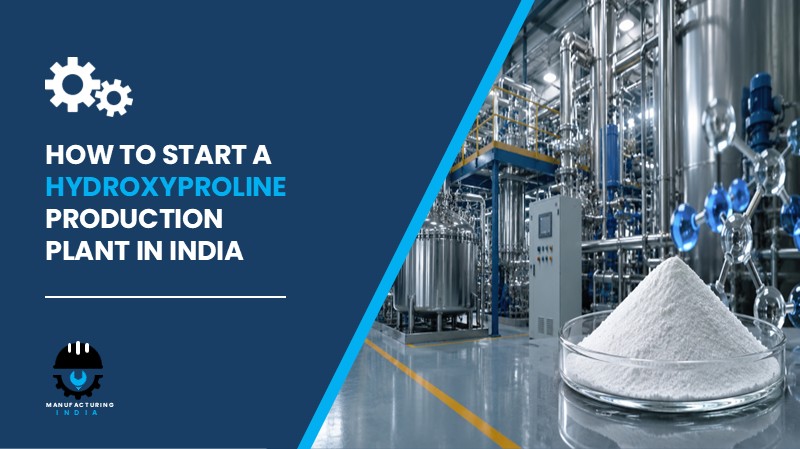
Setting up a hydroxyproline production plant in India presents a compelling investment case at a time when the country’s pharmaceutical manufacturing sector is targeting USD 130 Billion by 2030, its nutraceuticals and wellness industry is expanding at double-digit growth rates, its cosmetics and personal care market is scaling rapidly, and its biomedical research infrastructure is deepening with government investment in life sciences and biotechnology. Hydroxyproline (Hyp) — the non-essential amino acid produced by the hydroxylation of proline that serves as a vital structural component of collagen — is positioned at the very intersection of all four of these high-growth sectors simultaneously. As the primary building block of collagen’s triple-helix structure, accounting for roughly 13–14% of the amino acids in mammalian collagen, hydroxyproline is indispensable for pharmaceutical wound healing formulations, cosmetic anti-aging products, nutraceutical joint and skin health supplements, tissue engineering scaffolds, bone regeneration matrices, and biomedical research applications. As India’s consumer health, beauty, and wellness markets deepen and its pharmaceutical and biomedical manufacturing base expands, the domestic requirement for reliably supplied, high-purity hydroxyproline is growing into a commercially significant and structurally durable specialty biochemical investment opportunity.
India’s structural positioning for hydroxyproline production is well-aligned with both the product’s supply chain requirements and its end-use market opportunities. The country’s pharmaceutical and nutraceutical manufacturing hubs in Hyderabad, Ahmedabad, Pune, and Mumbai provide immediate proximity to pharmaceutical-grade and nutraceutical-grade hydroxyproline customers who currently rely on imported supply from global producers. Asia-Pacific is emerging as a key production and consumption hub due to expanding pharmaceutical and personal care industries — and India, as the region’s fastest-growing pharmaceutical manufacturing nation, is well-placed to develop domestic hydroxyproline production capacity that serves both the domestic market and regional export demand. The Make in India initiative, government focus on healthcare self-reliance, pharmaceutical manufacturing, and biotechnology development, and policy support for value-added nutraceutical production collectively create a policy environment that indirectly but meaningfully supports demand for hydroxyproline and related biochemical intermediates. Specialty chemical and life science industrial parks in Gujarat, Maharashtra, and Telangana offer the controlled manufacturing environment, biochemical handling infrastructure, analytical chemistry expertise, and regulatory frameworks that a hydroxyproline production facility requires.
Investing in a hydroxyproline production plant in India today aligns India’s rapidly expanding pharmaceutical, nutraceutical, cosmetics, and biomedical research sectors with megatrend alignment across collagen supplements, anti-aging products, sports nutrition, and regenerative medicine. With gross profit margins of 32–42%, net profit margins of 20–28%, and a global hydroxyproline market growing from USD 81.30 Million in 2025 to USD 131.63 Million by 2034 at a CAGR of 5.5%, the unit economics are commercially attractive at the proposed 1,000 MT annual production capacity, positioning India-based producers to serve a growing multi-sector customer base with domestic supply chain advantages.
What is Hydroxyproline?
Hydroxyproline (Hyp) is a non-essential amino acid, produced by the hydroxylation of proline, that acts as a vital structural component of collagen. It accounts for roughly 13–14% of the amino acids in mammalian collagen, aiding in the stability of its triple-helix structure, particularly in connective tissues like skin, cartilage, and bone. Produced post-translationally by prolyl hydroxylase — a process requiring Vitamin C — it is absent in most other proteins, which makes its presence a highly specific biomarker for collagen-related biological activity.
Due to its specificity to collagen, hydroxyproline levels in blood and urine are commonly used as a diagnostic marker to measure collagen catabolism, bone resorption, and liver fibrosis — diagnostic applications that add a clinical testing demand layer alongside the manufacturing and formulation end-use segments. Hydroxyproline is used for collagen stabilisation, wound healing formulations, anti-aging skincare, tissue engineering scaffolds, bone regeneration matrices, and cell culture media supplements — a breadth of applications that makes it one of the most functionally versatile specialty amino acid derivatives in the biochemical ingredients market. The advancements in biotechnology and fermentation-based production methods that are improving product quality, sustainability, and manufacturing efficiency are further expanding the commercial accessibility and application range of hydroxyproline across high-growth end-use sectors.
The primary production process covers hydrolysis of collagen or gelatin hydrolysate, ion-exchange chromatography for hydroxyproline isolation, recrystallisation and purification, drying, quality testing, and packaging. End-use industries served include pharmaceuticals, cosmetics, biomedical research, nutraceuticals, food processing, and veterinary medicine. Applications span collagen stabilisation, wound healing formulations, anti-aging skincare, tissue engineering scaffolds, bone regeneration matrices, and cell culture media supplements.
Cost of Setting Up a Hydroxyproline Production Plant in India
The cost of establishing a hydroxyproline production plant in India depends on production capacity, target product grade and purity specification, process technology selection within the hydrolysis and ion-exchange chromatography framework, geographic location — particularly proximity to collagen and gelatin hydrolysate supply and pharmaceutical customer clusters — degree of automation, and the stringent pharmaceutical-grade quality compliance and purification standards applicable to hydroxyproline supplied to pharmaceutical, nutraceutical, and cosmetic manufacturers.
1. Capital Expenditure (CapEx)
Land and Site Development forms a foundational component of total capital investment, covering land acquisition charges, site registration, boundary development, drainage infrastructure, and site utilities. The location must offer easy access to key raw materials such as collagen/gelatin hydrolysate, ion exchange resins, and water. Proximity to target pharmaceutical, nutraceutical, and cosmetic manufacturing customers minimises distribution costs. The site must have robust infrastructure including reliable transportation, utilities, and waste management systems, with compliance with local zoning laws and environmental regulations ensured from project inception. Investors may explore pharmaceutical and life science industrial parks in Hyderabad’s Genome Valley, Ahmedabad, Pune, and Chennai — locations with established pharmaceutical ingredient supply chains, analytical chemistry talent, and regulatory compliance ecosystems suited to amino acid derivative manufacturing.
Plant Layout Optimisation is a critical civil investment for hydroxyproline production — the layout must be optimised to enhance workflow efficiency, safety, and minimise material handling between the hydrolysis, filtration, chromatography, and drying stages. Separate areas for raw material storage, hydrolysis and extraction, chromatographic purification, crystallisation, drying, quality control, and finished goods storage must be designated, with space for future capacity expansion incorporated to accommodate growth as the nutraceutical and pharmaceutical markets develop.
Machinery and Equipment represent the largest single component of total CapEx for a hydroxyproline production plant. Essential equipment includes:
- Hydrolysis reactors
- Membrane filtration units
- Ion exchange columns
- Crystallisation tanks
- Drying systems
- Purification modules
- Quality control analysers
Other Capital Costs include an effluent treatment plant (ETP) to manage biological and chemical process effluents from hydrolysis and chromatographic operations, advanced monitoring systems to detect leaks or deviations in the purification process, pre-operative expenses, pharmaceutical-grade certification and GMP compliance infrastructure costs, commissioning charges, and import duties on specialised ion exchange chromatography equipment or analytical quality control instrumentation not available domestically at the required specification.
Request a Sample Report for In-Depth Market Insights: https://www.imarcgroup.com/hydroxyproline-manufacturing-plant-project-report/requestsample
2. Operational Expenditure (OpEx)
Raw Material Cost is the dominant operational expense, accounting for approximately 45–55% of total OpEx. The primary raw materials are collagen/gelatin hydrolysate, ion exchange resins, and water. Collagen/gelatin hydrolysate — as the primary protein substrate containing proline and hydroxyproline residues that the hydrolysis and chromatographic isolation process converts into purified hydroxyproline — is the most cost-significant input and the key sourcing challenge. India’s domestic collagen supply chain is linked to the leather and meat processing industries, particularly in Tamil Nadu, West Bengal, and Uttar Pradesh, though pharmaceutical-grade collagen hydrolysate may require specialised import-route sourcing. Ion exchange resins, consumed in the chromatographic purification stage, require periodic replacement and represent an ongoing procurement requirement. Long-term contracts with reliable suppliers for all primary raw materials must be negotiated to stabilise pricing and ensure a steady supply.
Utility Cost is the second-largest OpEx component, representing approximately 9–13% of total operating expenses, covering electricity for hydrolysis reactors, membrane filtration systems, ion exchange pumping and regeneration, crystallisation tank temperature control, drying systems, and quality control analytical equipment. Steam and cooling water requirements for reactor temperature management and crystallisation operations add to the utility profile.
Other Operating Costs include transportation and distribution to pharmaceutical API manufacturers, nutraceutical supplement producers, cosmetic ingredient formulators, biomedical research institutions, and cell culture media producers, specialised pharmaceutical-grade packaging materials for hydroxyproline powder, salaries and wages for biochemists and analytical quality control specialists, routine machinery maintenance including ion exchange column regeneration and membrane filtration module replacement, GMP audit and compliance costs, depreciation on production equipment, and applicable taxes. By the fifth year of operations, total operational costs are projected to increase substantially due to factors such as inflation, market fluctuations, potential rises in the cost of key materials, supply chain disruptions, rising consumer demand, and shifts in the global economy.
3. Plant Capacity
The proposed production facility for hydroxyproline is designed with an annual production capacity of 1,000 MT, enabling economies of scale while maintaining the operational flexibility to serve pharmaceutical, nutraceutical, cosmetics, biomedical research, food processing, and veterinary medicine customers across multiple product grades and purity specifications. Plant capacity can be customised per investor requirements and expanded through additional hydrolysis reactor and chromatographic purification train capacity as customer volumes and market qualification milestones are achieved. Profitability improves with higher capacity utilisation, making established supply relationships with pharmaceutical ingredient distributors and nutraceutical manufacturers a strategic commercial foundation from the outset.
4. Profit Margins and Financial Projections
The financial projections for a hydroxyproline production plant demonstrate healthy profitability potential under normal operating conditions. Gross profit margins typically range between 32–42%, supported by stable demand across pharmaceutical, nutraceutical, cosmetics, and biomedical research customer segments. Net profit margins are projected at 20–28% — commercially attractive returns reflecting the meaningful value-added purification and specification compliance that pharmaceutical-grade hydroxyproline commands over its collagen hydrolysate feedstock. A comprehensive financial analysis covering NPV (net present value), IRR (internal rate of return), payback period, gross margin progression, and net margin development across a five-year horizon is essential before committing capital, with projections developed based on realistic assumptions related to capital investment, operating costs, production capacity utilisation, pricing trends, and demand outlook.
Why Set Up a Hydroxyproline Production Plant in India?
Crucial Specialty Biochemical Ingredient with Multi-Sector Demand. Hydroxyproline is a key amino acid derivative widely used in pharmaceuticals, nutraceuticals, cosmetics, collagen peptides, tissue engineering, and diagnostic media — positioning it as an essential ingredient for health, wellness, and biomedical applications across India’s most rapidly growing industrial sectors simultaneously. This multi-sector demand profile insulates producers from single-industry cyclicality, providing revenue resilience across pharmaceutical, nutraceutical, and cosmetics procurement cycles that operate with different seasonal and regulatory dynamics.
Megatrend Alignment Across Collagen, Anti-Aging, and Regenerative Medicine. Rising global demand for collagen supplements, anti-aging products, sports nutrition, wound healing solutions, and regenerative medicine is driving steady consumption of hydroxyproline-based products. The nutraceutical and wellness sectors continue to expand at strong double-digit growth rates globally, and India’s own health and wellness consumer market is expanding rapidly with rising disposable incomes, urban health consciousness, and the growing penetration of modern retail and e-commerce channels into tier-2 and tier-3 cities.
European Cosmetics Market Driving Premium Ingredient Demand. As per the CBI, the European market is one of the largest cosmetics markets in the world, worth €96 Billion (USD 111.4 Billion) in 2023 — a market scale that reflects the enormous commercial appetite for bioactive skincare ingredients including collagen-supporting compounds like hydroxyproline. India’s growing cosmetics manufacturing base is increasingly targeting both domestic premium skincare consumers and export markets, creating sustained institutional demand for pharmaceutical and cosmetic-grade hydroxyproline from a domestic supply source.
Scientific Research Validating Expanding Applications. In November 2025, a study published in NIH found that a specific ratio of three glycine to one proline to one hydroxyproline (3G:1P:1H) acts as the minimal required unit to boost collagen homeostasis in human fibroblasts and extends the lifespan of C. elegans — a discovery that advances understanding of hydroxyproline’s biological mechanism and strengthens the scientific evidence base for its use in healthy ageing formulations, nutraceuticals, and regenerative medicine applications. This active research frontier continues to expand the addressable application space for hydroxyproline beyond established pharmaceutical and cosmetic uses.
Policy and Healthcare Industry Support for Domestic Manufacturing. Government focus on healthcare self-reliance, pharmaceutical manufacturing, biotechnology development, and value-added nutraceutical production — including initiatives supporting domestic chemical and life science manufacturing — indirectly supports demand for hydroxyproline and related biochemical intermediates. India’s Production-Linked Incentive scheme for pharmaceuticals and the broader Atmanirbhar Bharat agenda for healthcare input manufacturing create a policy environment that favours domestic biochemical ingredient production over import dependence.
Localisation and Supply Chain Reliability Creating Commercial Opportunity. Pharmaceutical, nutraceutical, and cosmetic manufacturers increasingly prefer dependable local suppliers to reduce import dependence, manage raw material volatility, and ensure uninterrupted supply — creating commercial opportunities for regional hydroxyproline producers with efficient sourcing, quality assurance, and scalable operations. While less capital-intensive than large-scale API manufacturing, hydroxyproline production requires stringent purification standards, controlled hydrolysis and extraction processes, consistent amino acid profiling, and regulatory compliance — creating entry barriers that favour technically capable and quality-focused manufacturers over low-cost commodity producers.
Production Process — Step by Step
The hydroxyproline production process uses hydrolysis, ion-exchange chromatography, and recrystallisation as the primary production method, covering hydrolysis of collagen or gelatin substrate, membrane filtration, ion-exchange chromatographic purification, crystallisation, drying, quality testing, and packaging. Each stage requires precisely controlled temperature, pH, eluent composition, and crystallisation conditions to produce hydroxyproline of the target purity, amino acid profile, and physical specification required by pharmaceutical, nutraceutical, cosmetic, and biomedical research customers.
- Collagen/Gelatin Hydrolysate Receipt and Preparation: Pharmaceutical-grade or food-grade collagen or gelatin hydrolysate is received from certified suppliers, quality-checked for protein content, amino acid profile, and absence of microbiological contamination, and prepared in aqueous solution at the specified concentration for controlled hydrolysis processing.
- Hydrolysis Reaction: The collagen or gelatin hydrolysate is processed in hydrolysis reactors under controlled temperature, pH, and residence time conditions using acid hydrolysis — typically concentrated hydrochloric acid at elevated temperature — or enzymatic hydrolysis to cleave protein chains into their constituent amino acids, including hydroxyproline, proline, glycine, and other collagen-associated amino acids.
- Membrane Filtration: The crude amino acid hydrolysate is processed through membrane filtration units to remove insoluble materials, protein aggregates, and high-molecular-weight peptide fragments, producing a clarified amino acid solution suitable for ion-exchange chromatographic separation.
- Ion-Exchange Chromatography: The clarified amino acid solution is loaded onto ion exchange columns configured with appropriate resin chemistry to selectively retain and separate hydroxyproline from the complex mixture of collagen-derived amino acids. Step-wise elution with controlled pH and ionic strength buffers separates hydroxyproline from proline, glycine, alanine, and other co-eluting amino acids, producing a hydroxyproline-enriched eluate fraction of target purity.
- Purification and Concentration: The hydroxyproline-enriched chromatographic fraction is processed through purification modules — including activated carbon treatment for decolouration and additional ion-exchange passes for further amino acid profile refinement — then concentrated by evaporation to the supersaturation level required for controlled crystallisation.
- Crystallisation: Concentrated hydroxyproline solution is processed in crystallisation tanks under controlled temperature reduction and seeding conditions to produce uniform hydroxyproline crystals of the specified morphology and size distribution required for pharmaceutical or nutraceutical grade product specifications.
- Drying: Crystallised hydroxyproline is processed through drying systems at controlled temperature under appropriate atmosphere to reduce moisture content to specification levels while maintaining crystal structure integrity and preventing decomposition or colour development that would affect product quality.
- Quality Testing: Finished hydroxyproline is subjected to comprehensive quality testing through quality control analysers covering amino acid purity by HPLC, residual moisture content, specific optical rotation, heavy metal content, microbiological compliance, and physical appearance — verifying compliance with pharmacopoeial or customer-specific specifications before release for packaging.
- Packaging and Dispatch: Specification-compliant hydroxyproline is packaged under appropriate atmosphere in pharmaceutical-grade sealed containers using packaging equipment to prevent moisture absorption and contamination, then dispatched to pharmaceutical API manufacturers, nutraceutical supplement producers, cosmetic ingredient formulators, biomedical research institutions, food processors, and veterinary medicine producers.
Key Applications
Hydroxyproline produced in India serves a commercially diverse and scientifically significant range of applications across pharmaceutical, cosmetic, nutraceutical, and biomedical sectors:
- Pharmaceutical Industry: Used in collagen-based formulations, wound healing products, and anti-aging therapies where hydroxyproline’s role in collagen structural stabilisation supports therapeutic efficacy in dermatological and orthopaedic applications.
- Cosmetics Industry: Incorporated in skincare products for collagen support and skin hydration — one of the fastest-growing active ingredient categories in India’s premium and mass-market cosmetics segments driven by rising consumer demand for evidence-based anti-aging and skin repair formulations.
- Biomedical Research: Used as a biomarker for collagen metabolism and connective tissue studies, and as a component of tissue engineering scaffolds, bone regeneration matrices, and cell culture media supplements across academic and industrial research programmes.
- Nutraceuticals: Included in dietary supplements for joint, bone, and skin health — a segment experiencing strong double-digit growth globally as consumers increasingly adopt preventive nutrition approaches across the ageing and active lifestyle demographics.
Leading Producers
The global hydroxyproline industry is served by a group of specialty biochemical and amino acid companies with diverse production capabilities and application portfolios across pharmaceutical, cosmetic, and nutraceutical segments. Key players in the global market include:
- Kyowa Hakko Bio
- Evonik Industries
- Merck KGaA
- Fengchen Group
- Jinyang Pharmaceutical
Timeline to Start the Plant
Establishing a hydroxyproline production plant in India involves a structured multi-phase development sequence. Investors should plan for the following phases:
- Feasibility study and project report preparation
- Land acquisition and site development
- Regulatory approvals and environmental clearances
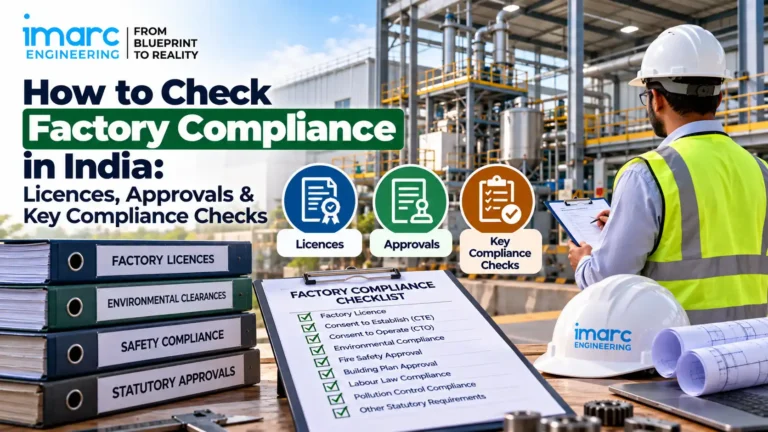
- Factory licence and fire safety compliance
- Machinery procurement and installation
- Raw material supplier agreements and supply chain setup
- Trial production and quality testing
- Commercial production launch
Licences and Regulatory Requirements
Starting a hydroxyproline production unit in India requires several approvals spanning business registration, pharmaceutical ingredient compliance, food safety, environmental, and biotechnology regulatory domains:
- Business registration (Proprietorship, LLP, or Pvt Ltd)
- Factory Licence under the Factories Act
- Environmental Clearance from the State Pollution Control Board
- GST Registration
- Fire Safety NOC
- FSSAI (Food Safety and Standards Authority of India) licence or drug licence under the Drugs and Cosmetics Act applicable to hydroxyproline produced for food supplement, pharmaceutical, or cosmetic ingredient use
- GMP (Good Manufacturing Practice) certification under Schedule M of the Drugs and Cosmetics Act for pharmaceutical-grade hydroxyproline supply to drug manufacturers
- Effluent Treatment Plant (ETP) operational clearance for managing hydrolysis process effluents and ion exchange resin regeneration waste streams
- Occupational Health and Safety compliance
Key Challenges to Consider
Collagen Feedstock Quality Consistency and Pharmaceutical-Grade Sourcing. Producing consistent pharmaceutical-grade hydroxyproline requires collagen or gelatin hydrolysate feedstock with reproducible amino acid composition, purity, and absence of microbiological or heavy metal contamination. Sourcing pharmaceutical-grade collagen consistently from India’s domestic leather and gelatin processing industries — which are primarily oriented toward food and industrial grades — may require import-route procurement from certified European or North American gelatin producers, adding supply chain complexity and cost that must be factored into the investment model.
Ion Exchange Chromatography Process Complexity and Resin Management. Isolating pharmaceutical-grade hydroxyproline from the complex mixture of collagen-derived amino acids — including proline, glycine, and alanine, which are present at similar or higher concentrations — requires sophisticated ion-exchange chromatographic separations with precisely controlled elution conditions, column loading cycles, and resin regeneration protocols. Managing this technically demanding separation process consistently across production batches requires experienced biochemical process engineers and rigorous process validation documentation.
Pharmaceutical and GMP Compliance Requirements. Supplying hydroxyproline to pharmaceutical API manufacturers and clinical nutraceutical producers requires GMP certification under Schedule M of the Drugs and Cosmetics Act, with detailed documentation of standard operating procedures, batch records, equipment calibration, and environmental monitoring. Achieving and maintaining GMP compliance adds both capital cost for facility infrastructure and ongoing operational management complexity that must be planned and resourced from the earliest stages of project development.
Multi-Sector Specification Management. Serving pharmaceutical, nutraceutical, cosmetics, food processing, and biomedical research customers simultaneously requires maintaining multiple product specifications — amino acid purity by HPLC, heavy metal limits, optical rotation, microbiological standards — that differ across application grades. This multi-specification production management demands robust quality management systems, batch traceability, and flexible production protocols that add quality assurance complexity beyond single-market amino acid production.
Competition from Established Global Producers. The competitive landscape includes globally established specialty biochemical companies including Kyowa Hakko Bio, Evonik Industries, and Merck KGaA, which carry established pharmaceutical customer qualifications, proprietary purification process technology, and long-standing supply relationships with major nutraceutical and pharmaceutical manufacturers. New Indian producers must differentiate through domestic supply chain advantages, competitive pricing, reliable pharmaceutical-grade quality, and the supply security benefits that local production provides over import-dependent alternatives.
Skilled Biochemical Process Workforce. Maintaining consistent hydroxyproline purity, amino acid profile, and chromatographic separation performance across production batches requires graduate-level biochemists, chromatography process specialists, and pharmaceutical analytical chemists — a highly skilled technical workforce that requires ongoing investment in recruitment, continuing professional development, and competitive retention programmes.
Frequently Asked Questions
1. How much does it cost to set up a hydroxyproline production plant in India?
The total setup cost depends on production capacity, product purity grade, process technology configuration, location, and GMP compliance infrastructure level. CapEx covers land and site development, pharmaceutical-grade civil construction, core machinery including hydrolysis reactors, membrane filtration units, ion exchange columns, crystallisation tanks, drying systems, purification modules, and quality control analysers, along with ETP, GMP compliance infrastructure, and other capital costs. A detailed project report with full CapEx and OpEx breakdowns is available on request.
2. Is hydroxyproline production profitable in India in 2026?
Yes. The project demonstrates gross profit margins of 32–42% and net profit margins of 20–28% under normal operating conditions, supported by stable and growing demand from pharmaceutical formulation, nutraceutical supplement, cosmetics ingredient, and biomedical research customers. The global hydroxyproline market growing from USD 81.30 Million in 2025 to USD 131.63 Million by 2034 at a 5.5% CAGR, combined with India’s own pharmaceutical and wellness market expansion, provides a robust demand foundation.
3. What machinery is required for a hydroxyproline production plant in India?
Key machinery includes hydrolysis reactors, membrane filtration units, ion exchange columns, crystallisation tanks, drying systems, purification modules, and quality control analysers. Ion exchange columns and associated chromatographic control systems are the most technically critical production equipment, as they determine the amino acid separation selectivity, hydroxyproline purity, and production yield that underpin the facility’s product quality and commercial positioning.
4. What licences and approvals are required to start a hydroxyproline production plant in India?
Required approvals include business registration, a Factory Licence under the Factories Act, Environmental Clearance from the State Pollution Control Board, GST registration, a Fire Safety NOC, FSSAI licence or drug licence under the Drugs and Cosmetics Act for the relevant application grades, GMP certification under Schedule M for pharmaceutical-grade supply, ETP operational clearance, and Occupational Health and Safety compliance.
5. What raw materials are needed for hydroxyproline production?
The primary raw materials are collagen/gelatin hydrolysate, ion exchange resins, and water. Collagen/gelatin hydrolysate accounts for approximately 45–55% of total operating expenses, making feedstock procurement strategy, pharmaceutical-grade supplier qualification, and amino acid composition consistency management the most critical cost and quality management levers for the investment.
6. What are the environmental compliance requirements for a hydroxyproline production plant in India? The unit must obtain Environmental Clearance from the State Pollution Control Board, operate a certified ETP for managing biological and chemical process effluents from hydrolysis and ion-exchange chromatographic operations, implement advanced monitoring systems to detect leaks or deviations in the process, and maintain monitoring systems for wastewater discharge and air emissions in line with applicable state pollution control standards for biochemical processing facilities.
7. What is the best location to set up a hydroxyproline production plant in India?
Optimal locations offer proximity to pharmaceutical-grade collagen or gelatin hydrolysate supply chains, access to pharmaceutical and nutraceutical customer clusters, reliable utilities, analytical chemistry talent pools, and regulatory environments with pharmaceutical GMP compliance experience. Pharmaceutical and life science industrial parks in Hyderabad’s Genome Valley, Ahmedabad, Pune, and Chennai are among the most strategically relevant options for this investment.
8. What is the break-even period for this type of plant in India?
The break-even period depends on production capacity, customer qualification timelines across pharmaceutical and nutraceutical segments, capacity utilisation rate, collagen feedstock pricing trends, and the product grade mix between pharmaceutical and nutraceutical hydroxyproline. A detailed financial analysis including payback period, NPV, and IRR projections is included in the full project report, available via the sample request link.
9. What government incentives are available for manufacturers in India?
The Make in India initiative, PLI schemes for pharmaceuticals and nutraceuticals, the Atmanirbhar Bharat agenda for healthcare input manufacturing self-reliance, and state-level life sciences and biotechnology manufacturing incentives in Telangana, Maharashtra, and Gujarat provide financial and regulatory support for hydroxyproline production investments. Export promotion benefits under specialty biochemical ingredients and pharmaceutical intermediates categories may also be applicable.
Key Takeaways for Investors
A hydroxyproline production plant in India represents a commercially sound and strategically well-positioned investment in a specialty amino acid derivative that serves India’s most dynamically growing sectors — pharmaceuticals, nutraceuticals, cosmetics, and biomedical research — through a single product with the functional versatility, scientific credential, and multi-sector applicability that few specialty biochemical ingredients can match. The project demonstrates healthy financial viability at an annual production capacity of 1,000 MT, with gross profit margins of 32–42% and net profit margins of 20–28% confirming commercially attractive unit economics supported by the meaningful value-added conversion of collagen feedstock into a pharmaceutical-grade, multi-application specialty ingredient. The global hydroxyproline market, valued at USD 81.30 Million in 2025, is projected to reach USD 131.63 Million by 2034, growing at a CAGR of 5.5%, with the nutraceutical and wellness sectors expanding at strong double-digit growth rates and Asia-Pacific emerging as a key production and consumption hub that India is ideally positioned to lead. With the November 2025 NIH study confirming the minimal 3G:1P:1H glycine-proline-hydroxyproline ratio for boosting collagen homeostasis in human fibroblasts — strengthening the scientific foundation for healthy ageing and regenerative medicine applications — and India’s pharmaceutical and healthcare industry increasingly prioritising domestic biochemical ingredient supply chains over import dependence, demand sustainability for India-based hydroxyproline production is structurally robust and commercially compelling across the full investment horizon.
About the Author