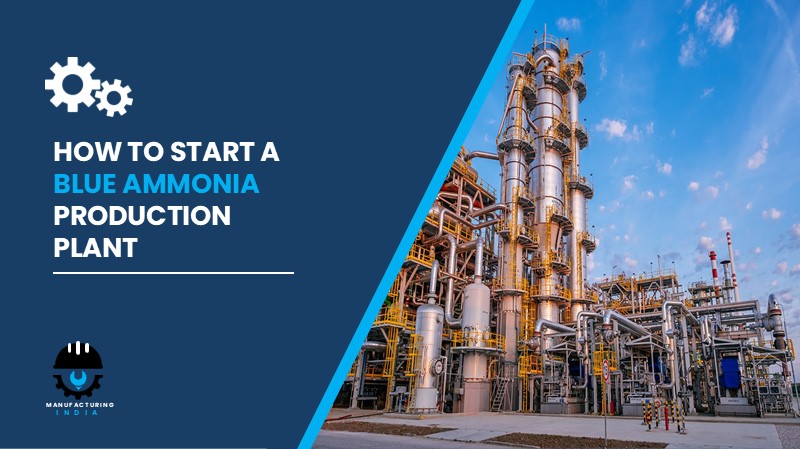
Setting up a blue ammonia production plant in India presents a compelling investment case at the leading edge of the global energy transition one that bridges the critical gap between today’s fossil fuel-dependent ammonia economy and tomorrow’s fully renewable green hydrogen future. Blue ammonia a low-carbon form of ammonia produced from hydrogen derived from natural gas reforming combined with carbon capture and storage (CCS) technology to eliminate the CO₂ emissions that conventional ammonia production generates is emerging as the most commercially viable near-term pathway for decarbonising the ammonia value chain across energy, fertiliser, maritime, and chemical manufacturing sectors globally. The global blue ammonia market was valued at USD 190.84 million in 2025 and is projected to reach USD 20,896.60 million by 2034, exhibiting an extraordinary CAGR of 68.5% the highest growth rate across the entire clean energy and chemical manufacturing investment landscape driven by the global transition toward low-carbon energy systems, increasing demand for clean hydrogen carriers, and the growing adoption of carbon capture and storage technologies as the practical mechanism for decarbonising hard-to-abate industrial sectors.
India’s strategic positioning for this investment is strengthening rapidly. The country’s National Green Hydrogen Mission explicitly encompasses blue ammonia as a complementary pathway to green ammonia in India’s overall clean hydrogen strategy, recognising that blue production using CCS provides the cost-efficient, scalable bridge between conventional production and fully renewable alternatives during the transition decade. India’s large natural gas infrastructure, growing industrial gas processing capacity, and the policy framework supporting both CCS development and clean energy export positions the country well to establish world-scale blue ammonia production that serves both domestic fertiliser security requirements and the growing international demand for certified low-carbon ammonia from power generation, maritime, and hydrogen import markets across Asia-Pacific, Europe, and the Middle East.
A blue ammonia manufacturing plant in India is positioned within the fastest-growing clean energy market globally expanding from USD 190.84 million in 2025 toward USD 20,896.60 million by 2034 at a 68.5% CAGR driven by the global net-zero transition, UK government’s GBP 21.7 billion CCUS commitment, and growing hydrogen trade. With gross margins of 25–35% and net margins of 10–20% at 100,000–500,000 MT annual capacity, and validated by CF Industries’ first certified blue ammonia cargo to Europe in October 2025, this investment delivers exceptional early-mover returns in one of the most strategically critical low-carbon chemical markets of the decade.
What is Blue Ammonia?
Blue ammonia is a low-carbon form of ammonia that results from hydrogen production from natural gas and nitrogen extraction from air, with the process capturing the carbon dioxide emissions generated during hydrogen production using carbon capture and storage (CCS) technologies. This distinguishes blue ammonia from conventional grey ammonia where CO₂ from steam methane reforming is released directly into the atmosphere while also differentiating it from green ammonia, which uses renewable electrolysis to produce hydrogen with no carbon emissions at all. Blue ammonia achieves significantly lower greenhouse gas emissions than conventional production while leveraging existing ammonia manufacturing infrastructure, making it the most cost-efficient and immediately deployable pathway for decarbonising ammonia across most production scales and geographies currently served by natural gas feedstock.
The material functions as an energy carrier, hydrogen transport system, and environmentally friendly fuel option. Blue ammonia serves as a primary component in fertiliser manufacturing, power production, shipping fuel, and the development of hydrogen-based economies. The technology uses existing ammonia transport and storage infrastructure to provide industries with a cost-efficient method for achieving emission reductions in challenging sectors where direct renewable energy integration is not yet feasible. The global community’s increasing emphasis on carbon neutrality is driving blue ammonia to become a transitional solution between conventional fossil fuel methods and complete renewable green ammonia production systems. The primary production method involves natural gas desulfurisation, hydrogen production via reforming, carbon capture and compression, nitrogen separation, ammonia synthesis, purification, storage, and dispatch. End-use industries served include energy and power generation, fertilisers and agrochemicals, maritime fuel and bunkering, hydrogen transport and storage, and chemical manufacturing.
Cost of Setting Up a Blue Ammonia Production Plant in India
The total investment required to establish a blue ammonia Production plant in India depends on plant capacity, CCS technology selection, geographic location, natural gas supply infrastructure access, and compliance with chemical safety and environmental regulatory requirements. Investors must account comprehensively for both one-time capital expenditure and recurring operational costs when preparing a feasibility study or detailed project report (DPR).
1. Capital Expenditure (CapEx)
Land and Site Development constitutes a substantial foundational investment for a facility of this scale and technical complexity. Blue ammonia plants require large land areas to accommodate natural gas receiving infrastructure, reforming units, CCS compression and injection equipment, nitrogen production systems, ammonia synthesis reactors, product storage tanks, and loading facilities. Site selection must prioritise access to natural gas pipeline infrastructure, CO₂ geological storage sites or CO₂ transport pipelines, adequate water supply for process operations and cooling, and port infrastructure for ammonia export logistics a combination of requirements that directs ideal site selection toward coastal industrial zones with gas infrastructure connectivity.
Civil Works and Construction encompasses the natural gas desulfurisation building, steam methane reforming (SMR) or autothermal reforming (ATR) facility, carbon capture unit building with chemical or physical solvent absorption systems, CO₂ compression and transport infrastructure, air separation unit (ASU) building, ammonia synthesis reactor building with high-pressure containment specifications, refrigeration and liquefaction plant, storage tank farm with ammonia containment and vapour recovery systems, water treatment facility, quality control laboratory, and administrative block. The combination of high-pressure ammonia synthesis, toxic gas handling, and CO₂ compression systems requires extremely high civil specification standards including explosion-proof electrical installations, reinforced containment structures, and comprehensive emergency response infrastructure adding significantly to construction costs relative to conventional chemical manufacturing facilities.
Machinery and Equipment represent the single largest component of capital expenditure. Key machinery required for a blue ammonia manufacturing plant includes:
- High-pressure reactors
- Reformers (SMR or ATR units)
- Carbon capture units
- Compressors
- Storage tanks
- Air separation units for nitrogen production
- Heat exchangers and cooling systems
- Advanced process control and safety systems
Other Capital Costs include the effluent treatment plant (ETP), ammonia vapour recovery and scrubbing systems, CO₂ transport and geological storage well infrastructure or pipeline connection costs, pre-operative expenses covering environmental impact assessment and regulatory submission preparation, plant commissioning charges, and import duties applicable to large-scale CCS units or reforming reactor vessels sourced internationally.
Request a Sample Report for In-Depth Market Insights: https://www.imarcgroup.com/blue-ammonia-manufacturing-plant-project-report/requestsample
2. Operational Expenditure (OpEx)
Raw Material and Energy Cost is the overwhelmingly dominant driver of operating expenditure, accounting for approximately 65–75% of total OpEx. The primary inputs are natural gas, water, nitrogen from air separation, and CCS materials including solvents or sorbents for carbon capture. Natural gas the hydrogen feedstock and energy source for the reforming process is the single largest cost line, with its price linked to domestic and international gas commodity markets subject to significant volatility driven by energy market dynamics, LNG pricing, and geopolitical supply factors. The CCS solvent or sorbent system requires periodic replenishment as the carbon capture material degrades through operational cycling an ongoing consumable cost that must be planned and budgeted from the outset. Investors are advised to secure long-term natural gas supply agreements at formula-based pricing, and to negotiate with geological storage operators or CO₂ pipeline operators for long-term CO₂ disposal capacity to stabilise this critical operational cost component.
Utility Costs – covering electricity and steam for the reformer, compressors, CO₂ capture and compression systems, air separation units, and facility operations account for approximately 15–25% of total OpEx, the second-highest utility cost proportion reviewed across chemical manufacturing categories. The CCS carbon capture and CO₂ compression trains are highly energy-intensive, with the energy penalty of CO₂ capture adding materially to the utility cost profile compared to a conventional ammonia plant without CCS. Investors must prioritise access to competitive industrial electricity and steam tariffs, and should evaluate co-generation or waste heat recovery opportunities within the reformer and synthesis loop to partially offset the CCS energy penalty.
Other Operating Costs include outbound transportation and shipping of liquid blue ammonia to fertiliser distributors, maritime fuel buyers, power generation offtakers, and export terminals; employee salaries for chemical process engineers, CCS operations specialists, plant safety officers, and quality assurance scientists; equipment maintenance for reformers, CCS units, synthesis reactors, and compression systems; quality assurance and purity testing; depreciation on civil and machinery assets; and applicable taxes. By the fifth year of operations, total operational costs are expected to increase substantially due to inflation, market fluctuations, potential rises in natural gas prices, supply chain disruptions, and shifts in the global clean energy economy.
3. Plant Capacity
The proposed blue ammonia production facility is designed with an annual production capacity ranging between 100,000 and 500,000 MT, enabling economies of scale while maintaining operational flexibility across different offtake market segments fertiliser, power generation, maritime, and hydrogen carrier export. This capacity range is well-aligned with the requirements of domestic fertiliser manufacturers, regional power generation buyers, maritime fuel supply contracts, and international low-carbon ammonia export commitments to markets in Japan, South Korea, Europe, and the Middle East. Capacity can be customised based on investor requirements, natural gas supply capacity, and CO₂ storage availability. Profitability improves substantially with higher capacity utilisation, and blue ammonia plants support phased capacity expansion through additional reforming trains and CCS modules with contained incremental investment.
4. Profit Margins and Financial Projections
The blue ammonia Production plant demonstrates healthy profitability potential under normal operating conditions. Gross profit margins typically range between 25–35%, supported by the premium that certified low-carbon blue ammonia commands over conventional grey ammonia in sustainability-conscious energy, fertiliser, and maritime markets. Net profit margins range between 10–20%, reflecting the high capital intensity and natural gas cost dominance of the production model. A comprehensive financial analysis should include income projections, expenditure forecasts, gross and net margin tracking across Years 1 through 5, net present value (NPV), internal rate of return (IRR), payback period, and a full profit and loss account. Sensitivity analysis covering natural gas price movements, CO₂ storage cost variability, and blue ammonia selling price dynamics in international clean energy markets is essential for investment-grade planning in this rapidly evolving sector.
Why Set Up a Blue Ammonia Production Plant in India?
Extraordinary Market Growth Rate Creating Generational Early-Mover Opportunity. The global blue ammonia market is growing at a CAGR of 68.5% expanding from USD 190.84 million in 2025 toward USD 20,896.60 million by 2034 a growth trajectory without precedent in the chemical and energy manufacturing sector. This extraordinary expansion rate reflects the urgency of industrial decarbonisation mandates, the scale of government-backed CCUS infrastructure investment, and the growing international trade in low-carbon ammonia as an energy carrier. Investors who establish certified production capacity during this formative growth phase can secure long-term offtake agreements and build commercial relationships that translate into sustainable first-mover advantage as the market scales.
UK Government’s GBP 21.7 Billion CCUS Commitment Anchoring Market Foundation. In October 2024, the UK government committed GBP 21.7 billion over 25 years to develop commercial Carbon Capture, Utilisation and Storage clusters such as HyNet and the East Coast Cluster. With transport and storage infrastructure reaching financial close in April 2025, these projects strengthened carbon management capabilities and accelerated blue ammonia production by enabling low-carbon hydrogen integration. This historic government investment directly creates the CCS infrastructure that blue ammonia production depends upon, and signals the policy commitment of major importing nations to build the regulatory and physical frameworks required to support a global low-carbon ammonia trade providing Indian producers with a validated and institutionally backed export market pathway.
CF Industries’ First Certified Blue Ammonia Cargo to Europe Confirming Commercial Viability. In October 2025, CF Industries announced that it shipped its first certified low-carbon blue ammonia cargo from its US facility to Europe, delivering approximately 23,500 tonnes of ammonia made with carbon capture technology that significantly reduced CO₂ emissions compared with conventional production. This landmark first transatlantic blue ammonia cargo delivery by the world’s largest publicly traded nitrogen fertiliser producer directly confirms that the certified low-carbon ammonia trade is commercially operational and that the international supply chain infrastructure, certification frameworks, and buyer demand required for a functioning blue ammonia market are now in place.
SBM Offshore’s Blue Ammonia FPSO Approval Validating Offshore Production Pathway. In September 2025, the American Bureau of Shipping (ABS) granted approval in principle (AIP) to SBM Offshore’s Blue Ammonia FPSO concept a floating production, storage, and offloading unit designed to convert offshore natural gas into ammonia with integrated carbon capture and storage technology. This approval positions ammonia as a lower-carbon energy carrier for power generation and maritime applications while advancing decarbonised offshore energy solutions confirming that blue ammonia production technology is being validated across multiple production configurations and scale levels by the world’s leading classification societies and offshore engineering companies.
Power Generation and Fertiliser Sectors as Large-Volume Structural Buyers. The power generation and fertiliser sectors have emerged as key market drivers because they consume large amounts of ammonia and face regulatory requirements to reduce their carbon emissions. India’s own fertiliser sector one of the world’s largest is under increasing policy pressure to decarbonise its nitrogen fertiliser production supply chain, creating a domestic institutional buyer base for certified low-carbon blue ammonia that can be served from domestic production facilities without the emissions and cost penalty of international shipping. Power generation buyers in Japan, South Korea, and Europe seeking fuel-switching solutions for thermal power plants provide the primary international export market.
Maritime Sector’s Ammonia Fuel Transition Creating New Long-Term Demand. Maritime operators are increasingly investigating ammonia-based fuels as a solution to meet their growing emission control requirements under IMO decarbonisation mandates. As the shipping industry transitions away from heavy fuel oil toward zero-carbon alternatives, blue ammonia with its established bunkering infrastructure, high energy density, and independently certified low-carbon credentials is positioned as a preferred near-term maritime fuel solution that India’s coastal blue ammonia production facilities can efficiently supply to international shipping routes passing through Indian Ocean trade lanes.
Manufacturing Process – Step by Step
The blue ammonia production process uses natural gas desulfurisation, hydrogen production via reforming, carbon capture and compression, nitrogen separation, ammonia synthesis, purification, storage, and dispatch as the primary production method. Below are the main stages involved in the blue ammonia production process flow:
- Natural Gas Receipt and Desulfurisation: Pipeline natural gas is received at the facility, measured, and processed through desulfurisation units that remove hydrogen sulphide and organic sulphur compounds that would poison the downstream reforming and synthesis catalysts ensuring the feedstock meets the purity specifications required for optimal reformer performance and catalyst life.
- Steam Methane Reforming or Autothermal Reforming: Desulfurised natural gas is mixed with steam and fed into reformers either steam methane reforming (SMR) tubular reactors operating at high temperature or autothermal reforming (ATR) reactors combining partial oxidation and steam reforming where the hydrocarbon feedstock reacts over nickel-based catalysts to produce a syngas mixture of hydrogen, carbon monoxide, carbon dioxide, and steam.
- Water-Gas Shift Reaction: The syngas from reforming passes through high-temperature and low-temperature shift reactors where carbon monoxide reacts with steam over iron or copper-based catalysts to produce additional hydrogen and carbon dioxide, maximising hydrogen yield from the available feedstock carbon.
- Carbon Capture: The CO₂-rich shifted syngas stream passes through carbon capture units typically using chemical solvent absorption systems with amine-based solvents, or physical solvent systems such as rectisol that selectively absorb CO₂ from the hydrogen stream, producing a hydrogen-rich gas and a concentrated CO₂ stream for subsequent compression and storage.
- CO₂ Compression and Transport to Geological Storage: The captured CO₂ stream is compressed to the injection pressure required for pipeline transport or direct geological sequestration, and transported to the CO₂ storage site where it is permanently injected into certified geological formations completing the carbon capture and storage cycle that gives blue ammonia its low-carbon credentials.
- Hydrogen Purification: The decarbonised hydrogen stream undergoes pressure swing adsorption (PSA) or methanation followed by drying to achieve the high-purity hydrogen specification required for efficient ammonia synthesis over the iron-based Haber-Bosch catalyst.
- Air Separation for Nitrogen Production: Air separation units (ASUs) separate atmospheric air by cryogenic distillation to produce high-purity nitrogen gas as the second feedstock for ammonia synthesis, with oxygen produced as a co-product that can be utilised in ATR units or sold.
- Hydrogen and Nitrogen Compression: Compressors pressurise the purified hydrogen and nitrogen streams to the synthesis loop pressure typically 150–300 bar required for efficient ammonia synthesis.
- Ammonia Synthesis – Haber-Bosch Process: High-pressure reactors combine the compressed hydrogen and nitrogen streams over an iron-based catalyst at elevated temperature and pressure via the Haber-Bosch synthesis loop, producing ammonia at typical single-pass conversion rates of 15–25% with unreacted gases recycled for continued conversion.
- Purification and Product Recovery: The ammonia product is separated from unreacted synthesis gases by condensation and refrigeration, with purification units achieving the product purity specification required for fertiliser, energy, or export market applications.
- Quality Inspection and Testing: Analytical instruments verify ammonia product for purity, moisture content, and contaminants, with batch release conditional on all parameters meeting specification. Carbon intensity certification documentation is compiled using verified CCS performance data to establish the low-carbon credentials required for premium market access.
- Storage and Loading: Liquid blue ammonia is transferred to cryogenic storage tanks with ammonia vapour recovery and containment systems, then loaded into distribution vessels, tanker trucks, or ship loading facilities for dispatch to domestic and export buyers.
Key Applications
Blue ammonia produced at this type of facility serves four primary end-use sectors, each representing a large and growing market segment in the global low-carbon economy:
- Energy and Power Generation: Power plants use blue ammonia as a low-carbon fuel, enabling them to decrease emissions while operating existing thermal systems particularly in Japan, South Korea, and Europe where co-firing of ammonia in coal and gas power plants is being actively demonstrated and deployed as a near-term decarbonisation pathway.
- Fertiliser Industry: Blue ammonia enables the production of low-emission nitrogen fertilisers while maintaining the performance and agricultural yields that conventional ammonia-based fertilisers deliver providing the Indian fertiliser sector with a domestically produced, certified low-carbon nitrogen feedstock.
- Maritime and Shipping Fuel: The carbon-reduced credentials of blue ammonia help marine fuel adoption while meeting the international emission control standards that the IMO’s decarbonisation framework mandates for ships operating on international routes.
- Hydrogen Transport and Storage: Blue ammonia functions as an efficient hydrogen carrier for long-distance transport and large-scale storage solutions enabling hydrogen produced in natural-gas-rich production regions to be efficiently transported to hydrogen import markets that lack domestic production capacity.
Leading Blue Ammonia Producers
The global blue ammonia industry is served by a group of pioneering producers with growing certified production capacities and diverse end-use sector relationships. Key players include:
- Yara International
- Saudi Arabian Oil Co.
- OCI
- CF Industries Holdings, Inc.
- Qatar Fertiliser Company
- Shell
Timeline to Start the Plant
Investors planning to establish a blue ammonia manufacturing plant in India should anticipate the following project development phases, with an overall project timeline typically ranging from 36 to 60 months given the scale and regulatory complexity of this facility type:
- Feasibility study and project report preparation
- Land acquisition and site development
- Regulatory approvals and environmental clearances
- Factory licence and fire safety compliance
- Machinery procurement and installation
- Raw material supplier agreements and supply chain setup
- Trial production and quality testing
- Commercial production launch
Licences and Regulatory Requirements
Starting a blue ammonia production unit in India requires several approvals:
- Business registration (Proprietorship, LLP, or Private Limited Company)
- Factory Licence under the Factories Act
- Environmental Clearance from the Ministry of Environment, Forest and Climate Change (MoEFCC) including full Environmental Impact Assessment for a Schedule A hazardous chemical facility involving ammonia synthesis and CCS operations
- Hazardous chemical safety compliance under the Manufacture, Storage and Import of Hazardous Chemical (MSIHC) Rules for ammonia, natural gas, and CO₂ handling
- GST Registration
- Fire Safety NOC including ammonia toxic gas, natural gas flammability, and high-pressure vessel hazard compliance
- Effluent Treatment Plant (ETP) operational clearance
- Petroleum and Explosives Safety Organisation (PESO) approval for ammonia storage vessels and high-pressure synthesis equipment
- Occupational Health and Safety compliance covering ammonia toxic gas exposure monitoring, natural gas leak detection, and CCS chemical handling
- CO₂ geological storage site permitting and injection well licensing under applicable state and central environmental regulations
- National Green Hydrogen Mission registration for eligibility to access clean hydrogen and clean ammonia production incentives
- Low-carbon ammonia certification under internationally recognised certification frameworks for export market access
Key Challenges to Consider
Exceptional Capital Intensity Including CCS Infrastructure. Blue ammonia plants are among the most capital-intensive investments in the Indian chemical manufacturing sector, requiring large-scale reforming units, synthesis reactors, CCS compression and injection infrastructure, and co-located CO₂ geological storage or pipeline access all operating simultaneously and reliably to deliver certified low-carbon product. Securing project finance, viability gap funding, and long-term offtake agreements before construction is essential to managing the extended payback timeline.
Natural Gas Price as the Dominant and Volatile Cost Variable. Natural gas accounts for 65–75% of total OpEx making it the most significant operational variable in the entire production economics model. Gas price volatility driven by international LNG markets, pipeline supply dynamics, and domestic gas allocation policies can materially compress or expand blue ammonia production margins. Long-term gas supply contracts at formula-based pricing are the primary risk mitigation tool but require careful counterparty assessment and contract structure negotiation.
CCS Infrastructure Availability and CO₂ Storage Permitting. Blue ammonia’s low-carbon credentials depend entirely on the effective capture and permanent geological storage of the CO₂ generated during reforming. Establishing access to permitted CO₂ geological storage capacity whether through direct well injection, pipeline transport to offshore storage, or participation in shared CCUS cluster infrastructure is a technically complex, long-lead-time, and regulatory-intensive requirement that must be addressed early in the project development timeline. Without fully operational CCS, a blue ammonia plant cannot produce certified low-carbon product.
Carbon Certification Framework Complexity. Accessing premium blue ammonia pricing in international power generation, maritime, and hydrogen carrier markets requires internationally recognised low-carbon certification that verifies the CO₂ capture rate, storage permanence, and lifecycle greenhouse gas intensity of each production batch. Developing and maintaining compliance with evolving certification standards — including ISO, ISCC PLUS, and market-specific frameworks requires dedicated regulatory affairs expertise and adds ongoing documentation and audit overhead.
Competition from Established Global Blue and Green Ammonia Producers. The international low-carbon ammonia market is served by large-scale producers including Saudi Aramco, Yara, CF Industries, and Shell with established CCS infrastructure, long-term export contracts, and first-mover brand recognition with international buyers. Indian producers must leverage competitive natural gas access, proximity to Asian import markets across India Ocean shipping lanes, and National Green Hydrogen Mission policy support to build competitive positioning against established global supply chains.
Skilled Chemical Process Engineering Workforce for CCS Operations. Operating high-pressure ammonia synthesis reactors, amine-based CCS absorption units, CO₂ compression trains, and advanced process control systems requires chemical engineers with specialised training in both conventional ammonia process chemistry and carbon capture operations a combination of skills that is globally scarce and in high demand as the CCS industry expands simultaneously across multiple geographies and application sectors.
Frequently Asked Questions
1. How much does it cost to set up a blue ammonia production plant in India?
The total cost depends on plant capacity (100,000–500,000 MT per annum), CCS technology selection, natural gas supply infrastructure, CO₂ storage access, and location. CapEx covers land, high-specification chemical plant civil construction, and equipment including reformers, high-pressure reactors, carbon capture units, compressors, air separation units, storage tanks, and advanced process control systems, along with CCS infrastructure and pre-operative regulatory costs.
2. Is blue ammonia manufacturing profitable in India in 2026?
Yes, with the global blue ammonia market growing at 68.5% CAGR toward USD 20,896.60 million by 2034, UK government’s GBP 21.7 billion CCUS commitment anchoring export market development, CF Industries’ first certified blue ammonia cargo to Europe in October 2025 confirming commercial viability, and India’s National Green Hydrogen Mission providing production incentives. Gross margins of 25–35% and net margins of 10–20% are achievable for well-structured, early-mover production investments.
3. What machinery is required for a blue ammonia production plant in India?
Key equipment includes high-pressure reactors, reformers (SMR or ATR), carbon capture units, CO₂ compressors, air separation units, ammonia synthesis reactors, heat exchangers, refrigeration and liquefaction systems, storage tanks, and advanced process control and safety systems.
4. What licences and approvals are required to start a blue ammonia production plant in India?
Required approvals include business registration, Factory Licence, Environmental Clearance including full EIA, MSIHC hazardous chemical compliance, GST Registration, Fire Safety NOC, ETP operational clearance, PESO approval for ammonia and high-pressure vessel systems, CO₂ geological storage site permitting, Occupational Health and Safety compliance, and National Green Hydrogen Mission registration.
5. What raw materials are needed for blue ammonia production?
The primary raw materials are natural gas, water, and atmospheric air for nitrogen extraction. CCS materials including amine solvents or physical sorbents for carbon capture, and CO₂ geological storage capacity, are critical operational inputs. The Haber-Bosch synthesis requires iron-based ammonia synthesis catalyst that must be periodically replaced.
6. What are the environmental compliance requirements for a blue ammonia production plant in India?
Full Environmental Impact Assessment and Environmental Clearance from MoEFCC are mandatory. MSIHC compliance for ammonia, natural gas, and CO₂ handling, ETP for process wastewater, CO₂ geological storage site environmental permitting, ammonia vapour monitoring and emergency response planning, and ongoing CCS performance monitoring and reporting for carbon certification are all required.
7. What is the best location to set up a blue ammonia production plant in India?
Locations with access to natural gas pipeline infrastructure, proximity to potential CO₂ geological storage sites or CO₂ transport pipeline networks, coastal access for ammonia export logistics, reliable high-capacity industrial power supply, and proximity to domestic fertiliser and power generation buyer markets — such as Odisha, Andhra Pradesh, Gujarat, and Maharashtra coastal industrial zones — offer the best combination of feedstock access, CCS infrastructure compatibility, and market connectivity.
8. What is the break-even period for this type of plant in India?
The break-even period depends on plant capacity utilisation, natural gas prices secured through long-term supply contracts, CO₂ storage costs, blue ammonia selling price premiums achieved in certified low-carbon markets, and export contract development speed. Full NPV and IRR analysis incorporating sensitivity testing for natural gas price and blue ammonia selling price movements is essential for investment-grade financial planning.
9. What government incentives are available for blue ammonia manufacturers in India?
The National Green Hydrogen Mission encompasses blue ammonia as a transitional low-carbon pathway, providing production incentives, viability gap funding frameworks, and regulatory support for CCS-enabled clean hydrogen and ammonia production. State-level clean energy industrial zone incentives, Ministry of Petroleum and Natural Gas support for CCS project development, and export promotion support for low-carbon energy products through relevant trade councils provide meaningful financial and regulatory support for qualifying blue ammonia production investments.
Key Takeaways for Investors
A blue ammonia production plant in India represents one of the most extraordinary early-mover investment opportunities in the global clean energy economy positioned within the fastest-growing clean energy market globally, expanding at 68.5% CAGR from USD 190.84 million in 2025 toward USD 20,896.60 million by 2034, driven by universal industrial decarbonisation mandates, the UK’s GBP 21.7 billion CCUS infrastructure commitment, and structural demand across fertiliser, power generation, maritime, and hydrogen carrier sectors that are all simultaneously transitioning away from high-carbon ammonia. Financial viability is supported across a production capacity range of 100,000 to 500,000 MT per annum, with gross margins of 25–35% and net margins of 10–20% achievable as blue ammonia commands certified low-carbon premium pricing over conventional grey ammonia in international markets. Commercial viability is directly confirmed by CF Industries’ October 2025 first certified blue ammonia transatlantic cargo delivery to Europe and by ABS’s September 2025 approval in principle for SBM Offshore’s Blue Ammonia FPSO concept milestone achievements that collectively validate the technology, certification frameworks, and buyer demand infrastructure that Indian producers can now build upon. With India’s National Green Hydrogen Mission providing policy and financial support, the country’s natural gas infrastructure enabling competitive feedstock access, and the Indian Ocean trade route positioning Indian coastal production facilities optimally for serving Asian and Middle Eastern import markets, the investment case for blue ammonia manufacturing in India is both strategically compelling and commercially validated for the decade ahead.
About the Author