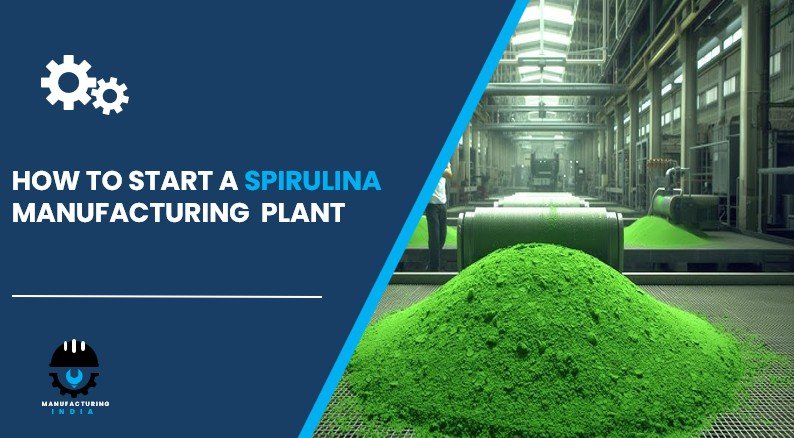
Setting up a spirulina manufacturing plant in India represents a compelling investment opportunity driven by the accelerating global shift toward natural superfoods, rising demand for plant-based nutritional supplements, and growing incorporation of spirulina in functional foods and nutraceutical formulations. As health-conscious consumers, nutraceutical brands, functional food producers, and personal care companies increasingly seek premium, clean-label, and sustainably sourced ingredients, spirulina with its exceptional protein content, bioavailability, antioxidant richness, and versatility has emerged as one of the defining superfood ingredients of the decade. This growth trajectory, combined with expanding end-use sectors such as dietary supplements, health beverages, cosmetics, aquaculture feed, and animal nutrition, creates a highly favourable environment for new spirulina manufacturing entrants.
What is Spirulina?
Spirulina is a blue-green microalgae belonging to the Arthrospira genus that thrives in controlled alkaline water cultivation environments. It is recognised as one of nature’s most nutrient-dense superfoods, containing high-quality complete protein (comprising 60–70% dry weight), essential amino acids, B-complex vitamins, iron, magnesium, potassium, calcium, and an impressive array of antioxidants and bioactive compounds including phycocyanin the distinctive blue pigment responsible for spirulina’s characteristic colour and significant antioxidant, anti-inflammatory, and hepatoprotective properties.
Spirulina production involves a multi-stage controlled bioprocess encompassing cultivation in raceway open ponds or closed photobioreactors, harvesting by filtration or centrifugation, washing, drying through spray drying or freeze drying, milling, and packaging. The result is a highly digestible, nutrient-rich ingredient available in powder, tablet, capsule, and liquid extract forms, serving nutraceutical, functional food, cosmetic, animal nutrition, and aquaculture feed markets globally. The global spirulina market size was valued at USD 684.92 Million in 2025 and is expected to reach USD 1,436.78 Million by 2034, exhibiting a CAGR of 8.6% from 2026 to 2034.
Cost of Setting Up a Spirulina Manufacturing Plant
The total cost of establishing a spirulina manufacturing plant is shaped by several key parameters: production capacity (measured in metric tonnes per annum), cultivation technology platform (open raceway ponds vs. closed photobioreactors), automation level, facility specification, raw material sourcing strategy, drying technology selection, and applicable regulatory and environmental compliance requirements. Below is a structured breakdown of all major cost components.
1. Capital Expenditure (CapEx)
Total capital investment in a spirulina manufacturing plant covers the following major heads:
Land and Site Development
This includes land acquisition or lease, site preparation, boundary development, land registration, and utilities connectivity. Site selection should prioritize proximity to reliable water sources (freshwater or controlled saline water), nutrient input suppliers (nitrates, phosphates, bicarbonate), and carbon dioxide supply infrastructure. Access to abundant sunlight for open-pond cultivation or controlled artificial lighting for photobioreactor systems, stable utility infrastructure including uninterrupted power supply and water treatment, strong logistics corridors for both inbound nutrient inputs and outbound finished goods, and availability of a trained bioprocess and food manufacturing workforce are critical selection criteria. Compliance with industrial zoning regulations, food and nutraceutical manufacturing standards, wastewater discharge requirements, and environmental regulations is essential from the outset.
Civil Works and Construction
Building costs encompass the main production facility including cultivation pond or photobioreactor infrastructure, harvesting and dewatering areas, drying and milling zones, blending and formulation areas, packaging lines, finished goods warehousing and dispatch facilities, quality control and analytical testing laboratories, administrative block, utility infrastructure (water treatment, electrical systems, CO2 supply, HVAC), and worker amenities. Construction must comply with applicable food and nutraceutical manufacturing facility standards, food safety and hygiene regulations, Good Manufacturing Practice (GMP) requirements, and environmental compliance frameworks.
Machinery and Equipment
Machinery represents the single largest component of CapEx. Key equipment required for a spirulina manufacturing plant includes:
- Cultivation Infrastructure: Raceway open pond systems or closed-loop photobioreactors with CO2 injection and pH monitoring systems
- Nutrient Dosing Systems: Chemical dosing systems for nutrient solution (nitrogen, phosphorus, potassium, micronutrients) preparation and automated delivery to cultivation systems
- Harvesting and Filtration Equipment: Vibrating screens, belt filter presses, or centrifuges for biomass dewatering and concentration from cultivation medium
- Drying Systems: Spray dryers or freeze dryers for moisture reduction and preservation of heat-sensitive bioactive compounds including phycocyanin and vitamins
- Milling and Pulverization Equipment: Pin mills, hammer mills, or jet mills for particle size reduction of dried spirulina biomass to target powder specifications
- Blending and Mixing Systems: Ribbon blenders or paddle mixers for uniformity in blended spirulina powder products and multi-ingredient formulations
- Tableting, Encapsulation, and Packaging Lines: Tablet press equipment, capsule filling lines, and sachet or powder packaging machines for finished product dosage form manufacturing
- Quality Control and Analytical Laboratory Equipment: HPLC systems, UV-Vis spectrophotometers, moisture analyzers, and microbiological testing equipment for product specification compliance
- Material Handling Equipment: Automated guided vehicles, food-grade conveyors, and controlled atmosphere storage systems for maintaining product quality in storage and handling
Other Capital Costs
These include pre-operative expenses, commissioning charges, import duties on specialized drying and photobioreactor equipment, staff training costs, initial raw material and consumable inventory for commissioning, regulatory compliance setup including food safety certification, FSSAI manufacturing license (for India), organic certification, and quality management system establishment costs.
Request a Sample Report for In-Depth Market Insights: https://www.imarcgroup.com/spirulina-manufacturing-plant-project-report/requestsample
2. Operational Expenditure (OpEx)
Raw materials principally water, nutrients (nitrates, phosphates, bicarbonate), and CO2 constitute the dominant operating cost, typically representing 40–50% of total OpEx. Utility costs, driven primarily by pumping systems for open ponds or artificial lighting and climate control for photobioreactors, drying systems, and processing equipment, account for 30–40% of OpEx. Labor, maintenance, quality control, packaging, transportation, and overhead costs constitute the remainder of the operating cost base.
3. Plant Capacity
The proposed spirulina manufacturing facility is designed with an annual production capacity ranging between 100–1,000 MT, enabling economies of scale while maintaining operational flexibility. This capacity supports a diversified product portfolio of spirulina powder, tablets, capsules, and extracts serving nutraceutical, functional food, cosmetic, and animal nutrition end-use segments.
4. Profit Margins and Financial Projections
The project demonstrates strong profitability under normal operating conditions. Financial projections should encompass capital investment, operating costs, capacity ramp-up schedule, pricing strategy by product tier (bulk powder vs. branded capsule/tablet formulations), and forward demand outlook. A comprehensive analysis should include sensitivity analysis, Net Present Value (NPV), Internal Rate of Return (IRR), and Payback Period calculations. Gross margins for spirulina manufacturing typically range from 40–50%, supported by strong consumer demand for natural superfoods and the premium positioning of certified organic and high-purity spirulina products. Net profit margins of 15–25% are achievable with disciplined cost management and optimal capacity utilization.
Why Set Up a Spirulina Manufacturing Plant?
High-Value Superfood Segment with Premium Pricing
Spirulina occupies a premium position in the global natural ingredients market, commanding significantly higher prices than conventional agricultural commodities due to its exceptional nutritional density, bioavailability, and multi-sector applicability. As a complete protein source containing all essential amino acids, spirulina is positioned at the intersection of the rapidly growing plant-based nutrition, nutraceutical, and functional food markets each exhibiting sustained double-digit growth globally. Manufacturers of certified organic, high-purity spirulina products can command price premiums of 30–60% over standard grades, supporting gross margins of 40–50% at commercial scale.
Alignment with Global Health and Wellness Megatrends
Global consumer health consciousness is undergoing a structural and permanent shift driven by rising awareness of preventive healthcare, plant-based diets, immunity-boosting nutrition, and clean-label ingredient preferences. Spirulina is a direct beneficiary of all four of these macro consumption trends simultaneously as a vegan complete protein, an immune-system supporter, an antioxidant powerhouse, and a natural superfood with a short, recognizable ingredient declaration. These converging demand drivers are creating sustained, multi-decade structural growth across all major global markets for spirulina in dietary supplements, functional foods, and personal care applications.
Scalable and Year-Round Sustainable Production
Controlled cultivation systems for spirulina whether open raceway ponds in tropical and subtropical climates or closed photobioreactors in temperate regions enable year-round production with minimal seasonal disruption. Spirulina cultivation uses significantly less land and water than conventional agricultural protein sources (soybeans, livestock) to produce equivalent protein quantities. The ability to utilize non-arable land, marginal water sources, and CO2 from industrial emissions in the cultivation process gives spirulina manufacturing a compelling sustainability profile increasingly valued by environmentally conscious consumers, food brands, and institutional buyers with sustainability procurement mandates.
Export-Oriented Demand Across High-Value Markets
Spirulina faces robust and growing demand across North America, Europe, and Asia-Pacific markets, driven by consumer preference for clean-label vegan supplements, immunity-focused nutrition, and sustainable protein sources. India represents a particularly advantageous manufacturing base for export-oriented spirulina production, combining tropical climatic conditions ideal for open-pond cultivation, cost-competitive production economics, growing domestic nutraceutical consumption, and strategic positioning for export market competitiveness in global supply chains. Manufacturers holding internationally recognized certifications organic (USDA/EU Organic), non-GMO, HACCP, and ISO 22000 are well positioned to access premium retail channels across North America, the European Union, Japan, and Australia.
Growing Application in Nutraceuticals and Functional Foods
The global nutraceutical industry’s expansion driven by aging populations, rising healthcare costs, and consumer preference for natural health solutions over pharmaceutical interventions is creating sustained demand for high-quality spirulina as a functional ingredient. Beyond traditional supplement forms, spirulina is increasingly incorporated into protein bars, smoothie powders, ready-to-drink beverages, infant nutrition formulations, sports nutrition products, and fortified food products. This diversification of application forms is expanding spirulina’s total addressable market substantially beyond conventional supplement categories and creating multiple simultaneous revenue channels for spirulina manufacturers.
Cosmetics and Personal Care Applications
Phycocyanin spirulina’s signature blue pigment and primary bioactive compound exhibits potent antioxidant, anti-inflammatory, and skin-protective properties that are driving its incorporation into premium anti-aging skincare formulations, antioxidant serums, and natural cosmetic products. As global beauty consumers shift toward clean beauty, natural ingredient formulations, and scientifically validated active ingredients, spirulina extracts and phycocyanin concentrates are gaining adoption in prestige skincare lines as natural blue colorants and functional actives. This cosmetic application segment offers higher price realization and margin potential than commodity supplement grades.
Animal Nutrition and Aquaculture Feed Demand
The aquaculture industry globally represents a large and growing market for spirulina as a high-protein, carotenoid-rich natural feed additive that improves growth rates, feed conversion efficiency, immune function, and pigmentation in farmed fish and shrimp. Poultry and livestock applications similarly leverage spirulina’s protein, vitamin, and antioxidant profile to enhance animal performance and product quality. The increasing global consumption of farmed seafood, driven by wild-catch supply constraints and aquaculture industry growth in Asia-Pacific, creates sustained demand for spirulina as a sustainable, high-performance aquaculture feed ingredient that is immune to the supply chain and price volatility affecting conventional fishmeal alternatives.
Policy and Sustainability Support
Government programs that promote nutraceuticals and algae-based products and sustainable agriculture provide spirulina production with financial subsidies, export assistance programs, and research and development support. India’s Production Linked Incentive (PLI) schemes for food processing, nutraceutical manufacturing incentives, and state-level industrial investment programs provide meaningful financial support for qualified spirulina manufacturers. International sustainability and climate commitments are increasingly driving institutional procurement programs, corporate ingredient sourcing policies, and food system transition initiatives toward algae-based protein sources with low land, water, and carbon footprints.
Manufacturing Process Overview
The spirulina manufacturing process is a precision bioprocess that transforms water, nutrients, CO2, and sunlight (or artificial light) into high-purity spirulina biomass through controlled cultivation, then converts the biomass into finished nutritional products through harvesting, drying, milling, and formulation operations. The key process stages are:
- Cultivation: Spirulina biomass is cultivated in open raceway ponds (preferred for large-scale, lower-cost tropical production) or closed photobioreactors (preferred for higher-purity, controlled-environment production) using a defined alkaline growth medium containing water, inorganic nitrogen (nitrates), phosphate, bicarbonate, potassium, micronutrients, and CO2 under controlled pH (8.5–11), temperature (28–35°C), and lighting conditions.
- Harvesting and Dewatering: Mature culture is harvested by pumping to vibrating screen filtration systems or centrifuges for initial biomass concentration and separation from spent growth medium. Harvested biomass is washed with clean water to remove residual growth medium salts and achieve target mineral and ash specifications.
- Drying: Dewatered spirulina paste is spray-dried using inlet air temperatures optimized to preserve heat-sensitive nutrients and phycocyanin, or freeze-dried for premium applications requiring maximum preservation of bioactive compounds and natural color.
- Milling and Blending: Dried spirulina cake is milled to target particle size specifications (typically 60–200 mesh) using pin mills or air classifying mills, followed by blending for product uniformity and multi-ingredient formulation mixing.
- Packaging and Dosage Form Manufacturing: Milled spirulina powder is packaged in bulk bags, consumer retail pouches, or processed into tablets, capsules, or sachets on downstream dosage form manufacturing equipment under GMP-compliant conditions.
- Quality Control and Traceability: Comprehensive inline and end-of-line quality testing including proximate analysis (protein, moisture, ash), phycocyanin content, heavy metal screening, microbiological testing, and sensory evaluation ensures product specification compliance. Full documentation and traceability systems maintain production records for regulatory compliance and customer quality audits.
Key Applications of Spirulina
The spirulina market serves several major end-use segments across nutrition, wellness, cosmetics, and agriculture. Nutraceuticals represent the largest application segment, with spirulina widely consumed in capsule, tablet, and powder forms as an immunity booster, protein supplement, antioxidant support product, and daily superfood supplement. Functional food and beverage applications encompass protein bars, smoothie mixes, health drinks, fortified cereals, and ready-to-blend nutrition powders incorporating spirulina as a premium functional ingredient. Cosmetics and personal care applications deploy phycocyanin extracts and spirulina powders as natural blue colorants and bioactive skin care ingredients in anti-aging creams, serums, and antioxidant formulations. Animal nutrition and aquaculture feed applications utilize spirulina biomass as a high-protein, carotenoid-rich natural feed additive for farmed fish, shrimp, poultry, and livestock. Infant nutrition and specialized medical nutrition applications represent emerging high-value segments for high-purity, pharmaceutical-grade spirulina.
Global Spirulina Market Outlook
The global spirulina market size was valued at USD 684.92 Million in 2025. According to IMARC Group estimates, the market is expected to reach USD 1,436.78 Million by 2034, exhibiting a CAGR of 8.6% from 2026 to 2034. Globally, the spirulina market benefits from multiple structural demand drivers:
- Accelerating global health and wellness consumer megatrend driving sustained demand growth across supplements, functional foods, and clean-label personal care applications
- Rising consumption of plant-based protein sources and vegan nutrition products across all major developed and developing markets
- Technology maturation of closed-loop cultivation systems and low-temperature drying techniques improving product quality, bioactive content preservation, and yield consistency
- Growing consumer and institutional interest in algae-based sustainable protein sources with measurably lower land, water, and carbon footprints versus conventional agricultural proteins
- Government nutraceutical manufacturing incentive programs and agricultural sustainability policy support in India, China, the United States, and European Union member states
- Asia-Pacific expected to remain the dominant production region, with India representing a particularly strong manufacturing base combining favourable climatic conditions, cost-competitive economics, and growing domestic demand
Major global players in the spirulina industry include DIC Corporation, E.I.D. Parry (India) Limited, Chr. Hansen Holdings A/S, Fuqing King Dnarmsa Spirulina Co. Ltd., Earthrise Nutritionals (Sun Chemical), GNC Holdings Inc., Now Foods, Naturex, Prolgae Spirulina Supplies Pvt. Ltd., and Algenol, serving nutraceutical, functional food, cosmetics, and animal feed end-use sectors across all major markets.
Licenses and Regulatory Requirements
Establishing a spirulina manufacturing unit requires a range of approvals and certifications, which may vary by country and jurisdiction, including:
- Business registration and company incorporation
- FSSAI (Food Safety and Standards Authority of India) Manufacturing License under applicable food safety regulations (for India-based operations)
- Factory License under applicable labor and manufacturing laws
- ISO 22000:2018 Food Safety Management System Certification
- HACCP (Hazard Analysis and Critical Control Points) Certification for food manufacturing operations
- ISO 9001:2015 Quality Management System Certification
- Organic Certification (USDA Organic and/or EU Organic) for premium export-oriented product lines
- Non-GMO Project Verification for access to premium North American retail channels
- Pollution Control Board Clearances Consent to Establish (CTE) and Consent to Operate (CTO) for industrial manufacturing with water usage and wastewater generation
- Kosher and Halal Certifications for access to relevant international consumer markets
- ISO 14001 Environmental Management System Certification for sustainable manufacturing operations
- CE Marking equivalent (where applicable) and international product quality certifications for European and North American market access
- Export-Import Code (IEC) for international market access
- Drug and Cosmetic Act compliance certifications for spirulina products positioned as therapeutic supplements or cosmetic ingredients in relevant markets
- Occupational Health and Safety management compliance (ISO 45001) with specific provisions for food manufacturing operations
Key Challenges to Consider
Water Quality Management and Contamination Control
Spirulina cultivation quality is highly sensitive to water quality parameters including pH, alkalinity, mineral content, and microbial contamination. Open raceway pond systems are particularly vulnerable to contamination by competing microorganisms, predatory organisms, and environmental pollutants that can compromise product quality and safety. Implementing robust water quality monitoring, chemical dosing control systems, contamination prevention protocols, and rapid response procedures for pond contamination events requires specialized expertise and represents a continuous operational challenge for commercial-scale spirulina producers.
Drying Technology and Bioactive Preservation
Spirulina contains heat-sensitive bioactive compounds particularly phycocyanin and certain B-vitamins that can be degraded by high-temperature drying processes. Optimizing drying conditions to achieve acceptable moisture levels for shelf-stability while maximizing preservation of bioactive content requires careful process engineering and ongoing quality monitoring. Freeze drying, while producing superior quality output, involves substantially higher capital and operational costs than spray drying, creating a technology selection tradeoff between product quality, production economics, and target market premium pricing.
Scale-Up and Yield Consistency
Scaling spirulina cultivation from pilot systems to commercial-scale production introduces significant challenges in maintaining consistent biomass productivity, nutrient utilization efficiency, and product quality specifications across large cultivation areas. Open-pond systems are susceptible to seasonal temperature, light intensity, and weather variation that impacts daily biomass productivity. Achieving consistent protein content, phycocyanin levels, and microbiological specification compliance across production batches at commercial scale requires disciplined process monitoring, data-driven cultivation management, and robust quality management systems.
Certification and Market Access Requirements
Accessing premium nutraceutical, organic food, and export market channels requires obtaining and maintaining multiple certifications USDA Organic, EU Organic, HACCP, ISO 22000, Kosher, Halal, and Non-GMO each with distinct documentation, audit, and ongoing compliance requirements. The cost and organizational burden of multi-certification maintenance can be substantial for new entrants, and any compliance lapse can result in certification suspension that closes premium market channels. Building the quality management infrastructure to maintain all required certifications simultaneously while executing commercial production ramp-up requires careful planning and investment.
Consumer Education and Market Development
Despite spirulina’s established superfood positioning, significant consumer education investment is often required to drive trial and adoption in new market segments and geographies. Communicating the science behind spirulina’s nutritional benefits, addressing taste and color concerns for food applications, and differentiating premium certified grades from commodity products requires sustained marketing investment. New entrants must develop credible brand positioning, invest in consumer education content, and build relationships with nutraceutical and functional food brand customers who can incorporate spirulina into finished products that reach end consumers at scale.
Price Competition from Asian Producers
China dominates global spirulina production volume, with a large number of producers capable of supplying commodity-grade spirulina powder at highly competitive prices. New entrants from other markets must differentiate through certification credentials (organic, non-GMO, HACCP), quality consistency, supply chain transparency, and value-added product forms (high-purity phycocyanin extracts, pharmaceutical-grade powders, branded consumer formulations) to justify price premiums over Chinese commodity product. Long-term competitiveness requires a clear differentiation strategy targeting premium market segments rather than competing on commodity pricing.
Frequently Asked Questions (FAQs)
1. How much does it cost to set up a spirulina manufacturing plant?
The investment depends on plant capacity (100–1,000 MT per annum), cultivation technology platform (open raceway ponds vs. closed photobioreactors), drying technology (spray vs. freeze drying), automation level, location, and target market certifications. Costs cover land, civil construction (cultivation infrastructure, processing facility, quality control laboratory, storage, utilities), machinery (cultivation systems, harvesting equipment, dryers, mills, packaging lines), quality certifications, working capital, and regulatory compliance. A comprehensive feasibility study from IMARC Group provides detailed, capacity-specific cost estimates covering all CapEx and OpEx components.
2. Is spirulina manufacturing a profitable business in 2026?
Yes. Strong and structurally growing demand from nutraceuticals, functional foods, cosmetics, and animal nutrition applications, combined with gross margins of 40–50% and net profit margins of 15–25%, makes spirulina manufacturing financially attractive. The premium positioning of certified organic and high-purity spirulina products over commodity grades supports superior pricing power and margin sustainability. Break-even periods of 4–7 years are achievable with disciplined capacity ramp-up, strong quality management, and targeted market development in premium nutraceutical and export channels.
3. What machinery and equipment are required for a spirulina manufacturing plant?
Key equipment includes raceway open pond systems or closed photobioreactor infrastructure with CO2 injection and pH monitoring, nutrient dosing systems, vibrating screen filtration units, centrifuges for harvesting, spray dryers or freeze dryers, pin mills or air classifying mills for pulverization, ribbon blenders for product mixing, tablet press and capsule filling equipment, powder and retail packaging lines, and comprehensive quality control and analytical laboratory instruments including HPLC systems, spectrophotometers, moisture analyzers, and microbiological testing equipment.
4. What licenses and approvals are required?
Required approvals generally include company registration, FSSAI manufacturing license (for India), factory license, ISO 22000 food safety management certification, HACCP certification, ISO 9001 quality management certification, Pollution Control Board clearances, and export market certifications. For premium market access, USDA Organic, EU Organic, Non-GMO Project Verification, Kosher, and Halal certifications are typically required. Product safety testing documentation and nutritional labeling compliance are mandatory for commercial launch authorization across all major markets.
5. How long does it take to commission a spirulina manufacturing plant?
Typically, 18–30 months from project initiation to commercial production launch, depending on project scale, cultivation infrastructure construction timeline, processing equipment procurement lead times, civil construction, regulatory approvals, product certification timelines, and customer qualification requirements for key nutraceutical or functional food brand accounts. Organic certification timelines (typically requiring a 3-year land transition period for new cultivation sites not previously certified) are a critical path item and should be initiated as early as possible for producers targeting premium certified organic market channels.
6. What are the key raw materials for spirulina manufacturing?
Primary raw materials and inputs include water (freshwater or controlled saline water), inorganic nitrogen sources (sodium nitrate, potassium nitrate), phosphate compounds (potassium phosphate), bicarbonate (sodium bicarbonate or potassium bicarbonate) for alkalinity and carbon nutrition, potassium sulfate, magnesium sulfate, micronutrient mineral solutions (iron, manganese, zinc), and carbon dioxide for pH management and carbon nutrition. Packaging materials include food-grade HDPE or aluminum foil pouches for retail product, HDPE drums for bulk powder, and PVDC or HPMC capsule shells for capsule formulations.
7. What is the break-even period for a spirulina manufacturing plant?
The break-even period generally ranges from 4–7 years for well-positioned plants, depending on capacity utilization ramp-up, product mix between bulk powder, branded supplements, and high-value phycocyanin extracts, certification status, operating efficiency, and market demand development trajectory. Securing long-term supply agreements with established nutraceutical brands, functional food manufacturers, or aquaculture feed producers significantly improves revenue predictability and accelerates break-even achievement.
8. What are the main types of spirulina products and their applications?
The primary product categories include food-grade spirulina powder (for bulk ingredient supply to nutraceutical and food manufacturers), certified organic spirulina powder (for premium retail and brand supply), spirulina tablets and capsules (for consumer direct and branded supplement products), phycocyanin extract (high-value blue pigment and antioxidant for cosmetics, food coloring, and premium supplement applications), and spirulina-based animal feed additives (for aquaculture, poultry, and livestock nutrition). Each product type serves distinct market segments with different quality specifications, certification requirements, and price realization profiles.
9. What government incentives are available for spirulina manufacturers?
Manufacturers may benefit from Production Linked Incentive (PLI) schemes for food processing under India’s Ministry of Food Processing Industries, state industrial investment incentives and capital subsidies for nutraceutical and food manufacturing facilities, export promotion benefits through the Agricultural and Processed Food Products Export Development Authority (APEDA), technology upgrade fund schemes for food processing modernization, R&D tax credits for algae cultivation technology development programs, and infrastructure support in designated food processing parks and agri-export zones. Domestic production of spirulina aligns with nutraceutical industry development, agricultural sustainability, and export competitiveness objectives across India and major global economies.
10. How does spirulina manufacturing compare to conventional supplement manufacturing in terms of setup?
Compared to conventional botanical extract or mineral supplement manufacturing, spirulina production requires proprietary cultivation infrastructure (raceway ponds or photobioreactors), specialized bioprocess management expertise, and continuous biological monitoring capabilities not required in conventional manufacturing. However, spirulina manufacturing eliminates dependence on agricultural commodity supply chains, offers vertical integration from cultivation through finished product manufacturing, and provides the ability to certify the full production chain from raw material to finished product a significant competitive advantage for organic and clean-label market positioning. The manufacturing infrastructure supports multiple spirulina product forms and quality grades from the same cultivation platform, enabling product portfolio diversification and market segment diversification as the business scales.
Key Takeaways for Investors
The spirulina manufacturing industry represents a high-growth, nutritionally distinctive, and financially compelling investment opportunity positioned at the intersection of the global superfood megatrend, plant-based nutrition revolution, sustainable agriculture transition, and nutraceutical industry expansion. Key investment highlights include: The industry benefits from diversified demand across nutraceuticals, functional foods, cosmetics, animal nutrition, and aquaculture feed applications, providing resilience against single-sector demand volatility and multiple simultaneous revenue growth pathways. Certified organic and high-purity spirulina products command substantial price premiums over commodity grades, with gross margins of 40–50% and net profit margins of 15–25% delivering a compelling financial case for quality-differentiated manufacturing investment. Long-term growth is supported by structural demand drivers including the global health and wellness megatrend, rising plant-based protein consumption, sustainable ingredient sourcing commitments by major food and personal care brands, and government nutraceutical industry development incentives across all major economies. India represents a particularly compelling manufacturing and export base, combining tropical climatic conditions ideal for year-round open-pond cultivation, cost-competitive production economics, growing domestic nutraceutical and functional food consumption, strong policy support through PLI and food processing incentive programs, and strategic positioning for export market competitiveness in North American, European, and Asian premium ingredient supply chains.
About the Author