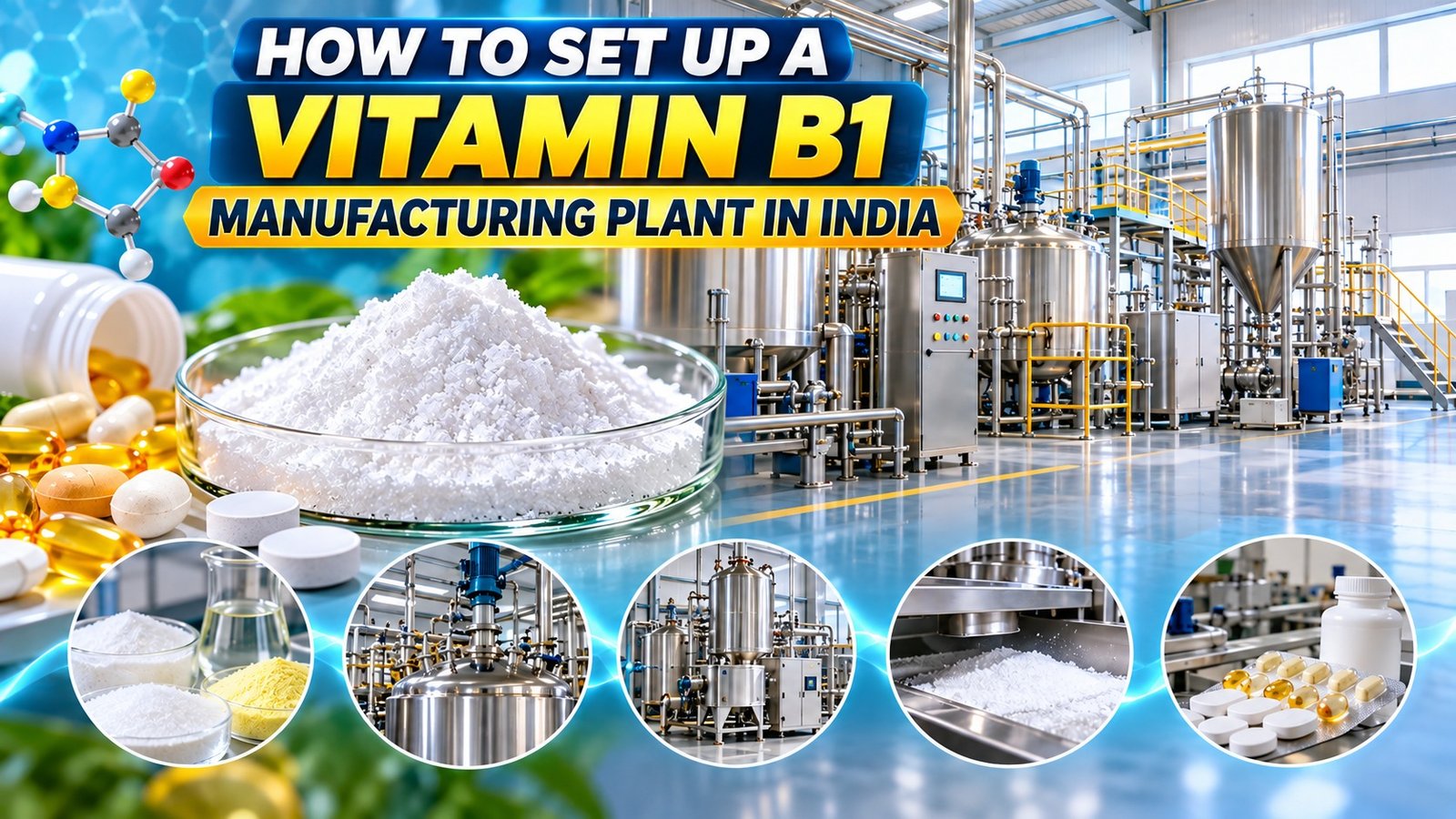
Setting up a vitamin B1 manufacturing plant in India presents a compelling investment case, given demand from pharmaceuticals, dietary supplements, food and beverages, nutraceuticals, clinical nutrition, and animal nutrition sectors. Greater consumer awareness of micronutrient requirements is encouraging manufacturers to incorporate thiamine into multivitamins, B-complex supplements, fortified foods, and functional nutritional products.
India’s food fortification framework positions the country as a strategically sound location for this production. Under India’s Food Safety and Standards (Fortification of Foods) Regulations, thiamine can be used as a fortificant in specified food products at 1–1.5 mg per kg, giving domestic manufacturers an established regulatory pathway into the food-fortification market.
Backed by a regulated domestic fortification pathway, healthy gross margins of 30–42%, and diversified demand across pharmaceutical, food, and animal-nutrition segments, this investment offers a cost-competitive route into an essential micronutrient ingredient, with steady demand supporting sound break-even viability.
What is Vitamin B1?
Vitamin B1, commonly called thiamine, is a water-soluble B-group vitamin that plays an important role in carbohydrate and energy metabolism and supports normal neuronal function. Because the body stores relatively limited amounts of thiamine, regular dietary intake is important for maintaining adequate levels. Commercially, it is supplied as thiamine salts, including thiamine hydrochloride and thiamine mononitrate, and may come as a powder or be incorporated into tablets, capsules, premixes, fortified foods, beverages, and feed formulations.
The vitamin B1 manufacturing process uses raw-material preparation, synthesis or production, separation, purification, concentration, crystallization, drying, milling, testing, and packaging. This method serves end-use industries such as pharmaceuticals, dietary supplements, food and beverages, nutraceuticals, clinical nutrition, and animal nutrition.
Cost of Setting Up a Vitamin B1 Manufacturing Plant in India
The cost of a vitamin B1 manufacturing plant depends on capacity, technology, location, automation, and regulatory compliance.
1. Capital Expenditure (CapEx)
Capital investment covers land acquisition, site preparation, and infrastructure, optimized through industrial estates or SEZ-linked plots with developed utilities and faster approvals. Civil works cover the production shed, laboratory, storage areas, and administrative block.
Machinery is the largest portion of capital expenditure for a vitamin B1 manufacturing plant, since equipment costs scale with automation level and capacity. A vitamin B1 manufacturing plant’s civil works and containment systems also warrant early planning given the regulated nature of pharmaceutical-grade output. Key machinery required includes:
- Reaction vessels
- Agitators
- pH-control systems
- Separation units
- Centrifuges
- Filtration systems
- Extraction equipment
- Evaporators
- Crystallizers
- Dryers
- Pulverizers
- Particle classifiers
- Blending systems
- Storage tanks
- Weighing and dosing systems
- Filling machines
- Packaging equipment
Other capital costs include effluent treatment systems, monitoring systems to detect leaks or process deviations, pre-operative and commissioning expenses, and import duties on machinery.
Request a Sample Report for In-Depth Market Insights: https://www.imarcgroup.com/vitamin-b1-manufacturing-plant-project-report/requestsample
2. Operational Expenditure (OpEx)
Raw material cost is the largest OpEx component, at approximately 45–55% of total OpEx, comprising 4-Amino-5-bromomethyl-2-methylpyrimidine, 4-Methyl-5-hydroxyethylthiazole hydrochloride, thiocyanate salt, and phosphoric acid. Long-term supplier contracts help stabilize pricing and secure consistent supply.
Utility cost, covering electricity, water, and steam, accounts for approximately 10–14% of OpEx. Other costs include transportation, packaging, salaries, depreciation, taxes, and maintenance. By the fifth year, operational cost is expected to rise on inflation, market fluctuations, and supply chain disruptions.
3. Plant Capacity
The proposed facility is designed with an annual production capacity of 500–3,000 MT, enabling economies of scale while maintaining flexibility. Capacity can be customized to investor requirements, and profitability improves with higher capacity utilisation as fixed costs spread across greater output.
4. Profit Margins and Financial Projections
Financial projections cover net present value (NPV), internal rate of return (IRR), payback period, liquidity, and profitability analysis. Under normal conditions, a vitamin B1 manufacturing plant typically shows gross margins of 30–42% and net margins of 12–20%, reflecting profitability supported by stable demand and value-added applications.
Why Set Up a Vitamin B1 Plant in India?
Growing Supplement Demand: Increasing consumer focus on preventive nutrition and micronutrient intake supports demand for thiamine ingredients across multivitamins and B-complex formulations.
Food Fortification Pathway: India’s Food Safety and Standards (Fortification of Foods) Regulations permit thiamine as a fortificant in specified food products at 1–1.5 mg per kg, creating a broad, regulated downstream market for domestic manufacturers.
Pharmaceutical Applications: Established use of thiamine in nutritional and deficiency-related pharmaceutical products provides consistent, non-discretionary demand.
Healthy-Aging Research Interest: Ongoing research into thiamine’s role in neuronal and energy metabolism, including studies examining its intake and cognitive performance, is sustaining scientific and consumer interest in the category.
Diversified End Uses: Thiamine serves pharmaceutical, nutraceutical, food, beverage, and animal-nutrition applications, reducing dependence on any single end-use segment.
Active Research and Development: A February 2024 study in the Journal of Translational Medicine, analysing NHANES data from 2,422 U.S. adults aged 60 and above, found that higher thiamine intake was associated with higher cognitive-function scores, adding to scientific interest in its nutritional role, though the authors noted the cross-sectional design cannot establish causality.
Manufacturing Process – Step by Step
The vitamin B1 manufacturing process uses raw-material preparation and synthesis as the primary production method, followed by a series of unit operations, material handling steps, and quality checks.
- Raw-Material Preparation: Precursor chemicals are prepared and proportioned ahead of synthesis.
- Synthesis or Production: Reaction vessels, agitators, and pH-control systems carry out the chemical synthesis under controlled conditions.
- Separation: Separation units and centrifuges isolate the target compound from the reaction mixture.
- Purification: Filtration systems and extraction equipment remove impurities to meet purity specifications.
- Concentration: Evaporators concentrate the purified solution ahead of crystallization.
- Crystallization: Crystallizers bring the concentrated product out of solution in crystalline form.
- Drying and Milling: Dryers, pulverizers, and particle classifiers reduce and grade the material to the required particle size.
- Testing and Packaging: Blending systems and storage tanks stage the product for weighing, dosing, filling, and packaging ahead of dispatch to pharmaceutical, food, and nutraceutical end-users.
Key Applications
Thiamine serves a diverse set of end-use industries centered on nutrition and health:
- Pharmaceuticals: Preparations intended for thiamine supplementation and management of deficiency.
- Dietary Supplements: Multivitamins, B-complex formulations, capsules, and tablets.
- Food Fortification: Selected food products fortified to increase nutritional value.
- Functional Beverages: Fortified beverages and nutritional drinks.
- Animal Nutrition: Feed formulations using thiamine derivatives as nutritional additives.
Leading Manufacturers
Leading producers in this global industry include several companies with extensive production capacities and diverse application portfolios. Key players include:
- Sanofi
- Pfizer Inc.
- Sun Pharmaceutical Industries Ltd.
- Mankind Pharma
- Dr. Reddy’s Laboratories Ltd.
Timeline to Start the Plant
- Feasibility study and project report preparation
- Land acquisition and site development
- Regulatory approvals and environmental clearances
- Factory licence and fire safety compliance
- Machinery procurement and installation
- Raw material supplier agreements and supply chain setup
- Trial production and quality testing
- Commercial production launch
Licences and Regulatory Requirements
Starting a vitamin B1 manufacturing unit in India requires several approvals:
- Business registration (Proprietorship, LLP, or Pvt Ltd)
- Factory Licence under the Factories Act
- Environmental Clearance from State Pollution Control Board
- GST Registration
- Fire Safety NOC
- Food and pharmaceutical compliance covering formulation, fortification, and labeling standards
- Effluent Treatment Plant (ETP) operational clearance
- Occupational Health and Safety compliance
Key Challenges to Consider
High Capital Requirements: Machinery is the largest share of capital expenditure, with synthesis and crystallization equipment demanding significant investment.
Raw Material Price Volatility: 4-Amino-5-bromomethyl-2-methylpyrimidine, 4-Methyl-5-hydroxyethylthiazole hydrochloride, thiocyanate salt, and phosphoric acid are subject to price fluctuations that can affect operating costs.
Regulatory Compliance: Food, pharmaceutical, and feed regulations, SOPs, documentation protocols, and regular audits govern each stage of production.
Competition from Established Players: Sanofi, Pfizer Inc., Sun Pharmaceutical Industries Ltd., Mankind Pharma, and Dr. Reddy’s Laboratories Ltd. hold extensive production capacities and diverse application portfolios.
Purity and Formulation Pressure: Manufacturers are focused on high-purity ingredients, stable formulations, and efficient production processes to meet food, pharmaceutical, and feed-grade specifications.
Skilled Manpower: Synthesis, purification, and quality-control operations require trained personnel to maintain consistent standards.
Frequently Asked Questions
1. How much does it cost to set up a vitamin B1 manufacturing plant in India?
Cost depends on capacity, automation level, land and site development, and civil works; a detailed CapEx and OpEx breakdown is covered in the full feasibility report.
2. Is vitamin B1 manufacturing profitable in India in 2026?
The facility demonstrates healthy profitability potential, with gross margins of 30–42% and net margins of 12–20% under normal operating conditions.
3. What machinery is required for a vitamin B1 plant in India?
Key machinery includes reaction vessels, agitators, pH-control systems, separation units, centrifuges, filtration systems, extraction equipment, evaporators, crystallizers, dryers, pulverizers, particle classifiers, blending systems, storage tanks, weighing and dosing systems, filling machines, and packaging equipment.
4. What licences and approvals are required to start a vitamin B1 plant in India?
Requirements include business registration, a Factory Licence, Environmental Clearance, GST Registration, Fire Safety NOC, food and pharmaceutical compliance, ETP clearance, and occupational health and safety compliance.
5. What raw materials are needed for vitamin B1 manufacturing?
4-Amino-5-bromomethyl-2-methylpyrimidine, 4-Methyl-5-hydroxyethylthiazole hydrochloride, thiocyanate salt, and phosphoric acid are the primary raw materials.
6. What are the environmental compliance requirements for a vitamin B1 plant in India?
Plants require Environmental Clearance from the State Pollution Control Board, an operational Effluent Treatment Plant, and adherence to emission and safety monitoring standards.
7. What is the best location to set up a vitamin B1 plant in India?
Sites should offer access to raw materials, proximity to target markets, robust transportation and utility infrastructure, and compliance with zoning and environmental regulations.
8. What is the break-even period for this type of plant in India?
Break-even timing depends on capacity utilisation, pricing, and cost structure, assessed through payback period and net present value analysis.
9. What government incentives are available for manufacturers in India?
Incentives vary by state and are typically tied to industrial estate or SEZ location, land and infrastructure support, and regulatory compliance; India’s food fortification regulations further support demand for domestically manufactured thiamine.
Key Takeaways for Investors
A vitamin B1 manufacturing plant offers a compelling opportunity supported by demand from pharmaceuticals, dietary supplements, food and beverages, nutraceuticals, clinical nutrition, and animal nutrition sectors. Financial projections indicate sound viability across capacities of 500–3,000 MT annually, with gross margins of 30–42% and net margins of 12–20%. The global market, sized at 84.43 thousand tonnes in 2025 and projected to reach 135.54 thousand tonnes by 2034 at a 5.4% CAGR, alongside India’s regulated food-fortification pathway for thiamine, points to sustained demand for this essential micronutrient ingredient.
About the Author