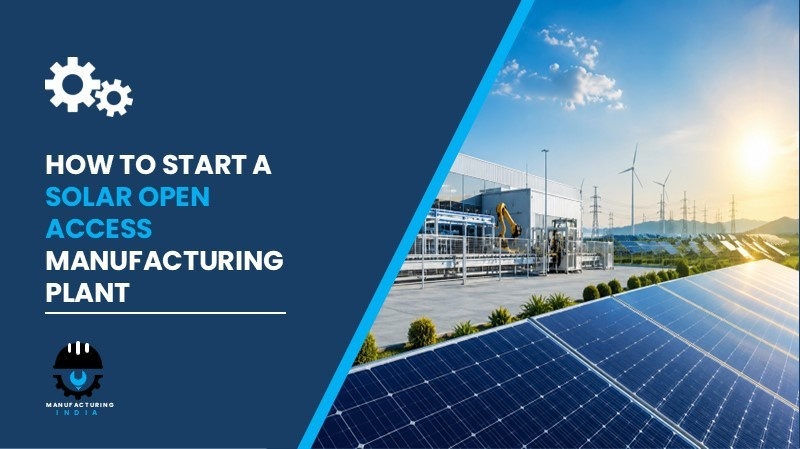
A solar open access manufacturing plant setup in India presents a compelling investment case, backed by strong and diversified demand from manufacturing units, commercial and industrial facilities, data centers, infrastructure, and telecommunications operators. Solar open access is a regulatory mechanism that allows large electricity consumers to buy power directly from offsite solar developers instead of local utility monopolies, using a Power Purchase Agreement (PPA) to source clean energy wheeled through the existing state grid. As high-power-consuming industries look to cut electricity costs and meet ESG goals without heavy upfront capital, this model is becoming central to how corporate India sources power.
India’s policy environment is turning increasingly favourable for this segment. The Ministry of New and Renewable Energy (MNRE) reports that India added a record 44.5 GW of renewable energy capacity in 2025, while Green Open Access Rules, banking provisions, and renewable purchase obligation (RPO) compliance are simplifying procedures and expanding the addressable market. Rising participation from independent power producers, green energy developers, and digital energy platforms is creating a more competitive and efficient ecosystem, making India a strategically sound base for this kind of production.
This investment combines regulatory tailwinds, growing renewable purchase obligations, and rising corporate sustainability commitments with healthy gross margins of 14-22% and net margins of 5-10%. With demand concentrated across manufacturing, data centers, infrastructure, and telecom, and with capacities scalable from 500 MW to 2 GW, the segment offers a financially sound and policy-supported entry point for investors evaluating break-even viability.
What is Solar Open Access?
Solar open access is a regulatory mechanism that allows large electricity consumers, usually industries, to buy power directly from offsite solar developers rather than local utility monopolies. Instead of installing panels on their own premises, businesses sign a Power Purchase Agreement (PPA) to source clean energy wheeled through the existing state grid, paying the developer the agreed tariff plus regulated grid charges. This model offers major cost savings and helps consumers meet ESG goals without upfront capital investments.
The solar open access manufacturing process centers on solar power generation, electricity transmission through dedicated connectivity, power scheduling, metering, and grid integration. The end-use base for this production is broad, spanning manufacturing, commercial and industrial facilities, data centers, infrastructure, telecommunications, and other high-power-consuming industries.
Cost of Setting Up a Solar Open Access Manufacturing Plant in India
The cost of setting up a solar open access manufacturing plant depends on capacity, technology, location, automation, and regulatory compliance.
1. Capital Expenditure (CapEx)
Total capital investment for this plant is driven primarily by land acquisition, site preparation, and the necessary supporting infrastructure, with the location chosen to balance proximity to raw material sources, target markets, and grid connectivity. Civil works costs cover construction of the plant’s core physical infrastructure and form a distinct line item within the overall capital outlay. Machinery and equipment represent the largest share of CapEx, since scale of manufacturing and level of automation directly determine total equipment spend. Key machinery required includes:
- Solar PV modules
- Inverters
- Mounting structures
- Transformers
- Switchgear
- Transmission lines
- Metering systems
- SCADA and monitoring systems
- Power evacuation infrastructure
- Grid interconnection equipment
Beyond land, civil works, and machinery, other capital costs round out the CapEx structure, supporting a solid foundation for safe and efficient plant operations.
Request a Sample Report for In-Depth Market Insights: https://www.imarcgroup.com/solar-open-access-manufacturing-plant-project-report/requestsample
2. Operational Expenditure (OpEx)
Raw material cost is the single largest component of OpEx, accounting for approximately 65-75% of total operating expenses. Key raw materials include high-purity silicon, silver paste, copper ribbon/busbars, low-iron tempered glass, EVA/POE encapsulant film, polymer backsheet, aluminium frame, and junction box. Given this weight in the cost structure, securing long-term contracts with reliable suppliers is essential to mitigate price volatility and ensure a consistent supply of materials for the solar open access manufacturing plant.
Utility cost, covering electricity, water, and steam, accounts for approximately 8-12% of OpEx. Other operating costs for the plant include transportation, packaging, salaries and wages, depreciation, taxes, and repairs and maintenance, all of which factor into the first-year operating cost base. By the fifth year of operations, total operational cost is expected to increase substantially due to inflation, market fluctuations, potential rises in the cost of key materials, supply chain disruptions, and rising consumer demand.
3. Plant Capacity
The proposed solar open access manufacturing facility is designed with an annual capacity ranging between 500 MW and 2 GW, enabling economies of scale while maintaining operational flexibility. Plant capacity can be customized based on investor requirements, and profitability of the unit improves with higher capacity utilisation.
4. Profit Margins and Financial Projections
Financial projections for a solar open access manufacturing plant are built on capital investment, operating costs, capacity utilisation, pricing trends, and demand outlook, and cover liquidity analysis, profitability, payback period, net present value (NPV), and internal rate of return (IRR). Under normal operating conditions, the project demonstrates healthy profitability, with gross profit margins typically ranging between 14-22% and net profit margins between 5-10%.
Why Set Up a Solar Open Access Plant in India?
Strategic Renewable Energy Solution: Solar open access enables commercial and industrial consumers to procure clean electricity directly from off-site solar power plants through the open access grid. This helps reduce energy costs, improve sustainability, and achieve long-term energy security, positioning the segment as a key enabler of India’s clean energy transition.
Megatrend Alignment: The rapid growth of corporate sustainability commitments, renewable energy adoption, decarbonization targets, and rising electricity demand from manufacturing, data centers, and commercial facilities is driving sustained demand for solar open access projects, with the C&I renewable energy segment witnessing strong long-term growth.
Policy and Regulatory Tailwinds: Government initiatives promoting renewable energy capacity expansion, Green Open Access Rules, transmission infrastructure upgrades, renewable purchase obligations (RPOs), and net-zero commitments are accelerating solar open access adoption across industrial and commercial sectors. MNRE data shows India added a record 44.5 GW of renewable energy capacity in 2025 alone.
Moderate but Justifiable Entry Barriers: While this plant requires significant investment in project development, land acquisition, grid connectivity, regulatory approvals, and long-term PPAs, the complexity of execution and state-level compliance requirements create entry barriers that favour experienced developers and integrated energy providers, protecting margins for serious investors.
Active Industry Investment: In July 2026, the Ministry of New and Renewable Energy (MNRE) granted a key seven-month extension exempting net-metering and open access solar projects from mandatory domestic cell-sourcing under the Approved List of Models and Manufacturers (ALMM) List-II until December 31, 2026, easing near-term project execution.
Localization and Dependability in Energy Supply: Businesses are increasingly seeking reliable domestic renewable energy providers to secure predictable electricity costs, reduce dependence on conventional power sources, and meet ESG objectives, creating opportunities for developers offering dependable project execution, long-term operational support, and stable power supply.
Solar Open Access Manufacturing Process – Step by Step
The solar open access manufacturing process uses solar power generation, electricity transmission through dedicated connectivity, power scheduling, metering, and grid integration as the primary production method.
- Solar Power Generation: Renewable electricity is generated at the off-site solar facility using solar PV modules, inverters, and mounting structures.
- Electricity Transmission through Dedicated Connectivity: Power is routed through transformers, switchgear, and transmission lines toward the existing state grid.
- Power Scheduling: Generated electricity is scheduled for delivery in line with the consumer’s demand and grid requirements.
- Metering: Metering systems and SCADA/monitoring systems track electricity generated, wheeled, and consumed for accurate billing.
- Grid Integration: Power evacuation infrastructure and grid interconnection equipment integrate the generated electricity into the open access network for delivery to end consumers.
The final stage of the process routes electricity through the state grid to commercial and industrial consumers, data centers, infrastructure operators, and telecommunications facilities under the agreed power purchase arrangement.
Key Applications
The solar open access manufacturing plant serves a wide base of high-power-consuming sectors across the Indian economy.
- Commercial & Industrial (C&I): Supplying renewable electricity to manufacturing plants, IT parks, commercial buildings, warehouses, and industrial facilities.
- Utilities & Power Distribution: Large-scale renewable power generation and electricity supply through open access networks.
- Infrastructure: Powering airports, metro rail systems, ports, educational institutions, hospitals, and government facilities.
- Data Centers & Telecommunication: Providing clean and cost-effective electricity for data centers, telecom towers, and digital infrastructure.
Leading Manufacturers
Leading players in the global solar open access industry operate with extensive project development capacities and diverse application portfolios. Key players include:
- AM Green Energy
- Serentica Renewables
- Fourth Partner Energy
- Brookfield Renewable Partners
Timeline to Start the Plant
- Feasibility study and project report preparation
- Land acquisition and site development
- Regulatory approvals and environmental clearances
- Factory licence and fire safety compliance
- Machinery procurement and installation
- Raw material supplier agreements and supply chain setup
- Trial production and quality testing
- Commercial production launch
Licences and Regulatory Requirements
Starting a solar open access manufacturing unit in India requires several approvals:
- Business registration (Proprietorship, LLP, or Pvt Ltd)
- Factory Licence under the Factories Act
- Environmental Clearance from State Pollution Control Board
- GST Registration
- Fire Safety NOC
- Effluent Treatment Plant (ETP) operational clearance
- Occupational Health and Safety compliance
Key Challenges to Consider
High Capital Requirements: Project development, land acquisition, grid connectivity, and long-term PPAs demand significant upfront capital before the plant becomes cash-flow positive.
Raw Material Price Volatility: Prices of high-purity silicon, silver paste, copper ribbon/busbars, and other key raw materials fluctuate with global supply and demand, directly affecting margins on the solar open access manufacturing plant.
Regulatory Compliance: State-level Green Open Access Rules, renewable purchase obligation (RPO) compliance, and evolving ALMM requirements demand continuous monitoring and adaptation.
Technology and Innovation Pressure: Ongoing advancements in solar photovoltaic technology, energy management systems, and hybrid solutions integrated with battery energy storage require sustained investment to stay competitive.
Competition: Established players such as AM Green Energy, Serentica Renewables, Fourth Partner Energy, and Brookfield Renewable Partners intensify competitive pressure in project development and PPA pricing.
Skilled Manpower: Grid integration, SCADA monitoring, and quality assurance systems require a technically skilled workforce that can be difficult to source and retain.
Frequently Asked Questions
1. How much does it cost to set up a solar open access manufacturing plant in India?
Cost depends on plant capacity, technology, location, automation level, and regulatory compliance, and covers land, civil works, machinery, and other capital costs.
2. Is solar open access manufacturing profitable in India in 2026?
Yes, the segment demonstrates healthy profitability, with gross profit margins of 14-22% and net profit margins of 5-10% under normal operating conditions.
3. What machinery is required for a solar open access plant in India?
Key machinery includes solar PV modules, inverters, mounting structures, transformers, switchgear, transmission lines, metering systems, SCADA and monitoring systems, power evacuation infrastructure, and grid interconnection equipment.
4. What licences and approvals are required to start a solar open access plant in India?
Requirements include business registration, a Factory Licence, Environmental Clearance, GST Registration, Fire Safety NOC, ETP operational clearance, and Occupational Health and Safety compliance.
5. What raw materials are needed for solar open access manufacturing?
Raw materials include high-purity silicon, silver paste, copper ribbon/busbars, low-iron tempered glass, EVA/POE encapsulant film, polymer backsheet, aluminium frame, and junction box.
6. What are the environmental compliance requirements for a solar open access plant in India?
Plants must secure Environmental Clearance from the State Pollution Control Board and maintain ETP operational clearance and Occupational Health and Safety compliance.
7. What is the best location to set up a solar open access plant in India?
Site selection should prioritise access to raw materials, proximity to target markets to minimise distribution costs, robust transportation and utility infrastructure, and compliance with local zoning and environmental regulations.
8. What is the break-even period for this type of plant in India?
The project report’s financial analysis section covers payback period, NPV, and IRR to determine break-even timelines based on capacity and cost assumptions.
9. What government incentives are available for manufacturers in India?
The MNRE’s Green Open Access Rules, renewable purchase obligations (RPOs), and the recent ALMM List-II exemption extension for net-metering and offsite solar projects support sector growth.
Key Takeaways for Investors
This investment opportunity is anchored in demand from manufacturing, commercial and industrial facilities, data centers, infrastructure, and telecommunications sectors. Financial viability holds across the 500 MW-2 GW capacity range, supported by gross margins of 14-22% and net margins of 5-10%. With Asia-Pacific accounting for over 60% of the global solar open access market and India adding a record 44.5 GW of renewable energy capacity in 2025, demand fundamentals for this plant remain firmly on a growth trajectory backed by sustained policy support.
About the Author