Introduction
Choosing certifications for a manufacturing plant is one of the highest-impact compliance and market-access decisions a business makes — and one of the easiest to get wrong when decisions are driven by competitor benchmarking or generic certification advice.
Once time and money are spent on the wrong standard, the hidden problems surface: certifications that customers do not ask for, audit findings that do not improve real process control, systems that remain paper-based, and annual costs that deliver little commercial return. These risks are rarely visible in a brochure or a consultant’s pitch. They become clear only through structured evaluation of process needs, customer requirements, regulatory obligations and growth plans before any certification project begins.
IMARC Engineering provides comprehensive Product and Facility Certification Support to help manufacturers identify, implement, and maintain the right certifications for domestic and international markets. This article explains how to choose the right certification for your manufacturing plant, which factors matter most, and why a clear decision framework protects both compliance and commercial value.
Why Certification Choice Matters for Indian Manufacturers in 2026
India’s manufacturing sector continues to expand under policy support and rising domestic and export demand.
Manufacturing is estimated to grow around 7% at constant prices in FY 2025-26, according to MoSPI’s First Advance Estimates. FDI into manufacturing rose 18% in FY 2024-25 to US$19.04 billion, as reported by the Ministry of Commerce and Industry and DPIIT. Cumulative FDI inflows since April 2000 stand at approximately US$1.16 trillion. The Production Linked Incentive (PLI) scheme has attracted cumulative investment exceeding ₹2.16 lakh crore, with cumulative production and sales surpassing ₹20.41 lakh crore as of December 2025, per PIB.
As plants scale and enter regulated or export markets, certifications become gatekeepers. Buyers in automotive, pharmaceuticals, food, electronics and industrial supply chains increasingly expect specific standards. Logistics costs have improved to an estimated 7.97% of GDP (DPIIT-NCAER study), yet plant-level credibility still depends on verified systems for quality, safety, environment and sector-specific control.
Choosing the right certification — not the longest list — determines whether the investment strengthens market access and operations or becomes an annual cost with limited return.
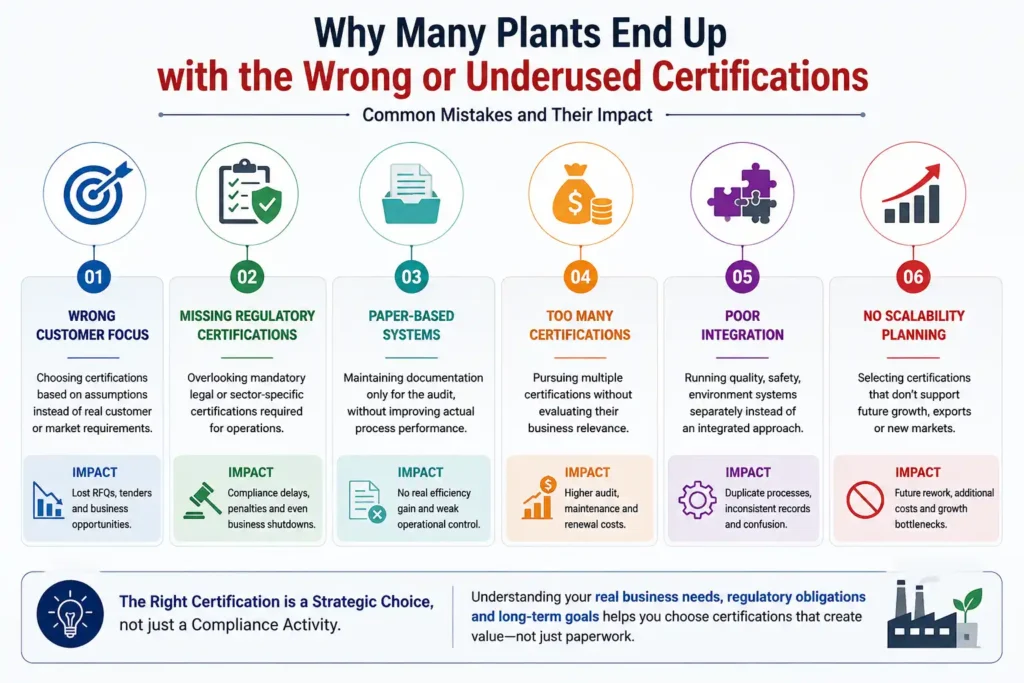
Why Many Plants End Up with the Wrong or Underused Certifications
Most weak certification outcomes follow a familiar pattern: standards selected because competitors have them, limited link to actual process risks, weak internal ownership, and systems built mainly for the audit rather than daily control.
Common problems include:
- Customer mismatch: Holding certificates that key buyers do not require while missing the one standard that appears in every RFQ.
- Regulatory gap: Overlooking mandatory or strongly expected sector certifications (for example GMP/Schedule M in pharma or FSSAI-linked systems in food).
- Paper systems: Procedures and records created for auditors that operators do not use, so process control does not improve.
- Cost without return: Multiple overlapping standards that raise audit and consultant spend without opening new markets or reducing risk.
- Scalability issues: Systems designed for current volume that cannot support expansion, multi-site operations or export growth.
- Weak integration: Separate management systems that duplicate work instead of a coherent quality, safety and environmental framework.
Structured selection of the right certification for your manufacturing plant reduces these outcomes by aligning standards with process, market and regulatory reality.
Key Factors for Choosing the Right Certification
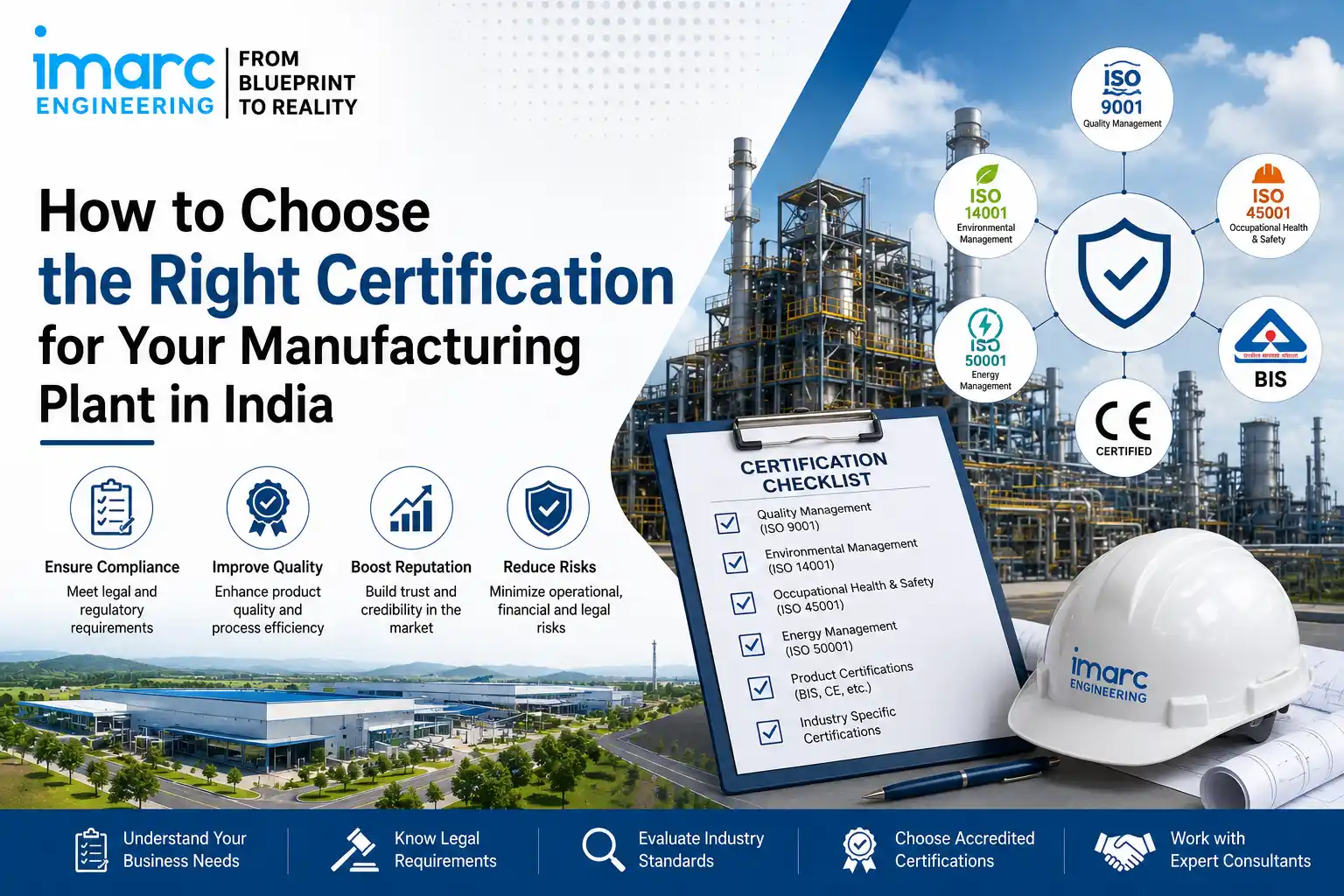
A credible decision examines six interconnected areas. Weakness in any one of them can lead to the wrong standard or an underused system.
Factor 1. Customer and Market Requirements
Identify what buyers, OEMs, retailers and export markets actually demand in RFQs, supplier manuals and audit checklists. Prioritise standards that unlock orders over those that only look good on a website.
Factor 2. Regulatory and Sector Obligations
Map mandatory or strongly expected requirements — factory licence linked systems, environmental consents, Schedule M/GMP for pharma, FSSAI and food safety systems, BIS product certifications, automotive customer-specific requirements, and any export-market rules.
Factor 3. Process Risk and Control Needs
Assess where failures hurt most: product quality, contamination, safety incidents, environmental non-compliance, or data integrity. Choose standards that strengthen control in those areas rather than generic coverage.
Factor 4. Business Stage and Scale
Match the depth of the system to current size and growth plan. A single-site unit selling domestically has different needs from a multi-plant exporter targeting regulated markets.
Factor 5. Integration and Resource Reality
Consider whether the plant can maintain the system with existing people and processes. Over-ambitious combinations of standards often collapse into audit-driven paperwork.
Factor 6. Cost, Timeline and Return
Estimate implementation effort, certification and surveillance costs, and the commercial or risk-reduction benefit. Prioritise certifications with clear payback through market access, fewer customer audits, or lower operational risk.
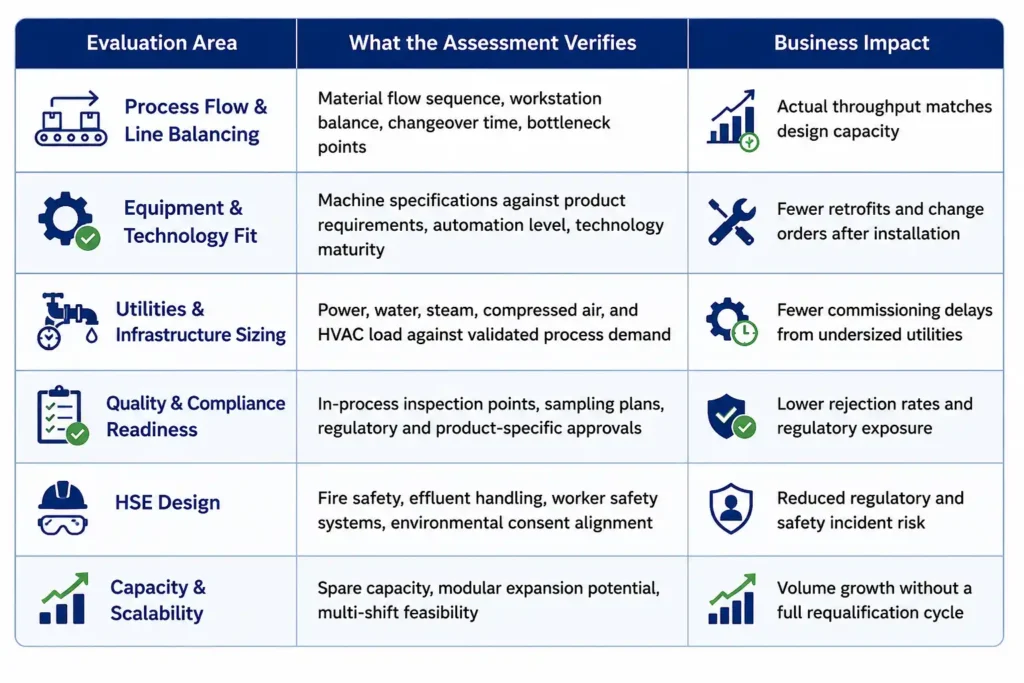
How to Apply These Factors in Practice
Use a simple sequence so that certification choice stays evidence-based:
- List current and target customers and note every standard they require or prefer.
- Map regulatory obligations linked to your sector, location and products.
- Rank process risks (quality failures, safety, environment, data) and identify which standards address them most directly.
- Decide the minimum set that covers customer access, legal needs and highest risks.
- Check internal capacity to implement and maintain the system without creating parallel paperwork.
- Sequence implementation so that foundational systems (often ISO 9001 or sector GMP) come before specialised add-ons.
This approach keeps the plant focused on certifications that deliver market access and operational control rather than a long but underused certificate wall.
How Structured Certification Advisory Supports Better Choices
IMARC Engineering helps manufacturers select and prepare for the right certifications as part of broader operational and compliance readiness.
- Requirement and gap mapping: Clarifying customer, regulatory and process drivers before any standard is selected.
- Prioritisation support: Ranking certifications by commercial impact, legal necessity and risk reduction.
- System design alignment: Ensuring chosen standards strengthen real process control rather than existing only for audits.
- Implementation readiness: Supporting documentation, training and internal audit structures that operators can sustain.
- Multi-standard integration: Avoiding duplicated systems when more than one certification is required.
- Surveillance and improvement linkage: Connecting certification maintenance to ongoing efficiency and quality work.
IMARC Engineering works with manufacturers across pharmaceuticals, food and beverage, chemicals, auto components, electronics, FMCG and discrete industrial production.
Consult IMARC Engineering for Certification Planning and Compliance Support: https://www.imarcengineering.com/contact?service=product-facility-certification-support
Common Mistakes When Selecting Plant Certifications
- Copying a competitor’s certificate list without checking your own customer and regulatory needs
- Starting multiple standards at once without the capacity to maintain them
- Treating certification as a one-time project instead of an operating system
- Ignoring sector-specific or mandatory requirements while pursuing optional ISO standards
- Building procedures that auditors accept but operators do not follow
- Underestimating surveillance audit and internal resource costs over three to five years
Conclusion
India’s manufacturing growth, supported by PLI investments, rising FDI and improving logistics — creates strong opportunities for plants that can demonstrate credible control of quality, safety, environment and sector-specific risks. Certification is one of the main ways that control is verified by customers and regulators.
Choosing the right certification for your manufacturing plant depends on customer requirements, regulatory obligations, process risks, business scale, internal capacity and clear return on effort. A short, well-matched set of standards delivers more value than a long list that exists mainly on paper.
Through requirement mapping, prioritisation, system alignment and implementation support, IMARC Engineering helps manufacturers select and sustain certifications that strengthen market access, compliance and operational performance across India.
Contact Us:
IMARC Engineering
Phone: +91-120-433-0800
Email: sales@imarcengineering.com
India: C-130, Sector 2, Noida, Uttar Pradesh 201301
LinkedIn: https://www.linkedin.com/showcase/imarc-engineering/
About the Author