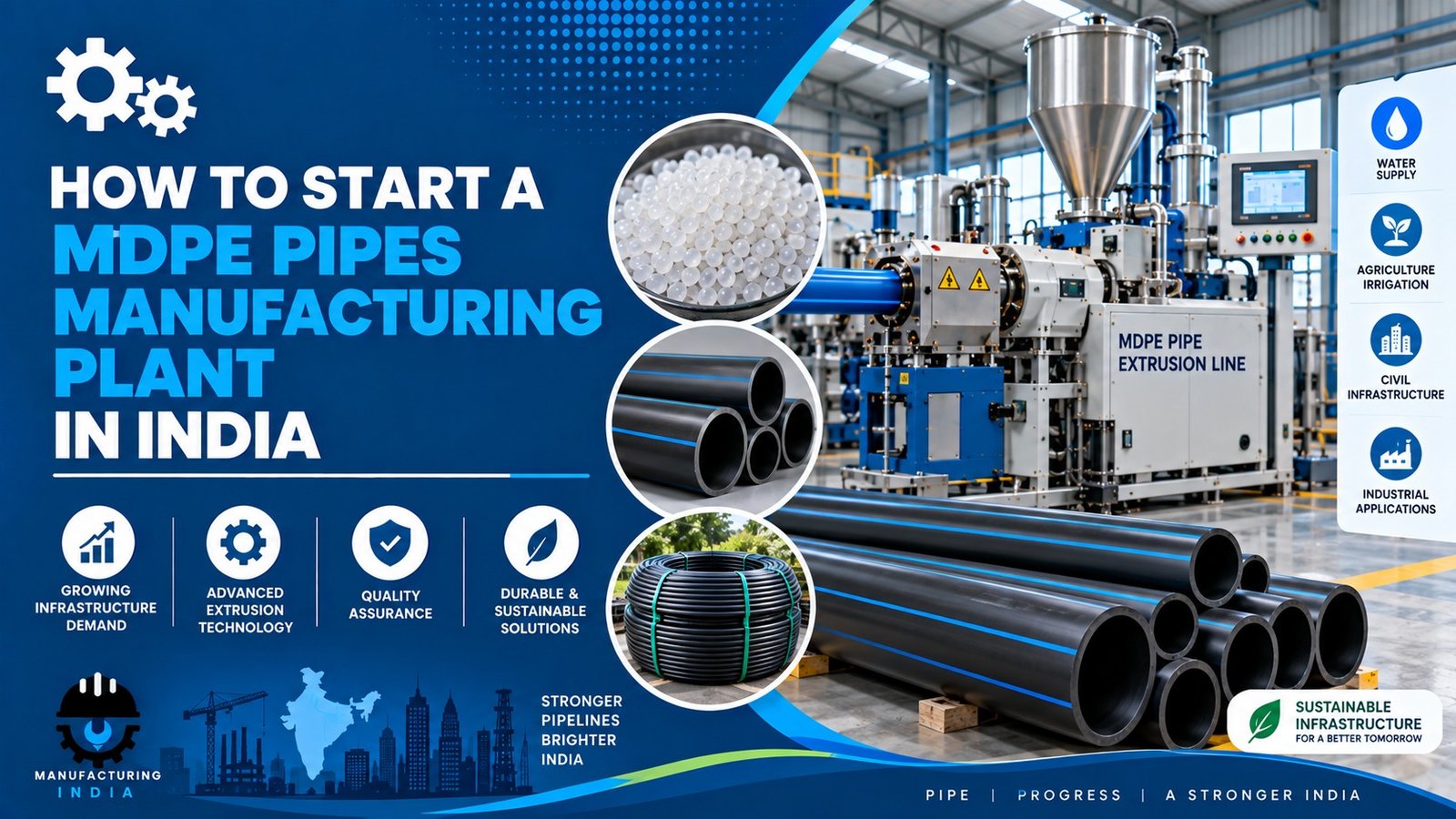
Setting up a MDPE pipes manufacturing plant in India presents a compelling investment case, given demand from construction, plumbing, water infrastructure, gas distribution, irrigation, industrial utilities, and municipal infrastructure. Improvements in polyethylene resins, extrusion processes, jointing systems, and leak detection are steadily raising pipe reliability, making these systems central to modern utility networks.
India’s infrastructure programmes make the country a strategically sound base for this production. Government investment in drinking water supply, rural water infrastructure, city gas distribution, irrigation, wastewater management, and pipeline modernization supports demand, with Jal Jeevan Mission, AMRUT, and expanding city gas distribution networks strengthening the case for polyethylene-based piping.
Backed by a global market valued at USD 6.00 Billion in 2025 growing at a 3.3% CAGR, gross margins of 22–32%, and direct policy support through Jal Jeevan Mission and AMRUT, this investment offers a cost-competitive route into utility piping, with steady demand from water and gas distribution supporting sound break-even viability.
What is MDPE Pipes?
MDPE pipes, or Medium-Density Polyethylene pipes, are flexible, durable plastic pipes used for underground water and gas distribution. Known for high impact resistance and chemical stability, they handle high-pressure environments without cracking or corroding. Their smooth internal surface minimizes friction, ensuring excellent flow rates and preventing sediment buildup. Lightweight and highly flexible, they bend around obstacles easily, reducing the need for joints and fittings during installation. Commonly colour-coded — blue for potable water, yellow for natural gas — they offer a reliable, long-lasting, cost-effective solution for utility infrastructure and municipal pipelines.
The MDPE pipes manufacturing process uses resin blending, extrusion, sizing, cooling, and cutting. This method serves end-use industries such as construction, plumbing, water infrastructure, gas distribution, irrigation, industrial utilities, and municipal infrastructure.
Cost of Setting Up a MDPE Pipes Manufacturing Plant in India
The cost of a MDPE pipes manufacturing plant depends on capacity, technology, location, automation, and regulatory compliance.
1. Capital Expenditure (CapEx)
Capital investment covers land acquisition, site preparation, and infrastructure, optimized through industrial estates or SEZ-linked plots with developed utilities and faster approvals. Civil works cover the production shed, quality-control laboratory, storage areas, and administrative block.
Machinery is the largest portion of capital expenditure for a MDPE pipes manufacturing plant, since equipment costs scale with automation level and capacity. Key machinery required includes:
- Resin blending/mixing units
- Additive dosing systems
- Hopper dryers
- Single-screw extrusion machines
- Extrusion dies
- Vacuum sizing tanks
- Cooling tanks
- Haul-off units
- Pipe cutting machines
- Inspection/testing equipment
- Pipe coiling or stacking systems
Other capital costs include effluent treatment systems, pre-operative and commissioning expenses, and import duties on machinery.
Request a Sample Report for In-Depth Market Insights: https://www.imarcgroup.com/mdpe-pipes-manufacturing-plant-project-report/requestsample
2. Operational Expenditure (OpEx)
Raw material cost dominates at approximately 70–80% of OpEx, comprising MDPE resin and stabilizers. This unusually high share makes long-term supplier contracts essential to stabilize pricing against resin volatility and secure consistent supply.
Utility cost, covering electricity, water, and steam, accounts for approximately 10–15% of OpEx. Other costs include transportation, packaging, salaries, depreciation, taxes, and repairs and maintenance. By the fifth year, operational cost is expected to rise substantially on inflation, market fluctuations, and supply chain disruptions.
3. Plant Capacity
The proposed facility is designed with an annual production capacity of 15,000–35,000 MT, enabling economies of scale while maintaining flexibility. Capacity can be customized to investor requirements, and profitability improves with higher capacity utilisation as fixed costs spread across greater output.
4. Profit Margins and Financial Projections
Financial projections cover net present value (NPV), internal rate of return (IRR), payback period, liquidity, and profitability analysis. Under normal conditions, a MDPE pipes manufacturing plant typically shows gross margins of 22–32% and net margins of 10–16%, reflecting profitability supported by stable demand and value-added applications.
Why Set Up a MDPE Pipes Plant in India?
Crucial Water and Gas Distribution Component: These pipes serve as essential components for water supply, gas distribution, irrigation, drainage, and industrial fluid conveyance, offering flexibility, corrosion resistance, and long service life for modern infrastructure and utility networks.
Moderate but Justifiable Entry Barriers: While requiring lower capital than highly specialized polymer products, stringent quality requirements, precise extrusion and sizing, pressure-rating standards, and certification requirements favour experienced manufacturers focused on quality, durability, and consistent pricing.
Megatrend Alignment: Expansion of urban water infrastructure, natural gas distribution, agricultural irrigation, wastewater networks, and industrial utilities drives consistent demand for lightweight, flexible, corrosion-resistant piping, with investment in water management and gas connectivity supporting long-term opportunities.
Policy and Infrastructure Push: Government investments in drinking water supply, rural water infrastructure, city gas distribution, irrigation, wastewater management, and pipeline modernization support demand, with Jal Jeevan Mission, AMRUT, and expanding city gas distribution networks in India strengthening the underlying case.
Localization and Dependability in Supply Chains: Water utilities, gas distributors, infrastructure contractors, and EPC companies increasingly favour local, dependable pipe manufacturers to shorten lead times, cut transportation costs, and ensure consistent availability, creating openings for regional producers with efficient polymer sourcing.
Urbanisation and Pipeline Replacement: Per UN-Habitat, by 2030 nearly 60% of the world’s population will live in urban areas. Urbanization, replacement of aging metallic pipelines, and lower installation and lifecycle costs versus metal pipes are expected to strengthen demand further.
Manufacturing Process – Step by Step
The MDPE pipes manufacturing process uses resin blending as the primary production method, followed by a series of unit operations, material handling steps, and quality checks.
- Resin Blending: Blending and mixing units and additive dosing systems combine MDPE resin with stabilizers in controlled proportions.
- Drying: Hopper dryers remove residual moisture from the resin blend before it enters the extruder.
- Extrusion: Single-screw extrusion machines melt and force the blend through extrusion dies to form the pipe profile.
- Sizing: Vacuum sizing tanks fix the pipe to its specified diameter and wall thickness.
- Cooling: Cooling tanks bring the extruded pipe down to a stable temperature.
- Haul-Off: Haul-off units draw the pipe through the line at a controlled, consistent speed.
- Cutting: Pipe cutting machines cut the line to specified lengths.
- Inspection and Dispatch: Inspection and testing equipment verifies conformance before coiling or stacking systems prepare output for dispatch to water, gas, and infrastructure end-users.
Key Applications:
These pipes serve a focused set of end-use industries across utility and infrastructure networks:
- Water Supply and Distribution: Potable water pipelines, service connections, and municipal water networks.
- Gas Distribution: Natural gas pipelines, service lines, and low-pressure gas networks.
- Construction and Infrastructure: Underground utility lines, drainage systems, and plumbing applications.
- Agriculture and Irrigation: Irrigation pipelines, water conveyance systems, and agricultural water distribution.
Leading Manufacturers:
Leading manufacturers in this global industry include several companies with extensive manufacturing capacities and diverse application portfolios. Key players include:
- Westwell Polytubes
- Kataria Plastics Private Limited
- KPT Piping System Private Limited
Timeline to Start the Plant:
- Feasibility study and project report preparation
- Land acquisition and site development
- Regulatory approvals and environmental clearances
- Factory licence and fire safety compliance
- Machinery procurement and installation
- Raw material supplier agreements and supply chain setup
- Trial production and quality testing
- Commercial production launch
Licences and Regulatory Requirements:
Starting a MDPE pipes manufacturing unit in India requires several approvals:
- Business registration (Proprietorship, LLP, or Pvt Ltd)
- Factory Licence under the Factories Act
- Environmental Clearance from State Pollution Control Board
- GST Registration
- Fire Safety NOC
- Effluent Treatment Plant (ETP) operational clearance
- Occupational Health and Safety compliance
Key Challenges to Consider:
High Capital Requirements: Machinery is the largest share of capital expenditure, with extrusion lines demanding heavy investment before operations begin.
Raw Material Price Volatility: With resin and stabilizers at 70–80% of OpEx, margins are unusually exposed to polyethylene price movements, making procurement strategy decisive.
Regulatory Compliance: Pressure-rating standards, certification, SOPs, documentation protocols, traceability, and regular audits govern each stage of output.
Competition from Established Players: Westwell Polytubes, Kataria Plastics Private Limited, and KPT Piping System Private Limited hold extensive capacities and diverse application portfolios.
Technology and Quality Pressure: Advances in polyethylene resins, extrusion, jointing systems, and leak detection require sustained investment to keep pace on reliability.
Skilled Manpower: Extrusion, sizing, and quality control require trained personnel for consistent standards.
Frequently Asked Questions:
1. How much does it cost to set up a MDPE pipes manufacturing plant in India?
Cost depends on capacity, automation level, land and site development, and civil works; a detailed CapEx and OpEx breakdown is covered in the full feasibility report.
2. Is MDPE pipes manufacturing profitable in India in 2026?
The facility demonstrates healthy profitability potential, with gross margins of 22–32% and net margins of 10–16% under normal operating conditions.
3. What machinery is required for a MDPE pipes plant in India?
Key machinery includes resin blending/mixing units, additive dosing systems, hopper dryers, single-screw extrusion machines, extrusion dies, vacuum sizing tanks, cooling tanks, haul-off units, pipe cutting machines, inspection/testing equipment, and pipe coiling or stacking systems.
4. What licences and approvals are required to start a MDPE pipes plant in India?
Requirements include business registration, a Factory Licence, Environmental Clearance, GST Registration, Fire Safety NOC, ETP clearance, and occupational health and safety compliance.
5. What raw materials are needed for MDPE pipes manufacturing?
MDPE resin and stabilizers are the primary raw materials.
6. What are the environmental compliance requirements for a MDPE pipes plant in India?
Plants require Environmental Clearance from the State Pollution Control Board, an operational Effluent Treatment Plant, and adherence to emission and safety monitoring standards.
7. What is the best location to set up a MDPE pipes plant in India?
Sites should offer access to raw materials, proximity to target markets, robust transportation and utility infrastructure, and compliance with zoning and environmental regulations.
8. What is the break-even period for this type of plant in India?
Break-even timing depends on capacity utilisation, pricing, and cost structure, assessed through payback period and net present value analysis.
9. What government incentives are available for manufacturers in India?
Incentives vary by state and are typically tied to industrial estate or SEZ location, land and infrastructure support, and regulatory compliance.
Key Takeaways for Investors
A MDPE pipes manufacturing plant offers a compelling opportunity supported by demand from construction, plumbing, water infrastructure, gas distribution, irrigation, industrial utilities, and municipal infrastructure. Financial projections indicate sound viability across capacities of 15,000–35,000 MT annually, with gross margins of 22–32% and net margins of 10–16%. The global market, valued at USD 6.00 Billion in 2025 and expected to reach USD 8.04 Billion by 2034 at a 3.3% CAGR, alongside UN-Habitat’s projection that nearly 60% of the world’s population will be urban by 2030, points to sustained demand from infrastructure modernization and expanding utility networks.
About the Author