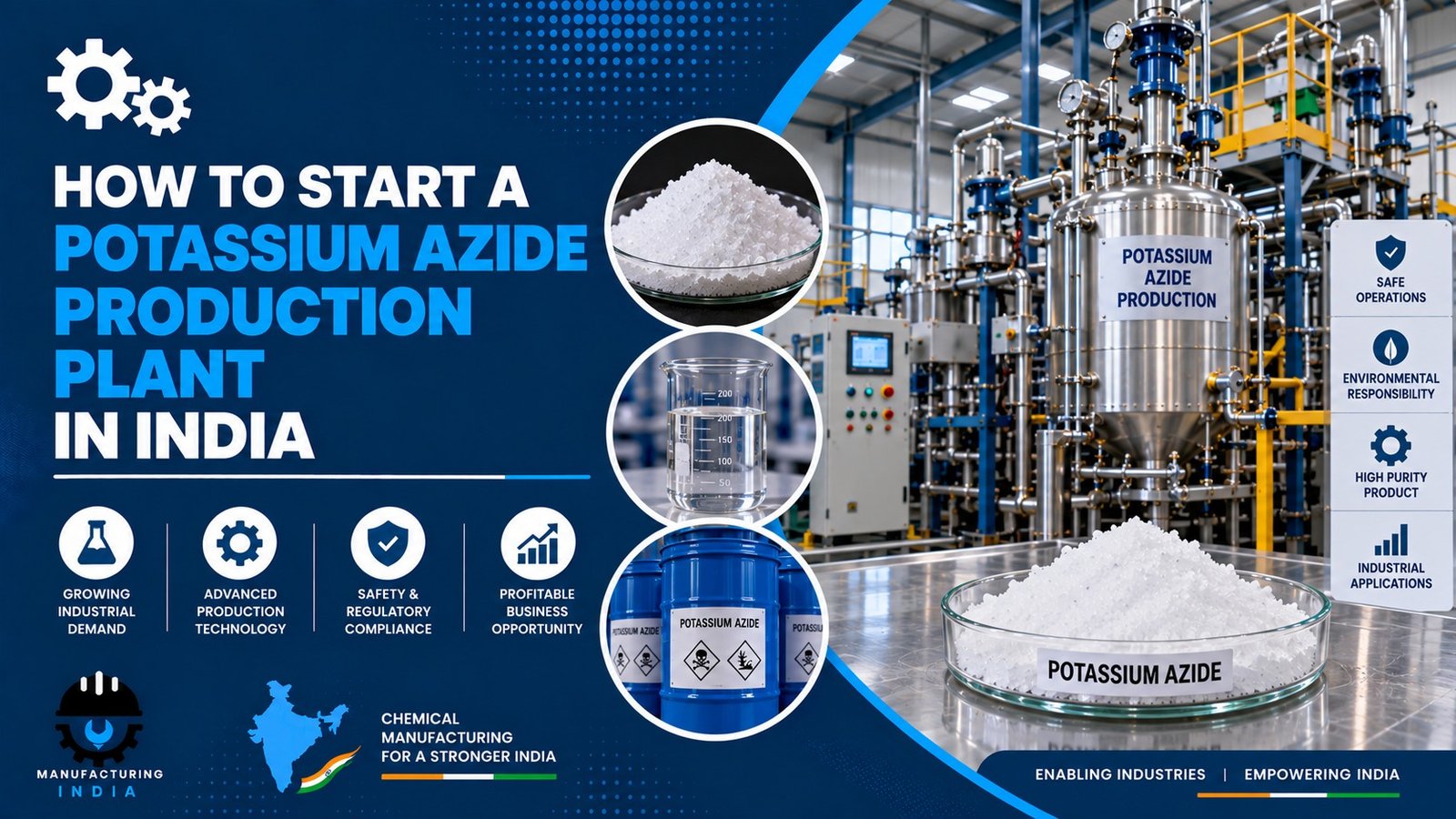
Setting up a potassium azide production plant in India presents a compelling investment case, given demand from chemical production, pharmaceuticals, specialty chemicals, laboratory and research, electronics, and pyrotechnic industries. As a specialized reagent and intermediate used in organic synthesis, it occupies a niche but technically significant position in fine and specialty chemicals.
India’s expanding chemical and research infrastructure makes the country a strategically sound location for this production, with APAC already accounting for about 57.0% of global share. India’s push towards self-reliance, chemical production expansion, and domestic R&D capability indirectly supports niche specialty chemical projects.
Backed by APAC’s dominant 57.0% share of global demand, gross margins of 22–30%, and India’s expanding pharmaceutical and research base, this investment offers a route into high-value specialty reagents — though the reactive nature of azide compounds makes safety infrastructure and regulatory compliance decisive to break-even viability.
What is Potassium Azide?
Potassium azide is an inorganic chemical compound — a white, odorless, water-soluble crystalline salt. It functions primarily as a specialized laboratory reagent used in organic synthesis to produce complex nitrogen compounds. Under high heat or ultraviolet radiation it undergoes rapid thermal decomposition, releasing nitrogen gas. This reactivity governs how the material must be handled, stored, and transported throughout the facility.
The potassium azide production process uses chemical synthesis through a controlled metathesis or ion-exchange reaction, followed by purification, crystallization, filtration, drying, and packaging. This method serves end-use industries such as chemical production, pharmaceuticals, specialty chemicals, laboratory and research, electronics, and pyrotechnic industries.
Cost of Setting Up a Potassium Azide Production Plant in India
The cost of a potassium azide production plant depends on capacity, technology, location, automation, and regulatory compliance.
1. Capital Expenditure (CapEx)
Capital investment covers land acquisition, site preparation, and infrastructure, optimized through industrial estates or SEZ-linked plots with developed utilities. Civil works cover the production shed, laboratory, segregated storage, and administrative block, with separation between storage, production, quality control, and finished goods dictated by safety rather than workflow alone.
Machinery is the largest portion of capital expenditure for a potassium azide production plant, since equipment costs scale with automation level and capacity. Key machinery required includes:
- Chemical reactors
- Controlled reagent feeding systems
- Agitated mixing tanks
- Ion-exchange or reaction vessels
- Crystallizers
- Filtration units
- Centrifuges
- Vacuum dryers
- Material handling systems
- Fume extraction and scrubbing units
- Specialized packaging machines designed for safe handling of azide compounds
Other capital costs include effluent treatment, monitoring systems to detect leaks or process deviations, pre-operative and commissioning expenses, and import duties.
Request a Sample Report for In-Depth Market Insights: https://www.imarcgroup.com/potassium-azide-manufacturing-plant-project-report/requestsample
2. Operational Expenditure (OpEx)
Raw material cost is the largest OpEx component at approximately 45–55%, driven by sodium azide. High-purity specifications and a limited supplier base make long-term contracts important to stabilize pricing and secure supply.
Utility cost, covering electricity, water, and steam, is approximately 12–16% of OpEx. Other costs include transportation, packaging, salaries, depreciation, taxes, and maintenance. By the fifth year, operational cost is expected to rise on inflation, market fluctuations, and supply chain disruptions.
3. Plant Capacity
The proposed facility is designed with an annual production capacity of 200–800 MT, enabling economies of scale while maintaining flexibility. Capacity can be customized to investor requirements, and profitability improves with higher capacity utilisation as fixed costs spread across greater output.
4. Profit Margins and Financial Projections
Financial projections cover net present value (NPV), internal rate of return (IRR), payback period, liquidity, and profitability analysis. Under normal conditions, a potassium azide production plant typically shows gross margins of 22–30% and net margins of 6–12% — the narrow net margin reflecting the safety, monitoring, and compliance infrastructure required.
Why Set Up a Potassium Azide Plant in India?
Strategically Important Specialty Chemical: It is used mainly as a chemical intermediate and laboratory reagent, supporting organic synthesis, specialty chemical production, and research within the fine chemicals industry.
Technical Entry Barriers and Controlled Handling: Production requires stringent process control, specialized handling systems, high-purity inputs, and robust safety infrastructure given the reactive nature of azide compounds. These requirements create meaningful entry barriers favouring experienced manufacturers with strong process engineering and compliance capability.
Growth in Specialty Chemicals and Research Activities: Expanding pharmaceutical and fine chemical research, rising demand for advanced intermediates, and growth in academic and industrial R&D support demand for specialized reagents.
Import Substitution and Domestic Development: Focus on strengthening domestic specialty chemical production and cutting dependence on imported high-value intermediates creates openings for local production.
Localization and Reliable Supply of High-Purity Chemicals: Research institutions, laboratories, and specialty chemical manufacturers value dependable suppliers offering consistent quality, controlled specifications, and reliable delivery, creating openings for regional producers with strong quality systems.
Pharmaceutical Demand Growth: IBEF indicates India’s pharmaceutical market is slated to grow 7–9% in FY26, fueled by domestic demand, product innovation, and expansion into Europe, supporting demand for high-value laboratory reagents.
Production Process – Step by Step
The potassium azide production process uses controlled chemical synthesis as the primary production method, across closed unit operations with quality checks at each stage.
- Controlled Synthesis: Chemical reactors, reagent feeding systems, and agitated mixing tanks carry out the metathesis or ion-exchange reaction under monitored conditions.
- Purification: Ion-exchange or reaction vessels remove impurities to meet specifications.
- Crystallization: Crystallizers bring the purified product out of solution in controlled crystalline form.
- Filtration: Filtration units and centrifuges separate the crystalline product from residual liquor.
- Drying: Vacuum dryers remove residual moisture under controlled conditions.
- Extraction and Scrubbing: Fume extraction and scrubbing units run throughout to contain emissions and maintain a safe working environment.
- Packaging and Dispatch: Specialized packaging machines for azide compounds prepare the product for dispatch to laboratory, pharmaceutical, and specialty chemical customers under applicable transport controls.
Key Applications
This compound serves a focused set of end-use industries centered on research and synthesis:
- Chemical Research and Laboratories: Reagent and intermediate in specialized inorganic and synthetic chemistry applications.
- Pharmaceutical and Fine Chemical Production: Chemical intermediate in the synthesis of selected nitrogen-containing compounds.
- Analytical and Research Applications: Controlled laboratory studies involving azide chemistry and inorganic reactions.
- Specialty Chemical Production: Intermediate for producing other azide-based compounds and specialized formulations.
Leading Producers
Leading producers in this global industry include companies with extensive production capacities and diverse application portfolios. Key players include:
- Sigma-Aldrich
- Fine Chemicals Inc.
- Gujarat Aquatreat Chemicals Pvt. Ltd.
Timeline to Start the Plant
- Feasibility study and project report preparation
- Land acquisition and site development
- Regulatory approvals and environmental clearances
- Factory licence and fire safety compliance
- Machinery procurement and installation
- Raw material supplier agreements and supply chain setup
- Trial production and quality testing
- Commercial production launch
Licences and Regulatory Requirements
Starting a potassium azide production unit in India requires several approvals:
- Business registration (Proprietorship, LLP, or Pvt Ltd)
- Factory Licence under the Factories Act
- Environmental Clearance from State Pollution Control Board
- GST Registration
- Fire Safety NOC
- Hazardous chemical compliance covering manufacture, storage, transport, and import of reactive azide compounds
- Effluent Treatment Plant (ETP) operational clearance
- Occupational Health and Safety compliance
Given the reactive nature of the product, approvals, inspections, and site-specific safety assessments should be treated as a gating item in the project schedule, with professional regulatory support budgeted from the feasibility stage.
Key Challenges to Consider
High Capital and Safety Infrastructure Requirements: Machinery is the largest share of capital expenditure, and the extraction, scrubbing, monitoring, and containment systems required add materially to it.
Raw Material Price Volatility: Feedstock at 45–55% of OpEx, with high-purity specifications and a limited qualified supplier base, leaves margins exposed to input pricing and availability.
Regulatory Compliance: Hazardous chemical rules, SOPs, documentation protocols, traceability, and regular audits govern each stage, with a heavier burden than conventional specialty chemicals.
Competition from Established Players: Sigma-Aldrich, Fine Chemicals Inc., and Gujarat Aquatreat Chemicals Pvt. Ltd. hold extensive production capacities and diverse application portfolios.
Process Safety and Quality Pressure: Manufacturers focus on improving process safety, maintaining high-purity standards, and developing reliable supply chains to serve research and industrial demand.
Skilled Manpower: Reaction control, containment, and quality control require personnel with azide-specific handling competence.
Frequently Asked Questions
1. How much does it cost to set up a potassium azide production plant in India?
Cost depends on capacity, automation, land and site development, civil works, and safety infrastructure; a detailed CapEx and OpEx breakdown is in the full feasibility report.
2. Is potassium azide production profitable in India in 2026?
The facility shows healthy profitability potential, with gross margins of 22–30% and net margins of 6–12% under normal operating conditions.
3. What machinery is required for a potassium azide plant in India?
Key machinery includes chemical reactors, controlled reagent feeding systems, agitated mixing tanks, ion-exchange or reaction vessels, crystallizers, filtration units, centrifuges, vacuum dryers, material handling systems, fume extraction and scrubbing units, and specialized packaging machines for azide compounds.
4. What licences and approvals are required to start a potassium azide plant in India?
Business registration, a Factory Licence, Environmental Clearance, GST Registration, Fire Safety NOC, hazardous chemical compliance, ETP clearance, and occupational health and safety compliance. Specialist regulatory advice is strongly recommended.
5. What raw materials are needed for potassium azide production?
A high-purity azide feedstock, named in the OpEx section above, is the primary input.
6. What are the environmental compliance requirements for a potassium azide plant in India?
Environmental Clearance from the State Pollution Control Board, an operational Effluent Treatment Plant, leak and deviation monitoring, and adherence to emission and safety standards.
7. What is the best location to set up a potassium azide plant in India?
Sites should offer access to raw materials, proximity to target markets, robust transportation, utility and waste management infrastructure, and compliance with zoning and environmental regulations.
8. What is the break-even period for this type of plant in India?
Break-even depends on capacity utilisation, pricing, and cost structure, assessed through payback period and net present value analysis.
9. What government incentives are available for manufacturers in India?
Incentives vary by state and are typically tied to industrial estate or SEZ location, land and infrastructure support, and regulatory compliance.
Key Takeaways for Investors
A potassium azide production plant offers a niche opportunity supported by demand from chemical production, pharmaceuticals, specialty chemicals, laboratory and research, electronics, and pyrotechnic industries. Financial projections indicate viability across capacities of 200–800 MT annually, with gross margins of 22–30% and net margins of 6–12% — returns contingent on sustained investment in process safety. APAC’s roughly 57.0% share of global demand, alongside India’s pharmaceutical market growing 7–9% in FY26 (IBEF), points to steady research and intermediate demand, making this a specialist project best suited to investors with existing chemical process engineering and regulatory capability.
About the Author