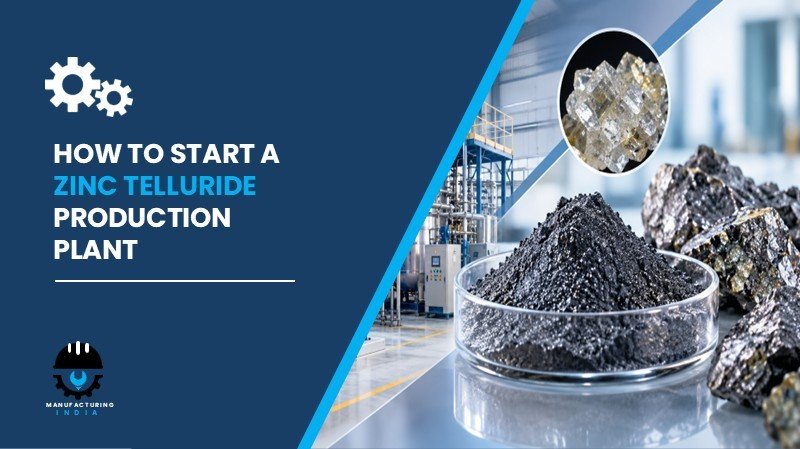
A zinc telluride production plant setup in India presents a compelling investment case, driven by rising demand from the semiconductor, optoelectronics, photovoltaic, infrared technology, thermoelectric, and advanced materials industries. Zinc telluride (ZnTe) is a specialized II-VI compound semiconductor material valued for its role in green LEDs, solar cells, photodetectors, and terahertz radiation generation, making it an important input for India’s expanding electronics and renewable energy ecosystem.
India’s push toward domestic semiconductor and electronics manufacturing, combined with growing infrastructure and R&D investment, strengthens the case for local production of specialized materials. Entrepreneurs evaluating industrial estates, technology parks, or SEZ-linked locations can align with the country’s ambition to reduce dependence on imported high-purity specialty materials, making India a strategically sound base for zinc telluride production.
This is an investment opportunity anchored in India’s growing electronics and semiconductor demand, moderate but justifiable entry barriers, and a gross profit margin of 30-40% with a net margin of 12-20%, positioning this venture for viable break-even economics.
What is Zinc Telluride?
Zinc telluride (ZnTe) is a binary chemical compound composed of zinc and tellurium, classified as a semiconductor material. It typically appears as red or brownish-red crystals and possesses a direct bandgap of approximately 2.26 eV at room temperature, placing its optical properties within the visible green spectrum. This makes it valuable for optoelectronic applications, including green LEDs, solar cells, and photodetectors. Its strong electro-optic effect also makes it a premier material for terahertz (THz) radiation generation and detection via optical rectification.
The zinc telluride production process involves zinc melting/alloying, tellurium addition, reaction/synthesis, cooling, crushing, grinding, and powder processing. The resulting material serves end-use industries including semiconductor, optoelectronics, photovoltaic, infrared technology, thermoelectric, and advanced materials sectors.
Cost of Setting Up a Zinc Telluride Production Plant in India
The cost of setting up a zinc telluride production plant depends on capacity, technology, location, automation level, and regulatory compliance requirements.
1. Capital Expenditure (CapEx)
Land and site development form a substantial part of the overall investment, covering land acquisition, registration, and boundary development; investors can evaluate SEZ zones or industrial estates to streamline approvals. Civil works cover the production shed, quality-control laboratory, storage areas, and the administrative block. Machinery represents the largest single share of capital expenditure for a zinc telluride production plant. Key machinery required includes:
- Zinc melting furnaces
- Powder feeding systems
- Tellurium charging and blending units
- Reaction/synthesis furnaces
- Controlled-atmosphere chambers
- Cooling systems
- Crushers
- Ball mills or pulverizers
- Sieving units
- Powder handling systems
- Packaging machines
Other capital costs include effluent treatment plant (ETP) installation, pre-operative expenses, commissioning costs, and applicable import duties. Scale and automation level ultimately determine the total machinery cost.
Request a Sample Report for In-Depth Market Insights: https://www.imarcgroup.com/zinc-telluride-manufacturing-plant-project-report/requestsample
2. Operational Expenditure (OpEx)
Raw material cost is the dominant component of operating expenses for a zinc telluride production plant, with zinc metal/zinc powder and tellurium together accounting for approximately 60-70% of total OpEx, making long-term supplier contracts important to mitigate price volatility. Utility costs, covering electricity, water, and steam, account for approximately 15-20% of operating expenses. Other operating costs include transportation, packaging, salaries, maintenance, depreciation, and taxes. By the fifth year, total operational cost is expected to rise substantially due to inflation and market fluctuations.
3. Plant Capacity
The proposed zinc telluride production facility is designed with an annual capacity ranging between 50-200 MT, enabling economies of scale with operational flexibility. Capacity can be customized to investor requirements, and profitability generally improves as capacity utilization increases.
4. Profit Margins and Financial Projections
Financial projections are developed based on realistic assumptions covering capital investment, operating costs, capacity utilization, pricing trends, ROI, net present value (NPV), and payback period. Under normal operating conditions, gross profit margins range between 30-40%, while net profit margins range between 12-20%, supported by stable demand across the semiconductor and optoelectronics sectors.
Why Set Up a Zinc Telluride Plant in India?
Crucial Optoelectronic and Semiconductor Material: Zinc telluride is an important II-VI semiconductor material used in optoelectronic devices, infrared and terahertz applications, solar cells, photodetectors, and semiconductor research, positioning it as a specialized material supporting advanced electronics.
Megatrend Alignment: The expansion of optoelectronics, photonics, infrared sensing, terahertz technologies, and renewable energy applications is supporting demand for high-performance compound semiconductor materials, creating opportunities for zinc telluride producers.
Technology and Infrastructure Push: Government and industrial investment in semiconductor manufacturing, electronics production, and research infrastructure indirectly supports demand for materials such as zinc telluride, with initiatives promoting domestic production strengthening opportunities for local units.
Cost-Competitive Production: Zinc telluride production carries moderate but justifiable entry barriers: capital requirements are lower than large-scale semiconductor fabrication, though the process demands high-purity raw materials and stringent quality testing, favouring experienced producers.
Active Industry Investment: In June 2025, a research study published in Electrochimica Acta involved the synthesis of zinc telluride (ZTC) semiconductor composites derived from 3D metal-organic frameworks (MOF) modified with carbon nanotubes (CNTs), with DFT calculations showing enhanced Na+/electron diffusion at the ZTC interface, signaling sustained global research interest.
Localization and Supply-Chain Dependability: Semiconductor, electronics, and research organizations increasingly seek reliable sources of high-purity specialty materials to reduce lead times and disruptions, creating opportunities for regional zinc telluride manufacturers with robust quality control.
Zinc Telluride Production Process – Step by Step
The zinc telluride production process uses zinc melting/alloying, tellurium addition, and controlled reaction/synthesis as the primary method, with the following stages:
- Zinc Melting/Alloying: Zinc metal or zinc powder is melted in zinc melting furnaces as the base feedstock.
- Tellurium Addition: Tellurium is introduced into the molten zinc via tellurium charging and blending units for precise stoichiometric control.
- Reaction/Synthesis: Zinc and tellurium react within reaction/synthesis furnaces under controlled-atmosphere chambers to form zinc telluride.
- Cooling: The reacted material passes through cooling systems to stabilize the compound.
- Crushing: Cooled zinc telluride is broken down using crushers into manageable pieces.
- Grinding and Powder Processing: The crushed material is refined through ball mills or pulverizers and sieving units for the required particle size.
- Handling and Packaging: Finished powder moves through powder handling systems before packaging machines prepare it for dispatch to end-use industries.
Throughout the process, quality assurance criteria and technical tests are applied at each stage to ensure consistent purity and performance.
Key Applications
Zinc telluride serves high-technology industries centered on optoelectronics, energy, electronics, and communications.
- Optoelectronics: Used in photodetectors, infrared optical devices, and semiconductor components.
- Solar Energy: Applied in thin-film solar cells, photovoltaic devices, and solar conversion technologies.
- Electronics: Utilized in semiconductor devices, sensors, and high-speed electronic components.
- Telecommunication: Deployed in infrared optical communication systems, optical sensors, and signal-detection components.
Leading Zinc Telluride Producers
Leading producers in the global zinc telluride industry include multinational companies with diverse application portfolios. Key players include:
- Dien Tech
- AEM Deposition
- Scimplify
These producers serve end-use sectors spanning semiconductor, optoelectronics, photovoltaic, infrared technology, thermoelectric, and advanced materials industries.
Timeline to Start the Plant
Setting up a zinc telluride production plant follows a structured project timeline:
- Feasibility study and project report preparation
- Land acquisition and site development
- Regulatory approvals and environmental clearances
- Factory licence and fire safety compliance
- Machinery procurement and installation
- Raw material supplier agreements and supply chain setup
- Trial production and quality testing
- Commercial production launch
Licences and Regulatory Requirements
Starting a zinc telluride production unit in India requires several approvals:
- Business registration (Proprietorship, LLP, or Pvt Ltd)
- Factory Licence under the Factories Act
- Environmental Clearance from State Pollution Control Board
- GST Registration
- Fire Safety NOC
- Hazardous/Chemical handling compliance, given the use of controlled-atmosphere synthesis and specialty raw materials
- Effluent Treatment Plant (ETP) operational clearance
- Occupational Health and Safety compliance
Key Challenges to Consider
Investors evaluating a zinc telluride production plant should weigh the following challenges:
High Capital Requirements: Machinery costs, including furnaces and controlled-atmosphere chambers, form the largest share of capital expenditure, requiring careful planning before launch.
Raw Material Price Volatility: Zinc metal/zinc powder and tellurium together make up 60-70% of operating expenses, so price fluctuations can materially affect margins.
Regulatory Compliance: Environmental clearances, effluent treatment requirements, and synthesis safety protocols demand ongoing monitoring and documentation.
Purity and Stoichiometric Control: Production demands high-purity raw materials and precise stoichiometric control, favouring experienced producers capable of consistent quality.
Competition: Established players such as Dien Tech, AEM Deposition, and Scimplify compete on production capacity, requiring new entrants to differentiate on quality.
Skilled Manpower: Operating controlled-atmosphere reaction systems and quality assurance protocols requires trained technical personnel.
Frequently Asked Questions
1. How much does it cost to set up a zinc telluride production plant in India?
Cost depends on land and site development, civil works, machinery, and other capital costs; detailed CapEx figures are available through the sample report.
2. Is zinc telluride production profitable in India in 2026?
Yes, the project demonstrates healthy profitability potential, with gross profit margins of 30-40% and net profit margins of 12-20% under normal operating conditions.
3. What machinery is required for a zinc telluride plant in India?
Key machinery includes zinc melting furnaces, powder feeding systems, tellurium charging and blending units, reaction/synthesis furnaces, controlled-atmosphere chambers, cooling systems, crushers, ball mills or pulverizers, sieving units, powder handling systems, and packaging machines.
4. What licences and approvals are required to start a zinc telluride plant in India?
Business registration, Factory Licence, Environmental Clearance, GST Registration, Fire Safety NOC, hazardous/chemical handling compliance, ETP clearance, and Occupational Health and Safety compliance.
5. What raw materials are needed for zinc telluride production?
Zinc metal/zinc powder and tellurium, together accounting for approximately 60-70% of operating costs.
6. What are the environmental compliance requirements for a zinc telluride plant in India?
Environmental Clearance from the State Pollution Control Board, an operational Effluent Treatment Plant, and adherence to emission and safety monitoring standards for the controlled synthesis process.
7. What is the best location to set up a zinc telluride plant in India?
Sites with easy access to zinc metal/zinc powder and tellurium, proximity to target markets, robust infrastructure, and compliance with local zoning and environmental regulations.
8. What is the break-even period for this type of plant in India?
It depends on capacity utilization, pricing trends, and cost structure; detailed payback period and NPV figures are covered in the full financial analysis.
9. What government incentives are available for manufacturers in India?
Government and industrial investment in semiconductor manufacturing, electronics production, and advanced materials infrastructure indirectly supports domestic production of materials such as zinc telluride; scheme-level details should be verified with current policy sources.
Key Takeaways for Investors
A zinc telluride production plant taps into steady India demand from the semiconductor, optoelectronics, photovoltaic, infrared technology, thermoelectric, and advanced materials industries, supported by a global outlook that expects the broader semiconductor market to exceed USD 1.5 trillion by 2035, per NITI Aayog. The project offers financial viability across a 50-200 MT annual capacity range, with gross margins of 30-40% and net margins of 12-20%, while capacity can be scaled to investor requirements. With Asia Pacific accounting for approximately 38.5% of the global zinc telluride market and continued R&D in optoelectronics, space technologies, and high-frequency communication systems, long-term demand for this specialized material appears well positioned to sustain a well-planned facility.
About the Author