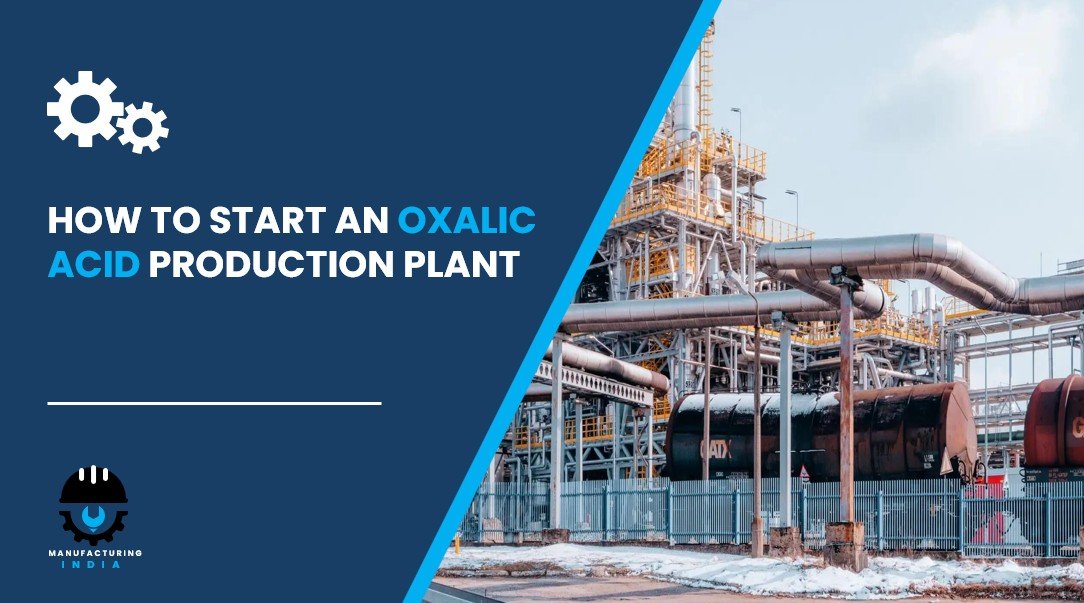
Setting up an oxalic acid production plant cost analysis provides a complete roadmap for establishing an oxalic acid production unit, covering market overview, unit operations, raw material requirements, utility and infrastructure requirements, machinery and technology requirements, manpower requirements, packaging and transportation requirements, capital investments (CapEx), operating expenses (OpEx), income and expenditure projections, and financial analysis. The global oxalic acid market was valued at approximately USD 670.00 Million in 2025 and is expected to reach USD 1,014.71 Million by 2034, exhibiting a CAGR of 4.7% from 2026 to 2034, driven by increasing demand from metal cleaning and processing industries, rising use in rare earth separation, expanding textile bleaching applications, and growing adoption in pharmaceuticals and agrochemicals.
What is Oxalic Acid?
Oxalic acid is an organic dicarboxylic acid widely used in industrial, chemical, and specialty applications due to its strong reducing and chelating properties. It is typically produced through chemical synthesis routes involving oxidation of carbohydrates such as sucrose, glucose, or ethylene glycol, or through nitric acid oxidation processes. In its pure form, oxalic acid appears as a white crystalline solid and is highly soluble in water. It is commonly used in metal cleaning, rust removal, bleaching of textiles and wood, rare earth element processing, pharmaceuticals, and as an intermediate in chemical manufacturing. Various grades of oxalic acid include industrial grade, purified grade, and technical grade, depending on application requirements. Its ability to bind with metal ions makes it highly effective in cleaning and purification processes across multiple industries, ensuring consistent demand in both developed and emerging industrial markets.
Key Investment Highlights
- Process Used: Raw material preparation and oxidation, reaction and crystallization, filtration and purification, drying and milling, packaging and storage.
- End-use Industries: Chemical processing industry, metal cleaning and surface treatment, textile and leather processing, pharmaceutical industry, agrochemical industry.
- Applications: Used for rust removal, bleaching agents, rare earth metal extraction, cleaning formulations, and chemical intermediates.
Request Sample: https://www.imarcgroup.com/oxalic-acid-manufacturing-plant-project-report/requestsample
Oxalic Acid Plant Capacity
The proposed production facility is designed with an annual production capacity ranging between 10,000–30,000 tons, enabling economies of scale while maintaining operational flexibility.
Minimum Cost Required to Set Up an Oxalic Acid Production Plant:
Industry cost benchmarking for oxalic acid manufacturing points to a minimum entry investment of roughly USD 5-8 million for a smaller-scale facility near the lower end of the benchmarked capacity band (around 10,000 tons per annum), reflecting the cost of corrosion-resistant reactors, oxidation systems, crystallizers, centrifuges or filtration units, dryers, milling systems, storage tanks, and packaging infrastructure required for producing consistent industrial-grade oxalic acid. Capital requirements scale from there, reaching around USD 10-18 million for mid-sized plants (approximately 15,000-20,000 tons per annum), and exceeding USD 20-30 million for large-scale, export-oriented facilities at the upper end of the capacity range (25,000-30,000 tons per annum and above), where expanded raw material handling, larger reaction and crystallization systems, automated milling and packaging lines, advanced quality control laboratories, emission-control systems, and effluent treatment infrastructure significantly increase total investment. IMARC’s 2026 report identifies a proposed plant capacity range of 10,000-30,000 tons per annum and highlights reactors, crystallizers, filtration/centrifugation, drying, milling, storage, and packaging as key plant requirements.
Oxalic Acid Plant Profit Margins
The project demonstrates healthy profitability potential under normal operating conditions. Gross profit margins typically range between 25–35%, supported by stable demand and value-added applications.
- Gross Profit: 25–35%
- Net Profit: 12–18%
Oxalic Acid Plant Cost Analysis
The operating cost structure of an oxalic acid plant setup cost in india is primarily driven by raw material consumption, particularly ethylene glycol, which accounts for approximately 60–70% of total operating expenses (OpEx).
- Raw Materials: 60–70% of OpEx
- Utilities: 20–25% of OpEx
Financial Projection
The financial projections for the proposed project have been developed based on realistic assumptions related to capital investment, operating costs, production capacity utilization, pricing trends, and demand outlook. These projections provide a comprehensive view of the project’s financial viability, ROI, profitability, and long-term sustainability.
Major Applications
- Chemical Processing Industry: Used as a key intermediate in multiple organic synthesis reactions and industrial chemical formulations. It supports large-scale chemical manufacturing processes requiring controlled reactivity and high-purity inputs.
- Textile Industry: Applied in bleaching and dyeing processes to improve fabric brightness and remove impurities. It enhances color uniformity and processing efficiency in textile finishing operations.
- Metal Cleaning and Treatment: Used for rust removal, surface polishing, and metal cleaning applications. It helps in restoring metal surfaces and improving corrosion resistance before further processing.
- Rare Earth Processing: Plays a critical role in separating and purifying rare earth elements during extraction processes. It improves yield efficiency and enhances purification accuracy in metallurgical operations.
Why Oxalic Acid Production?
- Rising Industrial Demand: Increasing use across metallurgy, textiles, pharmaceuticals, and chemical industries is driving consistent market demand. It is widely adopted as a multifunctional industrial chemical.
- Strong Industrial Versatility: Its ability to act as a reducing agent and chelating compound makes it highly valuable in multiple process industries. This versatility supports stable long-term consumption.
- Expanding Metal Processing Sector: Growth in metal treatment and rare earth processing industries is creating strong demand for oxalic acid. It is essential in refining and purification operations.
- Cost-Efficient Bulk Production: Established chemical synthesis routes allow efficient large-scale production with optimized operating costs. This supports attractive margins in industrial manufacturing.
- High Export Potential: Demand from global chemical and industrial markets provides strong export opportunities. Asia Pacific remains a key supply hub for international trade.
Speak to an Analyst: https://www.imarcgroup.com/request?type=report&id=11511&flag=C
Oxalic Acid Industry Outlook 2026
The oxalic acid market is witnessing steady expansion driven by increasing industrial applications across metal treatment, chemical synthesis, and rare earth processing sectors. Growing demand from the metallurgy industry, particularly in rust removal and surface finishing applications, is significantly contributing to market growth. Expanding chemical manufacturing activities in the Asia Pacific are further supporting consumption due to cost-efficient production capabilities and strong downstream demand. Additionally, rising utilization in textile bleaching and pharmaceutical intermediate synthesis is strengthening market penetration across multiple industries. Moreover, increasing investments in specialty chemicals and industrial chemicals infrastructure are expected to support long-term market growth. As per IMARC Group estimates, the specialty chemicals market reached USD 805.5 Billion in 2025, creating strong downstream demand across industrial intermediates and performance materials, driving increased utilization of oxalic acid in applications such as metal cleaning, pharmaceuticals, and chemical synthesis.
Leading Oxalic Acid Producers
Leading producers in the global oxalic acid industry include several multinational companies with extensive production capacities and diverse application portfolios. Key players include:
- Mudanjiang Fengda Chemical Co., Ltd.
- Oxaquim
- Merck KGaA
- UBE Industries Ltd.
- Clariant International Limited
- Indian Oxalate Limited
These companies serve end-use sectors such as chemical processing, metallurgy, textiles, pharmaceuticals, and industrial cleaning applications.
How to Setup an Oxalic Acid Production Plant?
Setting up an oxalic acid production plant requires evaluating several key factors, including technological requirements and quality assurance. Some of the critical considerations include:
Detailed Process Flow
The production process is a multi-step operation that involves several unit operations, material handling, and quality checks. Below are the main stages involved in the oxalic acid production process flow:
- Unit Operations Involved
- Mass Balance and Raw Material Requirements
- Quality Assurance Criteria
- Technical Tests
- Site Selection: The location must offer easy access to key raw materials such as ethylene glycol, nitric acid, and air. Proximity to target markets will help minimize distribution costs. The site must have robust infrastructure, including reliable transportation, utilities, and waste management systems. Compliance with local zoning laws and environmental regulations must also be ensured.
- Plant Layout Optimization: The layout should be optimized to enhance workflow efficiency, safety, and minimize material handling. Separate areas for raw material storage, production, quality control, and finished goods storage must be designated. Space for future expansion should be incorporated to accommodate business growth.
- Equipment Selection: High-quality, corrosion-resistant machinery tailored for oxalic acid production must be selected. Essential equipment includes reactors, crystallizers, centrifuges or filtration units, dryers, milling systems, storage tanks, and automated packaging systems. All machinery must comply with industry standards for safety, efficiency, and reliability.
- Raw Material Sourcing: Reliable suppliers must be secured for raw materials like ethylene glycol, nitric acid, and air to ensure consistent production quality. Minimizing transportation costs by selecting nearby suppliers is essential. Sustainability and supply chain risks must be assessed, and long-term contracts should be negotiated to stabilize pricing and ensure a steady supply.
- Safety and Environmental Compliance: Safety protocols must be implemented throughout the production process of oxalic acid. Advanced monitoring systems should be installed to detect leaks or deviations in the process. Effluent treatment systems are necessary to minimize environmental impact and ensure compliance with emission standards.
- Quality Assurance Systems: A comprehensive quality management system should be implemented across all stages of operations to ensure consistent product and service standards. Appropriate testing, monitoring, and validation processes must be established to evaluate performance, safety, reliability, and compliance with applicable regulatory and industry requirements. Standard operating procedures (SOPs), documentation protocols, and traceability mechanisms should be maintained to support transparency, risk management, and continuous improvement.
Project Economics
Establishing and operating an oxalic acid production plant involves various cost components, including:
- Capital Investment: The total capital investment depends on plant capacity, technology, and location. This investment covers land acquisition, site preparation, and necessary infrastructure.
- Equipment Costs: Equipment costs, such as those for reactors, crystallizers, centrifuges or filtration units, dryers, milling systems, storage tanks, and automated packaging systems, represent a significant portion of capital expenditure. The scale of production and automation level will determine the total cost of machinery.
- Raw Material Expenses: Raw materials, including ethylene glycol, nitric acid, and air, are a major part of operating costs. Long-term contracts with reliable suppliers will help mitigate price volatility and ensure a consistent supply of materials.
- Infrastructure and Utilities: Costs associated with land acquisition, construction, and utilities (electricity, water, steam) must be considered in the financial plan.
- Operational Costs: Ongoing expenses for labor, maintenance, quality control, and environmental compliance must be accounted for. Optimizing processes and providing staff training can help control these operational costs.
- Financial Planning: A detailed financial analysis, including income projections, expenditures, and break-even points, must be conducted. This analysis aids in securing funding and formulating a clear financial strategy.
Capital Expenditure (CapEx) and Operational Expenditure (OpEx) Analysis
Capital Investment (CapEx): Machinery costs account for the largest portion of the total capital expenditure. The cost of land and site development, including charges for land registration, boundary development, and other related expenses, forms a substantial part of the overall investment. This allocation ensures a solid foundation for safe and efficient plant operations.
Operating Expenditure (OpEx): In the first year of operations, the operating cost for the oxalic acid production plant is projected to be significant, covering raw materials, utilities, depreciation, taxes, packing, transportation, and repairs and maintenance. By the fifth year, the total operational cost is expected to increase substantially due to factors such as inflation, market fluctuations, and potential rises in the cost of key materials. Additional factors, including supply chain disruptions, rising consumer demand, and shifts in the global economy, are expected to contribute to this increase.
Latest Industry Developments
- February 2026: A research study published by MDPI reported findings on how oxalic acid treatments influenced pomegranate growth, quality traits, and biochemical composition. Preharvest applications at increasing concentrations boost yield, firmness, color, sugars, organic acids, and antioxidant compounds. Notably, fruit treated with the highest dose shows significant rises in malic, ascorbic, and oxalic acid content at harvest.
- October 2025: A research study published by the European Chemistry Societies Publishing highlighted comprehensive catalytic applications developed for organic synthesis, covering oxalic acid’s effectiveness in metal-free reactions, deep eutectic solvent systems, and the construction of diverse heterocyclic scaffolds. The review underscores potential directions in multicomponent reactions and greener pathways centered on oxalic acid.
Key Questions Answered in This Report
- How has the oxalic acid market performed so far and how will it perform in the coming years?
- What is the market segmentation of the global oxalic acid market?
- What is the regional breakup of the global oxalic acid market?
- What are the price trends of various feedstocks in the oxalic acid industry?
- What is the structure of the oxalic acid industry and who are the key players?
- What are the various unit operations involved in an oxalic acid production plant?
- What is the total size of land required for setting up an oxalic acid production plant?
- What is the layout of an oxalic acid production plant?
- What are the machinery requirements for setting up an oxalic acid production plant?
- What are the raw material requirements for setting up an oxalic acid production plant?
- What are the packaging requirements for setting up an oxalic acid production plant?
- What are the transportation requirements for setting up an oxalic acid production plant?
- What are the utility requirements for setting up an oxalic acid production plant?
- What are the human resource requirements for setting up an oxalic acid production plant?
- What are the infrastructure costs for setting up an oxalic acid production plant?
- What are the capital costs for setting up an oxalic acid production plant?
- What are the operating costs for setting up an oxalic acid production plant?
- What should be the pricing mechanism of the final product?
- What will be the income and expenditures for an oxalic acid production plant?
- What is the time required to break even?
- What are the profit projections for setting up an oxalic acid production plant?
- What are the key success and risk factors in the oxalic acid industry?
- What are the key regulatory procedures and requirements for setting up an oxalic acid production plant?
- What are the key certifications required for setting up an oxalic acid production plant?
Buy the full Oxalic Acid Production Plant Cost report: https://www.imarcgroup.com/checkout?id=11511&method=2175
Contact Us
IMARC Group
134 N 4th St. Brooklyn, NY 11249, USA
Email: sales@imarcgroup.com
Tel No: (D) +91 120 433 0800
United States: (+1-201-971-6302)
About the Author