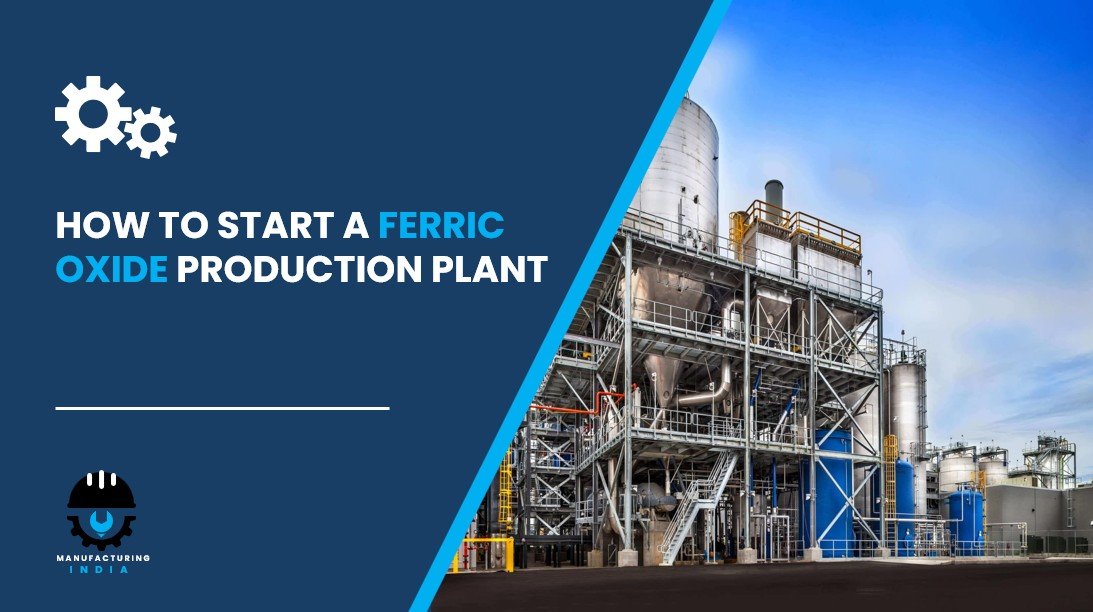
Setting up a ferric oxide plant cost in india represents a highly attractive investment proposition underpinned by robust and structurally growing demand from the construction and infrastructure sector, the paints, coatings, and pigments industry, the steel and metallurgy sector, and expanding applications across ceramics, electronics, and water treatment. As construction activity accelerates across Asia-Pacific, steel producers scale output, and industrial buyers increasingly seek consistent, high-purity pigment and process inputs, ferric oxide produced through precipitation, calcination, and milling occupies an increasingly important position across pigments and coatings, colored construction materials, steelmaking, and specialty industrial applications. This growth trajectory, combined with steady industrial manufacturing expansion and rising demand for reliable regional supply chains, creates a highly favourable manufacturing environment for new entrants with efficient precipitation, filtration, and calcination systems.
What is Ferric Oxide?
Ferric oxide, also known as iron(III) oxide, is a common and highly stable inorganic compound formed when iron reacts with oxygen. It occurs naturally as hematite and is the primary component of rust. It appears as an odorless, reddish-brown solid that is insoluble in water but soluble in strong acids. Because of its vibrant color and safety, it is widely utilized as a pigment in paints, cosmetics, and ceramics. Industrially, ferric oxide remains the primary source of iron for global steel production, and it also serves as a polishing agent for glass and jewelry, a catalyst, and a component in magnetic storage devices.
The ferric oxide market benefits from technological advancements in production methods, including precipitation and thermal synthesis, which enhance particle uniformity and color consistency while reducing energy consumption. According to industrial reports, Asia-Pacific holds the largest share of the global market, accounting for approximately 44.1% of total demand, driven by large-scale construction, steel production, and coatings manufacturing across the region.
Minimum Cost Required to Set Up a Ferric Oxide Production Plant:
Industry cost benchmarking for ferric oxide manufacturing points to a minimum entry investment of roughly USD 2-5 million for a smaller-scale facility near the lower end of the benchmarked capacity band (around 5,000-8,000 tons per annum), reflecting the cost of reaction or oxidation systems, filtration units, dryers, grinding and pulverizing equipment, and material-handling infrastructure required for producing consistent pigment- or industrial-grade ferric oxide. Capital requirements scale from there, reaching around USD 6-12 million for mid-sized plants (approximately 10,000-15,000 tons per annum), and exceeding USD 15-20 million for large-scale, export-oriented facilities at the upper end of the capacity range (20,000 tons per annum and above), where expanded raw material handling, advanced milling and classification systems, automated packaging, quality control laboratories, emission-control systems, and wastewater treatment infrastructure increase total investment significantly.
Ferric Oxide Production Plant Cost
The total capital investment required to establish a ferric oxide production plant is shaped by several key parameters: annual production capacity, the process route adopted (precipitation, calcination, and milling), the level of automation across reaction, filtration, and drying sections, target product grade and purity, facility specification, and applicable regulatory and safety compliance requirements. Below is a structured breakdown of the major cost components.
1. Capital Expenditure (CapEx)
Total capital investment in a ferric oxide production plant covers the following major heads:
Land and Site Development
This encompasses land acquisition or lease, site preparation, boundary development, and utilities connectivity. Site selection should prioritise proximity to sources of iron scrap or ferrous sulfate and reliable sodium hydroxide supply to ensure competitive landed raw material costs, which are the single largest driver of ferric oxide production economics. Access to a consistent water supply for washing and precipitation operations, strong road and logistics connectivity for outbound pigment and industrial dispatch, proximity to steel, paints, and construction material manufacturing clusters, and availability of a trained technical workforce are critical site selection criteria. Compliance with industrial zoning regulations, effluent discharge norms applicable to precipitation and washing operations, and environmental clearance frameworks must be assessed from project initiation.
Civil Works and Construction
Building costs cover the main processing facility including the raw material receiving and storage section, reaction and precipitation hall, filtration and washing area, drying and calcination section, milling and grading facility, quality control laboratory, administrative block, and utility infrastructure including process water systems, effluent treatment, and material handling. Construction must comply with applicable factory act requirements, electrical safety codes, and environmental clearance conditions governing effluent and particulate emissions.
Machinery and Equipment
Machinery represents the single largest CapEx component. Key equipment required for a ferric oxide production plant includes:
- Crushers and Raw Material Handling Systems: Crushing and feeding equipment used to prepare iron scrap or ferrous sulfate feedstock for the reaction stage
- Reaction and Precipitation Vessels: Reactors and precipitation tanks where iron salts are oxidized and precipitated into ferric hydroxide using sodium hydroxide or ammonia and controlled aeration, forming the core production stage of the plant
- Filtration Units: Filter presses or rotary filters that separate precipitated ferric hydroxide from the reaction liquor and wash water
- Drying Ovens: Rotary or tray dryers that reduce the moisture content of the filtered precipitate ahead of calcination
- Calciners: Rotary or muffle calciners that convert dried ferric hydroxide into ferric oxide at controlled high temperatures, determining final color and crystal structure
- Milling Machines: Ball mills or micronizers that grind calcined ferric oxide to the target particle size and fineness required for pigment, coating, or specialty applications
- Quality Control and Testing Equipment: Particle-size analyzers, color measurement instruments, and purity testing equipment to verify compliance with pigment, industrial, and export specifications
- Effluent Treatment Systems: Treatment infrastructure to manage process wastewater and residual liquor generated during precipitation and washing, supporting compliance with pollution control norms
- Packaging Systems: Bagging, weighing, and sealing equipment for dispatch of finished ferric oxide powder to pigment, construction material, and industrial buyers
Other Capital Costs
These include pre-operative expenses, commissioning charges, staff training and competency development, initial working capital for production commissioning, regulatory compliance setup including environmental clearances, and quality management system establishment costs.
Request a Sample Report for In-Depth Market Insights: https://www.imarcgroup.com/ferric-oxide-manufacturing-plant-project-report/requestsample
2. Operational Expenditure (OpEx)
Raw materials, principally sodium hydroxide together with iron scrap or ferrous sulfate, constitute the dominant operating cost, typically representing 48–58% of total OpEx. Utility costs, driven primarily by process heating for calcination, drying, and auxiliary power consumption, account for 9–13% of OpEx. Labour, maintenance, quality control, depreciation, taxes, packaging, transportation, and overhead costs constitute the remainder of the operating cost base.
3. Plant Capacity
The proposed ferric oxide production facility is designed with an annual production capacity of approximately 40,000 MT, enabling economies of scale while maintaining operational flexibility. This capacity supports a diversified offtake portfolio spanning pigments and coatings, construction materials, steel and metallurgy feedstock, and ceramics and glass applications, serving domestic industrial customers and export-oriented buyers alike.
4. Profit Margins and Financial Projections
The project demonstrates healthy profitability potential under normal operating conditions. Financial projections encompass capital investment, operating costs, capacity utilisation ramp-up schedule, raw material sourcing strategy, and forward demand outlook underpinned by construction, steel, and coatings sector growth. A comprehensive feasibility analysis includes sensitivity analysis, Net Present Value (NPV), Internal Rate of Return (IRR), and Payback Period calculations. Gross profit margins for ferric oxide production typically range from 24–32%, supported by stable demand and value-added applications. Net profit margins of 14–20% are achievable with disciplined cost management, optimal capacity utilisation, and effective raw material procurement.
Why Set Up a Ferric Oxide Production Plant?
Essential Industrial and Functional Material
Ferric oxide is a widely utilized inorganic compound serving as a critical raw material in pigments, construction materials, metallurgy, polishing compounds, magnetic materials, catalysts, water treatment, and electronics, positioning it as an indispensable product across diverse industrial value chains.
Moderate but Defensible Entry Barriers
While production technology is relatively mature, maintaining stringent purity standards, particle-size consistency, color stability, process control, and compliance with industrial specifications creates meaningful entry barriers that favor experienced manufacturers with strong quality assurance capabilities.
Alignment with Industrial and Infrastructure Growth
Expanding construction activities, rising steel production, increasing demand for high-performance pigments, growth in water treatment infrastructure, and broader industrial manufacturing are driving sustained demand for ferric oxide products across global markets.
Infrastructure and Manufacturing Policy Support
Government investments in construction, transportation networks, industrial development, environmental management, and domestic manufacturing initiatives indirectly strengthen demand for ferric oxide through its extensive use in building materials, coatings, steelmaking, and treatment applications.
Supply Chain Localization and Reliability Advantage
Manufacturers and industrial consumers are increasingly seeking reliable regional suppliers to ensure consistent product quality, reduce procurement risks, optimize logistics costs, and maintain supply continuity, creating opportunities for domestic ferric oxide producers with efficient operations and dependable sourcing networks.
Manufacturing Process Overview
The ferric oxide production operation transforms iron-bearing feedstock into a fine, stable oxide powder through a sequence of oxidation, precipitation, and thermal processing operations. The key process stages are:
- Raw Material Collection: Iron scrap or ferrous sulfate, along with sodium hydroxide or ammonia and air for oxidation, are received and prepared for the reaction stage
- Oxidation of Iron Salts: Iron salts are oxidized in controlled reaction conditions, converting ferrous iron to the ferric state ahead of precipitation
- Precipitation and Aging: The oxidized iron solution is treated with an alkaline agent to precipitate ferric hydroxide, which is then aged under controlled conditions to develop consistent particle characteristics
- Filtration and Washing: Precipitated ferric hydroxide is filtered and washed to remove residual salts and reaction by-products
- Drying: Washed precipitate is dried to reduce moisture content ahead of thermal conversion
- Calcination: Dried ferric hydroxide is calcined at controlled high temperatures to convert it into ferric oxide, with temperature and duration determining the final color shade and crystal structure
- Grinding and Packaging: Calcined ferric oxide is milled to the target particle size, tested for quality, and packaged for dispatch to pigment, construction material, and industrial buyers
- Quality Control: Particle size, color consistency, and purity are continuously monitored and tested to verify compliance with pigment, industrial, and export specifications before release for dispatch
Key Applications of Ferric Oxide
The ferric oxide market serves several major end-use segments across construction, industrial, and specialty sectors:
- Pigments and Coatings: Used as a red, brown, black, or yellow pigment in paints, industrial coatings, and protective finishes
- Construction Materials: Utilized in colored concrete, cement products, paving blocks, roofing tiles, and bricks
- Steel and Metallurgy: Employed as a raw material in ironmaking, steel production, welding electrodes, and metallurgical processes
- Ceramics and Glass: Used as a coloring agent and functional additive in ceramic products, tiles, enamels, and specialty glass applications
- Magnetic Materials and Catalysts: Applied in ferrite cores, magnetic recording media, catalyst supports, polishing agents, and wastewater treatment processes
Global Ferric Oxide Market Outlook
The ferric oxide market is experiencing steady growth, underpinned by its widespread applications across construction, coatings, pigments, and electronics sectors. Increasing demand in construction and infrastructure projects, particularly in Asia-Pacific, drives consumption of colored concrete, paints, and coatings that rely on ferric oxide for durability and aesthetic appeal. The residential construction sector, which expanded at 6.8% during FY2024-25, is projected to reach USD 350 Billion by 2030, as per industrial reports. Industrial applications in magnetic materials, ceramics, and polishing compounds further reinforce market demand, while the expansion of the electronics and battery sectors provides emerging opportunities for high-purity ferric oxide powders. Environmental regulations and sustainability considerations are prompting manufacturers to adopt cleaner production techniques and optimize resource efficiency. Competitive activity is marked by consolidation among major global players and regional manufacturers focusing on product differentiation, quality, and reliable supply chains.
Ask An Analyst: https://www.imarcgroup.com/request?type=report&id=10154&flag=C
Leading producers in the global ferric oxide industry include Huntsman Corporation, Sumitomo Chemical, Ferro Corporation, and AkzoNobel, serving end-use sectors including construction, paints and coatings, plastics, ceramics, electronics, magnetic materials, and water treatment.
Latest Industry Developments
- June 2025: A study published in Applied Biosciences used an aqueous leaf extract to green-synthesize iron oxide nanoparticles from ferrous sulphate and ferric chloride. The successful synthesis was confirmed through UV–visible spectroscopy, with the reaction mixtures changing color to green-black and reddish-brown for the respective nanoparticles, pointing to emerging low-energy, environmentally friendly synthesis routes for the industry.
Licenses and Regulatory Requirements
Establishing a ferric oxide production unit requires a range of approvals and certifications, which may vary by country and jurisdiction, including:
- Business registration and company incorporation under applicable company law
- Factory License under applicable state Factories Act provisions for manufacturing operations
- Environmental Clearance from the applicable State or Central Pollution Control Board for precipitation, calcination, and effluent discharge operations
- Pollution Control Board Clearances – Consent to Establish (CTE) and Consent to Operate (CTO) for manufacturing operations involving effluent and particulate emission generation
- Electrical Inspectorate approvals for high-temperature calcination and process equipment installations
- ISO 9001:2015 Quality Management System Certification for quality management infrastructure compliance
- ISO 14001 Environmental Management System Certification, where applicable, for environmental compliance across production operations
- Fire Safety Certification from the applicable state fire department for the processing and storage facility
- Export-Import Code (IEC) for international market access
Key Challenges to Consider
Raw Material Price Volatility
Sodium hydroxide and iron feedstock together account for most operating costs, and price volatility in these inputs, driven by broader chemical and metal market cycles, can materially affect production economics. Securing long-term supply contracts and diversified sourcing is a critical project development priority.
Process Control and Product Consistency
Achieving consistent color, particle size, and purity across production batches requires tight control over precipitation, aging, and calcination conditions, and any lapse in process control can affect product acceptance among pigment and industrial buyers with strict specifications.
Effluent and Emission Management
Precipitation and washing operations generate process wastewater and residual liquor that must be treated to meet discharge norms, while calcination generates particulate emissions requiring appropriate control equipment, making continuous investment in environmental compliance infrastructure a non-negotiable operational requirement.
Competitive and Consolidated Market Structure
The global ferric oxide industry includes established multinational players with extensive production capacities and diverse application portfolios, requiring new entrants to differentiate on quality, reliability, and customer service to secure market share.
Capital Intensity and Financing
New entrants must carefully evaluate financing structures, including term loans, government-backed schemes, and equipment leasing arrangements, to manage capital deployment for reaction, calcination, and milling infrastructure while working toward long-term project profitability.
Break-Even Timelines
Break-even timelines for ferric oxide production projects typically range from 3 to 5 years, depending on plant capacity, raw material costs, operational efficiency, and market pricing. Optimized production and strong distribution channels can shorten this period.
Frequently Asked Questions (FAQs)
1. How much capital is required to start a ferric oxide production plant?
Capital requirements generally include land acquisition, construction, equipment procurement, installation, pre-operative expenses, and initial working capital. The total amount varies with capacity, technology, and location. A comprehensive feasibility study from IMARC Group provides detailed, capacity-specific cost estimates covering all CapEx and OpEx components.
2. Is ferric oxide production a profitable business in 2026?
Yes. Sustained demand driven by construction, steel, and coatings sector growth, combined with gross margins of 24–32% and net profit margins of 14–20%, make ferric oxide production financially attractive, particularly for projects that secure competitive raw material contracts and reliable offtake relationships.
3. What raw materials are required for ferric oxide production?
Ferric oxide production requires iron salts such as ferrous sulfate or ferric chloride, along with oxidizing agents like air or hydrogen peroxide. Water and alkaline agents such as ammonia or sodium hydroxide are also used to precipitate and convert iron into ferric oxide.
4. What machinery and equipment are required to start a ferric oxide factory?
A ferric oxide factory typically requires reactors or precipitation tanks, filtration units, drying systems such as rotary or spray dryers, calciners, milling equipment, and storage tanks. Basic laboratory equipment is needed for quality control.
5. How long does it take to start a ferric oxide production plant?
Usually, the timeline can range from 12 to 24 months to start a ferric oxide production plant, depending on factors like site development, equipment procurement, installation, and compliance with environmental and safety standards.
6. What are the biggest challenges in starting a ferric oxide production business?
Challenges may include high capital requirements, securing regulatory approvals, ensuring raw material supply, competition from established producers, skilled manpower availability, and managing operational risks.
7. What licenses and approvals are needed to start a ferric oxide factory?
Typical requirements include business registration, environmental clearances, factory licenses, fire safety certifications, and industry-specific permits. Local, state, or national regulations may apply depending on the location.
8. Who are the top ferric oxide producers in the world?
Leading producers include Huntsman Corporation, Sumitomo Chemical, Ferro Corporation, AkzoNobel, Cathay Industries, Lanxess, Bayferrox, and Toda Kogyo, among others, serving pigment, construction, steel, and specialty industrial buyers globally.
9. What is the cost breakdown of setting up a ferric oxide production plant?
Cost components typically include land and infrastructure, machinery and equipment, building and civil construction, utilities and installation, and working capital, with machinery and raw materials forming the largest shares of CapEx and OpEx respectively.
10. How long does it take to break even in a ferric oxide production business?
Break-even in a ferric oxide production business typically ranges from 3 to 5 years, depending on plant capacity, raw material costs, operational efficiency, and market pricing. Optimized production and strong distribution channels can help accelerate returns.
Key Takeaways for Investors
The ferric oxide production industry represents a structurally resilient and financially attractive investment opportunity positioned at the intersection of steady construction and infrastructure growth, expanding steel production, and rising demand for consistent, high-quality pigment and industrial inputs. Strong underlying demand from Asia-Pacific, which accounts for the largest share of global consumption, combined with moderate but defensible entry barriers around process control and quality assurance, provides a favourable investment environment for new entrants.
The scalable nature of the ferric oxide value chain, from standard pigment-grade production to high-purity specialty applications in electronics and magnetic materials, allows investors to phase capital deployment according to risk appetite and target market positioning, while continued demand from established multinational buyers reflects strong confidence in the long-term growth and profitability of the category.
Contact Us:
IMARC Group
134 N 4th St. Brooklyn, NY 11249, USA
Email: sales@imarcgroup.com
Tel No: (D) +91 120 433 0800
United States: (+1-201-971-6302)
About the Author