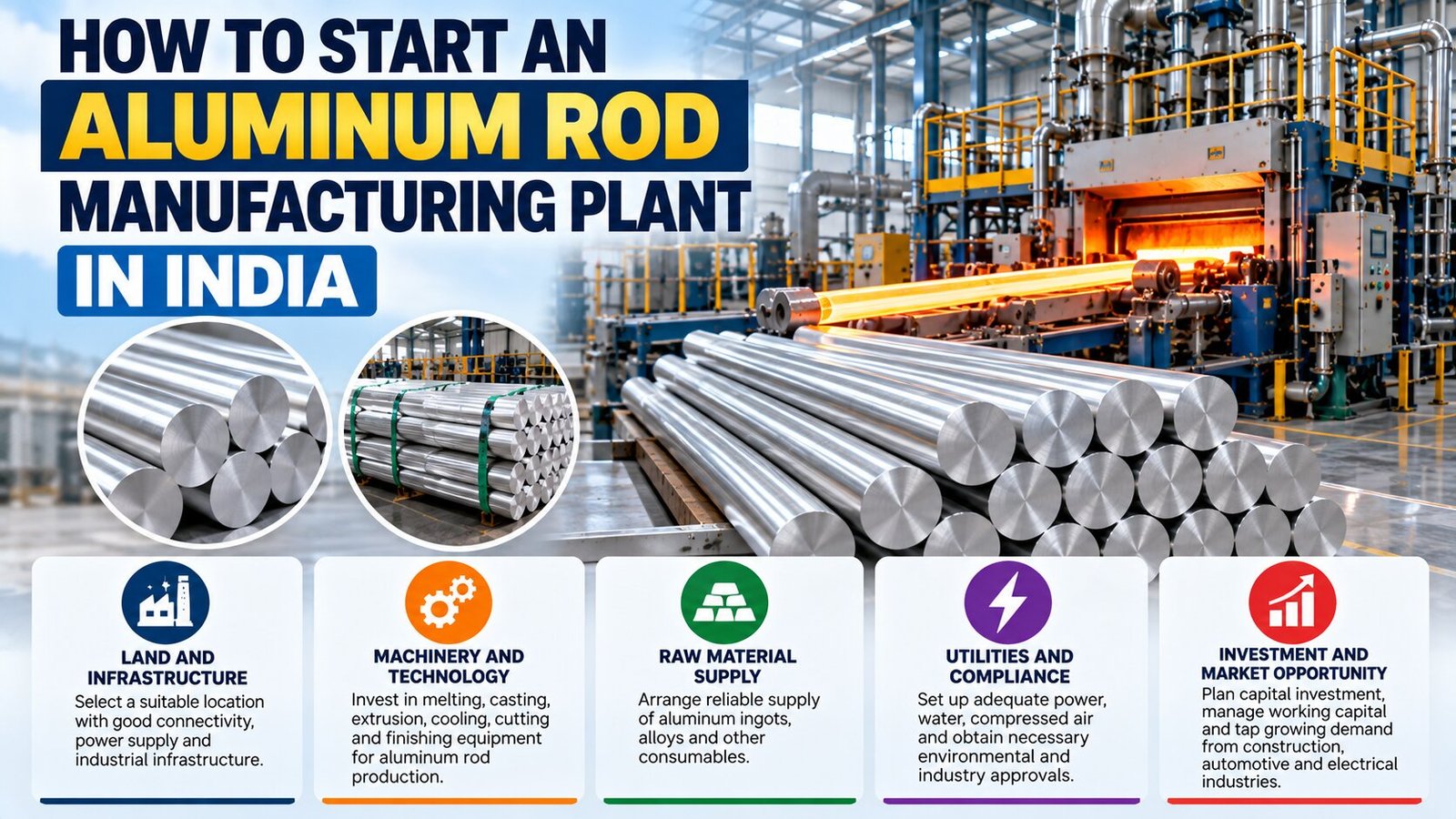
Setting up an aluminum rod manufacturing plant in India presents a compelling investment case, given demand from power transmission and distribution, electrical and electronics, automotive, construction, renewable energy, and industrial machinery sectors. Growing emphasis on sustainable manufacturing and circular economy practices is encouraging the use of recycled aluminum, lowering carbon emissions while supporting resource efficiency.
India’s expanding power and electrical infrastructure positions the country as a strategically sound location for this production, particularly as Asia-Pacific already accounts for over 50% of global share. Government initiatives such as Make in India and PLI schemes for electrical equipment and automotive components are indirectly strengthening demand for this material across downstream industries.
Backed by Asia-Pacific’s dominant share of over 50% of the global market, gross margins of 22–30%, and direct policy support through Make in India and PLI schemes, this investment offers a cost-competitive route into essential electrical-grade metal, with steady demand from power transmission and automotive sectors supporting sound break-even viability.
What is Aluminum Rod?
An aluminum rod is a solid, cylindrical or square-shaped metal piece made from pure aluminum or its alloys. Famous for being very light yet strong, it does not rust easily and handles heat and electricity very well. Workers shape these rods using high heat or pressing tools, and they are used to build cars, airplanes, house windows, and power lines.
The aluminum rod manufacturing process uses continuous casting and rolling as the primary production method. This method serves end-use industries such as power transmission and distribution, electrical and electronics, automotive, construction, renewable energy, and industrial machinery.
Cost of Setting Up an Aluminum Rod Manufacturing Plant in India
The cost of an aluminum rod manufacturing plant depends on capacity, technology, location, automation, and regulatory compliance.
1. Capital Expenditure (CapEx)
Capital investment covers land acquisition, site preparation, and infrastructure, optimized through industrial estates or SEZ-linked plots with developed utilities and faster approvals. Civil works cover the production shed, laboratory, storage areas, and administrative block.
Machinery is the largest portion of capital expenditure for an aluminum rod manufacturing plant, since equipment costs scale with automation level and capacity. Key machinery required includes:
- Melting furnaces
- Alloying systems
- Continuous casting and rolling (CCR) lines
- Rolling mills
- Cooling systems
- Coilers
- Straightening and cutting machines
- Quality inspection systems
- Packaging machines
Other capital costs include effluent treatment systems, monitoring systems to detect leaks or process deviations, pre-operative and commissioning expenses, and import duties on machinery.
Request a Sample Report for In-Depth Market Insights: https://www.imarcgroup.com/aluminum-rod-manufacturing-plant-project-report/requestsample
2. Operational Expenditure (OpEx)
Raw material cost dominates the operating structure at approximately 72–80% of OpEx, driven by aluminium ingots and alloying elements. This unusually high share makes long-term supplier contracts essential to stabilize pricing against aluminium volatility and secure consistent supply.
Utility cost, covering electricity, water, and steam, accounts for approximately 10–14% of OpEx. Other costs include transportation, packaging, salaries, depreciation, taxes, and maintenance. By the fifth year, operational cost is expected to rise on inflation, market fluctuations, and supply chain disruptions.
3. Plant Capacity
The proposed facility is designed with an annual production capacity of 50,000–2,00,000 MT, enabling economies of scale while maintaining flexibility. Capacity can be customized to investor requirements, and profitability improves with higher capacity utilisation as fixed costs spread across greater output.
4. Profit Margins and Financial Projections
Financial projections cover net present value (NPV), internal rate of return (IRR), payback period, liquidity, and profitability analysis. Under normal conditions, an aluminum rod manufacturing plant typically shows gross margins of 22–30% and net margins of 8–14%, reflecting profitability supported by stable demand and value-added applications. An aluminum rod manufacturing plant reaching higher capacity utilisation earlier in its operating life will generally see these margins strengthen over time.
Why Set Up an Aluminum Rod Plant in India?
Critical Industrial Raw Material: These rods are essential semi-finished products used in electrical conductors, power transmission, automotive components, construction materials, and industrial fabrication, positioning them as a key input supporting electrification, lightweight engineering, and infrastructure development.
Moderate but Justifiable Entry Barriers: While less capital-intensive than advanced semiconductor manufacturing, production requires continuous casting and rolling technology, stringent alloy composition control, dimensional accuracy, and customer qualification, favouring experienced manufacturers with efficient operations.
Megatrend Alignment: Rapid expansion of power transmission networks, electric vehicles, renewable energy projects, construction activity, and lightweight transportation is driving sustained demand for high-quality rods, with UN-Habitat projecting nearly 60% of the world’s population will live in urban areas by 2030.
Policy and Infrastructure Push: Government investments in power grid modernization, renewable energy, rail electrification, and urban infrastructure, alongside Make in India and PLI schemes for electrical equipment and automotive components, are indirectly strengthening demand across downstream industries.
Localization and Dependability in Supply Chains: Manufacturers of conductors, cables, automotive components, and industrial products increasingly prefer reliable domestic suppliers to reduce lead times, manage price volatility, and ensure consistent quality, favouring regional producers with integrated sourcing.
Active Industry Investment: In October 2025, Vedanta confirmed its Q2 FY26 results, achieving its highest-ever quarterly aluminum output of 617 kilotons and record quarterly alumina production of 653 kilotons, underscoring the scale of India’s upstream aluminium capacity feeding downstream rod production.
Manufacturing Process – Step by Step
The aluminum rod manufacturing process uses continuous casting and rolling as the primary production method, followed by a series of unit operations, material handling steps, and quality checks.
- Melting: Melting furnaces convert aluminium ingots into molten metal for processing.
- Alloying: Alloying systems introduce alloying elements to achieve the required composition.
- Continuous Casting and Rolling: Continuous casting and rolling lines cast and roll the molten metal into rod form in a single integrated line.
- Rolling: Rolling mills refine the rod to the specified diameter and surface finish.
- Cooling: Cooling systems bring the rod down to a stable, workable temperature.
- Coiling: Coilers wind the finished rod into coils for handling and transport.
- Straightening and Cutting: Straightening and cutting machines bring the product to final dimensions.
- Inspection and Packaging: Quality inspection systems verify conformance before packaging machines prepare output for dispatch to electrical, automotive, and industrial end-users.
Key Applications
This material serves a broad set of end-use industries centered on electrical and structural applications:
- Electrical and Power: Power transmission and distribution conductors, electrical cables, overhead lines, and busbars.
- Automotive: Automotive wiring, EV electrical systems, battery cables, and lightweight electrical components.
- Construction: Building wiring, power distribution systems, architectural electrical applications, and infrastructure projects.
- Industrial Manufacturing: Conductors for transformers, motors, switchgear, cable manufacturing, and general engineering applications.
Leading Manufacturers
Leading manufacturers in this global industry include several multinational companies with extensive manufacturing capacities and diverse application portfolios. Key players include:
- Alcoa Corporation
- Rio Tinto Group
- Norsk Hydro ASA
- RUSAL
- China Hongqiao Group Limited
Timeline to Start the Plant
- Feasibility study and project report preparation
- Land acquisition and site development
- Regulatory approvals and environmental clearances
- Factory licence and fire safety compliance
- Machinery procurement and installation
- Raw material supplier agreements and supply chain setup
- Trial production and quality testing
- Commercial production launch
Licences and Regulatory Requirements
Starting an aluminum rod manufacturing unit in India requires several approvals:
- Business registration (Proprietorship, LLP, or Pvt Ltd)
- Factory Licence under the Factories Act
- Environmental Clearance from State Pollution Control Board
- GST Registration
- Fire Safety NOC
- Effluent Treatment Plant (ETP) operational clearance
- Occupational Health and Safety compliance
Key Challenges to Consider
High Capital Requirements: Machinery is the largest share of capital expenditure, with melting and casting-and-rolling lines demanding heavy investment.
Raw Material Price Volatility: With aluminium ingots at 72–80% of OpEx, margins are unusually exposed to aluminium price movements, making procurement strategy decisive.
Regulatory Compliance: SOPs, documentation protocols, traceability, and regular audits govern each stage, with emission and waste-handling standards adding to the burden.
Competition from Established Players: Alcoa Corporation, Rio Tinto Group, Norsk Hydro ASA, RUSAL, and China Hongqiao Group Limited hold extensive manufacturing capacities.
Technology and Quality Pressure: Manufacturers are adopting advanced alloy formulations and energy-efficient production processes to improve quality and reduce operating costs.
Skilled Manpower: Melting, casting-rolling, and quality control require trained personnel to maintain consistent standards.
Frequently Asked Questions
1. How much does it cost to set up an aluminum rod manufacturing plant in India?
Cost depends on capacity, automation level, land and site development, and civil works; a detailed CapEx and OpEx breakdown is covered in the full feasibility report.
2. Is aluminum rod manufacturing profitable in India in 2026?
The facility demonstrates healthy profitability potential, with gross margins of 22–30% and net margins of 8–14% under normal operating conditions.
3. What machinery is required for an aluminum rod plant in India?
Key machinery includes melting furnaces, alloying systems, continuous casting and rolling (CCR) lines, rolling mills, cooling systems, coilers, straightening and cutting machines, quality inspection systems, and packaging machines.
4. What licences and approvals are required to start an aluminum rod plant in India?
Requirements include business registration, a Factory Licence, Environmental Clearance, GST Registration, Fire Safety NOC, ETP clearance, and occupational health and safety compliance.
5. What raw materials are needed for aluminum rod manufacturing? Aluminium ingots and alloying elements are the primary raw materials.
6. What are the environmental compliance requirements for an aluminum rod plant in India?
Plants require Environmental Clearance from the State Pollution Control Board, an operational Effluent Treatment Plant, and adherence to emission and safety monitoring standards.
7. What is the best location to set up an aluminum rod plant in India?
Sites should offer access to raw materials, proximity to target markets, robust transportation and utility infrastructure, and compliance with zoning and environmental regulations.
8. What is the break-even period for this type of plant in India?
Break-even timing depends on capacity utilisation, pricing, and cost structure, assessed through payback period and net present value analysis.
9. What government incentives are available for manufacturers in India?
Incentives vary by state and are typically tied to industrial estate or SEZ location, land and infrastructure support, and regulatory compliance; Make in India and PLI schemes further support electrical and automotive component manufacturers.
Key Takeaways for Investors
An aluminum rod manufacturing plant offers a compelling opportunity supported by demand from power transmission, electrical and electronics, automotive, construction, renewable energy, and industrial machinery sectors. Financial projections indicate sound viability across capacities of 50,000–2,00,000 MT annually, with gross margins of 22–30% and net margins of 8–14%. Asia-Pacific’s over-50% share of the global market, alongside India’s Make in India and PLI policy support and Vedanta’s record aluminium output, points to sustained demand for this essential electrical-grade metal.
About the Author