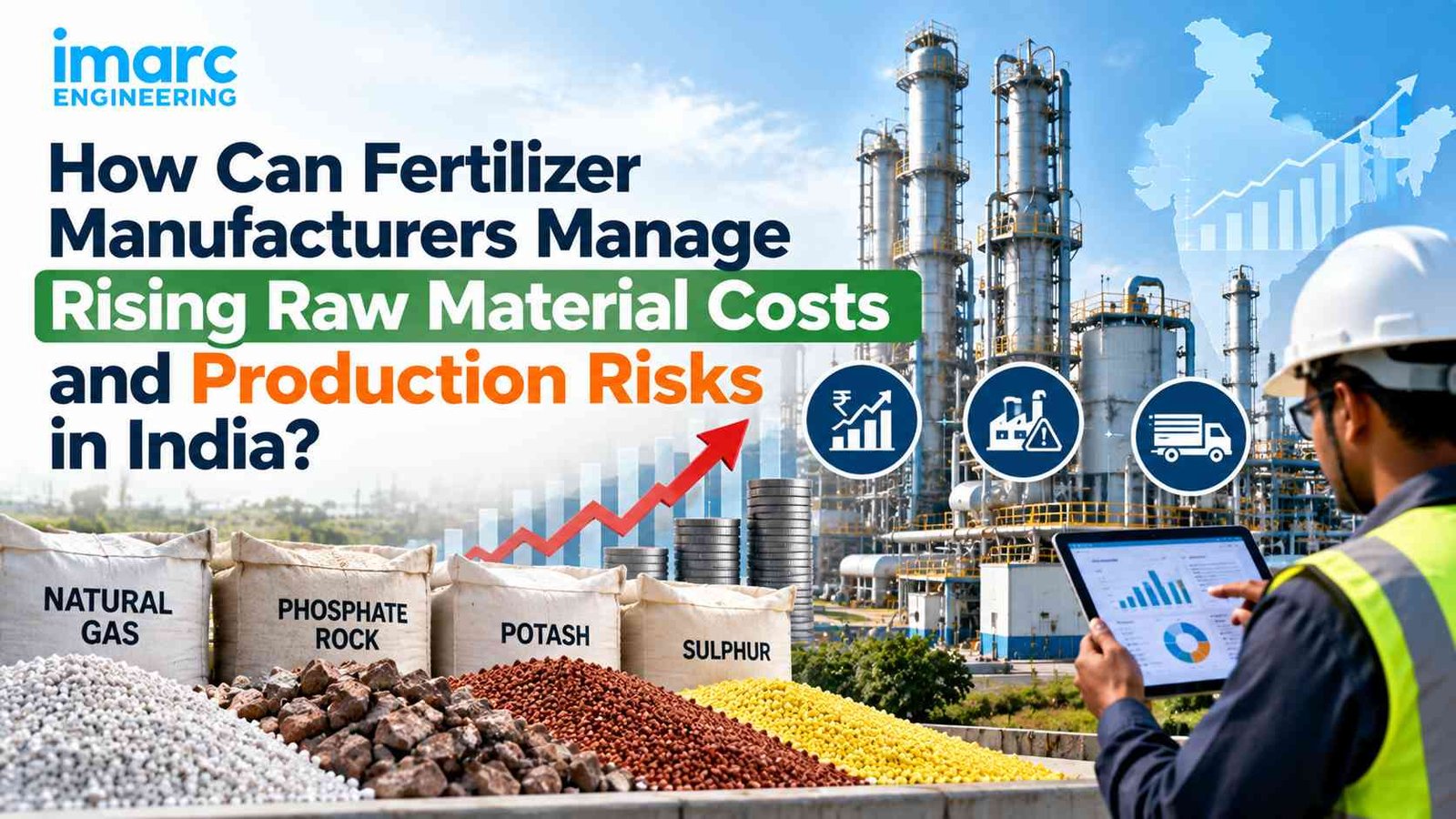
Fertilizer makers in India entered 2026 with a budgeted subsidy of INR 1.71 lakh crore and left the first half dealing with a very different reality. West Asia disruptions cut gas supply, pushed urea import prices to USD 935-959 per tonne by April and, by March, had reduced urea output at several plants by about 50%.
“Quick answer: Fertilizer manufacturers can manage rising raw material costs and production risks by diversifying gas and feedstock sources, signing multi-source supply contracts for sulphur, ammonia and rock phosphate, improving energy efficiency, hedging import and currency exposure, holding safety stock with adequate working capital, and building maintenance and process-safety discipline into operations.”
A structured approach to raw material cost reduction for fertilizer manufacturing starts at the feasibility stage, as feedstock selection, plant location, and utility design can influence costs for decades. Existing plants can also reduce costs, but the greatest savings often come when sourcing strategies and engineering decisions are planned together.
Fertilizer Raw Material Costs and Risks in India: Key Numbers at a Glance
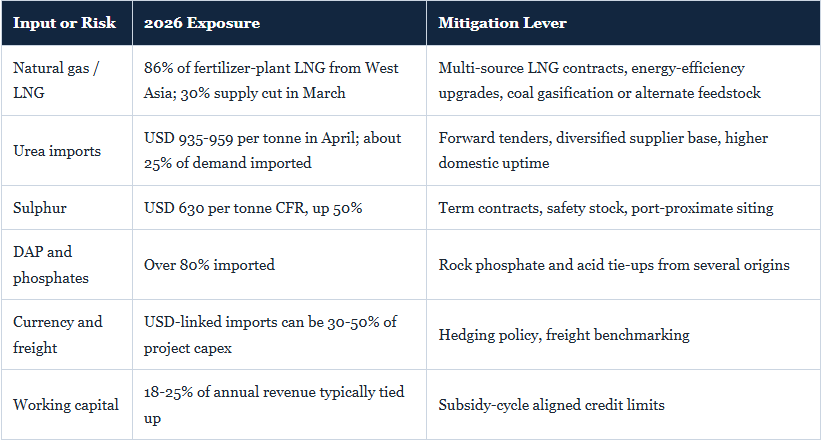
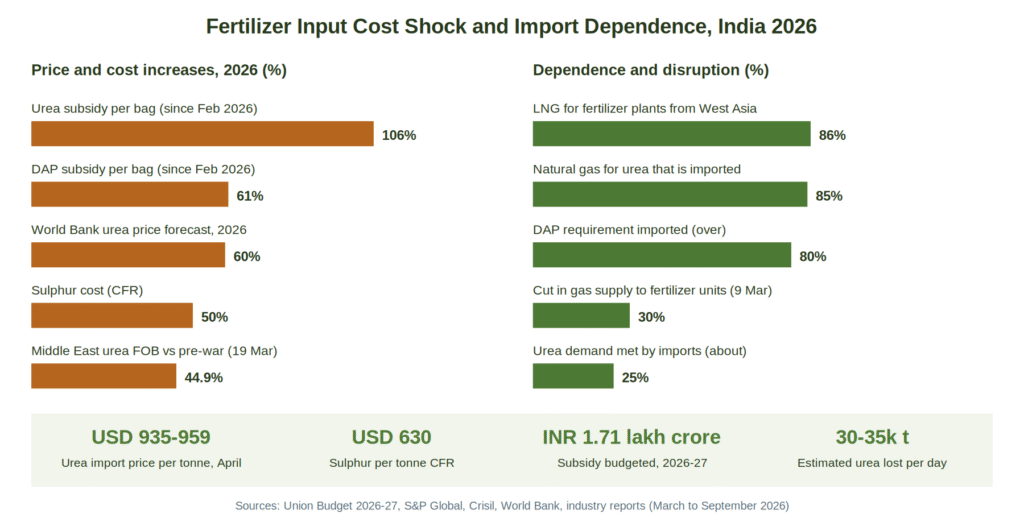
- 86%: share of the LNG needed by Indian fertilizer plants that originates from West Asia
- 30%: cut in gas supply to fertilizer producers announced on 9 March 2026
- USD 935-959 per tonne: reported urea import prices in April 2026, nearly double earlier levels
- USD 630 per tonne: sulphur cost (CFR), up 50%
- INR 1.71 lakh crore: fertilizer subsidy budgeted for 2026-27, with some reports projecting spending beyond INR 3 lakh crore
1. What Is Driving Rising Raw Material Costs for Fertilizer Plants?
Cost pressure in 2026 comes from energy, imported intermediates and logistics at the same time. The main drivers are:
- Natural gas and LNG: about 85% of the natural gas used in domestic urea production is imported, so global LNG shocks reach plant cost directly.
- Urea and ammonia prices: the World Bank projects urea prices to rise nearly 60% in 2026 before easing in 2027, while DAP is projected to rise about 6%.
- Sulphur and phosphates: India imports over 80% of its DAP needs, and sulphur prices have jumped 50%, which raises phosphoric acid and complex fertilizer costs.
- Freight and insurance: the Strait of Hormuz handles about a third of global fertilizer shipments, so route disruption adds freight and delay risk.
- Subsidy gap: urea subsidy per bag has risen to INR 2,775 (up 106% since February 2026) and DAP to INR 3,523 (up 61%), widening the gap between cost and fixed farm prices.
2. Which Production Risks Hurt Fertilizer Manufacturers Most?
Gas supply is the largest operational risk. When gas supply was cut in March 2026, urea output fell by roughly 50% at some plants, and industry estimates put the loss at 30,000-35,000 tonnes per day. Large train-based ammonia-urea plants cannot ramp load up and down quickly, so sudden curtailments cause both lost output and equipment stress.
3. How Can Manufacturers Reduce Raw Material Costs?
- Diversify feedstock: combine pooled gas, spot LNG and, where feasible, coal gasification, as the Talcher urea project does.
- Use multi-source, multi-year contracts for sulphur, ammonia and rock phosphate so one disrupted origin does not stop a line.
- Benchmark procurement: compare supplier quotes against landed-cost indices, freight and payment terms before each tender.
- Improve energy efficiency: urea subsidy is linked to energy norms, so lower gas use per tonne protects both margin and eligibility.
- Cut logistics cost: locate plants near ports, gas pipelines and consuming states, and optimise rail and road dispatch.
- Hedge currency exposure on USD-denominated equipment and raw material imports.
4. How Can Plants Build Resilience Against Supply Shocks?
- Hold calibrated safety stock of sulphur, ammonia and phosphate inputs, funded by working capital planned at 18-25% of annual revenue.
- Design for flexibility, including turndown capability, dual-fuel options and renewable power agreements for captive power.
- Run preventive maintenance and planned shutdowns when gas is curtailed instead of risking unplanned trips.
- Track subsidy receivables closely, because delayed payments strain cash exactly when input costs rise.
- Integrate HAZOP, process safety management and MSIHC compliance so cost-saving measures never weaken safety.
How IMARC Engineering’s Expertise Can Help Fertilizer Manufacturers Manage Cost and Production Risk
- Procurement strategy and cost benchmarking for gas, sulphur, ammonia and phosphate inputs
- Supplier identification, evaluation and vendor audits across multiple origins
- Utility cost and energy efficiency audits to lower gas consumption per tonne
- CapEx and OpEx planning with currency and freight scenarios
- Risk assessment, preventive maintenance planning and operational readiness support
- Feasibility studies and feedstock strategy for greenfield and expansion projects
Get in Touch With Our Team: https://www.imarcengineering.com/contact-us
Conclusion
Rising raw material costs in 2026 have shown that fertilizer margins depend as much on sourcing and engineering decisions as on subsidy policy. Manufacturers that diversify gas and input supply, benchmark procurement, improve energy efficiency and plan working capital for shocks will protect output and cash flow. The strongest results come from addressing feedstock risk at design stage, then maintaining discipline in operations.
Contact Us:
IMARC Engineering
Phone: +91-120-433-0800
Email: sales@imarcengineering.com
India: C-130, Sector 2, Noida, Uttar Pradesh 201301
LinkedIn: https://www.linkedin.com/showcase/imarc-engineering/
About the Author