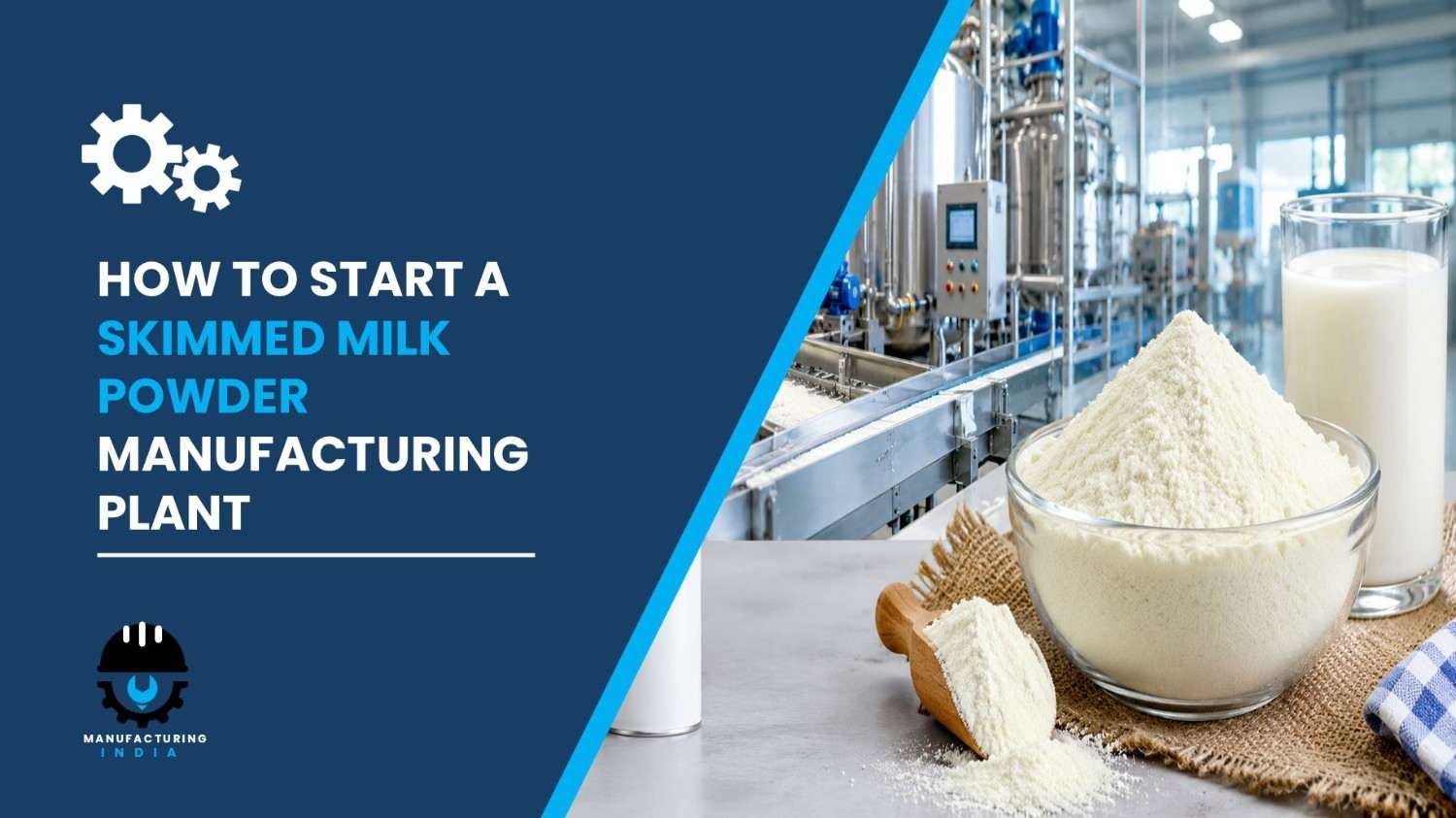
A skimmed milk powder manufacturing plant setup in India presents a compelling investment case for entrepreneurs and dairy processors seeking a shelf-stable ingredient with wide industrial demand. SMP serves food and beverages, dairy processing, bakery and confectionery, infant nutrition, nutritional supplements, and foodservice. These sectors rely on it as an essential dairy ingredient, and rising export demand from major dairy-producing regions keeps global consumption firm.
India offers a supportive backdrop for this production. Increasing urbanization, higher protein consumption, and expanding use of fortified and functional foods are lifting demand across emerging economies. Government initiatives supporting dairy infrastructure, milk processing capacity, cold chain development, farmer cooperatives, export promotion, and food processing, including dairy development schemes and the Make in India initiative, strengthen the growth outlook. Together, these factors make India a strategically sound base for a skimmed milk powder manufacturing plant.
The investment case rests on policy support for dairy infrastructure, steady demand from food, bakery, beverage, and infant nutrition sectors, and the economies of scale available at 10,000-50,000 MT of annual capacity. With a gross margin of 10-18% and a net margin of 3-8%, the project offers healthy profitability under normal operating conditions, and a feasibility study can establish its break-even viability.
What is Skimmed Milk Powder?
Skimmed milk powder (SMP) is a shelf-stable dairy product made by extracting water and fat from pasteurized cow’s milk. It contains less than 1.5% fat yet retains high levels of protein, calcium, and lactose, which makes it a versatile, low-calorie ingredient used in commercial baking, confectionery, and emergency food reserves.
The skimmed milk powder manufacturing process combines pasteurization, evaporation, spray drying, cooling, sieving, and packaging. The finished powder serves food and beverages, dairy processing, bakery and confectionery, infant nutrition, nutritional supplements, and foodservice.
Cost of Setting Up a Skimmed Milk Powder Manufacturing Plant in India
The cost of a skimmed milk powder manufacturing plant depends on capacity, technology, location, automation, and regulatory compliance.
1. Capital Expenditure (CapEx)
Land and Site Development: The cost of land, including land registration and boundary development, forms a substantial part of the overall investment. The site should offer easy access to fresh skim milk, reliable transportation, utilities, and waste management systems, and it must comply with local zoning laws and environmental regulations.
Civil Works: Construction covers separate areas for raw material storage, manufacturing, quality control, and finished goods storage, with space reserved for future expansion.
Machinery and Equipment: Machinery accounts for the largest portion of total capital expenditure. Key machinery required includes:
- Milk storage tanks
- Pasteurizers
- Evaporators
- Spray dryers
- Fluidized bed coolers
- Sieving machines
- Powder conveying systems
- Storage silos
- Packaging machines
The scale of production and the level of automation determine the total machinery cost, and all equipment should be corrosion-resistant and meet industry standards for safety, efficiency, and reliability.
Other Capital Costs: These include effluent treatment systems, which are necessary to limit environmental impact and meet emission standards.
Request a Sample Report for In-Depth Market Insights: https://www.imarcgroup.com/skimmed-milk-powder-manufacturing-plant-project-report/requestsample
2. Operational Expenditure (OpEx)
Raw Material Cost: Fresh skim milk is the principal input and accounts for approximately 75-82% of total operating expenses. Long-term contracts with reliable, nearby suppliers help stabilize pricing, secure steady supply, and keep transportation costs low.
Utility Cost: Electricity, water, and steam together account for 12-16% of OpEx.
Other Operating Costs: The remaining costs cover transportation, packaging, salaries and wages, repairs and maintenance, depreciation, and taxes.
By the fifth year of operations, total operating cost is expected to rise substantially because of inflation, market fluctuations, potential increases in key material costs, supply chain disruptions, rising consumer demand, and shifts in the global economy.
3. Plant Capacity
The proposed facility is designed for an annual capacity of 10,000-50,000 MT, which enables economies of scale while keeping operations flexible. Capacity can be customized to investor requirements, and profitability improves with higher capacity utilization.
4. Profit Margins and Financial Projections
Gross profit margins typically range between 10-18%, supported by stable demand and value-added applications, while net profit margins range between 3-8%. A full financial analysis covers income and expenditure projections, payback period, net present value (NPV), internal rate of return (IRR), liquidity and profitability analysis, and sensitivity analysis.
Why Set Up a Skimmed Milk Powder Plant in India?
Wide Industrial Demand: SMP is a key ingredient across food processing, bakery, confectionery, dairy products, infant nutrition, beverages, and nutritional supplements.
Rising Demand for Protein and Convenience Foods: Growing demand for protein-rich foods, convenience products, functional nutrition, infant formula, and packaged dairy products, together with expanding exports and rising consumption in emerging markets, supports sustained growth. The global market is expected to reach USD 22.1 Billion by 2034, at a CAGR of 5.45% from 2026 to 2034.
Policy and Regulatory Tailwinds: Government support for dairy infrastructure, milk processing capacity, cold chain development, farmer cooperatives, export promotion, and food processing, including dairy development schemes and Make in India, strengthens the prospects for a new skimmed milk powder manufacturing plant.
Cost-Competitive Manufacturing: Locating near fresh skim milk and target markets lowers transportation and distribution costs.
Active Industry Investment: Producers are investing in advanced spray-drying technologies, energy-efficient processing systems, and digital quality monitoring. In October 2025, Midland Farms announced Thr5ve 1.5 Low-Fat Milk, a fresh milk product enriched with DHA Omega-3s and fortified with skim powder.
Local Supply Chain Preference: Food manufacturers and dairy processors increasingly prefer dependable domestic suppliers for consistent quality, lower transportation costs, and supply continuity, which opens opportunities for regional producers with integrated sourcing.
Manufacturing Process: Step by Step
The skimmed milk powder manufacturing process uses pasteurization, evaporation, and spray drying as the primary production method.
- Raw Milk Storage: Fresh skim milk is held in milk storage tanks ahead of processing.
- Pasteurization: Pasteurizers heat-treat the milk.
- Evaporation: Evaporators remove water to concentrate the milk.
- Spray Drying: Spray dryers convert the concentrate into powder.
- Cooling: Fluidized bed coolers cool the powder.
- Sieving: Sieving machines grade the powder for consistency.
- Conveying and Storage: Powder conveying systems move the product to storage silos.
- Packaging and Dispatch: Packaging machines pack the powder for dispatch to end-use industries.
Key Applications
SMP serves several industries that value its protein, calcium, and shelf stability.
- Dairy and Food Processing: Reconstituted milk, yogurt, ice cream, cheese, and other dairy-based products.
- Bakery and Confectionery: Cakes, biscuits, chocolates, desserts, and bakery premixes.
- Infant Nutrition and Health Foods: Infant formula, nutritional supplements, protein powders, and fortified food products.
- Beverage and Convenience Foods: Milk-based beverages, instant drink mixes, ready-to-eat foods, soups, and sauces.
Leading Manufacturers
The global industry includes multinational companies with extensive capacities and diverse application portfolios. Key players include:
- Fonterra Co-operative Group
- Lactalis Group
- Nestlé S.A.
- Arla Foods amba
- FrieslandCampina N.V.
Timeline to Start the Plant
- Feasibility study and project report preparation
- Land acquisition and site development
- Regulatory approvals and environmental clearances
- Factory licence and fire safety compliance
- Machinery procurement and installation
- Raw material supplier agreements and supply chain setup
- Trial production and quality testing
- Commercial production launch
Licences and Regulatory Requirements
Starting a skimmed milk powder manufacturing unit in India requires several approvals:
- Business registration (Proprietorship, LLP, or Pvt Ltd)
- Factory Licence under the Factories Act
- Environmental Clearance from State Pollution Control Board
- GST Registration
- Fire Safety NOC
- Food safety certifications and quality standards compliance
- Effluent Treatment Plant (ETP) operational clearance
- Occupational Health and Safety compliance
Key Challenges to Consider
- High Capital Requirements: Machinery carries the largest share of CapEx, and land and site development add substantially to the investment.
- Raw Material Price Volatility: Fresh skim milk makes up 75-82% of OpEx, so price swings and fluctuations in fresh milk availability directly affect margins.
- Regulatory Compliance: Stringent quality standards, hygienic processing, food safety certifications, and environmental rules create entry barriers that favour experienced manufacturers.
- Technology Pressure: Advanced spray drying, energy-efficient systems, and digital quality monitoring are becoming standard expectations.
- Competition: Established players such as Fonterra Co-operative Group, Lactalis Group, Nestlé S.A., Arla Foods amba, and FrieslandCampina N.V. operate at scale.
- Skilled Manpower: Trained staff are needed to run the process and maintain quality.
Frequently Asked Questions
1. How much does it cost to set up a skimmed milk powder manufacturing plant in India?
The cost depends on capacity, technology, and location, and covers land, civil works, machinery, and other capital costs. Machinery is the largest portion.
2. Is skimmed milk powder manufacturing profitable in India in 2026?
Gross margins typically range between 10-18% and net margins between 3-8% under normal operating conditions.
3. What machinery is required for a skimmed milk powder plant in India?
Milk storage tanks, pasteurizers, evaporators, spray dryers, fluidized bed coolers, sieving machines, powder conveying systems, storage silos, and packaging machines.
4. What licences and approvals are required to start a skimmed milk powder plant in India?
Business registration, Factory Licence, Environmental Clearance, GST Registration, Fire Safety NOC, food safety certifications, ETP clearance, and occupational health and safety compliance.
5. What raw materials are needed for skimmed milk powder manufacturing?
Fresh skim milk is the principal raw material, at approximately 75-82% of OpEx.
6. What are the environmental compliance requirements for a skimmed milk powder plant in India?
Compliance with local zoning laws and environmental regulations, effluent treatment systems, and monitoring systems that detect leaks or deviations.
7. What is the best location to set up a skimmed milk powder plant in India?
A site with easy access to fresh skim milk, proximity to target markets, reliable transportation, utilities, and waste management systems, and room for expansion.
8. What is the break-even period for this type of plant in India?
It depends on capacity, utilization, and pricing. The financial analysis covers break-even points, payback period, NPV, and IRR.
9. What government incentives are available for manufacturers in India?
Dairy development schemes and the Make in India initiative support dairy infrastructure, milk processing capacity, cold chain development, farmer cooperatives, export promotion, and food processing.
Key Takeaways for Investors
The investment opportunity is supported by steady demand from food and beverages, dairy processing, bakery and confectionery, infant nutrition, and nutritional supplements. Financial viability of a skimmed milk powder manufacturing plant holds across capacities of 10,000-50,000 MT, with gross margins of 10-18% and net margins of 3-8%. The global market, valued at USD 13.6 Billion in 2025, is expected to reach USD 22.1 Billion by 2034 at a CAGR of 5.45%. Rising protein consumption, convenience foods, and expanding exports should keep demand durable for years to come.
About the Author