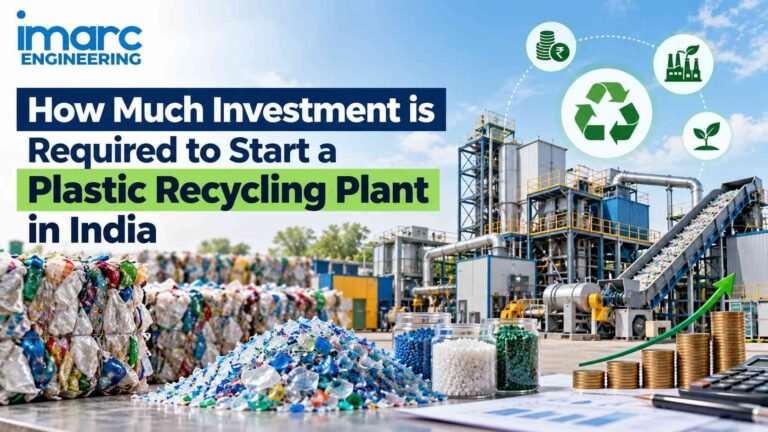
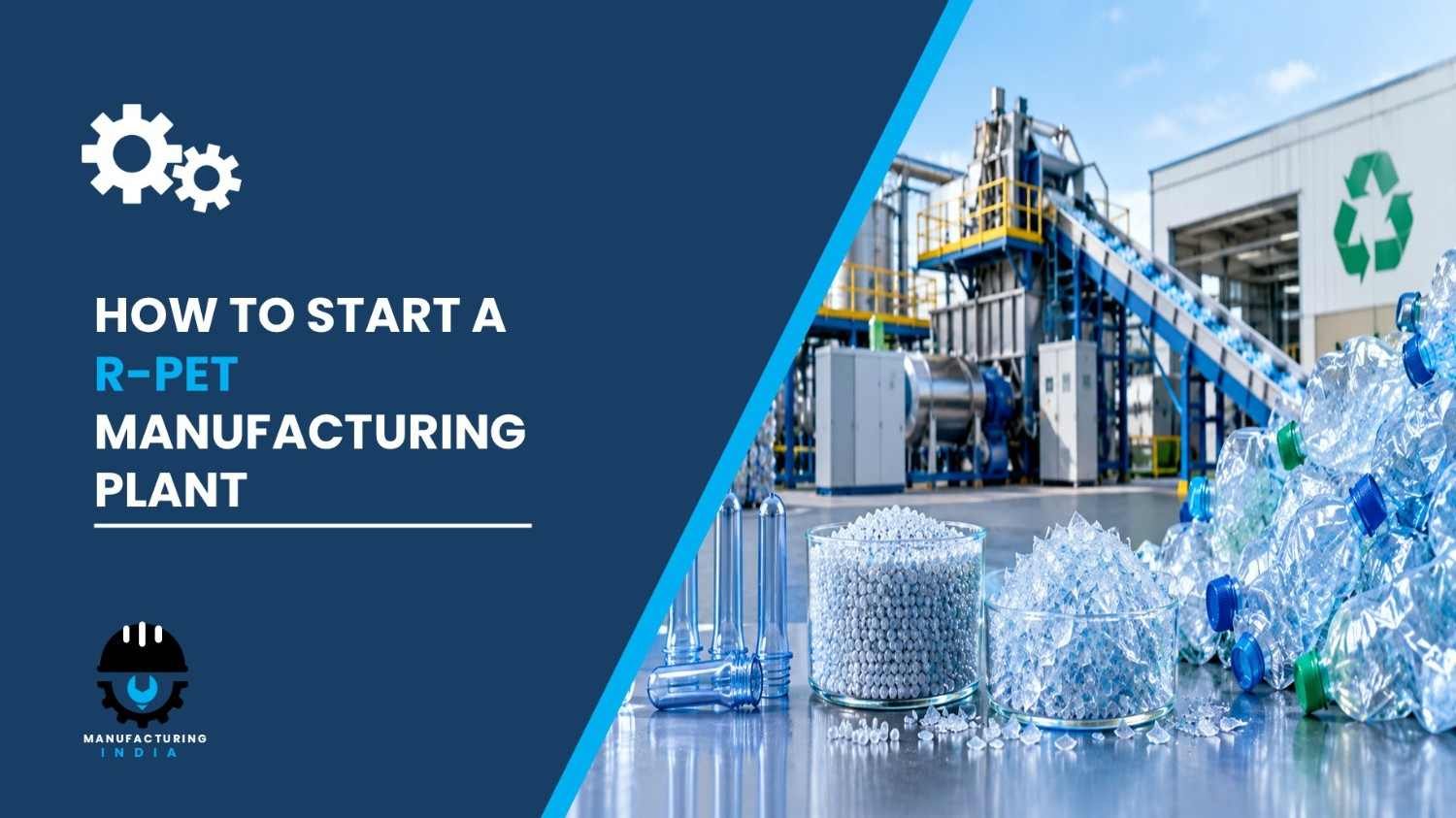
A R-PET manufacturing plant setup in India presents a compelling investment case, supported by demand from packaging, textiles, automotive, construction, consumer goods, and food and beverage industries. R-PET (recycled polyethylene terephthalate) is repurposed plastic made from used PET items such as water bottles and food containers. It is critical to India’s economy because it offers similar strength and clarity as virgin plastic while reducing landfill waste and advancing a circular economy.
India offers a favourable setting for this production. Growing investments in collection, sorting, and bottle-to-bottle recycling infrastructure are strengthening supply chains and improving feedstock availability. Government regulations promoting plastic waste management, Extended Producer Responsibility (EPR), and single-use plastic reduction, along with the Make in India initiative, are accelerating investment in recycling. As per IBEF, the packaging industry’s growth is projected to reach Rs. 29,563 crore (USD 3.4 Billion) by 2027, which makes India strategically sound for this production.
Policy support through EPR and Make in India, rising demand from packaging, textiles, and consumer goods, and a gross margin of 20-28% with a net margin of 7-14% build a strong investment case. Stable demand and value-added applications give the unit a credible path to recovering its investment.
What is R-PET?
An R-PET manufacturing plant converts used PET items into R-PET, a material that offers similar strength and clarity as virgin plastic but uses 70% less energy to produce. This helps lower greenhouse gas emissions, reduce landfill waste, and advance a circular economy. Brand owners are accelerating the adoption of food-grade material to meet recycled content targets and reduce carbon emissions. The production process runs through collection and sorting, washing, shredding, hot washing, drying, melt extrusion, filtration, pelletizing, and packaging. The output serves packaging, textiles, automotive, construction, consumer goods, and food and beverage industries.
Cost of Setting Up a R-PET Manufacturing Plant in India
The cost of setting up an R-PET manufacturing plant depends on capacity, technology, location, automation, and regulatory compliance.
1. Capital Expenditure (CapEx)
Land and site development covers land registration, boundary development, and related expenses. The site should offer easy access to post-consumer PET bottles/containers, caustic soda/detergent, and ethylene glycol, proximity to target markets, and robust transportation, utilities, and waste management systems. Civil works should provide separate areas for raw material storage, manufacturing, quality control, and finished goods storage, with space for future expansion. Machinery accounts for the largest portion of total capital expenditure.
Key machinery required includes:
- Sorting conveyors
- Bale breakers
- Label removers
- Washing tanks
- Friction washers
- Hot washing systems
- Shredders
- Dryers
- Extrusion and melt filtration units
- Pelletizers
- Storage silos
- Packaging machines
Other capital costs include effluent treatment systems and advanced monitoring systems to detect leaks or deviations in the process. Detailed CapEx line items are available in the full report.
Request a Sample Report for In-Depth Market Insights: https://www.imarcgroup.com/r-pet-manufacturing-plant-project-report/requestsample
2. Operational Expenditure (OpEx)
Raw material cost is the largest component, at approximately 40-55% of total operating expenses. It covers post-consumer PET bottles/containers, caustic soda/detergent, and ethylene glycol. Long-term contracts with reliable suppliers help stabilise pricing and ensure steady supply. Utility cost covers electricity, water, and steam, and accounts for 14-18% of OpEx. Other operating costs include transportation, packaging, salaries and wages, repairs and maintenance, depreciation, and taxes. By the fifth year, total operational cost is expected to increase substantially due to inflation, market fluctuations, potential rises in key material costs, and supply chain disruptions.
3. Plant Capacity
The proposed facility is designed with an annual capacity of 10,000-40,000 MT, enabling economies of scale while maintaining operational flexibility. Capacity can be customized per investor requirements, and profitability improves with higher capacity utilisation.
4. Profit Margins and Financial Projections
Under normal operating conditions, gross profit margins typically range between 20-28%, and net profit margins between 7-14%. The financial analysis covers ROI, NPV, IRR, and payback period, based on assumptions about capital investment, operating costs, capacity utilisation, pricing trends, and demand outlook. Specific year-wise figures are available in the full report.
Why Set Up a R-PET Plant in India?
Critical Material for the Circular Economy: R-PET is a key sustainable material for beverage bottles, food packaging, textiles, sheets, strapping, and consumer goods. This makes it an essential input for circular packaging and plastic waste reduction.
Megatrend Alignment: Sustainable packaging, recycled content mandates, and corporate ESG commitments are driving strong demand for high-quality R-PET. Expansion of the packaging, beverage, textile, and consumer goods industries supports long-term growth.
Policy and Regulatory Tailwinds: Plastic waste management rules, EPR, single-use plastic reduction, recycling targets, and Make in India are accelerating investment in R-PET production and recycling infrastructure.
Cost-Competitive Manufacturing: R-PET production is less capital-intensive than advanced polymer production. Domestic sourcing of feedstock also lowers logistics costs for producers.
Active Industry Investment: In September 2025, Great Galleon Ventures Limited (GGVL) relaunched its homegrown brand, V21, in 100% R-PET, making it one of the first Indian beverage brands to use certified, food-grade recycled plastic.
Local Supply Chain Preference: Brand owners and packaging manufacturers increasingly seek reliable domestic R-PET suppliers. This reduces dependence on imported materials, lowers logistics costs, and helps meet recycled content commitments.
R-PET Manufacturing Process: Step by Step
The R-PET manufacturing process is a multi-step operation that moves from collection and sorting through melt extrusion to finished pellets.
- Collection and sorting: Post-consumer PET bottles/containers are collected and sorted using sorting conveyors, bale breakers, and label removers.
- Washing: Washing tanks and friction washers clean the material, with caustic soda/detergent as a raw material.
- Shredding: Shredders reduce the material to smaller pieces.
- Hot washing: Hot washing systems decontaminate the shredded material.
- Drying: Dryers remove moisture before melting.
- Melt extrusion: The dried material is melted through extrusion units.
- Filtration: Melt filtration units remove impurities.
- Pelletizing: Pelletizers convert the filtered melt into pellets, which are held in storage silos.
- Packaging and dispatch: Packaging machines prepare pellets for dispatch to end-use industries.
Key Applications
R-PET serves packaging, textiles, consumer goods, and construction, along with automotive and food and beverage uses.
- Packaging: Food and beverage bottles, thermoformed trays, clamshell containers, and cosmetic packaging.
- Textiles: Polyester fibers for apparel, home furnishings, carpets, and industrial fabrics.
- Consumer Goods: Strapping, sheets, stationery products, and reusable plastic products.
- Construction: Insulation materials, plastic sheets, composite panels, and sustainable building products.
- Automotive: Automotive components and engineering plastic products.
Leading Manufacturers
Leading global R-PET players include several multinational companies with extensive capacities and diverse application portfolios:
- Evergreen (Greenbridge)
- Indorama Ventures Public Company Limited
- Krones AG
- PFR Nord GmbH
Timeline to Start the Plant
- Feasibility study and project report preparation
- Land acquisition and site development
- Regulatory approvals and environmental clearances
- Factory licence and fire safety compliance
- Machinery procurement and installation
- Raw material supplier agreements and supply chain setup
- Trial production and quality testing
- Commercial production launch
Licences and Regulatory Requirements
Starting an R-PET manufacturing unit in India requires several approvals:
- Business registration (Proprietorship, LLP, or Pvt Ltd)
- Factory Licence under the Factories Act
- Environmental Clearance from State Pollution Control Board
- GST Registration
- Fire Safety NOC
- Hazardous/chemical compliance for handling caustic soda/detergent
- Effluent Treatment Plant (ETP) operational clearance
- Occupational Health and Safety compliance
Key Challenges to Consider
- High Capital Requirements: Machinery forms the largest share of CapEx, and entry barriers are moderate but real.
- Raw Material Price Volatility: Post-consumer PET bottles/containers, caustic soda/detergent, and ethylene glycol drive 40-55% of OpEx, so long-term contracts matter.
- Regulatory Compliance: Food-grade compliance (where applicable), EPR obligations, and effluent treatment standards must be met.
- Technology Pressure: Advances in mechanical and chemical recycling are improving resin quality, so efficient washing and decontamination systems are essential.
- Competition: Established players include Evergreen (Greenbridge), Indorama Ventures Public Company Limited, Krones AG, and PFR Nord GmbH.
- Skilled Manpower: Strict quality control, SOPs, and traceability need trained staff.
Frequently Asked Questions
How much does it cost to set up a R-PET manufacturing plant in India?
Cost depends on capacity, technology, and location. Machinery is the largest CapEx share, and detailed figures are in the full report.
Is R-PET manufacturing profitable in India in 2026?
The project shows healthy potential, with gross margins of 20-28% and net margins of 7-14% under normal operating conditions.
What machinery is required for a R-PET plant in India?
Sorting conveyors, bale breakers, label removers, washing tanks, friction washers, hot washing systems, shredders, dryers, extrusion and melt filtration units, pelletizers, storage silos, and packaging machines.
What licences and approvals are required to start a R-PET plant in India?
Business registration, Factory Licence, Environmental Clearance, GST Registration, Fire Safety NOC, ETP clearance, and Occupational Health and Safety compliance.
What raw materials are needed for R-PET manufacturing?
Post-consumer PET bottles/containers, caustic soda/detergent, and ethylene glycol.
What are the environmental compliance requirements for a R-PET plant in India?
Effluent treatment systems, monitoring to detect leaks or deviations, and compliance with emission standards and local zoning laws.
What is the best location to set up a R-PET plant in India?
One with easy access to feedstock, proximity to target markets, reliable utilities, transport, and waste management.
What is the break-even period for this type of plant in India?
It depends on capacity and utilisation; the full report covers payback period and break-even analysis.
What government incentives are available for manufacturers in India?
Make in India, EPR programmes, and recycling targets support investment in recycling infrastructure.
Key Takeaways for Investors
The R-PET opportunity is anchored in packaging, textiles, automotive, construction, consumer goods, and food and beverage demand. Financial viability holds across capacities of 10,000-40,000 MT annually, with gross margins of 20-28% and net margins of 7-14%. The global R-PET market was 5.66 Million Tons in 2025 and is expected to reach 10.37 Million Tons by 2034, at a CAGR of 6.95% from 2026 to 2034. With recycled content mandates, EPR, and corporate sustainability commitments growing, demand for R-PET looks set to stay durable.
About the Author