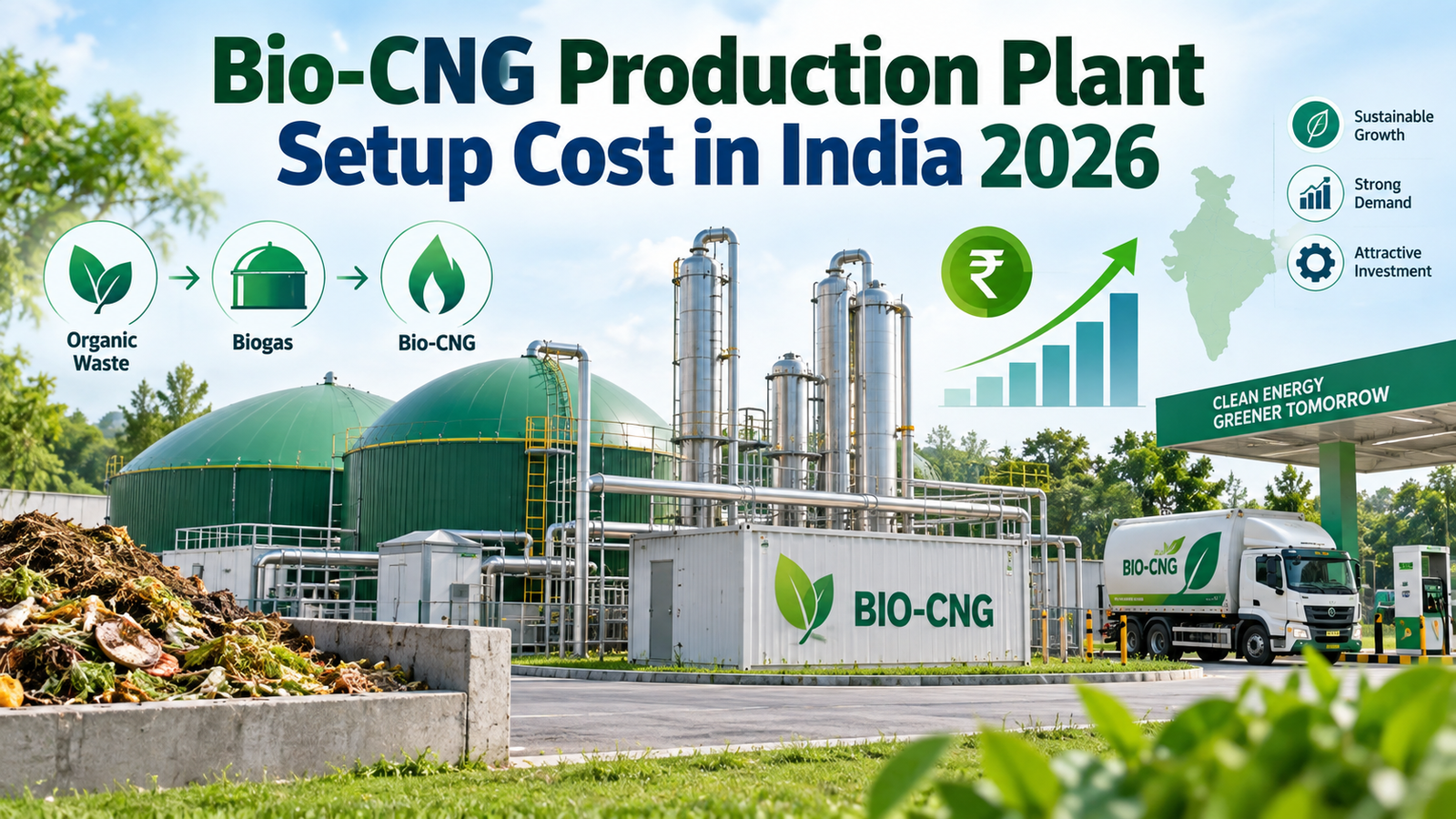
Setting up a Bio-CNG production plant setup cost in India represents a highly attractive investment proposition underpinned by mandated blending obligations, assured long-term offtake from oil marketing companies, abundant and low-cost organic feedstock, and accelerating national commitments to waste-to-energy and net-zero targets. As urban waste volumes rise, city gas distribution networks expand, and industry and transport operators seek cleaner alternatives to imported natural gas, Bio-CNG available as vehicle-grade compressed biogas, industrial fuel gas, and pipeline-injected biomethane occupies an increasingly strategic position across the transportation, industrial heating, power generation, and domestic cooking segments.
This growth trajectory, combined with a policy framework that converts offtake risk into a regulatory obligation for gas marketers and strong by-product realisation from fermented organic manure, creates a highly favourable manufacturing environment for new entrants with secure feedstock arrangements and efficient digestion and upgrading systems.
What is Bio-CNG?
Bio-CNG, also referred to as compressed biogas (CBG), is a renewable gaseous fuel produced by purifying and compressing the raw biogas generated from the anaerobic digestion of organic waste streams. Raw biogas typically contains 55–65% methane along with carbon dioxide, moisture, hydrogen sulphide, and trace contaminants. Through upgrading, the carbon dioxide and impurities are removed to raise methane content above 90%, after which the gas is dried, odourised, and compressed to around 200–250 bar for storage and dispensing. The resulting product is chemically and functionally interchangeable with fossil-derived CNG and can be used in existing vehicles, burners, and pipeline infrastructure without modification.
Bio-CNG is produced from a wide range of feedstocks, including cattle dung, poultry litter, paddy straw and other crop residues, sugarcane press mud and distillery spent wash, napier grass and other energy crops, segregated municipal solid waste, food and vegetable market waste, and sewage sludge. Each feedstock differs in methane yield, moisture content, seasonality, and collection economics, and the choice of feedstock fundamentally determines plant design, digester retention time, and project economics. Beyond the gas itself, the process generates fermented organic manure (FOM) and liquid fermented organic manure as valuable co-products that improve blended project returns.
The global bio-CNG market was valued at approximately USD 29.82 Billion in 2025 and is expected to reach USD 47.29 Billion by 2034, exhibiting a CAGR of 5.3% from 2026 to 2034, supported by decarbonisation mandates, rising fossil fuel prices, expanding gas distribution infrastructure, and the growing adoption of circular economy practices in waste management.
Cost of Setting Up a Bio-CNG Production Plant
The total capital investment required to establish a Bio-CNG production plant is shaped by several key parameters: rated production capacity (commonly ranging from 2 to 20 tonnes per day of CBG, with 5 TPD representing a widely adopted commercial benchmark), the feedstock mix selected (cattle dung, press mud, agricultural residue, or municipal organic waste), the digestion technology adopted (wet versus dry digestion, single-stage versus two-stage), the biogas upgrading route chosen (water scrubbing, pressure swing adsorption, or membrane separation), the level of automation across feed handling, digestion, and upgrading sections, land requirement, and the applicable regulatory, environmental, and safety compliance framework. Below is a structured breakdown of the major cost components.
1. Capital Expenditure (CapEx)
Total capital investment in a Bio-CNG production plant covers the following major heads:
Land and Site Development:
This encompasses land acquisition or lease, levelling and site preparation, internal roads, boundary development, weighbridge installation, and utilities connectivity. Bio-CNG plants are comparatively land-intensive because feedstock storage yards, digester tanks, manure drying beds, and gas storage areas all require dedicated space, with a 5 TPD plant typically requiring several acres depending on feedstock type and digester configuration. Site selection should prioritise proximity to concentrated feedstock sources such as dairy clusters, sugar mills, mandis, agricultural residue belts, or municipal waste collection points, since feedstock is bulky and low in energy density and transport cost rises steeply with haulage distance.
Reliable grid power, adequate process water availability, all-weather road access for inbound feedstock trucks and outbound cascade movement, proximity to a CNG station, CGD network tap-off point, or industrial gas consumer, and access to agricultural land for manure offtake are all critical site selection criteria. Compliance with industrial zoning regulations, setback distances from habitation, and pollution control siting norms must be assessed from project initiation.
Civil Works and Construction
Building costs cover the feedstock receiving and storage yard, pre-processing and slurry preparation section, digester civil structures including RCC tanks or lagoon-type digesters with gas holders, digestate handling and manure drying area, upgrading and compression plant room, cascade and gas storage bay, dispensing or loading area, quality control laboratory, administrative block, and utility infrastructure including power backup, transformer yard, water supply and effluent management systems. Construction must comply with applicable factory act requirements, gas safety and fire protection standards, PESO norms governing gas compression and storage installations, and pollution control board sitting and infrastructure conditions.
Request a Sample Report for In-Depth Market Insights: https://www.imarcgroup.com/bio-cng-manufacturing-plant-project-report/requestsample
Machinery and Equipment:
Machinery represents the single largest CapEx component. Key equipment required for a Bio-CNG production plant includes:
- Feedstock Reception and Pre-Processing Systems: Weighbridge, tipping and unloading infrastructure, shredders and choppers for fibrous residues, magnetic and density separators for removing inerts from municipal organic waste, and screw conveyors for controlled feeding
- Slurry Preparation and Mixing Units: Mixing tanks, dilution water systems, maceration pumps, and homogenisers that prepare a uniform substrate of correct total solids concentration for stable digestion
- Anaerobic Digesters: Continuously stirred tank reactors, plug-flow digesters, or covered lagoon digesters, complete with insulation, heating coils or heat exchangers for mesophilic or thermophilic operation, agitators, and integrated gas holders
- Biogas Handling and Pre-Treatment: Gas blowers, moisture separators, chillers for dehumidification, hydrogen sulphide removal systems using iron sponge, activated carbon, or biological desulphurisation, and siloxane removal where sewage or landfill gas is processed
- Biogas Upgrading Systems: Water scrubbing, pressure swing adsorption (PSA), membrane separation, or amine-based units that strip carbon dioxide to raise methane purity above 90%, with methane slip minimisation directly affecting yield and project returns
- Compression and Storage: Multi-stage gas compressors, priority panels, high-pressure storage cascades, and cylinder or cascade filling systems rated for approximately 200–250 bar service
- Gas Metering, Odourisation and Quality Monitoring: Online methane, carbon dioxide, oxygen, moisture, and hydrogen sulphide analysers, custody transfer metering skids, and odourant dosing systems required for fuel-grade compliance
- Digestate and Manure Processing: Decanter centrifuges or screw press separators, solar or mechanical drying beds, granulation or pelletising units, and bagging lines for fermented organic manure production
- Effluent and Liquid Digestate Management: Storage lagoons, evaporation systems, or effluent treatment infrastructure to handle liquid digestate in compliance with discharge norms
- Safety and Flare Systems: Emergency flare stacks, gas detection systems, flame arrestors, pressure relief devices, flameproof electrical installations, and fire fighting infrastructure
- Utility Infrastructure: Transformers and switchgear, diesel generator backup, process water treatment, boilers or heat recovery systems for digester heating, and compressed air systems
- Quality Control Laboratory Equipment: Instruments for measuring total solids, volatile solids, pH, volatile fatty acids, alkalinity, gas composition, and manure nutrient content
- Material Handling and Logistics: Front-end loaders, tractors and trolleys, balers for crop residue collection, and cascade-mounted trucks for gas evacuation to the offtake point
Other Capital Costs:
These include pre-operative expenses, detailed engineering and consultancy charges, commissioning and performance guarantee testing, import duties on specialised upgrading and compression equipment, staff training and competency development, initial feedstock and consumable inventory for commissioning, and regulatory compliance setup including PESO licensing, pollution control board clearances, explosives and gas cylinder rules compliance, and Fertiliser Control Order registration for manure sale.
2. Operational Expenditure (OpEx)
Feedstock procurement principally cattle dung, press mud, agricultural residue, or segregated organic waste, together with collection, aggregation, and inbound transport charges typically accounts for approximately 10–20% of total operating expenses, a materially lower share than in most process industries because much of the feedstock is a low-value or negative-value waste stream. Utility costs, driven primarily by electricity consumption of agitators, blowers, upgrading systems, and high-pressure compressors along with digester heating requirements, account for 15–20% of OpEx. Labour, plant maintenance and spares, consumables such as scrubbing media and desulphurisation chemicals, outbound cascade transportation, manure packaging, depreciation, taxes, insurance, and overhead cng plant cost constitute the remainder of the operating cost base.
3. Plant Capacity
The proposed Bio-CNG production facility is designed with a production capacity of 5 tonnes per day, enabling economies of scale while maintaining operational flexibility. This capacity, which broadly corresponds to processing in the range of 100 tonnes per day of wet organic feedstock depending on the substrate selected, aligns with the scale most commonly supported under central financial assistance schemes and supports a product portfolio of vehicle-grade Bio-CNG, industrial fuel gas, and fermented organic manure, serving city gas distribution offtakers, transport fleet operators, industrial consumers, and the agricultural input market.
4. Profit Margins and Financial Projections
The project demonstrates healthy profitability potential under normal operating conditions. Financial projections encompass capital investment, operating costs, capacity utilisation ramp-up schedule, product mix between Bio-CNG and organic manure, and forward demand outlook underpinned by mandatory blending obligations and expanding gas distribution infrastructure. A comprehensive feasibility analysis includes sensitivity analysis, Net Present Value (NPV), Internal Rate of Return (IRR), and Payback Period calculations. Gross profit margins for Bio-CNG production typically range from 40–60%, supported by low-cost or waste-derived feedstock, administered procurement pricing, and by-product recovery. Net profit margins of 25–40% are achievable with disciplined feedstock cost management, high plant availability, optimal capacity utilisation, and effective monetisation of fermented organic manure.
Why Set Up a Bio-CNG Production Plant?
Mandatory Blending Obligation Creating Assured Demand
India has introduced a phased Compressed Bio-Gas Blending Obligation (CBO) requiring city gas distribution entities to blend CBG into the CNG and PNG they supply. Blending was voluntary until FY 2024-25 and became mandatory from FY 2025-26, with the obligation set at 1% for FY 2025-26, 3% for FY 2026-27, and 4% for FY 2027-28, rising to 5% from FY 2028-29 onwards. Because national gas consumption is measured in the range of 165 MMSCMD, even a single percentage point translates into very large committed volumes. For a producer, this converts offtake from a commercial negotiation into a regulatory requirement on the buyer, materially de-risking the revenue side of the project.
Government Support, Procurement Framework and Fiscal Incentives
The SATAT (Sustainable Alternative Towards Affordable Transportation) initiative provides a structured procurement mechanism under which oil and gas marketing companies enter long-term offtake agreements with CBG producers at administered prices. Central financial assistance from the Ministry of New and Renewable Energy, viability gap funding covering a share of project cost for plants in the 5–15 TPD range, and the Union Budget 2026-27 central excise duty exemption on the CBG portion of blended CNG have each improved project-level economics. The blending obligation alone is expected to catalyse investment of around INR 37,500 crore and enable the establishment of roughly 750 CBG projects by 2028-29.
Abundant, Low-Cost and Widely Distributed Feedstock
India generates very large volumes of cattle dung, crop residue, sugar industry press mud, distillery effluent, municipal organic waste, and sewage sludge each year, much of which is currently burned, landfilled, or left unutilised. Because these streams are low-value or negative-value waste, feedstock accounts for a comparatively small share of operating cost, giving Bio-CNG projects a structural cost advantage over fuels dependent on purchased commodity inputs. This feedstock abundance also allows plant siting across a wide range of agricultural, dairy, sugar, and urban clusters rather than being confined to a narrow geography.
Strong By-Product Value from Fermented Organic Manure
Anaerobic digestion yields nutrient-rich fermented organic manure alongside the gas. Marketed through Fertiliser Control Order compliant channels and supported by market development assistance for organic fertilisers, this co-product provides a second revenue stream that meaningfully lifts blended project margins and reduces dependence on gas realisation alone. Integrated producers that invest in separation, drying, granulation, and branded bagging capture materially better value than those disposing of digestate as a waste.
Import Substitution and Energy Security
India imports a substantial share of its natural gas requirement, exposing the economy to international price volatility and foreign exchange outflow. Domestically produced Bio-CNG directly substitutes imported LNG in the transport and industrial segments, contributing to energy security objectives while keeping value within the rural economy. This strategic alignment with national policy priorities underpins the durability of the support framework that Bio-CNG projects depend on.
Circular Economy, Waste Management and Emissions Reduction
Bio-CNG production simultaneously addresses three policy problems: it diverts organic waste from landfills, provides an economic alternative to crop residue burning and its associated air quality crisis, and displaces fossil fuel combustion in transport and industry. Municipal bodies increasingly view CBG plants as a waste management solution rather than merely an energy project, which opens access to municipal feedstock supply agreements, tipping fee arrangements, and land support on concessional terms.
Compatibility with Existing Infrastructure
Because upgraded Bio-CNG is functionally equivalent to fossil CNG, it can be dispensed through existing CNG stations, injected into existing city gas distribution pipelines, and burned in existing vehicles and industrial equipment without modification. This eliminates the need for parallel distribution infrastructure or end-user asset replacement, a decisive advantage over alternative clean fuels that require new networks, new vehicle fleets, or new combustion equipment.
Scalable and Modular Project Development
Digester trains and upgrading modules can be added incrementally, allowing developers to commission a first phase, establish feedstock aggregation networks and operating expertise, and then expand capacity as supply chains mature. This phased approach allows new entrants to manage capital deployment and learning-curve risk while building toward a multi-plant portfolio across a feedstock catchment region.
Major States Driving Demand for Bio-CNG Plants in India
Bio-CNG project demand in India is highly concentrated in states that combine three conditions: dense and aggregable organic feedstock, an expanding city gas distribution footprint that must meet blending obligations, and an active state-level policy framework offering land, subsidy, or single-window support. The following states represent the most significant clusters of manufacturing plant demand.
Uttar Pradesh
Uttar Pradesh is the clear national leader in compressed biogas development and the single largest source of new plant demand. The state combines the country’s largest cattle population, extensive sugarcane cultivation producing very large volumes of press mud, substantial paddy and wheat straw availability, and a dedicated state bio-energy policy offering capital subsidy, stamp duty exemption, and land facilitation for CBG projects. Uttar Pradesh accounts for the highest number of CBG plants under development in the country and leads in operational installations, with major projects concentrated around the sugar belt districts of western and central Uttar Pradesh as well as dairy clusters in Bundelkhand and the eastern districts. Rapidly expanding city gas distribution coverage across the state’s urban centres, combined with a large CNG vehicle fleet in the National Capital Region periphery, provides a strong local offtake base. For equipment suppliers and EPC contractors, Uttar Pradesh currently represents the deepest addressable market for digesters, upgrading systems, and compression packages in India.
Maharashtra
Maharashtra ranks among the top states by CBG potential and by the number of projects under development. Its sugar industry, the largest in the country by mill count, generates enormous quantities of press mud and distillery spent wash that are ideally suited to anaerobic digestion with high and predictable methane yields. The state also has the highest assessed CBG generation potential from sewage waste, supported by large metropolitan sewage volumes in Mumbai, Pune, Nagpur, and Nashik. State-level support has been strengthened through viability gap funding of up to INR 15 crore per project announced in 2026 to encourage local waste-to-energy processing, alongside a dense CGD network and a very large CNG-fuelled transport and auto-rickshaw fleet in the Mumbai–Pune corridor. The combination of concentrated industrial feedstock and mature urban gas demand makes Maharashtra the most attractive state for larger-capacity, press mud and spent wash based plants.
Punjab and Haryana
Punjab and Haryana together constitute the country’s most acute agricultural residue challenge, with paddy straw burning each post-harvest season driving a severe seasonal air quality crisis across northern India. This has made CBG plants a policy priority rather than merely a commercial opportunity, with both states establishing state-level implementation committees, offering land on long lease, and facilitating straw supply chain development including baler and rake subsidies. Punjab hosts one of Asia’s largest paddy straw based CBG plants and ranks third nationally in projects under development. The key project-specific consideration in this region is the highly seasonal nature of straw availability, which requires substantial covered storage infrastructure and disciplined baling and aggregation logistics to sustain year-round plant operation. For developers able to solve the collection problem, feedstock is available at very low cost and in extremely large volume.
Gujarat
Gujarat offers one of India’s most developed city gas distribution networks and the highest CNG penetration among Indian states, creating a naturally strong and immediate offtake environment for Bio-CNG producers. The state’s large dairy cooperative structure provides highly organised access to cattle dung, and several dairy federations have moved into CBG production as a value-addition and waste management measure for member societies. A supportive industrial policy environment, strong logistics infrastructure, and the presence of major energy and petrochemical players investing in renewable gas further reinforce Gujarat’s position as a preferred location for dung-based and municipal waste based plants.
Karnataka, Tamil Nadu and Andhra Pradesh
The southern states present a diversified feedstock profile combining sugarcane press mud, poultry litter from large commercial poultry clusters, coconut and agro-processing residues, and rapidly growing urban organic waste volumes from Bengaluru, Chennai, and Hyderabad. Karnataka ranks among the leading states for CBG potential from sugar and distillery waste, while Tamil Nadu’s municipal corporations are actively procuring waste-to-energy capacity to address landfill constraints. Strong industrial gas demand from textile, food processing, and engineering clusters offers an alternative to CGD offtake, allowing producers to sell directly to industrial consumers at commercially negotiated prices.
Madhya Pradesh and Rajasthan
Madhya Pradesh and Rajasthan are emerging as the next tier of Bio-CNG plant demand, supported by large cattle populations, extensive soybean, mustard, and cotton residue availability, low land costs, and state policies actively courting waste-to-energy investment. Indore’s municipal solid waste-based Bio-CNG facility is among the most widely cited urban waste-to-energy installations in the country and has served as a template for other municipal corporations evaluating similar projects. As CGD infrastructure extends into these states under successive bidding rounds, local offtake capacity is expected to strengthen materially, improving project bankability for new entrants.
Manufacturing Process Overview
The Bio-CNG production operation transforms wet organic waste into fuel-grade compressed biogas and organic manure through a sequence of pre-processing, digestion, upgrading, compression, and by-product recovery operations. The key process stages are:
- Feedstock Collection and Reception: Organic feedstock is aggregated from dairies, farms, sugar mills, mandis, or municipal collection points, weighed at the plant weighbridge, and inspected for contamination, moisture, and total solids content. Reliable aggregation logistics are the single most important determinant of sustained plant utilisation.
- Pre-Processing and Segregation: Incoming material is screened to remove plastics, stones, metals, and other inerts, and fibrous feedstocks such as straw or napier grass are shredded to reduce particle size and increase surface area available for microbial action.
- Slurry Preparation: Screened feedstock is mixed with process water or recirculated liquid digestate in mixing tanks to achieve the target total solids concentration, pH, and carbon-to-nitrogen ratio required for stable digestion, then macerated and pumped to the digester.
- Anaerobic Digestion: The prepared slurry is fed into sealed digesters where, in the absence of oxygen, microbial consortia progressively hydrolyse, acidify, and methanate the organic matter over a retention period typically ranging from 20 to 45 days depending on feedstock and temperature regime. Digester temperature, agitation, pH, and volatile fatty acid levels are continuously monitored to maintain biological stability.
- Biogas Collection and Pre-Treatment: Raw biogas containing roughly 55–65% methane is collected from the digester gas holder, dehumidified through chilling and moisture separation, and desulphurised to remove hydrogen sulphide, which would otherwise corrode downstream compression equipment and violate fuel specifications.
- Biogas Upgrading: The pre-treated gas is processed through water scrubbing, pressure swing adsorption, or membrane separation to remove carbon dioxide and residual contaminants, raising methane content above 90% to meet vehicle-grade specifications. Minimising methane slip during upgrading is critical to both yield and emissions performance.
- Compression and Storage: Upgraded biomethane is odourised and compressed through multi-stage compressors to approximately 200–250 bar, then stored in high-pressure cascades or filled into cylinders and cascade-mounted trailers for dispatch.
- Quality Control: Product gas is tested for methane, carbon dioxide, oxygen, moisture, hydrogen sulphide, and total sulphur content against applicable Bureau of Indian Standards specifications for compressed biogas before dispatch or dispensing.
- Digestate Separation and Manure Production: Digestate discharged from the digester is separated into solid and liquid fractions. The solid fraction is dried, optionally granulated, tested for nutrient content, and bagged as fermented organic manure, while the liquid fraction is either recirculated as dilution water, sold as liquid fermented organic manure, or treated before discharge.
- Dispatch and Distribution: Bio-CNG is dispatched by cascade trailer to CNG stations and industrial consumers, injected into city gas distribution pipelines where a tap-off point is available, or dispensed on site at a captive filling station. Fermented organic manure is dispatched separately to fertiliser distributors, farmer producer organisations, and agricultural input retailers.
Speak to an Analyst: https://www.imarcgroup.com/request?type=report&id=29280&flag=C
Key Applications of Bio-CNG
The Bio-CNG market serves several major end-use segments across transportation, industry, power, and domestic sectors:
- Transportation Fuel: Bio-CNG is used directly in CNG-powered buses, trucks, light commercial vehicles, auto-rickshaws, and private cars without any engine modification, offering fleet operators a lower-emission fuel that is fully compatible with existing dispensing infrastructure.
- City Gas Distribution Blending: CGD entities blend Bio-CNG into the CNG and PNG they supply in order to meet statutory blending obligations, making pipeline injection and cascade supply to CGD networks the single most important structural demand channel for producers in India.
- Industrial Heating and Process Fuel: Boilers, furnaces, kilns, and dryers across textile, ceramics, food processing, chemicals, and engineering industries use Bio-CNG as a cleaner substitute for furnace oil, LPG, coal, and imported natural gas, often supported by corporate decarbonisation commitments.
- Power Generation: Upgraded biomethane fuels gas engines, gas turbines, and combined heat and power systems, providing dispatchable renewable electricity and useful heat for captive industrial or institutional loads.
- Residential and Commercial Cooking: Delivered through PNG networks or in cylinder form, Bio-CNG serves household kitchens, hotels, hostels, and institutional catering as a renewable alternative to LPG and fossil piped gas.
- Organic Fertiliser and Soil Health: Fermented organic manure recovered from digestate is applied in agriculture and horticulture to improve soil organic carbon and nutrient availability, supporting natural and organic farming programmes while generating an independent revenue stream for the plant.
Global Bio-CNG Market Outlook
The global bio-CNG market was valued at approximately USD 29.82 Billion in 2025. According to IMARC Group estimates, the market is expected to reach USD 47.29 Billion by 2034, exhibiting a CAGR of 5.3% from 2026 to 2034. The bio-CNG market benefits from multiple structural demand drivers:
- Tightening decarbonisation policy across major economies, including renewable fuel mandates, blending obligations, and carbon pricing mechanisms that improve the relative competitiveness of renewable gas
- Very large untapped feedstock availability worldwide, with the U.S. Environmental Protection Agency estimating that more than 70 million tons of wet organic waste suitable for anaerobic digestion is generated annually in the United States alone
- Expanding compressed natural gas refuelling infrastructure and gas distribution networks, allowing renewable gas to be distributed without parallel investment in new delivery systems
- Growing corporate procurement of renewable natural gas by logistics, retail, and manufacturing companies pursuing scope 1 and scope 3 emissions reduction targets
- Rising and volatile fossil gas prices, together with energy security concerns following supply disruptions, strengthening the case for domestically produced renewable alternatives
- Increasing municipal pressure to divert organic waste from landfill, converting waste management liabilities into energy assets and creating tipping fee revenue for operators
- Favourable by-product value chains, particularly digestate-derived organic fertiliser, improving overall project economics for integrated producers
- Continued investment by established oil, gas, and utility players in building renewable gas portfolios, reflecting confidence in long-term category growth
Major players in the global bio-CNG industry include:
- Clean Energy Fuels
- Verbio SE
- Shell
- Neste
- IFPEN
- Biokraft International AB
Serving end-use sectors including transportation, industrial heating, power generation, residential and commercial cooking, and waste-to-energy.
Latest Industry Developments
- Union Budget 2026-27: A central excise duty exemption was introduced on the CBG portion of blended CNG, directly improving realisation for producers and the viability of blending for city gas distribution entities.
- 2026: Viability gap funding under the Ministry of New and Renewable Energy was expanded to cover a share of project cost for plants in the 5–15 TPD capacity range, while Maharashtra announced state-level viability gap funding of up to INR 15 Crore per project to accelerate local waste-to-energy capacity.
Licenses and Regulatory Requirements
Establishing a Bio-CNG production unit requires a range of approvals and certifications, which may vary by state and jurisdiction, including:
- Business registration and company incorporation under applicable company law
- Factory License under applicable state Factories Act provisions for manufacturing operations
- Pollution Control Board Clearances Consent to Establish (CTE) and Consent to Operate (CTO) covering air emissions, effluent discharge, and solid waste handling
- Environmental Clearance, where applicable, based on project category, capacity, and siting
- Petroleum and Explosives Safety Organisation (PESO) approval for gas compression, high-pressure storage, cascade filling, and dispensing installations
- Gas Cylinders Rules and Static and Mobile Pressure Vessels (Unfired) Rules compliance for storage vessels, cascades, and cylinder handling
- Bureau of Indian Standards conformity for compressed biogas fuel specification under the applicable CBG standard
- Registration under SATAT and execution of a Letter of Intent and long-term offtake agreement with an oil and gas marketing company
- Fertiliser Control Order registration for the manufacture and sale of fermented organic manure
- Fire Safety NOC from the state fire services department
- Electrical inspectorate approval for high-tension connection, transformer yard, and flameproof installations
- Local body and municipal approvals, including building plan sanction and, where municipal waste is used, a waste supply or concession agreement
- Weights and Measures (Legal Metrology) approval for custody transfer metering and dispensing equipment
- ISO 9001:2015 Quality Management System and ISO 45001 Occupational Health and Safety certification for operational and worker safety compliance
Key Challenges to Consider
Feedstock Aggregation and Supply Continuity
The most common cause of underperformance in Indian CBG projects is not technology but feedstock. Organic waste is bulky, low in energy density, geographically dispersed, and often seasonal, and building a reliable collection network across hundreds of dairies, farms, or collection points requires sustained field effort, working capital for advance payments, and dedicated logistics assets. Plants that commission before securing committed supply frequently operate well below rated capacity for extended periods, severely impairing returns. Long-term supply agreements with sugar mills, dairy cooperatives, farmer producer organisations, or municipal bodies are the most effective mitigation.
Seasonality and Feedstock Quality Variability
Agricultural residue is available in concentrated windows following harvest, requiring large, covered storage yards and substantial inventory investment to sustain year-round operation. Feedstock quality also varies with moisture content, contamination levels, and storage conditions, and inconsistent substrate quality destabilises digester biology, reduces methane yield, and can cause extended recovery periods after upset conditions. Feedstock blending strategies and rigorous incoming quality control are essential operational disciplines.
High Capital Intensity and Long Gestation
Bio-CNG projects are capital-intensive relative to their revenue base, with digesters, upgrading systems, and compression packages representing substantial upfront commitments, and typical project timelines running well beyond a year from initiation to stable operation. Delays in land acquisition, statutory approvals, or offtake tie-up extend the pre-revenue period and increase interest during construction. Careful sequencing of approvals and early engagement with lenders experienced in the sector materially reduce this risk.
Digester Biology and Process Stability
Anaerobic digestion is a biological process sensitive to temperature fluctuation, pH shifts, ammonia and volatile fatty acid accumulation, hydraulic overloading, and the presence of antibiotics, disinfectants, or heavy metals in the feed. Loss of digester stability can reduce or halt gas production for weeks. Sustained performance requires trained operators, continuous monitoring of process indicators, and disciplined feeding regimes rather than reactive intervention after upset.
Offtake Logistics and Evacuation Constraints
Where a plant is not located near a CGD tap-off point or CNG station, gas must be evacuated by cascade trailer, which adds significant operating cost and introduces dependence on vehicle availability and turnaround times. Evacuation constraints can force production curtailment when storage fills. Site selection that prioritises proximity to an offtake point, or early negotiation of pipeline injection arrangements, is one of the highest-leverage decisions in project development.
Digestate and Manure Monetisation
A meaningful share of project economics depends on realising value from fermented organic manure, yet building distribution channels, establishing product credibility with farmers, and meeting Fertiliser Control Order specifications require investment and time. Plants that treat digestate as a disposal problem rather than a product face both higher costs and weaker margins, while liquid digestate management in particular can become a regulatory and logistical burden if not planned from the design stage.
Policy and Pricing Dependence
Project returns are influenced by administered CBG procurement pricing, subsidy disbursement timelines, and the pace of blending obligation enforcement. While the policy direction has been consistently supportive and increasingly favourable, developers should stress-test financial models against slower subsidy release, pricing revisions, and delayed offtake ramp-up rather than assuming the current framework remains unchanged across the full project life.
Frequently Asked Questions (FAQs)
1. How much does it cost to set up a Bio-CNG production plant in India?
The total investment depends on plant capacity, feedstock type, digestion technology, upgrading route, automation level, land cost, and location. Costs cover land and site development, civil construction including digesters and storage yards, machinery such as pre-processing systems, digesters, upgrading and compression units, gas storage cascades, manure processing equipment, quality control infrastructure, statutory approvals, and working capital for feedstock procurement. A comprehensive feasibility study from IMARC Group provides detailed, capacity-specific cost estimates covering all CapEx and OpEx components.
2. Is Bio-CNG production a profitable business in 2026?
Yes. Mandatory blending obligations, long-term offtake agreements with oil marketing companies, low-cost waste-derived feedstock, capital subsidy and viability gap funding support, and the excise duty exemption on the CBG portion of blended CNG collectively support gross margins of 40–60% and net profit margins of 25–40%. Profitability is nonetheless highly sensitive to plant utilisation, so securing feedstock and evacuation logistics before commissioning is critical.
3. What machinery and equipment are required for a Bio-CNG plant?
Key equipment includes weighbridge and feedstock reception systems, shredders and segregation equipment, slurry mixing and maceration units, anaerobic digesters with heating and agitation systems, gas holders, moisture removal and desulphurisation systems, biogas upgrading units (water scrubbing, PSA, or membrane), multi-stage compressors, high-pressure storage cascades, odourisation and online gas analysers, digestate separation and manure drying or granulation equipment, flare and safety systems, and laboratory instrumentation.
4. What licenses and approvals are required?
Required approvals include company registration, Factory License, Pollution Control Board Consent to Establish and Consent to Operate, environmental clearance where applicable, PESO approval for gas compression and storage, compliance under the Gas Cylinders Rules and SMPV(U) Rules, fire safety NOC, electrical inspectorate approval, Fertiliser Control Order registration for manure sale, and registration under SATAT with an executed offtake agreement. PESO approval and pollution control consents are the most common sources of schedule delay and should be initiated early.
5. How long does it take to commission a Bio-CNG production plant?
Typically 15–24 months from project initiation to stable commercial operation, depending on land availability, statutory approval timelines, equipment procurement lead times for upgrading and compression packages, civil construction duration, and the digester stabilisation period, which alone can require two to three months after first feeding before steady-state gas output is achieved.
6. What are the key raw materials for Bio-CNG production?
The principal feedstocks are cattle dung, poultry litter, sugarcane press mud, distillery spent wash, paddy straw and other crop residues, napier grass and energy crops, segregated municipal organic waste, food and market waste, and sewage sludge. Process water, desulphurisation and scrubbing media, and packaging material for organic manure constitute the other key recurring inputs.
7. What is the break-even period for a Bio-CNG plant?
The break-even period depends primarily on capacity utilisation achieved, feedstock cost and continuity, realised gas price under the offtake agreement, subsidy receipt timing, and manure revenue. Projects that secure committed feedstock supply, locate close to an offtake point, and achieve high plant availability in the first two years break even considerably faster than those that commission ahead of their supply chain.
8. What is the difference between biogas, Bio-CNG and CBG?
Biogas is the raw gas produced by anaerobic digestion, typically containing 55–65% methane along with carbon dioxide, moisture, and hydrogen sulphide, and is suitable only for direct combustion near the source. Bio-CNG, also called compressed biogas (CBG), is that same gas after carbon dioxide and contaminant removal raises methane content above 90%, followed by drying, odourisation, and compression to around 200–250 bar. In this upgraded form it meets fuel specifications and is fully interchangeable with fossil CNG.
9. What government incentives are available for Bio-CNG producers in India?
Producers may access central financial assistance from the Ministry of New and Renewable Energy, viability gap funding covering a share of project cost for plants in the 5–15 TPD range, guaranteed offtake under the SATAT framework at administered prices, the central excise duty exemption on the CBG portion of blended CNG introduced in the Union Budget 2026-27, market development assistance for fermented organic manure, and a range of state-level incentives including capital subsidy, stamp duty exemption, land facilitation, and dedicated viability gap funding in states such as Maharashtra and Uttar Pradesh.
10. Which states in India are best suited for setting up a Bio-CNG plant?
Uttar Pradesh leads on both operational plants and projects under development, supported by its cattle population, sugar industry press mud, and a dedicated state bio-energy policy. Maharashtra ranks highest on CBG potential from sugar, distillery, and sewage waste and offers substantial state viability gap funding. Punjab and Haryana provide vast paddy straw volumes alongside strong policy urgency around residue burning, Gujarat offers the country’s most developed CNG and CGD offtake infrastructure with organised dairy feedstock, and Karnataka, Tamil Nadu, Madhya Pradesh, and Rajasthan represent significant emerging opportunities.
Key Takeaways for Investors
The Bio-CNG production industry represents a structurally resilient and financially attractive investment opportunity positioned at the intersection of India’s waste management challenge, its energy import substitution agenda, and its net-zero commitments. Mandatory blending obligations rising from 1% in FY 2025-26 to 5% from FY 2028-29 convert offtake from a commercial risk into a regulatory obligation on the buyer, while SATAT procurement agreements, capital subsidy, viability gap funding, and excise duty relief materially strengthen project-level returns. Feedstock is abundant, geographically distributed, and low in cost, accounting for only 10–20% of operating expenses, and the fermented organic manure co-product provides a second revenue stream that lifts blended margins.
Because upgraded Bio-CNG is functionally identical to fossil CNG, it requires no new distribution infrastructure or end-user asset replacement, a decisive advantage over competing clean fuels. The principal determinants of success are not technological but operational: securing committed feedstock supply, locating close to an evacuation or offtake point, and sustaining digester stability and high plant availability. Investors who treat feedstock aggregation as the core business challenge rather than an afterthought, and who phase capital deployment across a regional cluster of plants, are best positioned to capture the growth of a category expected to expand from USD 29.82 Billion globally in 2025 to USD 47.29 Billion by 2034.
Contact Us:
IMARC Group
134 N 4th St. Brooklyn, NY 11249, USA
Email: sales@imarcgroup.com
Tel No: (D) +91 120 433 0800
United States: (+1-201-971-6302)
About the Author