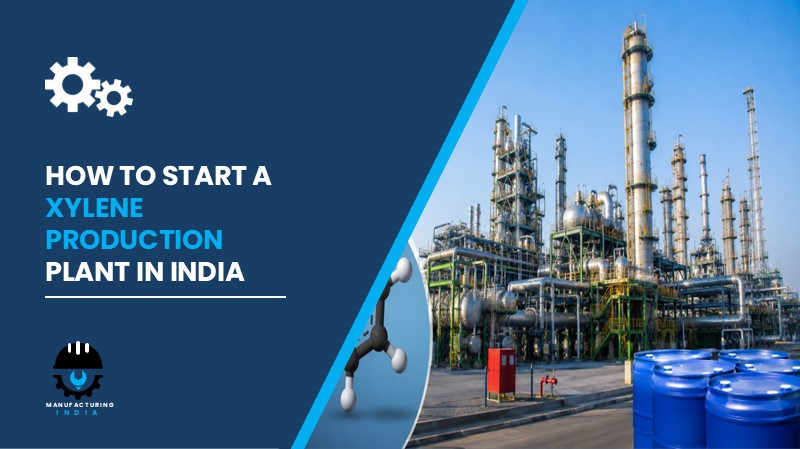
Setting up a xylene production plant in India presents a compelling investment case, driven by robust and growing demand from the petrochemical, plastics and polymers, paints and coatings, and adhesives and sealants industries. As a critical petrochemical intermediate used in producing purified terephthalic acid (PTA) and dimethyl terephthalate (DMT), xylene underpins polyester fibers and resins that are essential to India’s packaging, textiles, and automotive sectors. The sustained expansion of these downstream markets makes India-based xylene production both strategically relevant and commercially viable for long-term investors.
India’s rapid urbanisation, growing infrastructure spending, and the Government’s Make in India initiative collectively create a uniquely favorable environment for xylene production investment. Industrial clusters in states such as Gujarat and Maharashtra offer proximity to refinery feedstocks, well-developed logistics corridors, a cost-competitive skilled labour pool, and access to robust utility infrastructure. As domestic consumption of polyethylene terephthalate in beverage bottles, food packaging, and synthetic textiles continues to climb, establishing a local production facility positions investors to capture market share ahead of rising import substitution demand.
Investing in a xylene production plant in India offers a rare convergence of policy support, cost-competitive feedstock access, and multi-sector downstream demand across petrochemicals, packaging, automotive, and coatings industries. With gross profit margins ranging between 16–23% and net margins of 9–15%, the financial viability is strong across a range of plant capacities, with a well-structured feasibility study indicating a clear path to break-even and sustained returns.
What is Xylene?
Xylene refers to aromatic hydrocarbons composed of a benzene ring substituted with two methyl groups. These compounds exist as three distinct isomers — ortho-xylene, meta-xylene, and para-xylene — each differing in the relative positioning of the methyl groups on the benzene ring, which results in distinct physical and chemical properties. Xylenes are colorless, flammable liquids with a sweet odor and are widely used as solvents and chemical intermediates across multiple industrial segments.
Among the three isomers, para-xylene is the most commercially significant, owing to its pivotal role in producing purified terephthalic acid and polyester fibers. Ortho-xylene is primarily used in phthalic anhydride production, while meta-xylene finds applications in isophthalic acid production. Xylenes are derived from catalytic reforming and steam cracking processes in petroleum refineries, making them essential components of the global petrochemical value chain. The primary production method is catalytic reforming or pyrolysis gasoline extraction, followed by distillation, isomer separation, and purification processes. End-use industries served include the petrochemical industry, the plastics and polymers industry, the paints and coatings industry, and the adhesives and sealants industry.
Cost of Setting Up a Xylene Production Plant in India
The total cost of establishing a xylene production plant in India depends on several interdependent variables including plant capacity, the technology selected, the chosen location, degree of process automation, and applicable regulatory compliance requirements. Investors must account for both capital expenditure (CapEx) and operational expenditure (OpEx) across a multi-year planning horizon to accurately assess financial viability.
1. Capital Expenditure (CapEx)
Land and Site Development represents a substantial portion of the overall investment. In India, plant sites within Special Economic Zones (SEZs) or designated industrial estates offer fiscal advantages including tax benefits and streamlined regulatory approvals, making them preferred options for greenfield xylene production projects. Land registration charges, boundary development, and infrastructure tie-in costs must all be factored in.
Civil Works and Construction encompass the reactor shed, laboratory facilities, raw material and product storage areas, effluent management structures, and the administrative block. Given the flammable and hazardous nature of xylene, civil design must adhere to stringent fire safety and chemical storage norms applicable under Indian industrial law.
Machinery and Equipment account for the largest single component of capital expenditure. Key machinery required includes:
- Distillation columns
- Catalytic reformers
- Isomerization units
- Heat exchangers
- Storage tanks
- Process control systems
Other Capital Costs include effluent treatment plant (ETP) construction, pre-operative expenses such as feasibility studies and engineering design fees, plant commissioning costs, and — where applicable — import duties on specialised process equipment not manufactured domestically.
Request a Sample Report for In-Depth Market Insights: https://www.imarcgroup.com/xylene-production-plant-project-report/requestsample
2. Operational Expenditure (OpEx)
Raw Material Cost is the dominant driver of operational expenditure, accounting for approximately 62–72% of total OpEx. The primary raw materials required are reformate/naphtha (sourced from a refinery), toluene, and xylene isomerization catalyst. To mitigate price volatility — a known risk in petrochemical feedstock procurement — investors are advised to negotiate long-term supply contracts with established domestic refinery partners and supplement with strategic secondary sourcing arrangements.
Utility Cost — covering electricity, process water, and steam requirements — represents approximately 8–12% of total OpEx. Given that xylene production involves energy-intensive separation and distillation operations, establishing the plant in a location with access to reliable and competitively priced industrial power is critical to margin protection.
Other Operating Costs include transportation and outbound logistics, product packaging, salaries and wages across operational and administrative functions, routine equipment maintenance, depreciation on fixed assets, and applicable central and state taxes. By the fifth year of operations, total operational cost is projected to increase substantially relative to the first year, driven by inflation, rising feedstock costs, supply chain dynamics, and shifts in global energy markets.
3. Plant Capacity
The proposed production facility is designed with an annual production capacity of 100,000 MT, which enables economies of scale while maintaining operational flexibility. This capacity benchmark can be customised per investor requirements — smaller capacities may suit regional market strategies, while larger-scale operations drive down per-unit fixed costs. Profitability improves directly with higher capacity utilisation, making early ramp-up planning a key component of the investment strategy.
4. Profit Margins and Financial Projections
The xylene production plant demonstrates healthy profitability potential under normal operating conditions. Gross profit margins typically range between 16–23%, supported by stable downstream demand and the value-added nature of xylene derivatives across the petrochemical value chain. Net profit margins range between 9–15%, reflecting the capital-intensive nature of the operation and ongoing raw material cost pressures. A detailed financial analysis, including Net Present Value (NPV), Internal Rate of Return (IRR), payback period, income projections, and sensitivity analysis across demand and pricing scenarios, is essential to secure project financing and develop a clear investment roadmap.
Why Set Up a Xylene Plant in India?
Strong Downstream Demand from Polyester and Packaging. India’s consumption of polyethylene terephthalate in beverage bottles, food packaging, and synthetic textiles continues to grow at pace, directly driving demand for para-xylene as a primary feedstock. According to IMARC Group data, the industrial packaging market reached USD 66.1 billion in 2025, reflecting sustained demand across production and logistics sectors — demand that flows directly into xylene-derived PET resins and coatings.
Rapid Industrialisation and Urban Infrastructure Growth. Rapid industrialisation and urbanisation in emerging economies including India have led to significantly higher demand for construction materials, coatings, and adhesives. Xylene serves as a critical solvent and intermediate in these applications, and India’s infrastructure expansion pipeline provides a long-term demand anchor for domestic producers.
Policy and Regulatory Tailwinds. The Government of India’s Make in India initiative actively encourages domestic petrochemical production by providing incentives for capacity creation, easing land acquisition in industrial corridors, and streamlining environmental clearances for chemical processing units. Such policy support structurally reduces the risk profile for long-term capital commitments in this segment.
Cost-Competitive Production Environment. India offers a compelling combination of relatively low land costs in industrial estates, a large and cost-effective skilled technical workforce, and a well-developed domestic supply chain for refinery-derived feedstocks. These factors contribute to a structurally lower cost base compared to many competing geographies, directly supporting margin generation.
Active Industry Investment and Global Partnerships. In September 2025, Aramco, China Petroleum & Chemical Corporation (Sinopec), and Fujian Petrochemical Company Limited (FPCL) announced a partnership to develop a large-scale refining and petrochemical complex in Fujian, China, including a 2 million tons paraxylene production capacity. This investment signals the scale of global conviction in xylene demand growth, particularly across the Asia-Pacific region, where India is well positioned as both a consumer and a potential exporter.
Export Opportunity and Local Supply Chain Preference. Increasing global demand for xylene — particularly across the Asia-Pacific region — offers meaningful export potential for well-positioned Indian producers. Simultaneously, domestic coatings, packaging, and automotive companies are actively seeking local supply chain partners to reduce dependence on imports and improve supply reliability, creating a captive market opportunity for Indian xylene manufacturers.
Production Process – Step by Step
The xylene production process uses catalytic reforming or pyrolysis gasoline extraction as the primary production method, followed by a series of downstream separation and purification stages. The following steps outline the core unit operations involved in producing commercial-grade xylene:
- Feedstock Preparation: Reformate or naphtha sourced from a refinery is pre-treated and conditioned to remove impurities that could deactivate catalysts or compromise product purity downstream.
- Catalytic Reforming: The pre-treated feedstock undergoes catalytic reforming in the presence of an xylene isomerization catalyst to produce a mixed aromatic stream containing xylene isomers alongside other aromatic hydrocarbons.
- Distillation: The aromatic stream is fed into distillation columns to separate components based on their boiling points, progressively concentrating the xylene fraction and removing lighter and heavier aromatic impurities.
- Isomerization: The separated mixed xylene stream passes through isomerization units, where the relative proportions of ortho-, meta-, and para-xylene are adjusted to optimise the yield of the target isomer — typically para-xylene for PTA/polyester production.
- Heat Exchange and Energy Recovery: Heat exchangers are deployed throughout the process to recover thermal energy, improving overall process efficiency and reducing utility costs.
- Purification and Quality Testing: The xylene product stream undergoes final purification to meet commercial purity specifications, followed by rigorous quality assurance checks and technical testing against applicable regulatory and customer standards.
- Storage and Dispatch: Finished xylene is transferred to dedicated storage tanks designed for flammable liquid containment and subsequently dispatched to end-use industries including petrochemical producers, plastics and polymers manufacturers, paint and coatings producers, and adhesives and sealants companies.
Key Applications
Xylene serves a broad range of industrial sectors, each relying on the compound for distinct functional purposes across the production value chain:
- Petrochemical Industry: Xylene serves as a key feedstock in the production of PTA and DMT, which are essential for polyester production and large-scale industrial polymer production.
- Plastics and Polymers Industry: It plays a vital role in producing high-performance plastics and resins used in packaging, automotive components, and consumer goods.
- Paints and Coatings Industry: Xylene is widely used as a solvent that enhances the flow, drying time, and finish quality of paints, coatings, and varnishes.
- Adhesives and Sealants Industry: It functions as a carrier solvent in adhesives and sealants, improving application performance and bonding characteristics.
Leading Producers
The global xylene industry is served by several multinational companies with extensive production capacities and diverse application portfolios across end-use sectors including petrochemicals, plastics and polymers, paints and coatings, and adhesives and sealants. Key players in the global xylene market include:
- Exxon Mobil Corporation
- Reliance Industries Limited
- INEOS
- Mitsubishi Gas Chemical Company, Inc.
- CNPC (China National Petroleum Corporation)
- Chevron Phillips Chemical Company
- Eastman Chemical Company
Timeline to Start the Plant
Setting up a xylene production plant in India from concept to commercial production typically involves the following sequential phases:
- Feasibility study and project report preparation
- Land acquisition and site development
- Regulatory approvals and environmental clearances
- Factory licence and fire safety compliance
- Machinery procurement and installation
- Raw material supplier agreements and supply chain setup
- Trial production and quality testing
- Commercial production launch
Licences and Regulatory Requirements
Starting a xylene production unit in India requires several approvals across business, environmental, and safety domains:
- Business registration (Proprietorship, LLP, or Pvt Ltd)
- Factory Licence under the Factories Act
- Environmental Clearance from State Pollution Control Board
- GST Registration
- Fire Safety NOC
- Hazardous/Chemical compliance under applicable chemical handling regulations (applicable given xylene’s flammable and hazardous classification)
- Effluent Treatment Plant (ETP) operational clearance
- Occupational Health and Safety compliance
Key Challenges to Consider
High Capital Requirements. Establishing a xylene production facility involves significant upfront investment in land, civil construction, and specialised process equipment including catalytic reformers, distillation columns, and isomerization units. Securing adequate project financing through a combination of equity and debt is a critical early-stage challenge.
Raw Material Price Volatility. The primary raw materials — reformate/naphtha (from refinery), toluene, and xylene isomerization catalyst — are subject to global commodity price fluctuations tied to crude oil markets. Price swings can materially impact OpEx, particularly since raw materials account for 62–72% of total operating costs.
Regulatory Compliance. Xylene production involves flammable and hazardous chemicals subject to stringent environmental, safety, and emissions regulations in India. Securing and maintaining the full suite of regulatory approvals — including environmental clearances and ETP compliance — requires dedicated resources and ongoing management attention.
Technology and Innovation Pressure. Advances in process integration, such as the solar-driven catalytic CO₂ conversion pathways highlighted in a December 2025 Nature Communications research publication, signal ongoing innovation pressure across the petrochemical value chain, including processes with downstream linkages to xylene production.
Competition from Global Players. The domestic and export markets are served by well-capitalised global producers including Exxon Mobil Corporation, Reliance Industries Limited, INEOS, CNPC, and Chevron Phillips Chemical Company. New entrants must develop clear competitive differentiation through cost efficiency, product quality, or customer proximity strategies.
Skilled Manpower. Operating catalytic reforming, distillation, and isomerization systems requires a technically skilled workforce experienced in chemical process operations, quality control, and safety management. Attracting, training, and retaining qualified personnel is an ongoing operational challenge for xylene production facilities in India.
Frequently Asked Questions
1. How much does it cost to set up a xylene production plant in India?
The total cost depends on plant capacity, technology, automation level, location, and regulatory compliance requirements. Key cost components include land and site development, civil works, process machinery (distillation columns, catalytic reformers, isomerization units, heat exchangers, storage tanks, and process control systems), and pre-operative and commissioning expenses. A detailed project report provides a precise investment estimate tailored to your specific capacity and location parameters.
2. Is xylene production profitable in India in 2026?
Yes. Gross profit margins typically range between 16–23% and net profit margins between 9–15% under normal operating conditions, supported by sustained downstream demand from polyester, packaging, and coatings industries.
3. What machinery is required for a xylene plant in India?
Essential machinery includes distillation columns, catalytic reformers, isomerization units, heat exchangers, storage tanks, and process control systems.
4. What licences and approvals are required to start a xylene plant in India?
Investors need business registration, a Factory Licence under the Factories Act, Environmental Clearance from the State Pollution Control Board, GST Registration, Fire Safety NOC, hazardous chemical compliance certification, ETP operational clearance, and Occupational Health and Safety compliance.
5. What raw materials are needed for xylene production?
The primary raw materials are reformate/naphtha (from refinery), toluene, and xylene isomerization catalyst.
6. What are the environmental compliance requirements for a xylene plant in India?
A xylene production unit must obtain Environmental Clearance from the relevant State Pollution Control Board, operate a compliant Effluent Treatment Plant, meet emission standards for flammable and hazardous chemical processing, and maintain ongoing occupational health and safety compliance under Indian law.
7. What is the best location to set up a xylene plant in India?
Optimal locations include proximity to refinery feedstock sources, access to reliable industrial infrastructure, and sites within SEZs or industrial estates that offer regulatory and fiscal advantages. States with established petrochemical clusters — such as Gujarat and Maharashtra — are strategically preferred.
8. What is the break-even period for this type of plant in India?
Break-even timing varies with plant capacity, capacity utilisation ramp-up, feedstock costs, and prevailing market pricing. A detailed financial analysis covering NPV, IRR, and payback period — included in a full project report — provides a project-specific break-even projection.
9. What government incentives are available for manufacturers in India?
The Make in India initiative offers a range of incentives for domestic production including capital subsidies, fiscal incentives in SEZs, streamlined approval processes, and production-linked schemes applicable to the chemicals and petrochemicals sector.
Key Takeaways for Investors
A xylene production plant in India represents a compelling investment opportunity underpinned by sustained demand growth across the petrochemical, plastics and polymers, paints and coatings, and adhesives and sealants industries — all of which rely on xylene as a critical feedstock or solvent. The project demonstrates strong financial viability across plant capacities, with gross margins of 16–23% and net margins of 9–15% achievable under realistic operating assumptions, making this investment accessible to both large-scale and mid-tier industrial investors. The global xylene market — which reached 55.70 million tons in 2025 — is projected by IMARC Group to reach 78.50 million tons by 2034, expanding at a CAGR of 3.8% from 2026 to 2034, underscoring the long-term scale of demand that Indian producers can address. With rising polyester consumption, an expanding packaging industry, and India’s growing role in the Asia-Pacific petrochemical supply chain, demand sustainability for domestically produced xylene remains structurally sound for the foreseeable decade.
About the Author