Setting up a soy protein manufacturing plant in India presents a compelling investment case anchored in the country’s expanding soybean cultivation base, the rapidly accelerating domestic and global demand for plant-based protein ingredients, and the broad-based adoption of soy protein across food and beverage, sports nutrition, meat alternatives, nutraceuticals, and functional food manufacturing sectors. Soy protein a high-quality, plant-based complete protein derived from soybeans that provides all nine essential amino acids has emerged as one of the most commercially versatile and structurally important ingredients in the global food industry’s transition toward sustainable, plant-forward nutrition. The global soy protein market was valued at USD 10.69 billion in 2025 and is projected to reach USD 19.54 billion by 2034 at a CAGR of 6.93%, driven by advancements in soy protein extraction and processing technologies that are enhancing the nutritional profile and functionality of soy protein, making it a more versatile ingredient across a widening range of food manufacturing applications.
India’s structural advantages make it a well-positioned location for establishing a soy protein manufacturing facility. The country’s food manufacturing market is expected to grow from USD 307 billion in 2023 to USD 700 billion in 2030 according to IBEF a trajectory that directly expands the domestic buyer base for soy protein as a functional food ingredient across bakery, beverages, processed foods, and nutritional supplement manufacturing. India’s growing soybean production base concentrated in Madhya Pradesh, Maharashtra, and Rajasthan provides direct access to the primary raw material at competitive farm-gate prices. The expanding vegan and vegetarian population, the rapidly growing organised sports nutrition and dietary supplement market, and the accelerating adoption of plant-based meat alternatives by food processing companies collectively create a large and multi-layered domestic demand environment for soy protein that complements robust export market opportunities across the Middle East, Southeast Asia, and Europe.
A soy protein manufacturing plant in India is positioned within a global market valued at USD 10.69 billion in 2025 growing at 6.93% CAGR toward USD 19.54 billion by 2034, driven by plant-based diet adoption, health-conscious consumption, sports nutrition expansion, and meat alternative ingredient demand. With gross profit margins of 30–40% and net margins of 15–22% at 10,000–50,000 MT annual production capacity, and India’s food manufacturing sector targeted to reach USD 700 billion by 2030, this investment delivers strong, multi-sector-backed financial returns.
What is Soy Protein?
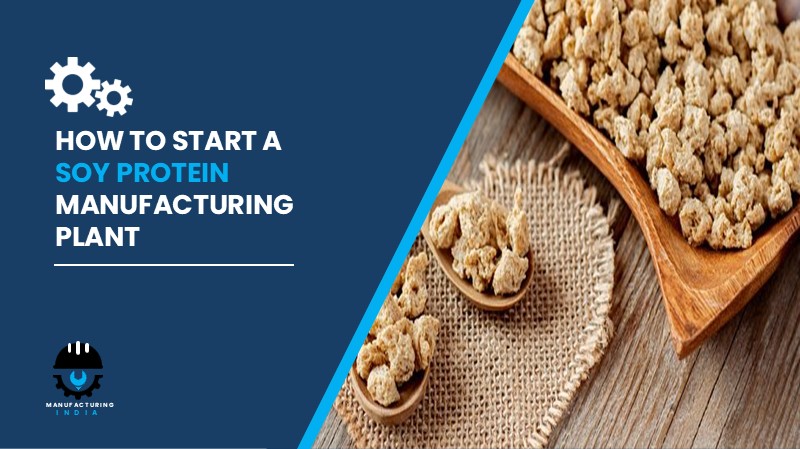
Soy protein is a high-quality, plant-based protein derived from soybeans a nutrient-dense legume that serves as a complete protein by providing all nine essential amino acids required for human health, making it an excellent alternative to animal protein for vegetarians, vegans, and health-conscious consumers. It is extracted by removing fats and carbohydrates from soybeans, and is commercially available in three primary forms: soy protein flour, soy protein concentrate, and soy protein isolate each offering different protein content levels and functional properties suited to specific food manufacturing applications. Soy protein is known to help build muscle, improve heart health by reducing LDL cholesterol, and aid in weight management due to its high satiety value nutritional credentials that underpin its growing adoption across health and wellness consumer product categories.
The primary production method involves extraction, isolation, and spray drying a multi-step processing operation integrating seed preparation, solvent extraction, protein concentration and purification, and spray drying into finished powder forms. End-use industries served include food and beverage, nutraceuticals, sports nutrition, animal feed, meat alternatives, pharmaceuticals, and functional foods. Key applications include protein fortification in beverages and bars, texturising plant-based meat substitutes, formulating meal replacement shakes, enhancing nutritional profiles in baked goods, and producing high-purity protein isolates for dietary supplements providing manufacturers with a single production investment that serves multiple high-value, rapidly growing buyer markets.
Cost of Setting Up a Soy Protein Manufacturing Plant in India
The total investment required to establish a soy protein manufacturing plant in India depends on plant capacity, product range flour, concentrate, or isolate geographic location, level of automation, and compliance with FSSAI food safety and environmental regulatory requirements. Investors must account comprehensively for both one-time capital expenditure and recurring operational costs when preparing a feasibility study or detailed project report (DPR).
1. Capital Expenditure (CapEx)
Land and Site Development constitutes a substantial foundational investment. Costs for land registration, boundary construction, internal road layout, drainage infrastructure, and site levelling vary based on whether the facility is within a government-notified food processing cluster, a Mega Food Park under MoFPI, or on privately acquired agricultural or industrial land. Food processing zones in Madhya Pradesh, Maharashtra, and Gujarat proximate to India’s primary soybean growing regions offer infrastructure-ready sites that minimise raw material inbound logistics costs and reduce time to market.
Civil Works and Construction encompasses the main seed preparation and conditioning hall, solvent extraction facility with explosion-proof construction and hexane vapour management systems, desolventising and toasting area, drying and cooling facility, grinding and classification room, quality control laboratory, finished product storage and packaging hall, effluent treatment facility, and administrative block. The hazardous solvent handling requirements for hexane-based extraction operations including explosion-proof electrical installations, ventilation systems, solvent recovery infrastructure, and fire suppression systems — add significantly to civil construction costs relative to ambient-process food manufacturing facilities.
Machinery and Equipment represent the single largest component of capital expenditure. Key machinery required for a soy protein manufacturing plant includes:
- Seed cleaners
- Conditioners
- Flaking mills
- Solvent extractors
- Desolventising toasters
- Drying and cooling units
- Grinding mills
- Packaging machines
Other Capital Costs include the effluent treatment plant (ETP) for managing hexane-contaminated process water and organic waste streams, hexane recovery and solvent storage infrastructure, pre-operative expenses covering regulatory filings and feasibility study preparation, plant commissioning charges, utility connection fees, and import duties applicable to specialised solvent extraction or spray drying equipment sourced internationally.
Request a Sample Report for In-Depth Market Insights: https://www.imarcgroup.com/soy-protein-manufacturing-plant-project-report/requestsample
2. Operational Expenditure (OpEx)
Raw Material Cost is the overwhelmingly dominant driver of operating expenditure, accounting for approximately 75–85% of total OpEx one of the highest raw material cost concentrations across food processing manufacturing categories. The primary inputs are soybean meal, hexane, and water. Soybean meal the de-fatted soy solid produced by solvent extraction of whole soybeans represents the largest raw material cost line, with its price linked to global soybean crush margins and domestic soybean commodity market dynamics subject to monsoon-driven seasonal variability and global agricultural supply cycles. Hexane the food-grade extraction solvent represents the second-largest input cost, with recovery efficiency from the solvent extraction and desolventising system directly determining hexane consumption per tonne of output and therefore per-unit production cost. Water is consumed throughout washing, pH adjustment, and product processing stages. Investors are advised to negotiate long-term supply contracts with soybean meal processors, hexane suppliers, and chemical distributors to stabilise input costs and ensure production continuity.
Utility Costs – covering electricity and steam for solvent extractors, desolventising toasters, drying and cooling units, grinding mills, and facility operations — account for approximately 10–15% of total OpEx. Desolventising and drying operations are the most energy-intensive process steps, requiring sustained steam and heat input to remove hexane and moisture from the protein product. Investors in regions with competitive industrial electricity and steam tariffs, reliable utility supply, and access to renewable energy options are better positioned to manage this cost component over the plant’s operational life.
Other Operating Costs include outbound transportation to food processing companies, sports nutrition brands, bakery manufacturers, meat alternative producers, nutraceutical formulators, and export buyers; packaging materials for 25 kg bags, jumbo bags, and export cartons; employee salaries and wages for food processing engineers, solvent safety specialists, quality assurance chemists, and regulatory compliance personnel; equipment maintenance; quality assurance testing for protein content, amino acid profile, moisture, and FSSAI nutritional standards compliance; depreciation on civil and machinery assets; and applicable taxes. By the fifth year of operations, total operational costs are expected to increase substantially due to inflation, market fluctuations, potential rises in soybean meal and hexane prices, supply chain disruptions, rising consumer demand, and shifts in the global economy.
3. Plant Capacity
The proposed soy protein manufacturing facility is designed with an annual production capacity ranging between 10,000 and 50,000 MT, enabling significant economies of scale while maintaining operational flexibility across different protein product grades soy flour, soy protein concentrate, and soy protein isolate and customer specification requirements. This capacity range is well-aligned with the procurement requirements of large food processing companies, sports nutrition brands, bakery manufacturers, plant-based meat alternative producers, and export buyers across international health food and ingredient markets. Capacity can be customised based on investor requirements and soybean meal procurement network scale. Profitability improves consistently with higher capacity utilisation, and soy protein plants support phased expansion through additional extraction and drying capacity with contained incremental CapEx.
4. Profit Margins and Financial Projections
The soy protein manufacturing plant demonstrates healthy profitability potential under normal operating conditions. Gross profit margins typically range between 30–40%, supported by stable multi-sector demand and the value-added, nutritionally differentiated nature of processed soy protein relative to commodity soybean meal inputs. Net profit margins range between 15–22%, reflecting the high raw material cost intensity and moderate utility requirements of the solvent extraction production model. Soy protein isolate commanding significantly higher per-kilogram prices than concentrate or flour offers the best margin profile and represents the most commercially attractive product grade for manufacturers with the process chemistry capability and quality systems to produce it at food-grade purity. A comprehensive financial analysis should include income projections, expenditure forecasts, gross and net margin tracking across Years 1 through 5, net present value (NPV), internal rate of return (IRR), payback period, and a full profit and loss account. Sensitivity analysis covering soybean meal commodity price movements and protein isolate selling price variability is recommended for investment-grade financial planning.
Why Set Up a Soy Protein Manufacturing Plant in India?
Plant-Based Diet Megatrend Structurally Driving Soy Protein Demand. The expanding vegan and vegetarian population, coupled with the rising awareness of the environmental benefits of plant-based proteins, is fuelling a sustained and structural shift toward plant-based protein ingredients across food manufacturing globally. As India’s own organised plant-based food sector grows driven by urban health consciousness, environmental awareness, and the influence of global dietary trends the domestic procurement of soy protein as the foundational ingredient in meat alternatives, dairy analogues, and protein-fortified products is expanding at pace across multiple food manufacturing segments simultaneously.
Sports Nutrition and Functional Food Markets Driving Premium Volume Demand. The growing popularity of soy protein in the foodservice industry and among health-conscious consumers, particularly in sports nutrition and functional food categories, is creating a large and premium-priced domestic demand stream for high-purity soy protein isolates. India’s rapidly expanding organised sports nutrition market serving both serious athletes and casual gym-goers seeking protein supplementation provides manufacturers with access to a consumer segment that prioritises protein content and quality over cost, supporting the premium pricing required to justify isolate-grade production capability.
India’s Food Manufacturing Sector Expansion Creating Multi-Year Demand Growth. India’s food manufacturing market is expected to grow from USD 307 billion in 2023 to USD 700 billion in 2030 according to IBEF. This near-doubling of the domestic food manufacturing economy directly expands the captive buyer base for functional protein ingredients across bakery, beverage, dairy analogue, processed food, and nutritional supplement manufacturers all of which use soy protein as a cost-effective, sustainable, and nutritionally complete ingredient across their product formulations.
Technology Innovation Expanding Soy Protein Application Scope. Advancements in soy protein extraction and processing technologies are enhancing the nutritional profile and functionality of soy protein, making it a more versatile ingredient across a widening range of applications. In November 2024, ICL Food Specialties and DAIZ Engineering announced the launch of ROVITARIS SprouTx a transformative soy protein leveraging proprietary germination technology to produce innovative textured soy proteins that allow formulators to create a new generation of plant-based meat and seafood products with excellent taste, texture, and nutritional attributes compared to existing plant-based protein options in the marketplace. This technology innovation signal directly expands the addressable product development opportunities for soy protein manufacturers who invest in capability beyond commodity flour production.
ADM’s Global Network Optimisation Confirming Strategic Market Importance. In August 2025, ADM announced that it is taking actions to streamline and strengthen its global soy protein production network, enhancing efficiency and positioning itself to better serve customers worldwide by capitalising on operational leverage and excellence at its recently recommissioned soy protein facility in Decatur, Illinois, as well as other facilities spanning its global network. This strategic capacity optimisation by the world’s largest soy protein producer focused specifically on soy protein network efficiency confirms the sustained commercial importance and investment priority that global food ingredient leaders continue to place on soy protein manufacturing capacity.
Cost-Competitive Manufacturing with Domestic Soybean Supply Access. India’s soybean production base one of Asia’s largest provides domestic soy protein manufacturers with direct access to the primary raw material at procurement-level prices, reducing import dependency and inbound logistics costs relative to processors in import-dependent markets. The combination of competitive land, construction, labour, and utility costs in India’s food processing zones, proximity to the growing domestic protein ingredient buyer base, and access to established export logistics infrastructure through ports in Gujarat and Maharashtra positions Indian soy protein manufacturers as commercially viable suppliers for both domestic and international food ingredient markets.
Manufacturing Process – Step by Step
The soy protein manufacturing process uses extraction, isolation, and spray drying as the primary production method. Below are the main stages involved in the soy protein manufacturing process flow:
- Soybean Meal Receipt and Inspection: Soybean meal is received from soybean crushing facilities, weighed, and tested for protein content, moisture, urease activity, and residual oil content before being cleared for the processing line — ensuring consistent feedstock quality for protein extraction.
- Seed Cleaning and Conditioning: Seed cleaners remove foreign matter from the soybean meal input, and conditioners adjust the temperature and moisture content of the material to optimise flaking and solvent extraction efficiency in subsequent processing stages.
- Flaking: Flaking mills compress the conditioned soybean meal into thin flakes that maximise the surface area exposed to solvent during extraction directly improving hexane contact efficiency and oil and protein extraction yield.
- Solvent Extraction: Solvent extractors bring the flaked soybean material into counter-current contact with food-grade hexane, dissolving residual oil from the flakes and producing a protein-rich de-fatted soy solid (white flake) along with a miscella stream containing the extracted oil and hexane. Extraction efficiency and hexane-to-meal ratio are controlled to maximise protein concentration in the de-fatted solid.
- Desolventising and Toasting: Desolventising toasters apply controlled steam and heat to the hexane-wet de-fatted soy flake to evaporate and recover hexane solvent, simultaneously applying a controlled toasting step that inactivates anti-nutritional factors including trypsin inhibitors and lectins while preserving protein solubility and functional properties required for the target soy protein product grade.
- Protein Extraction and Alkaline Solubilisation (for Concentrate and Isolate): For soy protein concentrate and isolate production, de-fatted toasted soy flake is mixed with water at alkaline pH to solubilise soy proteins while leaving insoluble fibre and carbohydrates behind. The alkaline extract is separated from insoluble residue by centrifugation or filtration.
- Acid Precipitation and Washing (for Isolate): For soy protein isolate production, the protein-rich alkaline extract is acidified to the isoelectric point of soy protein approximately pH 4.5 causing the protein to precipitate as a curd. The curd is separated by centrifugation and washed with water to remove residual sugars, minerals, and other solubles, producing a high-purity protein curd.
- Neutralisation and Resolubilisation: The washed protein curd is neutralised with alkali to the desired final pH for the product application, dissolving the protein back into aqueous solution as a high-protein slurry ready for spray drying.
- Drying and Cooling: Drying and cooling units typically spray dryers for isolate and flash dryers or rotary dryers for concentrate and flour grades convert the protein slurry or de-fatted flour into dry, free-flowing powder at controlled inlet temperatures, achieving the specified moisture content and particle size while preserving protein functionality.
- Grinding: Grinding mills process dried soy protein products to the target particle size specification for each commercial grade from standard mesh soy flour through to the fine powder specification required for beverage protein fortification and dietary supplement applications.
- Quality Inspection and Testing: Analytical instruments verify finished soy protein products for protein content, moisture, amino acid profile, protein dispersibility index (PDI), nitrogen solubility index (NSI), urease activity, microbial safety, and heavy metal levels against FSSAI and buyer specification acceptance criteria. Batch release is conditional on all parameters meeting the designated product grade specification.
- Packaging: Packaging machines fill finished soy protein flour, concentrate, or isolate into 25 kg multi-wall bags, jumbo bags, or export cartons depending on the customer and channel requirement, with product labelling including protein content, amino acid profile, allergen declaration, FSSAI licence number, best-before date, and batch code for full supply chain traceability.
- Dispatch to End-Use Industries: Finished soy protein is dispatched to food processing companies, sports nutrition brands, bakery manufacturers, plant-based meat alternative producers, nutraceutical formulators, animal feed producers, and export buyers in international protein ingredient markets.
Key Applications
Soy protein produced at this type of facility serves four primary end-use sectors with specific protein grade, functionality, and purity requirements for each:
- Food Processing: Used in plant-based protein products, meat alternatives, and nutritional supplements including textured soy protein for vegetarian meat substitutes and high-purity isolates for ready-to-drink protein beverages requiring clear, stable protein solutions.
- Beverage Industry: Incorporated in protein-fortified drinks, shakes, and functional beverages requiring high protein solubility, neutral flavour, and stability under beverage processing conditions including heat treatment and varying pH.
- Bakery and Confectionery: Applied in protein-enriched bread, snacks, and desserts where soy protein improves nutritional density, water absorption, and product texture particularly important for gluten-free and high-protein bakery formulations.
- Health and Nutrition: Used in dietary protein formulations, meal replacements, and sports nutrition products including protein powders, bars, and capsules where complete amino acid profile, high protein content, and consistent digestibility are mandatory formulation requirements.
Leading Soy Protein Producers
The global soy protein industry is served by several large-scale multinational manufacturers with extensive production capacities and diversified end-use application portfolios. Key players include:
- Wilmar International Ltd
- Cargill, Incorporated
- International Flavors & Fragrances Inc.
- CHS Inc.
- BRF Global
- Fuji Oil Holdings Inc.
Timeline to Start the Plant
Investors planning to establish a soy protein manufacturing plant in India should anticipate the following project development phases:
- Feasibility study and project report preparation
- Land acquisition and site development
- Regulatory approvals and environmental clearances
- Factory licence and fire safety compliance
- Machinery procurement and installation
- Raw material supplier agreements and supply chain setup
- Trial production and quality testing
- Commercial production launch
Licences and Regulatory Requirements
Starting a soy protein manufacturing unit in India requires several approvals:
- Business registration (Proprietorship, LLP, or Private Limited Company)
- Factory Licence under the Factories Act
- FSSAI (Food Safety and Standards Authority of India) Central Licence for manufacturing protein ingredients and functional food additives
- Environmental Clearance from the State Pollution Control Board — solvent extraction facilities are classified as Red category industries due to hexane usage
- Consent to Establish and Consent to Operate from the State Pollution Control Board
- Hazardous chemical safety compliance under the Manufacture, Storage and Import of Hazardous Chemical (MSIHC) Rules for hexane storage and handling
- GST Registration
- Fire Safety NOC — including hexane flammable solvent hazard compliance
- Effluent Treatment Plant (ETP) operational clearance for process wastewater management
- Occupational Health and Safety compliance covering hexane vapour exposure monitoring, explosion-proof equipment standards, and chemical handling protocols
- APEDA registration and export certification for manufacturers targeting international protein ingredient markets
Key Challenges to Consider
Soybean Meal Price Volatility as the Dominant Cost Variable. Soybean meal accounting for 75–85% of total OpEx is subject to significant commodity price volatility driven by global soybean supply dynamics, domestic monsoon variability, and international crushing margin cycles. Any meaningful increase in soybean meal prices directly compresses gross margins in this high raw-material-intensity business model. Long-term supply contracts with domestic soybean processors, multi-region procurement diversification, and strategic inventory management are essential risk mitigation practices.
Hexane Solvent Safety and Environmental Compliance. Hexane a flammable, volatile organic solvent classified as a hazardous chemical under MSIHC Rules requires comprehensive safety infrastructure including explosion-proof electrical installations, continuous vapour monitoring, solvent recovery systems, and emergency response protocols. Environmental compliance for hexane emissions is subject to CPCB ambient air standards, and any hexane release incident carries serious regulatory and reputational consequences. Managing hexane safety is a non-negotiable operational discipline that adds substantially to facility CapEx and ongoing safety management overhead.
Protein Quality and Functionality Consistency Management. Soy protein’s functional properties including protein dispersibility index (PDI), nitrogen solubility index (NSI), gelation behaviour, and emulsification capacity are highly sensitive to processing conditions, particularly desolventising and drying temperatures. Managing process parameters to consistently deliver the functional specification required by different buyer categories from sports nutrition isolates to texturised meat alternative ingredients requires disciplined process control and formulation chemistry expertise.
FSSAI Regulatory Compliance for Protein and Allergen Claims. Soy is a major food allergen that must be declared on all product labels under FSSAI allergen labelling regulations. Marketing soy protein on nutritional benefit platforms including protein content claims, amino acid profile statements, and cholesterol reduction claims is subject to FSSAI’s evolving standards for nutritional and health claims. Maintaining compliance across all product SKUs and export market regulatory requirements demands dedicated regulatory affairs investment and ongoing documentation management.
Competition from Established Global and Domestic Producers. The Indian soy protein market is served by imports from global producers including Cargill, Wilmar, and Fuji Oil Holdings alongside domestic processors. New entrants must differentiate through product quality consistency, application-specific formulation expertise including texturised soy protein for plant-based meat, and isolate-grade purity for sports nutrition or competitive pricing for institutional food processing buyers who prioritise supply reliability alongside cost.
Skilled Workforce for Solvent Extraction and Protein Chemistry Operations. Operating solvent extractors, desolventising toasters, spray drying systems, and protein chemistry laboratory instruments requires food processing engineers and biochemists with specialised training in soybean processing, hexane safety management, protein chemistry, and food-grade quality management. Sourcing and retaining this talent pool particularly for facilities located in agricultural processing zones outside major cities presents an ongoing operational challenge.
Frequently Asked Questions
1. How much does it cost to set up a soy protein manufacturing plant in India?
The total cost depends on plant capacity (10,000–50,000 MT per annum), product grade focus, location, and automation level. CapEx covers land, hazardous solvent-compliant civil construction, and machinery including seed cleaners, conditioners, flaking mills, solvent extractors, desolventising toasters, drying and cooling units, grinding mills, and packaging machines, along with hexane recovery infrastructure and pre-operative regulatory costs.
2. Is soy protein manufacturing profitable in India in 2026?
Yes. With gross margins of 30–40% and net margins of 15–22%, supported by India’s food manufacturing sector growing toward USD 700 billion by 2030, a global market expanding at 6.93% CAGR toward USD 19.54 billion by 2034, and strong multi-channel demand from food processing, sports nutrition, bakery, and plant-based meat alternative producers, the investment presents a commercially sound and improving profitability case.
3. What machinery is required for a soy protein manufacturing plant in India?
Key equipment includes seed cleaners, conditioners, flaking mills, solvent extractors, desolventising toasters, drying and cooling units, grinding mills, and packaging machines. Supporting systems include hexane recovery and storage infrastructure, protein isolation and precipitation equipment for isolate-grade production, spray drying systems, analytical laboratory instruments, and ETP for process wastewater management.
4. What licences and approvals are required to start a soy protein manufacturing plant in India?
Required approvals include business registration, FSSAI Central Licence, Factory Licence, Environmental Clearance and Pollution Control Board Consent to Operate (Red category), MSIHC hazardous chemical compliance for hexane, GST Registration, Fire Safety NOC with hexane flammable hazard compliance, ETP operational clearance, Occupational Health and Safety compliance, and APEDA export registration where international markets are targeted.
5. What raw materials are needed for soy protein manufacturing?
The primary raw materials are soybean meal, hexane, and water. Additional inputs include food-grade acids and alkalis for pH adjustment during protein isolation, packaging materials for bags and cartons, and analytical reagents for quality control testing throughout the production process.
6. What are the environmental compliance requirements for a soy protein manufacturing plant in India?
As a Red category industry, solvent extraction requires Environmental Clearance, Pollution Control Board Consent to Operate, and a comprehensive ETP for process wastewater management. MSIHC compliance for hexane storage and handling, continuous hexane vapour emission monitoring against CPCB ambient air standards, and hexane solvent recovery system performance requirements add further environmental management obligations.
7. What is the best location to set up a soy protein manufacturing plant in India?
States with established soybean cultivation and processing infrastructure including Madhya Pradesh, Maharashtra, and Rajasthan for soybean-proximate locations combined with access to food processing industrial zones, reliable utility supply, and domestic food manufacturing buyer proximity in Gujarat and Maharashtra offer the best combination of raw material access, regulatory infrastructure, and market connectivity for soy protein manufacturing investment.
8. What is the break-even period for this type of plant in India?
The break-even period depends on plant capacity utilisation, product mix between flour, concentrate, and isolate grades, soybean meal procurement cost management, and buyer contract development speed. A full NPV and IRR analysis incorporating sensitivity testing for soybean meal price movements and protein isolate selling price variability is recommended for investment-grade financial planning.
9. What government incentives are available for soy protein manufacturers in India?
MoFPI food processing infrastructure grants, Pradhan Mantri Kisan Sampada Yojana agro-processing subsidies, PLI scheme for processed food manufacturing, Mega Food Park infrastructure access, APEDA export development support, oilseed processing promotion under national oilseed mission schemes, and state-level agro-industrial incentive programs in Madhya Pradesh and Maharashtra all provide meaningful financial and market access support for qualifying soy protein manufacturing investments.
Key Takeaways for Investors
A soy protein manufacturing plant in India represents a commercially sound and multi-sector investment opportunity backed by a global market valued at USD 10.69 billion in 2025 growing at 6.93% CAGR toward USD 19.54 billion by 2034, essential ingredient status across food processing, sports nutrition, bakery, beverage, plant-based meat, and nutraceutical sectors, and India’s own food manufacturing economy projected to reach USD 700 billion by 2030 directly expanding the domestic captive buyer base for soy protein ingredients at scale. Financial viability is demonstrated across a production capacity range of 10,000 to 50,000 MT per annum, with gross margins of 30–40% and net margins of 15–22% achievable under competitive soybean meal procurement and efficient extraction operations with product mix management toward high-purity soy protein isolate providing a meaningful margin-enhancement pathway. Active global industry investment including ADM’s August 2025 strategic network optimisation focused on soy protein production efficiency, and ICL Food Specialties’ and DAIZ Engineering’s November 2024 launch of ROVITARIS SprouTx germination-technology soy protein for next-generation plant-based meat and seafood formulations confirms the sustained commercial innovation and capacity investment that is driving soy protein’s growing application scope and market expansion. With India’s plant-based food sector growing, sports nutrition market expanding, and food manufacturing investment accelerating, the long-term demand sustainability and commercial opportunity for Indian soy protein manufacturing investors are comprehensively and durably well-supported throughout the decade ahead.
About the Author