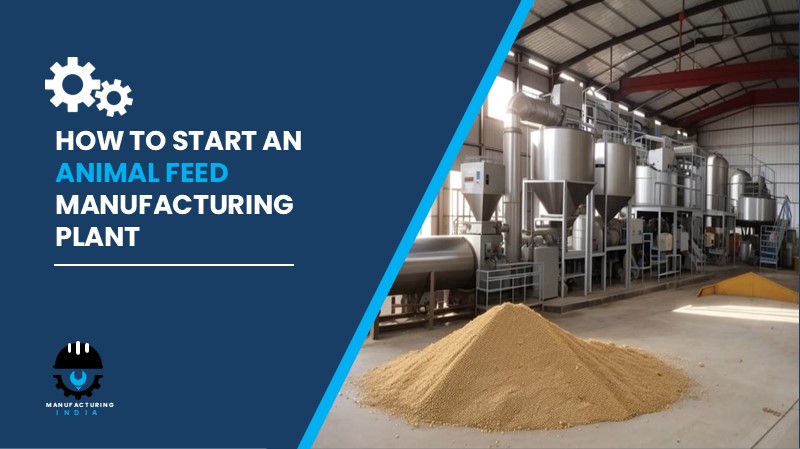
Setting up an animal feed manufacturing plant in India presents a compelling investment case grounded in the country’s position as one of the world’s largest livestock and poultry producers, the accelerating intensification of commercial dairy, broiler, layer, and aquaculture farming, and the structural shift from traditional on-farm feeding toward scientifically formulated, commercially manufactured compound feed across every animal agriculture segment. Animal feed a nutritional solution providing essential dietary requirements for livestock, poultry, aquaculture species, and companion animals through the precise blending of cereals, oilseed meals, vitamins, minerals, amino acids, and feed additives is the foundational input for every commercial animal production enterprise, ensuring consistent animal health, optimised growth rates, improved feed conversion ratios, and enhanced reproductive performance that determine the profitability of India’s vast and growing animal agriculture sector. The global animal feed market was valued at USD 548.1 billion in 2025 and is projected to reach USD 702.75 billion by 2034 at a CAGR of 2.8%, underpinned by rising protein consumption, expanding commercial livestock operations, and the continuous advancement of precision nutrition and functional additive formulations that improve feed efficiency and animal health outcomes.
India’s structural advantages make it a particularly strong location for establishing an animal feed manufacturing facility. The country’s large and expanding commercial poultry, dairy, and aquaculture sectors create a large, geographically distributed, and structurally growing domestic buyer base for compound feed products across multiple species and production systems. Abundant maize, soybean meal, and oil cake supply from India’s own agricultural production provides cost-competitive raw material access relative to countries with import-dependent feed ingredient supply chains. Government support through the National Dairy Development Board, the National Livestock Mission, and state-level poultry and dairy development schemes provides policy and financial tailwinds for both feed manufacturers and their downstream buyer markets. In September 2025, De Heus India inaugurated a new animal feed manufacturing facility in Rajpura, Punjab, with an investment of approximately USD 17 million among India’s largest feed plants confirming the active international investor confidence in India’s commercial animal feed market at scale.
An animal feed manufacturing plant in India is positioned within a global market valued at USD 548.1 billion in 2025 growing at 2.8% CAGR toward USD 702.75 billion by 2034, driven by the rapid expansion of commercial livestock and poultry farming, rising protein consumption, and advancing precision nutrition technology. With gross margins of 15–25% and net margins of 5–12% at a production capacity of 20,000–100,000 MT per annum, and with animal feed serving as a non-discretionary, recurring-demand input across every animal agriculture segment, this investment delivers commercially stable and scalable returns.
What is Animal Feed?
Animal feed functions as a nutritional solution providing essential dietary requirements for livestock, poultry, aquaculture species, and companion animals. It is created through the specific blending of cereals, oilseed meals, vitamins, minerals, amino acids, and feed additives mixed in exact proportions to enhance animal growth, reproductive capabilities, immune system functioning, and overall performance. Animal feed is produced in different forms including mash, pellets, crumbles, and liquid feed to match the requirements of different animal species and their respective feeding methods.
Current animal feed formulations aim to enhance digestibility and feed conversion rates while delivering complete nutrition and meeting safety and quality standards that safeguard animal health and productivity. Modern feeds increasingly incorporate precision nutrition principles, functional additives including enzymes, probiotics, and phytogenics, and species-specific formulations that optimise performance across broiler, layer, dairy cattle, buffalo, sheep, goat, shrimp, and fish production systems. The primary production method involves raw material grinding, mixing, conditioning, pelleting or extrusion, cooling, and packaging. End-use industries served include poultry farming, the dairy industry, livestock farming, and aquaculture.
Cost of Setting Up an Animal Feed Manufacturing Plant in India
The total investment required to establish an animal feed manufacturing plant in India depends on plant capacity, feed type focus, geographic location, level of automation, and compliance with feed safety and environmental regulatory requirements. Investors must account comprehensively for both one-time capital expenditure and recurring operational costs when preparing a feasibility study or detailed project report (DPR).
1. Capital Expenditure (CapEx)
Land and Site Development constitutes a substantial foundational investment. Costs for land registration, boundary construction, internal road layout, drainage infrastructure, and site levelling vary based on whether the facility is within a government-notified agro-industrial estate, a food and feed processing zone, or on privately acquired agricultural or industrial land. Feed manufacturing locations in Haryana, Punjab, Uttar Pradesh, Maharashtra, and Andhra Pradesh proximate to both major raw material supply areas and commercial poultry, dairy, and aquaculture farming clusters minimise inbound and outbound logistics costs and reduce time-to-market.
Civil Works and Construction encompasses the main raw material receiving and storage building which must accommodate large-volume grain silo infrastructure or covered warehouse storage for maize, soybean meal, and oil cake — along with the grinding and mixing production hall, pelleting or extrusion facility, cooling and sieving area, quality control laboratory, finished goods warehouse, and administrative block. Structural requirements for large-capacity hammer mills, pellet presses, and bulk grain handling conveyors, combined with food-grade hygiene standards for feed production areas, add to civil construction costs relative to standard industrial buildings.
Machinery and Equipment represent the single largest component of capital expenditure. Key machinery required for an animal feed manufacturing plant includes:
- Grinding machines (hammer mills)
- Mixers
- Pellet presses or extruders
- Coolers
- Packaging machines
Other Capital Costs include the effluent treatment plant (ETP) for managing process water and organic waste streams, pre-operative expenses covering regulatory filings and feasibility study preparation, plant commissioning charges, utility connection fees, and import duties applicable to specialised high-capacity pellet presses or automated packaging systems sourced internationally.
Request a Sample Report for In-Depth Market Insights: https://www.imarcgroup.com/animal-feed-manufacturing-plant-project-report/requestsample
2. Operational Expenditure (OpEx)
Raw Material Cost is the overwhelmingly dominant driver of operating expenditure, accounting for approximately 80–85% of total OpEx the highest raw material cost concentration across food and agri-processing manufacturing categories except precious metal jewelry and certain specialty chemical processes. The primary inputs are maize the dominant energy ingredient along with soybean meal, oil cake, and vitamins and mineral premixes. Maize alone is the largest single cost line, and its price is subject to seasonal agricultural commodity market fluctuations driven by monsoon variability, government procurement policies, and global corn market dynamics. Soybean meal prices follow their own commodity cycle linked to global soybean crush capacity and crushing margins. Investors are advised to establish long-term supply contracts with grain traders, oilseed meal manufacturers, and premix suppliers, and to maintain strategic raw material inventory buffers during price-advantageous procurement windows to manage input cost volatility. Locating plants in proximity to major grain trading and storage hubs in Haryana, Madhya Pradesh, and Maharashtra reduces inbound procurement costs materially.
Utility Costs – covering electricity for grinding machines, mixers, pellet presses, coolers, and facility operations account for approximately 5–10% of total OpEx. Hammer mills for grain grinding and pellet presses are the most energy-intensive equipment in the animal feed production line, and investors in regions with competitive industrial electricity tariffs and reliable grid supply are better positioned to manage this cost component. Steam for feed conditioning which improves pellet quality and digestibility by pre-treating mixed mash before pelleting is an additional utility requirement for pellet feed production.
Other Operating Costs include outbound transportation to poultry farms, dairy farms, aquaculture operations, and livestock farming enterprises which typically requires high-frequency, multi-route bulk delivery logistics; packaging materials for retail-format bags and bulk delivery tankers; employee salaries and wages for feed formulation nutritionists, production operators, quality technicians, and logistics coordinators; equipment maintenance; quality assurance testing for feed safety, mycotoxin contamination, and nutritional analysis compliance; depreciation on civil and machinery assets; and applicable taxes. By the fifth year of operations, total operational costs are expected to increase substantially due to inflation, market fluctuations, potential rises in maize and soybean meal procurement prices, supply chain disruptions, rising consumer demand, and shifts in the global economy.
3. Plant Capacity
The proposed animal feed manufacturing facility is designed with an annual production capacity ranging between 20,000 and 100,000 MT, enabling significant economies of scale while maintaining operational flexibility across different feed types broiler, layer, dairy, aquaculture, and companion animal and customer specification requirements. This capacity range is well-aligned with the procurement requirements of organised commercial poultry integrators, dairy cooperatives, aquaculture hatcheries, and independent farm operators across India’s growing animal agriculture sector. Capacity can be customised based on investor requirements, raw material procurement network scale, and target market species focus. Profitability improves consistently with higher capacity utilisation, and animal feed plants support phased capacity expansion through additional hammer mills, mixers, and pellet press lines with contained incremental CapEx.
4. Profit Margins and Financial Projections
The animal feed manufacturing plant demonstrates stable and commercially sound profitability potential under normal operating conditions. Gross profit margins typically range between 15–25%, supported by stable recurring demand across all animal agriculture segments and the value-added, precision-formulated nature of compound feed relative to raw grain and oilseed inputs. Net profit margins range between 5–12%, reflecting the very high raw material cost intensity of the production model. A comprehensive financial analysis should include income projections, expenditure forecasts, gross and net margin tracking across Years 1 through 5, net present value (NPV), internal rate of return (IRR), payback period, and a full profit and loss account. Sensitivity analysis covering maize and soybean meal commodity price movements is the most critical variable for investment-grade financial planning in this sector.
Why Set Up an Animal Feed Manufacturing Plant in India?
Essential and Non-Discretionary Input Across All Animal Agriculture Segments. Animal feed serves as a basic requirement for livestock, poultry, and aquaculture enterprises animals eat continuously, which creates permanent demand that protects the industry from economic downturns. This non-discretionary, recurring-demand nature of commercial animal feed provides manufacturers with a structurally stable buyer base and predictable production volume requirements across all economic and seasonal cycles a demand characteristic that distinguishes animal feed from most other food and agri-processing investment categories.
Rapid Expansion of Commercial Poultry and Livestock Farming in India. India’s commercial poultry sector — one of the fastest-growing in Asia is expanding production capacity across broiler and layer operations, driving large and growing procurement of formulated compound feed from reliable local suppliers. Dairy intensification, buffalo farming modernisation, and the organised aquaculture sector’s growth in Andhra Pradesh, Telangana, and Odisha are simultaneously creating parallel demand streams that feed manufacturers with appropriately diversified product portfolios can address from a single production facility.
Rising Protein Consumption and Changing Dietary Patterns Driving Feed Demand. The global alignment of protein consumption growth with persistent demand for advanced compound feed formulations is a primary structural driver for the animal feed market. India’s own rising per-capita consumption of chicken, eggs, fish, and dairy products driven by urbanisation and income growth creates the downstream demand pull that sustains and expands poultry, livestock, and aquaculture production volumes, and therefore the compound feed procurement that supports those operations.
Active International Investment Validating India’s Feed Market Scale. In September 2025, De Heus India inaugurated a new animal feed manufacturing facility in Rajpura, Punjab, with an investment of approximately USD 17 million. Among India’s largest feed plants, the facility has an initial capacity of 180 kMT, expandable to 240 kMT, and features automated production lines for cattle, poultry, buffalo, and pig feed using European technology a direct signal of international investor confidence in India’s commercial animal feed market and validation of its scale and growth trajectory. In February 2026, Akralos Animal Nutrition officially began operations as a North American feed and nutrition company formed through a joint venture between ADM and Alltech, with over 40 feed mills and a workforce exceeding 1,400, supplying animal feeds, minerals, and supplements supported by advanced nutrition science reflecting the consolidation and investment momentum occurring at scale in the global industry.
Supportive Government Policies for Dairy, Poultry, and Livestock Development. The government supports dairy development, poultry growth, livestock health, and domestic feed production through various initiatives which create opportunities for organised animal feed manufacturing. India’s National Dairy Development Board programmes, state livestock development schemes, and poultry development incentives collectively grow the commercial farming sector that buys compound feed creating an indirect but powerful policy tailwind for animal feed manufacturers serving these supported farming segments.
Technology Advancement in Precision Nutrition and Functional Additives. Improvements in feed technology including precision nutrition, functional additives such as enzymes, probiotics, and phytogenics, and advanced pelleting processes that improve digestibility and bioavailability — are enhancing feed efficiency and animal health outcomes across all production systems. Manufacturers investing in modern formulation capability and precision manufacturing technology can differentiate their products with measurable performance benefits over commodity compound feed, supporting premium pricing and improved customer retention.
Manufacturing Process – Step by Step
The animal feed manufacturing process uses raw material grinding, mixing, conditioning, pelleting or extrusion, cooling, and packaging as the primary production method. Below are the main stages involved in the animal feed manufacturing process flow:
- Raw Material Receipt and Inspection: Maize, soybean meal, oil cake, vitamins and mineral premixes, and other feed ingredients are received, weighed, sampled, and tested for moisture content, protein content, mycotoxin contamination, and adulteration before being cleared for storage and production scheduling.
- Raw Material Storage: Incoming grain and oilseed meal inputs are stored in silos or covered warehouses under conditions that prevent moisture absorption, mould development, and insect infestation critical for maintaining feed ingredient safety and nutritional value throughout the inventory holding period.
- Feed Formulation: Nutritionists develop least-cost feed formulations for each species and production stage, specifying the precise proportions of each ingredient required to deliver the target nutrient profile at minimum raw material cost, using computerised linear programming tools.
- Grinding: Grinding machines typically hammer mills process whole grain maize and other coarse ingredients into a fine, uniform particle size that optimises digestibility and mixing homogeneity for the target species and feed form.
- Weighing and Batching: Automated or semi-automated weighing and batching systems measure each ingredient to the precise quantities specified by the formulation, assembling batches for the mixer in the correct proportions.
- Mixing: Mixers blend all weighed ingredients including ground grains, oilseed meals, premixes, vitamins, minerals, and liquid additives into a thoroughly homogeneous mash at specification mixing times and intensities, achieving coefficient of variation (CV) values for nutrient distribution that meet quality standards for the target feed type.
- Conditioning: For pellet feed production, the mixed mash passes through a conditioner that adds steam and moisture, raising the temperature and moisture content to improve pellet binding, starch gelatinisation, and pathogen kill efficiency before pressing.
- Pelleting or Extrusion: Pellet presses compress the conditioned mash through die holes under high pressure to form cylindrical pellets of defined diameter, length, and hardness for each feed type. Extruders are used for aquaculture and pet food applications, producing expanded, shaped, and textured feed particles with controlled density and water stability.
- Cooling: Coolers lower the temperature and moisture of freshly pressed pellets or extruded feed to ambient conditions, achieving the residual moisture specification that ensures safe long-term storage and maintains pellet quality through the distribution chain.
- Screening and Grading: Screens separate fine particles and oversized pellets from the on-specification pellet product, with fines recycled to the mixing stage and oversized pieces returned for re-grinding or reprocessing.
- Quality Inspection and Testing: Analytical instruments test finished feed products for nutritional profile, moisture content, pellet hardness and durability, mycotoxin levels, microbial safety, and particle size distribution against specification acceptance criteria. Batch release is conditional on all parameters meeting relevant feed safety and quality standards.
- Packaging: Packaging machines fill finished animal feed into retail bags, bulk bags, or bulk tanker vehicles depending on the customer and channel requirement, applying product labels with species, life stage, nutritional guarantee, feed registration number, and batch traceability information.
- Dispatch to End-Use Industries: Finished compound feed is dispatched to poultry farms for broiler growth, layer egg production, and breeder nutrition; to dairy and livestock operations for cattle, buffalo, sheep, and goat nutrition; to aquaculture operations for fish and shrimp feed; and to companion animal product distributors.
Key Applications
Animal feed produced at this type of facility serves four primary end-use sectors with specific formulation, form, and specification requirements for each:
- Poultry: Used in broiler growth feed for meat production, layer feed for egg production, and breeder feed for chick and hatching egg supply the largest single volume application for commercially manufactured compound feed in India.
- Dairy and Livestock: Utilised in cattle feed, buffalo feed, and sheep and goat nutrition programs to support milk yield, meat production, reproductive performance, and general health across India’s large commercial and semi-commercial dairy and livestock farming sector.
- Aquaculture: Employed in fish and shrimp feed formulations for intensive and semi-intensive aquaculture operations producing major commercial species including rohu, catla, pangasius, vannamei shrimp, and tilapia across India’s rapidly expanding inland and coastal aquaculture sector.
- Companion Animals: Used in nutritionally balanced pet food and specialty feed for dogs, cats, and other companion animals a growing application segment driven by India’s expanding organised pet care market and rising pet ownership among urban consumers.
Leading Animal Feed Manufacturers
The global animal feed industry is served by several large-scale multinational manufacturers with extensive production capacities and diversified multi-species end-use portfolios. Key players include:
- Alltech
- Anova Feed
- Archer-Daniels-Midland Company
- Bunge Global SA
- Cargill Incorporated
- Charoen Pokphand Foods PCL
- Godrej Agrovet Limited
- Nutreco N.V.
- Purina Animal Nutrition LLC
Timeline to Start the Plant
Investors planning to establish an animal feed manufacturing plant in India should anticipate the following project development phases:
- Feasibility study and project report preparation
- Land acquisition and site development
- Regulatory approvals and environmental clearances
- Factory licence and fire safety compliance
- Machinery procurement and installation
- Raw material supplier agreements and supply chain setup
- Trial production and quality testing
- Commercial production launch
Licences and Regulatory Requirements
Starting an animal feed manufacturing unit in India requires several approvals:
- Business registration (Proprietorship, LLP, or Private Limited Company)
- Factory Licence under the Factories Act
- Feed manufacturing registration under the Prevention of Cruelty to Animals (Regulation of Livestock Markets) Rules and applicable state animal feed regulations
- Bureau of Indian Standards (BIS) registration for feed products covered under mandatory IS specifications where applicable
- Environmental Clearance from the State Pollution Control Board
- GST Registration
- Fire Safety NOC
- Effluent Treatment Plant (ETP) operational clearance for organic waste and process water management
- Occupational Health and Safety compliance covering grain dust management, pelleting equipment operations, and chemical additive handling
- FSSAI licence where pet food or companion animal feed products are manufactured under food safety regulations
Key Challenges to Consider
Extreme Raw Material Price Concentration – Maize and Soybean Meal. Maize and soybean meal together account for 80–85% of total OpEx — one of the highest raw material cost concentrations in all manufacturing. Any significant movement in corn or soybean meal commodity prices directly and materially compresses or expands gross margins. Long-term supply contracts, multi-source procurement across growing regions, and strategic grain inventory management are essential operational disciplines for managing this dominant cost variable.
Mycotoxin Contamination Risk in Grain Raw Materials. Aflatoxin, fumonisin, and other mycotoxin contamination in maize the primary raw material poses a serious feed safety risk that can cause livestock health problems, production losses, and regulatory penalties for feed manufacturers found supplying contaminated product. Implementing robust incoming grain mycotoxin testing, maintaining controlled grain storage conditions, and incorporating mycotoxin binder additives in formulations are mandatory quality and risk management requirements.
Feed Formulation Expertise and Precision Nutrition Capability. Producing commercially competitive compound feed with verifiable performance advantages over competitor products requires qualified animal nutritionists, access to updated ingredient nutrient databases, and computerised least-cost formulation systems. Building or retaining this formulation expertise represents an ongoing investment in intellectual capital that is as critical to commercial success as physical production infrastructure.
Logistics and Last-Mile Distribution Intensity. Commercial animal feed requires high-frequency, multi-point delivery to geographically dispersed farms often located in rural areas with variable road infrastructure. Building and managing an effective farm delivery logistics network including bulk delivery vehicles, delivery scheduling systems, and customer service capabilities is a significant operational challenge and capital commitment beyond the production plant investment.
Competition from Established Domestic and Multinational Feed Companies. India’s organised animal feed market is served by well-capitalised domestic companies including Godrej Agrovet, and multinational players including Cargill, Charoen Pokphand, and De Heus all of which bring brand recognition, agronomist advisory services, and farmer credit programmes alongside their feed products. New entrants must compete on product quality, species-specific formulation performance, localised customer service, and competitive pricing within their target geographic and species market segments.
Regulatory and Feed Safety Compliance Management. Ensuring consistent compliance with feed safety standards including mycotoxin limits, prohibited substance restrictions, and labelling requirements across every production batch requires robust quality management system documentation, regular third-party laboratory testing, and ongoing regulatory affairs engagement. Non-compliance carries regulatory penalties, farmer liability claims, and reputational damage that are commercially very difficult to recover from in a market where trust and technical credibility are primary purchase criteria.
Frequently Asked Questions
1. How much does it cost to set up an animal feed manufacturing plant in India?
The total cost depends on plant capacity (20,000–100,000 MT per annum), feed type focus, location, and automation level. CapEx covers land, agro-industrial civil construction, and machinery including grinding machines, mixers, pellet presses or extruders, coolers, and packaging machines, along with grain storage infrastructure and pre-operative regulatory costs.
2. Is animal feed manufacturing profitable in India in 2026?
Yes. With gross margins of 15–25% and net margins of 5–12%, supported by non-discretionary, recurring demand across poultry, dairy, livestock, aquaculture, and companion animal segments, a global market growing at 2.8% CAGR toward USD 702.75 billion by 2034, and active international investment including De Heus India’s September 2025 USD 17 million facility inauguration in Punjab, the investment presents a commercially sound and stable profitability case.
3. What machinery is required for an animal feed manufacturing plant in India?
Key equipment includes grinding machines (hammer mills), mixers, pellet presses or extruders, coolers, and packaging machines. Supporting systems include silos and grain storage infrastructure, conditioners for pre-pelleting steam treatment, screening and grading equipment, automated weighing and batching systems, and analytical testing laboratory instruments.
4. What licences and approvals are required to start an animal feed manufacturing plant in India?
Required approvals include business registration, Factory Licence, feed manufacturing registration under applicable state and central animal feed regulations, BIS registration where applicable, Environmental Clearance, GST Registration, Fire Safety NOC, ETP operational clearance, and Occupational Health and Safety compliance.
5. What raw materials are needed for animal feed manufacturing?
The primary raw materials are maize the dominant energy ingredient soybean meal, oil cake, and vitamins and mineral premixes. Additional inputs include amino acids such as lysine and methionine, feed additives including enzymes, probiotics, and antifungal agents, and packaging materials for retail bags and bulk delivery formats.
6. What are the environmental compliance requirements for an animal feed manufacturing plant in India?
Environmental Clearance from the State Pollution Control Board is required, along with an operational ETP for managing organic process water and grain dust-laden waste water, compliance with ambient dust emission standards for grinding and milling operations, and adherence to solid waste management rules for grain husk, screenings, and organic by-product disposal.
7. What is the best location to set up an animal feed manufacturing plant in India?
Locations with proximity to both major grain procurement areas and large commercial poultry, dairy, or aquaculture farming clusters including Haryana and Punjab for poultry and dairy, Andhra Pradesh for poultry and aquaculture, Maharashtra for dairy and livestock, and Uttar Pradesh for dairy and poultry offer the best combination of raw material access, farm buyer proximity, and logistics connectivity for animal feed manufacturing investment.
8. What is the break-even period for this type of plant in India?
The break-even period depends on plant capacity utilisation, product mix across species and feed types, raw material procurement cost management, and farm delivery logistics efficiency. A full NPV and IRR analysis incorporating sensitivity testing for maize and soybean meal price movements and volume variability is recommended for investment-grade financial planning.
9. What government incentives are available for animal feed manufacturers in India?
National Dairy Development Board and National Livestock Mission support programmes, state-level dairy and poultry development schemes, MoFPI food and feed processing infrastructure grants, agro-industrial zone incentives, and general Make in India manufacturing investment incentives provide relevant financial and regulatory support for qualifying animal feed manufacturing investments.
Key Takeaways for Investors
An animal feed manufacturing plant in India represents one of the most commercially stable and structurally demand-anchored investments available in the country’s agri-processing landscape backed by a global market valued at USD 548.1 billion in 2025 growing at 2.8% CAGR toward USD 702.75 billion by 2034, the non-discretionary, permanent demand nature of commercial animal feed as the foundational input for every livestock, poultry, aquaculture, and companion animal operation, and India’s own rapidly expanding commercial farming sector across all these segments. Financial viability is demonstrated across a production capacity range of 20,000 to 100,000 MT per annum, with gross margins of 15–25% and net margins of 5–12% achievable under competitive raw material procurement and efficient production operations. The American Feed Industry Association (AFIA) reports approximately 5,650 animal food manufacturing facilities in the United States producing nearly 284 million tons of finished feed and pet food annually as of 2023 a benchmark that illustrates the immense scale of commercial feed manufacturing infrastructure required to support a modern animal agriculture economy, and the corresponding opportunity that India’s own rapidly industrialising animal farming sector is creating for domestic feed manufacturers. With De Heus India’s September 2025 state-of-the-art facility inauguration and ADM-Alltech’s February 2026 Akralos joint venture launch confirming sustained global industry investment and innovation, the long-term demand sustainability and commercial opportunity for Indian animal feed manufacturing investors are comprehensively and durably well-supported throughout the decade ahead.
About the Author