Setting up a lead acid battery recycling plant in India presents a compelling investment case, driven by strong demand from battery manufacturing, automotive, industrial equipment, telecommunications, renewable energy storage, mining, and metallurgy sectors. Recycling enables valuable lead, plastics, and electrolyte materials to be reintroduced into the manufacturing cycle, reducing dependence on primary mining while supporting resource efficiency. The growing number of end-of-life automotive, industrial, telecom, and energy storage batteries continue to generate substantial feedstock for recycling facilities.
India’s expanding automotive production, industrial battery installations, and backup power applications continue to generate recyclable battery volumes, and stricter environmental regulations mandating safe collection, processing, and disposal of spent batteries are encouraging investment in cutting-edge recycling facilities. This growing feedstock base, combined with steady demand from battery manufacturers seeking a reliable recovered-lead supply, makes India a strategically sound location for this investment.
This investment benefits from growing feedstock availability, cost-competitive recovered-lead production, and steady demand from battery manufacturing, automotive, and industrial energy storage sectors. With gross margins of 20–28% and net margins of 7–13%, it offers a credible path to break-even viability.
What is Lead Acid Battery Recycling?
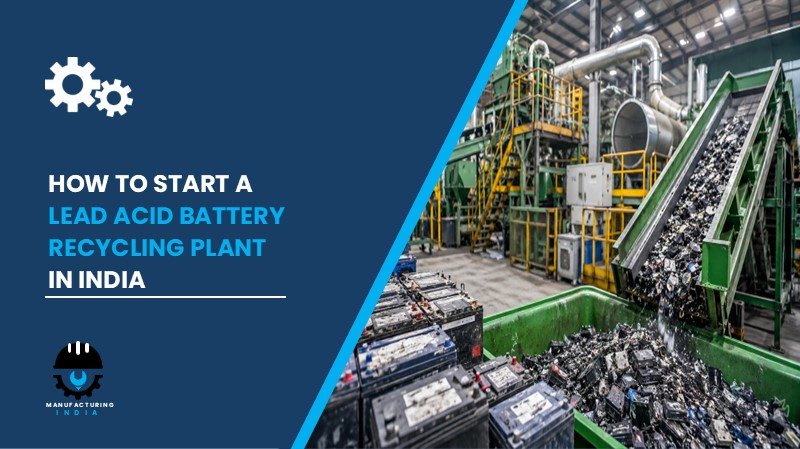
Lead-acid battery recycling is a resource recovery process that converts discarded batteries into reusable raw materials for manufacturing new industrial products. Spent batteries are collected and transported to recycling facilities, where they are mechanically broken apart to separate lead-bearing components, casings, and electrolyte. The recovered lead compounds are refined into secondary lead suitable for battery production, while plastic components are processed into recycled resins and the electrolyte is treated for reuse or safe disposal. By eliminating landfill waste and the need for fresh lead extraction, the process supports a closed-loop manufacturing paradigm.
The lead acid battery recycling process uses collection, dismantling, crushing, material separation, lead recovery, refining, plastic recycling, electrolyte treatment, quality inspection, and packaging as its core stages. End-use industries served include battery manufacturing, automotive, industrial equipment, telecommunications, renewable energy storage, mining, and metallurgy.
Cost of Setting Up a Lead Acid Battery Recycling Plant in India
Cost depends on capacity, technology, location, automation, and regulatory compliance.
1. Capital Expenditure (CapEx)
Total capital investment for the plant depends on capacity, technology, and location, covering land acquisition, site preparation, and necessary infrastructure. Land and site development — including registration, boundary development, and related charges – forms a substantial part of the investment, and investors can evaluate industrial estates or designated zones offering robust infrastructure, transportation, and utilities, while ensuring compliance with local zoning and environmental regulations.
Machinery costs account for the largest portion of capital expenditure, with scale of production and automation level determining the total cost.
Key machinery required includes:
- Battery breaking systems
- Crushers
- Hydro-separators
- Rotary furnaces
- Refining kettles
- Alloying furnaces
- Plastic washing units
- Pelletizers
- Electrolyte treatment systems
- Baghouse filters
- Gas cleaning equipment
- Wastewater treatment units
- Automated conveying systems
- Laboratory testing instruments
- Packaging equipment
- Centralized process control systems
Other capital costs cover infrastructure and utility setup, ensuring a solid foundation for safe and efficient plant operations.
Request a Sample Report for In-Depth Market Insights: https://www.imarcgroup.com/lead-acid-battery-recycling-plant-project-report/requestsample
2. Operational Expenditure (OpEx)
Raw material cost is the largest component of operating expenses. Spent lead acid batteries, sodium carbonate/NaOH, and coke/anthracite together account for approximately 40–50% of total OpEx, making long-term supplier contracts essential to mitigate price volatility.
Utility cost accounts for approximately 20–28% of OpEx. Other operating costs include transportation, packaging, salaries and wages, depreciation, taxes, and maintenance.
By the fifth year, total operational cost is expected to rise substantially due to inflation, market fluctuations, rising raw material costs, supply chain disruptions, and shifts in the global economy.
3. Plant Capacity
The proposed facility is designed with an annual production capacity ranging between 20,000–60,000 MT/year of spent batteries processed, enabling economies of scale while maintaining flexibility. Capacity can be customized based on investor requirements, and profitability generally improves with higher capacity utilisation.
4. Profit Margins and Financial Projections
Financial projections cover ROI, profitability, and long-term sustainability, based on capital investment, operating costs, capacity utilization, and demand outlook. Gross profit margins typically range between 20–28%, while net profit margins range between 7–13%. Payback period, liquidity, and net present value (NPV) figures form part of the full financial analysis.
Why Set Up a Lead Acid Battery Recycling Plant in India?
Recovery of Valuable Raw Materials. Recycling enables lead, plastics, and other reusable materials to be recovered efficiently, reducing reliance on newly mined resources.
Stable Supply for Battery Manufacturers. Recovered lead provides manufacturers with a reliable, cost-effective raw material source while reducing exposure to fluctuations in primary lead markets.
Environmental Compliance Tailwinds. Investment in cutting-edge recycling facilities is encouraged by increasingly strict environmental regulations mandating the safe collection, processing, and disposal of spent batteries.
Growing Availability of Used Batteries. Expanding automotive production, industrial battery installations, and backup power applications continue to generate recyclable battery volumes worldwide, including in India.
Active Industry Investment. In December 2025, ACE Green Recycling announced the expansion of its battery recycling business through new lead-acid and lithium battery recycling projects, scaling proprietary low-emission technology to increase production of high-purity recycled lead.
Support for Circular Manufacturing. Recycling enhances sustainability throughout the value chain by reusing recovered materials in new battery production.
Recycling Process – Step by Step
The lead acid battery recycling process uses mechanical dismantling and refining as the primary method, followed by material recovery and packaging.
- Battery collection: Spent batteries are collected and transported to the recycling facility.
- Dismantling: Batteries are mechanically broken apart to separate lead-bearing components, casings, and electrolyte solution.
- Crushing: Battery components are crushed to prepare them for material separation.
- Material separation: Hydro-separators divide lead-bearing components, plastics, and electrolyte for individual processing.
- Lead recovery: Lead compounds are processed in rotary furnaces to recover raw lead.
- Refining: Refining kettles and alloying furnaces convert recovered lead into battery-grade lead suitable for production.
- Plastic recycling: Plastic washing units and pelletizers process polypropylene casings into recycled resin pellets.
- Electrolyte treatment: Electrolyte treatment systems treat the electrolyte solution for reuse or safe disposal.
- Quality inspection and packaging: Laboratory testing instruments verify quality before packaging equipment prepares materials for dispatch to end-use industries such as battery manufacturing and automotive.
Key Applications
- Battery Manufacturing: Recovered lead is extensively used to manufacture new automotive and industrial lead-acid batteries.
- Automotive Sector: Vehicle manufacturers and battery producers utilize recycled lead in starter batteries for passenger vehicles, commercial fleets, motorcycles, and heavy-duty transportation equipment.
- Industrial Energy Storage: Telecommunications networks, data centers, power utilities, and UPS manufacturers rely on recycled lead for stationary batteries that provide dependable backup power.
- Plastic Resource Recovery: Polypropylene battery containers are cleaned, processed, and converted into recycled plastic pellets for manufacturing battery casings and other molded industrial products.
- Sustainable Waste Management: Battery recycling prevents hazardous materials from entering the environment while conserving valuable resources.
Leading Manufacturers
Leading producers in the global industry include:
- Ecobat
- Clarios
- East Penn Manufacturing Company
- Doe Run Company
Timeline to Start the Plant
- Feasibility study and project report preparation
- Land acquisition and site development
- Regulatory approvals and environmental clearances
- Factory licence and fire safety compliance
- Machinery procurement and installation
- Raw material supplier agreements and supply chain setup
- Trial production and quality testing
- Commercial production launch
Licences and Regulatory Requirements
Starting a lead acid battery recycling unit in India requires several approvals:
- Business registration (Proprietorship, LLP, or Pvt Ltd)
- Factory Licence under the Factories Act
- Environmental Clearance from State Pollution Control Board
- GST Registration
- Fire Safety NOC
- Hazardous/chemical compliance for lead and electrolyte handling
- Effluent Treatment Plant (ETP) operational clearance
- Occupational Health and Safety compliance
Key Challenges to Consider
High Capital Requirements. Machinery costs, including rotary furnaces, refining kettles, and alloying furnaces, account for the largest share of capital expenditure.
Raw Material Price Volatility. Spent lead acid batteries, sodium carbonate/NaOH, and coke/anthracite together make up 40–50% of OpEx, so reliable long-term supplier contracts are essential.
Regulatory Compliance. Safety protocols, monitoring systems, and effluent treatment requirements must be implemented throughout the process to minimize environmental impact.
Technology Pressure. Modern facilities are adopting cleaner recovery technologies, automated material handling, and improved refining processes to enhance efficiency and reduce emissions.
Competition from Established Players. Global producers such as Ecobat, Clarios, East Penn Manufacturing Company, and Doe Run Company set a high bar for new entrants.
Skilled Manpower. Operating rotary furnaces, refining kettles, and electrolyte treatment systems requires trained, well-supervised personnel.
Frequently Asked Questions
1. How much does it cost to set up this facility in India?
Cost depends on capacity, technology, location, automation, and regulatory compliance, covering land, civil works, machinery, and other capital costs.
2. Is lead acid battery recycling profitable in India in 2026?
Gross margins of 20–28% and net margins of 7–13% indicate healthy profitability potential under normal operating conditions.
3. What machinery is required for this facility in India?
Battery breaking systems, crushers, hydro-separators, rotary furnaces, refining kettles, alloying furnaces, plastic washing units, pelletizers, electrolyte treatment systems, baghouse filters, gas cleaning equipment, wastewater treatment units, and packaging equipment.
4. What licences and approvals are required to start the unit in India?
Business registration, a Factory Licence, Environmental Clearance, GST Registration, Fire Safety NOC, hazardous/chemical compliance, ETP clearance, and occupational health and safety compliance.
5. What raw materials are needed for lead acid battery recycling?
Spent lead acid batteries, sodium carbonate/NaOH, and coke/anthracite.
6. What are the environmental compliance requirements for this facility in India?
Environmental Clearance from the State Pollution Control Board, an operational ETP, and safety/monitoring systems.
7. What is the best location to set up this facility in India?
Easy access to spent batteries and key chemical inputs, proximity to target markets, and robust transportation and utility infrastructure.
8. What is the break-even period for this type of plant in India?
It depends on capacity utilisation, pricing trends, and cost structure, detailed through payback period and NPV analysis in the full financial projections.
9. What government incentives are available for manufacturers in India?
Stricter environmental regulations mandating safe battery collection, processing, and disposal are encouraging investment in cutting-edge recycling facilities.
Key Takeaways for Investors
This opportunity taps into steady, diversified demand from battery manufacturing, automotive, industrial equipment, telecommunications, renewable energy storage, mining, and metallurgy sectors. The project shows healthy financial viability across its proposed 20,000–60,000 MT/year capacity range, with gross margins of 20–28% and net margins of 7–13%. With the global market valued at USD 36.84 Billion in 2025 and projected to reach USD 50.28 Billion by 2034, and lead batteries already the most successfully recycled consumer product with a 99% recovery rate, demand fundamentals for domestically produced recovered lead appear well-positioned for long-term investor interest.
About the Author