
A potassium chloride production plant setup in India presents a compelling investment case, driven by steady demand from agriculture, food processing, pharmaceuticals, water treatment, chemical manufacturing and de-icing. Potassium chloride is a primary source of potassium in fertilizers, improving crop yield, soil fertility and plant resilience across cereals, oilseeds, fruits and vegetables. That makes it a critical input for India’s farm economy and food security.
India’s urbanisation, infrastructure growth and Make in India push for domestic chemical output add to this momentum. Food manufacturing in India is expected to grow from USD 307 Billion in 2023 to USD 700 Billion in 2030 (IBEF), which widens the demand base for salt substitutes and flavour enhancers. Fertilizer distributors and agricultural cooperatives increasingly prefer dependable regional suppliers to reduce import dependency, which makes India a strategically sound location for this production.
Policy support for local production, a raw-material-led cost structure, demand from fertilizers, food and pharmaceuticals, gross margins of 25-35% and net margins of 12-18% together make a strong investment case. A well-planned unit with disciplined cost control can reach break-even viability while serving a market that is projected to keep growing.
What is Potassium Chloride?
Potassium chloride (KCl) is an inorganic, odorless, white crystalline salt composed of potassium and chlorine, appearing as colorless crystals or powder. It is highly soluble in water and has a salty taste. It is extracted from minerals like sylvite or seawater and is primarily used as “potash” in agriculture to promote plant growth.
Medicinally, it serves as an electrolyte replenisher to treat hypokalemia (low blood potassium). It is also widely used as a sodium-free table salt substitute, in water softeners and in industrial applications.
The production process combines solution mining, evaporation, crystallization and drying. End-use industries include agriculture, food processing, pharmaceuticals, water treatment, chemical manufacturing and de-icing. Typical applications are fertilizer production, salt substitutes, IV drip formulations, water softener regeneration, industrial potassium compounds and runway ice control.
Cost of Setting Up a Potassium Chloride Production Plant in India
The potassium chloride production plant cost in India depends on capacity, technology, location, automation and regulatory compliance. Costs are best understood through capital expenditure and operational expenditure, followed by capacity and margins.
1. Capital Expenditure (CapEx)
Land and site development covers land acquisition, registration, boundary development and site preparation. Industrial estates or SEZ-style zones can be considered, provided the site offers access to sylvite ore and brine solution, reliable transport, utilities and waste management systems. Civil works include the production shed, laboratory, raw material and finished goods storage, and the administration block, laid out with separate zones for storage, production and quality control and room for future expansion.
Machinery and equipment account for the largest portion of CapEx. Key machinery required includes:
- Crushers
- Screens
- Flotation cells
- Centrifugal separators
- Crystallizers
- Drying units
- Compaction granulators
- Bagging machines
Equipment should be corrosion-resistant and compliant with industry standards for safety, efficiency and reliability. Other capital costs include effluent treatment systems, pre-operative expenses, commissioning and any applicable import duties on equipment.
Request a Sample Report for In-Depth Market Insights: https://www.imarcgroup.com/potassium-chloride-manufacturing-plant-project-report/requestsample
2. Operational Expenditure (OpEx)
Raw material cost is the largest component, at 60-70% of OpEx. The main inputs are sylvite ore and brine solution, and long-term contracts with nearby suppliers help stabilize pricing and supply. Utility cost covers electricity, water and steam, and accounts for 20-25% of OpEx.
Other operating costs include transportation, packaging, salaries and wages, repairs and maintenance, depreciation and taxes. By the fifth year, total operational cost is expected to rise substantially because of inflation, market fluctuations, supply chain disruptions and potential increases in key material costs.
3. Plant Capacity
The proposed facility is designed for an annual capacity of 100,000-500,000 tons (1-5 lakh tons), which enables economies of scale while keeping operations flexible. Capacity can be customized to investor requirements, and profitability improves with higher capacity utilisation.
4. Profit Margins and Financial Projections
Under normal operating conditions, gross profit margins typically range between 25-35% and net profit margins between 12-18%. Financial projections rest on assumptions for capital investment, operating costs, capacity utilisation, pricing trends and demand outlook. A full study covers NPV, ROI, payback period, profit and loss accounts and sensitivity analysis to test viability and long-term sustainability.
Why Set Up a Potassium Chloride Production Plant in India?
Essential agricultural input: Potassium chloride is one of the primary potassium sources in fertilizers and supports cereals, oilseeds, fruits and vegetables. Demand is tied to global food security and modern agriculture, which gives the product a durable customer base.
Megatrend alignment: Rising population, shrinking arable land and the push for higher productivity sustain demand for potassium-based fertilizers. Precision farming and growing fertilizer use in emerging economies further strengthen the long-term outlook.
Policy and regulatory tailwinds: Government initiatives to boost agricultural productivity, support farmers and ensure food security indirectly support potash demand. Fertilizer subsidies, agricultural modernization and domestic chemical production programs also encourage local output.
Cost-competitive production: Raw material sourcing near sylvite ore and brine solution, combined with proximity to target markets, lowers distribution costs. Moderate entry barriers, driven by purity control, crystallization and reliable sourcing, protect established producers.
Active industry investment and growth: The global potassium chloride market was 71.20 Million Tons in 2025 and is expected to reach 102.23 Million Tons by 2034, a CAGR of 3.9% from 2026 to 2034. Advances in mining and extraction technologies are improving efficiency and reducing costs.
Local supply chain preference: Distributors and cooperatives want regional suppliers who can manage price volatility and ensure timely availability during peak sowing seasons. Efficient domestic producers with strong logistics and sourcing capabilities are well placed to meet this need.
Potassium Chloride Production Process: Step by Step
The potassium chloride production process uses solution mining, evaporation, crystallization and drying as the primary production method. The main stages are:
- Raw material sourcing and handling: Sylvite ore and brine solution are received, stored and prepared based on mass balance and raw material requirements.
- Crushing and screening: Crushers and screens size the ore for downstream separation.
- Flotation and separation: Flotation cells and centrifugal separators separate potassium chloride from impurities.
- Evaporation and crystallization: Crystallizers produce potassium chloride crystals with controlled purity.
- Drying: Drying units remove moisture from the crystals.
- Compaction and granulation: Compaction granulators produce the required product form.
- Quality testing: Quality assurance criteria and technical tests are applied at each stage.
- Packaging and dispatch: Bagging machines pack the product for dispatch to agriculture, food, pharmaceutical, water treatment and chemical customers.
Key Applications of Potassium Chloride
Potassium chloride serves a diverse set of industries:
- Agriculture: primary source of potassium in fertilizers to improve crop yield and soil fertility.
- Food industry: salt substitute and flavour enhancer in low-sodium food products.
- Pharmaceuticals: ingredient in electrolyte replenishment solutions and potassium supplements.
- Chemical industry: raw material for potassium hydroxide and potassium carbonate.
- Water treatment: water softener regeneration.
- De-icing: runway ice control.
Leading Potassium Chloride Producers
Global production is led by multinational companies with extensive capacities and diverse application portfolios. Key players include:
- Nutrien Ltd.
- The Mosaic Company
- Uralkali PJSC
- Belaruskali
- K+S Aktiengesellschaft
Timeline to Start the Plant
- Feasibility study and project report preparation
- Land acquisition and site development
- Regulatory approvals and environmental clearances
- Factory licence and fire safety compliance
- Machinery procurement and installation
- Raw material supplier agreements and supply chain setup
- Trial production and quality testing
- Commercial production launch
Licences and Regulatory Requirements
Starting a potassium chloride production unit in India requires several approvals:
- Business registration (Proprietorship, LLP, or Pvt Ltd)
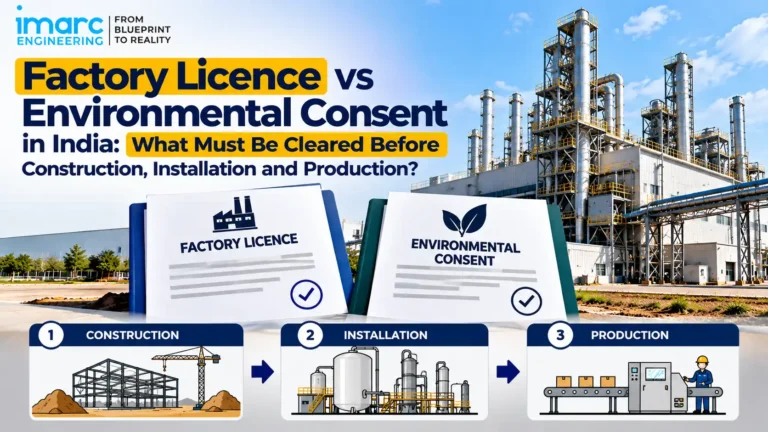
- Factory Licence under the Factories Act
- Environmental Clearance from State Pollution Control Board
- GST Registration
- Fire Safety NOC
- Effluent Treatment Plant (ETP) operational clearance
- Occupational Health and Safety compliance
Key Challenges to Consider
- High capital requirements: machinery, especially corrosion-resistant equipment, is the largest share of CapEx.
- Raw material price volatility: sylvite ore and brine solution make up 60-70% of OpEx, so price swings affect margins.
- Regulatory compliance: zoning, environmental and emission standards must be met, with effluent treatment in place.
- Quality and entry barriers: consistent purity, controlled crystallization and testing require process expertise.
- Competition: Nutrien Ltd., The Mosaic Company, Uralkali PJSC, Belaruskali and K+S Aktiengesellschaft operate at scale.
- Skilled manpower: operators and quality staff are needed across production and testing.
Frequently Asked Questions
1. How much does it cost to set up a potassium chloride production plant in India?
Cost depends on capacity (100,000-500,000 tons), technology and location. CapEx covers land, civil works, machinery and other capital costs, with machinery the largest portion.-
2. Is potassium chloride production profitable in India in 2026?
Gross margins typically range between 25-35% and net margins between 12-18%, supported by stable demand and value-added applications.
3. What machinery is required for a potassium chloride plant in India?
Crushers, screens, flotation cells, centrifugal separators, crystallizers, drying units, compaction granulators and bagging machines.
4. What licences and approvals are required to start a potassium chloride plant in India?
Business registration, a Factory Licence, Environmental Clearance from the State Pollution Control Board, GST Registration, Fire Safety NOC, ETP clearance and occupational health and safety compliance.
5. What raw materials are needed for potassium chloride production?
Sylvite ore and brine solution.
6. What are the environmental compliance requirements for a potassium chloride plant in India?
Effluent treatment systems, monitoring systems to detect leaks or deviations, and compliance with local zoning laws and environmental regulations.
7. What is the best location to set up a potassium chloride plant in India?
One with easy access to sylvite ore and brine solution, proximity to target markets, and robust transport, utilities and waste management.
8. What government incentives are available for manufacturers in India?
Fertilizer subsidies, agricultural modernization programs and domestic chemical production initiatives support demand and local output.
Key Takeaways for Investors
The potassium chloride opportunity in India is anchored in fertilizers, with added demand from food processing, pharmaceuticals, water treatment, chemical manufacturing and de-icing. Financial viability is supported across the 100,000-500,000 ton range, with gross margins of 25-35% and net margins of 12-18%. The global market is projected to grow from 71.20 Million Tons in 2025 to 102.23 Million Tons by 2034, at a CAGR of 3.9%. With population growth and agricultural productivity goals continuing, demand for this investment is set to remain sustainable.
About the Author