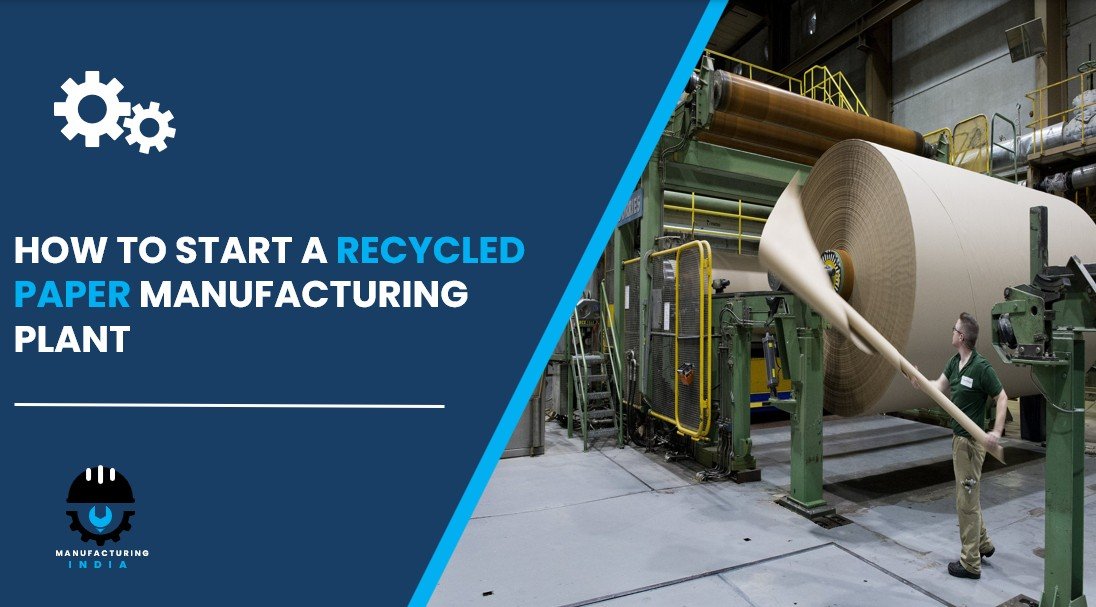
Setting up a recycled paper plant cost in india is driven by the rising consumption of paper-based packaging, increasing collection and utilization of recovered paper for tissue and printing-grade paper, and strong sustainability commitments by brand owners and retailers to lower virgin-fiber usage. The global recycled paper market size was valued at USD 38.92 Billion in 2025. According to IMARC Group estimates, the market is expected to reach USD 55.88 Billion by 2034, exhibiting a CAGR of 4.1% from 2026 to 2034. This feasibility report covers a comprehensive market overview to micro-level information such as unit operations involved, raw material requirements, utility requirements, infrastructure requirements, machinery and technology requirements, manpower requirements, packaging requirements, and transportation requirements, along with a detailed setup cost covering project economics, capital investments (CapEx), operating expenses (OpEx), income and expenditure projections, and financial analysis.
Minimum Cost Required to Set Up a Recycled Paper Manufacturing Plant:
Industry cost benchmarking for recycled paper manufacturing points to a minimum entry investment of roughly USD 8-12 million for a smaller-scale facility near the lower end of the proposed capacity band (around 10,000-20,000 MT/year), reflecting the cost of waste-paper sorting and pulping systems, screening and cleaning units, deinking equipment, refiners, paper machines, pressing and drying systems, calendaring, rewinding, cutting, packaging, and effluent-treatment infrastructure. Capital requirements can scale to around USD 15-25 million for mid-sized plants (approximately 20,000-35,000 MT/year), and may exceed USD 30-40 million for larger facilities at the upper end of the capacity range (40,000-50,000 MT/year and above), where larger paper machines, advanced deinking and fiber-processing systems, higher automation, expanded utilities, quality-control laboratories, and environmental-management infrastructure significantly increase overall investment. IMARC’s 2026 report specifies a proposed production capacity of 10,000-50,000 MT/year and identifies sorting, pulping, screening, cleaning, optional deinking, refining, paper forming, pressing, drying, calendaring, rewinding, cutting, and packing as key production stages.
Request Sample: https://www.imarcgroup.com/recycled-paper-manufacturing-plant-project-report/requestsample
What is Recycled Paper?
Recycled paper is paper manufactured using recovered paper and board (post-consumer and/or pre-consumer waste) as the primary fiber source instead of virgin wood pulp. It is produced by repulping collected paper, removing contaminants such as plastics, staples, inks, coatings, and adhesives, and then reforming the cleaned fiber slurry into new paper sheets through forming, pressing, and drying. Depending on the end product, recycled paper may include deinking, bleaching (where applicable), strength additives, fillers, and surface sizing to achieve the required brightness, smoothness, printability, and mechanical properties. Recycled paper grades commonly include kraft liner/test liner, fluting medium, duplex board, newsprint, printing paper, and tissue base paper, each tailored to specific performance and regulatory requirements.
Key Investment Highlights
- Process Used: Sorting & pulping, screening/cleaning, deinking (optional), thickening/refining, paper machine forming/pressing/drying, calendaring, rewinding, cutting & packing.
- End-use Industries: Packaging, tissue & hygiene, printing & writing.
- Applications: Used for corrugated boxes (liner & fluting), paper bags and cartons, tissue/napkin/roll base paper, notebooks and office paper (grade-dependent), and industrial wrapping papers.
Regional Insights:
Recycled paper manufacturing plant costs vary across regions, influenced by the availability and pricing of recovered paper, collection and recycling infrastructure, electricity and water costs, paper-making technology, labour, logistics, environmental requirements, and proximity to packaging, tissue, printing, and paperboard markets. IMARC’s 2026 analysis covers a proposed plant capacity of 10,000–50,000 MT annually and identifies sorting, pulping, screening, cleaning, optional deinking, refining, sheet formation, pressing, drying, calendaring, rewinding, cutting, and packing as key process stages.
● Asia Pacific (China, India, Japan, South Korea, Australia, Indonesia, Thailand, Malaysia, Vietnam, Philippines, Singapore) Large paper-consuming populations, expanding e-commerce and packaging industries, growing recycling infrastructure, and established paper-manufacturing clusters support recycled paper plant development. China and India offer substantial recovered-paper supply and downstream demand, while Japan and South Korea provide advanced recycling and paper-processing technologies. Access to waste-paper collection networks, water, energy, and transportation infrastructure can significantly influence plant economics.
● North America (U.S., Canada, Mexico) Well-developed waste collection and recycling systems, established packaging and tissue industries, and strong demand for recycled-content products support recycled paper manufacturing. Advanced sorting, deinking, pulp-processing, and paper-machine technologies can improve production efficiency, while labour, energy, water treatment, construction, and environmental-compliance costs influence overall investment requirements.
● Europe (Germany, U.K., France, Italy, Spain, Netherlands, Belgium, Poland, Sweden, Norway, Denmark, Switzerland) Advanced recycling infrastructure, established paper and packaging industries, and strong sustainability and circular-economy policies support recycled paper production. IMARC notes that Europe is expected to remain a leading region because of its advanced recycling infrastructure and stringent environmental policies. Plant economics are influenced by recovered-paper collection costs, energy prices, labour, environmental compliance, and wastewater-management requirements.
● Latin America (Brazil, Argentina, Mexico, Colombia, Chile, Peru, Paraguay, Uruguay, Ecuador) Growing packaging consumption, urbanisation, e-commerce, and increasing emphasis on waste recovery are creating opportunities for recycled paper manufacturing. Plant economics depend on the reliability of recovered-paper collection networks, access to water and energy, imported machinery requirements, transportation infrastructure, and proximity to major packaging and consumer-product markets.
● Middle East & Africa (Saudi Arabia, UAE, Qatar, Kuwait, Oman, Israel, Egypt, South Africa, Nigeria, Morocco, Algeria, Kenya, Ethiopia, Tanzania, Ghana) Expanding packaging demand, urban development, waste-management initiatives, and investments in sustainable manufacturing are creating opportunities for recycled paper production. Project costs are influenced by the availability and quality of recovered paper, water and energy requirements, imported equipment, collection infrastructure, logistics, skilled labour, and wastewater and solid-waste management systems.
Recycled Paper Plant Capacity
The proposed manufacturing facility is designed with an annual production capacity ranging between 10,000–50,000 MT, enabling economies of scale while maintaining operational flexibility.
Recycled Paper Plant Profit Margins
The project demonstrates healthy profitability potential under normal operating conditions. Gross profit margins typically range between 30–40%, supported by stable demand and value-added applications.
- Gross Profit: 30–40%
- Net Profit: 12–20%
Recycled Paper Plant Cost Analysis
The operating cost structure of a recycled paper manufacturing plant is primarily driven by raw material consumption, particularly waste paper, which accounts for approximately 50–60% of total operating expenses (OpEx).
- Raw Materials: 50–60% of OpEx
- Utilities: 20–30% of OpEx
Financial Projection
The financial projections for the proposed project have been developed based on realistic assumptions related to capital investment, operating costs, production capacity utilization, pricing trends, and demand outlook. These projections provide a comprehensive view of the project’s financial viability, ROI, profitability, and long-term sustainability.
Major Applications
- Packaging: Corrugated boxes, cartons, and protective paper-based packaging.
- Printing & Publishing: Newspapers, books, office paper, and marketing materials.
- Construction: Recycled paper insulation, fiberboard, and drywall facing paper.
- Hygiene & Consumer Products: Tissue paper, paper towels, napkins, and molded pulp products.
Why Recycled Paper Manufacturing?
- Core Circular-Economy Material: Recycled paper converts recovered paper waste into value-added grades used in everyday packaging and hygiene products, reducing landfill burden while improving resource efficiency across supply chains.
- Moderate but Defensible Entry Barriers: While less complex than petrochemicals, consistent quality requires strong sourcing networks for recovered paper, robust contaminant removal and process control, and stable paper machine performance — creating operational barriers that favor disciplined producers.
- Megatrend Alignment: Growth in e-commerce and organized retail is increasing corrugated packaging demand, while institutional and consumer hygiene consumption supports tissue grades — driving steady pull for recycled fiber-based products.
- Regulatory & Brand Sustainability Push: Producer responsibility frameworks, packaging waste rules, and corporate recycled-content targets are accelerating procurement of recycled paper and board, improving long-term demand visibility for compliant suppliers.
- Localization & Supply Reliability: Local recycled paper capacity helps converters and FMCG supply chains reduce lead times and exposure to imported virgin pulp volatility, enabling more resilient procurement strategies.
Recycled Paper Industry Outlook 2026
The recycled paper industry is witnessing steady growth, driven by the increasing demand for sustainable products and a reduction in waste generation. The growing focus on sustainability, coupled with rising environmental awareness among consumers, is boosting the use of recycled paper across various applications. The global push toward reducing plastic packaging is also driving the demand for recycled paper as an alternative. IBEF stated that the India paper packaging market size reached Rs. 1,57,263 crore (USD 18.6 billion) in CY24. Regions such as North America and Europe, with their advanced recycling infrastructure and stringent environmental policies, are expected to continue leading the market. Meanwhile, the Asia-Pacific region, particularly China and India, is emerging as a key player due to their large populations and rapid industrialization. The increasing shift toward circular economies and sustainable supply chains will further accelerate the adoption of recycled paper products. Additionally, innovations in recycling technology are improving the efficiency and cost-effectiveness of recycling processes, making recycled paper more affordable and accessible.
Leading Recycled Paper Manufacturers
Leading manufacturers in the global recycled paper industry include several multinational companies with extensive production capacities and diverse application portfolios. Key players include:
- Smurfit Kappa
- International Paper
- Stora Enso
- WestRock
- Sonoco Products
All the above serve end-use sectors such as packaging, tissue & hygiene, and printing & writing.
Speak to an Analyst: https://www.imarcgroup.com/request?type=report&id=9089&flag=C
How to Setup a Recycled Paper Manufacturing Plant?
Setting up a recycled paper manufacturing plant requires evaluating several key factors, including technological requirements and quality assurance. Some of the critical considerations include:
Detailed Process Flow
The manufacturing process is a multi-step operation that involves several unit operations, material handling, and quality checks. Below are the main stages involved in the recycled paper manufacturing process flow:
- Unit Operations Involved
- Mass Balance and Raw Material Requirements
- Quality Assurance Criteria
- Technical Tests
- Site Selection: The location must offer easy access to key raw materials such as waste paper, water, and drinking/cleaning chemicals. Proximity to target markets will help minimize distribution costs. The site must have robust infrastructure, including reliable transportation, utilities, and waste management systems. Compliance with local zoning laws and environmental regulations must also be ensured.
- Plant Layout Optimization: The layout should be optimized to enhance workflow efficiency, safety, and minimize material handling. Separate areas for raw material storage, production, quality control, and finished goods storage must be designated. Space for future expansion should be incorporated to accommodate business growth.
- Equipment Selection: High-quality, corrosion-resistant machinery tailored for recycled paper production must be selected. Essential equipment includes pulpers, screening systems, centrifugal cleaners, de-inking flotation cells, dispersers, refiners, paper machines, and reeling and sheeting lines. All machinery must comply with industry standards for safety, efficiency, and reliability.
- Raw Material Sourcing: Reliable suppliers must be secured for raw materials like waste paper, water, and drinking/cleaning chemicals to ensure consistent production quality. Minimizing transportation costs by selecting nearby suppliers is essential. Sustainability and supply chain risks must be assessed, and long-term contracts should be negotiated to stabilize pricing and ensure a steady supply.
- Safety and Environmental Compliance: Safety protocols must be implemented throughout the manufacturing process of recycled paper. Advanced monitoring systems should be installed to detect leaks or deviations in the process. Effluent treatment systems are necessary to minimize environmental impact and ensure compliance with emission standards.
- Quality Assurance Systems: A comprehensive quality control system should be established throughout production. Analytical instruments must be used to monitor product concentration, purity, and stability. Documentation for traceability and regulatory compliance must be maintained.
Project Economics
Establishing and operating a recycled paper manufacturing plant involves various cost components, including:
- Capital Investment: The total capital investment depends on plant capacity, technology, and location. This investment covers land acquisition, site preparation, and necessary infrastructure.
- Equipment Costs: Equipment costs, such as those for pulpers, screening systems, centrifugal cleaners, de-inking flotation cells, dispersers, refiners, paper machines, and reeling and sheeting lines, represent a significant portion of capital expenditure. The scale of production and automation level will determine the total cost of machinery.
- Raw Material Expenses: Raw materials, including waste paper, water, and drinking/cleaning chemicals, are a major part of operating costs. Long-term contracts with reliable suppliers will help mitigate price volatility and ensure a consistent supply of materials.
- Infrastructure and Utilities: Costs associated with land acquisition, construction, and utilities (electricity, water, steam) must be considered in the financial plan.
- Operational Costs: Ongoing expenses for labor, maintenance, quality control, and environmental compliance must be accounted for. Optimizing processes and providing staff training can help control these operational costs.
- Financial Planning: A detailed financial analysis, including income projections, expenditures, and break-even points, must be conducted. This analysis aids in securing funding and formulating a clear financial strategy.
Capital Expenditure (CapEx) and Operational Expenditure (OpEx) Analysis
Capital Investment (CapEx): Machinery costs account for the largest portion of the total capital expenditure. The cost of land and site development, including charges for land registration, boundary development, and other related expenses, forms a substantial part of the overall investment. This allocation ensures a solid foundation for safe and efficient plant operations.
Operating Expenditure (OpEx): In the first year of operations, the operating cost for the recycled paper manufacturing plant is projected to be significant, covering raw materials, utilities, depreciation, taxes, packing, transportation, and repairs and maintenance. By the fifth year, the total operational cost is expected to increase substantially due to factors such as inflation, market fluctuations, and potential rises in the cost of key materials. Additional factors, including supply chain disruptions, rising consumer demand, and shifts in the global economy, are expected to contribute to this increase.
Frequently Asked Questions:
1. How much capital is required to start a recycled paper manufacturing plant?
The capital investment generally includes land acquisition, site development, civil construction, production machinery, utilities, storage facilities, quality control equipment, installation, environmental management systems, pre-operative expenses, and initial working capital. The total investment varies depending on production capacity, manufacturing technology, automation level, and plant location.
2. How do I start a recycled paper manufacturing business?
Starting a recycled paper manufacturing business requires conducting a market and feasibility study, selecting a suitable plant location, arranging financing, obtaining the required licenses and environmental approvals, procuring and installing production equipment, hiring skilled personnel, establishing reliable sources of recovered paper, and developing sales and distribution networks. Efficient waste management and quality-control systems should also be established.
3. What raw materials are required for recycled paper manufacturing?
The primary raw material is recovered waste paper and board, including post-consumer and pre-consumer paper waste. Other inputs may include water, cleaning and processing chemicals, deinking agents where applicable, fillers, strength additives, bleaching agents for certain grades, and packaging materials. The exact requirements depend on the type and quality specifications of the recycled paper being produced.
4. What machinery and equipment are required to start a recycled paper manufacturing plant?
A recycled paper manufacturing plant typically requires sorting and pulping systems, pulpers, screening systems, centrifugal cleaners, deinking flotation cells, thickening and refining equipment, dispersers, paper machines, pressing and drying systems, calenders, reeling and sheeting lines, cutting equipment, packaging machines, and quality-testing instruments. Effluent treatment and waste-management systems may also be required.
5. What are the biggest challenges in starting a recycled paper manufacturing business?
Key challenges may include securing a consistent supply of suitable recovered paper, controlling raw material and utility costs, removing contaminants effectively, maintaining consistent paper quality, managing wastewater and process residues, meeting environmental requirements, controlling energy consumption, and maintaining reliable production and distribution operations. According to IMARC Group, recovered paper represents approximately 50–60% of operating expenses, while utilities account for around 20–30%.
6. Who are the top recycled paper manufacturers in the world?
Leading companies identified in the global recycled paper industry include Smurfit Kappa, International Paper, Stora Enso, WestRock, and Sonoco Products. These companies serve end-use sectors including packaging, tissue and hygiene, and printing and writing applications.
Buy Report: https://www.imarcgroup.com/checkout?id=9089&method=2175
Contact Us
IMARC Group
134 N 4th St. Brooklyn, NY 11249, USA
Email: sales@imarcgroup.com
Tel No: (D) +91 120 433 0800
United States: (+1-201-971-6302)
About the Author