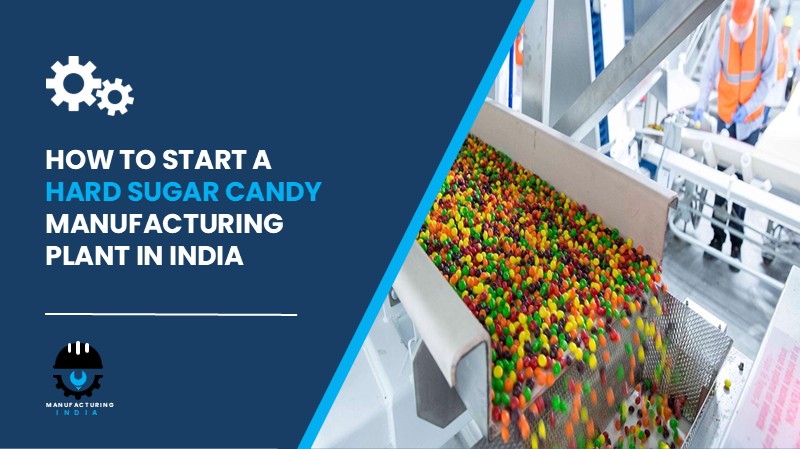
Setting up a hard sugar candy manufacturing plant in India presents a compelling investment case driven by rising consumer demand across the confectionery and snack industry, gift packaging sector, and seasonal event supplies market. Hard sugar candies are a consistently popular product category, sustained by their nostalgic appeal, long shelf life, and affordability as a retail and promotional item. As disposable incomes rise across India’s urban and semi-urban populations, the accessible price point and wide availability of hard sugar candies make this a resilient, high-volume segment within the broader food and beverages manufacturing landscape.
India’s strategic advantages for confectionery manufacturing are substantial. The country’s large agricultural base ensures proximity to key raw material sources such as sugar and glucose — both domestically produced at scale. States such as Gujarat, Maharashtra, and Uttar Pradesh offer established agri-processing infrastructure, competitive land costs, and well-connected logistics networks that reduce distribution expenses. The Government of India’s Make in India initiative actively supports food processing investments through fiscal incentives, subsidised industrial estate allotments, and export promotion schemes, making this an opportune moment for domestic and foreign investors to commission a hard sugar candy manufacturing plant in India.
Establishing a hard sugar candy manufacturing plant in India offers investors a compelling combination of policy support, cost-competitive raw material supply, and healthy gross profit margins in the range of 25-35%. With a global market valued at USD 16.97 Billion in 2025 and projected to reach USD 29.41 Billion by 2034, demand sustainability is well-established. Plants operating at optimised capacity can achieve net margins of 10-15%, making this facility a financially sound long-term asset.
What is Hard Sugar Candy?
Hard sugar candy refers to solid, sweet confections made primarily from sugar, glucose syrup, and flavorings. These candies are boiled to a high temperature during production, which forms a hard, glassy texture that delivers a long-lasting sweet experience to the consumer. Due to their very low moisture content, hard sugar candies have a longer shelf life compared to soft candy varieties, making them suitable for mass retail, gifting, and seasonal distribution.
The product comes in a wide variety of shapes, colours, and flavours, including fruit, mint, and caramel types. Market innovations have expanded the category to include sugar-free, organic, and functional varieties, giving manufacturers additional product lines to serve health-conscious consumers. The production method is known as the sugar cooking process involving boiling sugar syrup to the correct temperature, flavouring, moulding or shaping, cooling, and packaging.
End-use industries served by this product include the confectionery and snack industry, retail channels such as supermarkets and candy stores, the gift packaging industry, and event and party supplies. These broad applications across both everyday retail and seasonal demand cycles give the hard sugar candy manufacturing business a structurally diversified revenue base.
Cost of Setting Up a Hard Sugar Candy Manufacturing Plant in India
The cost of establishing this production facility depends on several interdependent variables, including plant capacity, technology selection, degree of automation, geographic location, and applicable regulatory compliance requirements. A thorough techno-economic assessment is essential before committing capital.
1. Capital Expenditure (CapEx)
The total capital investment in a hard sugar candy manufacturing plant covers several major heads. Land and site development costs include land registration, boundary development, and related infrastructure charges. Investors may benefit from locating within a Special Economic Zone (SEZ) or a food processing industrial estate, which often come with concessional land allotment, pre-built utilities, and faster regulatory clearances.
Civil works and construction encompass the manufacturing shed, raw material storage godowns, quality control laboratory, finished goods warehouse, administrative block, and utilities area. These civil costs constitute a meaningful share of overall project investment and should be planned carefully to allow future capacity expansion.
Machinery and equipment represent the largest portion of total capital expenditure. Key machinery required includes:
- Sugar cooking and syrup preparation units
- Moulding and shaping machines
- Cooling conveyors and hardening systems
- Packaging and wrapping machines
Other capital costs include the effluent treatment plant (ETP) for wastewater management, pre-operative expenses such as regulatory fees and project development costs, commissioning charges, and import duties applicable to specialised machinery not manufactured domestically.
Request a Sample Report for In-Depth Market Insights: https://www.imarcgroup.com/hard-sugar-candy-manufacturing-plant-project-report/requestsample
2. Operational Expenditure (OpEx)
The operating cost structure of the production unit is primarily driven by raw material consumption. Raw material cost for hard sugar candy manufacturing covering core inputs such as sugar, glucose, flavours, colours, and acidulants accounts for approximately 60-70% of total operational expenditure. Given this high proportion, entering long-term procurement contracts with reliable suppliers is a critical risk-mitigation strategy to stabilise pricing and ensure uninterrupted supply.
Utility costs, covering electricity, water, and steam, constitute approximately 5-10% of total OpEx. These are moderate relative to other food processing segments, reflecting the relatively streamlined nature of the sugar cooking process. Remaining operating costs include transportation of finished goods to retail and distribution channels, primary and secondary packaging materials, salaries and wages for production and administrative personnel, equipment maintenance, depreciation on fixed assets, and applicable taxes and levies. By the fifth year of operations, total operational costs are expected to increase substantially due to inflation, potential rises in key material prices, and market fluctuations.
3. Plant Capacity
The proposed manufacturing facility is designed with an annual production capacity ranging between 500-2,000 MT, enabling economies of scale while maintaining operational flexibility. This range can be customised based on investor capital availability and target market size. Profitability improves meaningfully with higher capacity utilisation, and investors are encouraged to plan for phased scale-up from the outset to optimise the cost-per-unit of production over time.
4. Profit Margins and Financial Projections
The hard sugar candy manufacturing plant project demonstrates healthy profitability potential under normal operating conditions. Gross profit margins typically range between 25-35%, supported by stable demand and value-added applications across the confectionery and gifting segments. Net profit margins range between 10-15% at average capacity utilisation. Financial viability is assessed through comprehensive projections covering net present value (NPV), internal rate of return (IRR), payback period analysis, and a full profit and loss account across a five-year horizon. These projections incorporate capital investment assumptions, production capacity utilisation rates, pricing trends, and demand outlook, and provide a complete picture of the investment’s long-term sustainability.
Why Set Up a Hard Sugar Candy Plant in India?
Growing Demand for Nostalgic and Traditional Sweets. Hard sugar candies continue to enjoy widespread popularity due to their strong nostalgic appeal. Approximately 85% of people believe that chocolate or candy is acceptable to indulge in occasionally, reflecting a structural baseline of consumer demand. This consistent baseline, combined with India’s large and growing young population, provides a durable domestic market for the product.
Rising Health-Conscious Alternatives Driving Market Expansion. The rising proportion of consumers approximately 62%, who believe healthier confectionery options exist is pushing manufacturers to develop low-sugar, organic, and functional candy varieties. This trend is an opportunity for Indian manufacturers to capture premium pricing by introducing sugar-free and organic hard candy lines alongside mainstream variants.
Innovations in Packaging and Seasonal Demand. Packaging innovations and the strong seasonality of hard candy consumption driven by festivals such as Diwali, Christmas, Holi, and Eid create predictable demand peaks that manufacturers can plan production around. Seasonal and promotional uses, including corporate gifting and event favours, provide additional high-margin sales channels suited to Indian market dynamics.
Cost-Competitive Manufacturing Environment. India offers a competitive advantage through lower land acquisition costs relative to developed economies, an abundant skilled and semi-skilled labour pool, a well-established domestic sugar industry providing price-stable raw material supply, and proximity to major retail distribution hubs across the country. These structural advantages reduce the overall cost base and improve competitiveness for export-oriented production as well.
Active Industry Investment and Global Market Growth. Recent developments in the global hard sugar candy sector illustrate the category’s vitality. In September 2025, Ferrara unveiled the Nerds Juicy Gummy Clusters, driving market interest through product innovation. In August 2024, Werther’s Original launched a limited-edition Caramel Apple Hard Candies as part of its seasonal Harvest Line in the US, combining signature caramel with a tangy apple-flavoured swirl made with real butter and fresh cream. These developments underline the value of innovation in flavour and format for sustaining market momentum a model Indian manufacturer can replicate.
Rising Disposable Income in Emerging Markets. The increase in disposable income across India’s emerging urban and semi-urban consumer segments is expanding the reach of hard sugar candies to new buyer groups. This demographic expansion is enhancing overall market demand and creating headroom for new domestic manufacturers to capture market share from imports and fragmented local players.
Manufacturing Process – Step by Step
The hard sugar candy manufacturing process uses the sugar cooking process as the primary production method. This multi-step operation involves a series of unit operations, material handling stages, and quality checks to ensure consistent product quality and regulatory compliance.
- Raw Material Receipt and Quality Check: Sugar, glucose, flavours, colours, and acidulants are received, inspected for quality compliance, and stored in designated raw material storage areas.
- Sugar Syrup Preparation: Sugar and glucose are dissolved in water and combined in precise proportions within sugar cooking and syrup preparation units to form a uniform syrup base.
- High-Temperature Boiling: The syrup mixture is cooked to a precise high temperature, causing the water content to evaporate and resulting in the formation of the characteristic hard, glassy candy mass.
- Flavouring and Colouring: Flavours, colours, and acidulants are added to the cooked candy mass at controlled temperatures to ensure even dispersion without degradation of the active ingredients.
- Moulding and Shaping: The flavoured candy mass is transferred to moulding and shaping machines, where it is formed into the required product dimensions, sizes, and configurations including filled, stamped, or deposited shapes.
- Cooling and Hardening: Formed candies pass through cooling conveyors and hardening systems, where controlled temperature reduction ensures the final hard texture and dimensional stability of each piece.
- Quality Testing: Finished candies undergo analytical testing for concentration, purity, moisture content, colour consistency, and dimensional conformance to product specification.
- Packaging and Dispatch: Approved product is fed through packaging and wrapping machines for primary and secondary packaging, then palletised and dispatched to end-use industries including retail channels, gift packaging companies, and event supply distributors.
Key Applications
Hard sugar candy manufactured in India serves a diverse range of end-use industries across the domestic and export markets:
- Confectionery and Snack Industry: Hard sugar candies are widely distributed through retail candy stores, supermarkets, and vending machines. Their long shelf life and convenient packaging make them a staple category for confectionery retailers.
- Gift Packaging and Promotional Items: Hard candies are widely incorporated into gift packaging for holidays and special occasions. They are also used as branded promotional items, offering an affordable and impactful marketing vehicle.
- Sugar-Free and Organic Candy Market: In response to health-conscious consumer trends, sugar-free and organic hard candy varieties are growing in popularity, catering to buyers seeking lower-calorie or natural confectionery alternatives.
- Seasonal and Event Favours: Hard sugar candies are regularly used for seasonal events such as Christmas, Halloween, and Easter, as well as for party favours and corporate giveaways, making them a recurring purchase across both consumer and institutional buyer segments.
Leading Manufacturers
The global hard sugar candy industry includes several multinational manufacturers with large production capacities and diverse application portfolios serving the confectionery and snack industry, retail channels, gift packaging sector, and event and party supplies segment. Based on available market intelligence, key players active in the global hard sugar candy manufacturing space include:
- Ferrara Candy Company
- Werther’s Original (August Storck KG)
Timeline to Start the Plant
Establishing a hard sugar candy manufacturing plant in India typically follows these eight sequential phases:
- Feasibility study and project report preparation
- Land acquisition and site development
- Regulatory approvals and environmental clearances
- Factory licence and fire safety compliance
- Machinery procurement and installation
- Raw material supplier agreements and supply chain setup
- Trial production and quality testing
- Commercial production launch
Licences and Regulatory Requirements
Starting a hard sugar candy manufacturing unit in India requires several approvals across central, state, and local regulatory bodies:
- Business registration (Proprietorship, LLP, or Private Limited Company)
- Factory Licence under the Factories Act
- Environmental Clearance from the State Pollution Control Board
- GST Registration
- Fire Safety NOC from the local fire authority
- Food Safety and Standards Authority of India (FSSAI) licence for manufacturing food products
- Effluent Treatment Plant (ETP) operational clearance
- Occupational Health and Safety compliance under applicable labour legislation
Key Challenges to Consider
High Capital Requirements. Establishing a purpose-built production facility with food-grade machinery, quality control systems, and compliance infrastructure requires substantial upfront investment, making access to structured project financing critical for new entrants.
Raw Material Price Volatility. The primary raw materials sugar, glucose, flavours, colours, and acidulants are subject to price fluctuations driven by agricultural production cycles, seasonal availability, and global commodity markets. This can compress margins if not managed through long-term procurement contracts and hedging strategies.
Regulatory Compliance. Food manufacturing in India is subject to rigorous FSSAI standards, state pollution control requirements, and factory safety regulations. Maintaining continuous compliance requires dedicated quality assurance personnel and ongoing investment in monitoring systems.
Innovation Pressure. Global market developments as evidenced by Ferrara’s Nerds Juicy Gummy Clusters launch in September 2025 and Werther’s Original limited-edition seasonal line introduced in August 2024 highlight the need for ongoing product development to remain competitive in evolving consumer preferences.
Competition from Established Players. The presence of large global manufacturers such as Ferrara Candy Company and Werther’s Original (August Storck KG) means that new entrants must compete on product quality, pricing efficiency, and distribution reach to capture meaningful market share.
Skilled Manpower. Sourcing and retaining trained operators for food-grade production equipment, quality control technicians, and food safety compliance personnel can be challenging in some manufacturing locations, requiring proactive workforce development programmes.
Frequently Asked Questions
1. How much does it cost to set up a hard sugar candy manufacturing plant in India? The total investment varies based on plant capacity (ranging between 500-2,000 MT annually), technology selection, location, and automation level. A detailed cost breakdown covering CapEx and OpEx is available in a full feasibility project report.
2. Is hard sugar candy manufacturing profitable in India in 2026? Yes. The production unit demonstrates gross profit margins of 25-35% and net profit margins of 10-15% under normal operating conditions, supported by stable domestic demand and growing consumer preference for confectionery.
3. What machinery is required for a hard sugar candy plant in India? Key equipment includes sugar cooking and syrup preparation units, moulding and shaping machines, cooling conveyors and hardening systems, and packaging and wrapping machines.
4. What licences and approvals are required to start a hard sugar candy plant in India? Required approvals include business registration, a Factory Licence, Environmental Clearance, GST Registration, FSSAI food manufacturing licence, Fire Safety NOC, ETP clearance, and Occupational Health and Safety compliance.
5. What raw materials are needed for hard sugar candy manufacturing? The core raw materials are sugar, glucose, flavours, colours, and acidulants. Sugar and glucose together drive approximately 60-70% of total operating costs.
6. What are the environmental compliance requirements for a hard sugar candy plant in India? The unit requires Environmental Clearance from the State Pollution Control Board and must operate a compliant Effluent Treatment Plant (ETP) to manage process wastewater in accordance with emission standards.
7. What is the best location to set up a hard sugar candy plant in India? Optimal locations offer proximity to sugar-producing agricultural regions, established logistics infrastructure, reliable utilities, and industrial estate access. States such as Uttar Pradesh, Maharashtra, and Gujarat are well-positioned given their strong agri-processing ecosystems.
8. What is the break-even period for this type of plant in India? The break-even period is determined by the detailed financial analysis in the feasibility study, covering NPV, IRR, and payback period projections based on actual capacity utilisation and pricing assumptions.
9. What government incentives are available for manufacturers in India? The Make in India initiative, food processing promotion schemes, PLI (Production Linked Incentive) support for food manufacturing, SEZ benefits, and state-level industrial investment subsidies are among the key incentives available to eligible manufacturers.
Key Takeaways for Investors The hard sugar candy manufacturing plant presents a well-rounded investment opportunity, with diversified demand from the confectionery and snack industry, retail channels, gift packaging sector, and seasonal event supplies market providing a structurally resilient revenue base. Financial viability is supported across the 500-2,000 MT annual capacity range, with gross margins of 25-35% and net margins of 10-15% achievable under normal operating conditions. The global hard sugar candy market was valued at USD 16.97 Billion in 2025 and is projected to expand to USD 29.41 Billion by 2034, growing at a CAGR of 6.3% from 2026 to 2034 a trajectory that validates long-horizon investment confidence. With innovation in sugar-free and organic formats, rising disposable incomes across emerging Indian consumer segments, and strong seasonal and promotional demand cycles, the forward-looking sustainability of demand for this manufacturing investment is firmly established.
About the Author