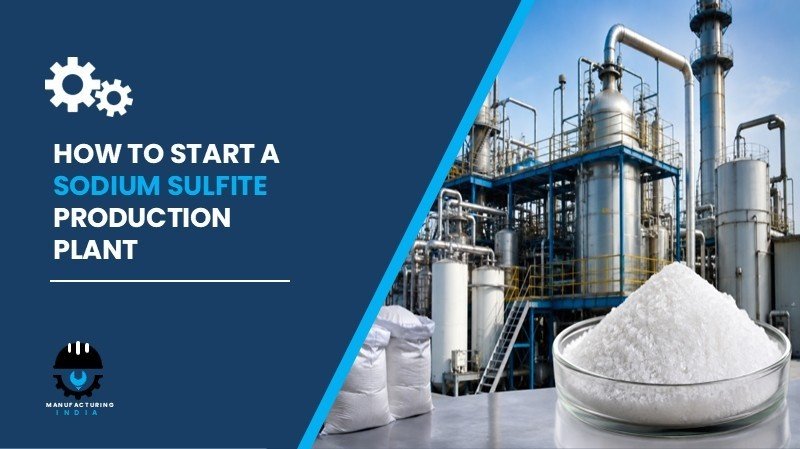
A sodium sulfite production plant setup in India presents a compelling investment case, backed by rising demand from water treatment, pulp & paper, photography, textile processing, chemical manufacturing, and oil & gas industries. As an antioxidant, preservative, and reducing agent, sodium sulfite is a critical input for industries seeking effective solutions for controlling dissolved oxygen and maintaining process efficiency.
India’s fast-expanding industrial base, growing urbanisation, and infrastructure build-out, supported by the government’s Make in India push, create strong conditions for this venture. States with an established chemicals and process-industry base, such as Gujarat and Maharashtra, offer ready access to feedstock, utilities, and skilled labour, making the country a strategically sound base for this production.
India offers a strong case for sodium sulfite production: policy-backed industrial growth, cost-competitive inputs, and steady demand from water treatment, pulp & paper, and textile processing sectors. With gross margins of 20-27% and net margins of 11-17%, the project supports healthy break-even viability across a range of plant capacities.
What is Sodium Sulfite?
Sodium sulfite is a versatile, water-soluble inorganic salt used as an antioxidant, preservative, and reducing agent. In food processing, it extends shelf life by preventing enzymatic browning and microbial growth in dried fruits and stabilizing wines. Industrially, it acts as an oxygen scavenger to prevent boiler corrosion, a bleaching and dechlorinating agent in textiles, and a delignifying agent in papermaking. In photography, it preserves developing solutions from premature oxidation.
The sodium sulfite production process is built around absorption, crystallization, centrifugation, and drying. Once processed, the compound serves end-use industries including water treatment, pulp & paper, photography, textile processing, chemical manufacturing, and oil & gas.
Cost of Setting Up a Sodium Sulfite Production Plant in India
Cost depends on capacity, technology, location, automation level, and regulatory compliance.
1. Capital Expenditure (CapEx)
Land and site development covers land acquisition, registration, and boundary development; investors can evaluate industrial estates or SEZs to streamline approvals. Civil works cover the production shed, quality-control lab, storage, and administrative block.
Machinery represents the largest share of capital expenditure for this facility. Key machinery required includes:
- Crushers
- Reactors
- Evaporators
- Crystallizers
- Centrifuges
- Drying units
- Screening machines
- Packaging systems
Other capital costs cover ETP installation, pre-operative expenses, commissioning, and applicable import duties on specialised equipment.
Request a Sample Report for In-Depth Market Insights: https://www.imarcgroup.com/sodium-sulfite-manufacturing-plant-project-report/requestsample
2. Operational Expenditure (OpEx)
Raw material cost dominates the operating structure of this unit, with sodium carbonate/hydroxide, sulfur dioxide, and water together accounting for approximately 55-65% of total OpEx. Long-term supplier contracts help stabilize pricing and supply.
Utility cost, covering electricity, water, and steam, makes up roughly 7-11% of OpEx. Other costs include transportation, packaging, salaries, maintenance, depreciation, and taxes, with total operating cost projected to rise substantially by the fifth year due to inflation and market fluctuations.
3. Plant Capacity
The proposed sodium sulfite production plant is designed around an annual capacity of 20,000 MT, enabling economies of scale while retaining flexibility. Capacity can be customised to match investor requirements, and profitability generally improves as capacity utilisation increases.
4. Profit Margins and Financial Projections
Financial planning covers net present value (NPV), internal rate of return (IRR), payback period, and liquidity and profitability analysis. Under normal operating conditions, the project shows healthy profitability, with gross margins of 20-27% and net margins of 11-17%, supported by stable demand and value-added applications.
Why Set Up a Sodium Sulfite Plant in India?
Essential Industrial Chemical Across Multiple Sectors: Sodium sulfite is widely used as a reducing agent, oxygen scavenger, preservative, and bleaching chemical across pulp & paper, water treatment, textiles, food processing, photography, and chemical manufacturing, making it an important specialty chemical for industrial efficiency.
Megatrend Alignment: Expanding industrial water treatment requirements, rising paper & packaging consumption, and increasing textile processing activity are supporting steady demand, with stricter water management standards further accelerating consumption in boiler and wastewater applications.
Policy and Infrastructure Tailwinds: Government investments in industrial infrastructure, municipal water treatment facilities, power generation, and manufacturing development programs are indirectly boosting demand, particularly in sectors requiring deoxygenation and effluent treatment.
Cost-Competitive Production: Access to land within industrial estates, a large skilled labour pool, and an established domestic chemical supply chain support a cost-competitive base for this production in India.
Active Industry Investment: In May 2026, BASF reinforced its commitment to the water treatment industry by introducing NSF/ANSI/CAN 60 certified sodium metabisulfite and sodium sulfite grades, giving customers a reliable source for municipal, industrial, and formulated water treatment applications.
Local Supply Chain Preference: Industrial consumers increasingly favour dependable regional suppliers to reduce logistics risk, favouring domestic producers with efficient distribution networks. India’s food manufacturing sector, a key end-use base for preservative-grade sodium sulfite, is projected to grow from USD 307 Billion in 2023 to USD 700 Billion by 2030, according to IBEF.
Sodium Sulfite Production Process – Step by Step
The sodium sulfite production process uses absorption, crystallization, centrifugation, and drying as the primary production method.
- Absorption: Sulfur dioxide gas is absorbed into a solution containing sodium carbonate or sodium hydroxide, initiating the core reaction.
- Reaction in Reactors: The absorbed gas reacts within corrosion-resistant reactors to form the sodium sulfite solution.
- Evaporation: The solution is concentrated using evaporators to prepare it for crystal formation.
- Crystallization: Crystallizers convert the concentrated solution into sodium sulfite crystals.
- Centrifugation: Centrifuges separate the crystals from the remaining mother liquor.
- Drying: Drying units remove residual moisture from the crystals.
- Screening: Screening machines grade the dried product to the required particle size.
- Packaging and Dispatch: Packaging systems prepare the finished product for dispatch to water treatment, pulp & paper, photography, textile, chemical, and oil & gas customers.
Key Applications
Sodium sulfite serves industries that rely on its reducing, oxygen-scavenging, and bleaching properties.
- Pulp & Paper Industry: Used in pulp bleaching, dechlorination, and chemical recovery processes.
- Food & Beverage Industry: Functions as a preservative, antioxidant, and colour-stabilising agent in processed foods and beverages.
- Water Treatment: Applied for removal of dissolved oxygen, chlorine neutralisation, and wastewater treatment.
- Textile & Chemical Processing: Used in bleaching, dye reduction processes, and as a reducing agent in industrial chemical manufacturing.
Leading Manufacturers
The global sodium sulfite industry includes several established players. Key players include:
- Allan Chemical Corp.
- American Elements
- BASF SE
- Borden and Remington Corp.
- Ganga Chemicals
Timeline to Start the Plant
- Feasibility study and project report preparation
- Land acquisition and site development
- Regulatory approvals and environmental clearances
- Factory licence and fire safety compliance
- Machinery procurement and installation
- Raw material supplier agreements and supply chain setup
- Trial production and quality testing
- Commercial production launch
Licences and Regulatory Requirements
Starting a sodium sulfite production unit in India requires several approvals:
- Business registration (Proprietorship, LLP, or Pvt Ltd)
- Factory Licence under the Factories Act
- Environmental Clearance from State Pollution Control Board
- GST Registration
- Fire Safety NOC
- Hazardous/Chemical compliance for sulfur dioxide handling and storage
- Effluent Treatment Plant (ETP) operational clearance
- Occupational Health and Safety compliance
Key Challenges to Consider
High Capital Requirements: Machinery costs, led by reactors, evaporators, crystallizers, and centrifuges, account for the largest share of CapEx and require careful project financing.
Raw Material Price Volatility: Sodium carbonate/hydroxide and sulfur dioxide prices can fluctuate, and since raw materials make up 55-65% of OpEx, long-term supplier contracts are essential.
Regulatory Compliance: Environmental clearances, effluent treatment requirements, and chemical-handling safety protocols demand sustained investment.
Moderate but Sustainable Entry Barriers: While the underlying technology is established, maintaining product purity, controlled sulfur chemistry, and reliable sourcing create real barriers for new entrants.
Competition from Established Players: Global producers such as BASF SE, American Elements, and Allan Chemical Corp. bring scale and diversified portfolios, requiring new entrants to compete on quality.
Skilled Manpower: Operating corrosion-resistant reactors, crystallizers, and drying systems requires trained technical staff, particularly for controlled sulfur chemistry.
Frequently Asked Questions
1. How much does it cost to set up a sodium sulfite production plant in India?
Cost depends on land, civil works, machinery (crushers, reactors, evaporators, crystallizers, centrifuges, drying units, screening machines, and packaging systems), and other capital costs like ETP installation and commissioning. A detailed CapEx breakdown by capacity is available in the sample report.
2. Is sodium sulfite production profitable in India in 2026?
Yes. The project shows healthy profitability, with gross profit margins of 20-27% and net profit margins of 11-17%, supported by stable demand across water treatment, pulp & paper, and textile processing sectors.
3. What machinery is required for a sodium sulfite plant in India?
Essential machinery includes crushers, reactors, evaporators, crystallizers, centrifuges, drying units, screening machines, and packaging systems, selected for corrosion resistance.
4. What licences and approvals are required to start a sodium sulfite plant in India?
Key approvals include business registration, a Factory Licence, Environmental Clearance, GST Registration, Fire Safety NOC, hazardous chemical compliance, ETP clearance, and Occupational Health and Safety compliance.
5. What raw materials are needed for sodium sulfite production?
The primary raw materials are sodium carbonate/hydroxide, sulfur dioxide, and water, together accounting for 55-65% of operating expenditure.
6. What are the environmental compliance requirements for a sodium sulfite plant in India?
Plants must secure Environmental Clearance from the State Pollution Control Board, operate an Effluent Treatment Plant, and maintain monitoring systems for sulfur dioxide handling and discharge.
7. What is the best location to set up a sodium sulfite plant in India?
The ideal site offers easy access to sodium carbonate/hydroxide, sulfur dioxide, and water, along with reliable transportation and utilities, while meeting zoning and environmental regulations.
8. What is the break-even period for this type of plant in India?
Break-even timing depends on capacity utilisation, pricing, and cost structure; the full financial analysis, including payback period, NPV, and IRR, is detailed in the sample report.
9. What government incentives are available for manufacturers in India?
Government investment in industrial infrastructure, water treatment facilities, and manufacturing development programs indirectly supports demand for sodium sulfite producers.
Key Takeaways for Investors
This investment is well positioned to serve steady demand from water treatment, pulp & paper, textile, food & beverage, and chemical manufacturing sectors. Financial viability holds up well across plant capacities, with gross margins of 20-27% and net margins of 11-17% at the proposed 20,000 MT scale. The global sodium sulfite market, valued at USD 1.7 Billion in 2025, is projected to reach USD 2.3 Billion by 2034 at a CAGR of 3.5%, while India’s food manufacturing base, forecast to grow from USD 307 Billion in 2023 to USD 700 Billion by 2030, adds further demand support. Demand for this production is set to remain sustained over the long term.
About the Author