A yellow phosphorus production plant setup in India presents a compelling investment case for entrepreneurs eyeing India’s expanding chemicals value chain. Demand for this critical intermediate is anchored in agrochemicals, chemical manufacturing, pharmaceuticals, flame retardants, electronics, and metallurgical industries, all of which rely on yellow phosphorus as a feedstock for phosphoric acid, phosphorus trichloride, phosphate esters, pesticides, food-grade phosphates, and specialty phosphorus compounds. As India’s agriculture sector expands and its chemical processing base deepens, yellow phosphorus remains indispensable to downstream production of fertilizers and crop protection chemicals.
India’s growing urbanisation, expanding infrastructure base, and the Make in India push toward domestic chemical self-reliance make the country a strategically sound base for this type of plant. States with established chemical processing clusters, such as Gujarat and Maharashtra, offer the industrial ecosystem and utility infrastructure that a high-temperature, continuous-process facility requires. Government initiatives promoting domestic chemical manufacturing and industrial self-reliance indirectly support new investment into phosphorus-based chemical value chains.
This is a capital-intensive but strategically justified investment: policy support for domestic chemical production, cost-competitive Indian manufacturing conditions, and sustained demand from agrochemical and specialty chemical sectors combine with gross margins of 22-30% and net margins of 8-14% to support a viable, scalable business case with a defined break-even path.
What is Yellow Phosphorus?
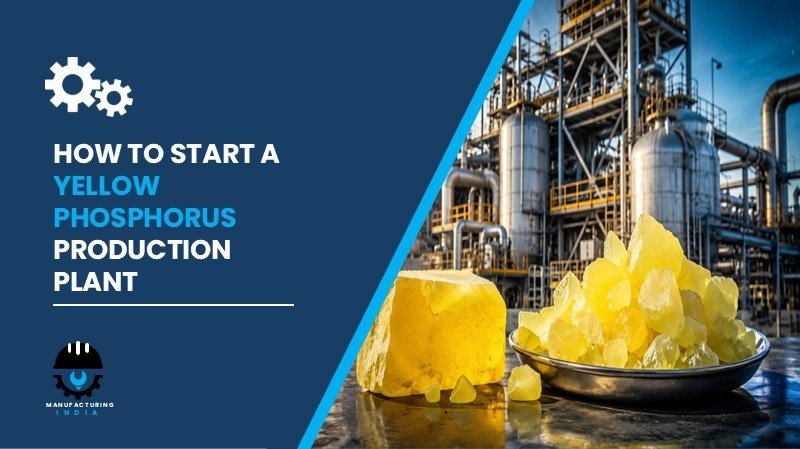
Yellow phosphorus, often referred to as white phosphorus, is a highly reactive, waxy, and toxic allotrope of the element phosphorus. It appears translucent and turns yellowish when exposed to light. Because of its pyrophoric nature, it spontaneously combusts at room temperature in the presence of air and must therefore be stored submerged in water at all times. It is highly poisonous to humans and demands rigorous handling protocols throughout the yellow phosphorus production plant.
The yellow phosphorus production process involves electric furnace reduction of phosphate rock with coke (or anthracite) and silica, followed by phosphorus vapor condensation, purification, and casting. It yields a chemical commonly used in phosphoric acid, agricultural fertilizers, pyrotechnics, and rodenticides, serving end-use industries spanning chemical manufacturing, agrochemicals, pharmaceuticals, flame retardants, electronics, and metallurgical sectors.
Cost of Setting Up a Yellow Phosphorus Production Plant in India
The overall cost of setting up this type of plant depends on capacity, technology, location, automation level, and regulatory compliance requirements.
1. Capital Expenditure (CapEx)
Land and site development form a substantial part of the overall investment, covering land acquisition, registration, and boundary development; investors can evaluate options within notified industrial estates or SEZs offering utility and compliance infrastructure suited to hazardous-chemical processing. Civil works and construction cover the shed, laboratory, storage areas, and administration block needed to support continuous furnace operations.
Machinery costs account for the largest portion of total capital expenditure for a yellow phosphorus production plant. Key machinery required includes:
- Raw material crushing and screening units
- Batching and mixing systems
- Submerged electric arc furnaces
- Phosphorus condensers
- Gas cleaning systems
- Slag handling units
- Storage tanks
- Casting and granulation systems
- Cooling units
- Wastewater treatment facilities
- Packaging machines
Other capital costs include effluent treatment plant installation, pre-operative expenses, commissioning costs, and applicable import duties on specialized furnace and condensation equipment.
Request a Sample Report for In-Depth Market Insights: https://www.imarcgroup.com/yellow-phosphorus-manufacturing-plant-project-report/requestsample
2. Operational Expenditure (OpEx)
Raw material cost is the largest component of operating expenditure, with phosphate rock, coke or anthracite, and silica together accounting for approximately 40-48% of total OpEx. Investors are advised to secure long-term supplier contracts to mitigate price volatility and ensure a consistent supply of these inputs. Utility cost, covering electricity, water, and steam for the high-temperature furnace process, represents roughly 30-38% of OpEx, reflecting the energy-intensive nature of this production plant.
Other operating costs include transportation, packaging, salaries and wages, repairs and maintenance, depreciation, and taxes. In the first year of operations, the operating cost for the plant is projected to be significant, and by the fifth year the total operational cost is expected to increase substantially due to inflation, market fluctuations, potential rises in key material costs, supply chain disruptions, and shifts in the global economy.
3. Plant Capacity
The proposed yellow phosphorus production plant is designed with an annual capacity ranging between 5,000-15,000 MT, enabling economies of scale while maintaining operational flexibility. Capacity can be customized to individual investor requirements, and profitability generally improves as capacity utilisation increases.
4. Profit Margins and Financial Projections
Financial projections for a yellow phosphorus production plant are developed based on capital investment, operating costs, capacity utilisation, pricing trends, and demand outlook, and include net present value (NPV), internal rate of return (IRR), and payback period as core evaluation metrics. Under normal operating conditions, the project demonstrates healthy profitability potential, with gross profit margins typically ranging between 22-30% and net profit margins between 8-14%, supported by stable demand and value-added downstream applications.
Why Set Up a Yellow Phosphorus Plant in India?
Critical Industrial Chemical Feedstock: Yellow phosphorus is a key raw material for phosphoric acid, phosphorus trichloride, phosphate salts, flame retardants, agrochemicals, food-grade phosphates, and specialty chemicals, making it an indispensable intermediate across the chemical, agricultural, and industrial sectors.
High but Justifiable Entry Barriers: The process requires significant capital investment, electric arc furnace technology, continuous high-temperature operations, stringent environmental controls, and specialised handling of hazardous materials. These technical and regulatory requirements create strong entry barriers that favour experienced and compliant producers, limiting oversupply risk for new entrants.
Megatrend Alignment: Growing demand for crop protection chemicals, specialty phosphorus derivatives, flame-retardant materials, water treatment chemicals, and industrial intermediates is driving sustained consumption, supported by expanding agriculture, infrastructure, and specialty chemical industries worldwide.
Policy and Regulatory Tailwinds: Government initiatives promoting domestic chemical manufacturing, fertilizer security, and industrial self-reliance are indirectly supporting investment in phosphorus-based chemical value chains and integrated production facilities.
Active Industry Investment: As per the Ministry of New and Renewable Energy, India added a record 44.5 GW of renewable energy capacity in 2025, reflecting the kind of expanding power infrastructure that supports energy-intensive processing plants such as this one.
Local Supply Chain Preference: Chemical manufacturers are increasingly seeking reliable regional suppliers to ensure consistent product quality, minimise import dependence, reduce logistics costs, and secure uninterrupted raw material availability, creating opportunities for compliant producers with integrated sourcing strategies.
Manufacturing Process – Step by Step
The yellow phosphorus production process uses electric furnace reduction as its primary production method. The main stages are:
- Raw Material Preparation: Phosphate rock, coke or anthracite, and silica are crushed and screened to the required specification before being batched and mixed.
- Electric Furnace Reduction: The blended raw materials are fed into submerged electric arc furnaces, where high-temperature reduction converts phosphate rock into phosphorus vapor.
- Phosphorus Vapor Condensation: Vapor from the furnace passes through phosphorus condensers, where it is cooled and condensed into liquid phosphorus.
- Gas Cleaning: Furnace off-gases are processed through gas cleaning systems to control emissions and recover usable by-product gas.
- Slag Handling: Molten slag generated during reduction is managed through dedicated slag handling units.
- Purification and Casting: Condensed phosphorus is purified and passed through casting and granulation systems, followed by cooling units to stabilise the product.
- Storage: Finished yellow phosphorus is held in storage tanks, submerged in water to prevent spontaneous combustion.
- Wastewater Treatment: Process effluent is treated through wastewater treatment facilities before discharge.
- Packaging and Dispatch: The product is packaged using dedicated packaging machines and dispatched to chemical manufacturing, agrochemical, pharmaceutical, flame retardant, electronics, and metallurgical end-users.
Key Applications
Yellow phosphorus serves a wide range of downstream chemical and industrial sectors:
- Agrochemicals: Used in the manufacturing of herbicides, insecticides, fungicides, and other crop protection chemicals.
- Chemical Industry: Used in the production of phosphoric acid, phosphorus trichloride, phosphorus pentasulfide, and other phosphorus derivatives.
- Flame Retardants: Used in manufacturing phosphorus-based flame-retardant additives for plastics, textiles, and electronics.
- Metallurgy & Specialty Chemicals: Used in the production of metal phosphides, high-purity phosphorus compounds, and specialty chemical intermediates.
Leading Manufacturers
Leading producers in the global yellow phosphorus industry operate with extensive production capacities and diverse application portfolios. Key players include:
- Hubei Xingfa Chemicals Group Co. Ltd.
- NDFZ LLP
- Yuntianhua Co. Ltd.
- Yunnan Mile Phosphorus Electricity Co. Ltd.
- Sichuan Chuantou Chemical Industry Group Co. Ltd.
Timeline to Start the Plant
- Feasibility study and project report preparation
- Land acquisition and site development
- Regulatory approvals and environmental clearances
- Factory licence and fire safety compliance
- Machinery procurement and installation
- Raw material supplier agreements and supply chain setup
- Trial production and quality testing
- Commercial production launch
Licences and Regulatory Requirements
Starting a yellow phosphorus production unit in India requires several approvals:
- Business registration (Proprietorship, LLP, or Pvt Ltd)
- Factory Licence under the Factories Act
- Environmental Clearance from State Pollution Control Board
- GST Registration
- Fire Safety NOC
- Hazardous/Chemical compliance given the pyrophoric and toxic nature of the product
- Effluent Treatment Plant (ETP) operational clearance
- Occupational Health and Safety compliance
Key Challenges to Consider
High Capital Requirements: Electric arc furnace technology, continuous high-temperature operations, and specialised handling systems demand substantial upfront investment before a yellow phosphorus production plant reaches commercial output.
Raw Material Price Volatility: Phosphate rock, coke or anthracite, and silica are subject to price fluctuations, making long-term supplier contracts essential to protect margins.
Regulatory Compliance: Stringent environmental regulations and hazardous-material handling requirements mean clearances, effluent treatment, and safety monitoring must be built into the project from the outset.
Competition: Established global players such as Hubei Xingfa Chemicals Group Co. Ltd. and Yuntianhua Co. Ltd. operate at scale, so new entrants must plan for cost-competitive operations.
Skilled Manpower: Continuous high-temperature furnace operations and hazardous-chemical handling require trained technical staff, and building this workforce is a key challenge for new entrants.
Technology and Innovation Pressure: Stringent environmental regulations and high electricity consumption are encouraging investment in energy-efficient furnace technologies and sustainable methods, adding ongoing pressure to refine the yellow phosphorus production process.
Frequently Asked Questions
1. How much does it cost to set up a yellow phosphorus production plant in India?
Total cost depends on capacity, technology, automation level, and location, driven mainly by machinery and land and site development costs.
2. Is yellow phosphorus production profitable in India in 2026?
Yes. The project shows healthy profitability, with gross margins of 22-30% and net margins of 8-14% under normal operating conditions.
3. What machinery is required for a yellow phosphorus plant in India?
Essential machinery includes crushing and screening units, batching and mixing systems, submerged electric arc furnaces, phosphorus condensers, gas cleaning systems, slag handling units, storage tanks, casting and granulation systems, cooling units, wastewater treatment facilities, and packaging machines.
4. What licences and approvals are required to start a yellow phosphorus plant in India?
Requirements include business registration, a Factory Licence, Environmental Clearance, GST registration, Fire Safety NOC, hazardous-chemical compliance, ETP clearance, and occupational health and safety compliance.
5. What raw materials are needed for yellow phosphorus production?
The primary raw materials are phosphate rock, coke or anthracite, and silica, together making up 40-48% of total operating expenditure.
6. What are the environmental compliance requirements for a yellow phosphorus plant in India?
Plants must secure Environmental Clearance, operate an Effluent Treatment Plant, install gas cleaning systems for furnace emissions, and maintain monitoring given the product’s pyrophoric and toxic properties.
7. What is the best location to set up a yellow phosphorus plant in India?
Locations offering proximity to phosphate rock, coke or anthracite, and silica, plus reliable utilities and transportation access, are best suited; Gujarat and Maharashtra offer relevant chemical-processing ecosystems.
8. What is the break-even period for this type of plant in India?
Break-even timing depends on capacity utilisation, pricing trends, and cost structure, and is calculated alongside payback period, NPV, and IRR in the financial analysis.
9. What government incentives are available for manufacturers in India?
Government initiatives promoting domestic chemical manufacturing and industrial self-reliance indirectly support investment in phosphorus-based chemical value chains.
Key Takeaways for Investors
A yellow phosphorus production plant in India offers a compelling opportunity anchored in sustained demand from agrochemicals, chemical manufacturing, pharmaceuticals, flame retardants, electronics, and metallurgical industries. The project demonstrates financial viability across the proposed capacity range of 5,000-15,000 MT annually, supported by gross margins of 22-30% and net margins of 8-14%. The global yellow phosphorus market, valued at USD 4.4 Billion in 2025, is projected to reach USD 5.9 Billion by 2034 at a CAGR of 3.4%, pointing to steady long-term demand growth. With policy support for domestic chemical production and megatrend alignment across agriculture, specialty chemicals, and flame-retardant materials, this production plant is well positioned for sustained relevance in India’s evolving chemicals landscape.
About the Author