Setting up a fiber glass manufacturing plant in India presents a highly compelling investment opportunity as global demand for high-performance reinforced materials continues to surge across construction, automotive, wind energy, aerospace, electronics, and industrial insulation industries. Fiber glass has become indispensable in modern manufacturing due to its exceptional strength-to-weight ratio, corrosion resistance, thermal insulation properties, electrical non-conductivity, and dimensional stability.
“With a rapidly expanding global market projected to grow at a CAGR of 3.7% through 2034, increasing adoption in wind energy, EV manufacturing, and advanced composites, and gross margins of 30–40%, fiber glass production offers one of the most financially attractive opportunities in the specialty materials sector — with a break-even window of 3–6 years.”
What is Fiber Glass?
Fiber glass is a reinforced material produced by drawing molten glass into fine fibers and combining them with polymer resins or used independently as insulation and reinforcement. It is primarily manufactured from silica sand, limestone, alumina, and other mineral additives. When processed through high-temperature glass melting furnaces and precision fiberization equipment, fiber glass is transformed into continuous filaments, woven fabrics, chopped strands, or insulation batts tailored for specific industrial applications.
Fiber glass exhibits high tensile strength, low weight, excellent corrosion resistance, thermal insulation properties, and electrical non-conductivity. It is non-combustible, dimensionally stable, and resistant to moisture and chemicals. These properties make fiber glass suitable for structural reinforcement, insulation, composites, and molded components across construction, transportation, energy, and industrial applications.
Globally, regulatory bodies and industry standards organizations recognize fiber glass for its high-performance characteristics. The increasing push for lightweight materials, sustainable energy solutions, and advanced insulation systems is further accelerating fiber glass demand across industrial and commercial markets worldwide.
Cost of Setting Up a Fiber Glass Manufacturing Plant in India
The fiber glass manufacturing plant cost depends on several parameters including production capacity, technology configuration, plant location, level of automation, raw material sourcing strategy, and regulatory compliance requirements. Here is a structured breakdown of all major cost components:
1. Capital Expenditure (CapEx)
The total capital investment in a fiber glass manufacturing plant typically covers the following:
Land and Site Development
This includes land acquisition, boundary development, land registration charges, and basic site preparation. Cost varies significantly depending on whether the land is in a designated industrial zone, materials park, Special Economic Zone (SEZ), or a privately purchased plot. Proximity to raw material suppliers such as silica sand quarries and key transportation routes is a critical factor in site selection.
Request a Sample Report for In-Depth Market Insights: https://www.imarcgroup.com/fiber-glass-manufacturing-plant-project-report/requestsample
Civil Works and Construction
Building costs cover the main production facility, glass melting furnace area, raw material storage and batching areas, quality control laboratory, administrative block, utility area, and worker amenities. Construction must comply with high-temperature plant safety norms including fire resistance, ventilation systems, heat containment, and environmental management standards for silica dust and emissions.
Machinery and Equipment
This is the single largest component of CapEx. Key machinery required for a fiber glass manufacturing plant includes:
- Glass Melting Furnaces (High-Temperature Electric/Gas Furnaces)
- Fiber Forming Bushings and Spinnerets
- Filament Drawing and Cooling Units
- Sizing Application Systems
- Chopping and Mat-Forming Machines
- Weaving and Roving Equipment
- Curing Ovens and Heat Treatment Systems
- Packaging Lines (Rolls, Pallets, and Container Filling)
- Storage Facilities for Raw Materials and Finished Products
- Process Control and Automation Systems (DCS/SCADA)
Machinery costs represent the largest share of overall capital expenditure, reflecting the high degree of precision engineering, heat-resistant materials, and process safety requirements involved in fiber glass manufacturing.
Other Capital Costs
These include pre-operative expenses, commissioning charges, import duties (if machinery is sourced internationally), utilities installation, fire safety systems, dust suppression and emission control systems, Effluent Treatment Plant (ETP) setup, and environmental management infrastructure.
2. Operational Expenditure (OpEx)
Once the plant is commissioned, the ongoing cost structure is dominated by a few key components:
Raw Material Cost (Silica Sand, Limestone, and Alumina): 50–60% of Total OpEx
Silica sand is the primary raw material and accounts for the largest share of operating expenses. Additional materials include limestone, alumina, borates, soda ash, binders, sizing chemicals, and polymer resins depending on the product formulation and end-use application requirements.
Utility Cost: 30–35% of Total OpEx
Utilities represent a very significant share of operating costs due to the energy-intensive glass melting process. Electricity and natural gas consumed by high-temperature furnaces, cooling systems, and process control equipment are the primary utility expenses. Energy-efficient furnace technology and heat recovery systems can significantly reduce utility costs over time.
Other Operating Costs
The remaining budget covers transportation, packaging (rolls, pallets, and logistics), salaries and wages, maintenance, depreciation, insurance, environmental compliance costs, silica dust management, taxes, and miscellaneous overhead.
3. Plant Capacity
The proposed manufacturing facility can be designed across a range of production scales:
- Small-Scale Operations: 2,000–5,000 metric tons annually — suitable for niche markets, specialized insulation products, and regional distribution with batch production and flexible equipment.
- Mid-Scale Plants: 10,000–20,000 metric tons annually — designed for national markets with semi-continuous production, moderate automation, and diversified product portfolio including chopped strand mats, woven roving, and thermal insulation.
- Large-Scale Plants: 20,000–50,000+ metric tons annually — built for national or global markets with continuous glass melting processes, high automation, multiple parallel fiberization lines, and comprehensive product portfolio spanning construction, wind energy, automotive, and electronics.
Profitability significantly improves with higher capacity utilization. Larger plants benefit from economies of scale in raw material procurement, energy efficiency, and distribution logistics.
4. Profit Margins and Financial Projections
- Gross Profit Margin:
- 30–40%
- Net Profit Margin: 12–18%
- Break-Even Period: 3 to 6 years, depending on production scale, market positioning, raw material cost management, product mix, and sales efficiency.
Financial projections must account for capital investment, operating costs, capacity utilization rates, pricing trends, and demand outlook. A thorough analysis should also include sensitivity analysis, Net Present Value (NPV), Internal Rate of Return (IRR), and Payback Period.
Why Set Up a Fiber Glass Manufacturing Plant in India?
The global market environment presents a uniquely favorable opportunity for establishing a fiber glass manufacturing facility:
Surging Industrial Demand
Fiber glass is experiencing accelerating demand from construction, automotive, wind energy, aerospace, and electronics sectors. India’s wind energy sector added approximately 5.82 GW of new capacity in 2025 alone, crossing the 50 GW installed capacity milestone — requiring massive quantities of fiber glass for turbine blade manufacturing and structural reinforcement.
Renewable Energy and Wind Power Growth
The growing adoption of fiber glass composites in renewable energy sources — particularly wind turbines, solar panel frames, and energy storage systems — is a major demand driver. Wind turbine manufacturers rely extensively on fiber glass-reinforced composites for blade manufacturing due to the superior strength-to-weight ratio and fatigue resistance.
Construction and Infrastructure Boom
The booming construction industry worldwide extensively uses fiber glass in insulation materials, roofing mats, wall panels, reinforced pipes, and structural composites. Rapid urbanization in emerging economies, particularly across Asia Pacific, is fuelling sustained demand growth for fiber glass construction products.
Automotive and Transportation Lightweighting
The expanding automotive industry requires fiber glass for body panels, bumpers, interiors, and structural parts to reduce vehicle weight while maintaining strength and corrosion resistance. The global push for fuel efficiency and electric vehicle development is creating sustained long-term demand for fiber glass composites.
Electrical and Electronics Applications
Electronics and electrical sectors rely on fiber glass for printed circuit boards (PCBs), cable insulation, and electrical enclosures due to its excellent dielectric properties. The global push for digitalization, power infrastructure, and advanced electronics is creating robust demand.
Manufacturing Process Overview
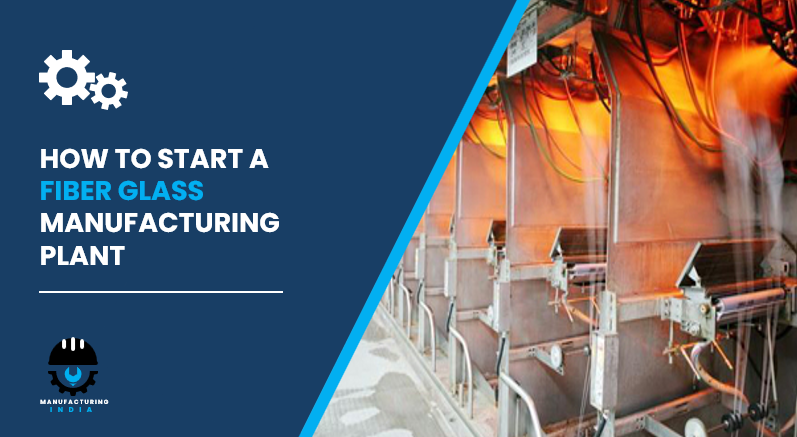
The fiber glass manufacturing process primarily involves batch preparation of raw materials including silica sand, limestone, alumina, and borates, followed by high-temperature glass melting and precision fiberization. The production is divided into several integrated stages:
- Batch Preparation and Raw Material Mixing — Raw minerals are weighed and blended in precise proportions to achieve the desired glass composition for the intended fiber grade.
- Glass Melting — The batch mixture is fed into high-temperature furnaces operating at approximately 1,600–1,700°C to form molten glass, which is continuously refined to remove bubbles and maintain uniform viscosity.
- Fiberization — Molten glass flows through precision bushings containing hundreds of fine orifices, where it is drawn into continuous filaments at high speed under controlled tension.
- Sizing Application — A chemical sizing or binder is applied to the freshly drawn filaments to provide lubrication, adhesion, and compatibility with downstream resin systems.
- Chopping, Weaving, or Forming — Depending on end-product requirements, filaments are chopped into short strands, wound into rovings, woven into fabrics, or formed into mats and insulation batts.
- Curing and Finishing — Products are cured in ovens or at ambient temperatures to activate binders, followed by quality inspection and trimming.
- Packaging and Dispatch — Final products are packaged in rolls, pallets, or bales and dispatched for downstream industrial use.
Key Applications of Fiber Glass
Fiber glass serves a wide variety of end-use industries:
- Building and Construction Insulation: Thermal and acoustic insulation for buildings, industrial equipment, HVAC systems, and appliances — the largest volume application segment.
- Aerospace and Wind Energy Composite components for wind turbine blades, aircraft parts, and industrial structures requiring high strength-to-weight ratio.
- Automotive and Transportation Body panels, bumpers, under-hood components, and structural reinforcements for passenger vehicles, commercial trucks, and electric vehicles.
- Electrical and Electronics PCB laminates, cable insulation, transformer components, and electrical enclosures demanding reliable dielectric performance.
- Industrial Applications Storage tanks, chemical-resistant pipes, ducts, and equipment housings for oil and gas, chemical processing, and water treatment industries.
- Marine Hull coatings, deck structures, and marine vessel components benefiting from corrosion resistance and lightweight properties.
Global Market Outlook
The global fiber glass market size was valued at USD 13.27 Billion in 2025. According to IMARC Group estimates, the market is expected to reach USD 18.43 Billion by 2034, exhibiting a CAGR of 3.7% from 2026 to 2034. This sustained growth is driven by expanding construction and infrastructure development, automotive and transportation lightweighting initiatives, renewable energy growth — particularly wind turbine manufacturing — electronics encapsulation demand, and increasing adoption of high-performance composite materials.
Asia Pacific dominated the market with approximately 60% revenue share, led by China, India, Japan, and South Korea due to strong manufacturing bases, raw material access, and robust downstream demand across construction, automotive, and wind energy sectors.
Leading global players in this industry include:
- Owens Corning
- Saint-Gobain
- Nippon Electric Glass
- Jushi Group Co. Ltd.
- 3B-The Fiberglass Company
- PPG Industries
Timeline to Start a Fiber Glass Manufacturing Plant
Setting up a fiber glass manufacturing plant from ideation to commissioning typically requires 18 to 30 months. This covers:
- Feasibility study and detailed project report (DPR) preparation
- Land acquisition and site development
- Environmental impact assessment and regulatory approvals
- Plant design and engineering
- Machinery procurement and installation
- Utility setup and infrastructure commissioning
- Trial production and quality testing
- Product certification and compliance verification
- Commercial production launch
Licenses and Regulatory Requirements
Starting a fiber glass manufacturing unit requires several approvals, which may vary by country and jurisdiction, including:
- Business registration and incorporation
- Factory License under applicable labor and manufacturing laws
- Environmental Clearance from relevant pollution control authorities
- Silica Dust and Occupational Health Compliance
- Fire Safety and Heat Plant Safety Certification (NOC)
- Hazardous Waste Management Authorization
- REACH Compliance (for EU markets)
- TSCA Inventory Listing (for US markets)
- ISO 9001 Quality Management Certification
- ISO 14001 Environmental Management Certification
- Occupational Health and Safety Certifications
Key Challenges to Consider
Before investing, entrepreneurs and investors should be aware of the common challenges in this business:
High Capital Requirements: Initial CapEx for high-temperature glass melting furnaces, precision fiberization equipment, safety systems, and environmental infrastructure is significant, especially for mid to large-scale plants.
Energy Intensity: Glass melting is one of the most energy-intensive industrial processes. Utility costs representing 30–35% of total OpEx mean that energy price fluctuations can significantly impact production costs and profit margins.
Regulatory Compliance: Meeting silica dust exposure standards, chemical safety, environmental, and occupational health requirements (including REACH, TSCA, and emission regulations) requires continuous investment in quality systems, monitoring equipment, and trained personnel.
Competition: The market features established global chemical and materials companies with significant production capacities and strong brand recognition. New entrants must develop a clear differentiation strategy, whether through specialized formulations, regional focus, or technical service excellence.
Technical Expertise: Operating high-temperature glass furnaces, managing fiberization processes, and maintaining product quality consistency requires highly trained materials engineers and process operators.
Frequently Asked Questions
The following questions are answered in the report:
- How much does it cost to set up a fiber glass manufacturing plant?
- Is fiber glass manufacturing a profitable business in 2026?
- What machinery and equipment are required for a fiber glass plant?
- What licenses and approvals are required to start a fiber glass manufacturing facility?
- How long does it take to commission a fiber glass manufacturing plant?
- What is the best location to set up a fiber glass manufacturing plant?
- What government incentives are available for fiber glass manufacturers?
- What is the break-even period for a fiber glass manufacturing plant?
- What are the REACH and TSCA compliance requirements for fiber glass production?
- What are the key raw materials and their sourcing strategies for fiber glass manufacturing?
Key Takeaways for Investors
The fiber glass manufacturing industry represents a strong and scalable investment opportunity backed by growing global demand across multiple high-value sectors and supportive industrial policy environments. With gross margins of 30–40% and a break-even window of 3–6 years, a well-planned fiber glass manufacturing plant cost remains competitive and financially viable across plant capacities. The convergence of renewable energy growth — especially wind turbine blade production — automotive lightweighting, construction and infrastructure development, and electronics sector demand creates a robust and diversified revenue base for fiber glass manufacturers entering or expanding in this market.
About the Author