Setting up a sponge iron manufacturing plant in India presents a highly attractive investment opportunity as demand for steel and iron-based raw materials continues to grow across infrastructure, construction, automotive, engineering, and manufacturing sectors. Sponge iron, also known as direct reduced iron (DRI), serves as a crucial intermediate raw material for steel production, particularly in electric arc furnaces (EAF) and induction furnaces.
Sponge iron has become an essential component in modern steelmaking due to its high iron content, consistent quality, and ability to improve the efficiency of steel production processes. With increasing investments in infrastructure development, urbanization, and industrial expansion, the demand for sponge iron is expected to remain strong, making the establishment of a sponge iron manufacturing plant a promising and profitable industrial venture.
“With the global sponge iron market projected to grow at a CAGR of 6.5% through 2034, surging to USD 220.94 Billion, India’s position as the world’s second-largest crude steel producer and abundant domestic raw material access makes sponge iron manufacturing one of the most strategically sound investments in the metals and materials sector — with gross margins of 20–30% and a clear break-even path.”
What is Sponge Iron?
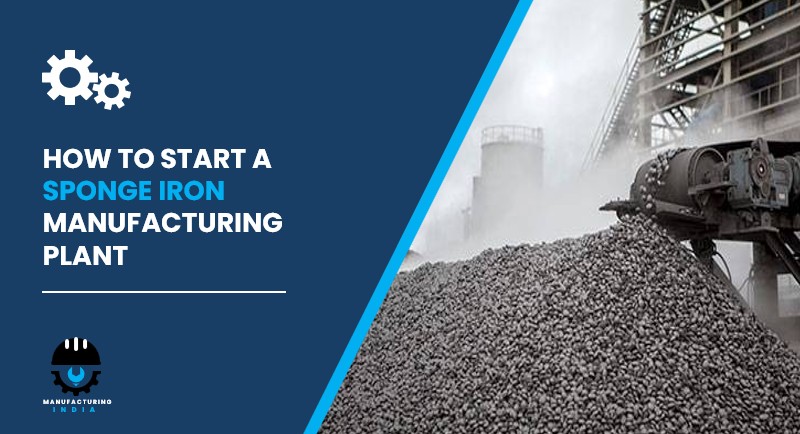
Sponge iron, also known as Direct Reduced Iron (DRI), is a high-purity metallic product obtained by the direct reduction of iron ore using reducing gases or non-coking coal — without melting the ore. It is characterized by a porous, sponge-like structure formed after the removal of oxygen from iron oxides. Sponge iron typically contains high iron content with low sulfur and phosphorus levels, making it an ideal raw material for steel production.
It is widely used as a substitute for scrap metal in electric arc furnaces (EAFs) and induction furnaces due to its consistency, purity, and predictable metallurgical properties. Globally, regulatory bodies and industry standards organizations recognize sponge iron for its role in enabling cleaner, more efficient steelmaking — particularly as the steel sector transitions toward lower-emission production technologies.
Cost of Setting Up a Sponge Iron Manufacturing Plant in India
The sponge iron manufacturing plant setup cost depends on several parameters including production capacity, technology configuration (coal-based rotary kiln vs. gas-based shaft furnace), plant location, level of automation, raw material sourcing strategy, and regulatory compliance requirements. Here is a structured breakdown of all major cost components:
1. Capital Expenditure (CapEx)
The total capital investment in a sponge iron manufacturing plant typically covers the following:
Land and Site Development
This includes land acquisition, boundary development, land registration charges, and basic site preparation. Cost varies significantly depending on whether the land is in a designated industrial zone, steel cluster, Special Economic Zone (SEZ), or privately purchased plot. Proximity to iron ore and coal supply sources, railway sidings, and key transportation routes is a critical factor in site selection for minimizing raw material logistics costs.
Request a Sample Report for In-Depth Market Insights: https://www.imarcgroup.com/sponge-iron-manufacturing-plant-project-report/requestsample
Civil Works and Construction
Building costs cover the main production facility (rotary kiln/shaft furnace area), iron ore and coal storage yards, finished product warehouse, quality control laboratory, administrative block, utility area, pollution control infrastructure, and worker amenities. Construction must comply with industrial plant safety norms including fire resistance, ventilation, dust suppression systems, and environmental management standards set by the Ministry of Environment, Forest and Climate Change (MoEFCC).
Machinery and Equipment
This is the single largest component of CapEx. Key machinery required for a sponge iron manufacturing plant includes:
- Rotary Kilns or Shaft Furnaces (DRI Reactors)
- Iron Ore and Coal Handling & Conveying Systems
- Screening and Separation Equipment
- Waste Heat Recovery Boilers (WHRB)
- Pollution Control Equipment (Dust Collectors, ESP, Bag Filters)
- Material Conveying and Storage Systems
- Weighing and Batching Systems
- Magnetic Separation Units
- Cooling Drums and Rotary Coolers
- Process Control and Automation Systems (DCS/SCADA)
- Power Generation Units (Captive Power Plants, WHRB-based)
Machinery costs represent the largest share of overall capital expenditure, reflecting the high degree of precision engineering, temperature-resistant materials, and process safety requirements involved in sponge iron production. Equipment must be capable of sustained high-temperature operation and comply with emission standards for dust and gas discharge.
Other Capital Costs
These include pre-operative expenses, commissioning charges, import duties (if machinery is sourced internationally), utilities installation, fire safety systems, Effluent Treatment Plant (ETP) setup, pollution control infrastructure, railway siding development, and environmental management systems. Captive power plant investment, where waste heat is used for power generation, is a significant value-adding capital component unique to sponge iron plants.
2. Operational Expenditure (OpEx)
Once the plant is commissioned, the ongoing cost structure is dominated by a few key components:
Raw Material Cost (Iron Ore, Coal, Dolomite): 75–85% of Total OpEx
Iron ore, non-coking coal, and dolomite/limestone are the primary raw materials and account for the dominant share of operating expenses. Iron ore (typically 65%+ Fe grade) and coal (both feed coal and injection coal) are the largest cost drivers. Additional materials include dolomite for sulfur absorption and process additives depending on the production technology. Securing long-term supply contracts and proximity to raw material sources are essential for cost competitiveness.
Utility Cost: 10–15% of Total OpEx
Utilities include electricity (consumed by material handling equipment, compressors, fans, and auxiliary systems), water (used in cooling systems and dust suppression), and compressed air supply. Waste heat recovery boilers (WHRB) can generate captive power from kiln off-gases, significantly reducing net electricity costs and improving overall plant economics. Energy-efficient equipment and heat recovery systems can substantially reduce utility costs over time.
Other Operating Costs
The remaining budget covers transportation and logistics, packaging, salaries and wages, maintenance and spare parts, depreciation, insurance, environmental compliance and pollution monitoring costs, taxes, and miscellaneous overhead. Pollution control system maintenance (dust collection, gas cleaning) is a recurring operational cost unique to coal-based sponge iron plants.
3. Plant Capacity
The proposed manufacturing facility can be designed across a range of production scales:
- Small-Scale Operations: Up to 50,000 metric tons annually — suitable for regional steel markets, captive consumption, and niche supply with batch or continuous rotary kiln production.
- Mid-Scale Plants: 100,000–300,000 metric tons annually — designed for state or national markets with optimized rotary kiln configurations, moderate automation, and waste heat recovery systems.
- Large-Scale Plants: 500,000+ metric tons (up to 1 Million MT) annually — built for national or export markets with advanced shaft furnace or multiple rotary kiln technology, high automation, comprehensive pollution control, and integrated captive power generation.
The proposed manufacturing facility is designed with an annual production capacity ranging between 200,000–1 Million MT, enabling economies of scale while maintaining operational flexibility. Profitability significantly improves with higher capacity utilization, as larger plants benefit from economies of scale in raw material procurement, energy efficiency, and distribution logistics.
4. Profit Margins and Financial Projections
- Gross Profit Margin: 20–30%
- Net Profit Margin: 8–15%
- Break-Even Period: 3 to 6 years, depending on production scale, market positioning, raw material cost management, product mix, and sales efficiency.
Financial projections must account for capital investment, operating costs, capacity utilization rates, coal and iron ore pricing trends, steel market demand outlook, and captive power generation potential. A thorough analysis should also include sensitivity analysis, Net Present Value (NPV), Internal Rate of Return (IRR), and Payback Period. Waste heat recovery power generation can significantly improve project IRR for larger plants.
Why Set Up a Sponge Iron Manufacturing Plant in India?
The global market environment presents a uniquely favorable opportunity for establishing a sponge iron manufacturing facility in India:
India’s Steel Sector Leadership
India is the world’s second-largest crude steel producer, with 151.14 MT of crude steel and 145.30 MT of finished steel produced in FY25, alongside consumption of 150.23 MT. This steel production powerhouse directly drives strong domestic demand for sponge iron as a key steelmaking input. Continued momentum in FY26 (April–October 2025), with 96.08 MT of crude steel and 91.98 MT of finished steel production, is sustaining growth in sponge iron consumption.
Growing Steel Demand
Rapid urbanization, infrastructure development under National Infrastructure Pipeline (NIP), and government initiatives such as Smart Cities, AMRUT, and housing schemes are driving sustained demand for steel, directly supporting sponge iron production expansion across India. The steel sector’s consistent growth trajectory provides a secure and growing off-take market for sponge iron producers.
Shift Toward EAF Technology
The growing adoption of electric arc furnaces (EAFs) and induction furnaces increases the demand for high-purity metallic feedstock like sponge iron. As Indian steel producers invest in cleaner steelmaking technologies, the requirement for consistent-quality DRI/sponge iron over variable-quality scrap metal is accelerating.
Scrap Metal Substitution
Sponge iron provides a reliable alternative to scrap steel, addressing supply volatility, price fluctuations, and quality inconsistencies in the scrap market. Indian steel manufacturers increasingly prefer sponge iron for consistent chemistry and predictable metallurgical outcomes, particularly for producing high-value flat and long steel products.
Domestic Resource Utilization
India’s abundant iron ore reserves (particularly in Odisha, Jharkhand, and Chhattisgarh) and non-coking coal availability enable coal-based sponge iron plants to leverage domestic raw materials, strengthening India’s steel value chain and reducing import dependence. This domestic resource advantage significantly improves cost competitiveness for Indian sponge iron producers.
Cost and Quality Advantages
Controlled chemical composition and low impurity levels in sponge iron improve steel quality and reduce downstream processing costs. Producers benefit from predictable raw material inputs, lower slag generation, improved heat efficiency, and consistent product quality — all of which translate into better margins and customer satisfaction in the steel supply chain.
Manufacturing Process Overview
The sponge iron manufacturing process primarily involves the direct reduction of iron ore using non-coking coal or reducing gas without melting the ore, preserving its porous metallic structure. The production is divided into two main technology routes:
Coal-Based Process (Rotary Kiln Technology)
In the coal-based process, iron ore and non-coking coal are fed into a rotary kiln where solid-state reduction occurs at temperatures of 900–1100°C. The kiln rotates continuously, ensuring uniform contact between ore and reducing agent. Dolomite is added to absorb sulfur. The reduced product (sponge iron) exits the kiln into a rotary cooler and is then discharged, screened, and magnetically separated into product grades. Off-gases from the kiln are passed through waste heat recovery boilers to generate steam and power.
Gas-Based Process (Shaft Furnace Technology — MIDREX/HYL)
In the gas-based process, iron ore pellets or lump ore are fed into a vertical shaft furnace where they are reduced by reformed natural gas (a mixture of hydrogen and carbon monoxide) at temperatures of around 800–900°C. This process produces higher-purity DRI with lower carbon content, suitable for premium steel applications. Gas-based DRI plants are more capital-intensive but offer superior product quality and lower environmental impact compared to coal-based plants.
The complete process flow involves raw material sourcing, storage and preparation, ore sizing and quality control, reduction in kiln or shaft furnace, cooling and discharge, screening and size classification, magnetic separation, product quality testing and inspection, and final dispatch to steel plants or storage.
Key Applications of Sponge Iron
Sponge iron serves a wide variety of end-use industries:
- Electric Arc & Induction Furnaces: Steel Manufacturing
- Foundries: High-quality castings with uniform composition
- Infrastructure and Construction: Construction-grade and structural steel for bridges, railways, and buildings
- Automotive and Engineering: Precision-engineered components and automotive-grade steel
- Alloy Steels: Specialty and alloy steel production requiring consistent chemistry
Global Market Outlook
The global sponge iron market size was valued at USD 125.35 Billion in 2025. According to IMARC Group estimates, the market is expected to reach USD 220.94 Billion by 2034, exhibiting a CAGR of 6.5% from 2026 to 2034. This sustained growth is driven by expanding global steel production, the shift toward EAF-based steelmaking, scarcity and quality inconsistencies in scrap metal supply, and India’s continued dominance as the world’s largest sponge iron producer.
India dominates the global sponge iron market, particularly in coal-based production, driven by its iron ore richness, large non-coking coal reserves, and growing EAF-based steel production. Asia Pacific leads global demand given strong manufacturing bases, domestic raw material access, and robust downstream demand in construction, automotive, and infrastructure sectors.
Leading Sponge Iron Manufacturers
Leading manufacturers in the global sponge iron industry include several companies with extensive production capacities and diverse application portfolios. Key players include:
- Tata Sponge
- Sarda Energy & Minerals Limited
- Mobarakeh Steel Company
- Sajjan India
- Prakash Industries Limited
- Jindal Steel & Power Ltd
Timeline to Start a Sponge Iron Manufacturing Plant
Setting up a sponge iron manufacturing plant from ideation to commissioning typically requires 18 to 30 months. This covers:
- Feasibility study and Detailed Project Report (DPR) preparation
- Land acquisition and site development
- Environmental impact assessment and regulatory approvals (including MoEFCC clearance)
- Plant design and engineering (rotary kiln/shaft furnace layout)
- Machinery procurement, fabrication, and installation
- Waste heat recovery system installation and utility infrastructure
- Pollution control systems commissioning
- Trial production, kiln stabilization, and quality testing
- Product certification and customer qualification
- Commercial production launch
Licenses and Regulatory Requirements
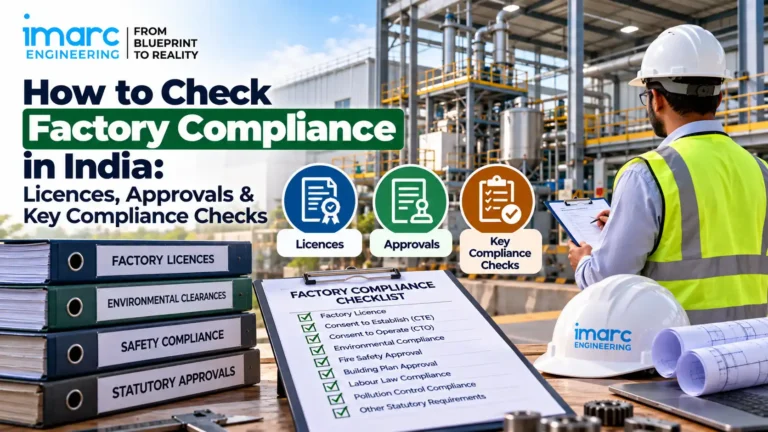
Starting a sponge iron manufacturing plant in India requires several approvals and compliance certifications, including:
- Business registration and incorporation (ROC/MSME)
- Factory License under the Factories Act
- Environmental Clearance from State Pollution Control Board (SPCB) and MoEFCC
- Consent to Establish and Consent to Operate (CTE/CTO)
- Mining lease or iron ore/coal procurement approvals
- Fire Safety and Industrial NOC
- Hazardous Waste Management Authorization
- Railway siding approval (if applicable)
- Captive Power Plant installation permits (CEA/State Electricity Board)
- ISO 9001 Quality Management Certification
- ISO 14001 Environmental Management Certification
- Occupational Health and Safety Certifications (ISO 45001)
Key Challenges to Consider
Before investing, entrepreneurs and investors should be aware of the common challenges in this business:
High Capital Requirements:
Initial CapEx for rotary kilns or shaft furnaces, pollution control infrastructure, waste heat recovery systems, and ore/coal handling equipment is significant, especially for mid to large-scale plants. Captive power plant investment further adds to upfront costs but provides long-term operational savings.
Raw Material Price Volatility:
Iron ore and non-coking coal prices are linked to global commodity markets and domestic mining policies. Fluctuations directly impact production costs and profit margins. Securing long-term supply contracts and maintaining strategic inventory buffers are essential risk mitigation measures.
Environmental and Pollution Compliance:
Coal-based sponge iron plants generate particulate matter, carbon monoxide, and other emissions requiring sophisticated pollution control systems including ESP/bag filters and gas cleaning systems. Meeting SPCB emission norms and obtaining environment clearances requires continuous investment in monitoring equipment, trained environmental officers, and compliance documentation.
Technical Expertise:
Operating rotary kilns at sustained high temperatures, managing ring formation inside kilns, and maintaining consistent product quality requires highly trained metallurgists, chemical engineers, and process operators. Kiln operational stability is critical to both product quality and plant economics.
Competition:
India’s sponge iron sector features established producers with significant production capacities and strong customer relationships with steel mills. New entrants must develop clear differentiation through superior product quality, competitive pricing, reliable supply consistency, or strategic location advantages near key steel clusters.
Frequently Asked Questions
The following questions are answered in the IMARC Group Sponge Iron Manufacturing Plant Project Report:
- How much does it cost to set up a sponge iron manufacturing plant in India?
- Is sponge iron manufacturing a profitable business in 2026?
- What machinery and equipment are required for a sponge iron plant?
- What licenses and approvals are required to start a sponge iron production facility?
- How long does it take to commission a sponge iron manufacturing plant?
- What is the best location to set up a sponge iron plant in India?
- What government incentives are available for sponge iron manufacturers?
- What is the break-even period for a sponge iron manufacturing plant?
- What are the environmental compliance requirements for coal-based DRI plants?
- How does waste heat recovery improve the economics of a sponge iron plant?
- What are the key raw materials and their sourcing strategies for sponge iron manufacturing?
Key Takeaways for Investors
The sponge iron manufacturing industry represents a strong and strategically essential investment opportunity backed by India’s position as the world’s second-largest crude steel producer, robust domestic iron ore and coal availability, and growing EAF-based steelmaking adoption. With gross margins of 20–30% and a break-even window of 3–6 years, a well-planned sponge iron manufacturing plant offers financially viable and scalable returns. The convergence of infrastructure development, urbanization, scrap metal substitution, and renewable energy-driven steel demand creates a resilient and diversified revenue base for sponge iron manufacturers entering or expanding in this market.
About the Author