The pallets manufacturing plant cost in India is a critical benchmark for entrepreneurs and investors looking to enter one of the country’s fastest-growing industrial sectors. As India’s logistics, warehousing, e-commerce, and pharmaceutical sectors undergo rapid expansion, the demand for standardized material handling solutions — particularly pallets — is rising consistently across both urban industrial corridors and emerging manufacturing hubs.
India’s domestic consumer base of over billion people, combined with surging FMCG and pharmaceutical output, is creating a steady and growing requirement for pallets across the supply chain. The Government of India’s Make in India initiative provides further tailwinds by incentivizing domestic production of industrial goods including packaging and logistics infrastructure. With a well-established timber supply chain, cost-competitive labor, and policy-driven industrial growth, India stands out as a highly viable destination for launching a pallets manufacturing facility.
“With over billion consumers, a rapidly urbanizing population, Make in India policy support, and a booming pharmaceutical and FMCG sector, India offers one of the most financially attractive environments for pallets manufacturing — with gross profit margins of 30–40% and a net profit margin of 12–20%.”
What is a Pallet?
Pallets function as flat transport systems which allow secure handling for goods through all stages of their movement process, which includes lifting, storage, stacking, and transportation by forklifts, pallet jacks, and automated systems. The common materials used for pallet production include wood, plastic, metal, and composite materials, while wooden pallets dominate the market because they provide affordable recycling options.
Pallets are engineered to meet standardized dimensions and load-bearing capacities, enabling seamless movement of goods across warehouses, ports, manufacturing plants, and retail distribution centers. The product is designed with strong materials that protect items during storage while achieving maximum space efficiency and maintaining compatibility with current logistics systems.
Cost of Setting Up a Pallets Manufacturing Plant in India:
Understanding the full cost structure of a pallets manufacturing plant in India is essential for financial planning, funding, and long-term profitability. The setup cost depends on several variables including plant capacity, automation level, location, and raw material sourcing strategy. Below is a structured breakdown of all major cost components:
1. Capital Expenditure (CapEx)
The total capital investment depends on plant capacity, technology, and location. Machinery costs account for the largest portion of total capital expenditure. Key machinery required for a pallets manufacturing plant includes:
• Wood cutting saws
• Nail guns
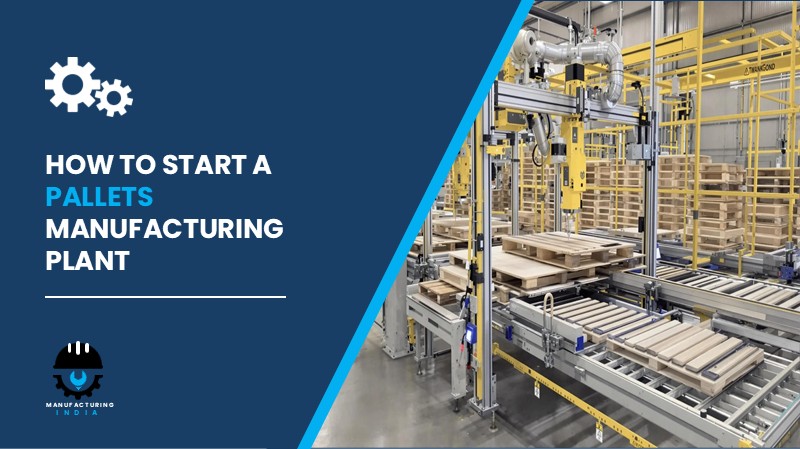
• Pallet assembly lines
• Heat treatment chambers
• Material handling systems
The cost of land and site development — including charges for land registration, boundary development, and other related expenses — forms a substantial part of the overall investment. Additional capital costs cover civil construction, utility setup, and pre-operative expenses.
2. Operational Expenditure (OpEx)
The operating cost structure of a pallets manufacturing plant is primarily driven by raw material consumption. Timber planks (hardwood/softwood) account for approximately 55–65% of total operating expenses. By the fifth year of operations, total operational costs are expected to increase substantially due to factors such as inflation, market fluctuations, and potential rises in the cost of key materials.
- Raw Material Cost: 55–65%
- Utility Cost: 10–15%
3. Plant Capacity
The proposed manufacturing facility is designed with an annual production capacity of 300,000 pallets. This scale enables economies of scale while maintaining operational flexibility to serve multiple end-use segments including logistics and warehousing, retail and FMCG, pharmaceuticals, and agriculture.
4. Profit Margins and Financial Projections
The project demonstrates healthy profitability potential under normal operating conditions. Financial projections are developed based on realistic assumptions related to capital investment, operating costs, production capacity utilization, pricing trends, and demand outlook.
- Gross Profit Margin: 30–40%
- Net Profit Margin: 12–20%
A thorough financial analysis includes income projections, expenditures, break-even points, Net Present Value (NPV), Internal Rate of Return (IRR), and Payback Period to ensure clear financial strategy and investor confidence.
Request a Sample Report for In-Depth Market Insights: https://www.imarcgroup.com/pallets-manufacturing-plant-project-report/requestsample
Why Set Up a Pallets Manufacturing Plant in India?
India presents several strategic advantages for establishing a pallets manufacturing unit:
Growing Logistics Infrastructure: Backbone of Modern Supply Chains
India’s rapid expansion of warehousing, cold chain, and 3PL networks is generating consistent demand for pallets across every link in the supply chain.
Regulatory and Export Compliance: India’s domestic manufacturing and export-oriented industries are aligned with international ISPM-15 heat treatment standards for export pallets, opening access to global trade.
Policy Support Under Make in India: India’s Government focuses on encouraging domestic manufacturing under Make in India, reducing import dependency for industrial goods including logistics equipment.
Cost-Competitive Raw Material Access: Abundant availability of hardwood and softwood timber from domestic forestry supply chains keeps raw material costs competitive.
Pharmaceutical and FMCG Demand: Growing demand from the pharmaceutical and food processing sectors for hygienic, durable plastic and composite pallets offers diversification opportunities for Indian manufacturers.
E-Commerce and Retail Boom: The rise of organized retail, e-commerce fulfilment centres, and automated warehousing is creating a high-growth end-use base for standardized pallet solutions.
Manufacturing Process – Step by Step:
The pallets manufacturing process is a multi-step operation involving several unit operations, material handling stages, and quality checks. Below are the main stages involved:
- Raw Material Sourcing: Timber planks (hardwood/softwood) and nails/screws are procured from reliable suppliers with proximity to the plant to minimize transportation costs.
- Timber Cutting: Wood cutting saws are used to size raw timber planks to the required standard dimensions as per pallet specifications.
- Drying and Conditioning: Timber is subjected to controlled drying to reduce moisture content, ensuring structural integrity and compliance with weight-bearing standards.
- Machining: Cut planks are further processed for smoothness, consistent dimensions, and removal of defects using specialized machining equipment.
- Pallet Assembly: Nail guns and pallet assembly lines are used to fasten deckboards and stringers together in the required pallet configuration.
- Heat Treatment: For export compliance, pallets are placed in heat treatment chambers meeting ISPM-15 phytosanitary standards to prevent pest transmission.
- Finishing: Surface finishing processes are applied as required, followed by branding, marking, and any protective coating.
- Quality Inspection and Testing: Each pallet undergoes technical tests and quality assurance checks for load-bearing capacity, dimensional accuracy, and structural compliance.
- Material Handling and Dispatch: Finished pallets are stacked using material handling systems, stored in finished goods areas, and dispatched for distribution.
Key Applications of Pallets:
Logistics and Warehousing: Pallets enable efficient material handling, space optimization, and rapid movement of goods in warehouses and distribution centers.
Manufacturing: Used to transport raw materials, work-in-process goods, and finished products within factories.
Retail and FMCG: Pallets support bulk transportation and organized storage of consumer goods.
Pharmaceuticals: Plastic and composite pallets are increasingly used in pharmaceutical applications where hygiene and durability are paramount.
Agriculture and Food Supply: Widely used for handling grains, fruits, vegetables, and packaged food products.
Export Packaging: Heat-treated pallets meeting ISPM-15 standards are used for cross-border trade and international shipping.
Leading Pallets Manufacturers:
Leading manufacturers in the global pallets industry include several multinational companies with extensive production capacities and diverse application portfolios. Key players include:
• PECO Pallet, Inc.
• L.C.N Inc.
• Cabka Group GmbH
• PalletOne, Inc.
• Brambles Ltd.
• Loscam Australia Pty Ltd
• Craemer Holding GmbH
• ORBIS Corporation
• Schoeller Allibert Group B.V.
• Falkenhahn AG
All of these players serve end-use sectors such as logistics and warehousing, manufacturing, retail and FMCG, pharmaceuticals, and agriculture.
Timeline to Start a Pallets Manufacturing Plant:
Setting up a pallets manufacturing plant from ideation to commercial commissioning involves several sequential phases. The overall timeline is estimated as follows:
- Feasibility study and preparation of the detailed project report (DPR)
- Land acquisition, site selection analysis, and legal due diligence
- Regulatory approvals, factory license, and environmental clearances
- Civil construction and plant infrastructure development
- Procurement and installation of wood cutting saws, nail guns, pallet assembly lines, heat treatment chambers, and material handling systems
- Raw material supply chain setup and supplier finalization
- Trial production, quality testing, and process calibration
- Commercial production launch and market dispatch
Licenses and Regulatory Requirements:
Setting up a pallets manufacturing unit in India requires compliance with several regulatory frameworks specific to industrial manufacturing:
- Business registration under Proprietorship, LLP, or Private Limited Company structure
- Factory License under the Factories Act from the respective State Labour Department
- Environmental Clearance from the State Pollution Control Board
- GST Registration for commercial operations
- Fire Safety NOC from the local Fire Department
- ISPM-15 Compliance Certification for heat-treated export pallets (from accredited inspection agencies)
- Bureau of Indian Standards (BIS) certification where applicable to material standards
- Trade License from local municipal authorities
- ESI and PF registration for workforce compliance
Key Challenges to Consider:
Before investing, entrepreneurs should be aware of the common challenges in this business:
High Capital Requirements: Initial CapEx for machinery including assembly lines, heat treatment chambers, and site infrastructure is significant, especially for mid to large-scale plants.
Raw Material Price Volatility: Timber plank prices can fluctuate based on forestry regulations, seasonal supply, and import dynamics, directly impacting operating margins.
Regulatory Compliance: Meeting heat treatment and phytosanitary standards for export pallets requires continuous investment in quality systems and certified treatment chambers.
Competition from Unorganized Sector: The pallet market in India includes a large unorganized segment of local carpenters and small workshops, requiring a clear product differentiation and quality positioning strategy.
Skilled Manpower: Operating precision assembly lines and heat treatment chambers requires trained technical staff familiar with industrial wood processing and quality standards.
Supply Chain Disruptions: Rising consumer demand, global economy shifts, and supply chain disruptions can contribute to increases in total operational costs in later years of operation.
Frequently Asked Questions:
The following questions are answered in the report:
- How much does it cost to set up a pallets manufacturing plant in India?
- What is the annual production capacity of a standard pallets manufacturing plant in India?
- What machinery is required to start a pallets manufacturing plant in India?
- What is the gross profit margin for a pallets manufacturing plant in India?
- What licenses and approvals are required to start a pallets manufacturing plant in India?
- What are the primary raw materials used in pallets manufacturing and their cost share?
- Is ISPM-15 heat treatment certification mandatory for pallets exported from India?
- What are the key end-use industries driving demand for pallets in India?
- What are the major challenges in setting up a pallets manufacturing plant in India?
Key Takeaways for Investors:
The Pallets Manufacturing Plant Cost in India presents a strong investment case backed by growing logistics, FMCG, pharmaceutical, and e-commerce demand, with gross profit margins of 30–40% and net profit margins of 12–20% under normal operating conditions. A well-planned pallets manufacturing plant with an annual capacity of 300,000 pallets, efficient raw material sourcing, and regulatory compliance is financially viable and scalable across India’s major industrial corridors.
About the Author