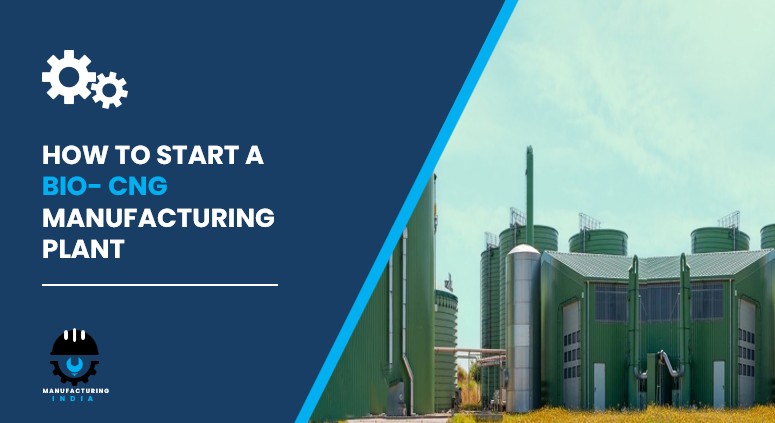
Setting up a bio-CNG manufacturing plant in India presents a compelling investment case for energy entrepreneurs, clean technology investors, and infrastructure developers. India’s growing transportation sector, expanding industrial energy demand, and the national drive to move away from fossil fuels have created a robust market for this renewable fuel. Bio-CNG serves critical end-use industries transportation, industrial operations, power generation, residential and commercial cooking, and waste-to-energy all experiencing consistent demand growth.
India’s combination of abundant organic waste resources, rising urbanisation, growing compressed natural gas infrastructure, and the Make in India initiative makes it a strategically ideal location. Manufacturing states such as Gujarat, Maharashtra, and Uttar Pradesh offer established industrial corridors, proximity to agricultural feedstock supply chains, and active policy backing for renewables. With 94 bio-CNG/CBG projects already approved under the Ministry of New and Renewable Energy, India’s regulatory environment actively encourages new production facilities of this kind.
Establishing a bio-CNG manufacturing facility in India combines policy support, cost-competitive operations, and access to vast organic waste feedstocks making it a financially sound investment. With gross profit margins of 40–60%, active government funding, and growing demand from transportation and industrial sectors, this venture delivers compelling break-even viability.
What is Bio-CNG?
Bio-CNG is a renewable energy fuel derived from the biogas upgrading of organic waste, including agricultural waste, food waste, and sewage sludge. Biogas primarily methane (CH₄) is produced through anaerobic digestion and then processed via CO₂ removal, moisture separation, and the addition of odorants to meet conventional natural gas quality standards. Once compressed, it serves as transportation fuel, in industrial-scale heating, for electricity generation, and for cooking applications.
Key advantages include significant greenhouse gas emission reductions, effective utilisation of organic waste in energy generation, and support for circular economy principles. As a green fuel substitute for conventional natural gas, Bio-CNG harnesses renewable organic waste as its primary feedstock. End-use industries include transportation, industrial and commercial operations, power generation, residential and commercial cooking, and waste-to-energy conversion.
Cost of Setting Up a Bio-CNG Manufacturing Plant in India
Total investment for this production unit is shaped by plant capacity, technology selection, location, automation level, and regulatory compliance requirements.
1. Capital Expenditure (CapEx)
The capital investment for this facility covers land and site development land registration, boundary development, and site preparation. Investors may consider Special Economic Zones (SEZs) or industrial estates in Gujarat, Uttar Pradesh, or Maharashtra for land cost advantages and utility concessions. Civil works cover the manufacturing shed, quality control laboratory, raw material storage, and administrative block. Machinery costs represent the largest share of total CapEx. Key machinery required includes:
- Anaerobic digesters
- Biogas upgrading systems
- Compression units
- Storage tanks
- Transportation vehicles
- Quality control systems
Other capital costs include effluent treatment plant (ETP) installation, pre-operative expenses, commissioning charges, and applicable import duties on biogas upgrading and compression equipment.
Request a Sample Report for In-Depth Market Insights: https://www.imarcgroup.com/bio-cng-manufacturing-plant-project-report/requestsample
2. Operational Expenditure (OpEx)
Operating costs are driven primarily by raw material consumption. Key inputs cattle dung, press mud, food waste, and water account for approximately 10–20% of total OpEx. Long-term procurement contracts with agricultural suppliers and municipal waste agencies ensure feedstock consistency. Utility costs for electricity and water account for approximately 15–20% of OpEx. Other ongoing costs include transportation, packaging, salaries, maintenance, depreciation, and taxes. By the fifth year, total OpEx is projected to increase substantially due to inflation, market fluctuations, and potential rises in key material costs.
3. Plant Capacity
The proposed production facility is designed with a capacity of 5 tons per day, enabling economies of scale while maintaining operational flexibility. Capacity can be customised per investor requirements and feedstock availability. Profitability improves as capacity utilisation increases, and fixed costs are spread across a larger output volume.
4. Profit Margins and Financial Projections
This production unit demonstrates strong financial viability. Gross profit margins typically range between 40–60%, with net profit margins between 25–40%. Detailed financial projections cover net present value (NPV), internal rate of return (IRR), payback period, and a five-year income and expenditure forecast built on realistic assumptions around capital investment, operating costs, capacity utilisation, and pricing trends.
Why Set Up a Bio-CNG Plant in India?
Expanding Demand Across Transportation and Industry. Bio-CNG is increasingly adopted as a fuel in CNG-powered vehicles buses, trucks, and private cars while industrial applications in heating, drying, and cooking grow in parallel. This dual demand from transportation and industrial end-users creates stable, long-term revenue prospects.
Circular Economy and Waste-to-Energy Potential. India generates enormous volumes of organic waste from agriculture, food processing, and municipal sources. Converting cattle dung, press mud, and food waste into Bio-CNG supports circular economy strategies, reduces landfill burden, and produces a commercially valuable energy product.
Policy and Regulatory Support. In April 2025, India’s Ministry of New and Renewable Energy approved 94 bio-CNG/CBG projects with Rs. 90.89 crore in funding, with Uttar Pradesh leading with 31 operational plants. Government subsidies, blending targets, and make in India incentives are actively lowering production costs for domestic manufacturers.
Cost-Competitive Manufacturing Base. India offers competitive land prices, lower labour costs, and proximity to abundant organic waste feedstocks in agricultural belts, enabling domestic production facilities to achieve favourable unit economics.
Active Institutional Investment. In June 2025, Hindustan Petroleum Corp. Ltd. announced an investment of approximately $231 million to build 24 bio-CNG production facilities in India demonstrating large-scale institutional confidence in the sector’s commercial future.
Energy Security Advantage. Countries with significant agricultural activity, including India, have the potential to become major Bio-CNG producers, reducing dependence on imported natural gas and strengthening national energy security.
Manufacturing Process Step by Step
The bio-CNG manufacturing process uses anaerobic digestion and biogas upgrading as the primary production method. A thorough understanding of the bio-CNG manufacturing process is essential for plant design, equipment selection, and operational efficiency. The key stages are:
- Organic Waste Collection: Feedstocks cattle dung, press mud, and food waste are collected and transported to the plant.
- Pre-treatment and Feeding: Raw materials are pre-processed and fed into anaerobic digesters alongside water.
- Anaerobic Digestion: Organic matter undergoes microbial breakdown, producing raw biogas of methane (CH₄) and CO₂.
- Biogas Upgrading: Biogas upgrading systems remove CO₂ and moisture, raising methane to natural gas quality.
- Odorant Addition: Odorants are added to meet safety and regulatory requirements for compressed gas distribution.
- Compression: Upgraded gas is compressed using compression units to produce finished Bio-CNG.
- Quality Control: Quality control systems monitor purity, concentration, and stability at each stage.
- Storage and Dispatch: Finished Bio-CNG is stored in storage tanks and dispatched via transportation vehicles to end-use sectors.
Key Applications
Bio-CNG serves a diverse range of industries across energy, transportation, and commercial sectors:
- Transportation: Alternative fuel in CNG-powered buses, trucks, and private vehicles.
- Industrial and Commercial Use: Applied in industrial heating, drying, and commercial cooking.
- Power Generation: Fuels gas turbines and combined heat and power (CHP) systems.
- Residential and Commercial Cooking: Clean cooking fuel for households and commercial kitchens.
- Waste-to-Energy: Converts organic waste into commercially valuable renewable energy.
Leading Manufacturers
The global bio-CNG industry is served by well-established multinational manufacturers with extensive production capacities. Key players include:
- Clean Energy Fuels
- Verbio SE
- Shell
- Neste
- IFPEN
- Biokraft International AB
Timeline to Start the Plant
- Feasibility study and project report preparation
- Land acquisition and site development
- Regulatory approvals and environmental clearances
- Factory licence and fire safety compliance
- Machinery procurement and installation
- Raw material supplier agreements and supply chain setup
- Trial production and quality testing
- Commercial production launch
Licences and Regulatory Requirements
Starting a bio-CNG manufacturing unit in India requires several approvals:
- Business registration (Proprietorship, LLP, or Pvt Ltd)
- Factory Licence under the Factories Act
- Environmental Clearance from the State Pollution Control Board
- GST Registration
- Fire Safety NOC
- Compressed gas storage and handling compliance under the Gas Cylinders Rules and Static and Mobile Pressure Vessels Rules
- Effluent Treatment Plant (ETP) operational clearance
- Occupational Health and Safety compliance
Key Challenges to Consider
High Capital Requirements. Substantial upfront investment in anaerobic digesters, biogas upgrading systems, and compression units requires careful financial structuring and access to project finance.
Raw Material Price Volatility. Feedstock costs for cattle dung, press mud, and food waste are subject to seasonal availability fluctuations; long-term procurement contracts are essential to mitigate price risk.
Regulatory Compliance. Ongoing adherence to environmental clearance conditions, ETP performance standards, and gas safety regulations adds operational complexity to running the facility.
Technology and Innovation Pressure. Advances in biogas upgrading and compression technologies require periodic equipment upgrades to maintain competitive efficiency and output quality.
Competition. The market includes established players such as Shell, Neste, Verbio SE, and Clean Energy Fuels, alongside emerging Indian manufacturers supported by government incentives.
Skilled Manpower. Operating anaerobic digesters, biogas upgrading systems, and quality control instruments requires trained technical personnel, which can be challenging to source in some regions.
Frequently Asked Questions
1. How much does it cost to set up a bio-CNG manufacturing plant in India?
Setup costs vary by capacity, technology, and location; IMARC Group’s project report covers all CapEx and OpEx components in full.
2. Is bio-CNG manufacturing profitable in India in 2026?
Yes gross margins of 40–60% and net margins of 25–40% confirm strong profitability under normal operating conditions.
3. What machinery is required for a bio-CNG plant in India?
Key machinery includes anaerobic digesters, biogas upgrading systems, compression units, storage tanks, transportation vehicles, and quality control systems.
4. What licences are required to start a bio-CNG plant in India?
Required approvals include business registration, Factory Licence, Environmental Clearance, GST Registration, Fire Safety NOC, gas handling compliance, ETP clearance, and occupational health compliance.
5. What raw materials are needed for bio-CNG manufacturing?
Primary raw materials are cattle dung, press mud, and food waste, along with water as a core process input throughout anaerobic digestion.
6. What are the environmental compliance requirements for a bio-CNG plant in India?
Plants must obtain Environmental Clearance from the State Pollution Control Board, maintain an operational ETP, and comply with compressed gas safety and emission regulations.
7. What is the best location to set up a bio-CNG plant in India?
Uttar Pradesh, Gujarat, and Maharashtra are strategically favourable; Uttar Pradesh currently leads with 31 approved plants under MNRE.
8. What is the break-even period for this type of plant in India?
The payback period, NPV, and IRR are detailed in IMARC Group’s financial analysis based on realistic capacity utilisation and cost assumptions.
9. What government incentives are available for manufacturers in India?
The Ministry of New and Renewable Energy has approved 94 bio-CNG/CBG projects with Rs. 90.89 crore in funding; Make in India subsidies and blending mandates further support producers.
Key Takeaways for Investors
A bio-CNG manufacturing plant in India represents a high-potential investment opportunity backed by growing demand across transportation, industrial, power generation, and waste-to-energy sectors. The project demonstrates strong financial viability across capacities, with gross margins of 40–60% and net margins of 25–40% achievable under realistic assumptions. The global bio-CNG market, valued at USD 29.82 Billion in 2025, is projected to reach USD 47.29 Billion by 2034 at a CAGR of 5.3%, reflecting sustained long-term growth. India’s abundant organic waste resources, active government support, and expanding CNG infrastructure collectively ensure robust demand sustainability for new entrants to this sector.
About the Author